Organization: Structure and Culture
Project Management Structures Challenges to Organizing Projects The uniqueness and short duration of projects relative to ongoing longer-term organizational activities The multidisciplinary and cross-functional nature of projects creates authority and responsibility dilemmas
Project Management Structures Choosing an Appropriate Project Management Structure The best system balances  the needs of the project  with the needs of the  organization.
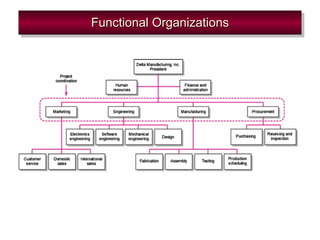
Project Management Structures Organizing Projects: Functional organization Different segments of the project are delegated to respective functional units. Coordination is maintained through normal management channels. Used when the interest of one functional area dominates the project or one functional area has a dominant interest in the project’s success.
Functional Organizations
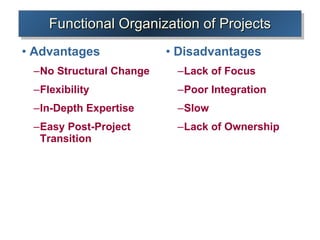
Functional Organization of Projects Advantages No Structural Change Flexibility In-Depth Expertise Easy Post-Project Transition Disadvantages Lack of Focus Poor Integration Slow Lack of Ownership
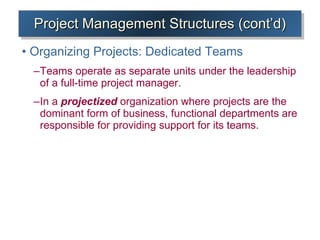
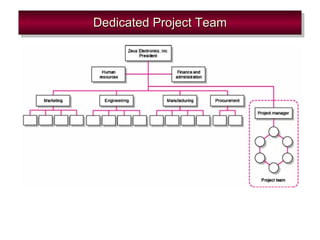
Project Management Structures (cont’d) Organizing Projects: Dedicated Teams Teams operate as separate units under the leadership of a full-time project manager. In a  projectized  organization where projects are the dominant form of business, functional departments are responsible for providing support for its teams.
Dedicated Project Team
Project Organization: Dedicated Team Advantages Simple Fast Cohesive Cross-Functional Integration Disadvantages Expensive Internal Strife Limited Technological Expertise Difficult Post-Project Transition
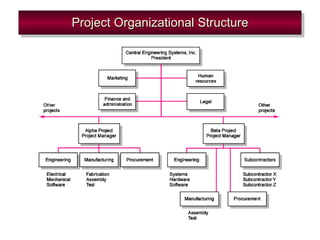
Project Organizational Structure
Project Management Structures (cont’d) Organizing Projects: Matrix Structure Hybrid organizational structure (matrix) is overlaid on the normal functional structure. Two chains of command (functional and project) Project participants report simultaneously to both functional and project managers. Matrix structure optimizes the use of resources. Allows for participation on multiple projects while performing normal functional duties. Achieves a greater integration of expertise and project requirements.
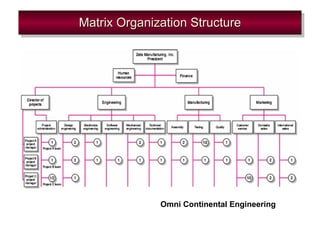
Matrix Organization Structure Omni Continental Engineering
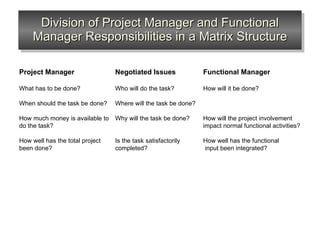
Division of Project Manager and Functional Manager Responsibilities in a Matrix Structure Project Manager  Negotiated Issues  Functional Manager What has to be done?  Who will do the task?  How will it be done? When should the task be done?  Where will the task be done? How much money is available to  Why will the task be done?  How will the project involvement do the task? impact normal functional activities? How well has the total project  Is the task satisfactorily How well has the functional  been done?  completed?  input been integrated?
Project Management Structures (cont’d) Matrix Structure   Hybrid organizational structure (matrix) is overlaid on the normal functional structure Two chains of command (functional and project) All project participants report simultaneously to both a functional and a project manager Matrix structure optimizes the use of resources Allows for participation on multiple projects while performing normal functional duties Achieves a greater integration of expertise and project requirements
Different Matrix Forms Functional (also Weak or Lightweight) Form Matrices in which the authority of the functional manager predominates and the project manager has indirect authority. Balance (or Middleweight) Form The traditional matrix form in which the project manager sets the overall plan and the functional manager determines how work to be done. Strong (Heavyweight) Form Resembles a project team in which the project manager has broader control and functional departments act as subcontractors to the project.
Project Organization: Matrix Form Advantages Efficient Strong Project Focus Easier Post-Project Transition Flexible Disadvantages Dysfunctional Conflict Infighting Stressful Slow
Project Management Structures (cont’d) Organizing Projects: Network Organizations An alliance of several organizations for the purpose of creating products or services. A “hub” or “core” firm with strong core competencies outsources key activities to a collaborative cluster of satellite organizations.
Mountain Bicycle Network Project FIGURE 3.5
Project Organization: Network Form Advantages Cost Reduction High Level of Expertise Flexible Disadvantages Coordination of Breakdowns Loss of Control Conflict
Choosing the best structure How should you go about selecting the optimal structure?
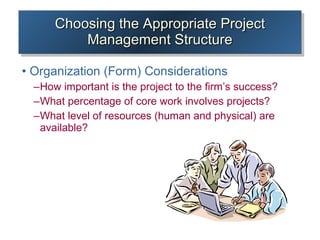
Choosing the Appropriate Project Management Structure Organization (Form) Considerations How important is the project to the firm’s success? What percentage of core work involves projects? What level of resources (human and physical) are available?
Rated Effectiveness of Different Project Structures by Type of Project FIGURE 3.6 Source:  Larson, E. W., and Gobeli, D. H., “Matrix Management: Contradictions and Insights,”  California Management Review,  vol. 29, no. 4 (Summer 1987), p. 137. Why?
Choosing the Appropriate Project Management Structure (cont’d) Project Considerations Size of project Strategic importance Novelty and need for innovation Need for integration (number of departments involved) Environmental complexity (number of external interfaces) Budget and time constraints Stability of resource requirements
Organizational Culture Organizational Culture Defined A system of shared norms, beliefs, values, and assumptions which bind people together, thereby creating shared meanings. The “personality” of the organization that sets it apart from other organizations. Provides a sense of identify to its members. Helps legitimize the management system of the organization. Clarifies and reinforces standards of behavior.
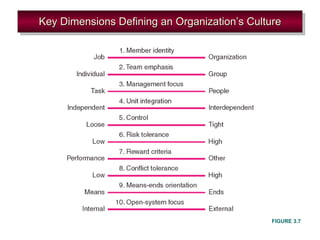
Key Dimensions Defining an Organization’s Culture FIGURE 3.7
Identifying Cultural Characteristics Study the physical characteristics of an organization. Read about the organization. Observe how people interact within the organization. Interpret stories and folklore surrounding the organization.
Organizational Culture Diagnosis Worksheet FIGURE 3.8
Implications of Organizational Culture  for Organizing Projects Challenges for Project Managers in Navigating Organizational Cultures Interacting with the culture and subcultures of the parent organization Interacting with the project’s clients or customer organizations Interacting with other organizations  connected to the project
Cultural Dimensions of an Organization Supportive  of Project Management FIGURE 3.9

Chap 3 Organization Structure

  • 1.
  • 2.
    Project Management StructuresChallenges to Organizing Projects The uniqueness and short duration of projects relative to ongoing longer-term organizational activities The multidisciplinary and cross-functional nature of projects creates authority and responsibility dilemmas
  • 3.
    Project Management StructuresChoosing an Appropriate Project Management Structure The best system balances the needs of the project with the needs of the organization.
  • 4.
    Project Management StructuresOrganizing Projects: Functional organization Different segments of the project are delegated to respective functional units. Coordination is maintained through normal management channels. Used when the interest of one functional area dominates the project or one functional area has a dominant interest in the project’s success.
  • 5.
  • 6.
    Functional Organization ofProjects Advantages No Structural Change Flexibility In-Depth Expertise Easy Post-Project Transition Disadvantages Lack of Focus Poor Integration Slow Lack of Ownership
  • 7.
    Project Management Structures(cont’d) Organizing Projects: Dedicated Teams Teams operate as separate units under the leadership of a full-time project manager. In a projectized organization where projects are the dominant form of business, functional departments are responsible for providing support for its teams.
  • 8.
  • 9.
    Project Organization: DedicatedTeam Advantages Simple Fast Cohesive Cross-Functional Integration Disadvantages Expensive Internal Strife Limited Technological Expertise Difficult Post-Project Transition
  • 10.
  • 11.
    Project Management Structures(cont’d) Organizing Projects: Matrix Structure Hybrid organizational structure (matrix) is overlaid on the normal functional structure. Two chains of command (functional and project) Project participants report simultaneously to both functional and project managers. Matrix structure optimizes the use of resources. Allows for participation on multiple projects while performing normal functional duties. Achieves a greater integration of expertise and project requirements.
  • 12.
    Matrix Organization StructureOmni Continental Engineering
  • 13.
    Division of ProjectManager and Functional Manager Responsibilities in a Matrix Structure Project Manager Negotiated Issues Functional Manager What has to be done? Who will do the task? How will it be done? When should the task be done? Where will the task be done? How much money is available to Why will the task be done? How will the project involvement do the task? impact normal functional activities? How well has the total project Is the task satisfactorily How well has the functional been done? completed? input been integrated?
  • 14.
    Project Management Structures(cont’d) Matrix Structure Hybrid organizational structure (matrix) is overlaid on the normal functional structure Two chains of command (functional and project) All project participants report simultaneously to both a functional and a project manager Matrix structure optimizes the use of resources Allows for participation on multiple projects while performing normal functional duties Achieves a greater integration of expertise and project requirements
  • 15.
    Different Matrix FormsFunctional (also Weak or Lightweight) Form Matrices in which the authority of the functional manager predominates and the project manager has indirect authority. Balance (or Middleweight) Form The traditional matrix form in which the project manager sets the overall plan and the functional manager determines how work to be done. Strong (Heavyweight) Form Resembles a project team in which the project manager has broader control and functional departments act as subcontractors to the project.
  • 16.
    Project Organization: MatrixForm Advantages Efficient Strong Project Focus Easier Post-Project Transition Flexible Disadvantages Dysfunctional Conflict Infighting Stressful Slow
  • 17.
    Project Management Structures(cont’d) Organizing Projects: Network Organizations An alliance of several organizations for the purpose of creating products or services. A “hub” or “core” firm with strong core competencies outsources key activities to a collaborative cluster of satellite organizations.
  • 18.
    Mountain Bicycle NetworkProject FIGURE 3.5
  • 19.
    Project Organization: NetworkForm Advantages Cost Reduction High Level of Expertise Flexible Disadvantages Coordination of Breakdowns Loss of Control Conflict
  • 20.
    Choosing the beststructure How should you go about selecting the optimal structure?
  • 21.
    Choosing the AppropriateProject Management Structure Organization (Form) Considerations How important is the project to the firm’s success? What percentage of core work involves projects? What level of resources (human and physical) are available?
  • 22.
    Rated Effectiveness ofDifferent Project Structures by Type of Project FIGURE 3.6 Source: Larson, E. W., and Gobeli, D. H., “Matrix Management: Contradictions and Insights,” California Management Review, vol. 29, no. 4 (Summer 1987), p. 137. Why?
  • 23.
    Choosing the AppropriateProject Management Structure (cont’d) Project Considerations Size of project Strategic importance Novelty and need for innovation Need for integration (number of departments involved) Environmental complexity (number of external interfaces) Budget and time constraints Stability of resource requirements
  • 24.
    Organizational Culture OrganizationalCulture Defined A system of shared norms, beliefs, values, and assumptions which bind people together, thereby creating shared meanings. The “personality” of the organization that sets it apart from other organizations. Provides a sense of identify to its members. Helps legitimize the management system of the organization. Clarifies and reinforces standards of behavior.
  • 25.
    Key Dimensions Definingan Organization’s Culture FIGURE 3.7
  • 26.
    Identifying Cultural CharacteristicsStudy the physical characteristics of an organization. Read about the organization. Observe how people interact within the organization. Interpret stories and folklore surrounding the organization.
  • 27.
  • 28.
    Implications of OrganizationalCulture for Organizing Projects Challenges for Project Managers in Navigating Organizational Cultures Interacting with the culture and subcultures of the parent organization Interacting with the project’s clients or customer organizations Interacting with other organizations connected to the project
  • 29.
    Cultural Dimensions ofan Organization Supportive of Project Management FIGURE 3.9