Change Management
Conflict Management
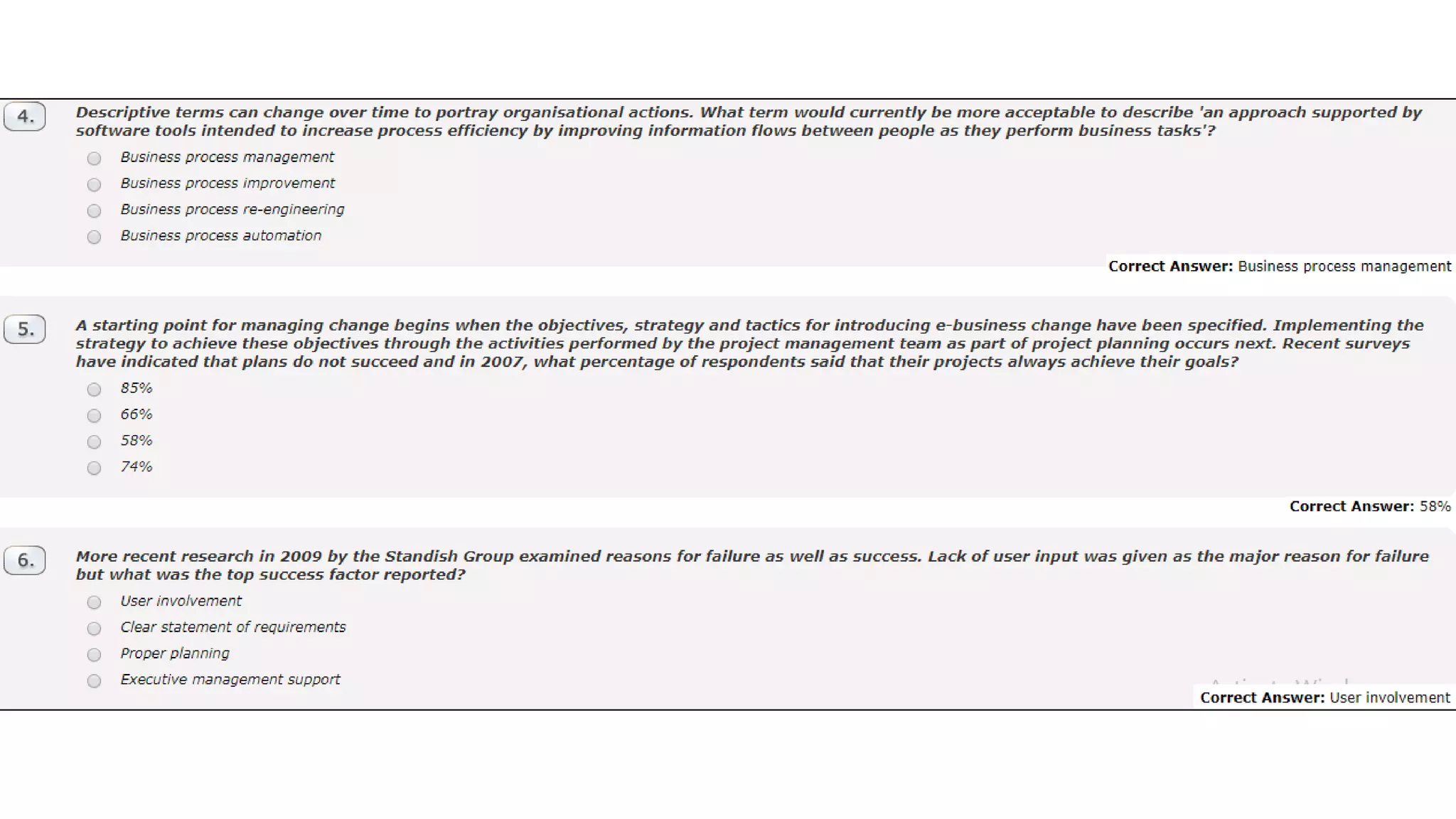
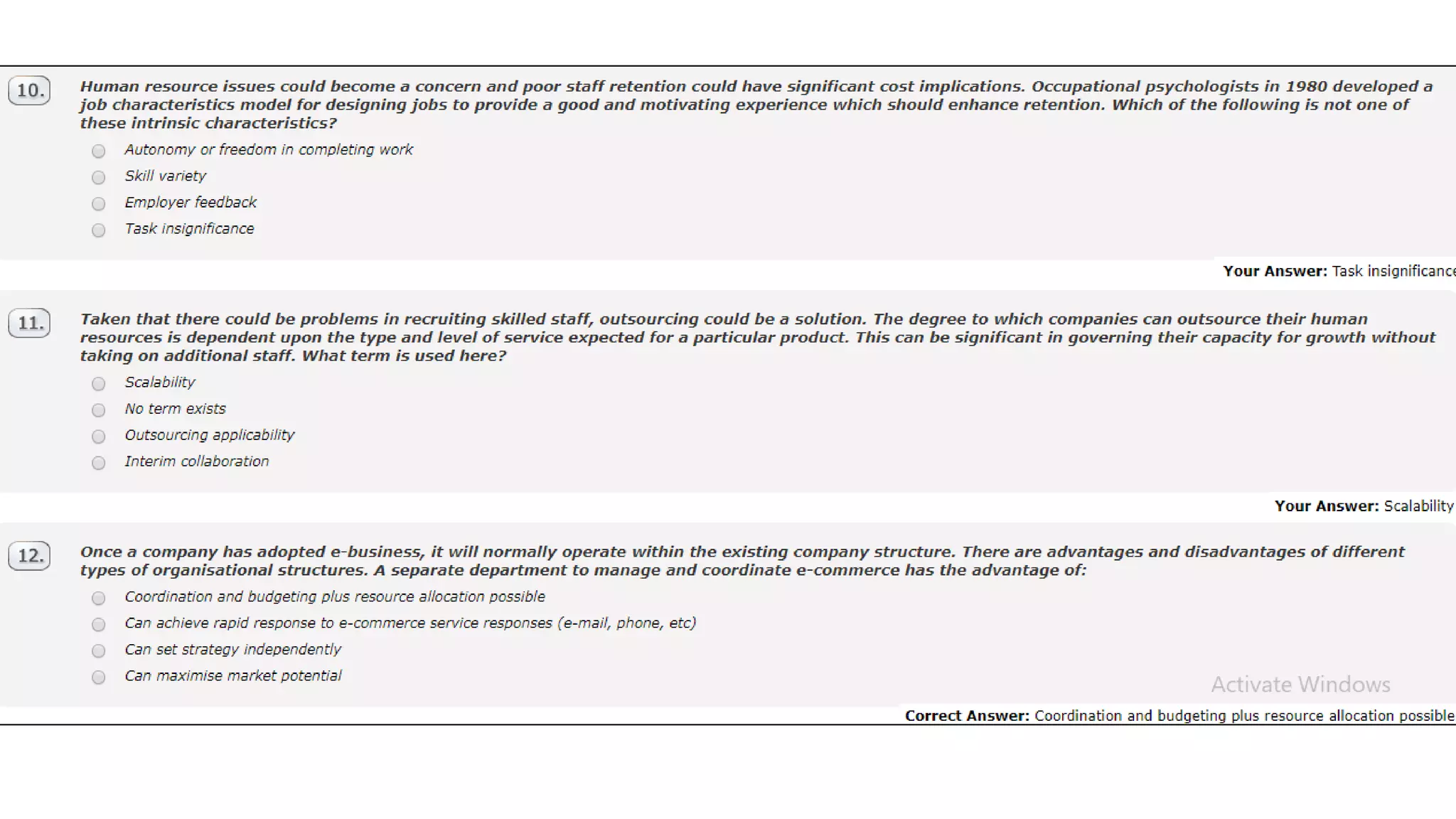
• A useful framework for reviewing an organisation's capabilities to manage e-business
was developed in the 1970s and became known as the 7S strategic framework. The
seven refers to Strategy, Structure, Systems, Staff, Style, Skills and Superordinate.
• Later research in 2005 asked e-commerce managers for their views as to the main
challenges of managing e-commerce within an organisation based on the 7S model.
They were Strategy, Structure, skills & staff.
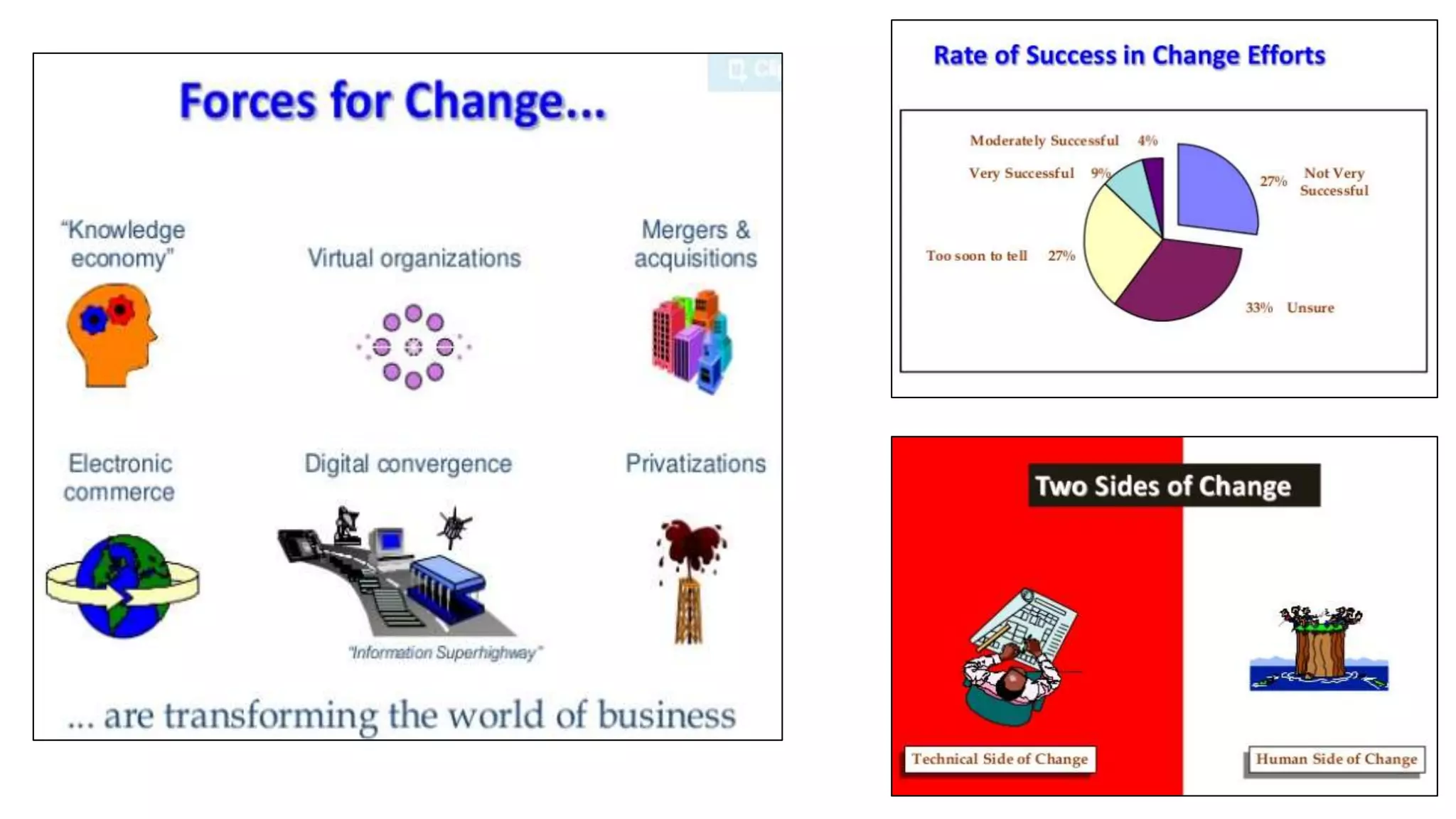
• The two types of change management consist of incremental change and
transformational change.
• In high collectivist cultures, leaders need to emphasize long-term implications of the
change on the wider community.
• In high power distance cultures change tends to be implemented top down.
• A change agent is the individual who helps implement change.
• In feminine cultures leaders need to emphasize the impact of change on quality of life.
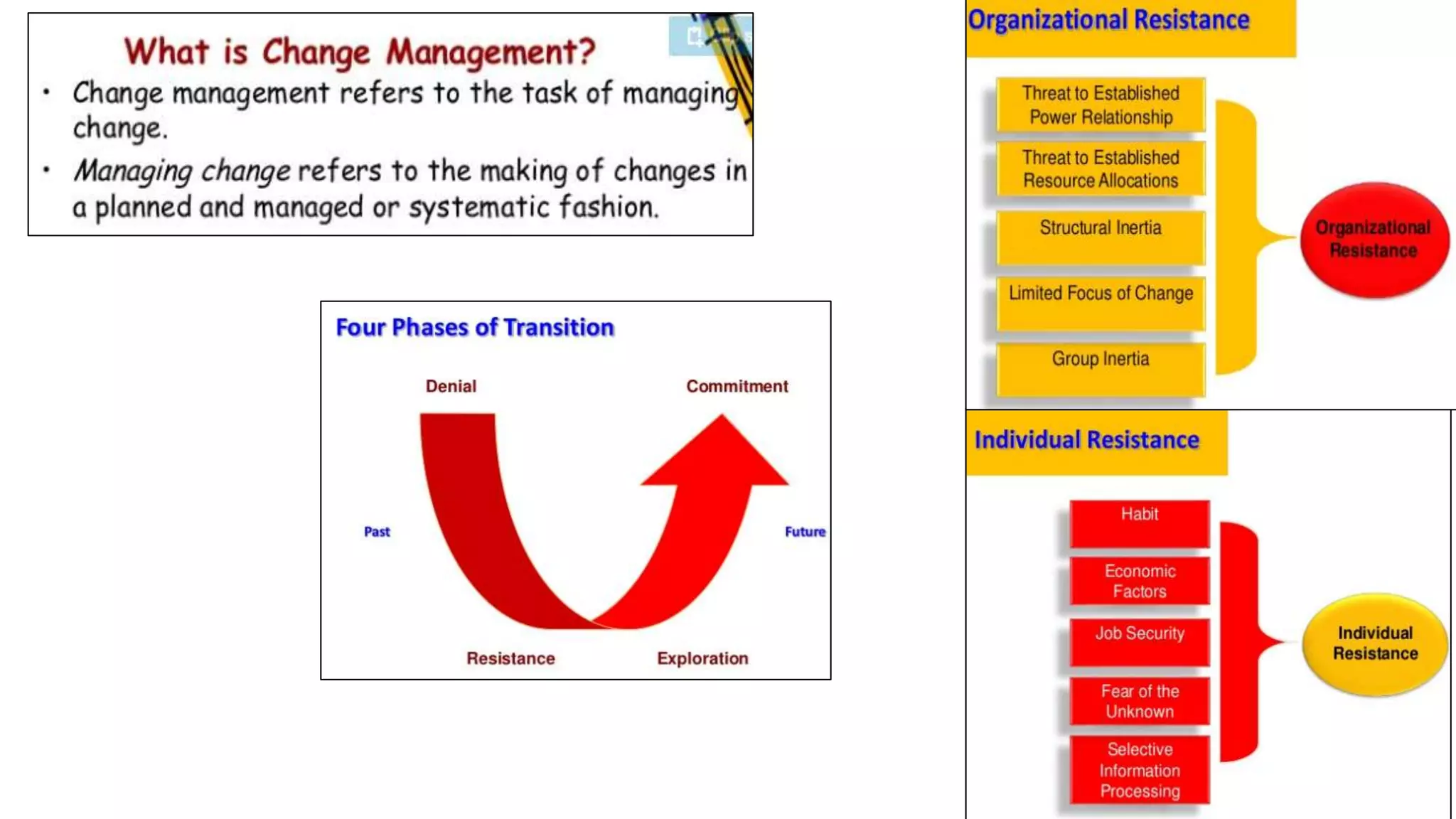
• The three stages of the change process : unfreezing, adjustment, and refreezing.
• The five stages of the coping cycle are (in order):
1. Denial,
2. Defence,
3. Discarding,
4. Adaptation,
5. Internalization.
• Dunphy and Stace (1993) identified four styles of change management.
• Communication is not one of the five stages of the negotiation process.
• Transformational change is often carried out by top down management.
A prototype is an early sample, model, or release of a product built to test a concept or process or to act as a thing to
be replicated or learned from. It is a term used in a variety of contexts, including semantics, design, electronics, and
software programming.
Tacit : Understood or implied without being stated.
Dunphy and Stace Described 4 Styles of Leadership
1. Collaborative Style:
The collaborative leadership style attracts large scale participation from the employees of the organization
in the important decisions related to the future and equally related to the method for implementing
organizational change.
2. Consultative Style:
The Consultative Style of Leaders consult the employees before implementing organizational change by
involving them little in the process of goal setting related to their area of expertise.
3. Directive Style:
The Directive Style of Leadership involves least participation from the employees in the decision-making
process related with the organizational future, instead this kind of leadership uses authority for
implementing vital decisions related to the organizational change.
4. Coercive Style:
This form of leadership exercises coercion or force for implementing organizational change on the
members of the organization either by involving the outside parties or involving the managers/executives in
the process.
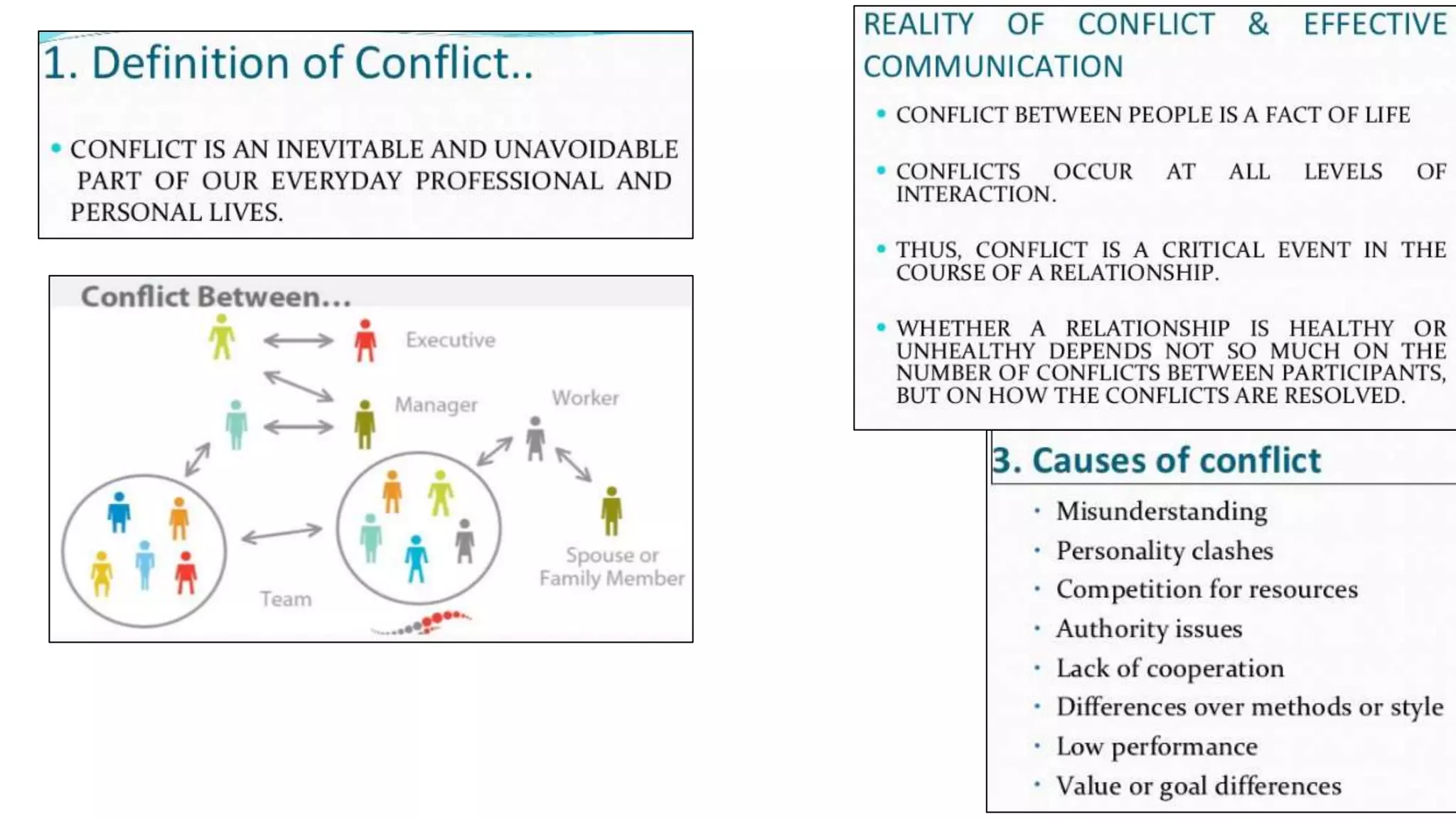
• Constructive conflict is not always harmonious; that's why it's called conflict.
• It's the process not the outcome that distinguishes constructive from destructive
conflict.
• Constructive conflict attempts to de-escalate the conflict, place the goal on finding a
satisfactory solution for all sides, and focus on cooperating not competing.
• Destructive conflict escalates the competitive clashes and attempts to win a victory at
others expense.
• How long the anger lasts and how intense it is are the two variables that separate
constructive and destructive anger.
• Anger of low intensity and short duration is constructive;
• Anger that lasts a long time and is very intense is destructive.
• Anger in itself is not either constructive or destructive until these two variables are
considered.
• Conflict involves interconnected parties. The behavior of one party must have
consequences for the other party.
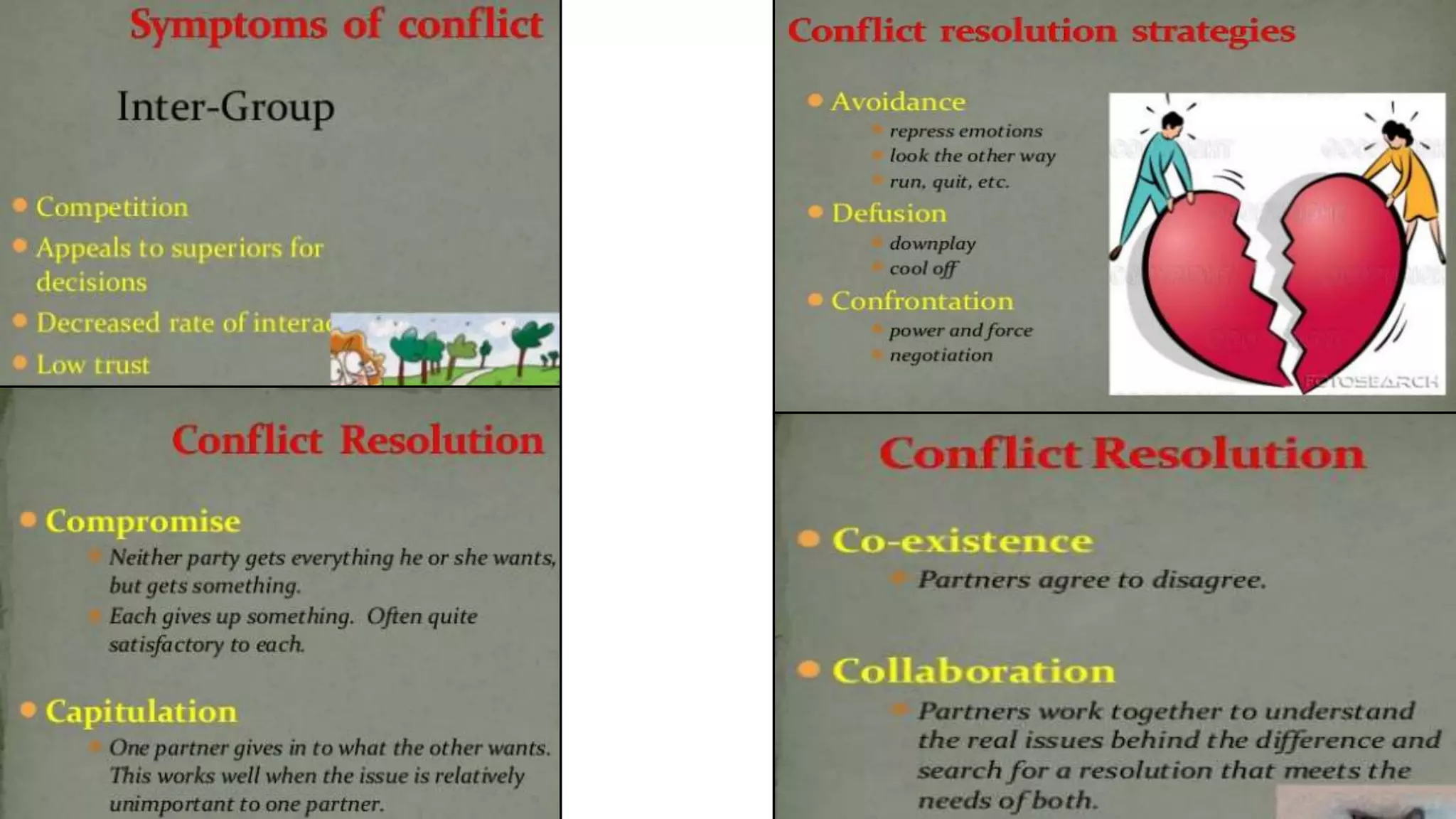
• Collaborating should be the primary
conflict management strategy, but different
strategies will become necessary when
dealing with other cultures.
• Collectivist cultures typically favour
accommodating not confronting directly.
• Assertiveness may be perceived as too
aggressive by some cultures.
• The French encourage, even thrive on
disagreement, so disagreement isn't
something to avoid in every cross-cultural
situation.
Only stonewalling is a way of explicitly
avoiding conflict.
Competing encourages conflict, compromising
gives in before conflict can emerge and
autonomy is the individual’s right to assert
themselves in a conflict.
• Smoothing attempts to soften the negative feelings that often accompany intense conflicts.
• It is a collaborating tactic that may need to be used before an actual confrontation on issues takes
place.
• Stonewalling is a refusal to communicate or cooperate.
• Such behaviour occurs in situations such as marriage guidance counseling, diplomatic negotiations, politics and
legal cases.
• Body language may indicate and reinforce this by avoiding contact and engagement with the other party.
• People use deflection in a conversation in order to render a conversation pointless and insignificant.
• Tactics in stonewalling include giving sparse, vague responses, refusing to answer questions, or responding to
questions with additional questions.
• In most cases, stonewalling is used to create a delay, rather than to put the conversation off forever.
A brute force attack is a trial-and-error method used to obtain
information such as a user password or personal identification
number (PIN).
In a brute force attack, automated software is used to generate a
large number of consecutive guesses as to the value of the desired
data.
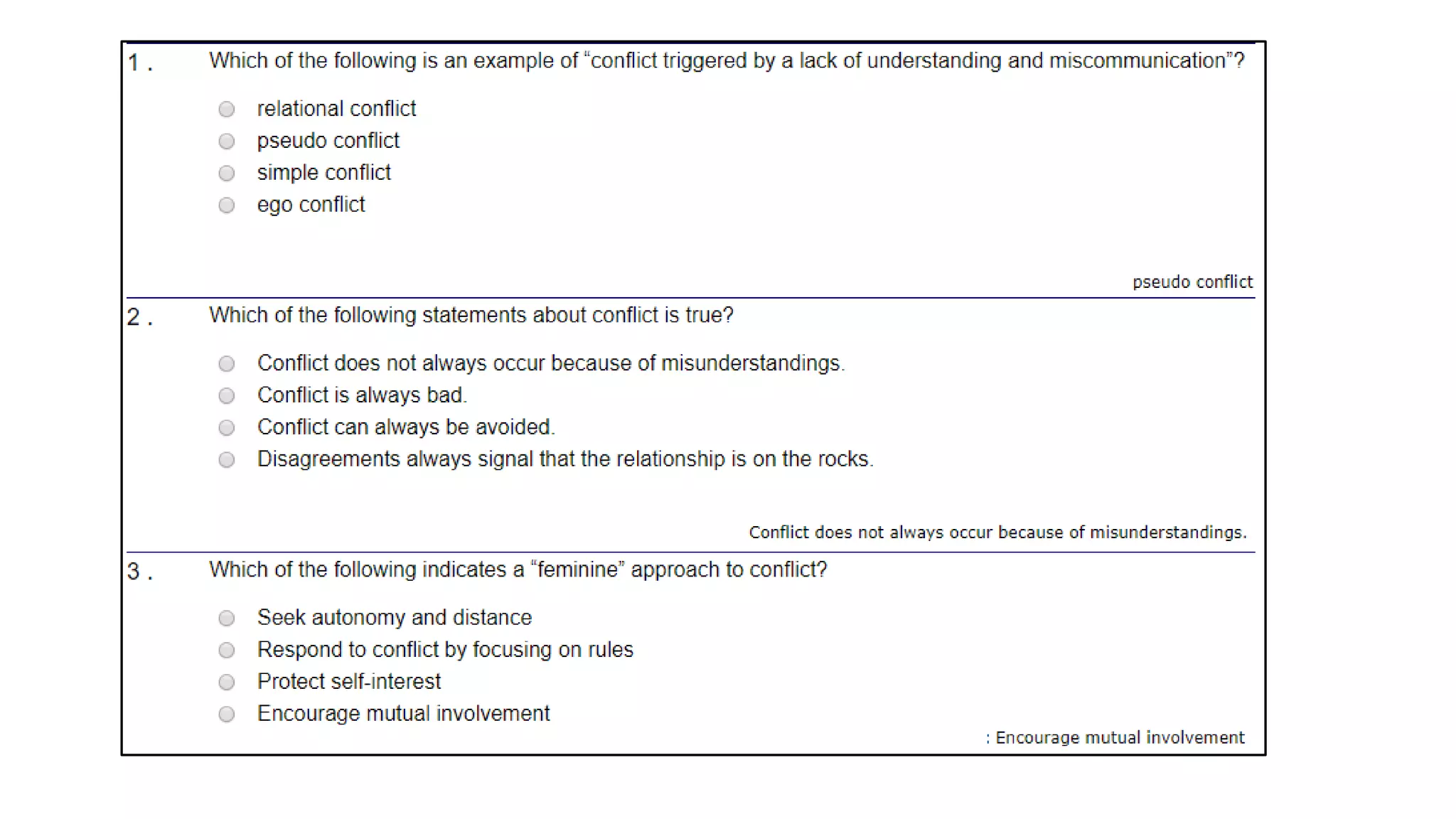
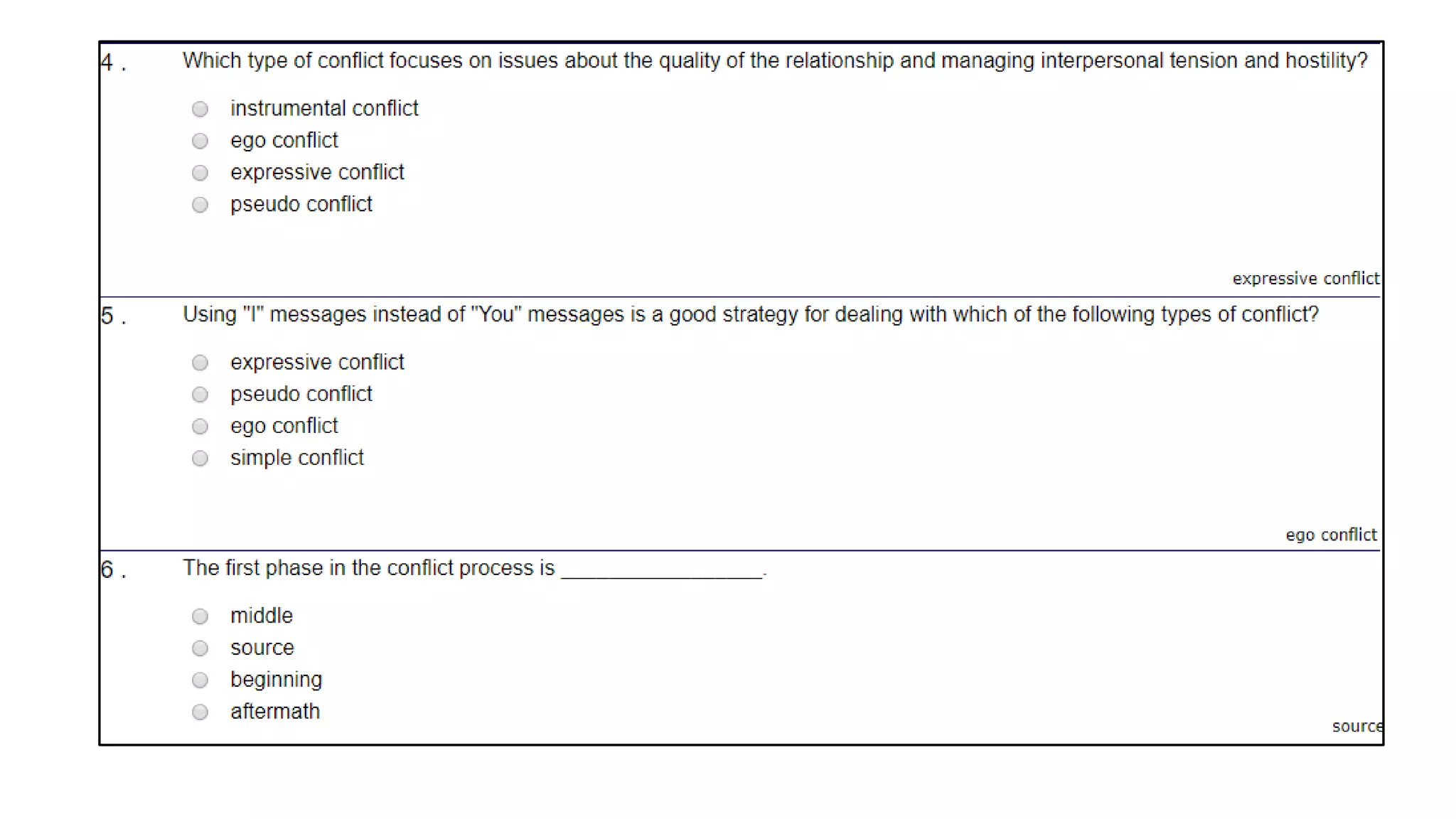
• An example of “conflict triggered by a lack of understanding and miscommunication” : Pseudo
Conflict
• Ego conflict is based on personal differences.
• Expressive conflict focuses on issues about the quality of the relationship and managing
interpersonal tension and hostility.
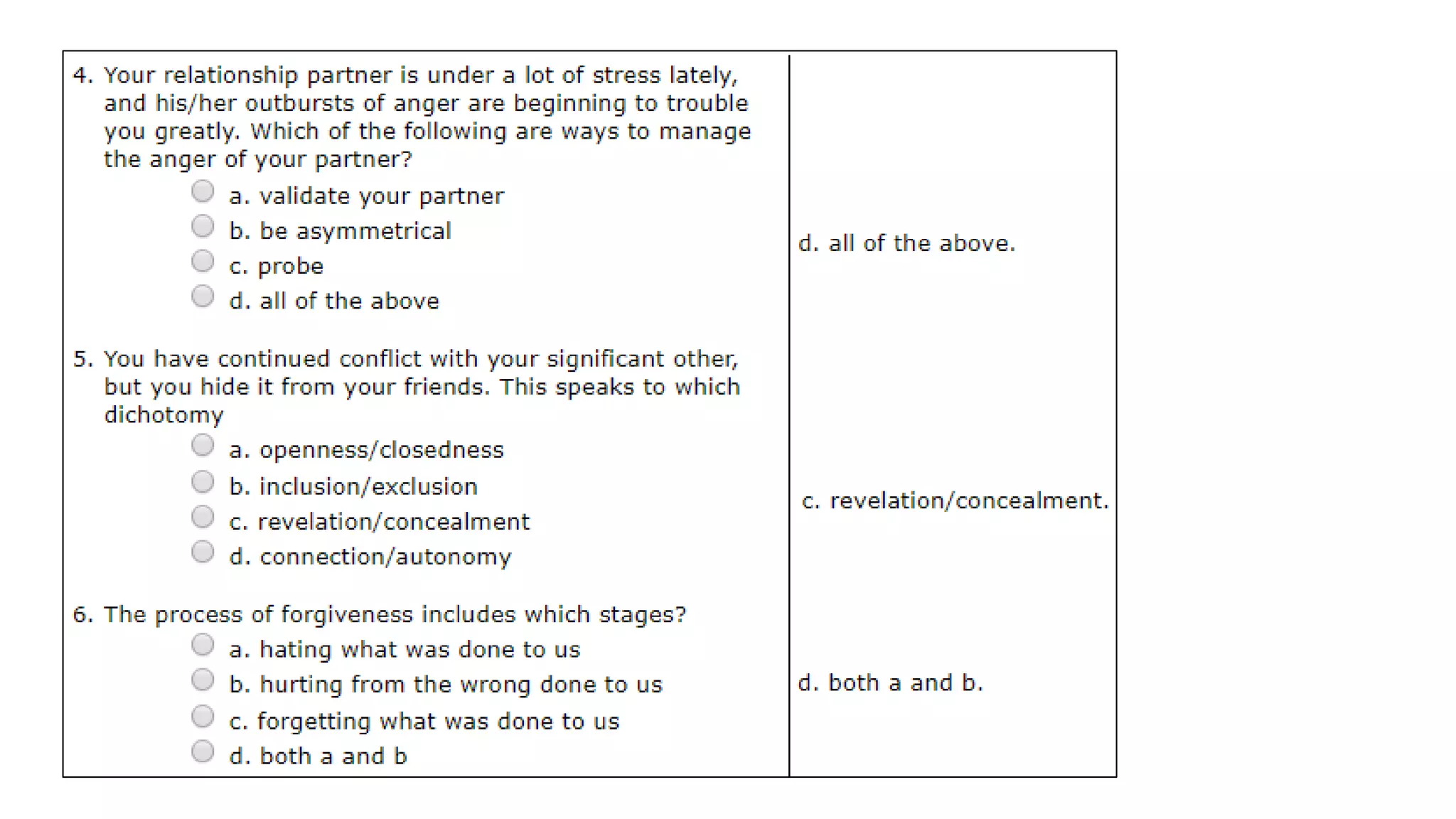
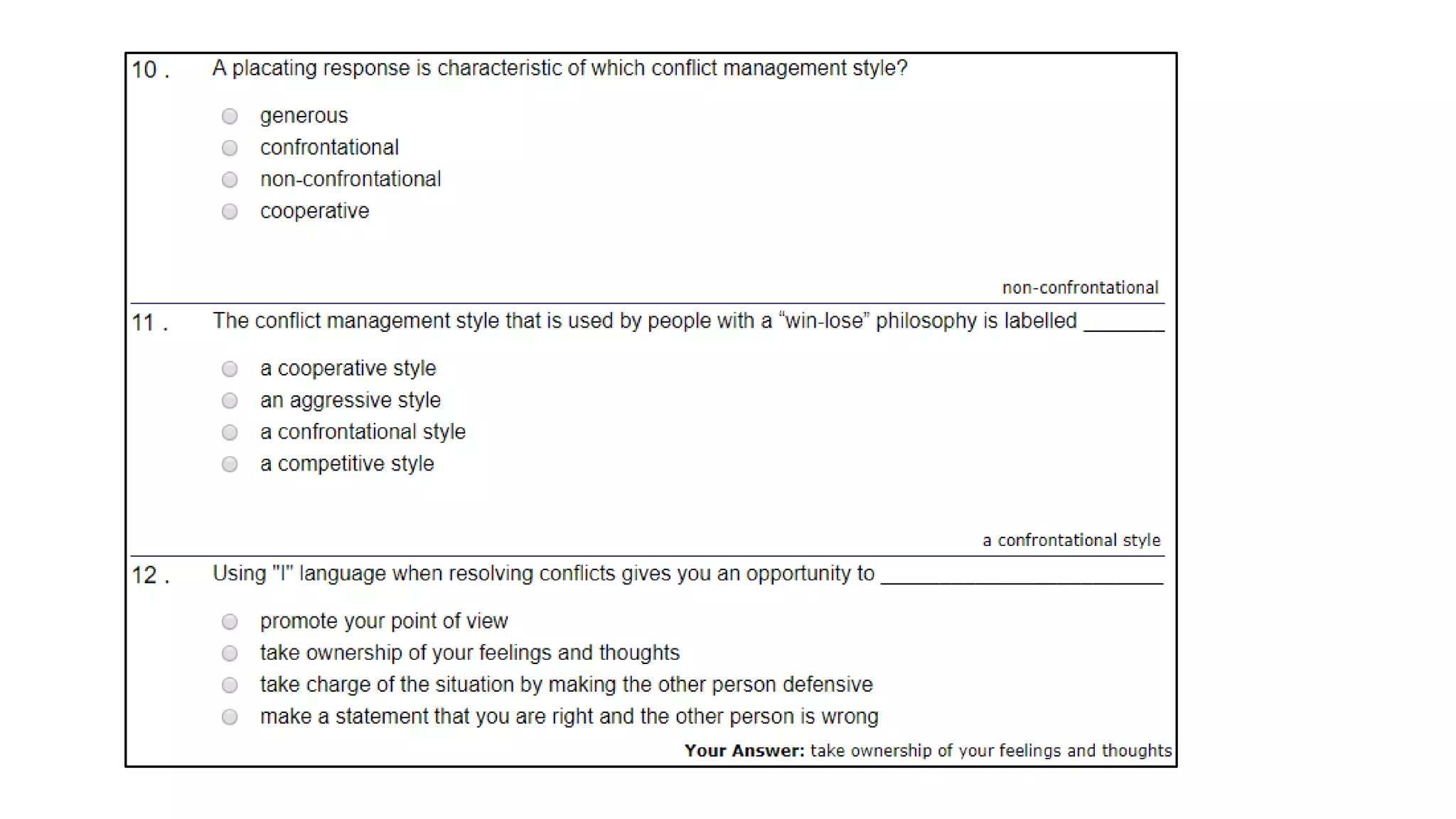
• A placating response is characteristic of a non-confrontational conflict style.
(Placating means : intended to make someone less angry or hostile)
• The conflict management style that is used by people with a win-lose philosophy is
confrontational style.
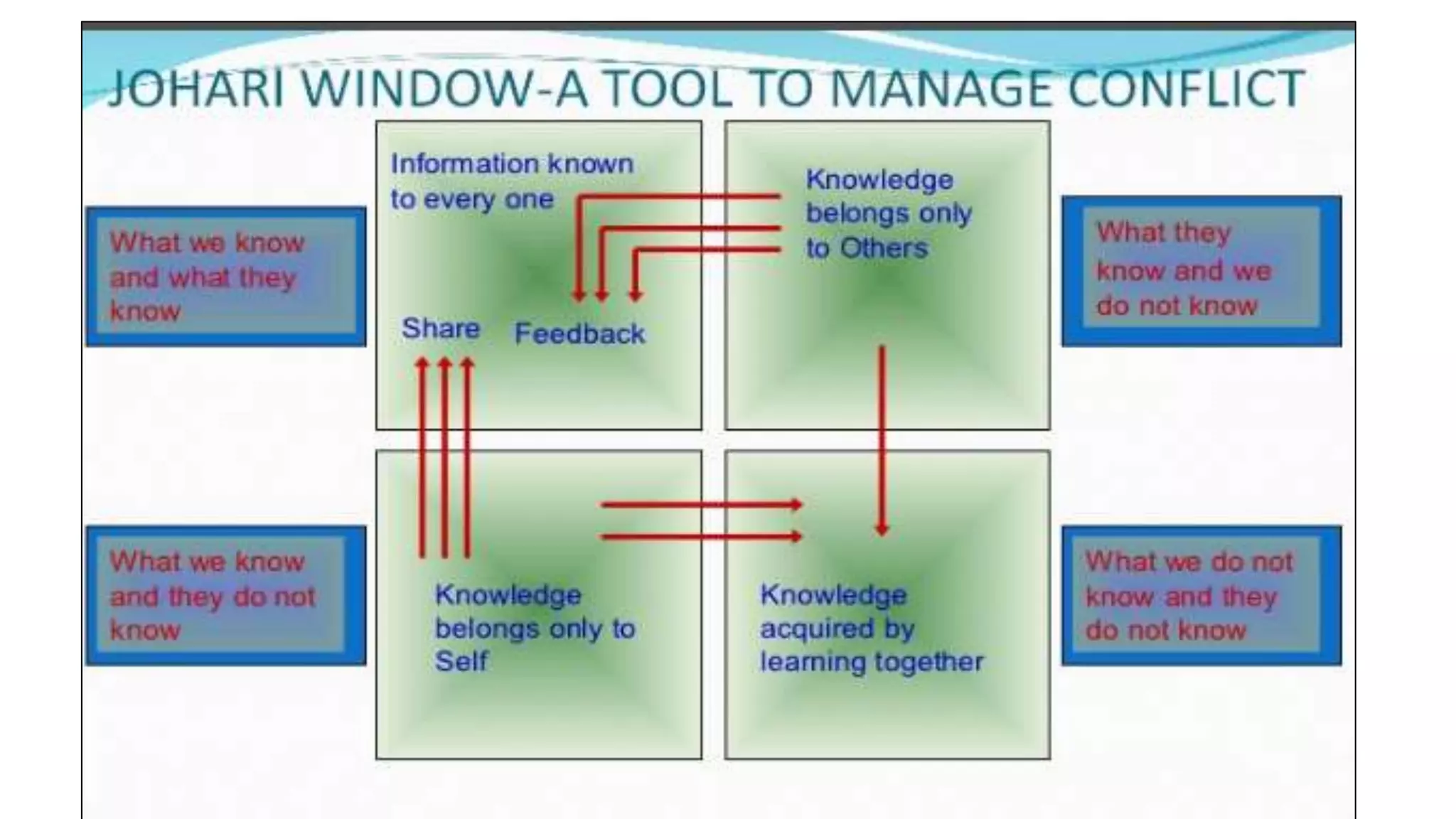
first step is describing how
you view the situation
• Functional forms of conflict support the goals of the group and improve its performance.
• Task conflict (not functional Conflict) relates to the content and goals of the work.
• Communication variables include :
1. semantic difficulties,
2. misunderstandings, and
3. noise in communication channels.
• Distributive bargaining presumes zero-sum conditions.
• In negotiating, the target point (not goal point) is the point that both parties would like to
achieve.
• Integrative bargaining assumes there are one or more settlements that can create a win-win
situation.
• The negotiation process consists of (1) preparation and planning; (2) definition of ground
rules; (3) clarification and justification; (4) bargaining and problem solving; and (5)
closure and implementation. (No feedback / Evaluation).
• Stereotypes about women and negotiation, research supports that women demonstrate less
confidence in anticipation of negotiating.
Change & Conflict management

Change & Conflict management

  • 1.
  • 16.
  • 35.
    • A usefulframework for reviewing an organisation's capabilities to manage e-business was developed in the 1970s and became known as the 7S strategic framework. The seven refers to Strategy, Structure, Systems, Staff, Style, Skills and Superordinate. • Later research in 2005 asked e-commerce managers for their views as to the main challenges of managing e-commerce within an organisation based on the 7S model. They were Strategy, Structure, skills & staff. • The two types of change management consist of incremental change and transformational change. • In high collectivist cultures, leaders need to emphasize long-term implications of the change on the wider community. • In high power distance cultures change tends to be implemented top down. • A change agent is the individual who helps implement change. • In feminine cultures leaders need to emphasize the impact of change on quality of life.
  • 36.
    • The threestages of the change process : unfreezing, adjustment, and refreezing. • The five stages of the coping cycle are (in order): 1. Denial, 2. Defence, 3. Discarding, 4. Adaptation, 5. Internalization. • Dunphy and Stace (1993) identified four styles of change management. • Communication is not one of the five stages of the negotiation process. • Transformational change is often carried out by top down management.
  • 39.
    A prototype isan early sample, model, or release of a product built to test a concept or process or to act as a thing to be replicated or learned from. It is a term used in a variety of contexts, including semantics, design, electronics, and software programming.
  • 41.
    Tacit : Understoodor implied without being stated.
  • 42.
    Dunphy and StaceDescribed 4 Styles of Leadership 1. Collaborative Style: The collaborative leadership style attracts large scale participation from the employees of the organization in the important decisions related to the future and equally related to the method for implementing organizational change. 2. Consultative Style: The Consultative Style of Leaders consult the employees before implementing organizational change by involving them little in the process of goal setting related to their area of expertise. 3. Directive Style: The Directive Style of Leadership involves least participation from the employees in the decision-making process related with the organizational future, instead this kind of leadership uses authority for implementing vital decisions related to the organizational change. 4. Coercive Style: This form of leadership exercises coercion or force for implementing organizational change on the members of the organization either by involving the outside parties or involving the managers/executives in the process.
  • 46.
    • Constructive conflictis not always harmonious; that's why it's called conflict. • It's the process not the outcome that distinguishes constructive from destructive conflict. • Constructive conflict attempts to de-escalate the conflict, place the goal on finding a satisfactory solution for all sides, and focus on cooperating not competing. • Destructive conflict escalates the competitive clashes and attempts to win a victory at others expense. • How long the anger lasts and how intense it is are the two variables that separate constructive and destructive anger. • Anger of low intensity and short duration is constructive; • Anger that lasts a long time and is very intense is destructive. • Anger in itself is not either constructive or destructive until these two variables are considered. • Conflict involves interconnected parties. The behavior of one party must have consequences for the other party.
  • 49.
    • Collaborating shouldbe the primary conflict management strategy, but different strategies will become necessary when dealing with other cultures. • Collectivist cultures typically favour accommodating not confronting directly. • Assertiveness may be perceived as too aggressive by some cultures. • The French encourage, even thrive on disagreement, so disagreement isn't something to avoid in every cross-cultural situation. Only stonewalling is a way of explicitly avoiding conflict. Competing encourages conflict, compromising gives in before conflict can emerge and autonomy is the individual’s right to assert themselves in a conflict.
  • 50.
    • Smoothing attemptsto soften the negative feelings that often accompany intense conflicts. • It is a collaborating tactic that may need to be used before an actual confrontation on issues takes place. • Stonewalling is a refusal to communicate or cooperate. • Such behaviour occurs in situations such as marriage guidance counseling, diplomatic negotiations, politics and legal cases. • Body language may indicate and reinforce this by avoiding contact and engagement with the other party. • People use deflection in a conversation in order to render a conversation pointless and insignificant. • Tactics in stonewalling include giving sparse, vague responses, refusing to answer questions, or responding to questions with additional questions. • In most cases, stonewalling is used to create a delay, rather than to put the conversation off forever.
  • 53.
    A brute forceattack is a trial-and-error method used to obtain information such as a user password or personal identification number (PIN). In a brute force attack, automated software is used to generate a large number of consecutive guesses as to the value of the desired data. • An example of “conflict triggered by a lack of understanding and miscommunication” : Pseudo Conflict • Ego conflict is based on personal differences. • Expressive conflict focuses on issues about the quality of the relationship and managing interpersonal tension and hostility. • A placating response is characteristic of a non-confrontational conflict style. (Placating means : intended to make someone less angry or hostile) • The conflict management style that is used by people with a win-lose philosophy is confrontational style.
  • 58.
    first step isdescribing how you view the situation
  • 60.
    • Functional formsof conflict support the goals of the group and improve its performance. • Task conflict (not functional Conflict) relates to the content and goals of the work. • Communication variables include : 1. semantic difficulties, 2. misunderstandings, and 3. noise in communication channels. • Distributive bargaining presumes zero-sum conditions. • In negotiating, the target point (not goal point) is the point that both parties would like to achieve. • Integrative bargaining assumes there are one or more settlements that can create a win-win situation. • The negotiation process consists of (1) preparation and planning; (2) definition of ground rules; (3) clarification and justification; (4) bargaining and problem solving; and (5) closure and implementation. (No feedback / Evaluation). • Stereotypes about women and negotiation, research supports that women demonstrate less confidence in anticipation of negotiating.