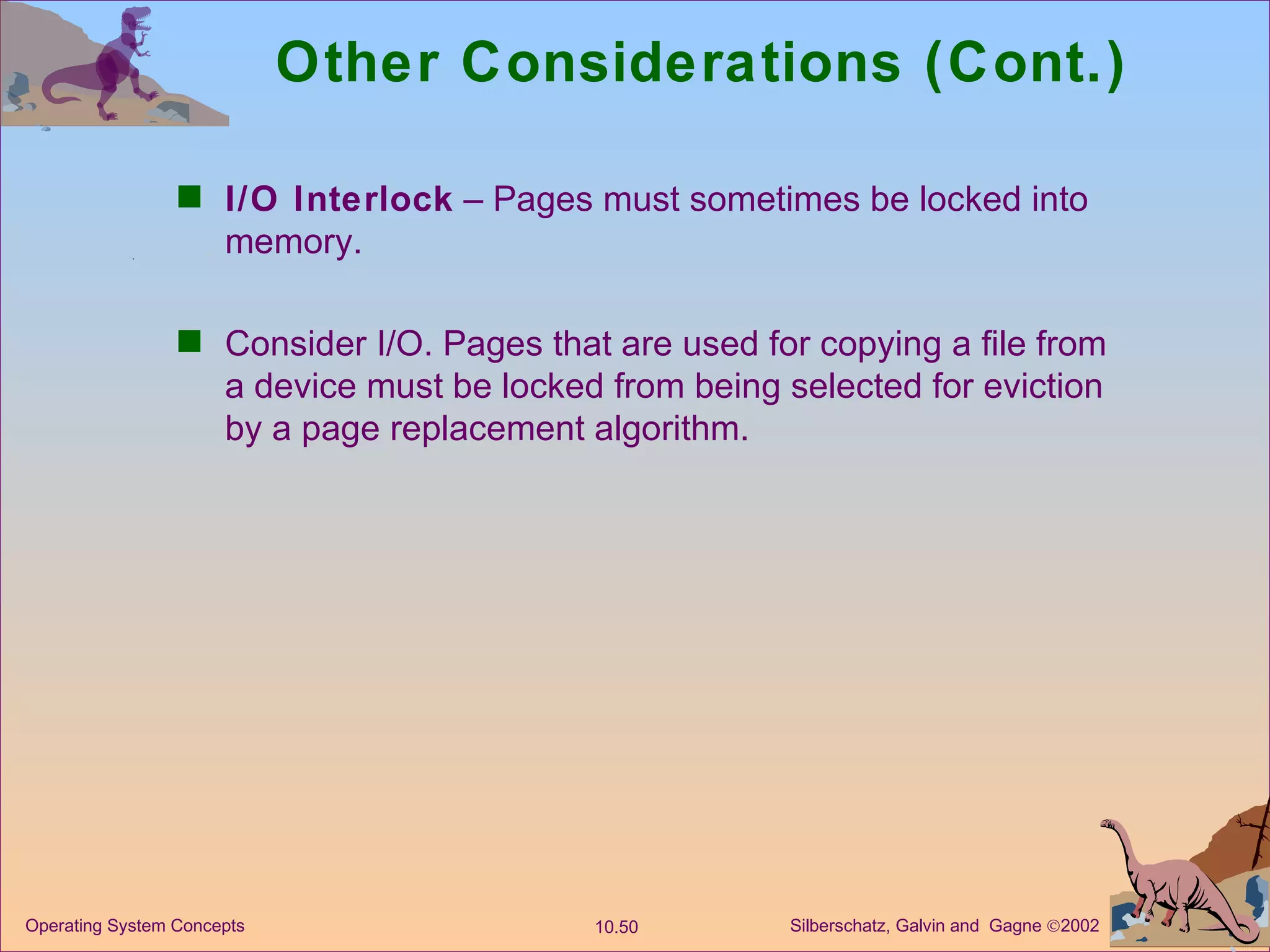
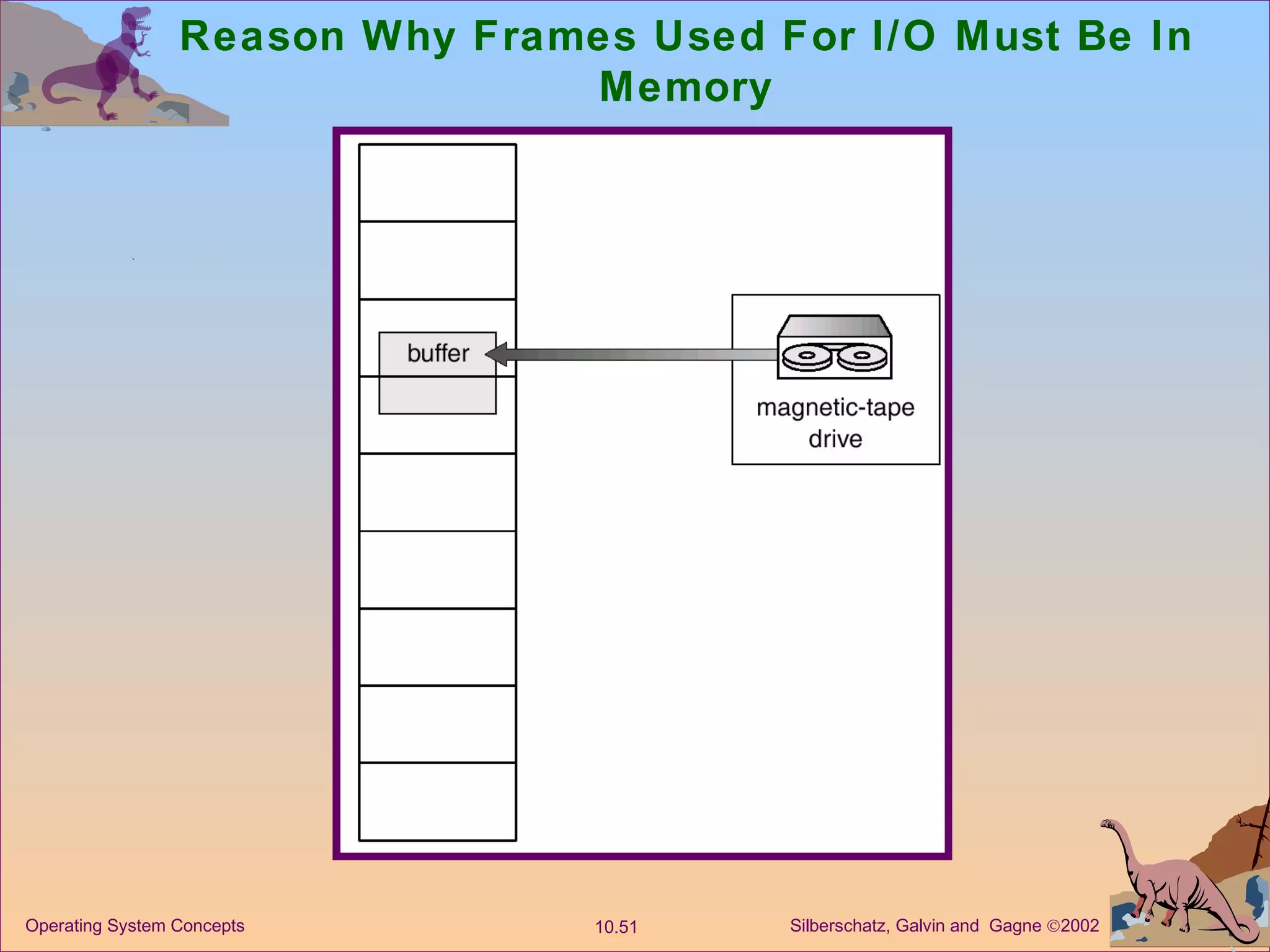
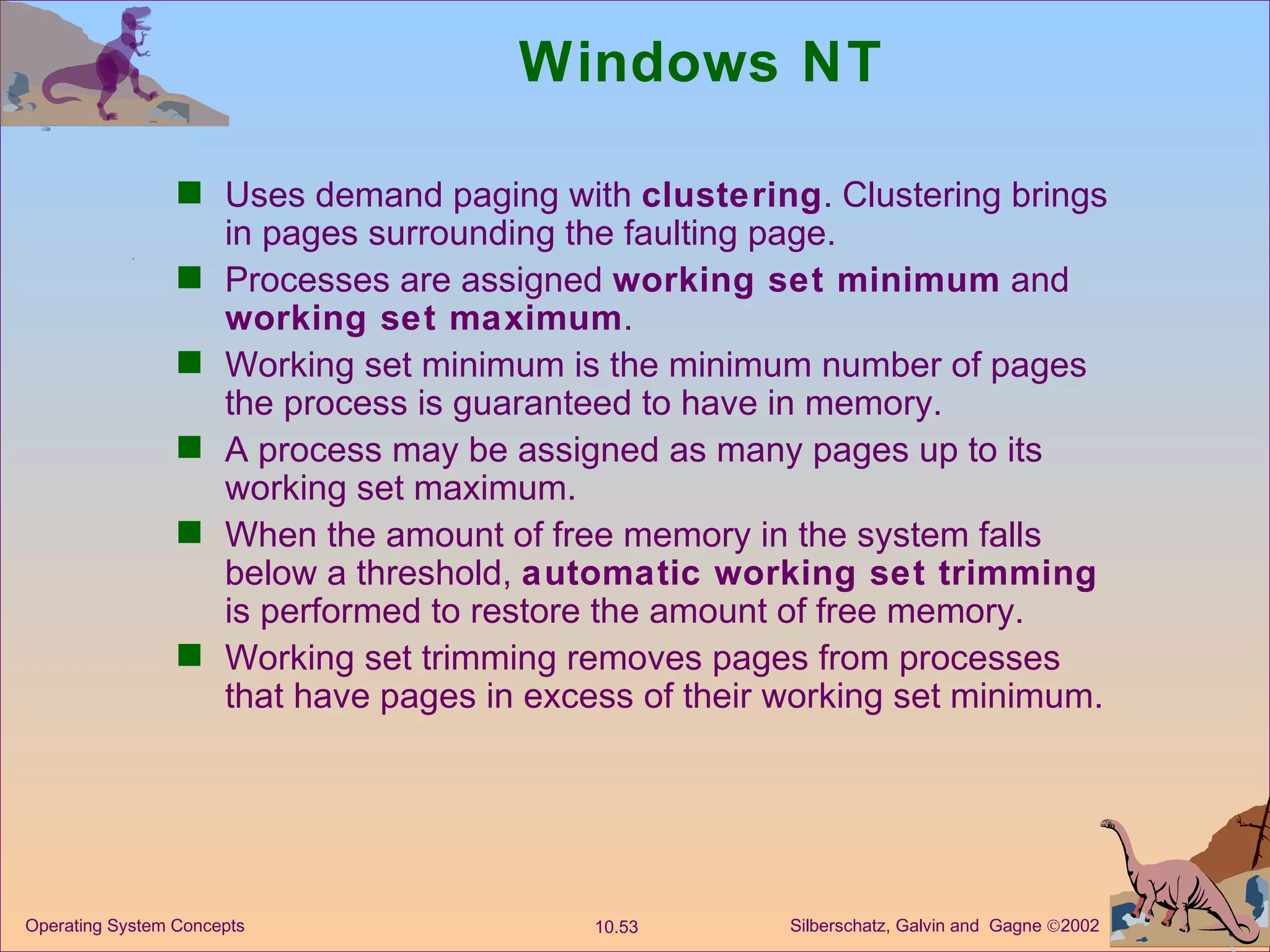
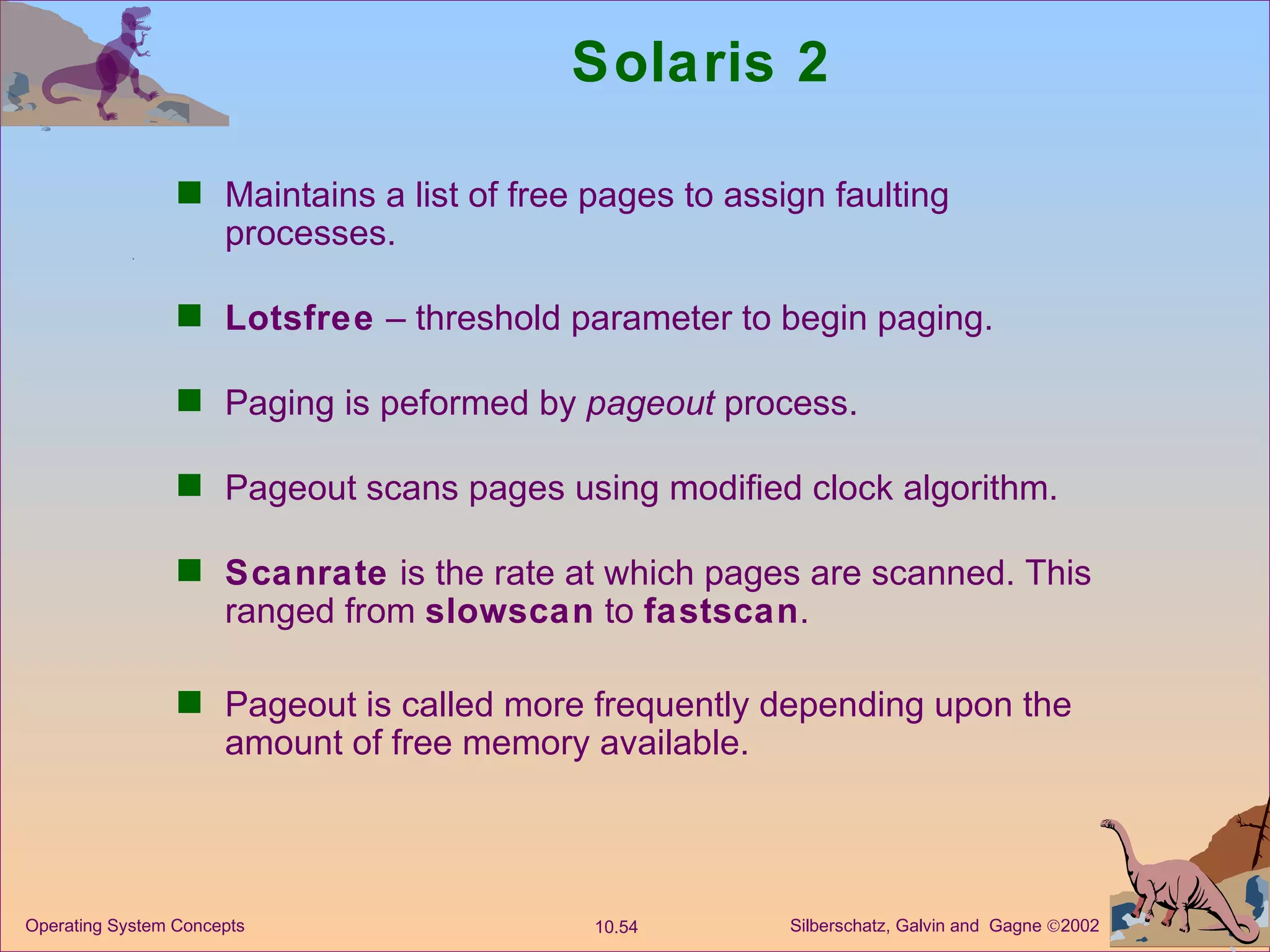
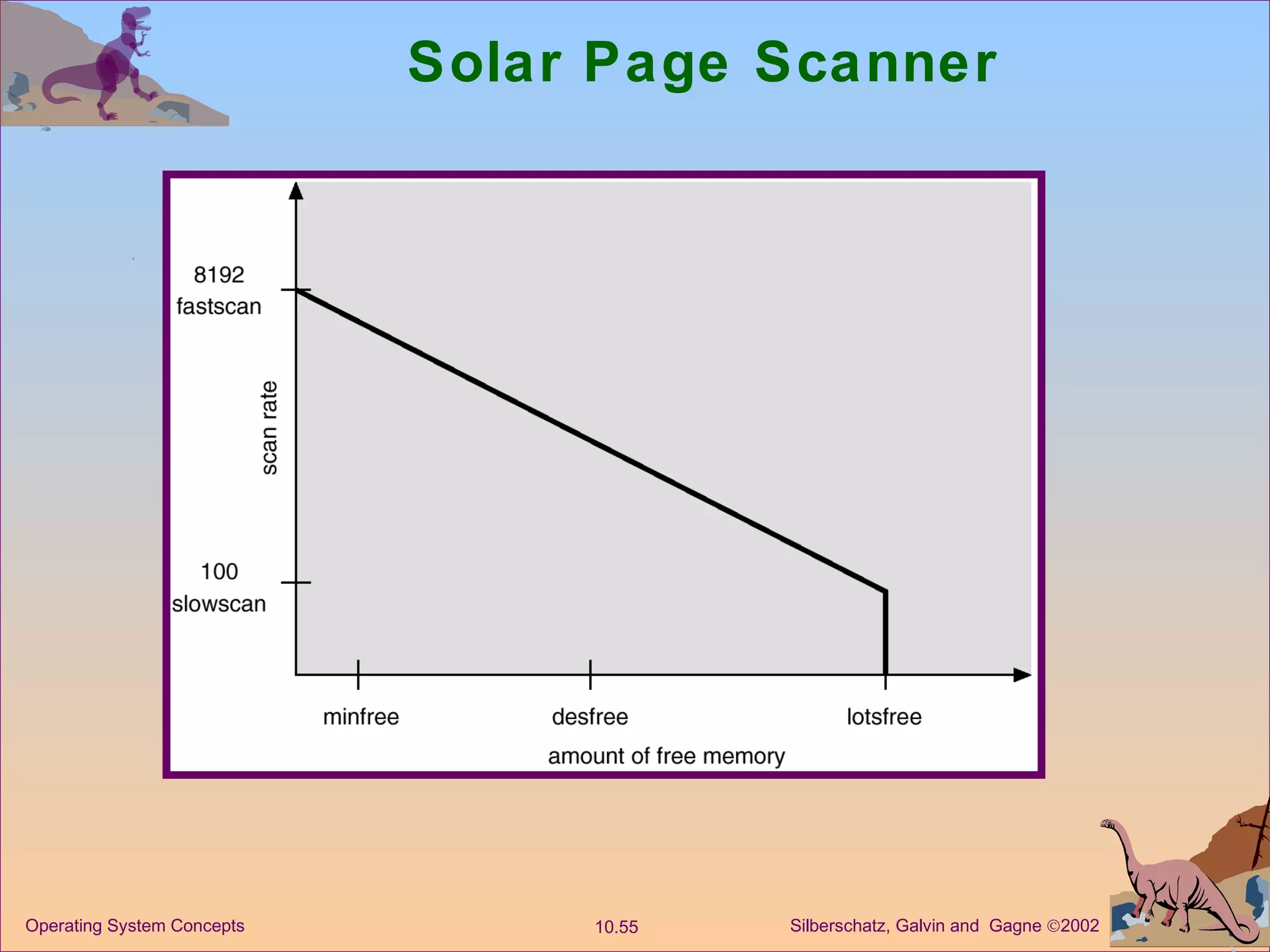
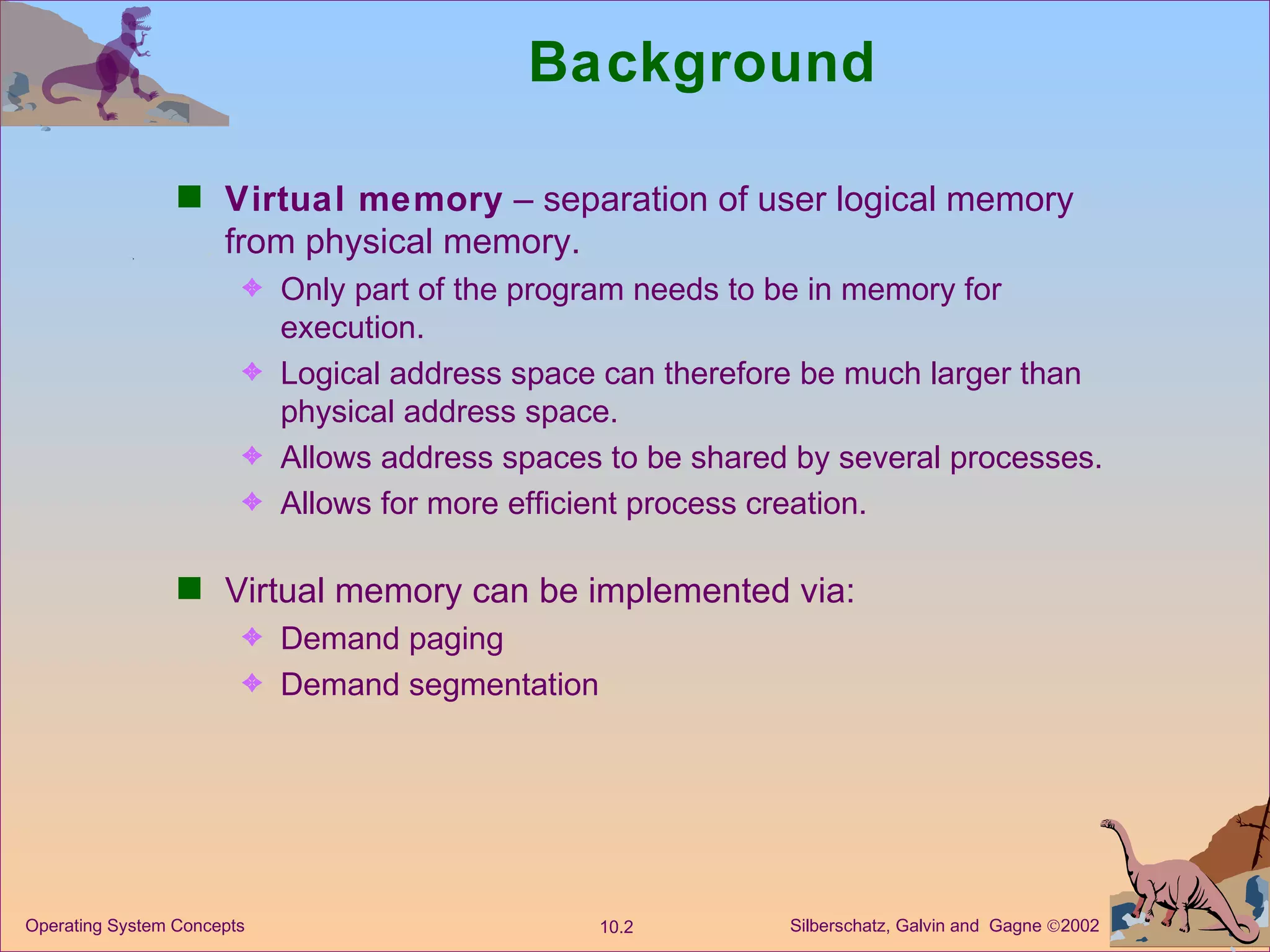
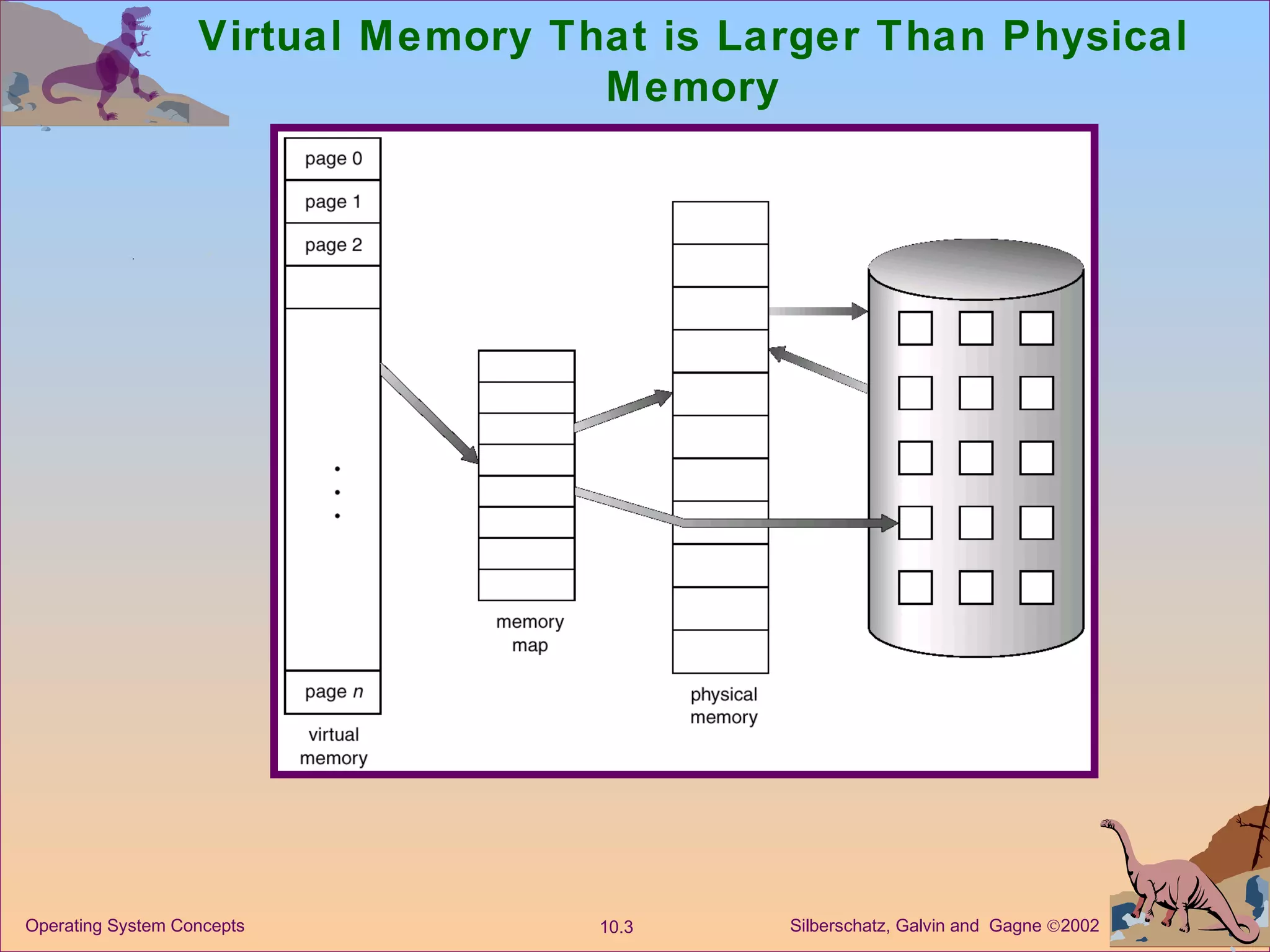
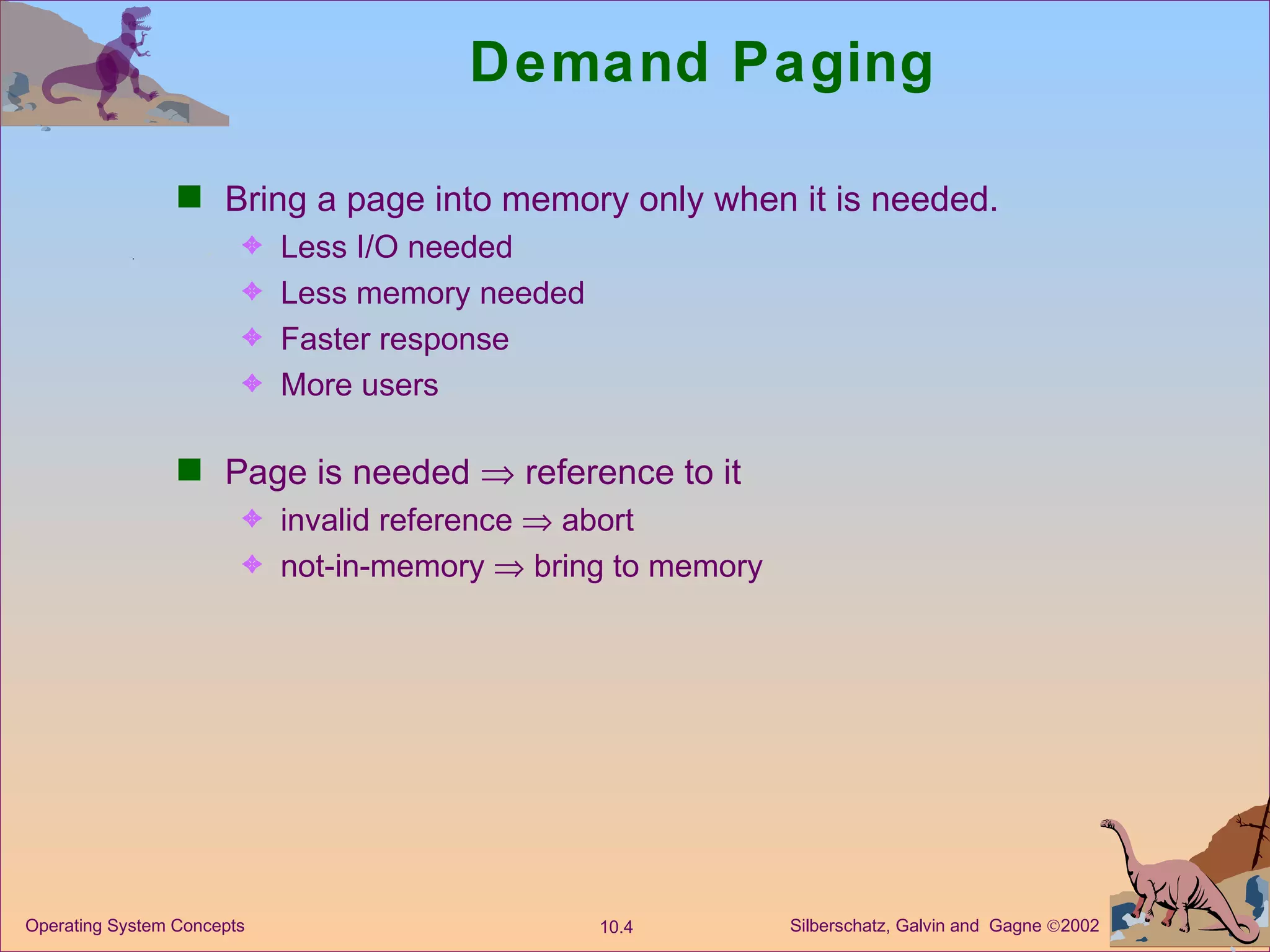
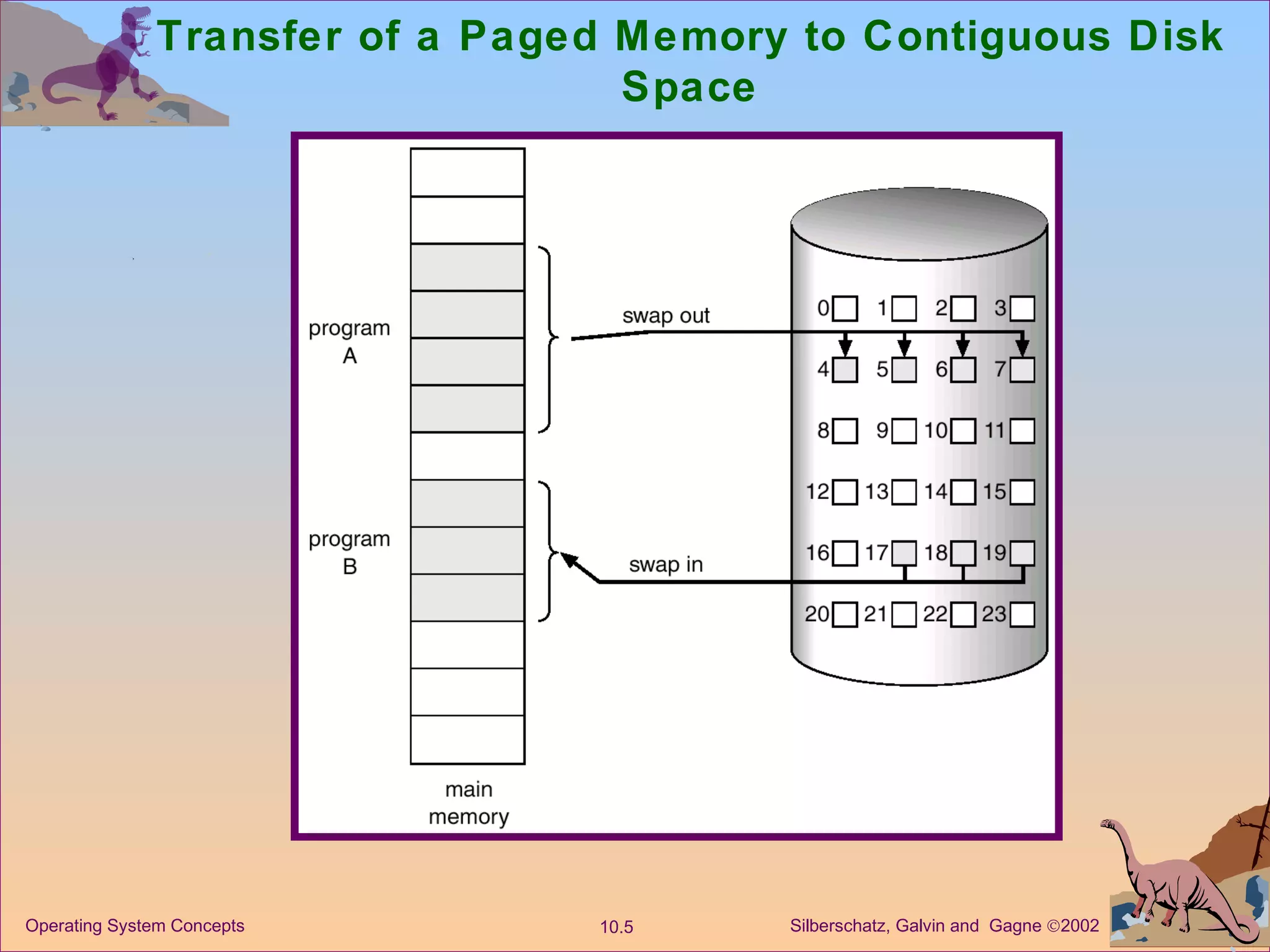
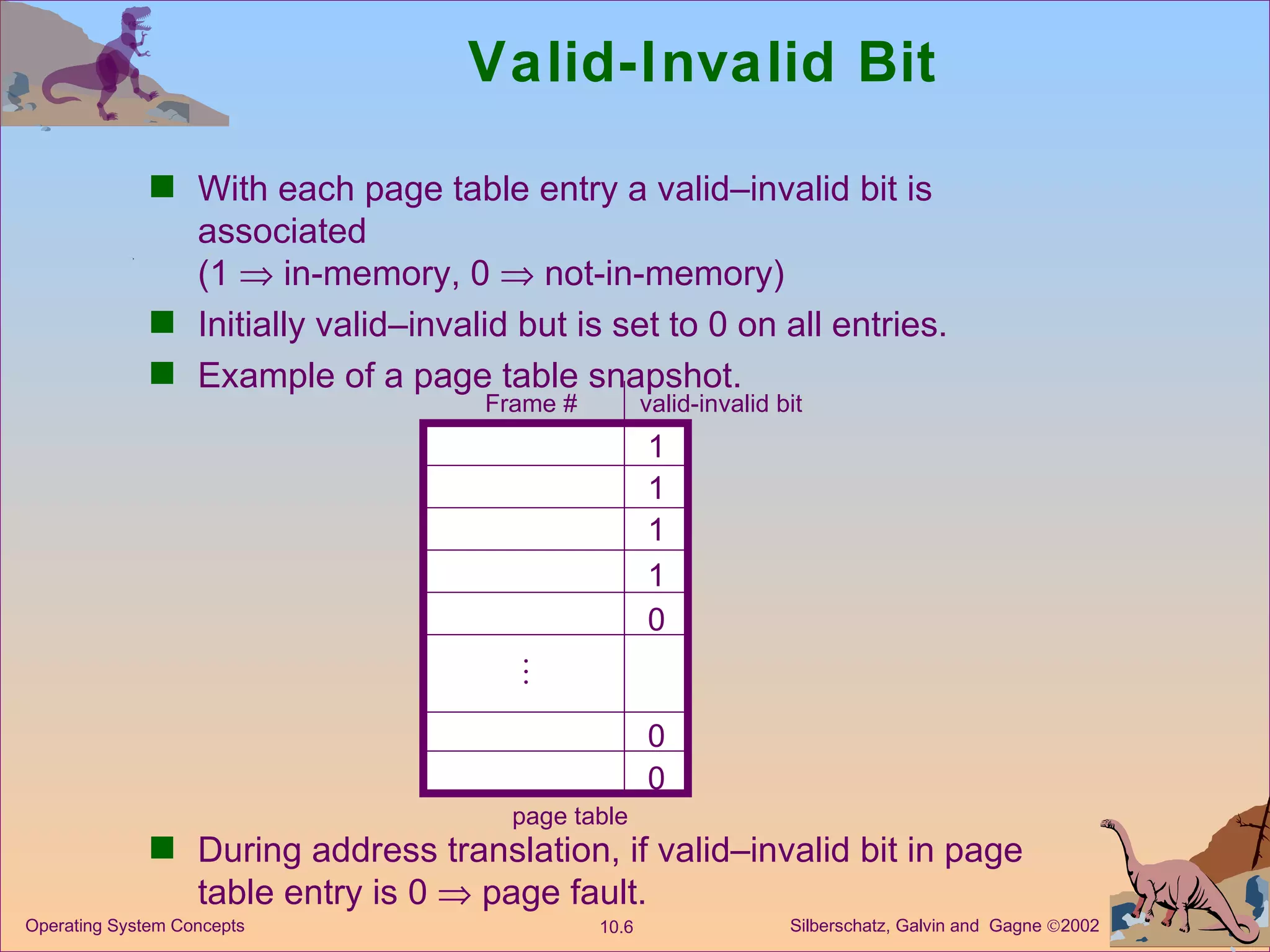
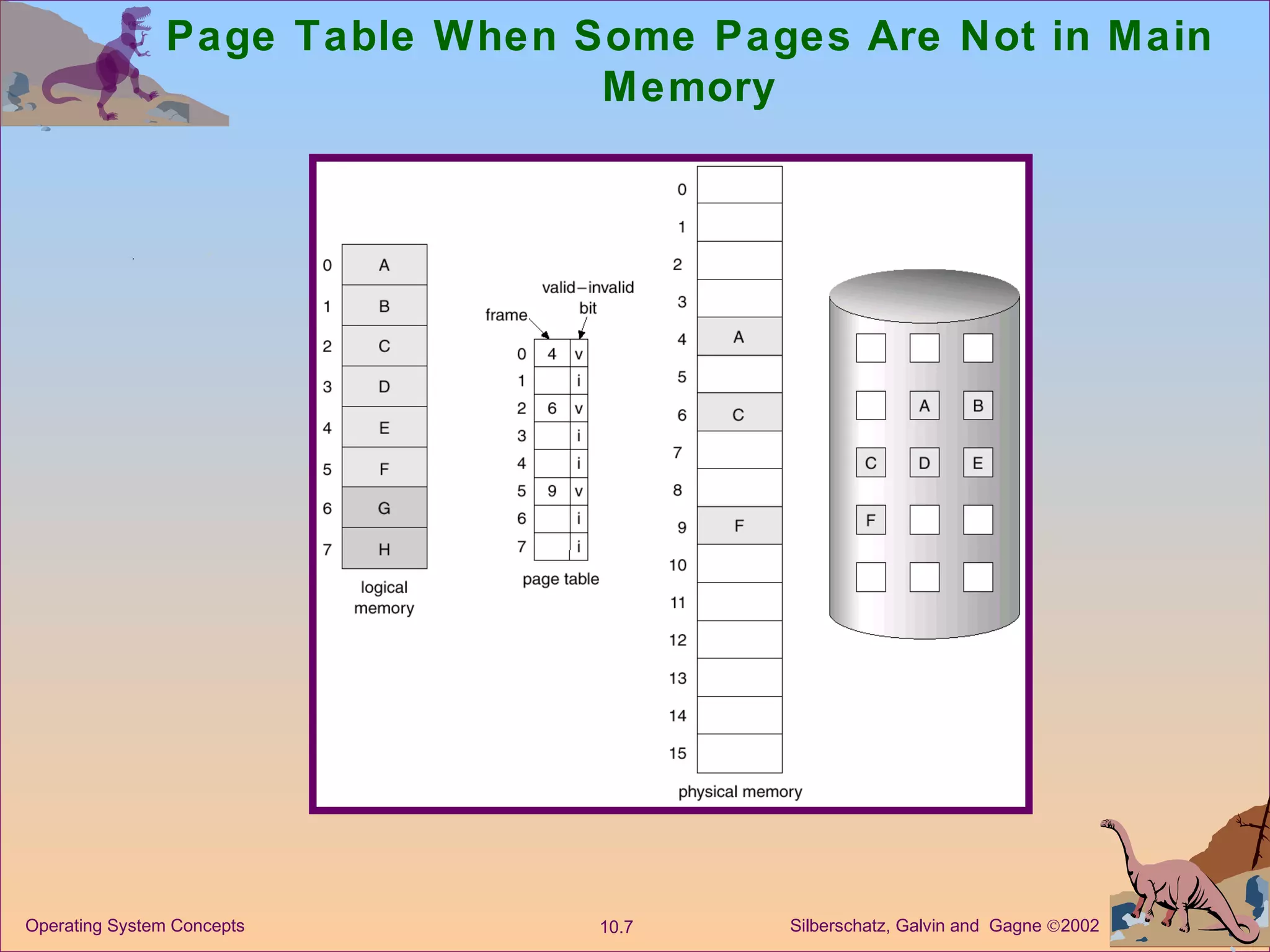
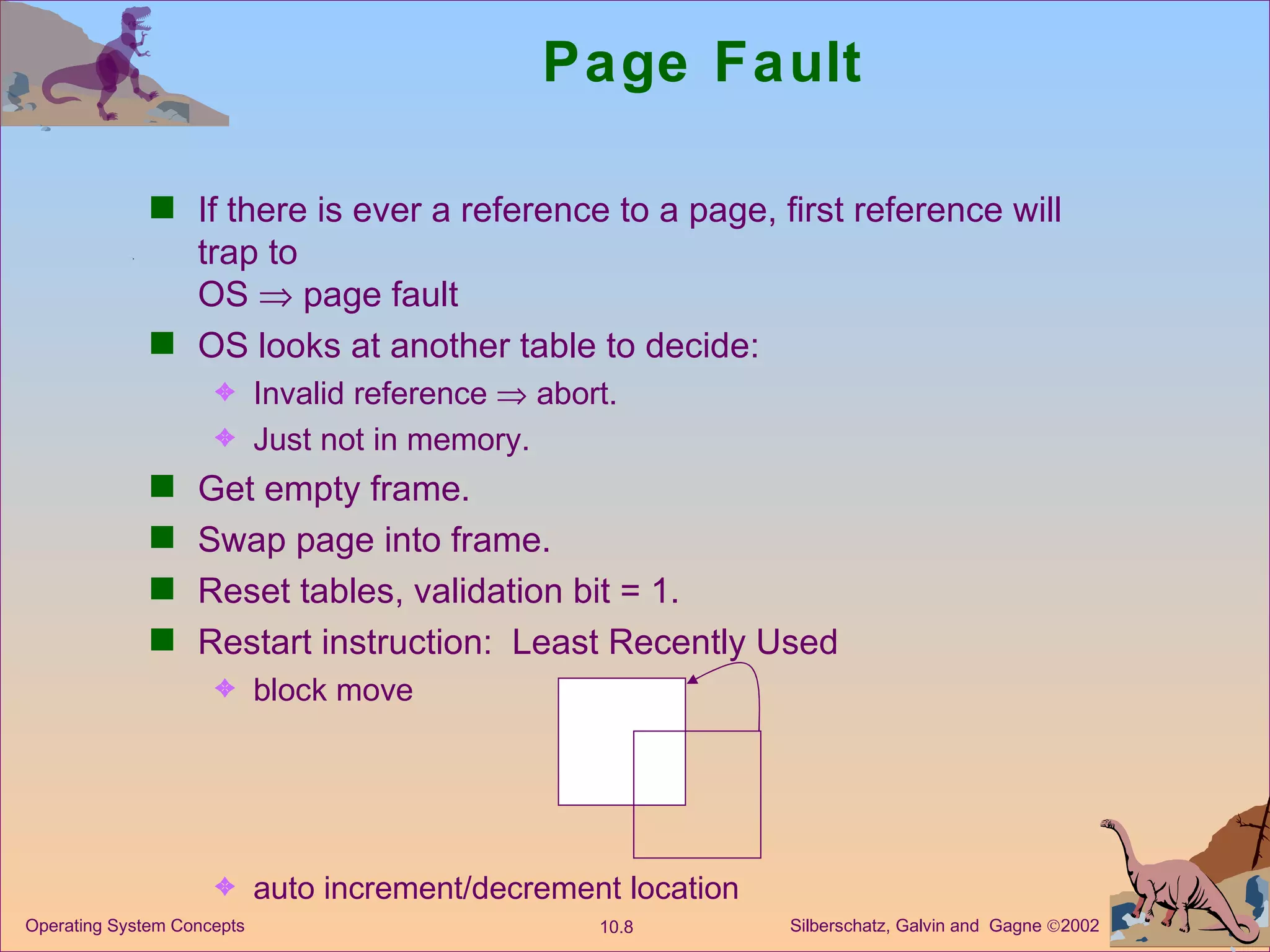
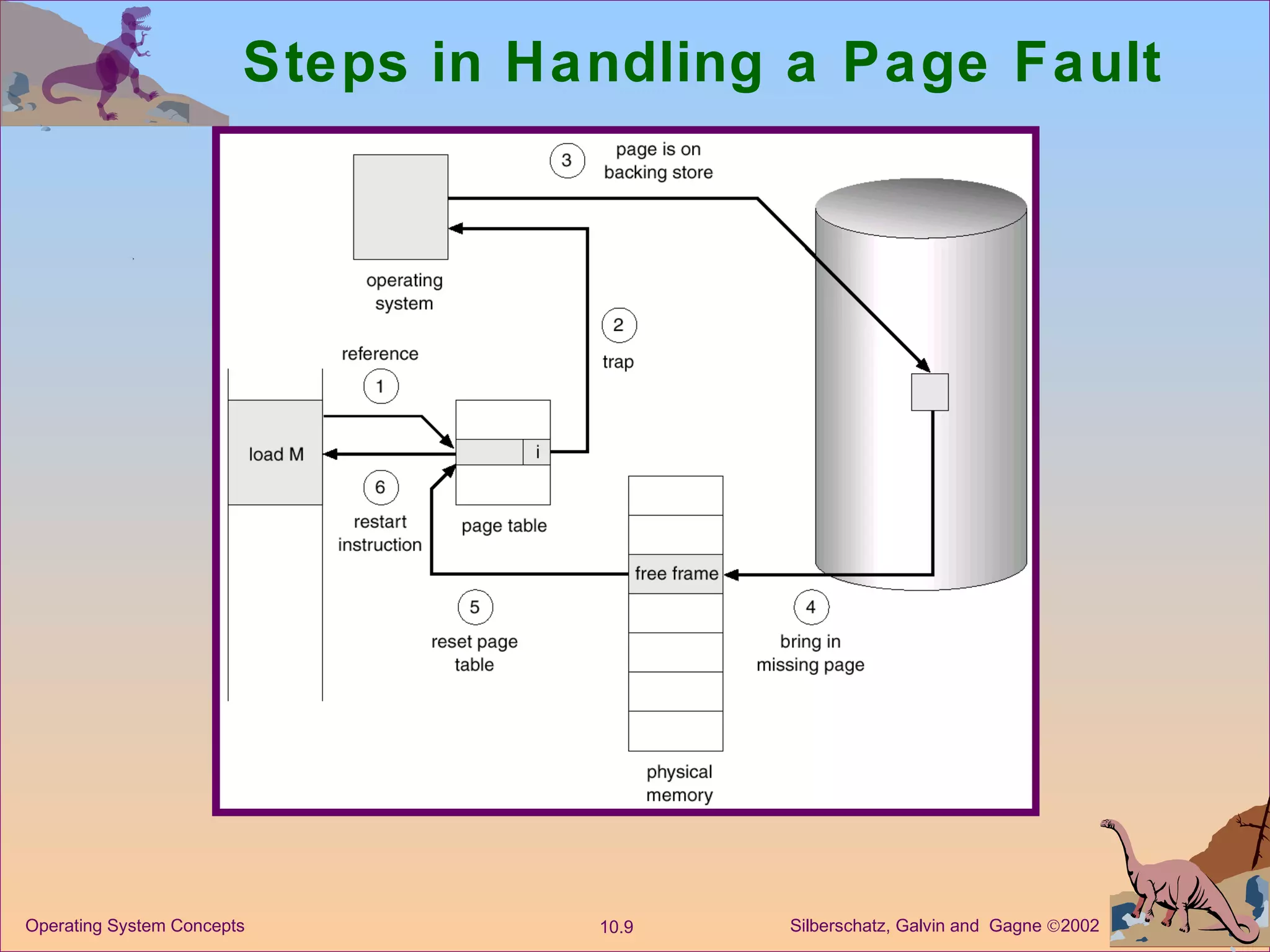
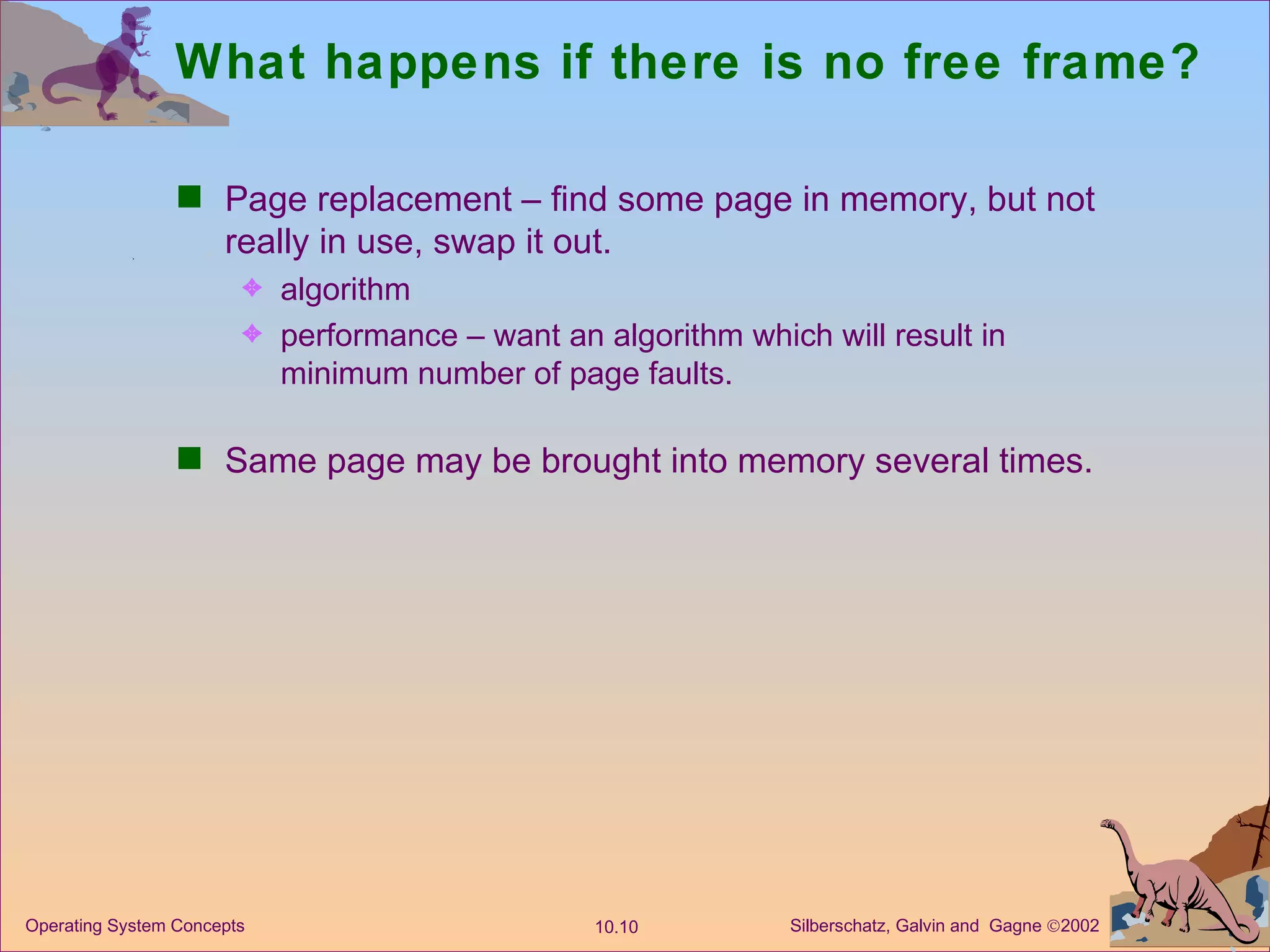
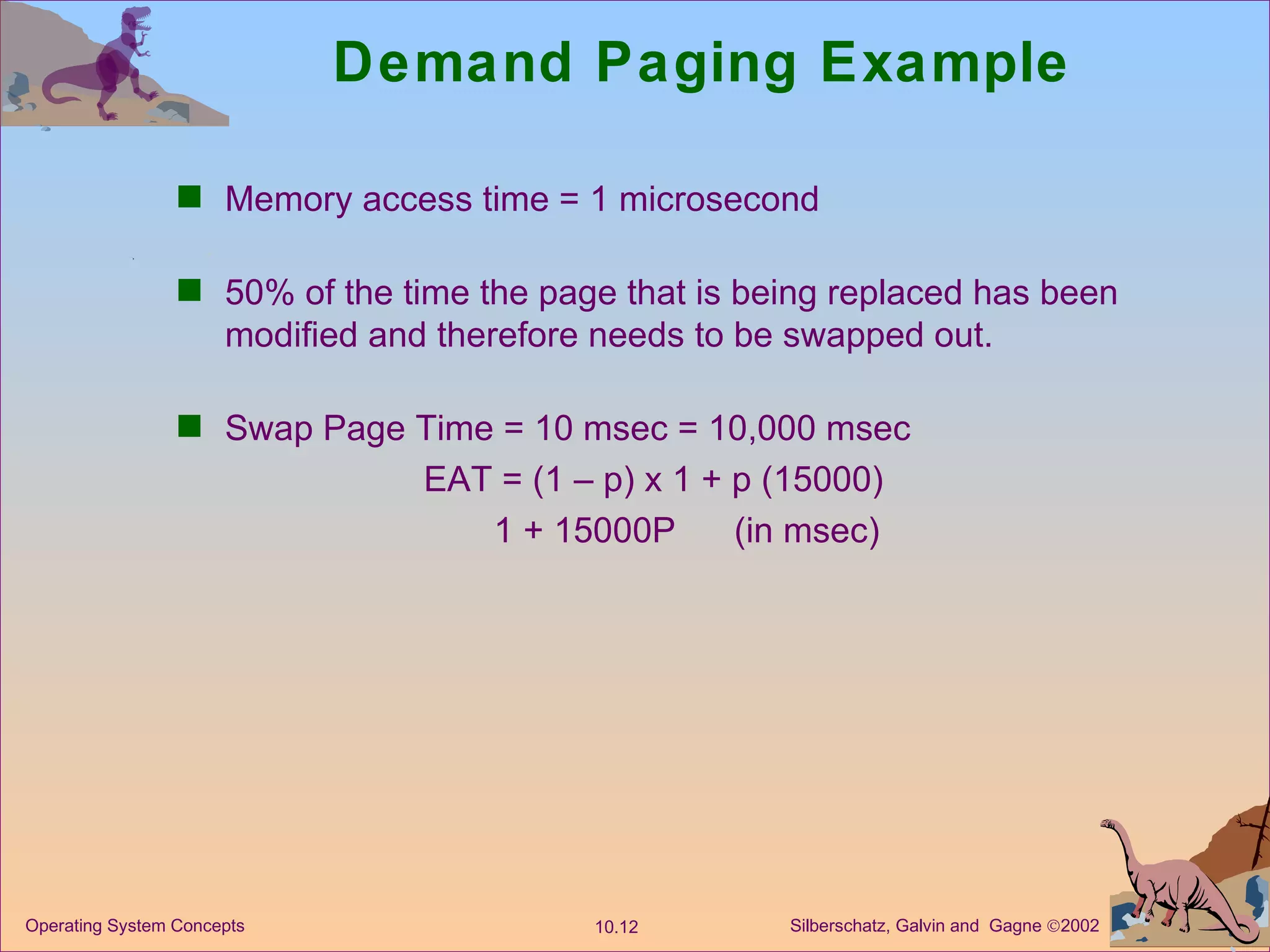
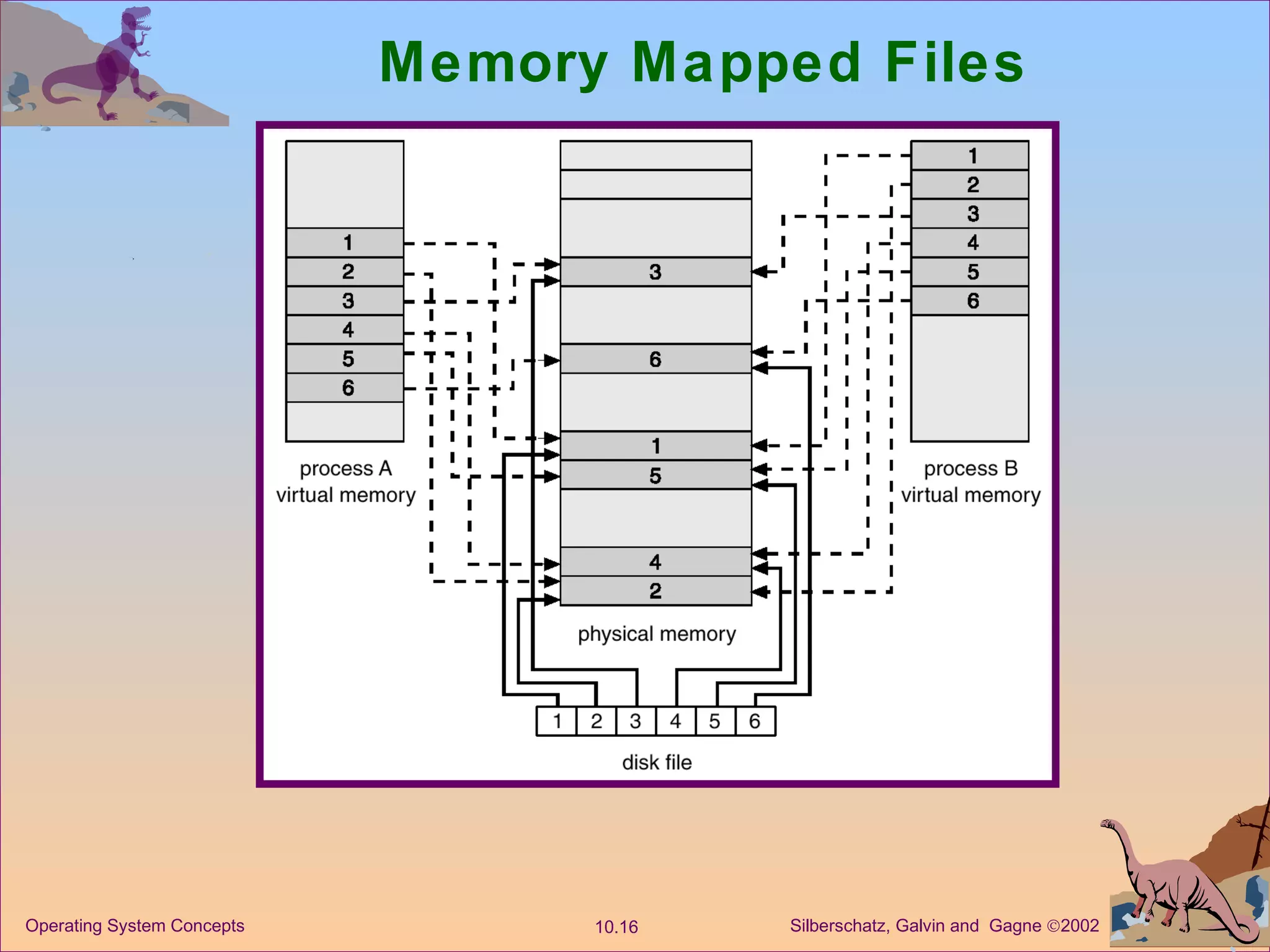
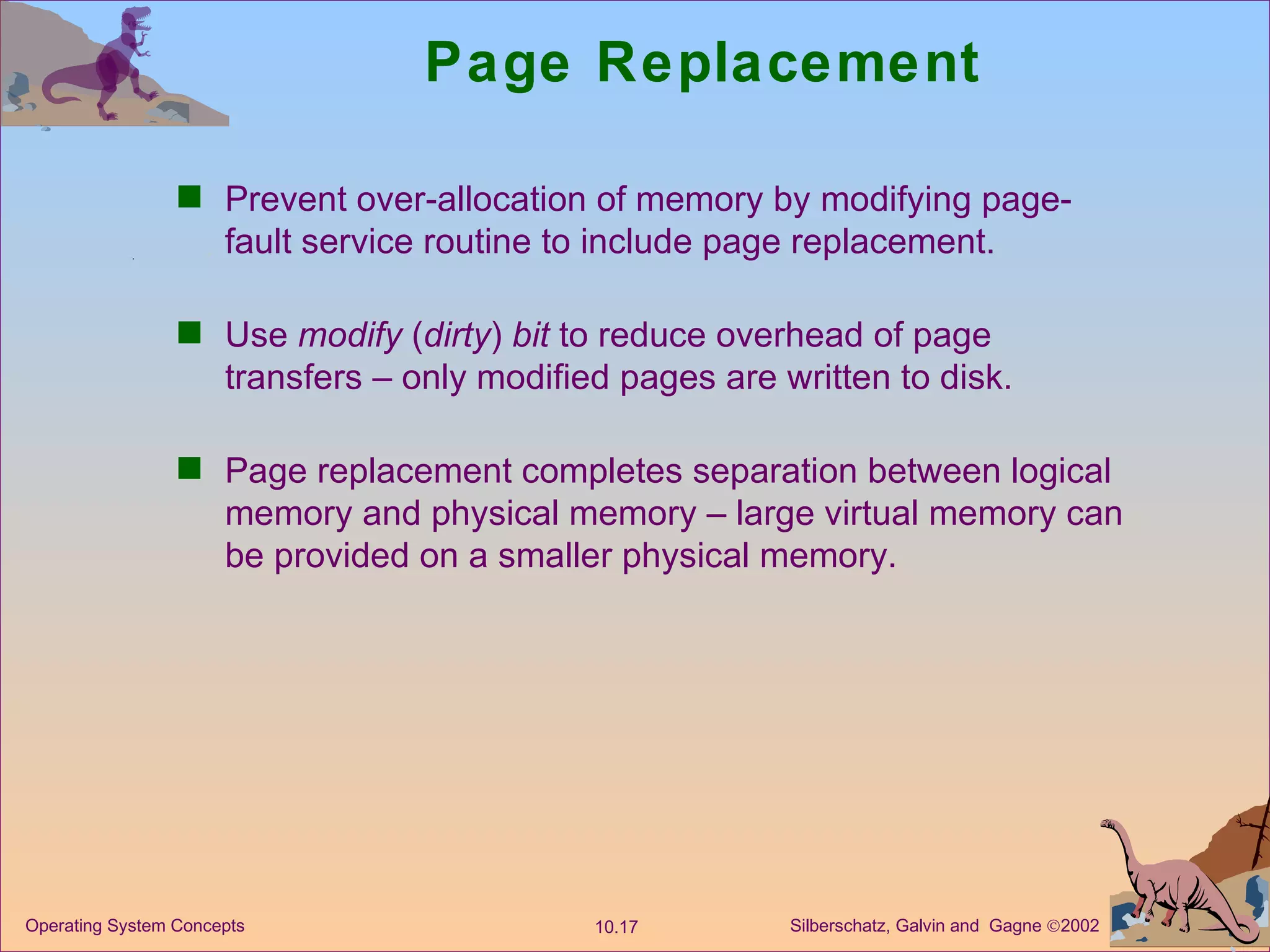
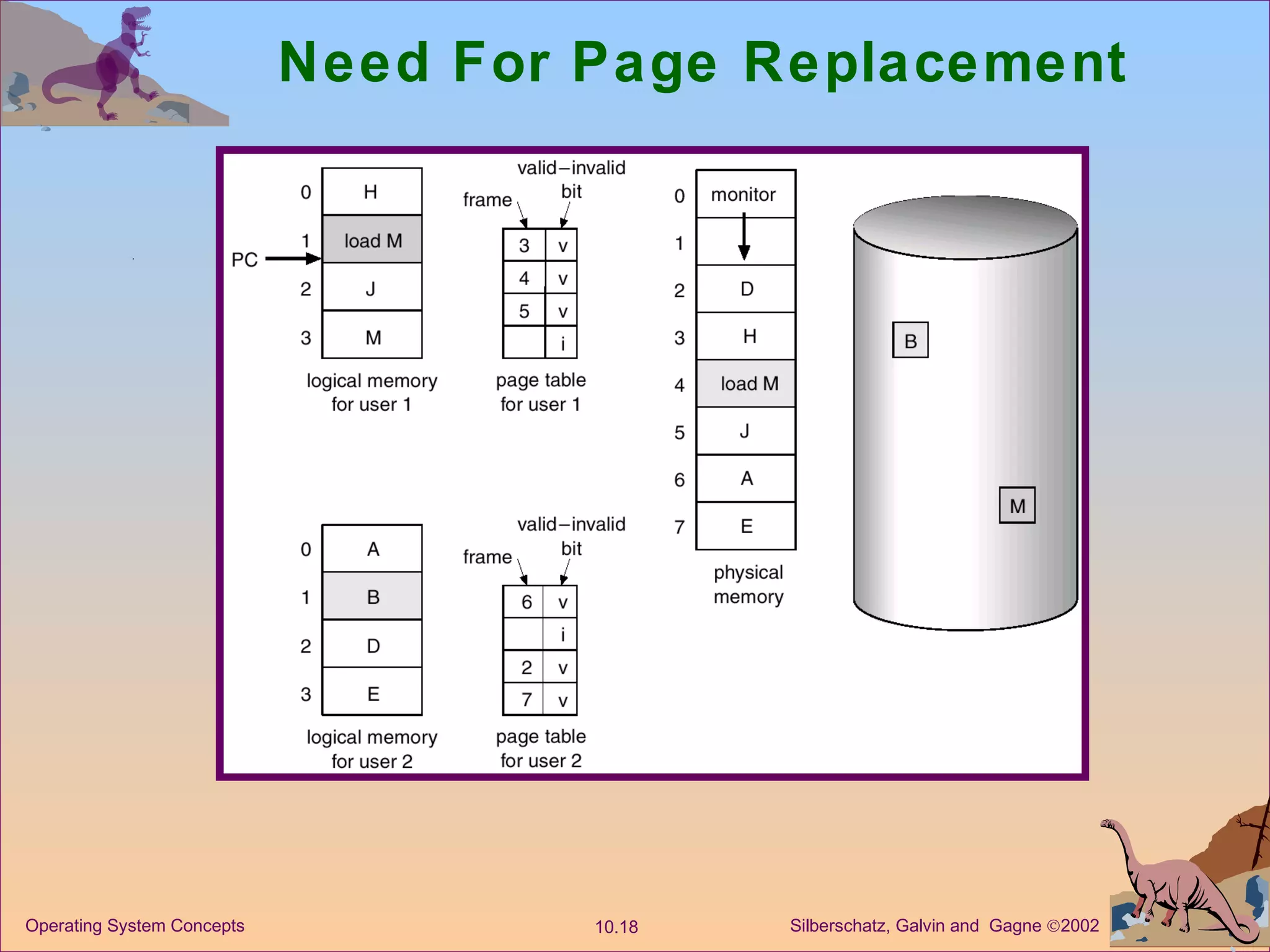
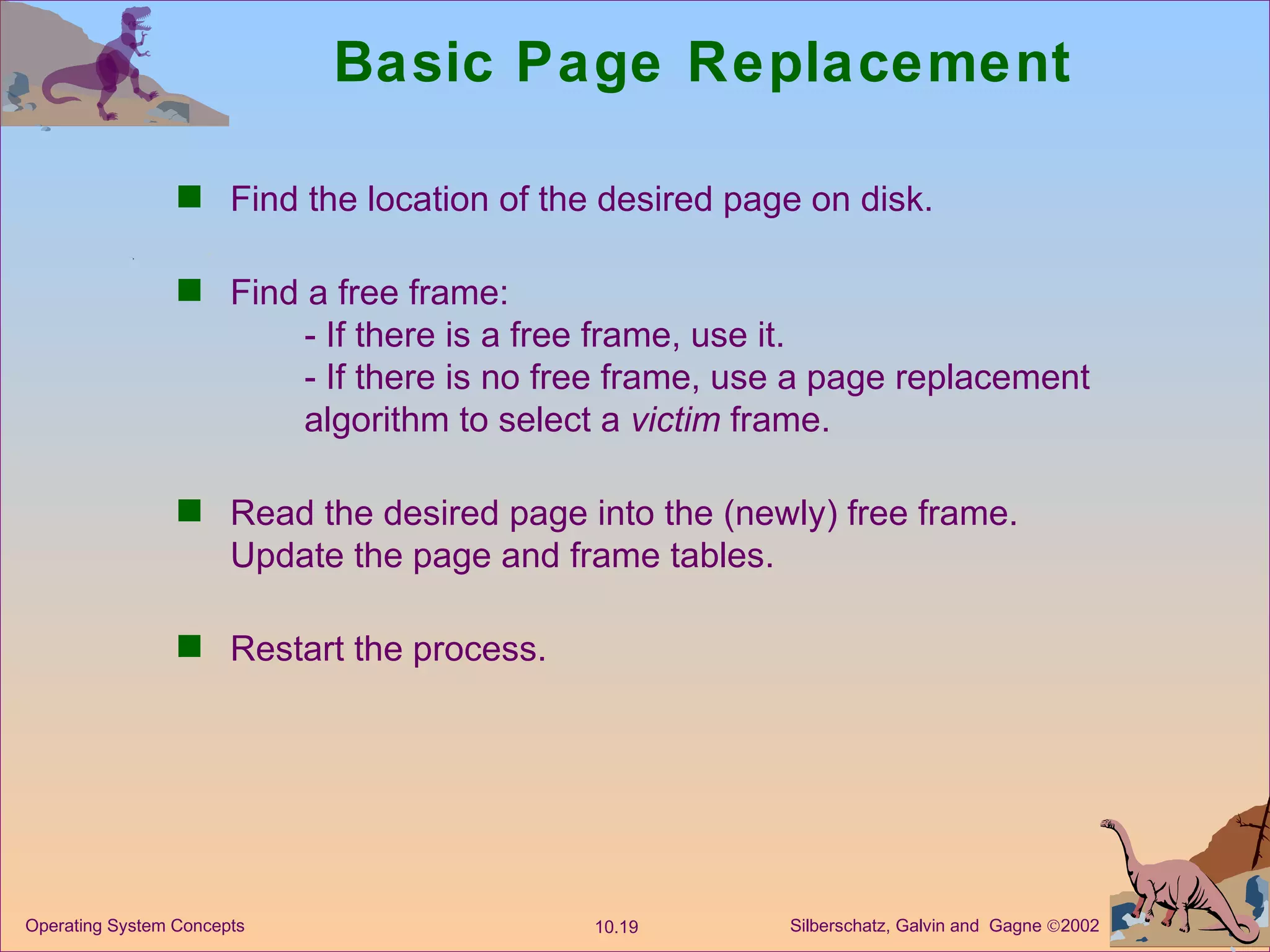
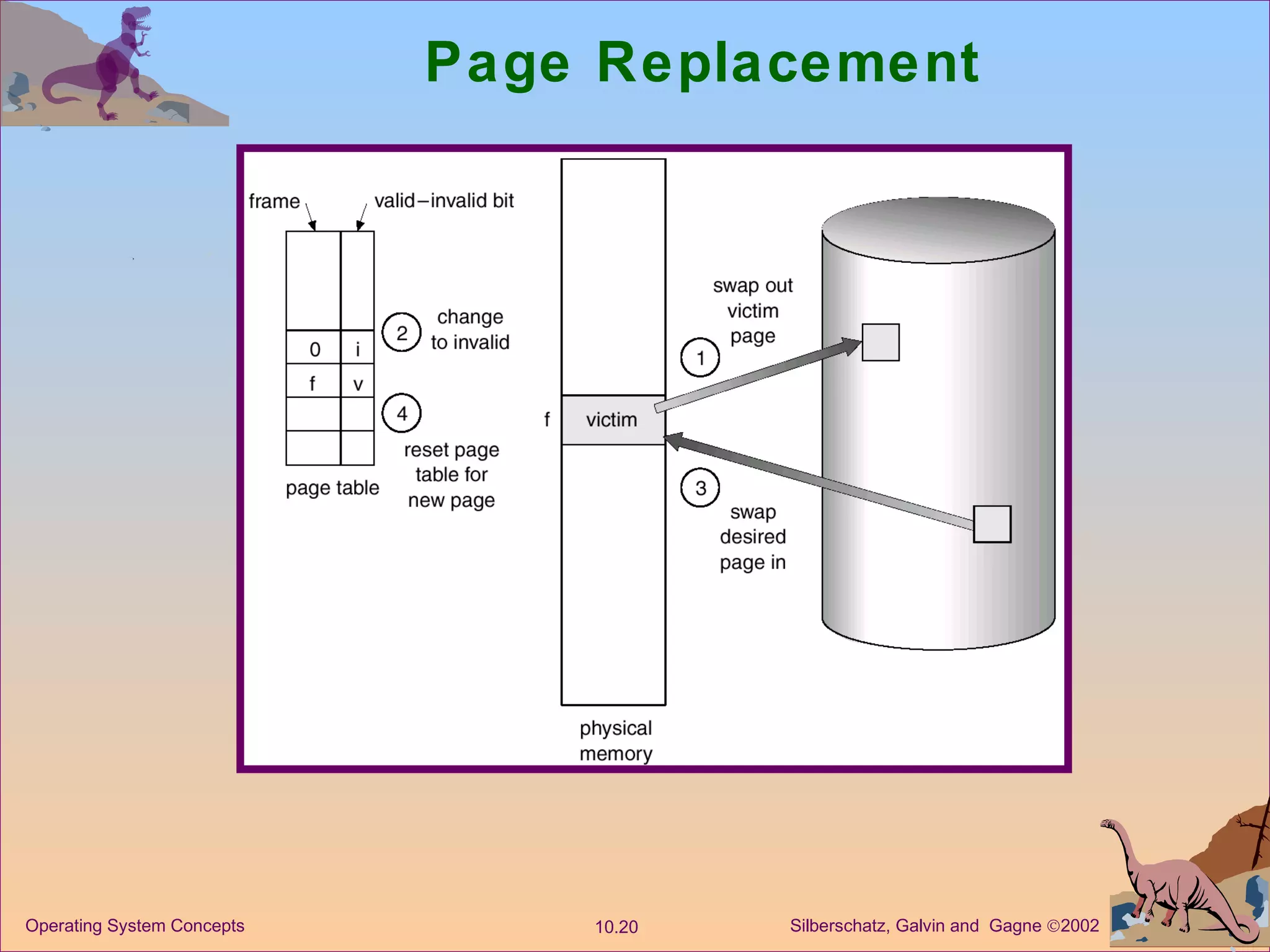
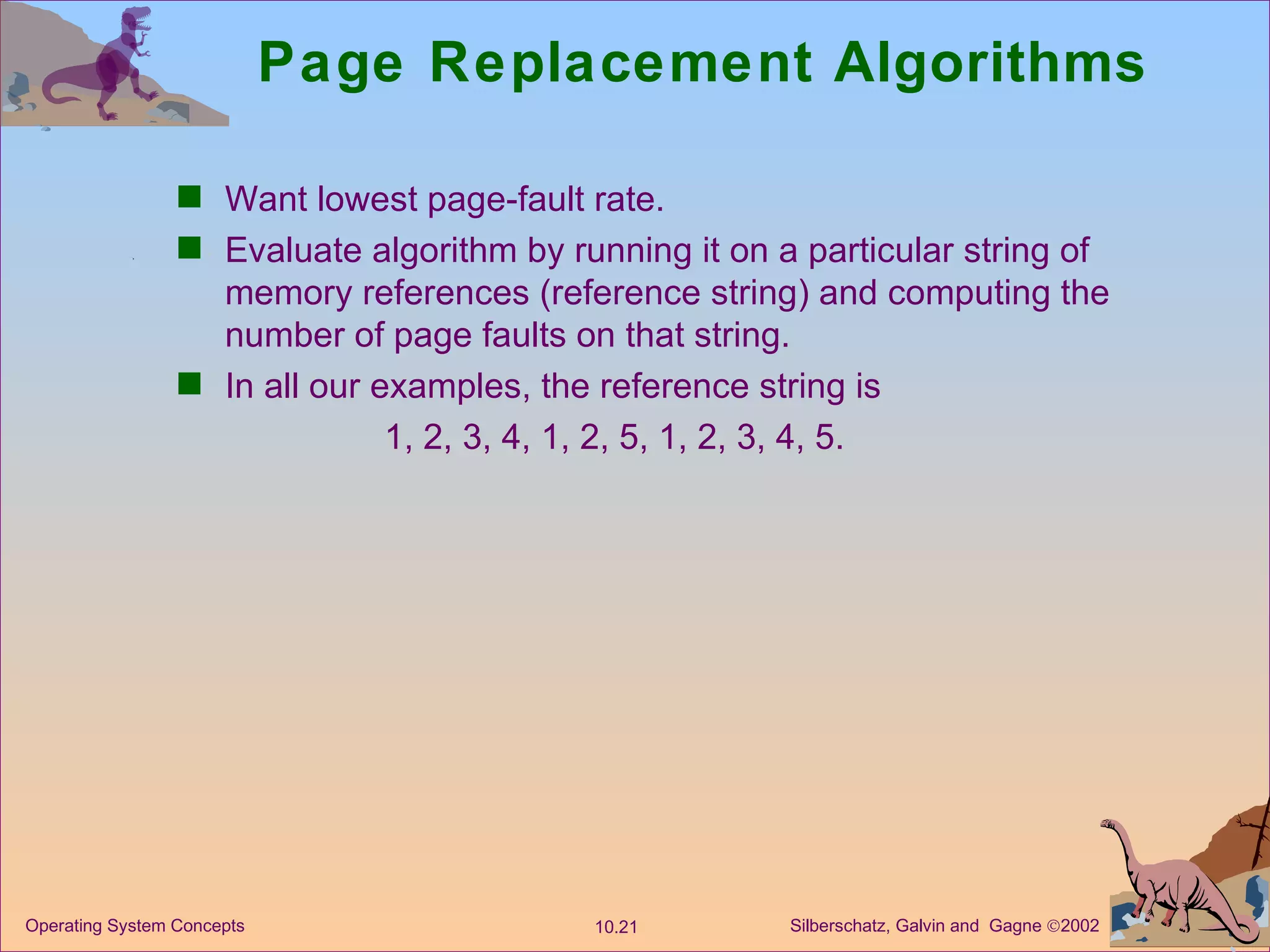
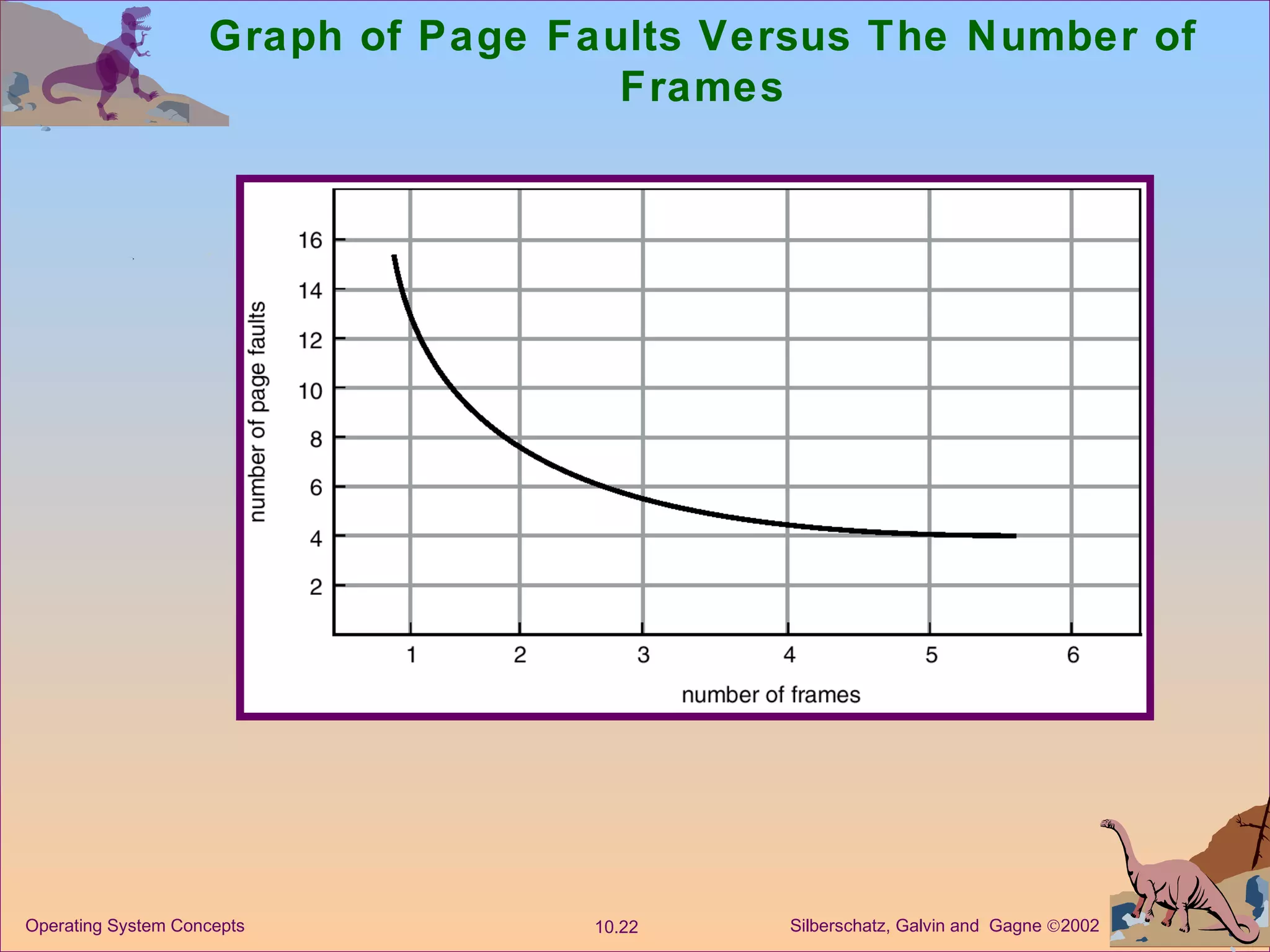
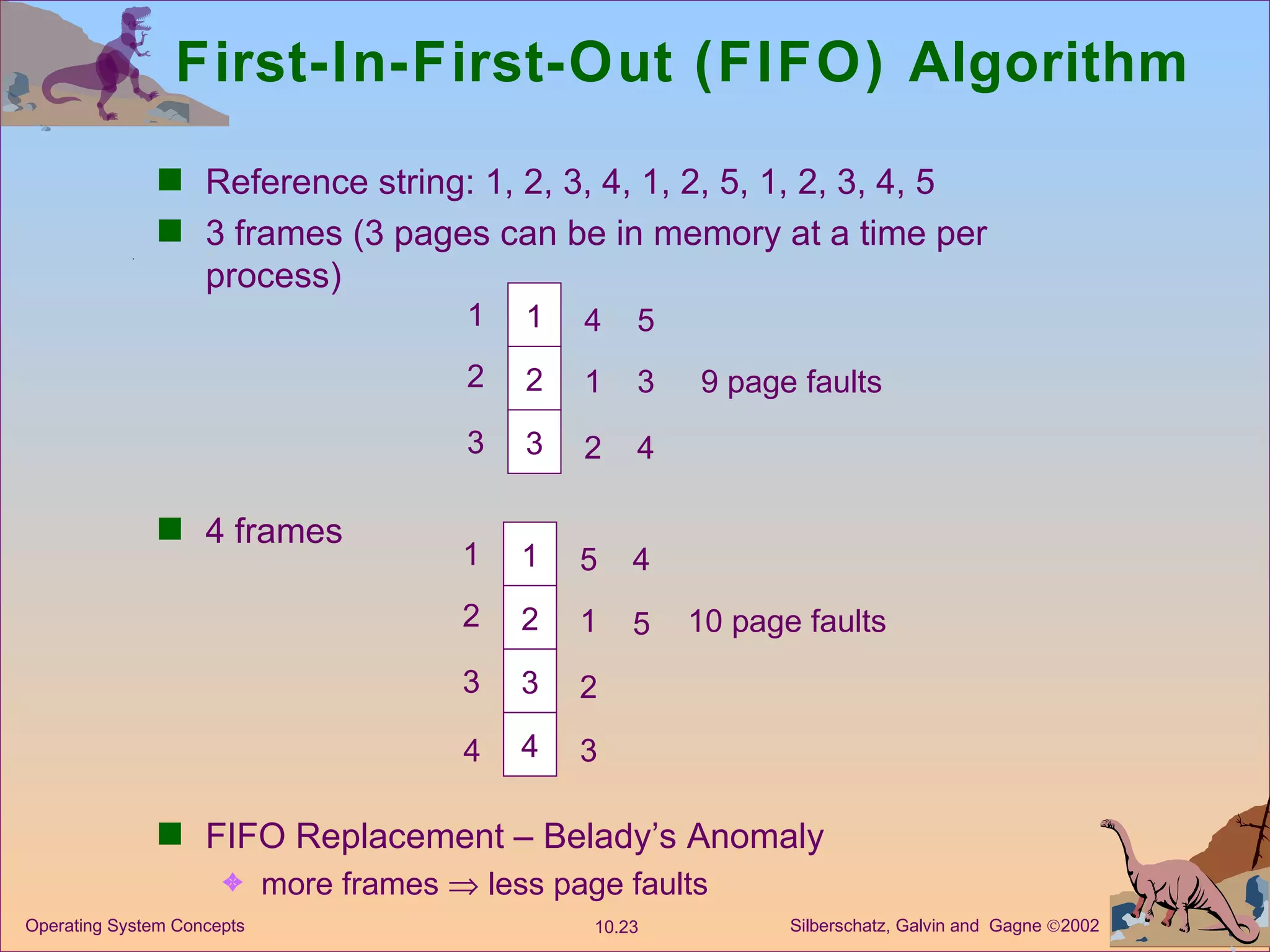
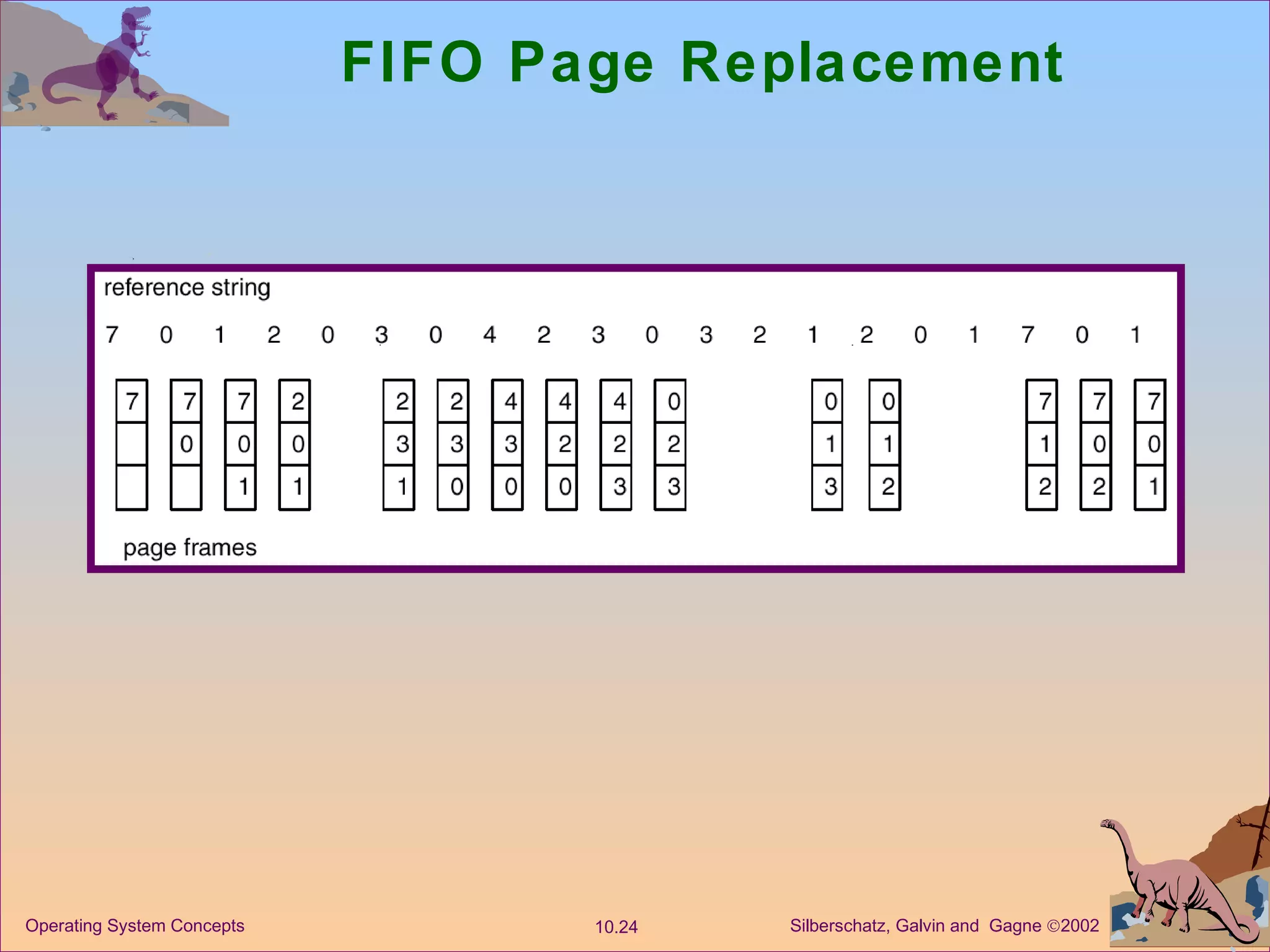
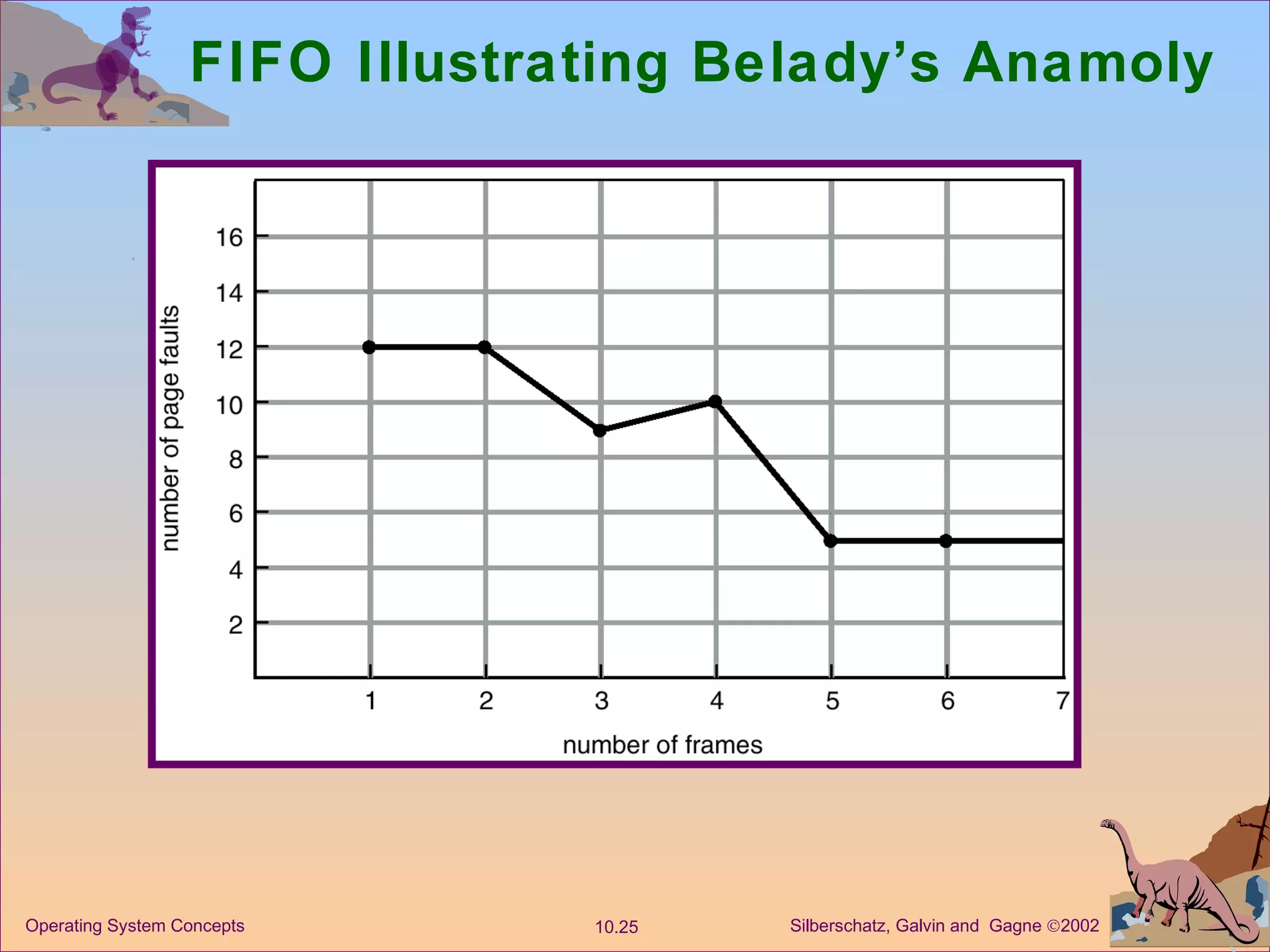
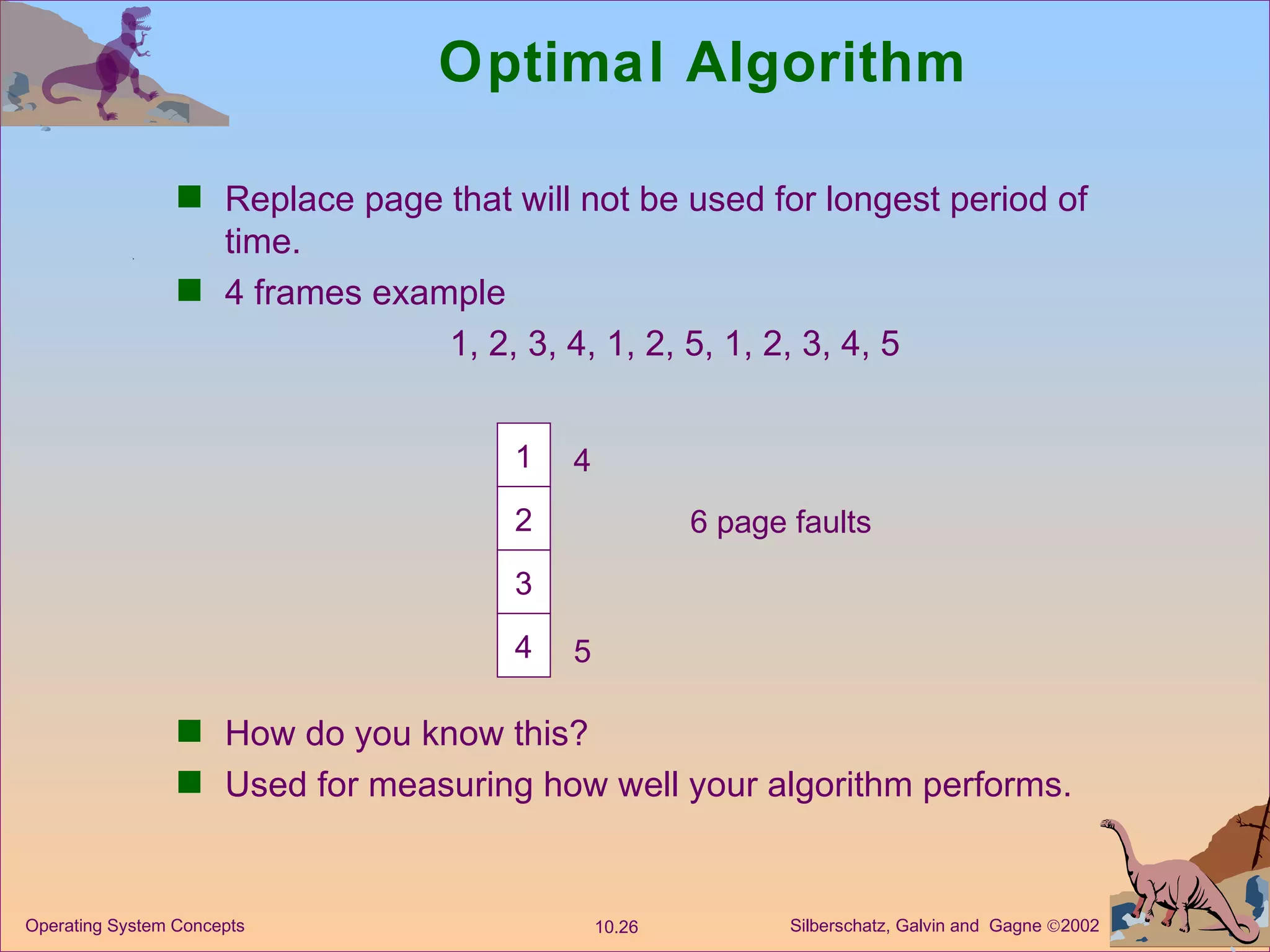
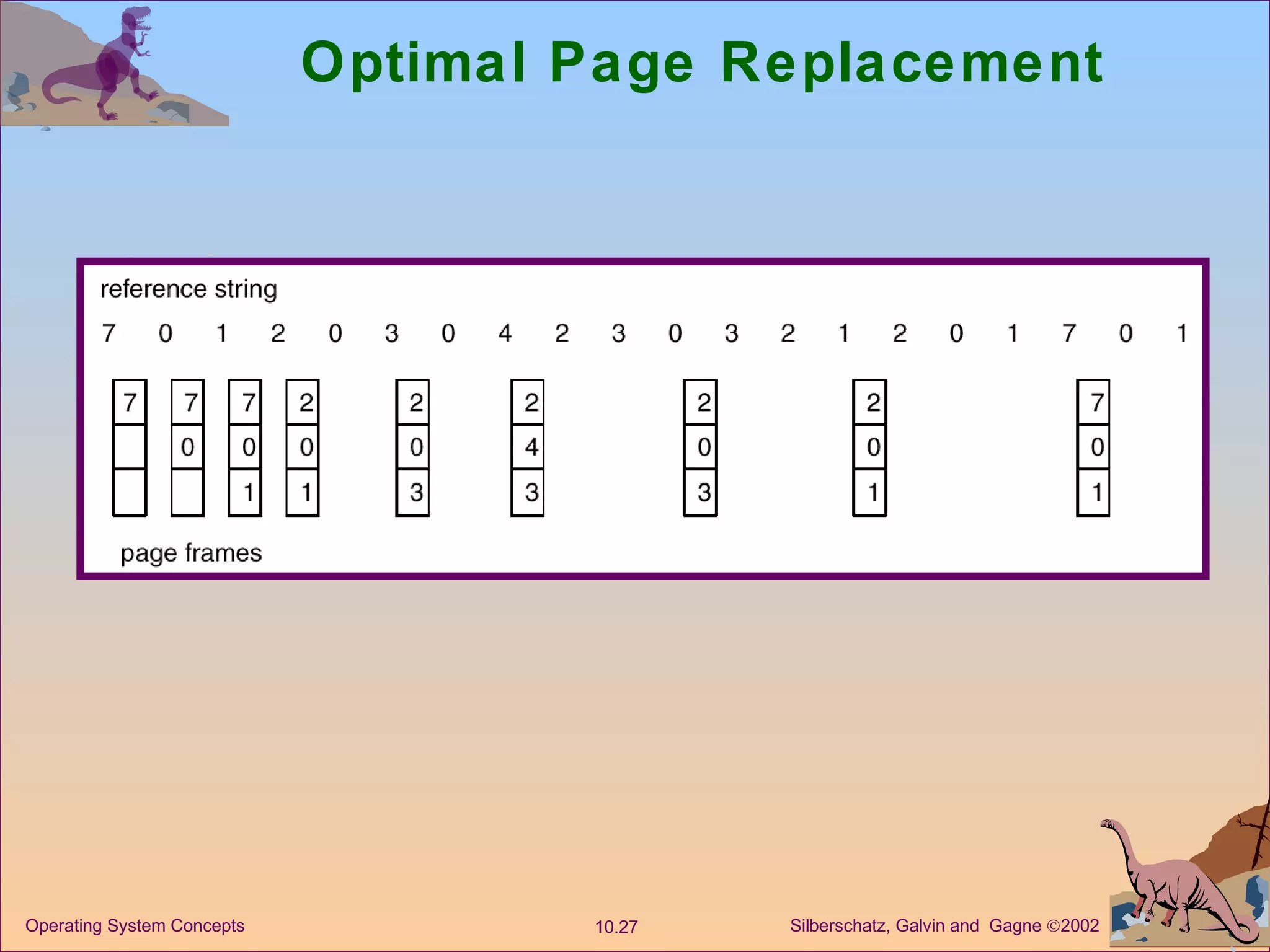
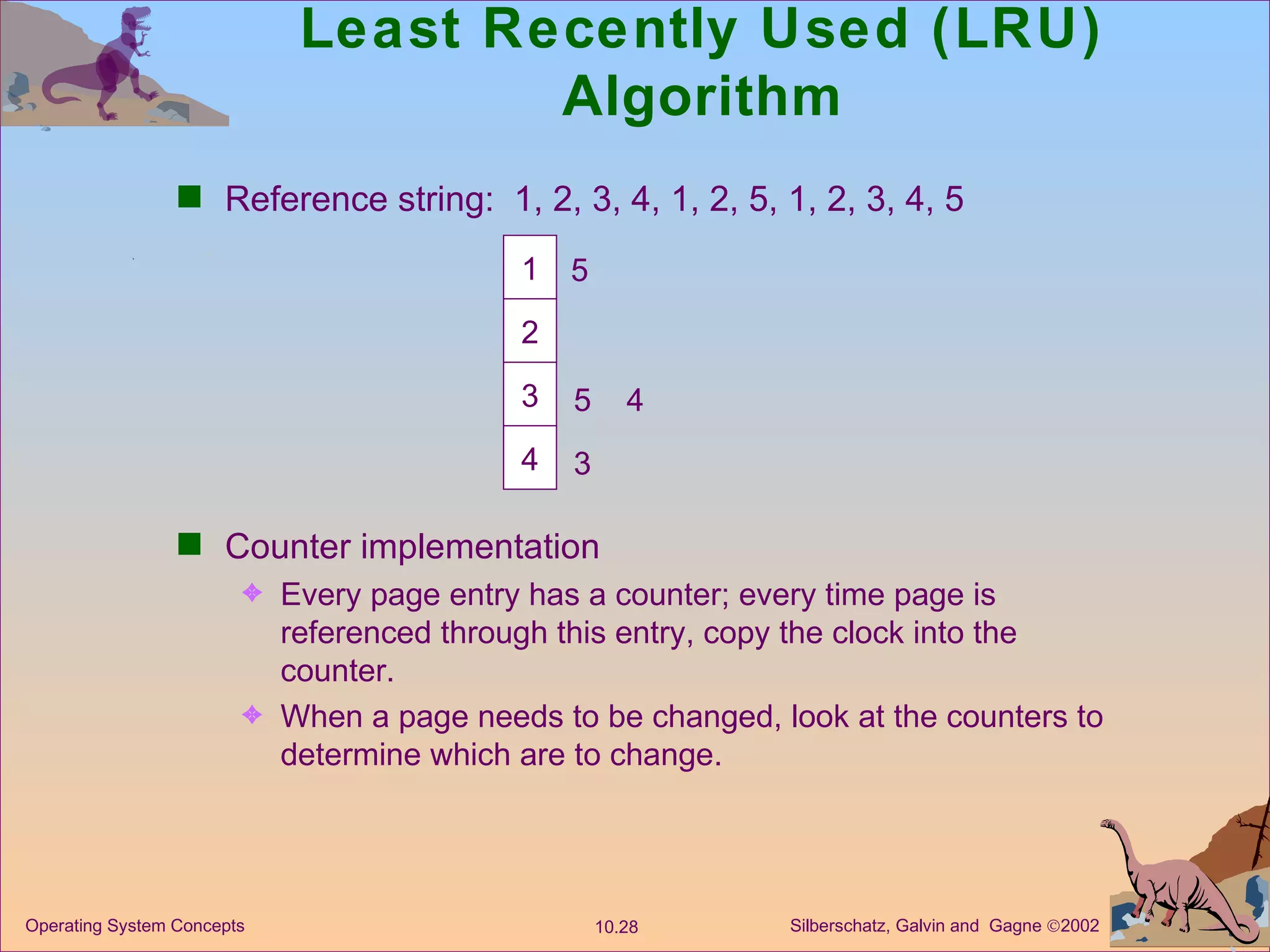
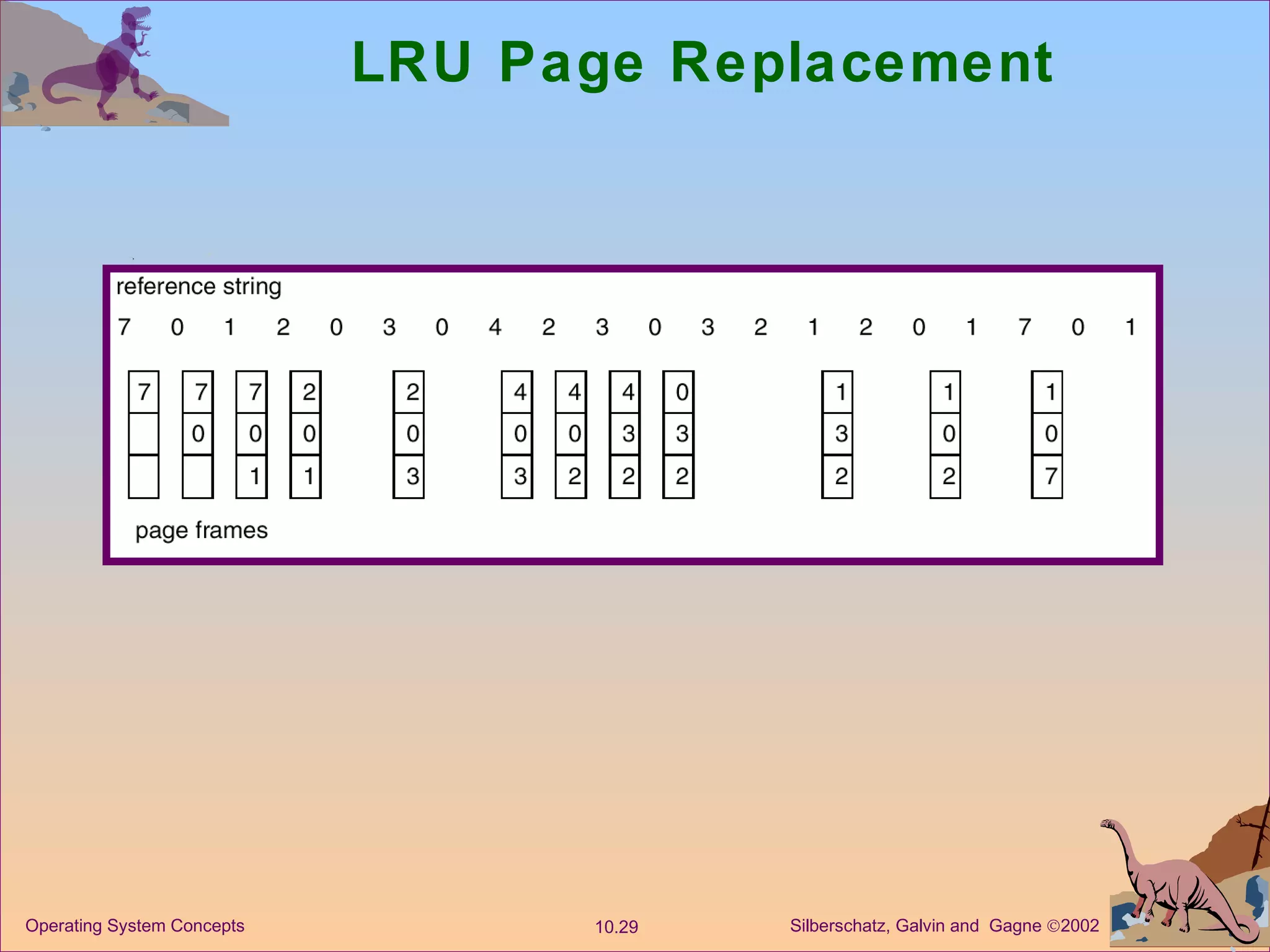
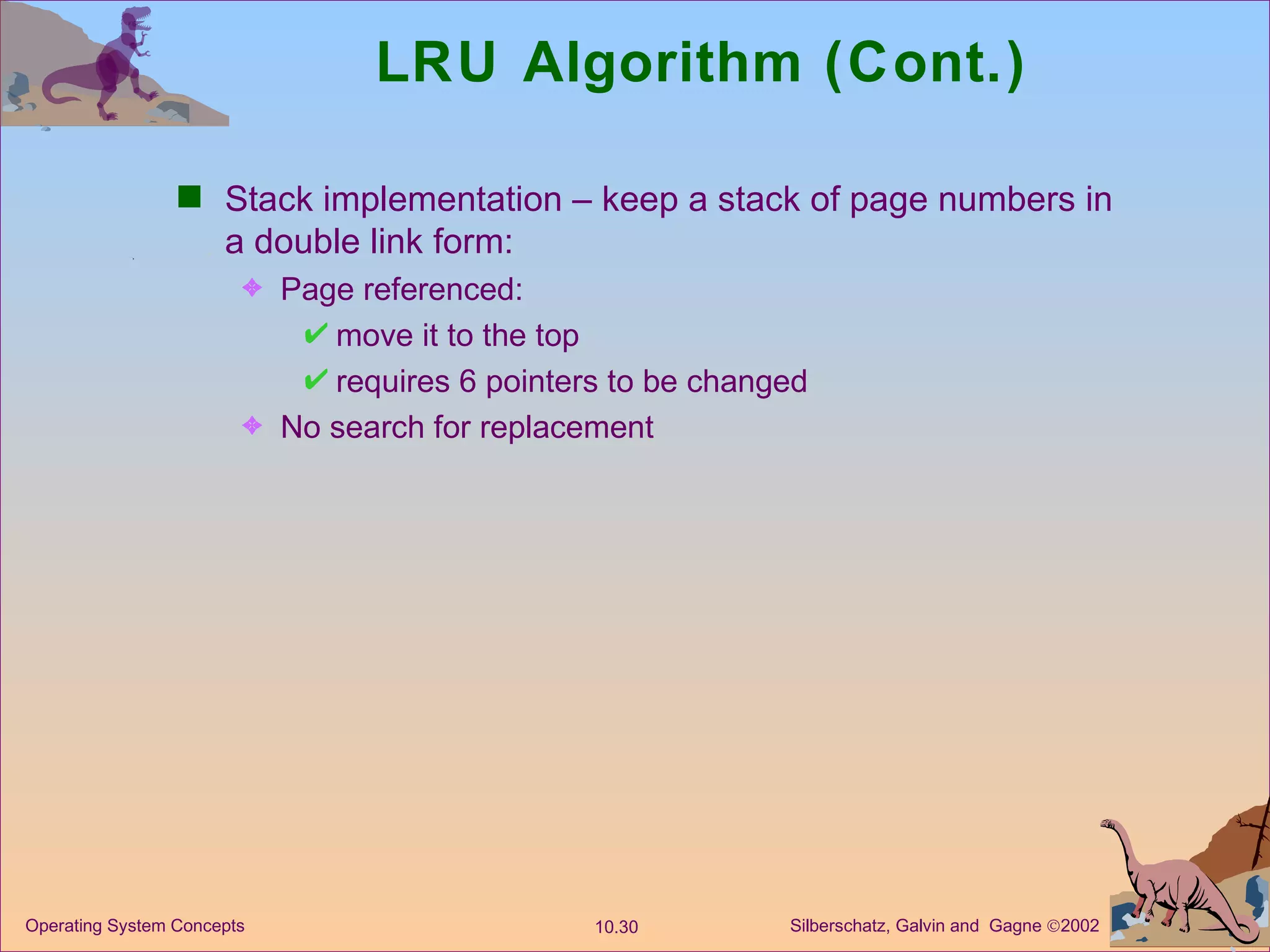
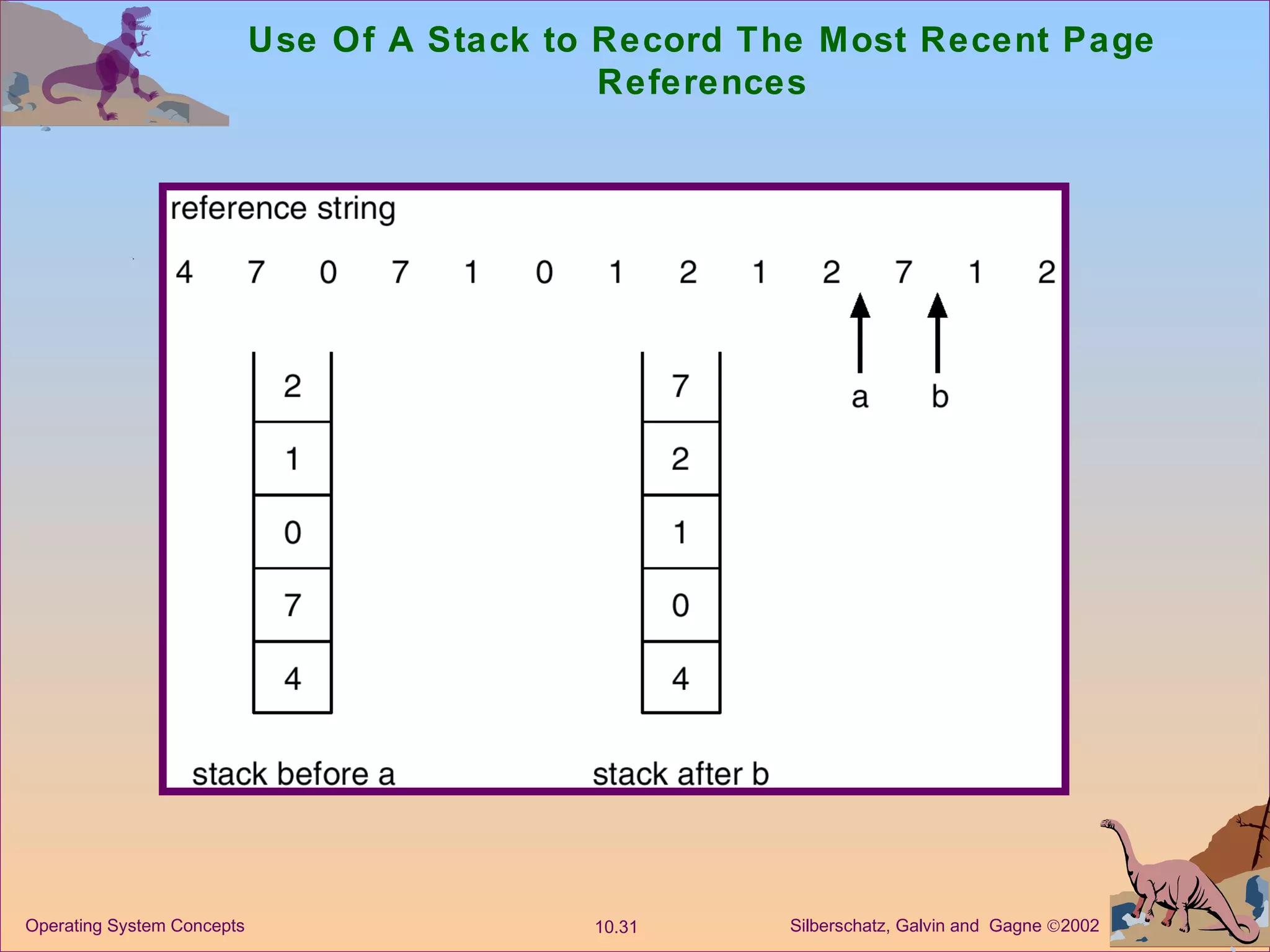
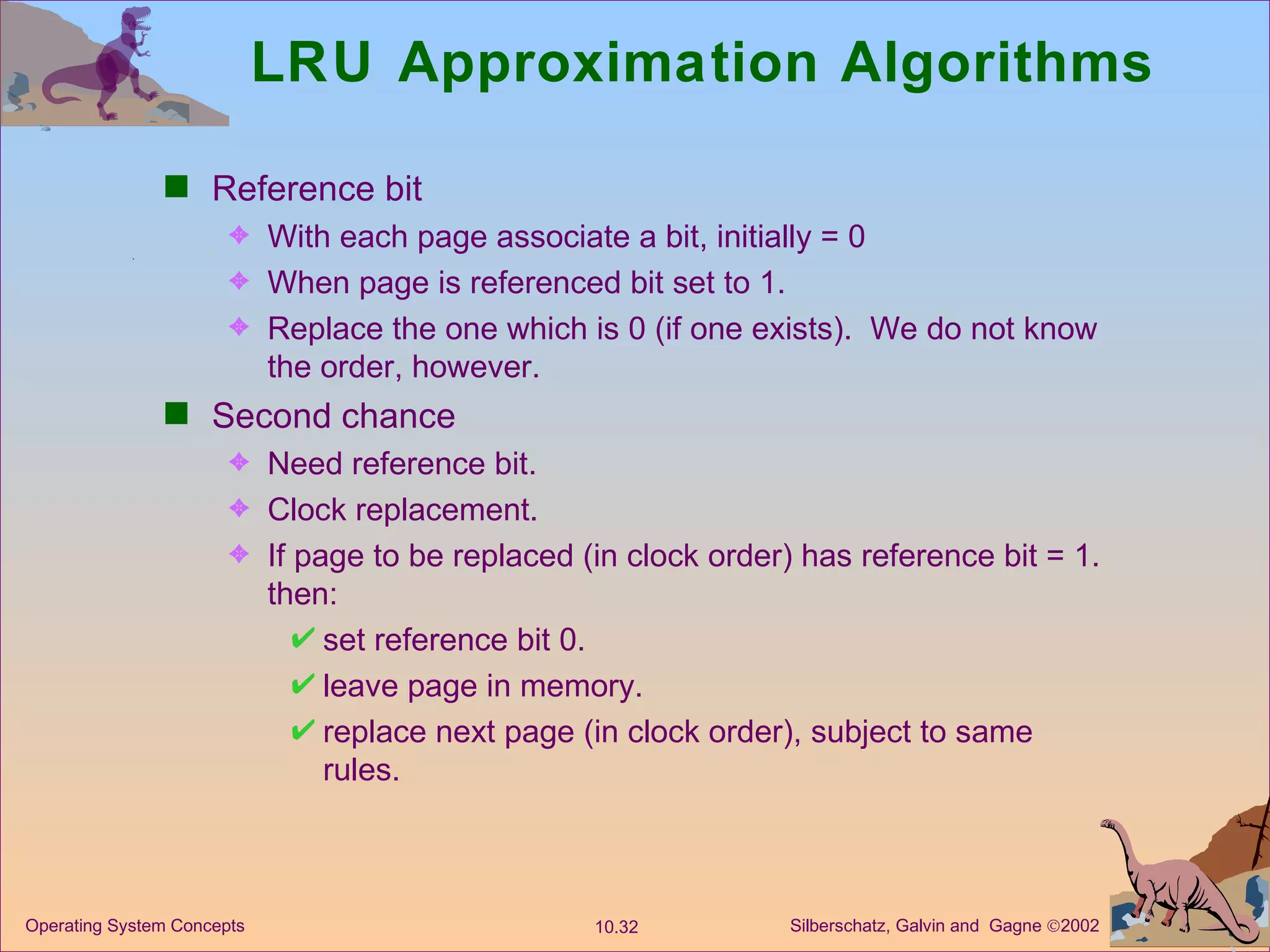
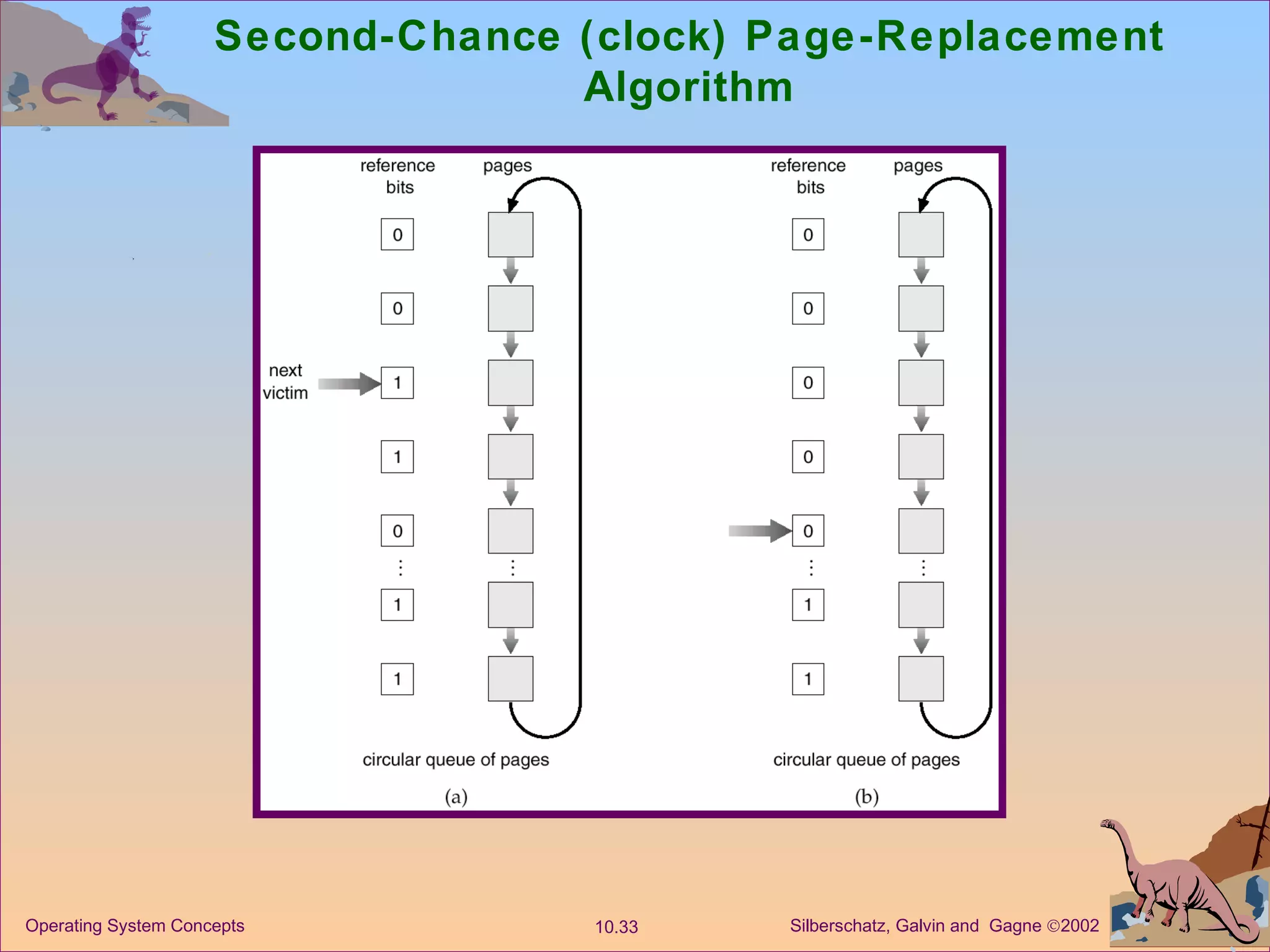
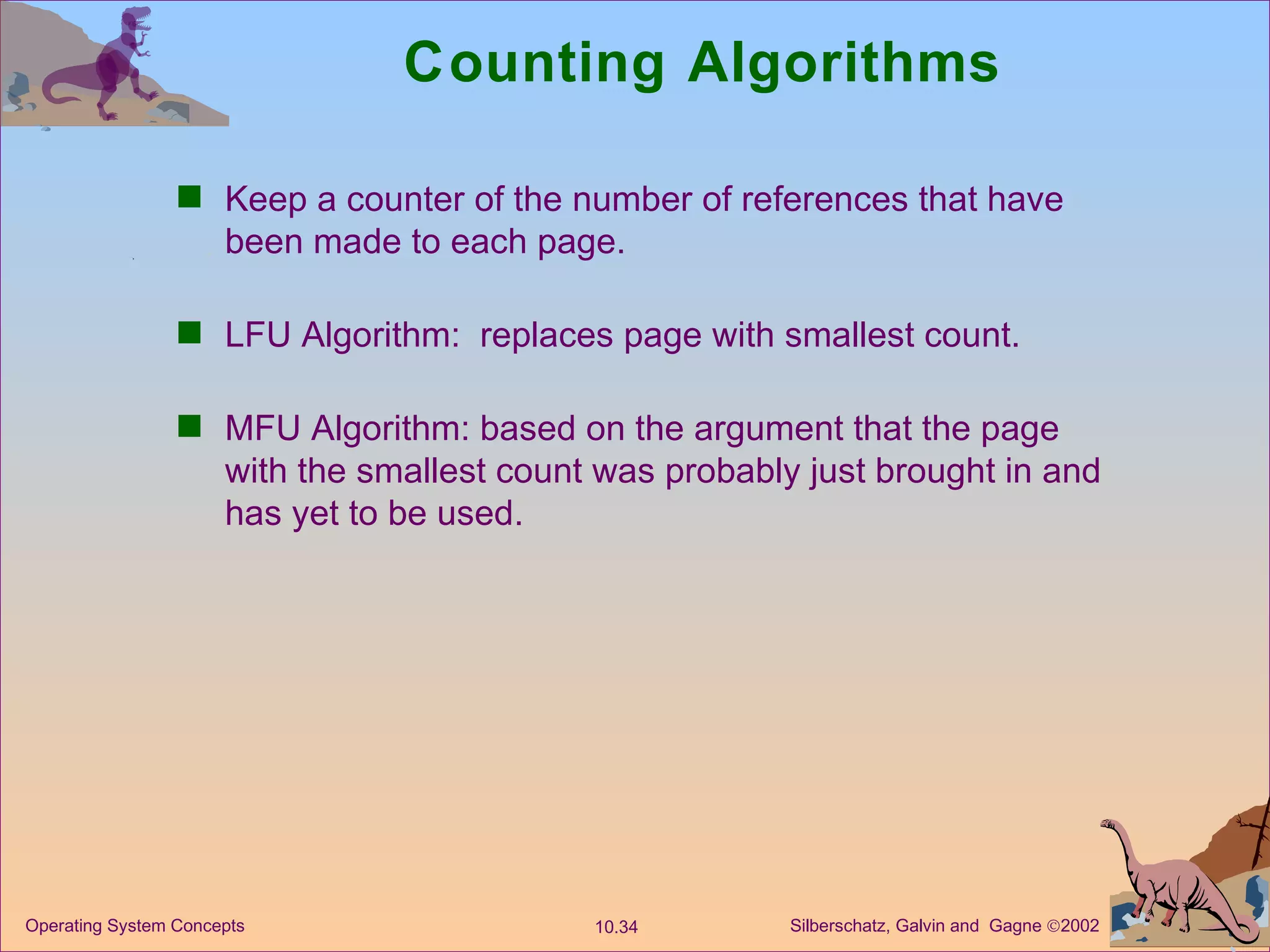
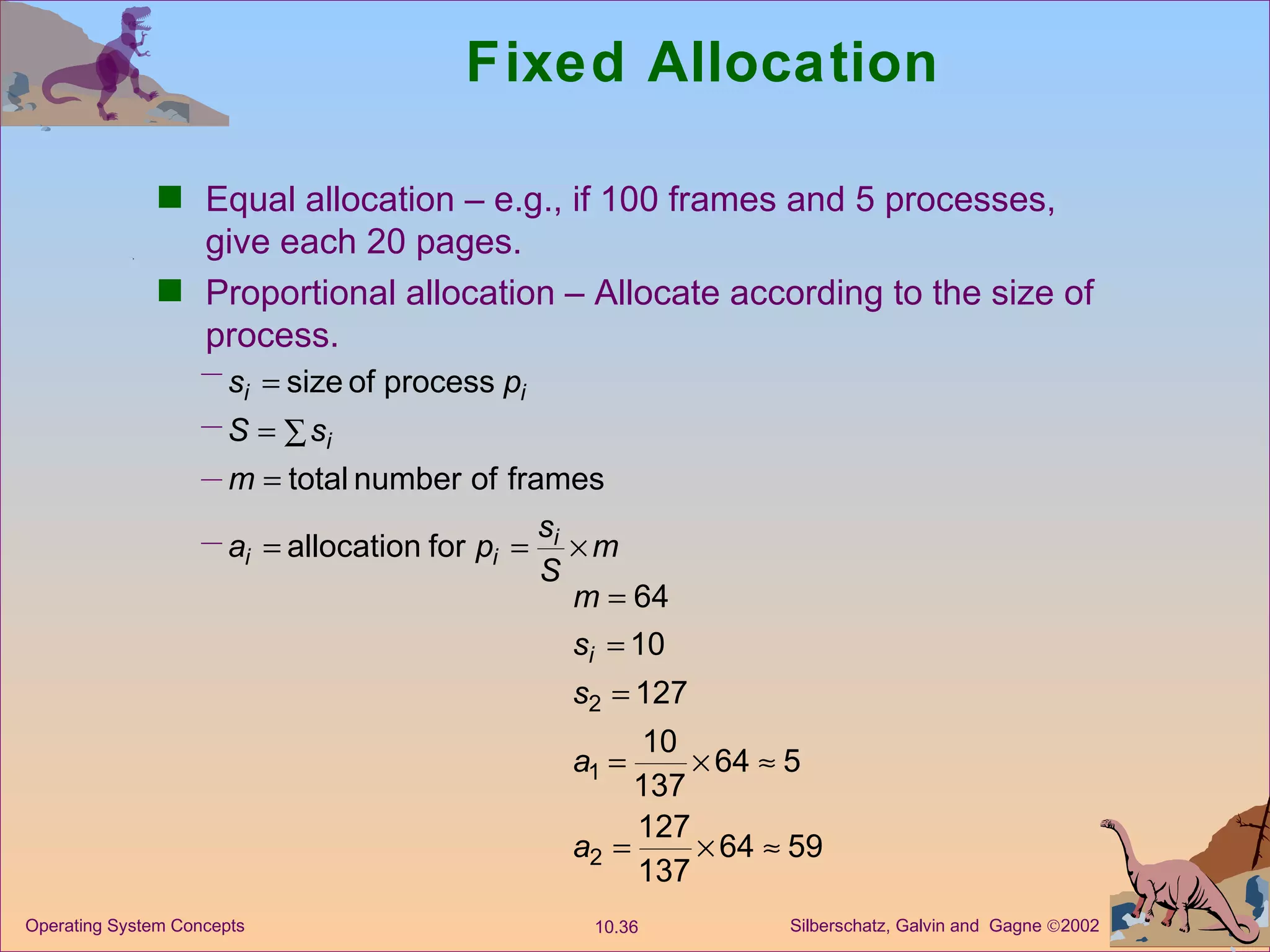
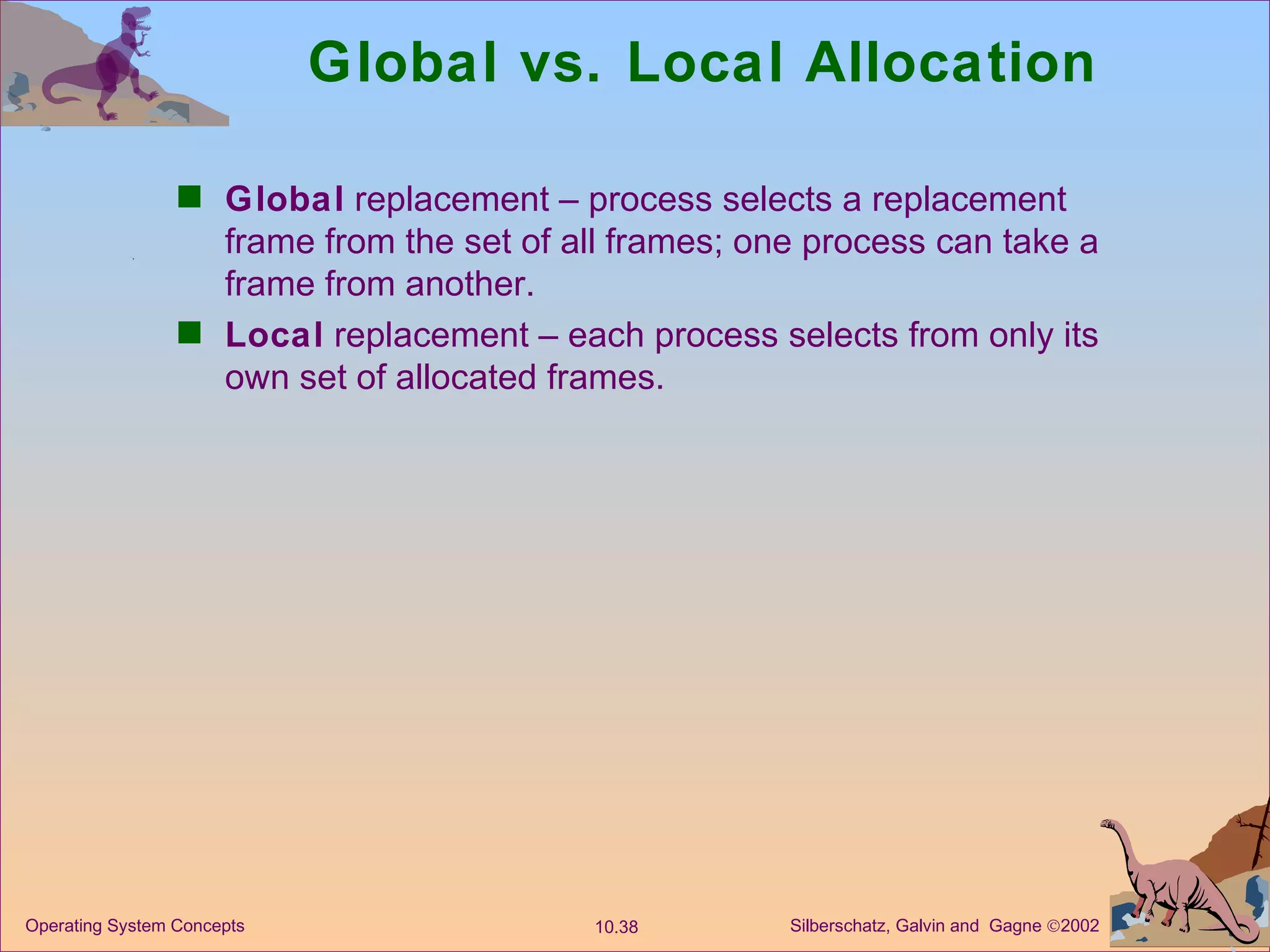
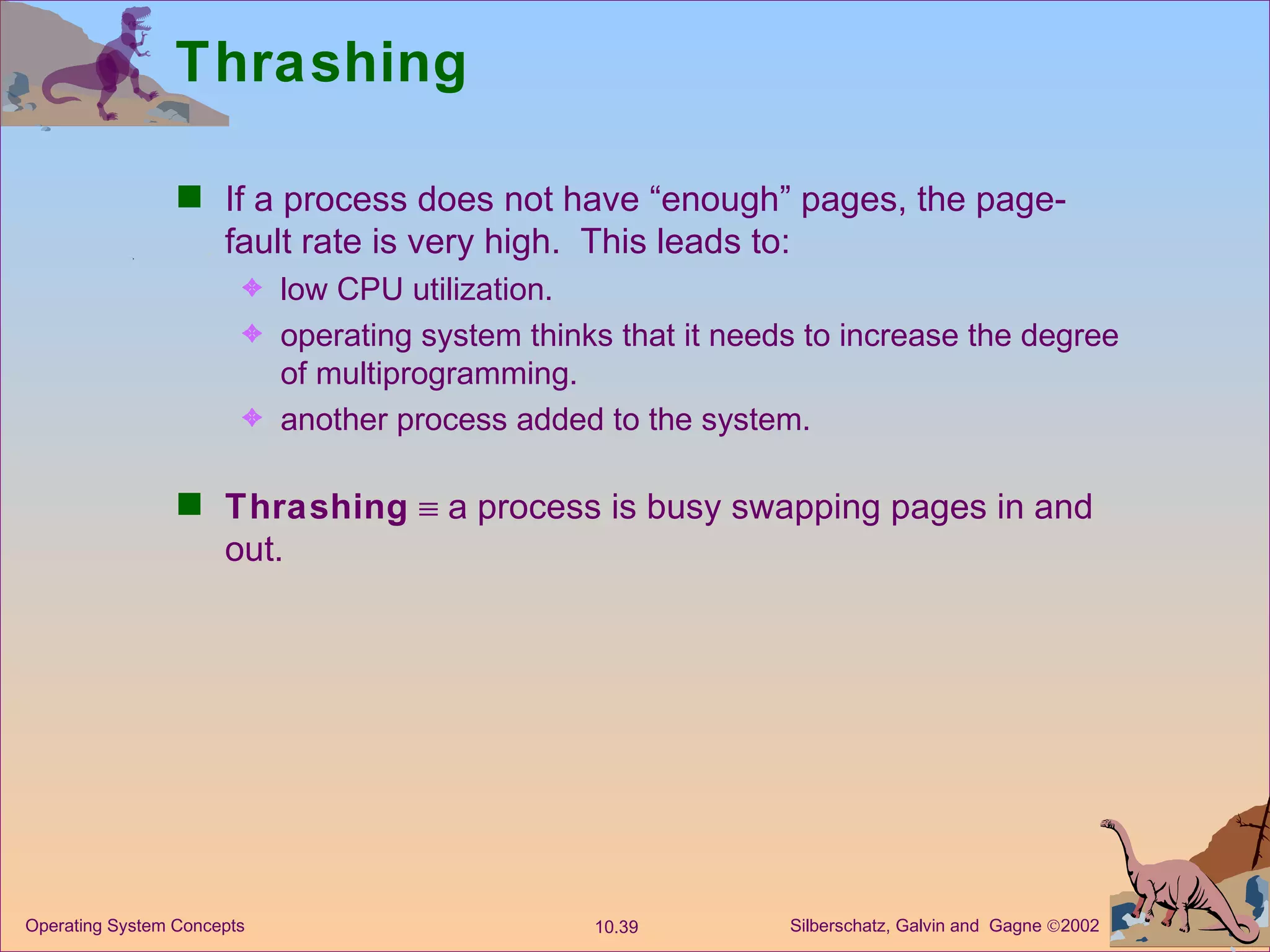
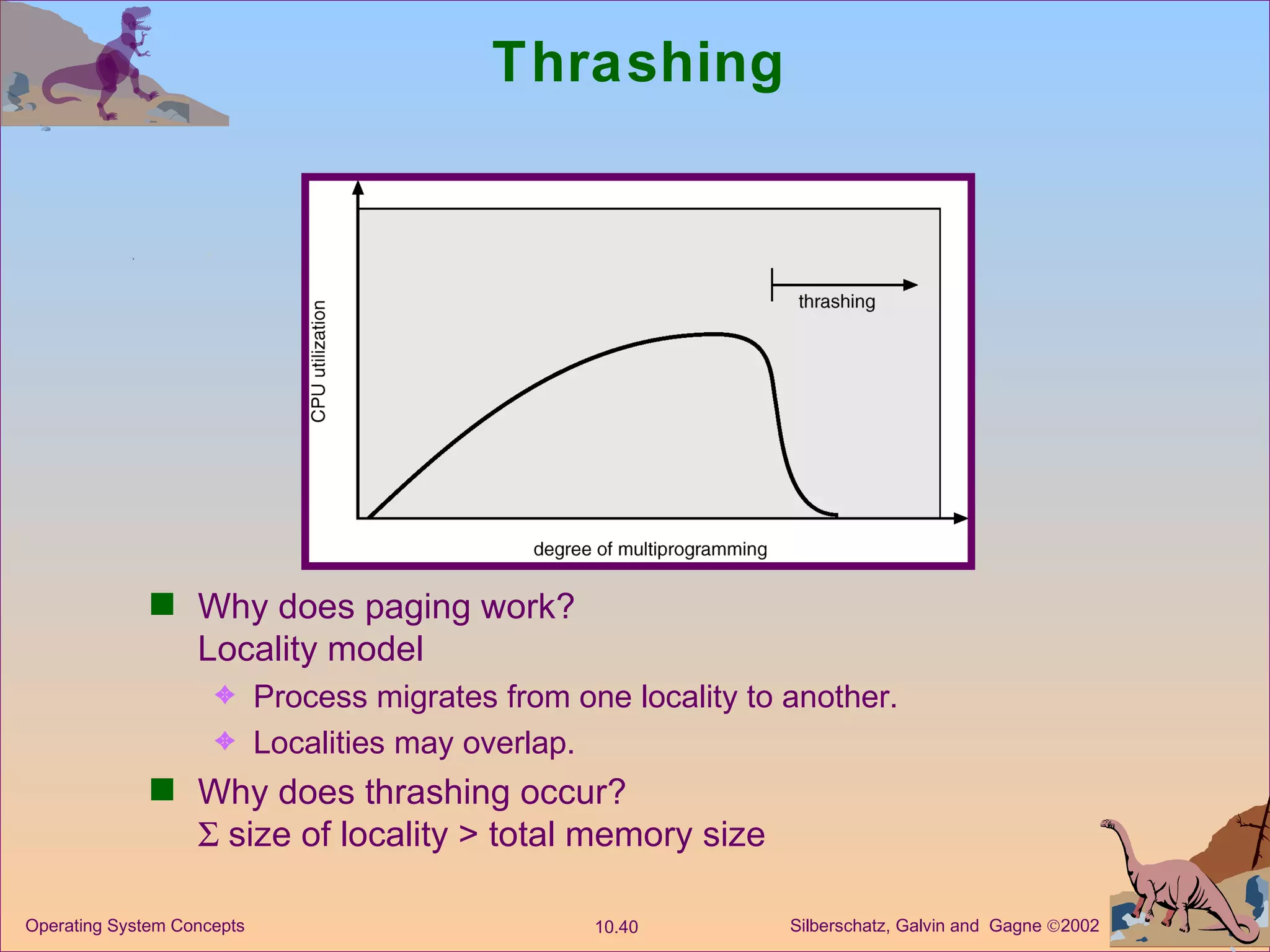
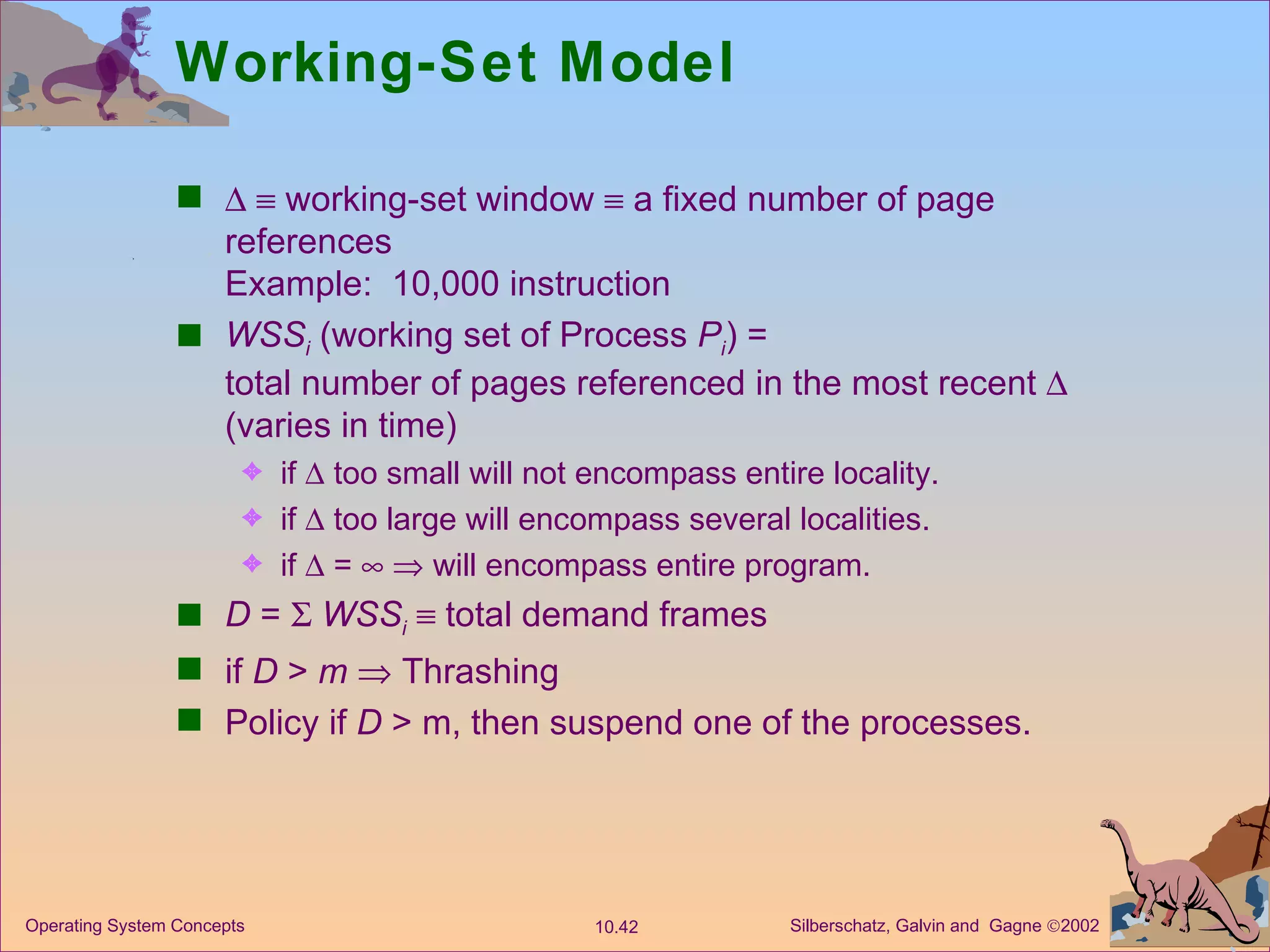
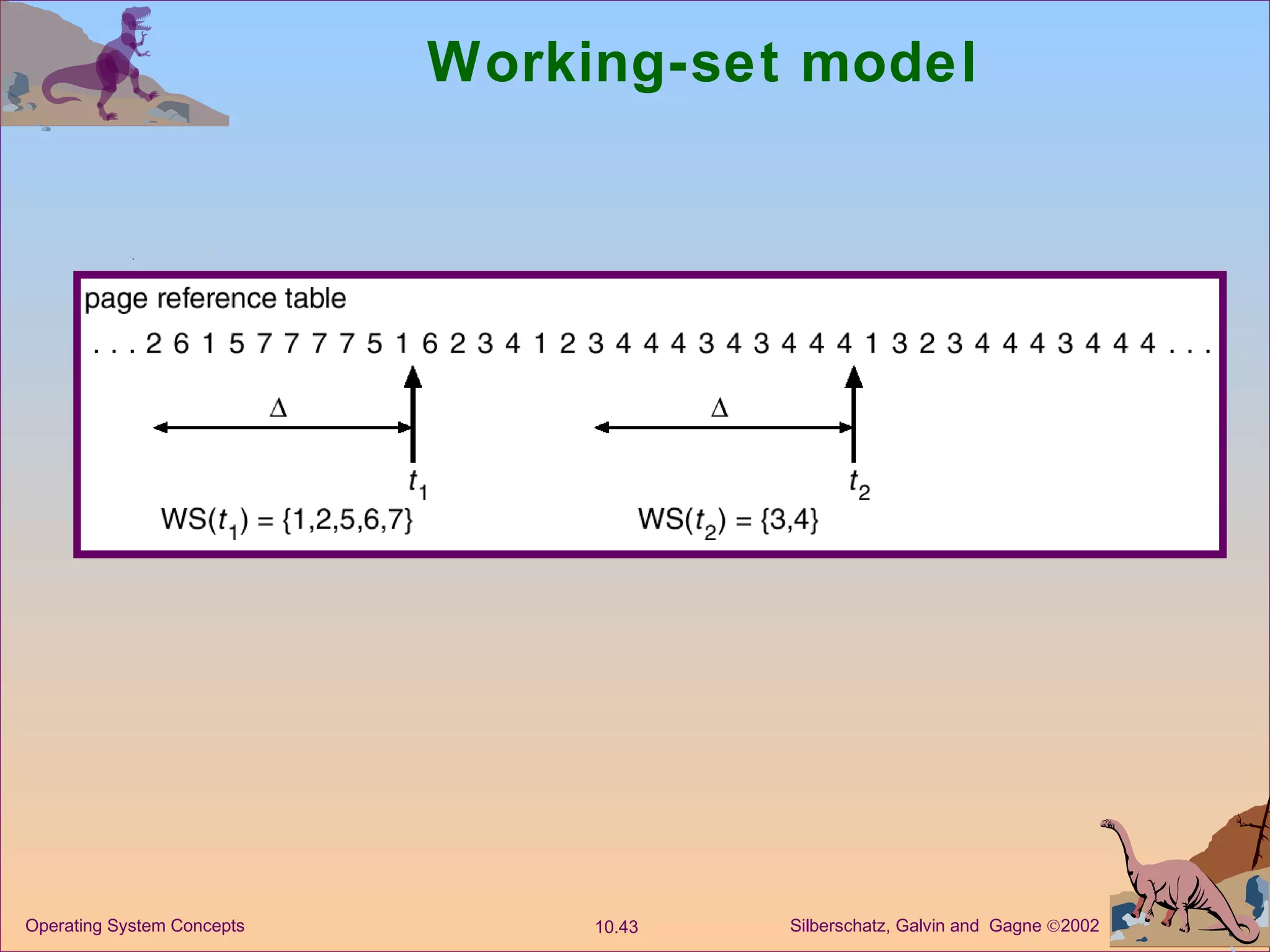
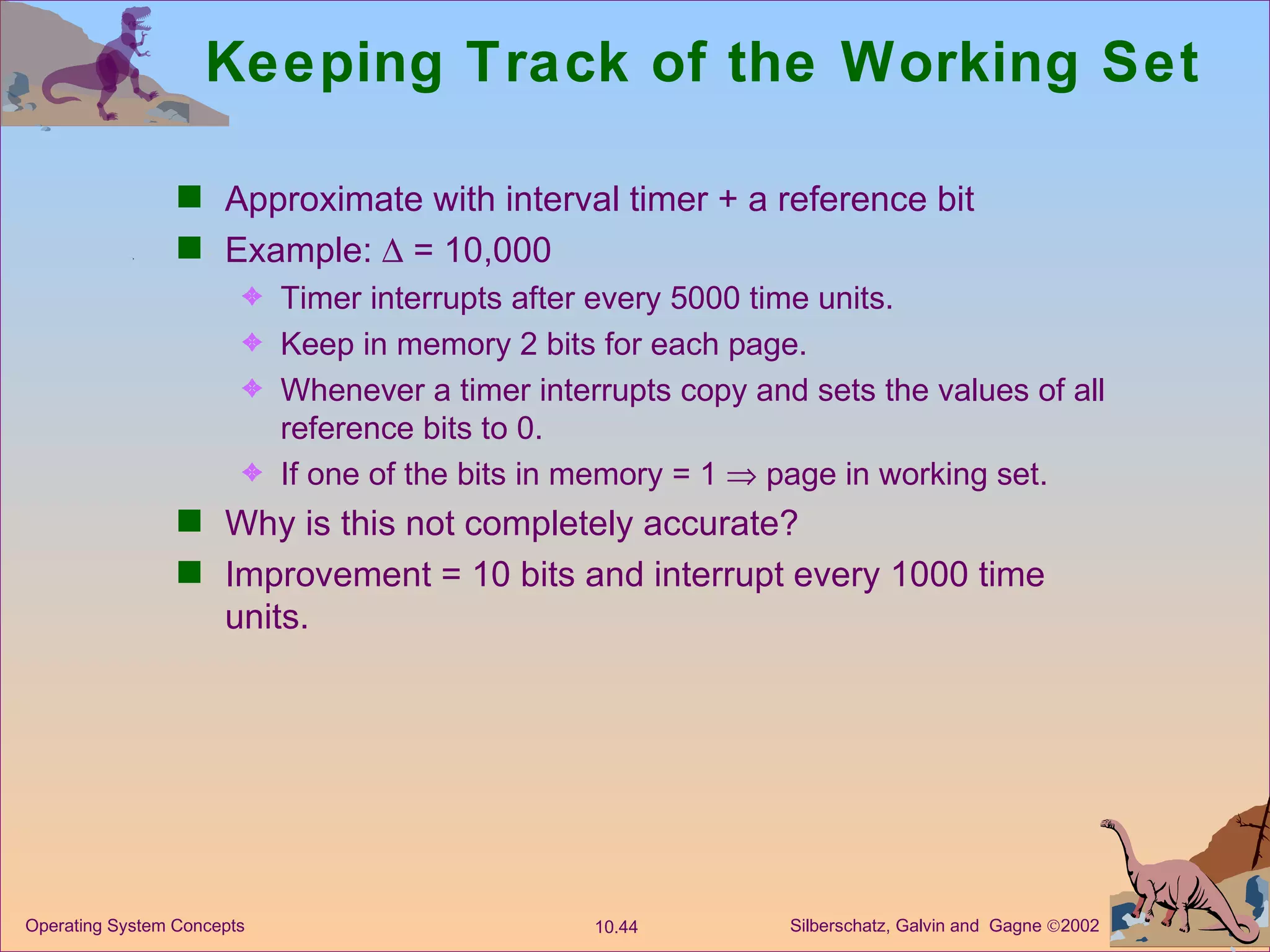
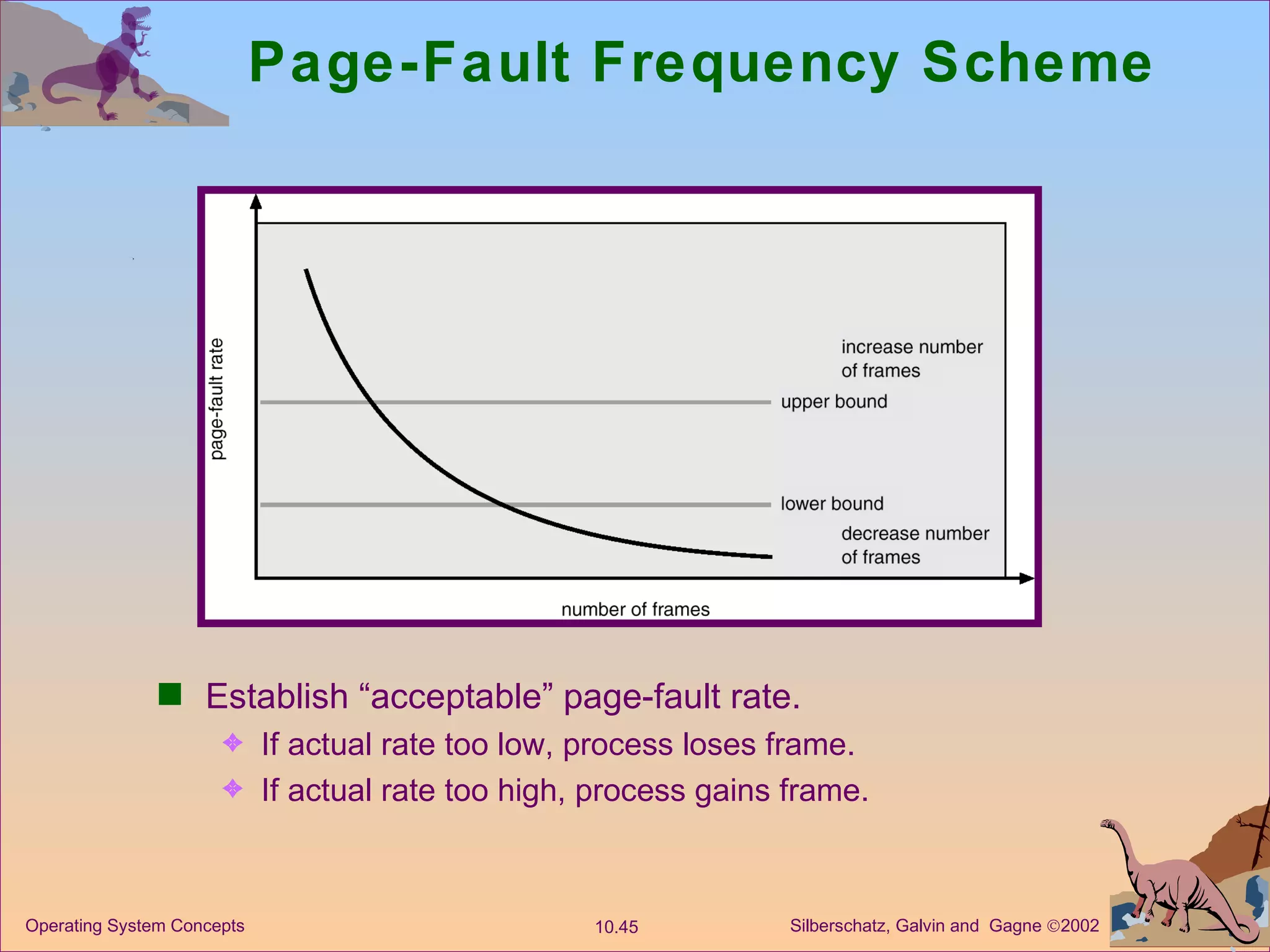
Virtual memory allows processes to have a logical address space larger than physical memory by paging portions of memory to disk as needed. When a process accesses a page not in memory, a page fault occurs which the operating system handles by finding a free frame, loading the needed page, and updating data structures. Page replacement algorithms aim to select pages least likely to be used soon when a free frame is unavailable. Thrashing can occur if working set sizes exceed available memory, continuously triggering page faults.
![Performance of Demand Paging Page Fault Rate 0 p 1.0 if p = 0 no page faults if p = 1, every reference is a fault Effective Access Time (EAT) EAT = (1 – p ) x memory access + p (page fault overhead + [swap page out ] + swap page in + restart overhead)](https://image.slidesharecdn.com/ch10-100408060011-phpapp02/75/Ch10-OS-11-2048.jpg)
![Other Considerations (Cont.) Program structure int A[][] = new int[1024][1024]; Each row is stored in one page Program 1 for (j = 0; j < A.length; j++) for (i = 0; i < A.length; i++) A[i,j] = 0; 1024 x 1024 page faults Program 2 for (i = 0; i < A.length; i++) for (j = 0; j < A.length; j++) A[i,j] = 0; 1024 page faults](https://image.slidesharecdn.com/ch10-100408060011-phpapp02/75/Ch10-OS-49-2048.jpg)