Virtual memory is a technique that is used to execute
processes that are not in main memory completely. The
remaining part are placed on the backing storage.
Demand paging
It is a technique that is used to bring a page into memory only
when it is needed.
 Page is needed  reference to it
 Referenced page not in real memory  Page Fault
 Just not in memory  Demand paging
 Find free frame
 Swap page into frame
 Reset tables to indicate page now in memory
 Restart the instruction that caused the page fault
“Page replacement completes separation between logical
memory and physical memory large virtual memory can be
provided on a smaller physical memory”
 It terminates the program immediately
Or
 Swaps out program & frees all of its frames
 It reduces the degree of multiprogramming
Steps performed by OS while replacing a page upon a page
fault:
1. Find the location of the desired page on disk
2. Find a free frame:
If there is a free frame, use it
If there is no free frame, use a page replacement algorithm
to select a victim frame; if the victim page is modified, write it
back to disk.
3. Bring the desired page into the (new) free frame; update the
page and frame tables
4. Restart the process
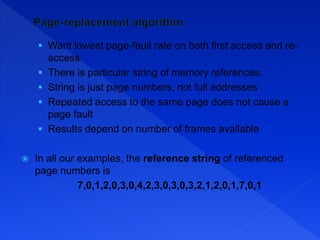
 Want lowest page-fault rate on both first access and re-
access
 There is particular string of memory references.
 String is just page numbers, not full addresses
 Repeated access to the same page does not cause a
page fault
 Results depend on number of frames available
 In all our examples, the reference string of referenced
page numbers is
7,0,1,2,0,3,0,4,2,3,0,3,0,3,2,1,2,0,1,7,0,1
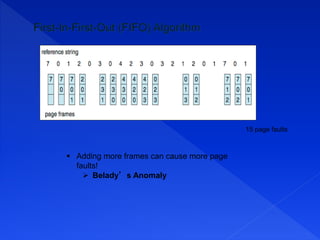
 Oldest page in main memory is the one which will be
selected for replacement
 Easy to implement, keep a list, replace pages from the tail
and add new pages at the head.
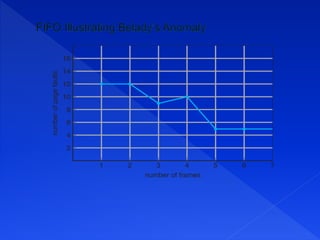
 Adding more frames can cause more page
faults!
 Belady’s Anomaly
15 page faults
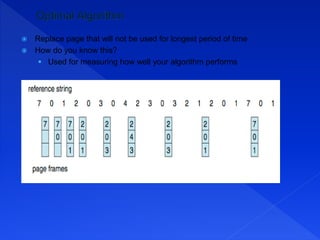
 Replace page that will not be used for longest period of time
 How do you know this?
 Used for measuring how well your algorithm performs
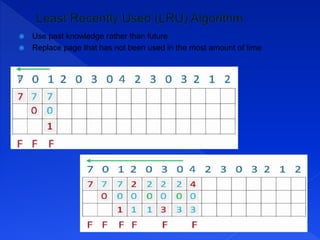
 Use past knowledge rather than future
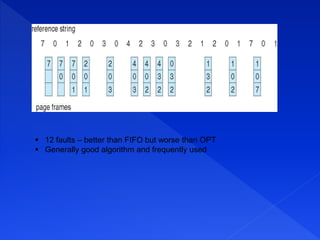
 Replace page that has not been used in the most amount of time
 12 faults – better than FIFO but worse than OPT
 Generally good algorithm and frequently used
With each page associate a bit, initially= 0
When page is referenced bit set to 1
 This Algorithm is a FIFO replacement algorithm wit
consideration given to the reference bit .when a page
has been selected for replacement , its reference bit is
inspected .
 When a page is given a second chance its reference bit
is cleared and its arrival time reset to the current time
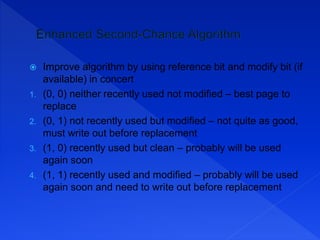
 Improve algorithm by using reference bit and modify bit (if
available) in concert
1. (0, 0) neither recently used not modified – best page to
replace
2. (0, 1) not recently used but modified – not quite as good,
must write out before replacement
3. (1, 0) recently used but clean – probably will be used
again soon
4. (1, 1) recently used and modified – probably will be used
again soon and need to write out before replacement
 Each process needs minimum number of pages
 Various allocation approaches
› fixed allocation
› global allocation
› local allocation
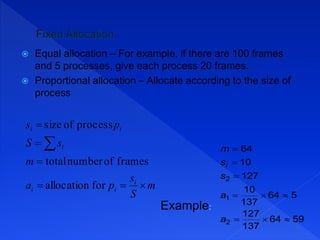
 Equal allocation – For example, if there are 100 frames
and 5 processes, give each process 20 frames.
 Proportional allocation – Allocate according to the size of
process
m
S
s
pa
m
sS
ps
i
ii
i
ii





forallocation
framesofnumbertotal
processofsize
Example:
5964
137
127
564
137
10
127
10
64
2
1
2





a
a
s
s
m
i
 When a page fault occurs for a process and we need page
replacement, there are two general approaches:
› Global replacement – select a victim frame from the
set of all frames;
 one process can take a frame from another
› Local replacement – select a victim frame only from
the frames allocated to the process.
 A process uses always its allocated frames
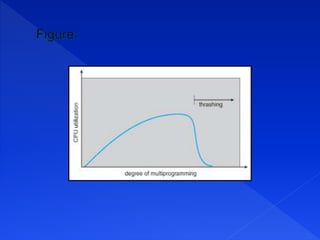
 At some time , the processor may be spend most of its
time swapping pages and doing little productive work, this
is known as Thrashing.
virtual memory Operating system

virtual memory Operating system

  • 2.
    Virtual memory isa technique that is used to execute processes that are not in main memory completely. The remaining part are placed on the backing storage. Demand paging It is a technique that is used to bring a page into memory only when it is needed.
  • 3.
     Page isneeded  reference to it  Referenced page not in real memory  Page Fault  Just not in memory  Demand paging  Find free frame  Swap page into frame  Reset tables to indicate page now in memory  Restart the instruction that caused the page fault
  • 4.
    “Page replacement completesseparation between logical memory and physical memory large virtual memory can be provided on a smaller physical memory”
  • 5.
     It terminatesthe program immediately Or  Swaps out program & frees all of its frames  It reduces the degree of multiprogramming
  • 6.
    Steps performed byOS while replacing a page upon a page fault: 1. Find the location of the desired page on disk 2. Find a free frame: If there is a free frame, use it If there is no free frame, use a page replacement algorithm to select a victim frame; if the victim page is modified, write it back to disk. 3. Bring the desired page into the (new) free frame; update the page and frame tables 4. Restart the process
  • 7.
     Want lowestpage-fault rate on both first access and re- access  There is particular string of memory references.  String is just page numbers, not full addresses  Repeated access to the same page does not cause a page fault  Results depend on number of frames available  In all our examples, the reference string of referenced page numbers is 7,0,1,2,0,3,0,4,2,3,0,3,0,3,2,1,2,0,1,7,0,1
  • 8.
     Oldest pagein main memory is the one which will be selected for replacement  Easy to implement, keep a list, replace pages from the tail and add new pages at the head.
  • 9.
     Adding moreframes can cause more page faults!  Belady’s Anomaly 15 page faults
  • 11.
     Replace pagethat will not be used for longest period of time  How do you know this?  Used for measuring how well your algorithm performs
  • 12.
     Use pastknowledge rather than future  Replace page that has not been used in the most amount of time
  • 13.
     12 faults– better than FIFO but worse than OPT  Generally good algorithm and frequently used
  • 14.
    With each pageassociate a bit, initially= 0 When page is referenced bit set to 1
  • 16.
     This Algorithmis a FIFO replacement algorithm wit consideration given to the reference bit .when a page has been selected for replacement , its reference bit is inspected .  When a page is given a second chance its reference bit is cleared and its arrival time reset to the current time
  • 17.
     Improve algorithmby using reference bit and modify bit (if available) in concert 1. (0, 0) neither recently used not modified – best page to replace 2. (0, 1) not recently used but modified – not quite as good, must write out before replacement 3. (1, 0) recently used but clean – probably will be used again soon 4. (1, 1) recently used and modified – probably will be used again soon and need to write out before replacement
  • 18.
     Each processneeds minimum number of pages  Various allocation approaches › fixed allocation › global allocation › local allocation
  • 19.
     Equal allocation– For example, if there are 100 frames and 5 processes, give each process 20 frames.  Proportional allocation – Allocate according to the size of process m S s pa m sS ps i ii i ii      forallocation framesofnumbertotal processofsize Example: 5964 137 127 564 137 10 127 10 64 2 1 2      a a s s m i
  • 20.
     When apage fault occurs for a process and we need page replacement, there are two general approaches: › Global replacement – select a victim frame from the set of all frames;  one process can take a frame from another › Local replacement – select a victim frame only from the frames allocated to the process.  A process uses always its allocated frames
  • 21.
     At sometime , the processor may be spend most of its time swapping pages and doing little productive work, this is known as Thrashing.