Downloaded 72 times
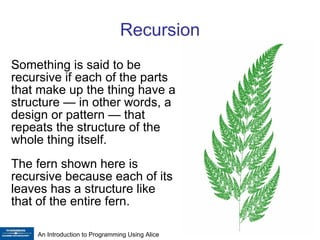
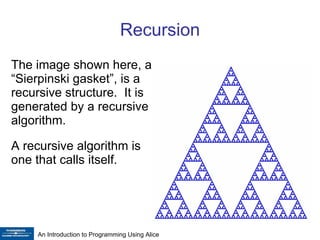
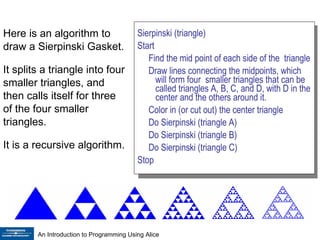
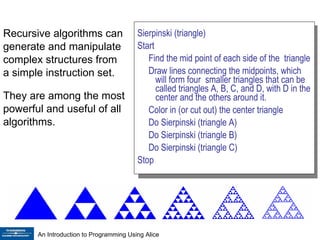
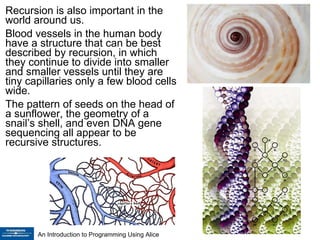
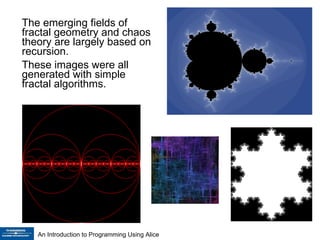
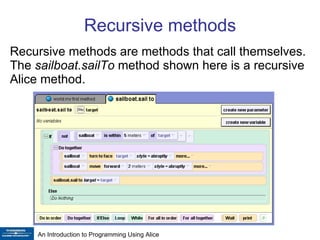
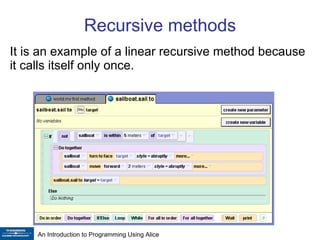
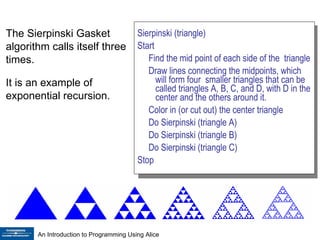
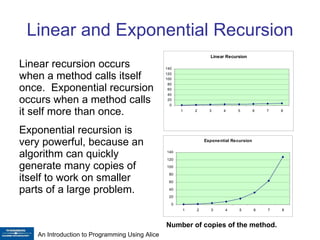
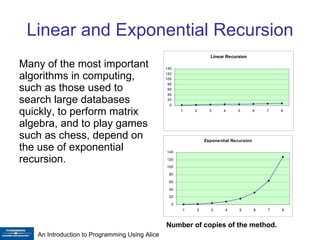
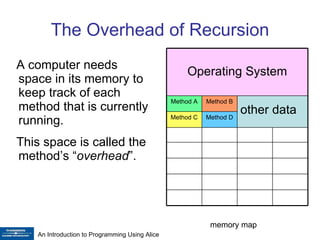
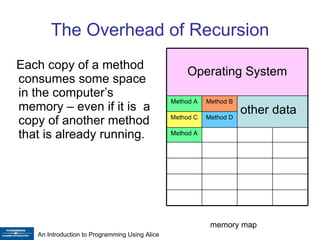
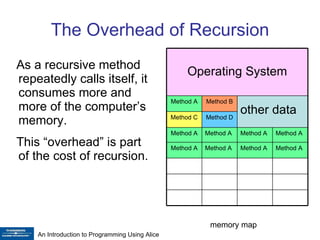
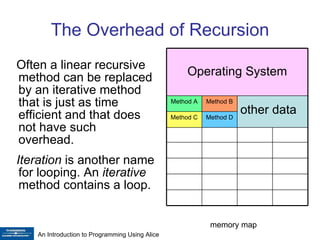
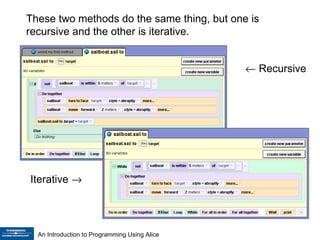
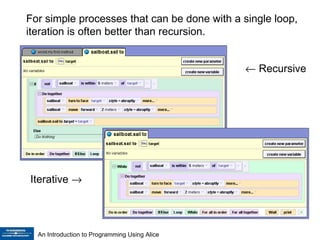
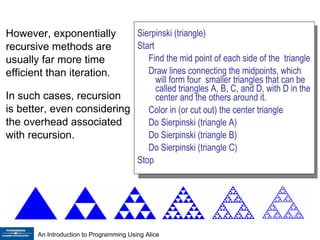
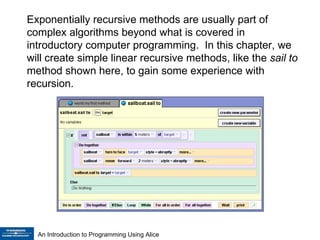

Recursion involves a method that calls itself directly or indirectly. This can be done linearly, where a method calls itself once, or exponentially, where it calls itself multiple times. Recursive algorithms can generate complex structures from simple instructions and are often more efficient than iterative approaches, though they require additional memory. Common examples of recursion in nature and mathematics are fractals, trees, and recursive algorithms used to generate structures like the Sierpinski triangle.


