Independence and the Constitution Chapter 2 section 3, 4 and 5 09/15/09 12.1 Explain the fundamental principles and moral values of American democracy as expressed in the U.S. Constitution and other essential documents of American democracy.
Topics The State Governments The Articles of Confederation The Constitution Ratification 09/15/09 12.1 Explain the fundamental principles and moral values of American democracy as expressed in the U.S. Constitution and other essential documents of American democracy.
I. The State governments A common experience What did they fear? 09/15/09 12.1 Explain the fundamental principles and moral values of American democracy as expressed in the U.S. Constitution and other essential documents of American democracy.
A. common experience State governments used: Constitutions- social contracts Popular Sovereignty Limited the power of government. 7 states had a bill of Rights All had separation of power 09/15/09 12.1 Explain the fundamental principles and moral values of American democracy as expressed in the U.S. Constitution and other essential documents of American democracy.
B. What did they fear? A strong central government. States just achieved independence. Do they want to give it up to a central government? Think moving in with your Grandparents!! 09/15/09 12.1 Explain the fundamental principles and moral values of American democracy as expressed in the U.S. Constitution and other essential documents of American democracy.
II. The Articles of Confederation Definition A brief description Its weaknesses Shay’s Rebellion. 09/15/09 12.1 Explain the fundamental principles and moral values of American democracy as expressed in the U.S. Constitution and other essential documents of American democracy.
A. Definition 09/15/09 12.1 Explain the fundamental principles and moral values of American democracy as expressed in the U.S. Constitution and other essential documents of American democracy.  It was the first attempt the American colonists made at creating their own government
B. A brief description It was a confederation. Weak central government. Strong state government. Legislature had most of power. Unicameral. No executive or judicial branch. Difficult to make change. 9 states needed to approve laws. 13 to amend. 09/15/09 12.1 Explain the fundamental principles and moral values of American democracy as expressed in the U.S. Constitution and other essential documents of American democracy.
C. Its weaknesses Powerless to regulate foreign and interstate trade. No executive to enforce the law. No Power to Tax. 9 to approve, 13 to amend. No national court system How are  disputes settled? 09/15/09 12.1 Explain the fundamental principles and moral values of American democracy as expressed in the U.S. Constitution and other essential documents of American democracy.
D. Shay’s Rebellion Economic conditions were worsening. States had trade wars. Had there own currency. Many farmers were losing there farms. Daniel Shay led a rebellion against the government. The central government had no troops to respond. 09/15/09 12.1 Explain the fundamental principles and moral values of American democracy as expressed in the U.S. Constitution and other essential documents of American democracy.
III. The Constitution The Framers? The Virginia Plan The New Jersey Plan The Connecticut Compromise Other Compromises  09/15/09 12.1 Explain the fundamental principles and moral values of American democracy as expressed in the U.S. Constitution and other essential documents of American democracy.
A. The Framers 55 delegates from 12 states, No R.I. A long hot summer. Met in secrecy The role of Madison ( Not Jefferson ). “ Never before or since, has so remarkable a group been brought together in this country.” 09/15/09 12.1 Explain the fundamental principles and moral values of American democracy as expressed in the U.S. Constitution and other essential documents of American democracy.
B. The Virginia Plan Proposed by James Madison Proposed 3 branches of government. Executive and Judiciary selected by the Legislative branch. A two house legislature (Bicameral) that had proportional representation. Plan favored larger states. 09/15/09 12.1 Explain the fundamental principles and moral values of American democracy as expressed in the U.S. Constitution and other essential documents of American democracy.
C. The New Jersey Plan It had no president, but an executive committee. Single house legislature (Unicameral) with with equal representation. Favored smaller states. 09/15/09 12.1 Explain the fundamental principles and moral values of American democracy as expressed in the U.S. Constitution and other essential documents of American democracy.
D. The Connecticut Compromise The Great Compromise  Two houses The Senate Equal representation Two seats per state The House. Proportional Representation. 09/15/09 12.1 Explain the fundamental principles and moral values of American democracy as expressed in the U.S. Constitution and other essential documents of American democracy.
E. Other Compromises The 3/5 Compromise Issue: Slavery-taxation and representation Postpones slave debate The Electoral College Issue:Who elects the President. Federalism State power vs. national government 09/15/09 12.1 Explain the fundamental principles and moral values of American democracy as expressed in the U.S. Constitution and other essential documents of American democracy.
IV. The Fight for ratification The Federalists The Anti-Federalists Ratification 09/15/09 12.1 Explain the fundamental principles and moral values of American democracy as expressed in the U.S. Constitution and other essential documents of American democracy.
A. The Federalists John Jay, Alexander Hamilton and James Madison. Supported a strong central government. The Federalist Papers 09/15/09 12.1 Explain the fundamental principles and moral values of American democracy as expressed in the U.S. Constitution and other essential documents of American democracy.
B. The Anti Federalists Patrick Henry, Samuel Adams and George Mason. Wanted stronger state governments.. More responsive to the people. Constitution lacked a Bill Of Rights. 09/15/09 12.1 Explain the fundamental principles and moral values of American democracy as expressed in the U.S. Constitution and other essential documents of American democracy.
C. Ratification 9 states required to ratify. By June 1789 9 states did. But not Virginia and New York. Virginia and New York were needed. 09/15/09 12.1 Explain the fundamental principles and moral values of American democracy as expressed in the U.S. Constitution and other essential documents of American democracy.
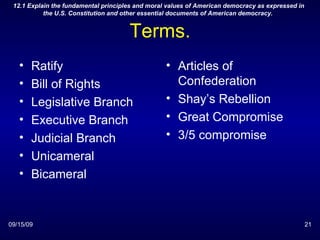
Terms. Ratify Bill of Rights Legislative Branch Executive Branch Judicial Branch Unicameral Bicameral Articles of Confederation Shay’s Rebellion Great Compromise 3/5 compromise 09/15/09 12.1 Explain the fundamental principles and moral values of American democracy as expressed in the U.S. Constitution and other essential documents of American democracy.

Ch 2 Sec 3,4,5

  • 1.
    Independence and theConstitution Chapter 2 section 3, 4 and 5 09/15/09 12.1 Explain the fundamental principles and moral values of American democracy as expressed in the U.S. Constitution and other essential documents of American democracy.
  • 2.
    Topics The StateGovernments The Articles of Confederation The Constitution Ratification 09/15/09 12.1 Explain the fundamental principles and moral values of American democracy as expressed in the U.S. Constitution and other essential documents of American democracy.
  • 3.
    I. The Stategovernments A common experience What did they fear? 09/15/09 12.1 Explain the fundamental principles and moral values of American democracy as expressed in the U.S. Constitution and other essential documents of American democracy.
  • 4.
    A. common experienceState governments used: Constitutions- social contracts Popular Sovereignty Limited the power of government. 7 states had a bill of Rights All had separation of power 09/15/09 12.1 Explain the fundamental principles and moral values of American democracy as expressed in the U.S. Constitution and other essential documents of American democracy.
  • 5.
    B. What didthey fear? A strong central government. States just achieved independence. Do they want to give it up to a central government? Think moving in with your Grandparents!! 09/15/09 12.1 Explain the fundamental principles and moral values of American democracy as expressed in the U.S. Constitution and other essential documents of American democracy.
  • 6.
    II. The Articlesof Confederation Definition A brief description Its weaknesses Shay’s Rebellion. 09/15/09 12.1 Explain the fundamental principles and moral values of American democracy as expressed in the U.S. Constitution and other essential documents of American democracy.
  • 7.
    A. Definition 09/15/0912.1 Explain the fundamental principles and moral values of American democracy as expressed in the U.S. Constitution and other essential documents of American democracy. It was the first attempt the American colonists made at creating their own government
  • 8.
    B. A briefdescription It was a confederation. Weak central government. Strong state government. Legislature had most of power. Unicameral. No executive or judicial branch. Difficult to make change. 9 states needed to approve laws. 13 to amend. 09/15/09 12.1 Explain the fundamental principles and moral values of American democracy as expressed in the U.S. Constitution and other essential documents of American democracy.
  • 9.
    C. Its weaknessesPowerless to regulate foreign and interstate trade. No executive to enforce the law. No Power to Tax. 9 to approve, 13 to amend. No national court system How are disputes settled? 09/15/09 12.1 Explain the fundamental principles and moral values of American democracy as expressed in the U.S. Constitution and other essential documents of American democracy.
  • 10.
    D. Shay’s RebellionEconomic conditions were worsening. States had trade wars. Had there own currency. Many farmers were losing there farms. Daniel Shay led a rebellion against the government. The central government had no troops to respond. 09/15/09 12.1 Explain the fundamental principles and moral values of American democracy as expressed in the U.S. Constitution and other essential documents of American democracy.
  • 11.
    III. The ConstitutionThe Framers? The Virginia Plan The New Jersey Plan The Connecticut Compromise Other Compromises 09/15/09 12.1 Explain the fundamental principles and moral values of American democracy as expressed in the U.S. Constitution and other essential documents of American democracy.
  • 12.
    A. The Framers55 delegates from 12 states, No R.I. A long hot summer. Met in secrecy The role of Madison ( Not Jefferson ). “ Never before or since, has so remarkable a group been brought together in this country.” 09/15/09 12.1 Explain the fundamental principles and moral values of American democracy as expressed in the U.S. Constitution and other essential documents of American democracy.
  • 13.
    B. The VirginiaPlan Proposed by James Madison Proposed 3 branches of government. Executive and Judiciary selected by the Legislative branch. A two house legislature (Bicameral) that had proportional representation. Plan favored larger states. 09/15/09 12.1 Explain the fundamental principles and moral values of American democracy as expressed in the U.S. Constitution and other essential documents of American democracy.
  • 14.
    C. The NewJersey Plan It had no president, but an executive committee. Single house legislature (Unicameral) with with equal representation. Favored smaller states. 09/15/09 12.1 Explain the fundamental principles and moral values of American democracy as expressed in the U.S. Constitution and other essential documents of American democracy.
  • 15.
    D. The ConnecticutCompromise The Great Compromise Two houses The Senate Equal representation Two seats per state The House. Proportional Representation. 09/15/09 12.1 Explain the fundamental principles and moral values of American democracy as expressed in the U.S. Constitution and other essential documents of American democracy.
  • 16.
    E. Other CompromisesThe 3/5 Compromise Issue: Slavery-taxation and representation Postpones slave debate The Electoral College Issue:Who elects the President. Federalism State power vs. national government 09/15/09 12.1 Explain the fundamental principles and moral values of American democracy as expressed in the U.S. Constitution and other essential documents of American democracy.
  • 17.
    IV. The Fightfor ratification The Federalists The Anti-Federalists Ratification 09/15/09 12.1 Explain the fundamental principles and moral values of American democracy as expressed in the U.S. Constitution and other essential documents of American democracy.
  • 18.
    A. The FederalistsJohn Jay, Alexander Hamilton and James Madison. Supported a strong central government. The Federalist Papers 09/15/09 12.1 Explain the fundamental principles and moral values of American democracy as expressed in the U.S. Constitution and other essential documents of American democracy.
  • 19.
    B. The AntiFederalists Patrick Henry, Samuel Adams and George Mason. Wanted stronger state governments.. More responsive to the people. Constitution lacked a Bill Of Rights. 09/15/09 12.1 Explain the fundamental principles and moral values of American democracy as expressed in the U.S. Constitution and other essential documents of American democracy.
  • 20.
    C. Ratification 9states required to ratify. By June 1789 9 states did. But not Virginia and New York. Virginia and New York were needed. 09/15/09 12.1 Explain the fundamental principles and moral values of American democracy as expressed in the U.S. Constitution and other essential documents of American democracy.
  • 21.
    Terms. Ratify Billof Rights Legislative Branch Executive Branch Judicial Branch Unicameral Bicameral Articles of Confederation Shay’s Rebellion Great Compromise 3/5 compromise 09/15/09 12.1 Explain the fundamental principles and moral values of American democracy as expressed in the U.S. Constitution and other essential documents of American democracy.