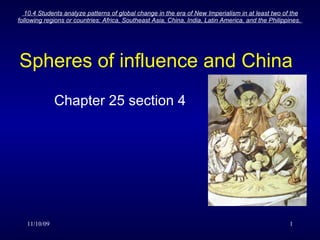
Spheres of influence and China Chapter 25 section 4
Topics Structure of Chinese Society China viewed itself as the center of Civilization. European Trade and China The Opium Wars Ch’ing Dynasty struggles
I. Structure of Chinese Society A Feudal model The Bureaucracy
A. A Feudal model Elite rented land to peasants and collected taxes. Peasants worked the land. Both groups were treated equally before the law.
B. The Bureaucracy ran the country. Person had to pass a difficult exam to enter. Focused on long history of China Also on Confucianism. To perfect the behavior of man. Had to look at the past.
II. China  as center of Civilization. Massive population Advanced Civilization Controlled local trade Very long history Cultural Chauvinism
A. Massive population Growing Population 150 million to 400 million. Large work force, no need to industrialize.
B. Advanced Civilization Invented the compass, printing, gunpowder. Produced many fine goods by skilled artisans. More advanced metallurgy up until the 17th century.
C. Controlled local trade Large fleet controlled local seas.
D. Very long history Longer recorded history than Europe.
E. Cultural Chauvinism Longer recorded history than Europe. China believed they were center of Civilization. Led to cultural Chauvinism or Hubris. The idea that China was superior to other nations. This is a big problem. China was unwilling to learn from other nations.
III. European Trade and China Europe wanted access to Chinese markets. China looked down on Europe.
A. Europe wanted access to Chinese markets. Europe wanted Chinese items such as silk, porcelain and Rhubarb. The problem was that China did not want anything from Europe. China only wanted gold and silver. Creates a Balance of Trade problem. Europe needs an item to trade to China.
B. China looked down on Europe. The barbarians smelled bad. They were only allowed to trade in Canton to licensed Hong Traders. China wanted to keep Europeans out of China.
IV. The Opium Wars  (1839-1842) The Opium trade China protests Treaty of Nanking
A. The Opium trade Opium was the solution to the trade problem. Opium trade increases from 1800 to 1839 by 4000 to 40,000 chests. Chinese Emperor asks Queen Victoria to end trade. She ignored the request.
B. China protests China goes to war to stop trade. Chinese navy has 13th century technology. Britain is Industrial. Chinese government is also no longer effective. Plagued with corruption. People used bribes to pass tests.
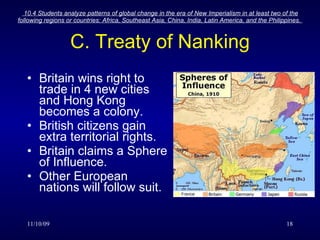
C. Treaty of Nanking Britain wins right to trade in 4 new cities and Hong Kong becomes a colony. British citizens gain extra territorial rights. Britain claims a Sphere of Influence. Other European nations will follow suit.
V. The Ch’ing Struggles Threats to China Tai Ping Rebellion U.S. and the Open Door Policy China attempts to modernize The Boxer Rebellion
A. Threats to China Dominated by Europe. Government was corrupt Overpopulation was becoming an issue. Opium trade and low taxes were emptying the treasury.
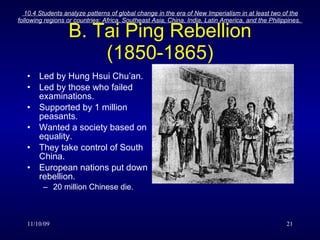
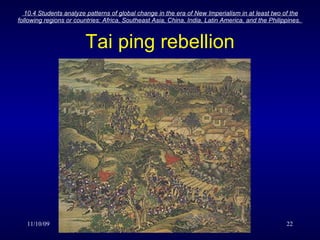
B. Tai Ping Rebellion (1850-1865) Led by Hung Hsui Chu’an. Led by those who failed examinations. Supported by 1 million peasants. Wanted a society based on equality. They take control of South China. European nations put down rebellion. 20 million Chinese die.
Tai ping rebellion
C. U.S. and the Open Door Policy U.S. fears being left out of China. China is a huge Market. U.S. declares an Open Door Policy. Any Nation may trade anywhere in China. Prevented china from being divided into colonies.
D. China attempts to modernize many argue modernization of China is essential to repel foreigners. Many Chinese resist. Cultural success of China. Long history. Must repel foreign influence, not embrace.
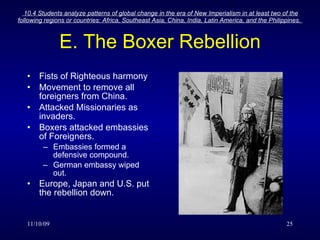
E. The Boxer Rebellion Fists of Righteous harmony Movement to remove all foreigners from China. Attacked Missionaries as invaders. Boxers attacked embassies of Foreigners. Embassies formed a defensive compound. German embassy wiped out. Europe, Japan and U.S. put the rebellion down.
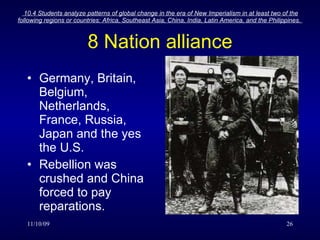
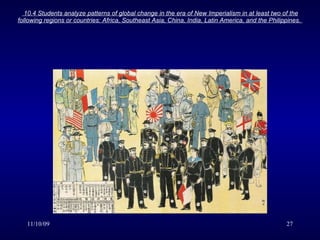
8 Nation alliance Germany, Britain, Belgium, Netherlands, France, Russia, Japan and the yes the U.S.  Rebellion was crushed and China forced to pay reparations.
 
Terms Extraterritorial rights Sphere of influence Opium war Hung Hsiu Chuan Taiping Rebellion Open Door Policy Boxer Rebellion
Summary… How did China view their own civilization? How did they view Europe's?  How did the Opium war’s affect the relationship between Europe and China? What actions did China take to oppose European dominance? Were they successful?

China And Imperialism

  • 1.
    Spheres of influenceand China Chapter 25 section 4
  • 2.
    Topics Structure ofChinese Society China viewed itself as the center of Civilization. European Trade and China The Opium Wars Ch’ing Dynasty struggles
  • 3.
    I. Structure ofChinese Society A Feudal model The Bureaucracy
  • 4.
    A. A Feudalmodel Elite rented land to peasants and collected taxes. Peasants worked the land. Both groups were treated equally before the law.
  • 5.
    B. The Bureaucracyran the country. Person had to pass a difficult exam to enter. Focused on long history of China Also on Confucianism. To perfect the behavior of man. Had to look at the past.
  • 6.
    II. China as center of Civilization. Massive population Advanced Civilization Controlled local trade Very long history Cultural Chauvinism
  • 7.
    A. Massive populationGrowing Population 150 million to 400 million. Large work force, no need to industrialize.
  • 8.
    B. Advanced CivilizationInvented the compass, printing, gunpowder. Produced many fine goods by skilled artisans. More advanced metallurgy up until the 17th century.
  • 9.
    C. Controlled localtrade Large fleet controlled local seas.
  • 10.
    D. Very longhistory Longer recorded history than Europe.
  • 11.
    E. Cultural ChauvinismLonger recorded history than Europe. China believed they were center of Civilization. Led to cultural Chauvinism or Hubris. The idea that China was superior to other nations. This is a big problem. China was unwilling to learn from other nations.
  • 12.
    III. European Tradeand China Europe wanted access to Chinese markets. China looked down on Europe.
  • 13.
    A. Europe wantedaccess to Chinese markets. Europe wanted Chinese items such as silk, porcelain and Rhubarb. The problem was that China did not want anything from Europe. China only wanted gold and silver. Creates a Balance of Trade problem. Europe needs an item to trade to China.
  • 14.
    B. China lookeddown on Europe. The barbarians smelled bad. They were only allowed to trade in Canton to licensed Hong Traders. China wanted to keep Europeans out of China.
  • 15.
    IV. The OpiumWars (1839-1842) The Opium trade China protests Treaty of Nanking
  • 16.
    A. The Opiumtrade Opium was the solution to the trade problem. Opium trade increases from 1800 to 1839 by 4000 to 40,000 chests. Chinese Emperor asks Queen Victoria to end trade. She ignored the request.
  • 17.
    B. China protestsChina goes to war to stop trade. Chinese navy has 13th century technology. Britain is Industrial. Chinese government is also no longer effective. Plagued with corruption. People used bribes to pass tests.
  • 18.
    C. Treaty ofNanking Britain wins right to trade in 4 new cities and Hong Kong becomes a colony. British citizens gain extra territorial rights. Britain claims a Sphere of Influence. Other European nations will follow suit.
  • 19.
    V. The Ch’ingStruggles Threats to China Tai Ping Rebellion U.S. and the Open Door Policy China attempts to modernize The Boxer Rebellion
  • 20.
    A. Threats toChina Dominated by Europe. Government was corrupt Overpopulation was becoming an issue. Opium trade and low taxes were emptying the treasury.
  • 21.
    B. Tai PingRebellion (1850-1865) Led by Hung Hsui Chu’an. Led by those who failed examinations. Supported by 1 million peasants. Wanted a society based on equality. They take control of South China. European nations put down rebellion. 20 million Chinese die.
  • 22.
  • 23.
    C. U.S. andthe Open Door Policy U.S. fears being left out of China. China is a huge Market. U.S. declares an Open Door Policy. Any Nation may trade anywhere in China. Prevented china from being divided into colonies.
  • 24.
    D. China attemptsto modernize many argue modernization of China is essential to repel foreigners. Many Chinese resist. Cultural success of China. Long history. Must repel foreign influence, not embrace.
  • 25.
    E. The BoxerRebellion Fists of Righteous harmony Movement to remove all foreigners from China. Attacked Missionaries as invaders. Boxers attacked embassies of Foreigners. Embassies formed a defensive compound. German embassy wiped out. Europe, Japan and U.S. put the rebellion down.
  • 26.
    8 Nation allianceGermany, Britain, Belgium, Netherlands, France, Russia, Japan and the yes the U.S. Rebellion was crushed and China forced to pay reparations.
  • 27.
  • 28.
    Terms Extraterritorial rightsSphere of influence Opium war Hung Hsiu Chuan Taiping Rebellion Open Door Policy Boxer Rebellion
  • 29.
    Summary… How didChina view their own civilization? How did they view Europe's? How did the Opium war’s affect the relationship between Europe and China? What actions did China take to oppose European dominance? Were they successful?