BUSINESS CYCLE

Introduction to Economics


                            1
Business Cycle
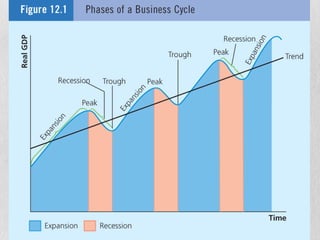
•Economic fluctuations: alternating periods of
 economic expansion and contraction
                             Boom, expansion
                             Bust, contraction,
                              slump, recession
                             Peak vs. trough
                             Depression


                                                   2
3
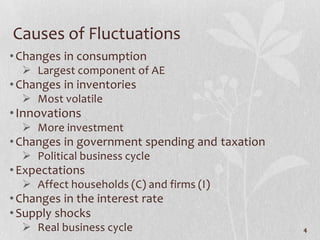
Causes of Fluctuations
• Changes in consumption
   Largest component of AE
• Changes in inventories
   Most volatile
• Innovations
   More investment
• Changes in government spending and taxation
   Political business cycle
• Expectations
   Affect households (C) and firms (I)
• Changes in the interest rate
• Supply shocks
   Real business cycle                         4
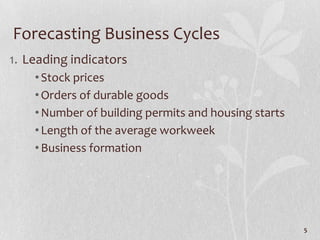
Forecasting Business Cycles
1. Leading indicators
    • Stock prices
    • Orders of durable goods
    • Number of building permits and housing starts
    • Length of the average workweek
    • Business formation


                                                      5
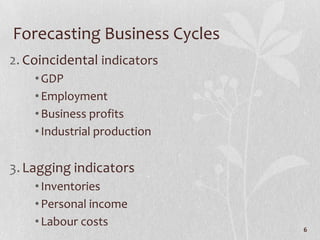
Forecasting Business Cycles
2. Coincidental indicators
    • GDP
    • Employment
    • Business profits
    • Industrial production

3. Lagging indicators
    • Inventories
    • Personal income
    • Labour costs
                              6

Ch 12: Business Cycle

  • 1.
  • 2.
    Business Cycle •Economic fluctuations:alternating periods of economic expansion and contraction  Boom, expansion  Bust, contraction, slump, recession  Peak vs. trough  Depression 2
  • 3.
  • 4.
    Causes of Fluctuations •Changes in consumption  Largest component of AE • Changes in inventories  Most volatile • Innovations  More investment • Changes in government spending and taxation  Political business cycle • Expectations  Affect households (C) and firms (I) • Changes in the interest rate • Supply shocks  Real business cycle 4
  • 5.
    Forecasting Business Cycles 1.Leading indicators • Stock prices • Orders of durable goods • Number of building permits and housing starts • Length of the average workweek • Business formation 5
  • 6.
    Forecasting Business Cycles 2.Coincidental indicators • GDP • Employment • Business profits • Industrial production 3. Lagging indicators • Inventories • Personal income • Labour costs 6