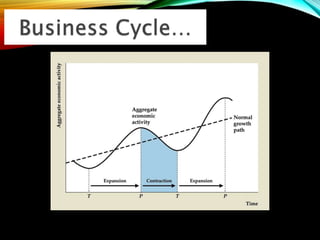
 A business cycle refers to periods of expansion and
contraction. A peak is the high point following a
period of economic expansion. A trough is the low
point following a period of economic decline.
What is a business cycle
The recurring and fluctuating levels of economic
activity that an economy experiences over a long period
of time.
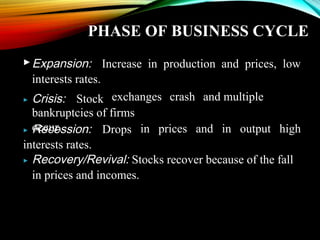
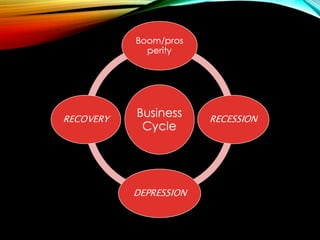
Expansion: Increase in production and prices, low
interests rates.
 Crisis: Stock exchanges crash and multiple
bankruptcies of firms
occur. Recession: Drops
interests rates.
in prices and in output high
 Recovery/Revival: Stocks recover because of the fall
in prices and incomes.
PHASE OF BUSINESS CYCLE
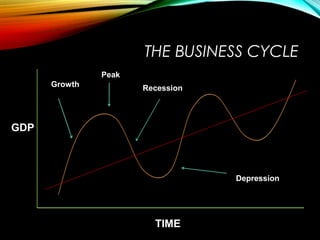
THE BUSINESS CYCLE
GDP
TIME
Peak
Recession
Depression
Growth
In recent years economic theory has moved towards
the study of economic fluctuation rather than a business
cycle.
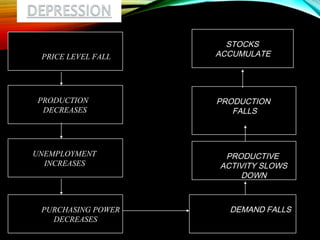
PRICE LEVEL FALL
PRODUCTION
DECREASES
UNEMPLOYMENT
INCREASES
PURCHASING POWER
DECREASES
DEMAND FALLS
PRODUCTIVE
ACTIVITY SLOWS
DOWN
PRODUCTION
FALLS
STOCKS
ACCUMULATE
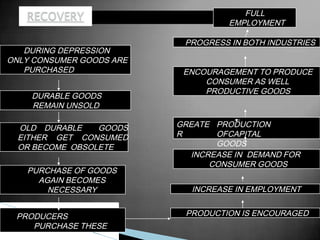
DURING DEPRESSION
ONLY CONSUMER GOODS ARE
PURCHASED
DURABLE GOODS
REMAIN UNSOLD
OLD DURABLE GOODS
EITHER GET CONSUMED
OR BECOME OBSOLETE
PURCHASE OF GOODS
AGAIN BECOMES
NECESSARY
PRODUCERS
PURCHASE THESE
GOODS
PRODUCTION IS ENCOURAGED
INCREASE IN EMPLOYMENT
INCREASE IN DEMAND FOR
CONSUMER GOODS
GREATE
R
PRODUCTION
OFCAPITAL
GOODS
ENCOURAGEMENT TO PRODUCE
CONSUMER AS WELL
PRODUCTIVE GOODS
PROGRESS IN BOTH INDUSTRIES
FULL
EMPLOYMENT
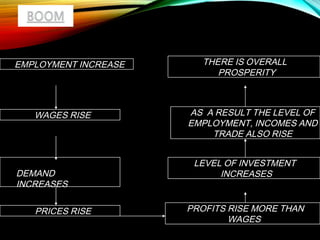
EMPLOYMENT INCREASE
WAGES RISE
DEMAND
INCREASES
PRICES RISE PROFITS RISE MORE THAN
WAGES
LEVEL OF INVESTMENT
INCREASES
AS A RESULT THE LEVEL OF
EMPLOYMENT, INCOMES AND
TRADE ALSO RISE
THERE IS OVERALL
PROSPERITY
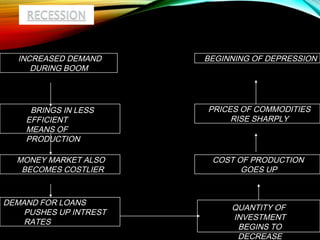
INCREASED DEMAND
DURING BOOM
BRINGS IN LESS
EFFICIENT
MEANS OF
PRODUCTION
MONEY MARKET ALSO
BECOMES COSTLIER
DEMAND FOR LOANS
PUSHES UP INTREST
RATES
QUANTITY OF
INVESTMENT
BEGINS TO
DECREASE
COST OF PRODUCTION
GOES UP
PRICES OF COMMODITIES
RISE SHARPLY
BEGINNING OF DEPRESSION
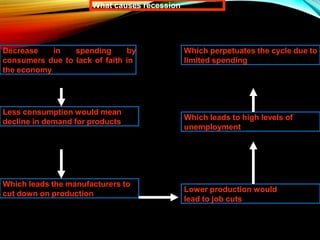
What causes recession
Decrease in spending by
consumers due to lack of faith in
the economy
Less consumption would mean
decline in demand for products
Which leads the manufacturers to
cut down on production
Lower production would
lead to job cuts
Which leads to high levels of
unemployment
Which perpetuates the cycle due to
limited spending
 The business cycle is the periodic but irregular up-
and-down movements in economic activity, measured
by fluctuations in Real GDP and other
macroeconomic variables.
CAUSES OF BUSINESS
CYCLES
• Internal Factors:
1. Consumption: When consumer spending increases, businesses will increase
production- causing them to hire more workers and purchase more materials
and capital goods. When consumer spending decreases, the opposite will occur.
2. Business investment: The purchasing of capital goods increases the number of
jobs in the economy because people have to make those goods. If investments
increases, the economy will grow, if investment decreases, the economy will
contract.
3. Government activity: The government can influence the business cycle
through fiscal policy (its tax and spend policies) and monetary policy (its
control of the money supply, largely through the federal reserve).
CONTI…
• External factors
1.Inventions and innovation: Major changes in technology can influence
the business cycle. Usually technological changes move the economy in a
positive direction, but this is not always so.
2.Wars and political events: The impact of such events on the economy
are very fact specific- in other words, difficult to generalize about.
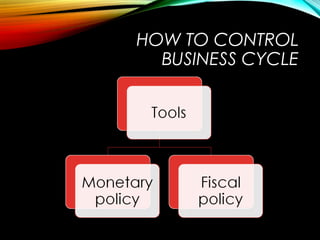
HOW TO CONTROL
BUSINESS CYCLE
INTRODUCTION
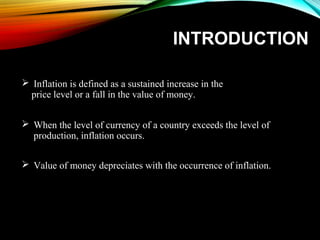
 Inflation is defined as a sustained increase in the
price level or a fall in the value of money.
 When the level of currency of a country exceeds the level of
production, inflation occurs.
 Value of money depreciates with the occurrence of inflation.
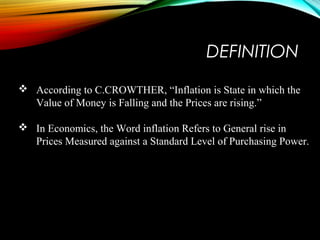
DEFINITION
 According to C.CROWTHER, “Inflation is State in which the
Value of Money is Falling and the Prices are rising.”
 In Economics, the Word inflation Refers to General rise in
Prices Measured against a Standard Level of Purchasing Power.
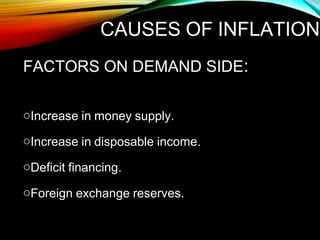
CAUSES OF INFLATION
FACTORS ON DEMAND SIDE:
oIncrease in money supply.
oIncrease in disposable income.
oDeficit financing.
oForeign exchange reserves.
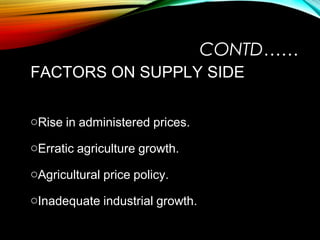
CONTD……
FACTORS ON SUPPLY SIDE
oRise in administered prices.
oErratic agriculture growth.
oAgricultural price policy.
oInadequate industrial growth.
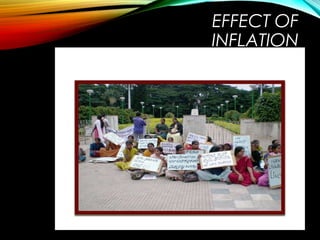
EFFECT OF
INFLATION
EFFECT OF
INFLATION
• They add inefficiencies in the market, and make it
difficult for companies to budget or plan long-term.
• Uncertainty about the future purchasing power of
money discourages investment and saving.
• There can also be negative impacts to trade from an
increased instability in currency exchange prices caused
by unpredictable inflation.
• Higher income tax rates.
• Inflation rate in the economy is higher than rates in
other countries; this will increase imports and reduce
exports, leading to a deficit in the balance of trade.
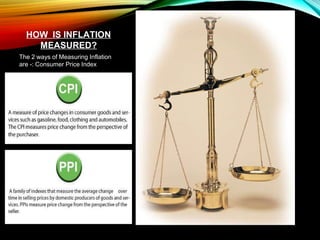
HOW IS INFLATION
MEASURED?
The 2 ways of Measuring Inflation
are -: Consumer Price Index
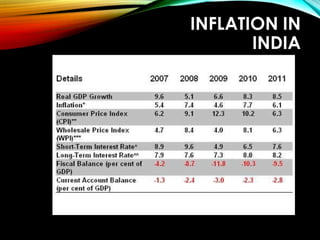
INFLATION IN
INDIA
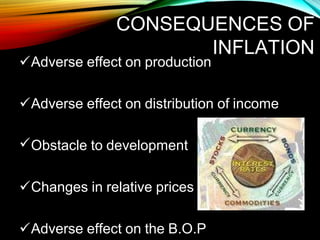
CONSEQUENCES OF
INFLATION
Adverse effect on production
Adverse effect on distribution of income
Obstacle to development
Changes in relative prices
Adverse effect on the B.O.P
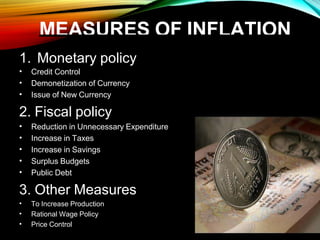
MEASURES OF INFLATION
1. Monetary policy
• Credit Control
• Demonetization of Currency
• Issue of New Currency
2. Fiscal policy
• Reduction in Unnecessary Expenditure
• Increase in Taxes
• Increase in Savings
• Surplus Budgets
• Public Debt
3. Other Measures
• To Increase Production
• Rational Wage Policy
• Price Control

Business Cycle

  • 1.
     A businesscycle refers to periods of expansion and contraction. A peak is the high point following a period of economic expansion. A trough is the low point following a period of economic decline. What is a business cycle
  • 2.
    The recurring andfluctuating levels of economic activity that an economy experiences over a long period of time.
  • 4.
    Expansion: Increase inproduction and prices, low interests rates.  Crisis: Stock exchanges crash and multiple bankruptcies of firms occur. Recession: Drops interests rates. in prices and in output high  Recovery/Revival: Stocks recover because of the fall in prices and incomes. PHASE OF BUSINESS CYCLE
  • 5.
  • 6.
    In recent yearseconomic theory has moved towards the study of economic fluctuation rather than a business cycle.
  • 8.
    PRICE LEVEL FALL PRODUCTION DECREASES UNEMPLOYMENT INCREASES PURCHASINGPOWER DECREASES DEMAND FALLS PRODUCTIVE ACTIVITY SLOWS DOWN PRODUCTION FALLS STOCKS ACCUMULATE
  • 9.
    DURING DEPRESSION ONLY CONSUMERGOODS ARE PURCHASED DURABLE GOODS REMAIN UNSOLD OLD DURABLE GOODS EITHER GET CONSUMED OR BECOME OBSOLETE PURCHASE OF GOODS AGAIN BECOMES NECESSARY PRODUCERS PURCHASE THESE GOODS PRODUCTION IS ENCOURAGED INCREASE IN EMPLOYMENT INCREASE IN DEMAND FOR CONSUMER GOODS GREATE R PRODUCTION OFCAPITAL GOODS ENCOURAGEMENT TO PRODUCE CONSUMER AS WELL PRODUCTIVE GOODS PROGRESS IN BOTH INDUSTRIES FULL EMPLOYMENT
  • 10.
    EMPLOYMENT INCREASE WAGES RISE DEMAND INCREASES PRICESRISE PROFITS RISE MORE THAN WAGES LEVEL OF INVESTMENT INCREASES AS A RESULT THE LEVEL OF EMPLOYMENT, INCOMES AND TRADE ALSO RISE THERE IS OVERALL PROSPERITY
  • 11.
    INCREASED DEMAND DURING BOOM BRINGSIN LESS EFFICIENT MEANS OF PRODUCTION MONEY MARKET ALSO BECOMES COSTLIER DEMAND FOR LOANS PUSHES UP INTREST RATES QUANTITY OF INVESTMENT BEGINS TO DECREASE COST OF PRODUCTION GOES UP PRICES OF COMMODITIES RISE SHARPLY BEGINNING OF DEPRESSION
  • 12.
    What causes recession Decreasein spending by consumers due to lack of faith in the economy Less consumption would mean decline in demand for products Which leads the manufacturers to cut down on production Lower production would lead to job cuts Which leads to high levels of unemployment Which perpetuates the cycle due to limited spending
  • 13.
     The businesscycle is the periodic but irregular up- and-down movements in economic activity, measured by fluctuations in Real GDP and other macroeconomic variables.
  • 14.
    CAUSES OF BUSINESS CYCLES •Internal Factors: 1. Consumption: When consumer spending increases, businesses will increase production- causing them to hire more workers and purchase more materials and capital goods. When consumer spending decreases, the opposite will occur. 2. Business investment: The purchasing of capital goods increases the number of jobs in the economy because people have to make those goods. If investments increases, the economy will grow, if investment decreases, the economy will contract. 3. Government activity: The government can influence the business cycle through fiscal policy (its tax and spend policies) and monetary policy (its control of the money supply, largely through the federal reserve).
  • 15.
    CONTI… • External factors 1.Inventionsand innovation: Major changes in technology can influence the business cycle. Usually technological changes move the economy in a positive direction, but this is not always so. 2.Wars and political events: The impact of such events on the economy are very fact specific- in other words, difficult to generalize about.
  • 16.
  • 17.
    INTRODUCTION  Inflation isdefined as a sustained increase in the price level or a fall in the value of money.  When the level of currency of a country exceeds the level of production, inflation occurs.  Value of money depreciates with the occurrence of inflation.
  • 18.
    DEFINITION  According toC.CROWTHER, “Inflation is State in which the Value of Money is Falling and the Prices are rising.”  In Economics, the Word inflation Refers to General rise in Prices Measured against a Standard Level of Purchasing Power.
  • 19.
    CAUSES OF INFLATION FACTORSON DEMAND SIDE: oIncrease in money supply. oIncrease in disposable income. oDeficit financing. oForeign exchange reserves.
  • 20.
    CONTD…… FACTORS ON SUPPLYSIDE oRise in administered prices. oErratic agriculture growth. oAgricultural price policy. oInadequate industrial growth.
  • 21.
  • 22.
    EFFECT OF INFLATION • Theyadd inefficiencies in the market, and make it difficult for companies to budget or plan long-term. • Uncertainty about the future purchasing power of money discourages investment and saving.
  • 23.
    • There canalso be negative impacts to trade from an increased instability in currency exchange prices caused by unpredictable inflation. • Higher income tax rates. • Inflation rate in the economy is higher than rates in other countries; this will increase imports and reduce exports, leading to a deficit in the balance of trade.
  • 24.
    HOW IS INFLATION MEASURED? The2 ways of Measuring Inflation are -: Consumer Price Index
  • 25.
  • 26.
    CONSEQUENCES OF INFLATION Adverse effecton production Adverse effect on distribution of income Obstacle to development Changes in relative prices Adverse effect on the B.O.P
  • 27.
    MEASURES OF INFLATION 1.Monetary policy • Credit Control • Demonetization of Currency • Issue of New Currency 2. Fiscal policy • Reduction in Unnecessary Expenditure • Increase in Taxes • Increase in Savings • Surplus Budgets • Public Debt 3. Other Measures • To Increase Production • Rational Wage Policy • Price Control