CETI
Driver for change: the role of
education and leadership
Professor Steven C. Boyages
November 2010
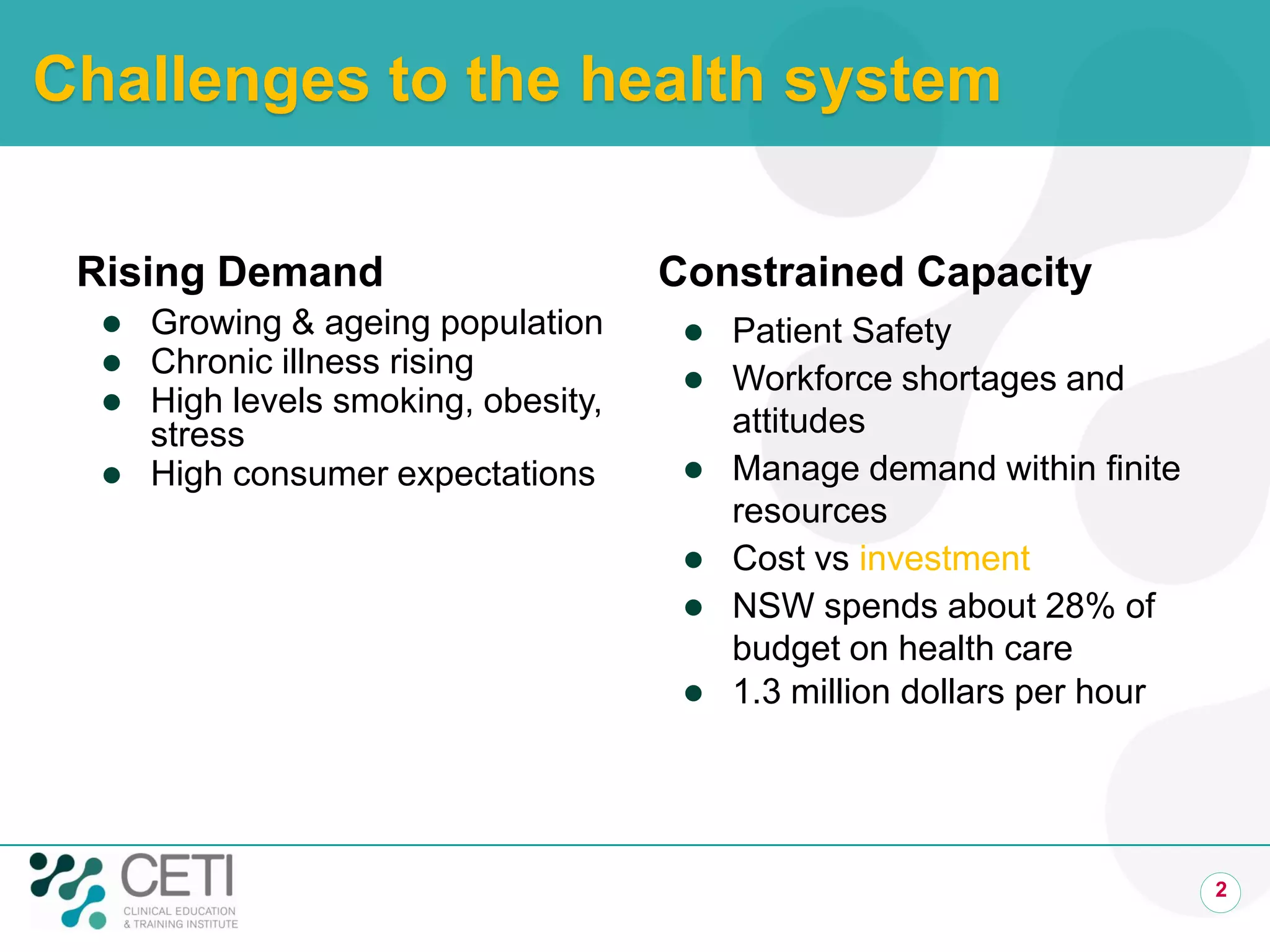
Challenges to the health system
Rising Demand
 Growing & ageing population
 Chronic illness rising
 High levels smoking, obesity,
stress
 High consumer expectations
Constrained Capacity
 Patient Safety
 Workforce shortages and
attitudes
 Manage demand within finite
resources
 Cost vs investment
 NSW spends about 28% of
budget on health care
 1.3 million dollars per hour
2
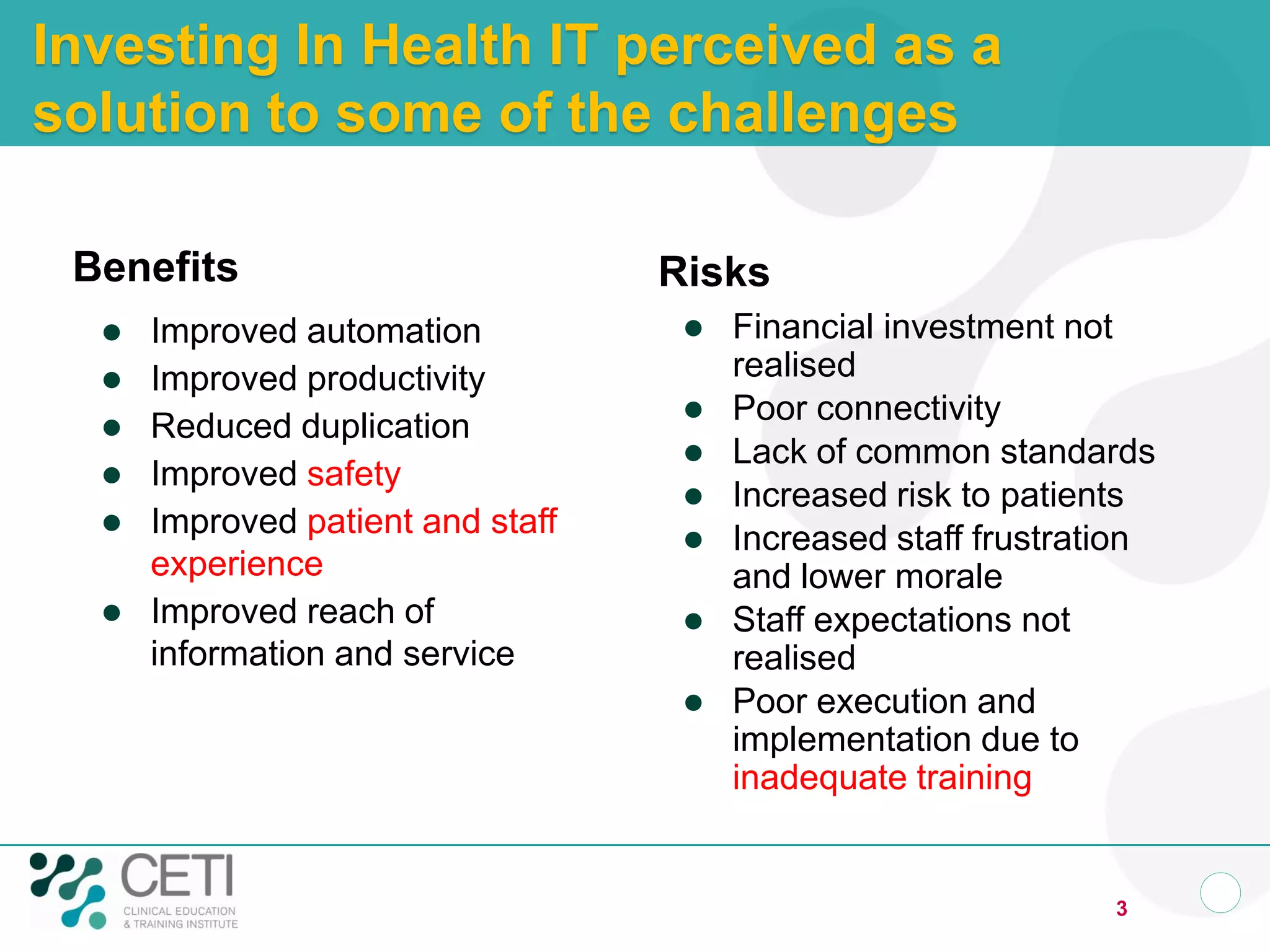
Investing In Health IT perceived as a
solution to some of the challenges
Benefits
 Improved automation
 Improved productivity
 Reduced duplication
 Improved safety
 Improved patient and staff
experience
 Improved reach of
information and service
Risks
 Financial investment not
realised
 Poor connectivity
 Lack of common standards
 Increased risk to patients
 Increased staff frustration
and lower morale
 Staff expectations not
realised
 Poor execution and
implementation due to
inadequate training
3
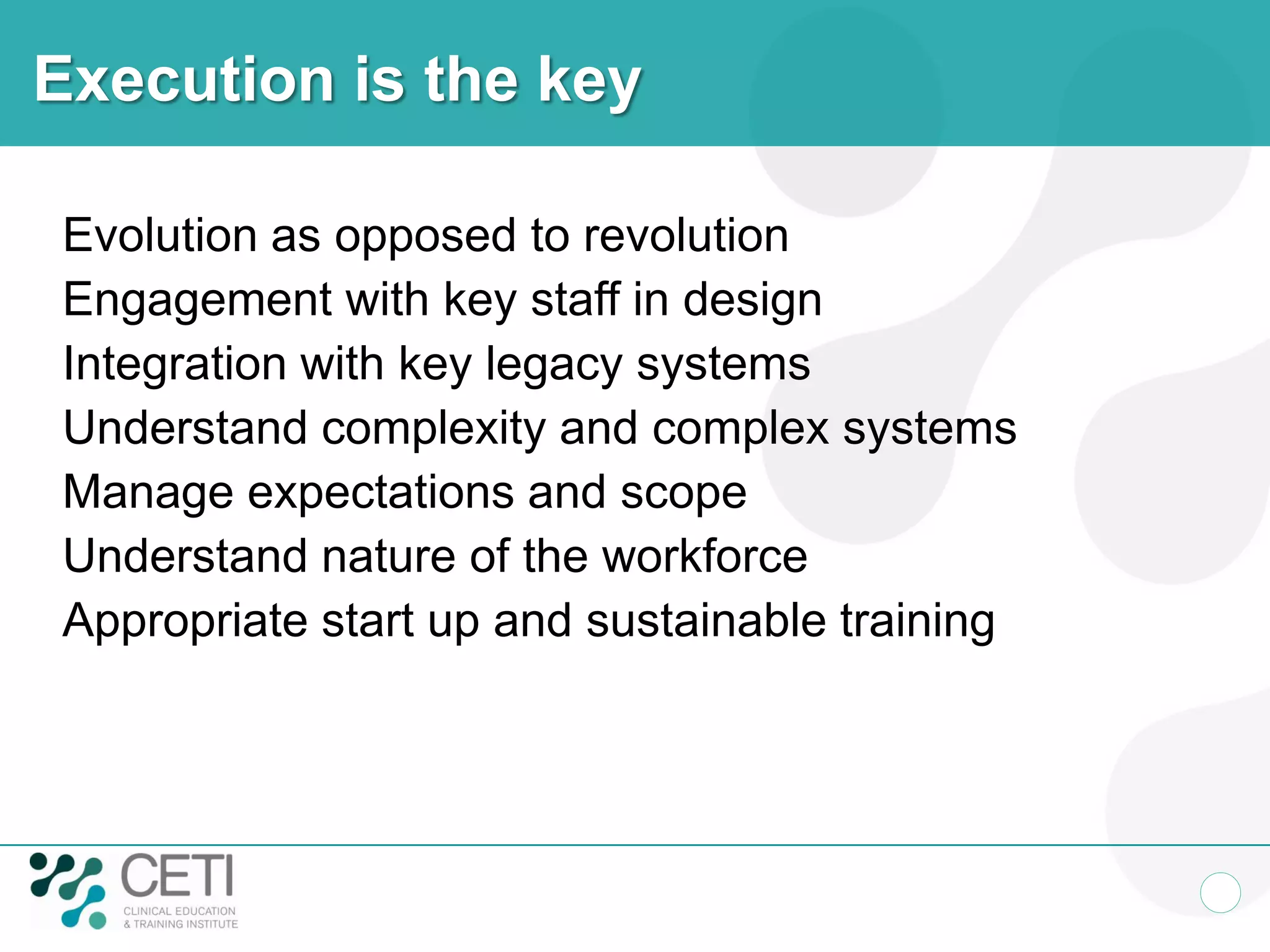
Execution is the key
Evolution as opposed to revolution
Engagement with key staff in design
Integration with key legacy systems
Understand complexity and complex systems
Manage expectations and scope
Understand nature of the workforce
Appropriate start up and sustainable training
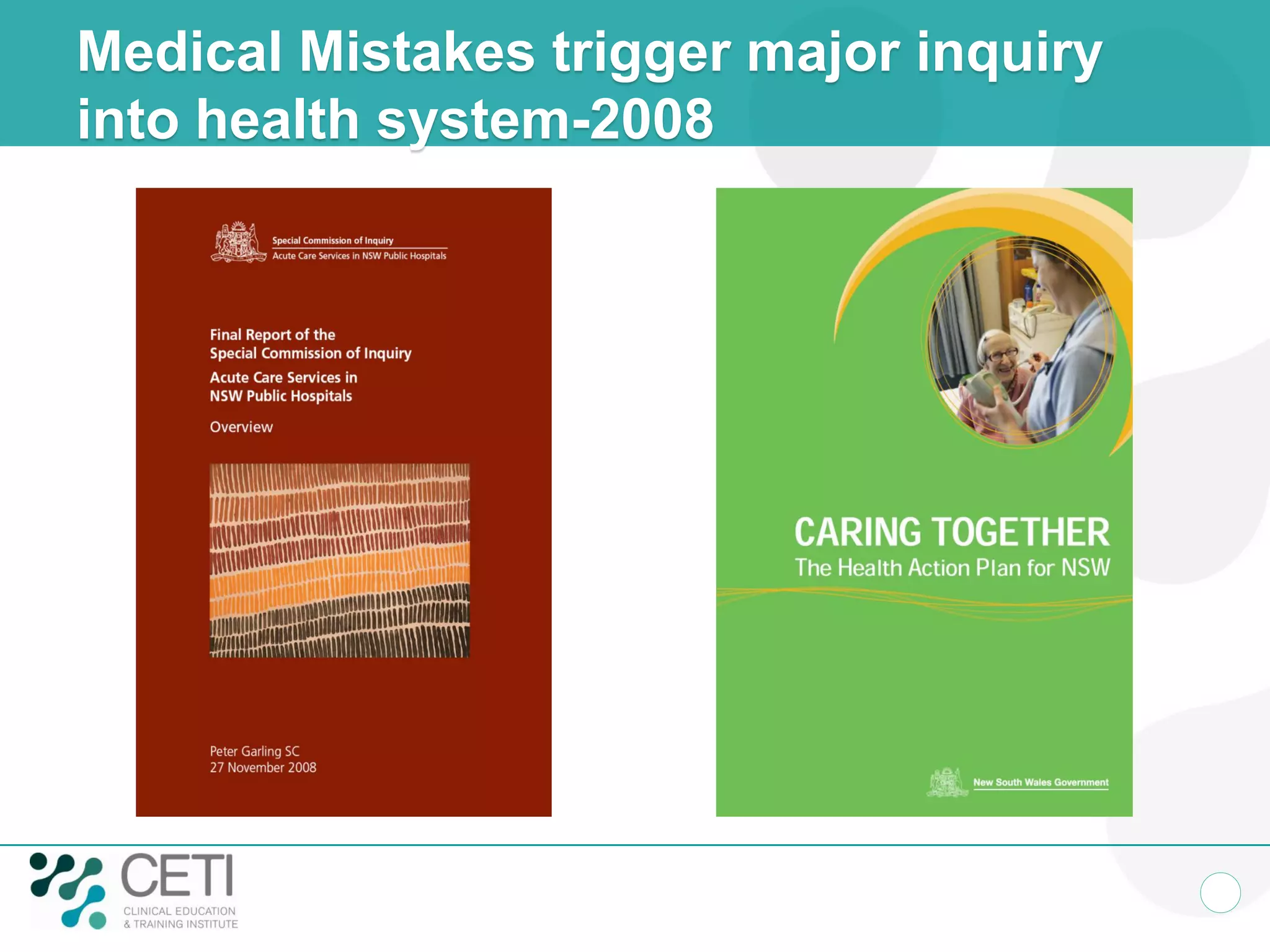
Medical Mistakes trigger major inquiry
into health system-2008
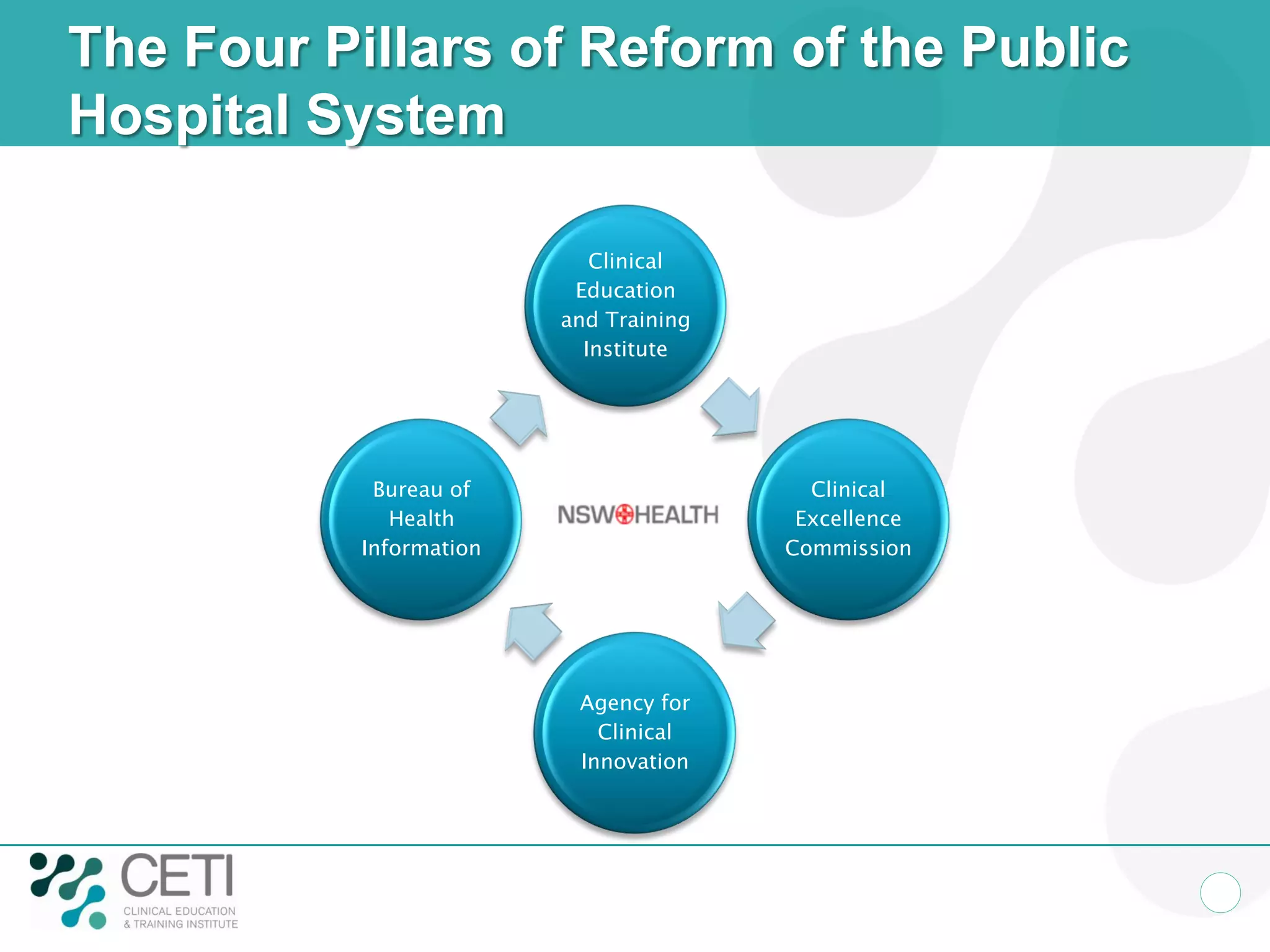
Clinical
Education
and Training
Institute
Clinical
Excellence
Commission
Agency for
Clinical
Innovation
Bureau of
Health
Information
The Four Pillars of Reform of the Public
Hospital System
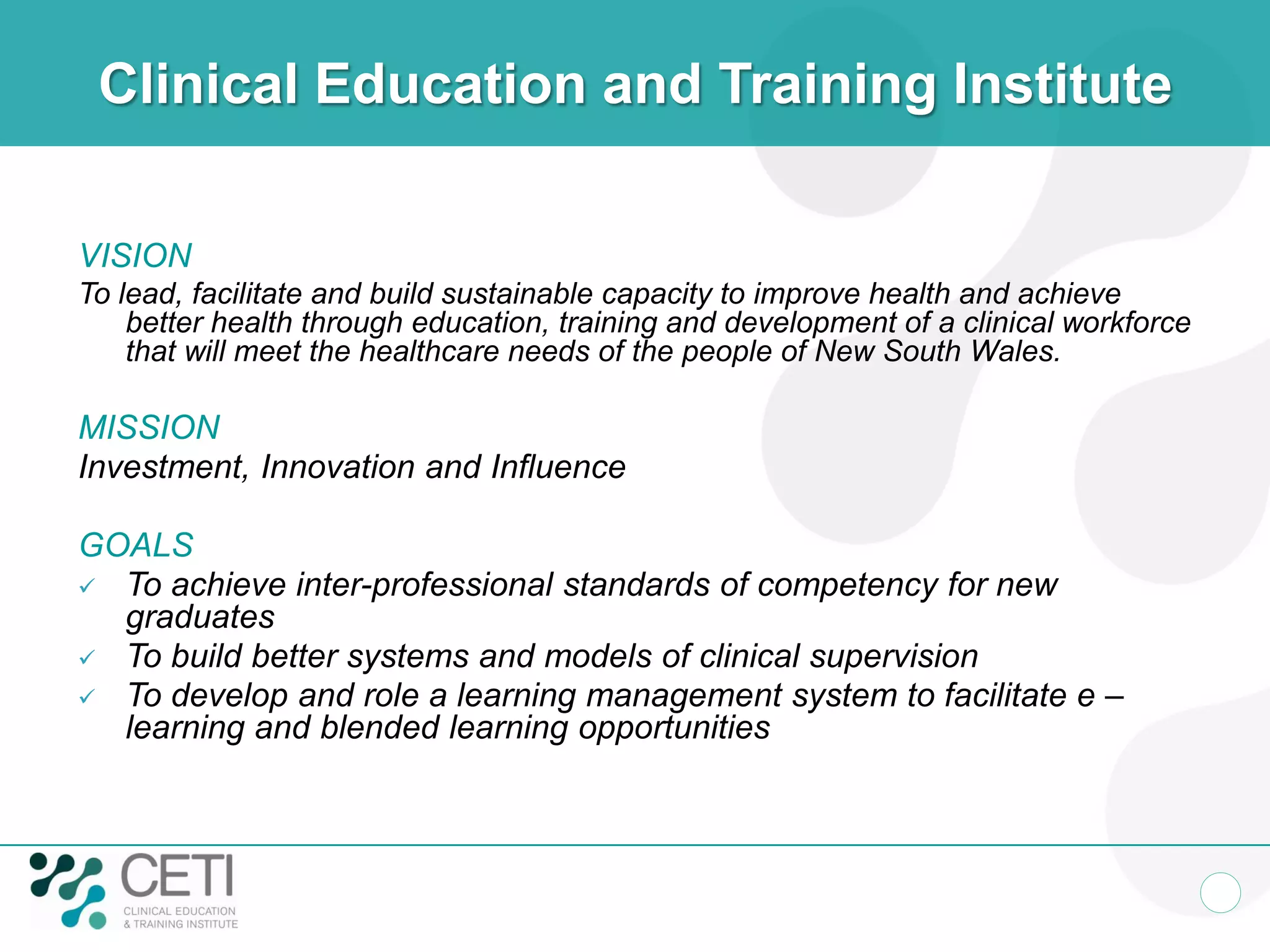
Clinical Education and Training Institute
VISION
To lead, facilitate and build sustainable capacity to improve health and achieve
better health through education, training and development of a clinical workforce
that will meet the healthcare needs of the people of New South Wales.
MISSION
Investment, Innovation and Influence
GOALS
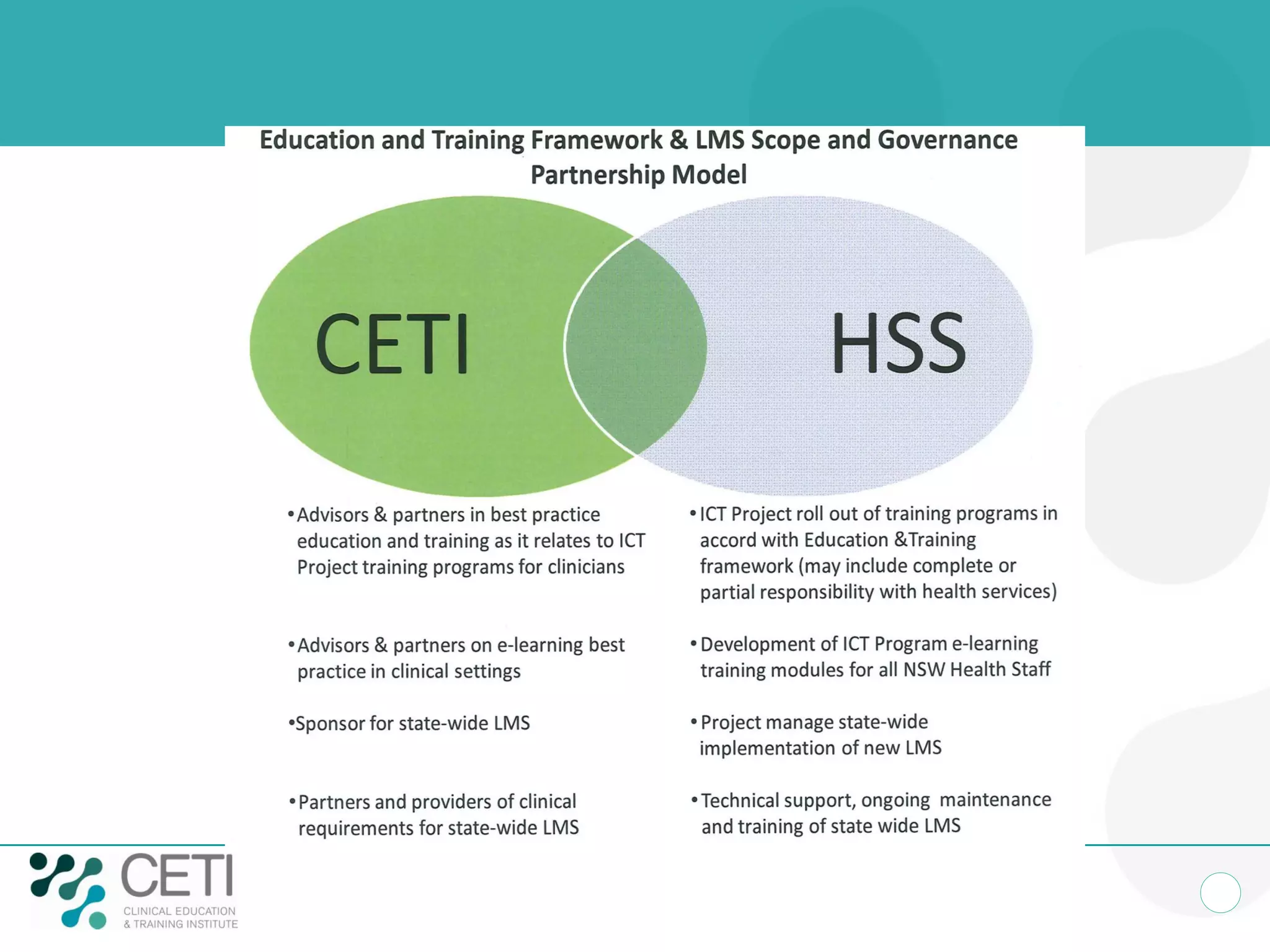
 To achieve inter-professional standards of competency for new
graduates
 To build better systems and models of clinical supervision
 To develop and role a learning management system to facilitate e –
learning and blended learning opportunities
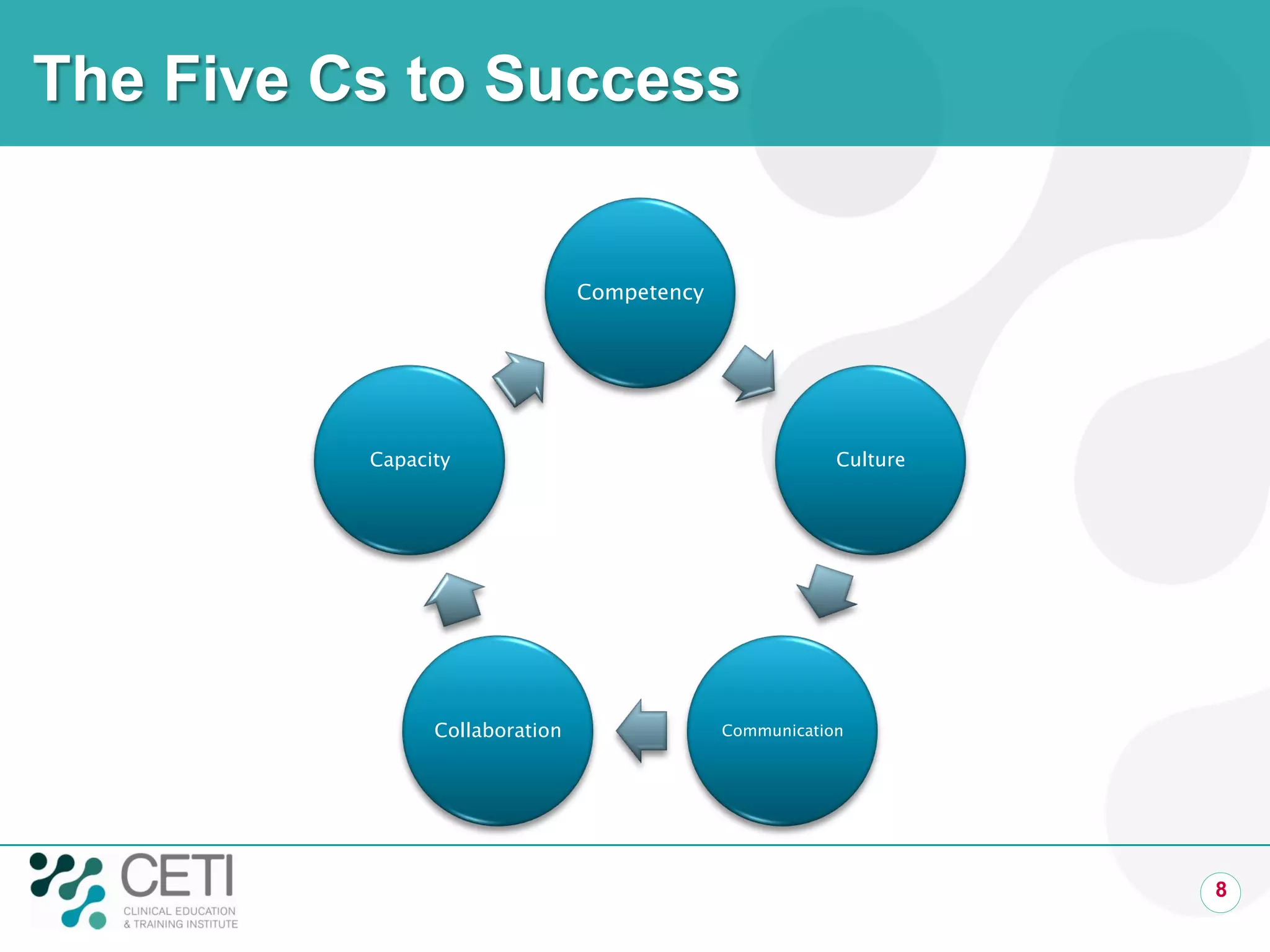
The Five Cs to Success
Competency
Culture
CommunicationCollaboration
Capacity
8
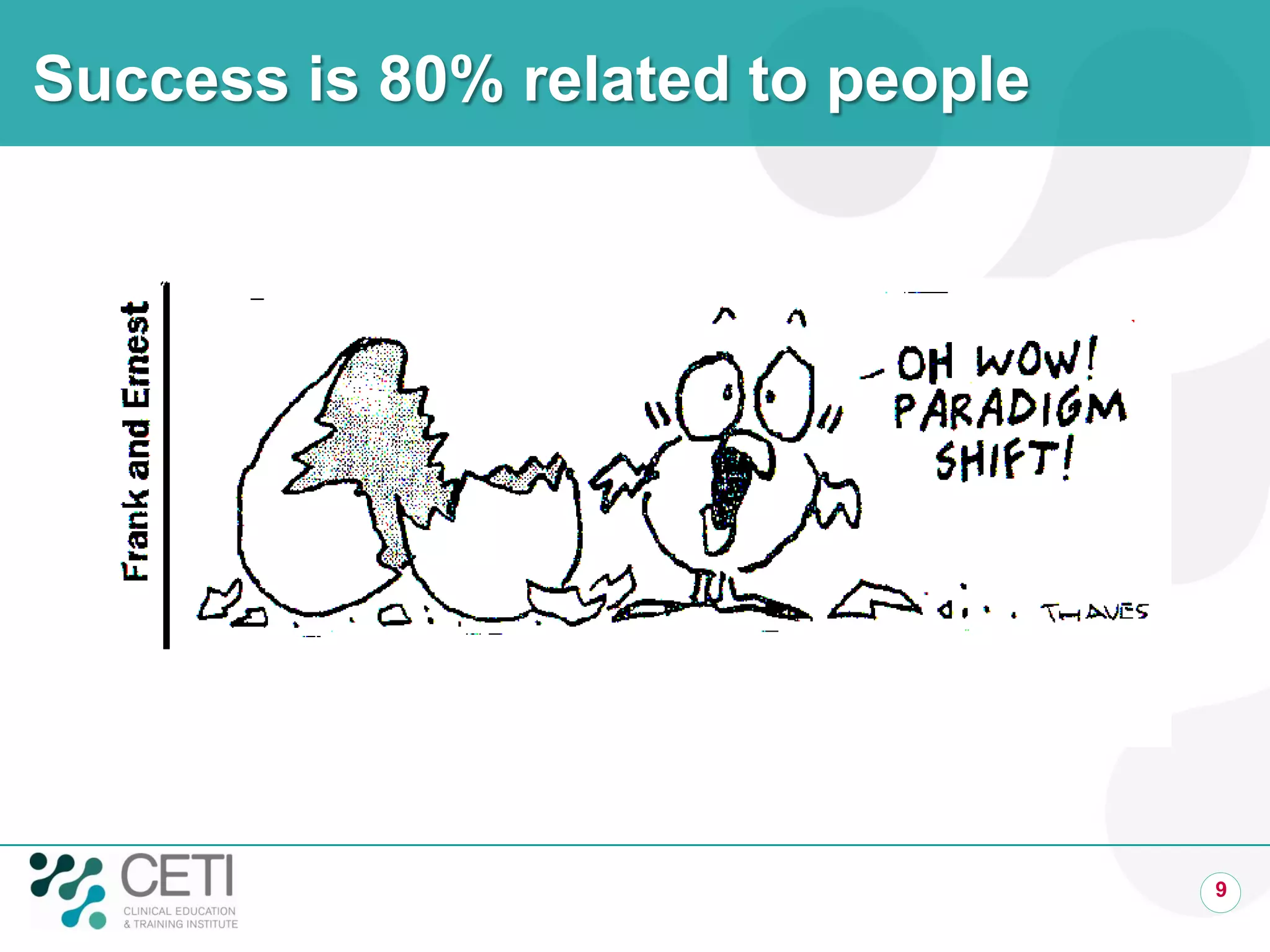
Success is 80% related to people
9
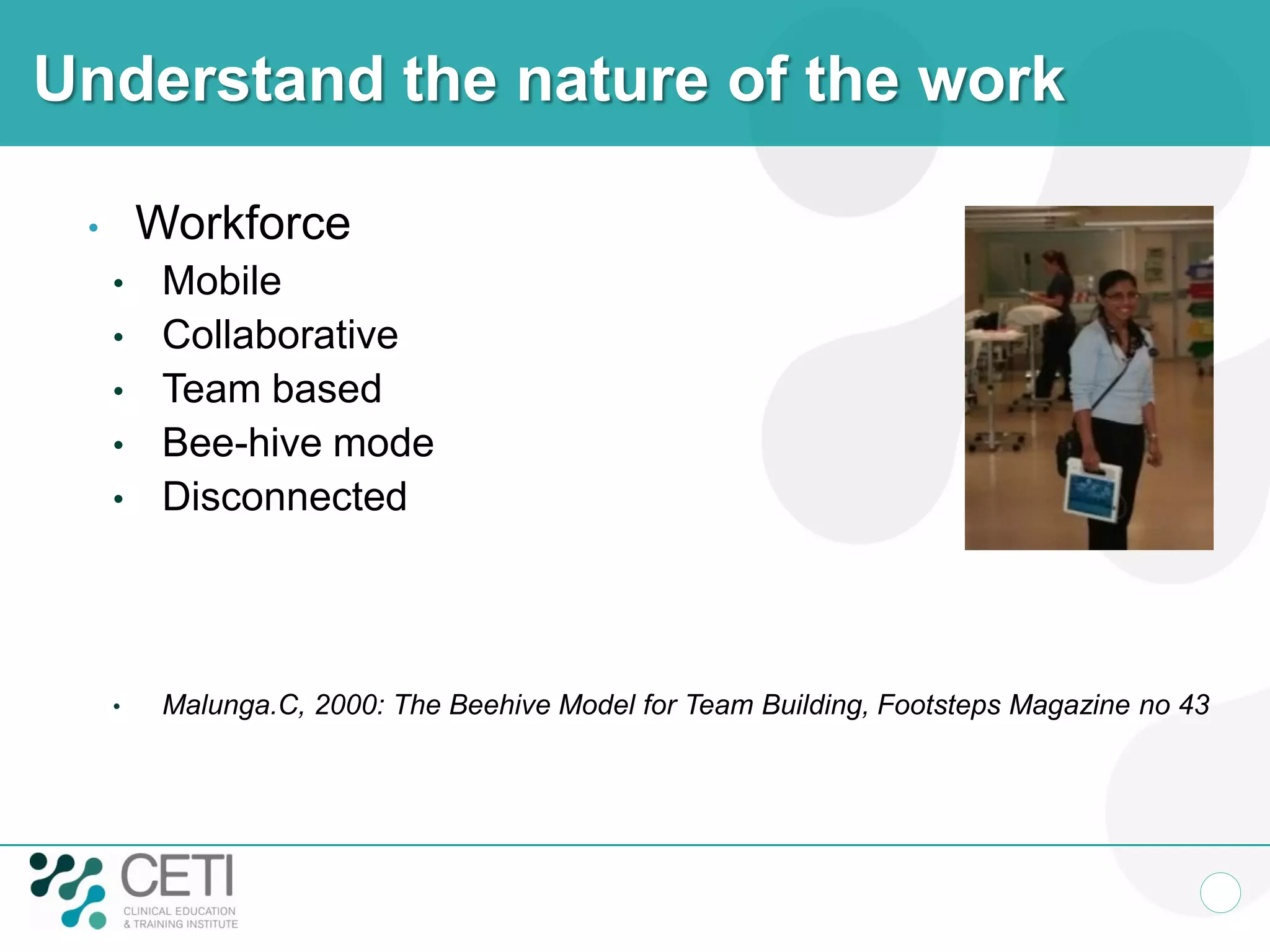
Understand the nature of the work
• Workforce
• Mobile
• Collaborative
• Team based
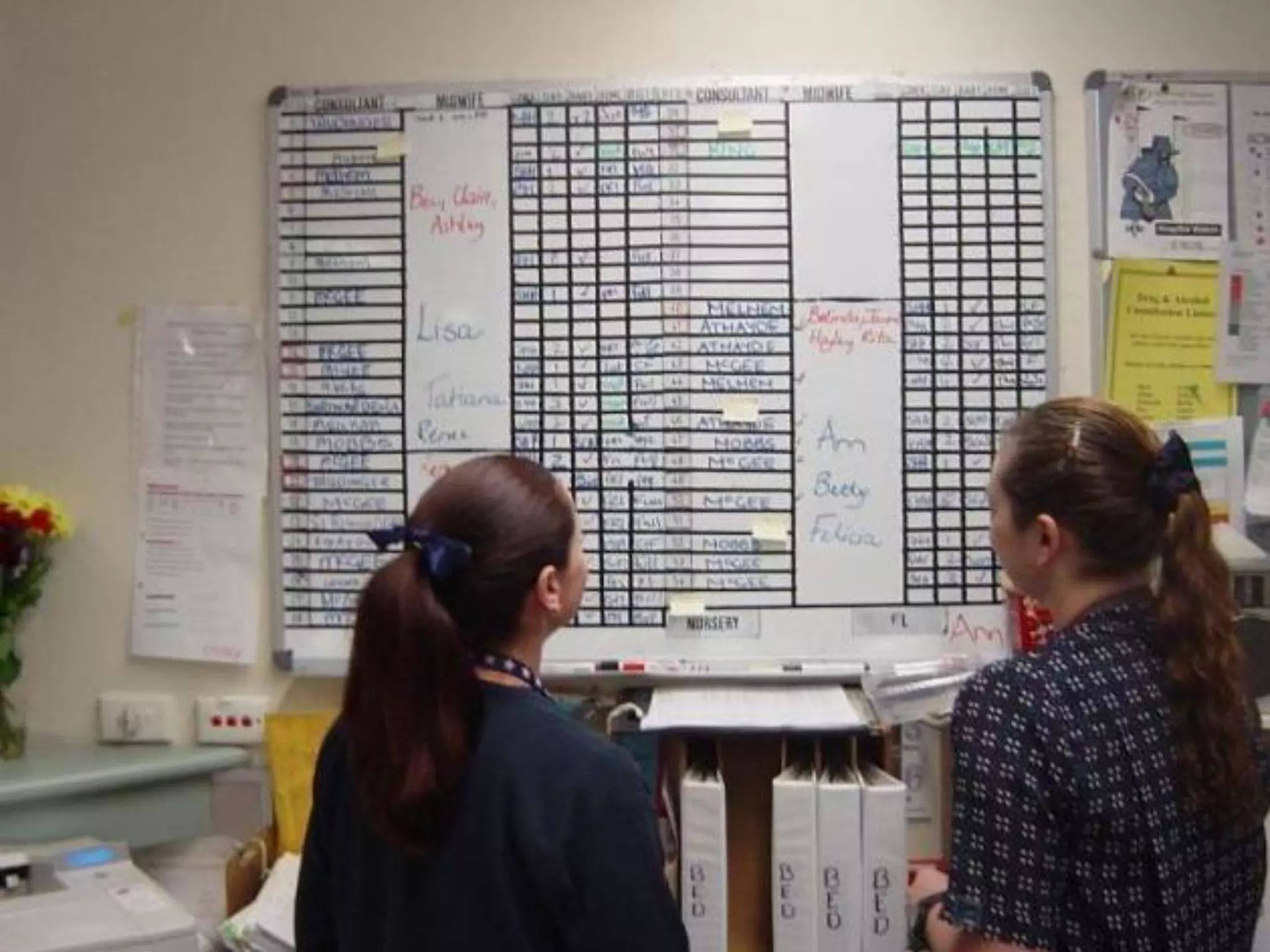
• Bee-hive mode
• Disconnected
• Malunga.C, 2000: The Beehive Model for Team Building, Footsteps Magazine no 43
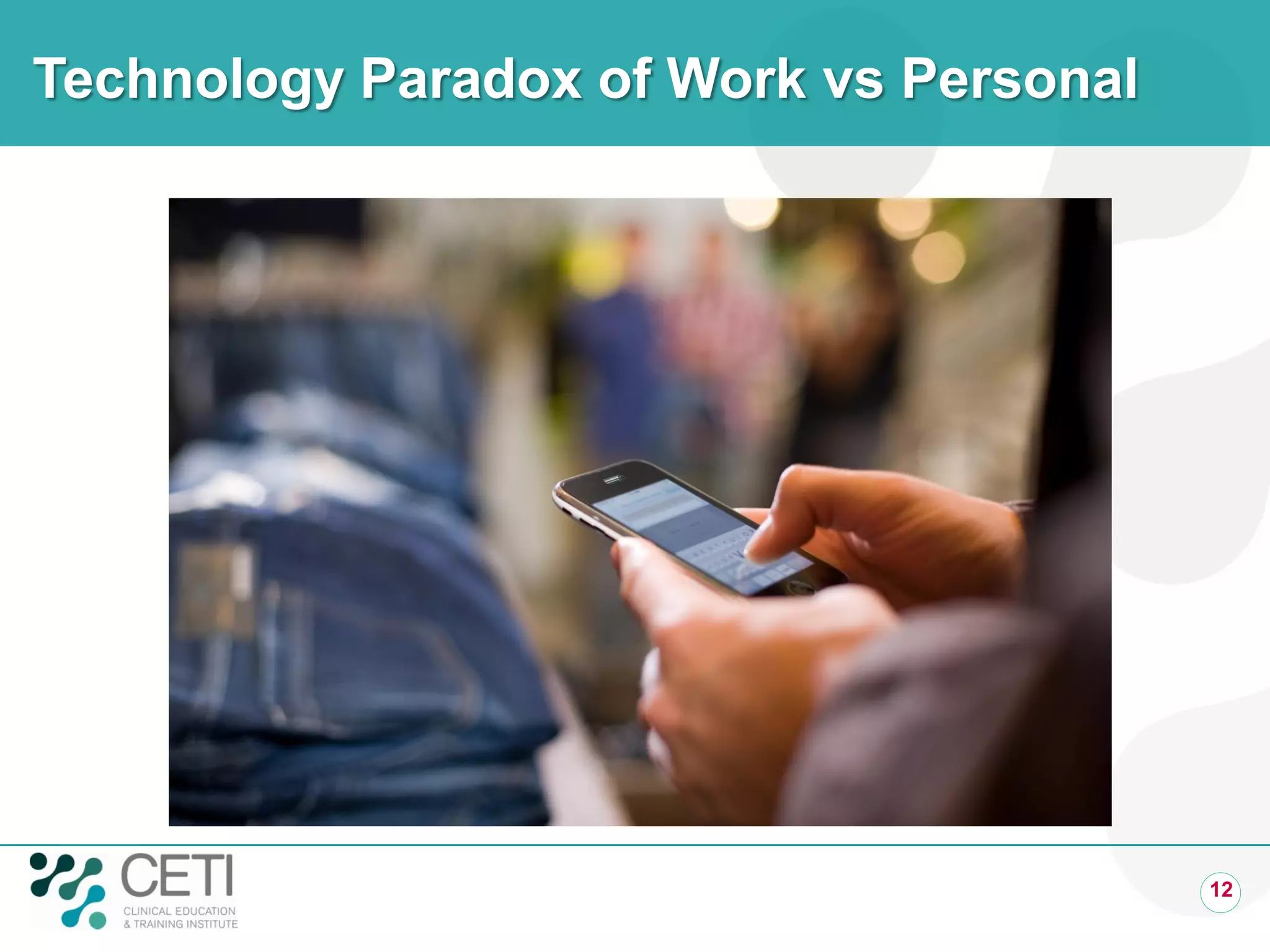
Technology Paradox of Work vs Personal
12
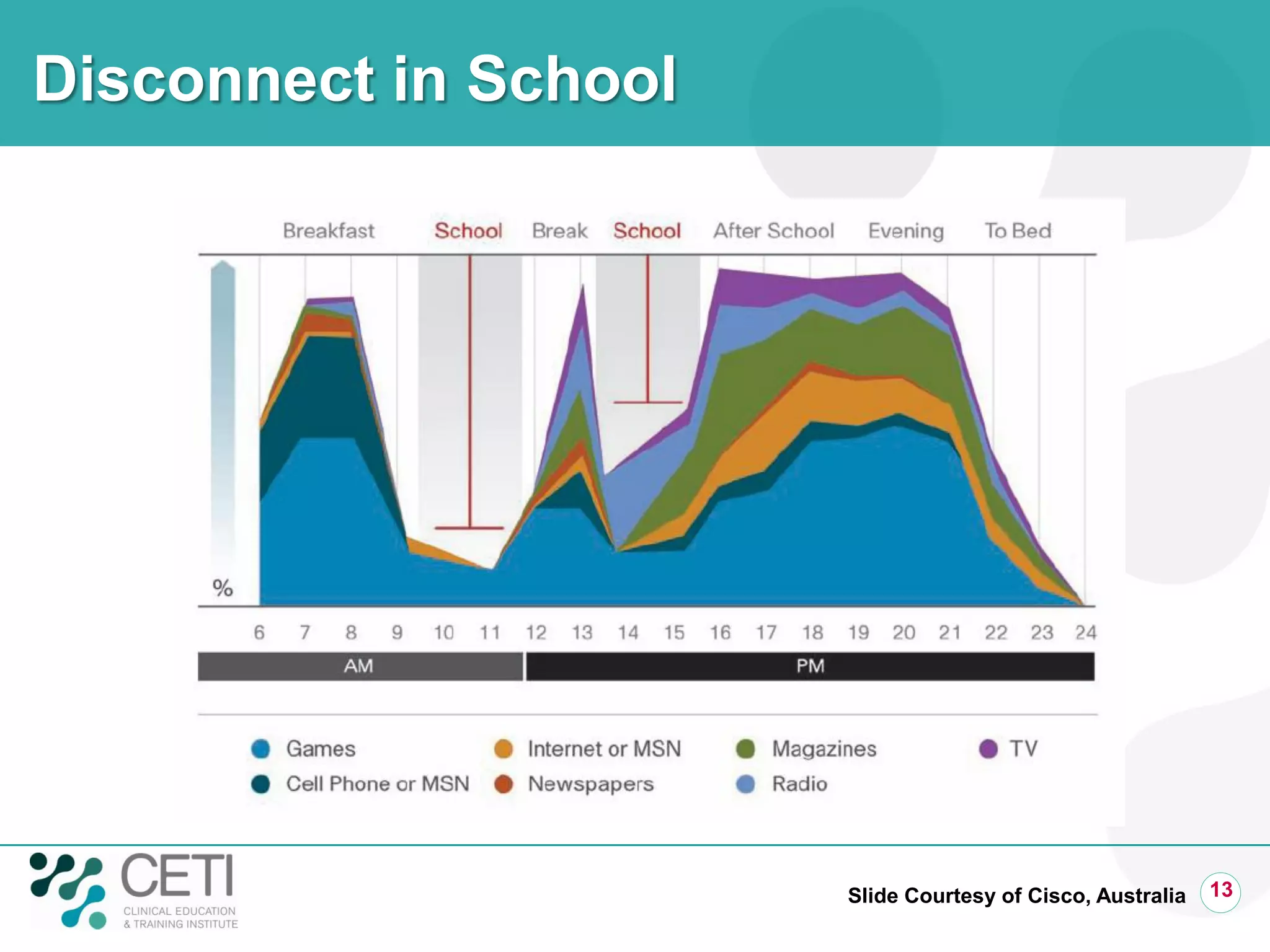
Disconnect in School
13Slide Courtesy of Cisco, Australia
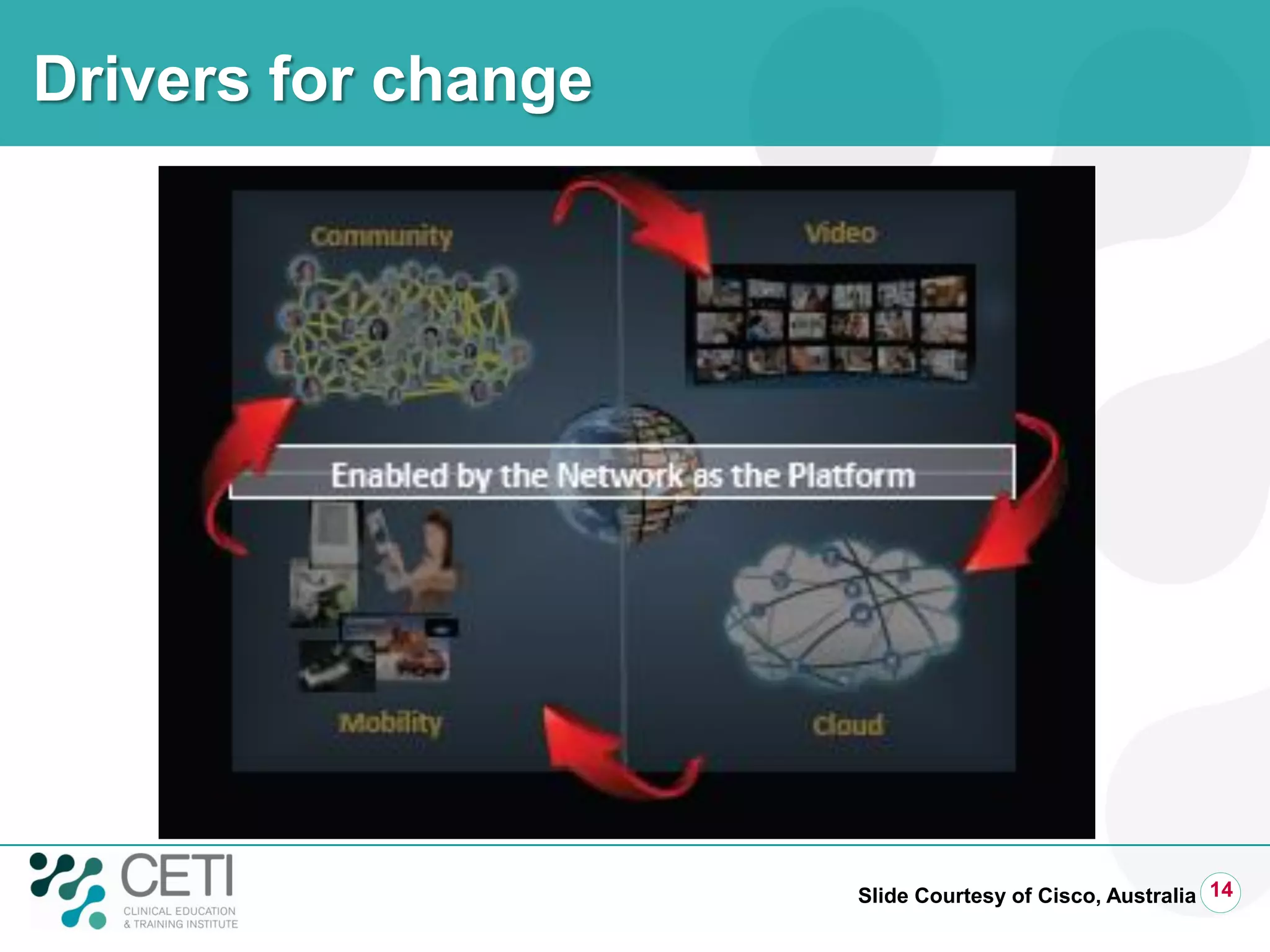
Drivers for change
14Slide Courtesy of Cisco, Australia
Technology Enabling
• New Ways of Organising Learning
• New pedagogy
• New relationships
• More sophisticated learning mix
• Richer assessments and evaluations
• Data at all levels
15
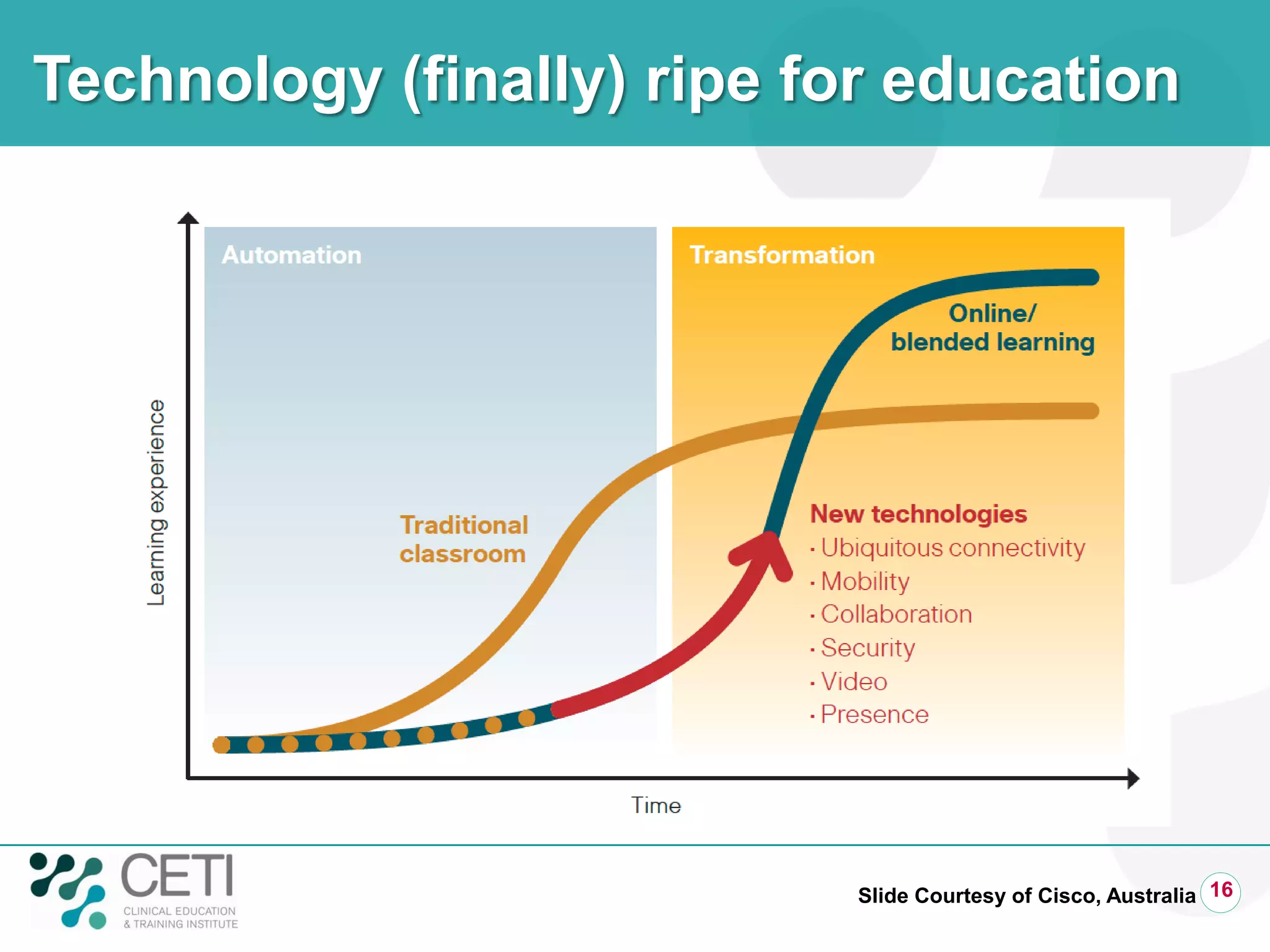
Technology (finally) ripe for education
16Slide Courtesy of Cisco, Australia
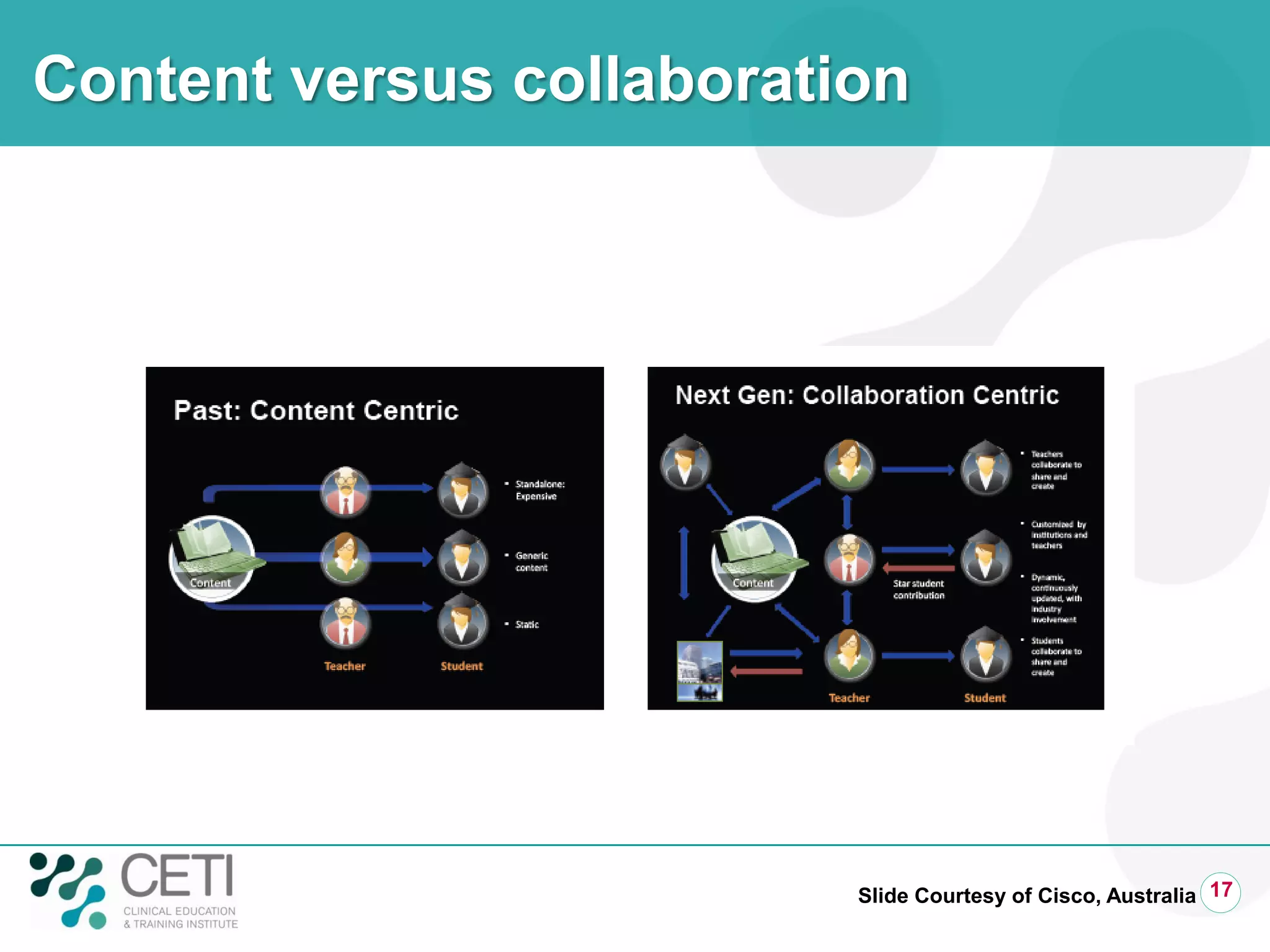
Content versus collaboration
17Slide Courtesy of Cisco, Australia
eLearning is evolving
 eLearning is an evolving format which has been
enabled through technology. Just as the landscape of
‘technology supported activities’ continues to evolve, so
does eLearning
19
Developing a common platform
 eLearning by definition is any learning that can be delivered
(and undertaken) electronically.
 There are 2 elements to eLearning:
o the technology, or learning experience, ie the electronic
media of formats
o the learning design, or the learning experience, ie the events,
activities and relationships that the learner is involved in
 While the technology and the learning design are
intrinsically bound together, it is useful to be mindful of these
elements in isolation when considering eLearning.
20
Element of blended learning
 The right place to situate eLearning is within the equally
contemporary idea of ‘blended learning’
 Blended learning is a concept that acquired currency when
learning designers began to consider how to integrate
self-directed technology-supported learning activity into
learning programs
 The key is that technology supports non-instructor facilitated
learning, ie learning done outside a classroom or traditional
learning environment and which is undertaken in a ‘self
directed’ manner. Such learning can be done according to the
speed of an individual’s own capacity to absorb information,
and also their inclinations as to other choices open to them
where there is no instructor.
21
Element of blended learning
 The term ‘blended learning’ now simply serves to consciously
remind the learning designer of the spectrum of possible
approaches and techniques from which he or she can draw
from – and of the need to duly consider both the technological
and the instructional elements of what they are looking to
achieve in designing a learning program.
 Therefore, eLearning and eLearning design is a facet of
learning and learning design generally.
22
Types of eLearning
 Web-based or online tutorial
 Podcast / Vodcast
 Virtual or Simulated Reality
 Webinar / Virtual Classroom Session
 Blog
 Threaded online discussion
 Wiki
 Yammer; Twitter (micro-blogs)
 Mobile learning (mLearning)
 Others e.g. Web sites, Video or Phone Conferencing
23
Discrete eLearning objects
 Learning design element
 Design standards, methodology and processes
 Policies regarding content authorisation and intellectual property
rules
 Designers with capability in the design methodology and
processes and understanding of policy
24
eLearning Modes / Formats
 Technology element
 Platforms and software applications supporting the learning
mode/format
 User access to the infrastructure, platforms and software
applications
 Users with skills to use skills the platforms and software
applications
 Development capability in the toolsets required for the
modes/formats
25
Summary of Current eLearning Practice
 Active in a range of operational areas across a range of learning contexts
 Not active in many operational areas and learning contexts where it potentially
could have strong value
 Operating without a formal state-wide process framework of policy, standards,
methodology and process
 Developing unevenly without a consistent approach
 Fairly low on the scale of sophistication
 Not supported by uniform technical infrastructure, platforms and tools
 Significantly less effective thank it could be
 The source of both real and potential unnecessary cost (through restricted
accessibility, duplication, inefficiency)
 The source of real and potential risk (through lack of policy and process
assurance)
26
What the Current State Report Recommends
 NSW Health will undertake a State-Wide IT Literacy Change
Initiative to improve the level of IT literacy (in line with ICT’s
strategy to increase the PC to person ratio). This will enable
the organisation to take best advantage of the benefits of
eLearning.
 NSW Health will develop eLearning development skills to
enable eLearning to move beyond ‘page turners’ and basic
simulations to address, in part, the heavily constrained
environments and roles.
 NSW Health should provide infrastructure and technology
to support and host eLearning developed by NSW Health.
27
What the Current State Report Recommends
 An eLearning Centre of Excellence will be established in an
area best suited to providing the most significant and widest
range of benefits as a result of the application and usage of
eLearning.
 The area recommended is the Clinical Education & Training
Institute (CETI), which has a brief for provision of clinical
educational and training services and is currently engaged in
establishing a framework for its eLearning practice.
28
Current State Report Recommends
 This centre might be centralised (and informed by a distributed
Community of practice), or may indeed be a Community of Practice.
The eLearning Centre of Excellence should own a eLearning
framework. This framework should be designed to provide:
 Technical standards
 Visual design standards
 Instructional design methodology
 Multimedia development standards and methodology
 Selection of supported tools and platforms
 Intellectual Property (IP) and copyright advice and standards
 Accessibility standards
 Processes for publication, maintenance and management of eLearning
29
Developing NSW Health eLearning Excellence
 Develop the ‘eLiteracy’ of NSW Health’s wider IT user community –
through a broad strategic change management and capability
development program
 Develop the capability of NSW Health’s eLearning practitioner
community – through a targeted capability development program
 Deliver the technical infrastructure and environment required to
support eLearning
 Support eLearning practice with knowledge, assets and capability –
through the establishment of an Centre for eLearning Advice (CeLA),
which provides internal expertise in eLearning, and internally
leverages best practice, the CeLA will develop and support an
eLearning Framework
 30
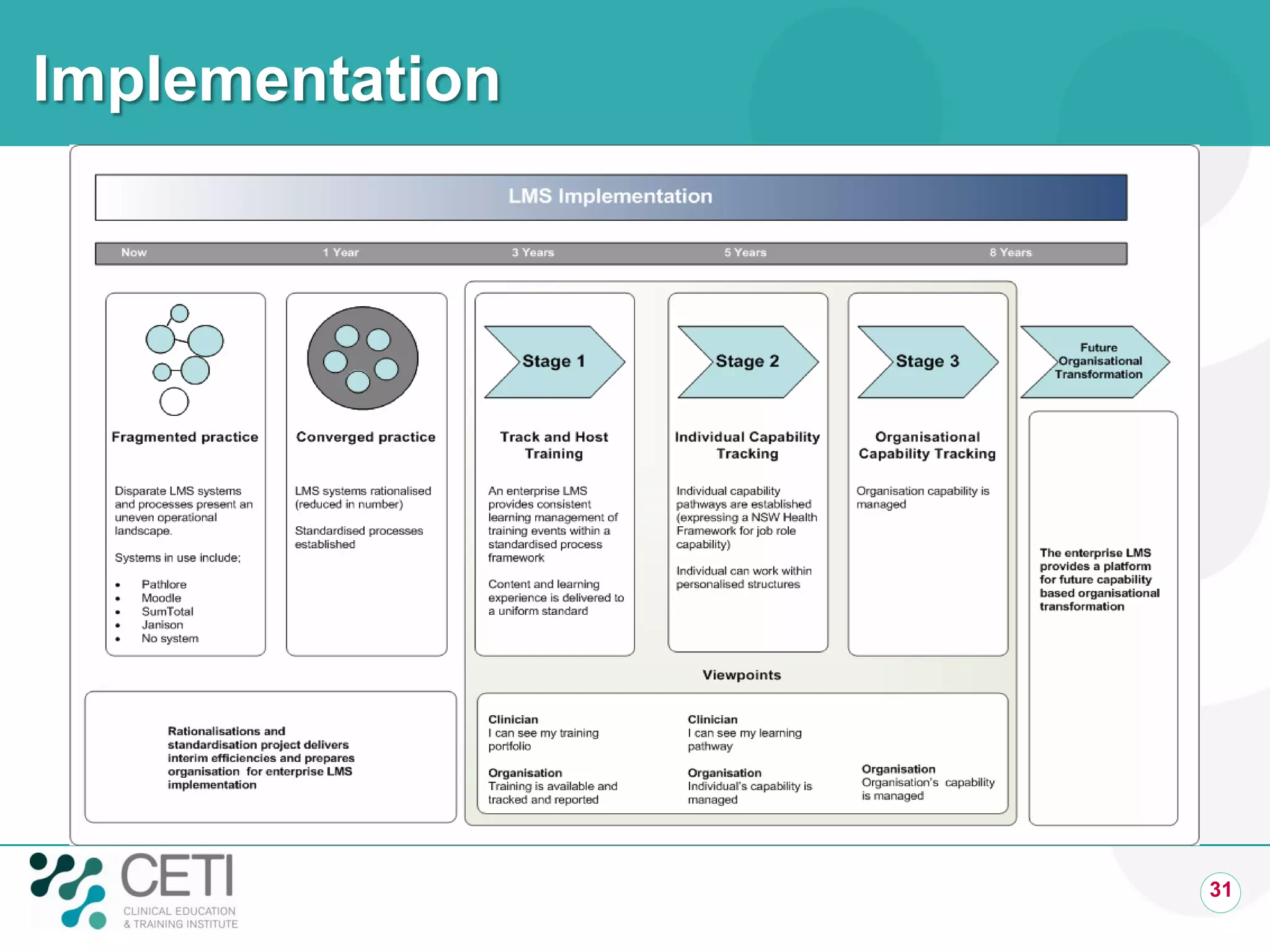
Implementation
31
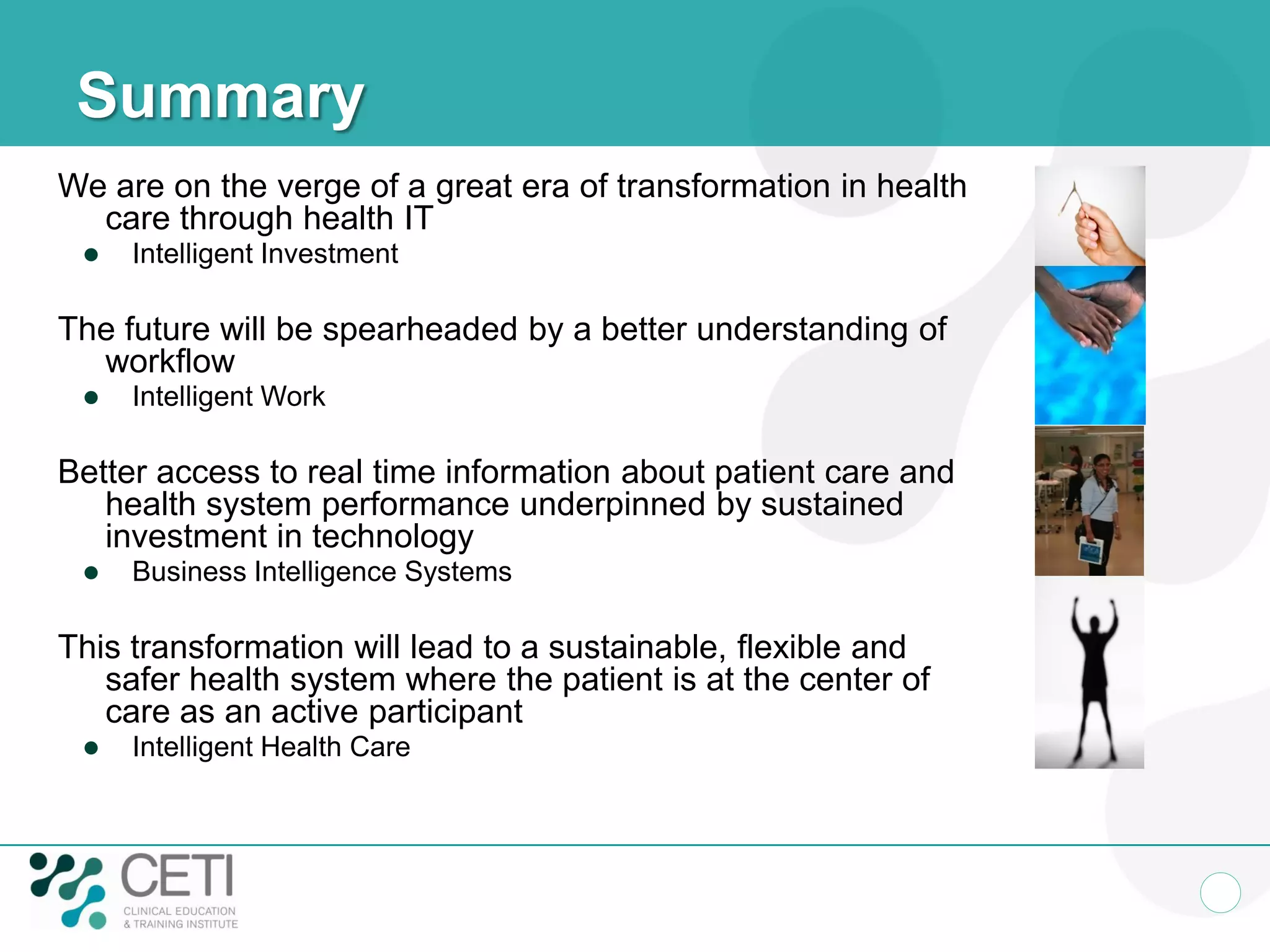
Summary
We are on the verge of a great era of transformation in health
care through health IT
 Intelligent Investment
The future will be spearheaded by a better understanding of
workflow
 Intelligent Work
Better access to real time information about patient care and
health system performance underpinned by sustained
investment in technology
 Business Intelligence Systems
This transformation will lead to a sustainable, flexible and
safer health system where the patient is at the center of
care as an active participant
 Intelligent Health Care
Technology Enabling
• New Ways of Organising Learning
• New pedagogy
• New relationships
• More sophisticated learning mix
• Richer assessments and evaluations
• Data at all levels
33
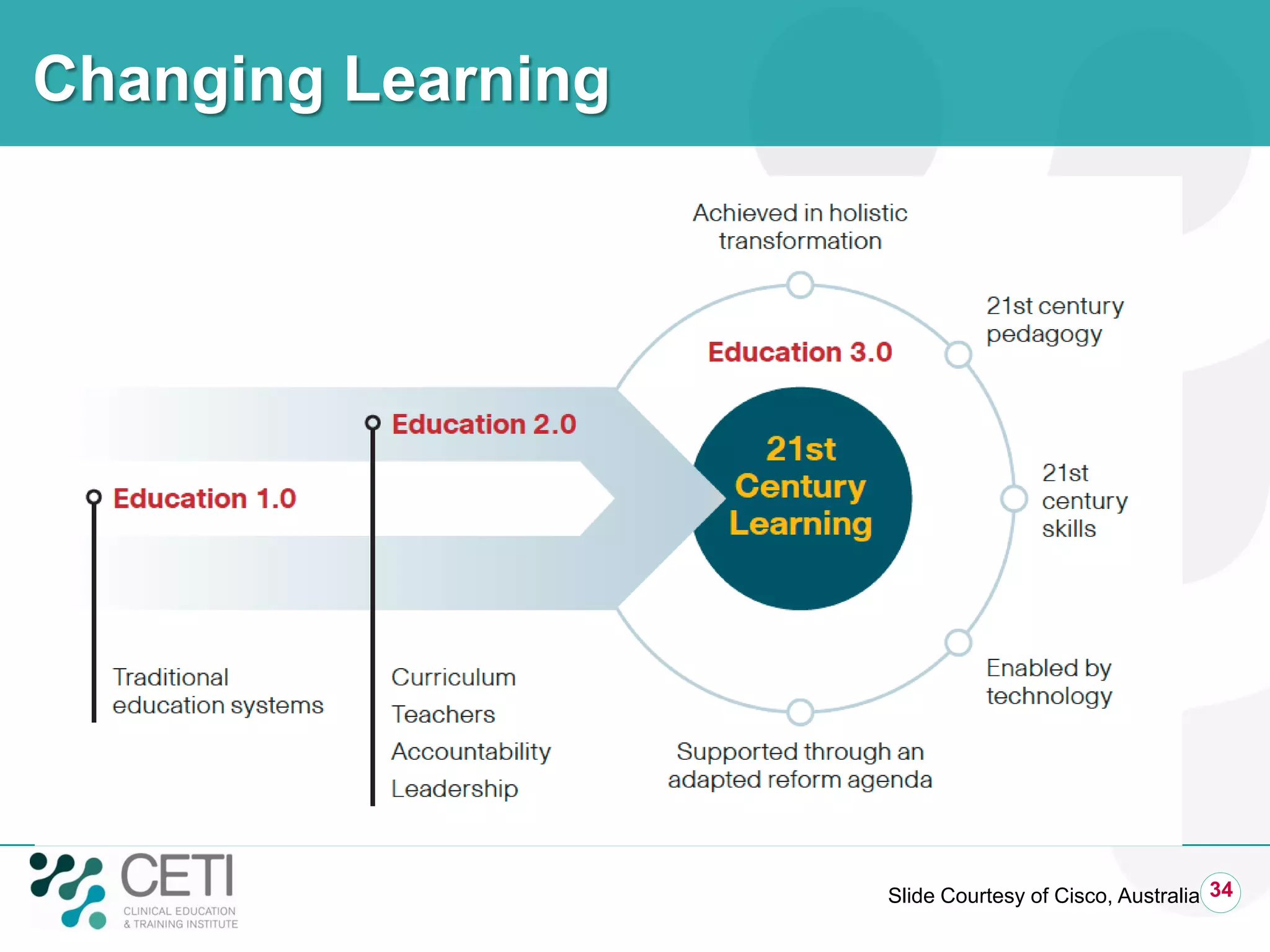
Changing Learning
34Slide Courtesy of Cisco, Australia
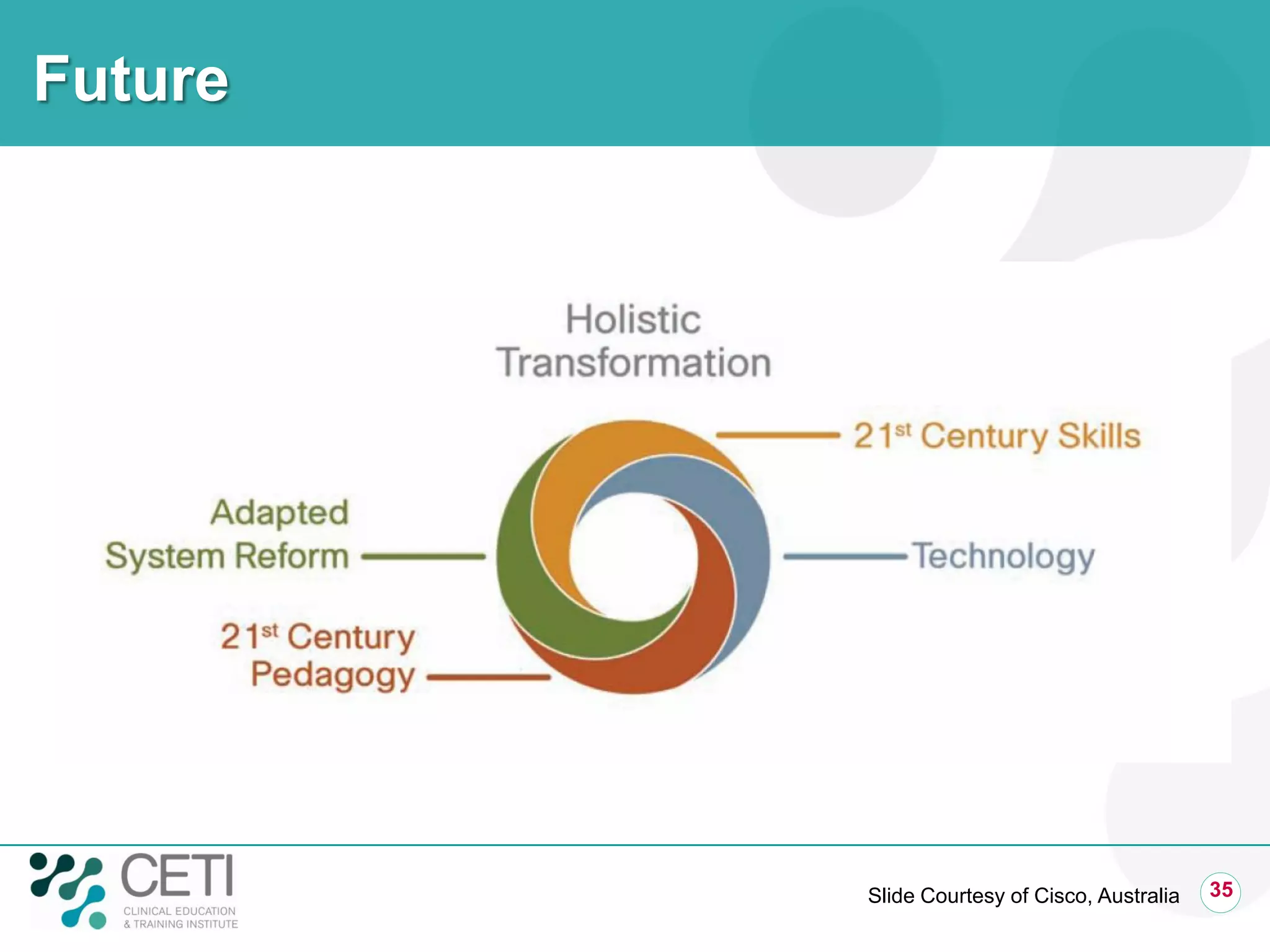
Future
35Slide Courtesy of Cisco, Australia

Ceti LEAD LEAP Presentation 2010

  • 1.
    CETI Driver for change:the role of education and leadership Professor Steven C. Boyages November 2010
  • 2.
    Challenges to thehealth system Rising Demand  Growing & ageing population  Chronic illness rising  High levels smoking, obesity, stress  High consumer expectations Constrained Capacity  Patient Safety  Workforce shortages and attitudes  Manage demand within finite resources  Cost vs investment  NSW spends about 28% of budget on health care  1.3 million dollars per hour 2
  • 3.
    Investing In HealthIT perceived as a solution to some of the challenges Benefits  Improved automation  Improved productivity  Reduced duplication  Improved safety  Improved patient and staff experience  Improved reach of information and service Risks  Financial investment not realised  Poor connectivity  Lack of common standards  Increased risk to patients  Increased staff frustration and lower morale  Staff expectations not realised  Poor execution and implementation due to inadequate training 3
  • 4.
    Execution is thekey Evolution as opposed to revolution Engagement with key staff in design Integration with key legacy systems Understand complexity and complex systems Manage expectations and scope Understand nature of the workforce Appropriate start up and sustainable training
  • 5.
    Medical Mistakes triggermajor inquiry into health system-2008
  • 6.
    Clinical Education and Training Institute Clinical Excellence Commission Agency for Clinical Innovation Bureauof Health Information The Four Pillars of Reform of the Public Hospital System
  • 7.
    Clinical Education andTraining Institute VISION To lead, facilitate and build sustainable capacity to improve health and achieve better health through education, training and development of a clinical workforce that will meet the healthcare needs of the people of New South Wales. MISSION Investment, Innovation and Influence GOALS  To achieve inter-professional standards of competency for new graduates  To build better systems and models of clinical supervision  To develop and role a learning management system to facilitate e – learning and blended learning opportunities
  • 8.
    The Five Csto Success Competency Culture CommunicationCollaboration Capacity 8
  • 9.
    Success is 80%related to people 9
  • 10.
    Understand the natureof the work • Workforce • Mobile • Collaborative • Team based • Bee-hive mode • Disconnected • Malunga.C, 2000: The Beehive Model for Team Building, Footsteps Magazine no 43
  • 12.
    Technology Paradox ofWork vs Personal 12
  • 13.
    Disconnect in School 13SlideCourtesy of Cisco, Australia
  • 14.
    Drivers for change 14SlideCourtesy of Cisco, Australia
  • 15.
    Technology Enabling • NewWays of Organising Learning • New pedagogy • New relationships • More sophisticated learning mix • Richer assessments and evaluations • Data at all levels 15
  • 16.
    Technology (finally) ripefor education 16Slide Courtesy of Cisco, Australia
  • 17.
    Content versus collaboration 17SlideCourtesy of Cisco, Australia
  • 19.
    eLearning is evolving eLearning is an evolving format which has been enabled through technology. Just as the landscape of ‘technology supported activities’ continues to evolve, so does eLearning 19
  • 20.
    Developing a commonplatform  eLearning by definition is any learning that can be delivered (and undertaken) electronically.  There are 2 elements to eLearning: o the technology, or learning experience, ie the electronic media of formats o the learning design, or the learning experience, ie the events, activities and relationships that the learner is involved in  While the technology and the learning design are intrinsically bound together, it is useful to be mindful of these elements in isolation when considering eLearning. 20
  • 21.
    Element of blendedlearning  The right place to situate eLearning is within the equally contemporary idea of ‘blended learning’  Blended learning is a concept that acquired currency when learning designers began to consider how to integrate self-directed technology-supported learning activity into learning programs  The key is that technology supports non-instructor facilitated learning, ie learning done outside a classroom or traditional learning environment and which is undertaken in a ‘self directed’ manner. Such learning can be done according to the speed of an individual’s own capacity to absorb information, and also their inclinations as to other choices open to them where there is no instructor. 21
  • 22.
    Element of blendedlearning  The term ‘blended learning’ now simply serves to consciously remind the learning designer of the spectrum of possible approaches and techniques from which he or she can draw from – and of the need to duly consider both the technological and the instructional elements of what they are looking to achieve in designing a learning program.  Therefore, eLearning and eLearning design is a facet of learning and learning design generally. 22
  • 23.
    Types of eLearning Web-based or online tutorial  Podcast / Vodcast  Virtual or Simulated Reality  Webinar / Virtual Classroom Session  Blog  Threaded online discussion  Wiki  Yammer; Twitter (micro-blogs)  Mobile learning (mLearning)  Others e.g. Web sites, Video or Phone Conferencing 23
  • 24.
    Discrete eLearning objects Learning design element  Design standards, methodology and processes  Policies regarding content authorisation and intellectual property rules  Designers with capability in the design methodology and processes and understanding of policy 24
  • 25.
    eLearning Modes /Formats  Technology element  Platforms and software applications supporting the learning mode/format  User access to the infrastructure, platforms and software applications  Users with skills to use skills the platforms and software applications  Development capability in the toolsets required for the modes/formats 25
  • 26.
    Summary of CurrenteLearning Practice  Active in a range of operational areas across a range of learning contexts  Not active in many operational areas and learning contexts where it potentially could have strong value  Operating without a formal state-wide process framework of policy, standards, methodology and process  Developing unevenly without a consistent approach  Fairly low on the scale of sophistication  Not supported by uniform technical infrastructure, platforms and tools  Significantly less effective thank it could be  The source of both real and potential unnecessary cost (through restricted accessibility, duplication, inefficiency)  The source of real and potential risk (through lack of policy and process assurance) 26
  • 27.
    What the CurrentState Report Recommends  NSW Health will undertake a State-Wide IT Literacy Change Initiative to improve the level of IT literacy (in line with ICT’s strategy to increase the PC to person ratio). This will enable the organisation to take best advantage of the benefits of eLearning.  NSW Health will develop eLearning development skills to enable eLearning to move beyond ‘page turners’ and basic simulations to address, in part, the heavily constrained environments and roles.  NSW Health should provide infrastructure and technology to support and host eLearning developed by NSW Health. 27
  • 28.
    What the CurrentState Report Recommends  An eLearning Centre of Excellence will be established in an area best suited to providing the most significant and widest range of benefits as a result of the application and usage of eLearning.  The area recommended is the Clinical Education & Training Institute (CETI), which has a brief for provision of clinical educational and training services and is currently engaged in establishing a framework for its eLearning practice. 28
  • 29.
    Current State ReportRecommends  This centre might be centralised (and informed by a distributed Community of practice), or may indeed be a Community of Practice. The eLearning Centre of Excellence should own a eLearning framework. This framework should be designed to provide:  Technical standards  Visual design standards  Instructional design methodology  Multimedia development standards and methodology  Selection of supported tools and platforms  Intellectual Property (IP) and copyright advice and standards  Accessibility standards  Processes for publication, maintenance and management of eLearning 29
  • 30.
    Developing NSW HealtheLearning Excellence  Develop the ‘eLiteracy’ of NSW Health’s wider IT user community – through a broad strategic change management and capability development program  Develop the capability of NSW Health’s eLearning practitioner community – through a targeted capability development program  Deliver the technical infrastructure and environment required to support eLearning  Support eLearning practice with knowledge, assets and capability – through the establishment of an Centre for eLearning Advice (CeLA), which provides internal expertise in eLearning, and internally leverages best practice, the CeLA will develop and support an eLearning Framework  30
  • 31.
  • 32.
    Summary We are onthe verge of a great era of transformation in health care through health IT  Intelligent Investment The future will be spearheaded by a better understanding of workflow  Intelligent Work Better access to real time information about patient care and health system performance underpinned by sustained investment in technology  Business Intelligence Systems This transformation will lead to a sustainable, flexible and safer health system where the patient is at the center of care as an active participant  Intelligent Health Care
  • 33.
    Technology Enabling • NewWays of Organising Learning • New pedagogy • New relationships • More sophisticated learning mix • Richer assessments and evaluations • Data at all levels 33
  • 34.
  • 35.