
PREVENTION AGAINST
MICRONUTRIENT MALNUTRITION
IODINE
FOLIC ACID
VITAMIN D
3RD
SUMMER SCHOOL
MANI, GREECE
2014
Professor Steven C. Boyages
Westmead Hospital
Sydney, Australia
Sydney, Australia
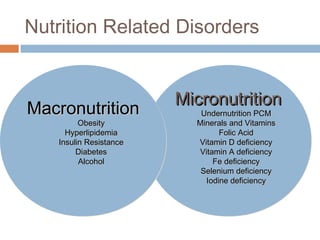
Nutrition Related Disorders
MicronutritionMicronutrition
Undernutrition PCMUndernutrition PCM
Minerals and VitaminsMinerals and Vitamins
Folic AcidFolic Acid
Vitamin D deficiencyVitamin D deficiency
Vitamin A deficiencyVitamin A deficiency
Fe deficiencyFe deficiency
Selenium deficiencySelenium deficiency
Iodine deficiencyIodine deficiency
MicronutritionMicronutrition
Undernutrition PCMUndernutrition PCM
Minerals and VitaminsMinerals and Vitamins
Folic AcidFolic Acid
Vitamin D deficiencyVitamin D deficiency
Vitamin A deficiencyVitamin A deficiency
Fe deficiencyFe deficiency
Selenium deficiencySelenium deficiency
Iodine deficiencyIodine deficiency
MacronutritionMacronutrition
ObesityObesity
HyperlipidemiaHyperlipidemia
Insulin ResistanceInsulin Resistance
DiabetesDiabetes
AlcoholAlcohol
MacronutritionMacronutrition
ObesityObesity
HyperlipidemiaHyperlipidemia
Insulin ResistanceInsulin Resistance
DiabetesDiabetes
AlcoholAlcohol
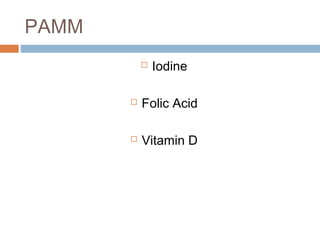
PAMM
 Iodine
 Folic Acid
 Vitamin D
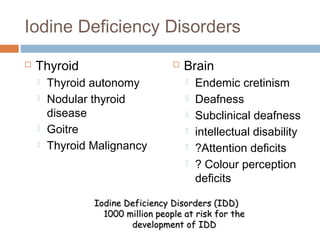
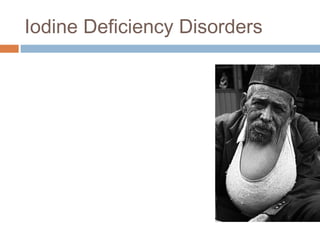
Iodine Deficiency Disorders
 Thyroid
 Thyroid autonomy
 Nodular thyroid
disease
 Goitre
 Thyroid Malignancy
 Brain
 Endemic cretinism
 Deafness
 Subclinical deafness
 intellectual disability
 ?Attention deficits
 ? Colour perception
deficits
Iodine Deficiency Disorders (IDD)Iodine Deficiency Disorders (IDD)
1000 million people at risk for the1000 million people at risk for the
development of IDDdevelopment of IDD
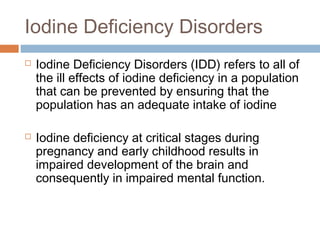
Iodine Deficiency Disorders
 Iodine Deficiency Disorders (IDD) refers to all of
the ill effects of iodine deficiency in a population
that can be prevented by ensuring that the
population has an adequate intake of iodine
 Iodine deficiency at critical stages during
pregnancy and early childhood results in
impaired development of the brain and
consequently in impaired mental function.
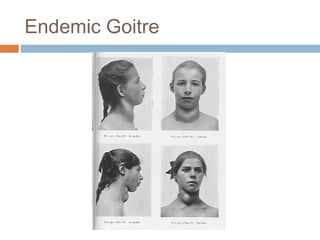
Endemic Goitre
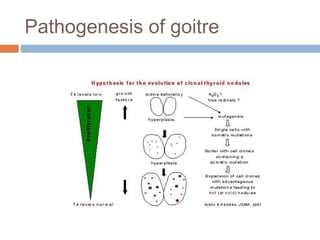
Pathogenesis of goitre
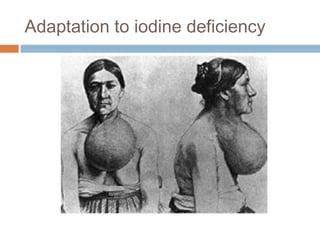
Adaptation to iodine deficiency
Iodine Deficiency Disorders
Early recognition of goitre with impaired
mental ability
"Hence while travelling in a
certain region in the County
Tyrol, under the jurisdiction of
the Bishop of Gurk, I was
astonished at the very large
number of madmen, fools and
dolts; but when I considered
the frigidity and the humidity of
the air, and also perceived the
crudity of the waters from the
very frequent occurrence of
goitre... all astonishment
ceased entirely."
 EUSTACHIUS RUDIUS, A
PHYSICIANFRO MUTRECHT
 (1 551 -1 6 1 1 )
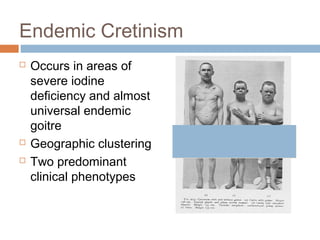
Endemic Cretinism
 Occurs in areas of
severe iodine
deficiency and almost
universal endemic
goitre
 Geographic clustering
 Two predominant
clinical phenotypes
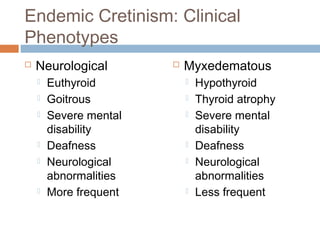
Endemic Cretinism: Clinical
Phenotypes
 Neurological
 Euthyroid
 Goitrous
 Severe mental
disability
 Deafness
 Neurological
abnormalities
 More frequent
 Myxedematous
 Hypothyroid
 Thyroid atrophy
 Severe mental
disability
 Deafness
 Neurological
abnormalities
 Less frequent
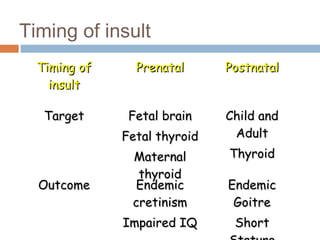
Timing of insult
Timing ofTiming of
insultinsult
PrenatalPrenatal PostnatalPostnatal
TargetTarget Fetal brainFetal brain
Fetal thyroidFetal thyroid
MaternalMaternal
thyroidthyroid
Child andChild and
AdultAdult
ThyroidThyroid
OutcomeOutcome EndemicEndemic
cretinismcretinism
Impaired IQImpaired IQ
EndemicEndemic
GoitreGoitre
ShortShort
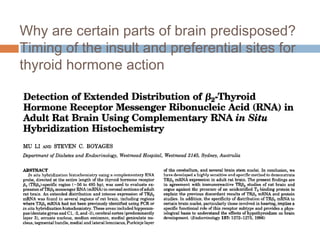
Why are certain parts of brain predisposed?
Timing of the insult and preferential sites for
thyroid hormone action
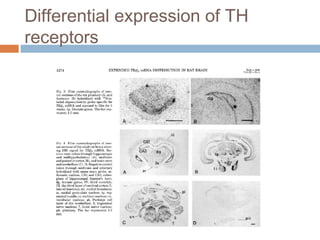
Differential expression of TH
receptors
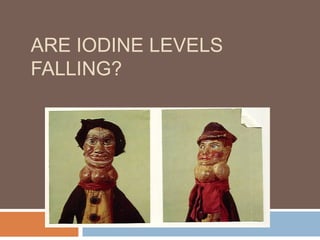
ARE IODINE LEVELS
FALLING?
Are we at risk?
Are iodine levels falling?
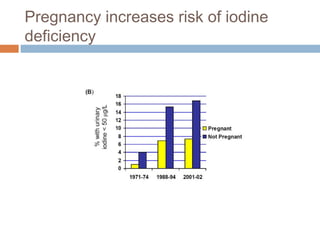
Figure 1. (A) Median U.S. urinary iodine concentrations in
males and females, 1971-2002 (B) Median U.S. urinary
iodine concentrations in pregnant and non-pregnant women
of child-bearing age (15- 44 years old), 1971-2002.
[Adapted from Hollowell et al, JCEM 1998; 83:3401-8 & Caldwell et al,
Thyroid 2005;15:692-9]
Pregnancy increases risk of iodine
deficiency
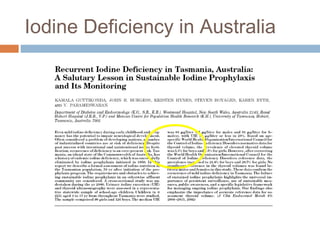
Iodine Deficiency in Australia
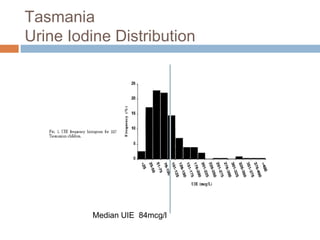
Tasmania
Urine Iodine Distribution
Median UIE 84mcg/l
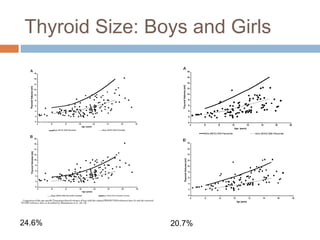
Thyroid Size: Boys and Girls
24.6% 20.7%
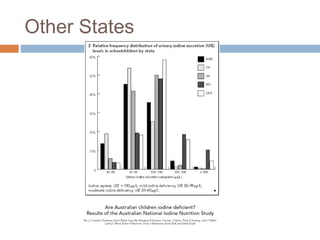
Other States
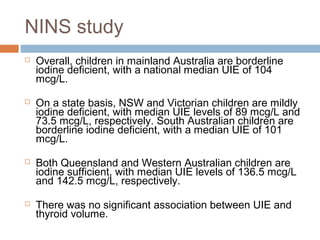
NINS study
 Overall, children in mainland Australia are borderline
iodine deficient, with a national median UIE of 104
mcg/L.
 On a state basis, NSW and Victorian children are mildly
iodine deficient, with median UIE levels of 89 mcg/L and
73.5 mcg/L, respectively. South Australian children are
borderline iodine deficient, with a median UIE of 101
mcg/L.
 Both Queensland and Western Australian children are
iodine sufficient, with median UIE levels of 136.5 mcg/L
and 142.5 mcg/L, respectively.
 There was no significant association between UIE and
thyroid volume.
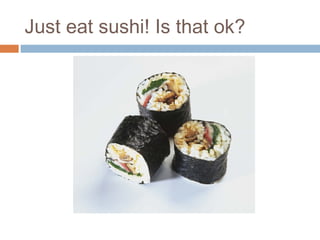
Just eat sushi! Is that ok?
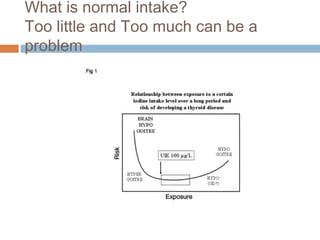
What is normal intake?
Too little and Too much can be a
problem
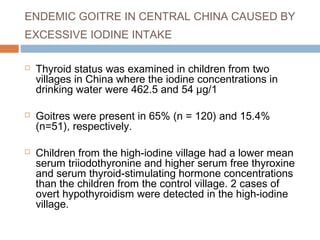
ENDEMIC GOITRE IN CENTRAL CHINA CAUSED BY
EXCESSIVE IODINE INTAKE
 Thyroid status was examined in children from two
villages in China where the iodine concentrations in
drinking water were 462.5 and 54 μg/1
 Goitres were present in 65% (n = 120) and 15.4%
(n=51), respectively.
 Children from the high-iodine village had a lower mean
serum triiodothyronine and higher serum free thyroxine
and serum thyroid-stimulating hormone concentrations
than the children from the control village. 2 cases of
overt hypothyroidism were detected in the high-iodine
village.
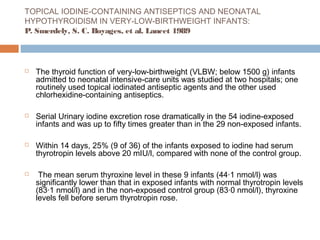
TOPICAL IODINE-CONTAINING ANTISEPTICS AND NEONATAL
HYPOTHYROIDISM IN VERY-LOW-BIRTHWEIGHT INFANTS:
P. Smerdely, S. C. Boyages, et al. Lancet 1989
 The thyroid function of very-low-birthweight (VLBW; below 1500 g) infants
admitted to neonatal intensive-care units was studied at two hospitals; one
routinely used topical iodinated antiseptic agents and the other used
chlorhexidine-containing antiseptics.
 Serial Urinary iodine excretion rose dramatically in the 54 iodine-exposed
infants and was up to fifty times greater than in the 29 non-exposed infants.
 Within 14 days, 25% (9 of 36) of the infants exposed to iodine had serum
thyrotropin levels above 20 mIU/l, compared with none of the control group.
 The mean serum thyroxine level in these 9 infants (44·1 nmol/l) was
significantly lower than that in exposed infants with normal thyrotropin levels
(83·1 nmol/l) and in the non-exposed control group (83·0 nmol/l), thyroxine
levels fell before serum thyrotropin rose.
Medications
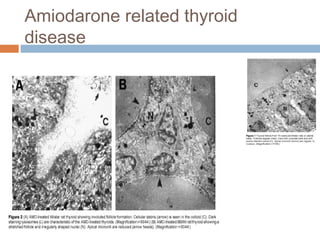
Amiodarone related thyroid
disease
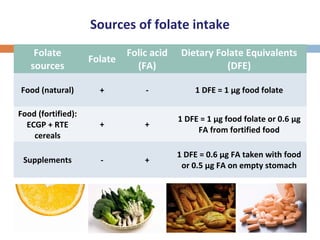
FOLIC ACID
Sources of folate intake
Folate
sources
Folate
Folic acid
(FA)
Dietary Folate Equivalents
(DFE)
Food (natural) + - 1 DFE = 1 μg food folate
Food (fortified):
ECGP + RTE
cereals
+ +
1 DFE = 1 μg food folate or 0.6 μg
FA from fortified food
Supplements - +
1 DFE = 0.6 μg FA taken with food
or 0.5 μg FA on empty stomach
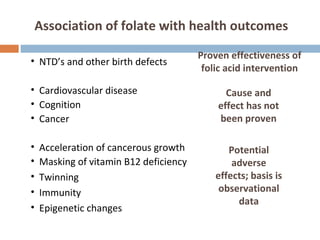
Association of folate with health outcomes
• NTD’s and other birth defects
• Cardiovascular disease
• Cognition
• Cancer
• Acceleration of cancerous growth
• Masking of vitamin B12 deficiency
• Twinning
• Immunity
• Epigenetic changes
Cause and
effect has not
been proven
Potential
adverse
effects; basis is
observational
data
Proven effectiveness of
folic acid intervention
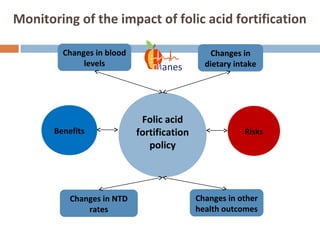
Monitoring of the impact of folic acid fortification
Changes in
dietary intake
Changes in blood
levels
Changes in NTD
rates
Folic acid
fortification
policy
Changes in other
health outcomes
Benefits Risks
anes
Changes in biomarker levels of folate status
How much did folate blood
levels change after the
introduction of fortification?
What are the challenges
associated with assessing
folate status through
biochemical measurements?
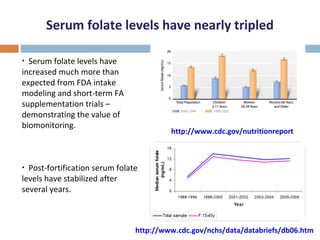
Serum folate levels have nearly tripled
• Serum folate levels have
increased much more than
expected from FDA intake
modeling and short-term FA
supplementation trials –
demonstrating the value of
biomonitoring.
• Post-fortification serum folate
levels have stabilized after
several years.
http://www.cdc.gov/nchs/data/databriefs/db06.htm
http://www.cdc.gov/nutritionreport
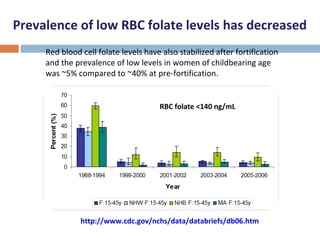
Prevalence of low RBC folate levels has decreased
Red blood cell folate levels have also stabilized after fortification
and the prevalence of low levels in women of childbearing age
was ~5% compared to ~40% at pre-fortification.
http://www.cdc.gov/nchs/data/databriefs/db06.htm
RBC folate <140 ng/mL
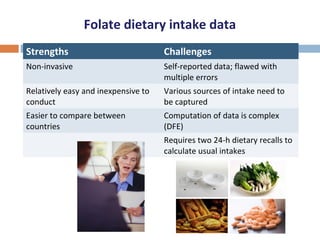
Folate dietary intake data
Strengths Challenges
Non-invasive Self-reported data; flawed with
multiple errors
Relatively easy and inexpensive to
conduct
Various sources of intake need to
be captured
Easier to compare between
countries
Computation of data is complex
(DFE)
Requires two 24-h dietary recalls to
calculate usual intakes
VITAMIN D
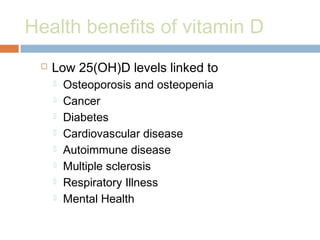
Health benefits of vitamin D
 Low 25(OH)D levels linked to
 Osteoporosis and osteopenia
 Cancer
 Diabetes
 Cardiovascular disease
 Autoimmune disease
 Multiple sclerosis
 Respiratory Illness
 Mental Health
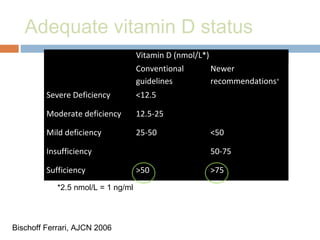
Adequate vitamin D status
Vitamin D (nmol/L*)
Conventional
guidelines
Newer
recommendations+
Severe Deficiency <12.5
Moderate deficiency 12.5-25
Mild deficiency 25-50 <50
Insufficiency 50-75
Sufficiency >50 >75
*2.5 nmol/L = 1 ng/ml
+
Bischoff Ferrari, AJCN 2006
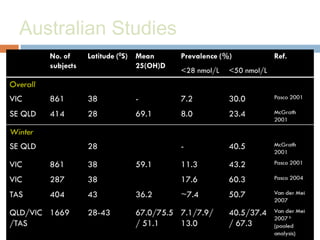
Australian Studies
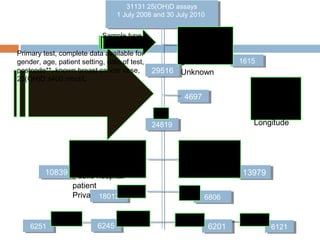
46974697
31131 25(OH)D assays
1 July 2008 and 30 July 2010
31131 25(OH)D assays
1 July 2008 and 30 July 2010
Primary test, complete data available for
gender, age, patient setting, date of test,
postcode**, known breast cancer case,
25(OH)D ≤400 nmol/L
Sample type
1083910839 1397913979
Diagnostic referral
Outpatient
Private outpatient
Emergency
Inpatient
Private hospital
patient
Public hospital
patient
Private patient
2951629516
2481924819
Yes
680668061801218012
Female Male
6201620162516251
Summer Winter
6121612162456245
Autumn Spring
16151615
QC sample
Research
Miscellaneou
s
Unknown
* *Matched
to ARIA,
SEIFA,
Latitude,
Longitude
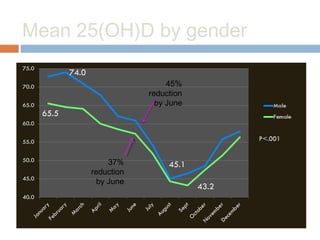
Mean 25(OH)D by gender
37%
reduction
by June
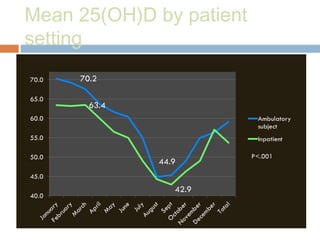
Mean 25(OH)D by patient
setting
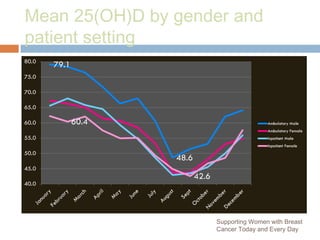
Mean 25(OH)D by gender and
patient setting
Supporting Women with Breast
Cancer Today and Every Day
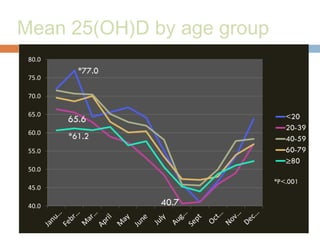
Mean 25(OH)D by age group
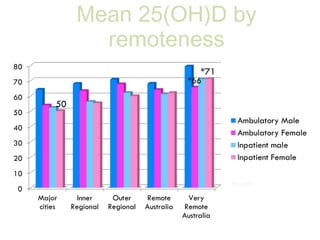
Mean 25(OH)D by
remoteness
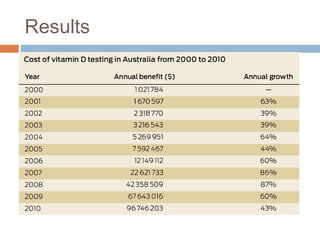
Results
Bilinski & Boyages MJA 197 (2) · 16 July 2012
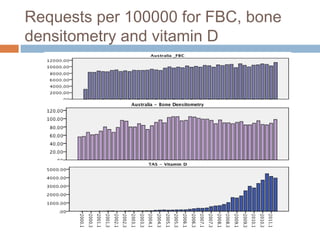
Requests per 100000 for FBC, bone
densitometry and vitamin D
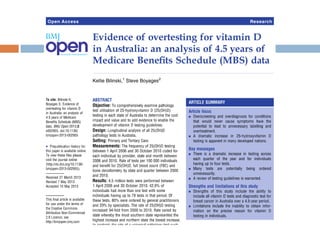
Bilinski & Boyages BMJ Open 2013;3: e002955
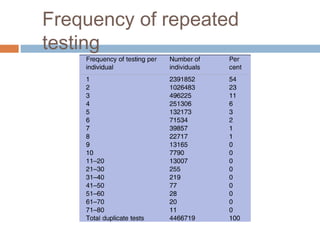
Frequency of repeated
testing
Bilinski & Boyages BMJ Open 2013;3: e002955
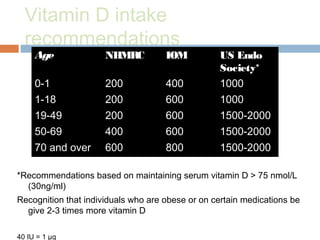
Vitamin D intake
recommendations
*Recommendations based on maintaining serum vitamin D > 75 nmol/L
(30ng/ml)
Recognition that individuals who are obese or on certain medications be
give 2-3 times more vitamin D
40 IU = 1 µg
Age NHMRC IOM US Endo
Society*
0-1 200 400 1000
1-18 200 600 1000
19-49 200 600 1500-2000
50-69 400 600 1500-2000
70 and over 600 800 1500-2000
Health Implications
 Public health messages required to address
high prevalence of vitamin D deficiency
 Australians are not adequately supplementing -
suitable guidelines are required
 Implications regarding frequency and timing of
testing
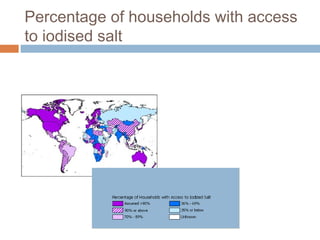
Percentage of households with access
to iodised salt
Food Fortification
 Eradication of iodine deficiency has always the highest priority.
 Optimal prevention of thyroid disease by modification of iodine
intake in the population is achieved by keeping iodine intake in
individuals within a relatively narrow interval around the
recommended level.
 To run an optimal iodization program it is necessary to have
information on dietary habits in the population, and on iodine
contents of different food items.
 Iodine used for enrichment of food should be well distributed in
different food items, e. g. by universal or nearly universal iodization
of salt. Optimal methods may differ between European countries
depending on dietary habits.
Risks of iodisation programmes
 Sudden increase in the prevalence of
hyperthyroidism
 Jod Basedow phenomenon
 Development of hypothyroidism in those with
pre-existing autoimmune thyroid disease
 Positive anti-TPO antibodies
 Change in the pattern of thyroid disease, rise in
the prevalence of thyroid autoimmunity
CONCLUSION
 Thyroid hormone is essential for normal
somatic and neurological development.
 Iodine deficiency leads to thyroid hormone
deficiency at critical periods of brain
development that leads to irreversible
neurological damage.
 Prevention of iodine deficiency is essential
Acknowledgements
 Australia
 CJ Eastman
 JP Halpern
 John K Collins
 Li Mu
 China
 Indonesia
 The Netherlands
 Hemmo Drexhage
 USA, Atlanta
 GF Maberly
 Italy, Pisa
 Alessandro Antonelli

Prevention against micronutrient malnutrition

  • 1.
    PREVENTION AGAINST MICRONUTRIENT MALNUTRITION IODINE FOLICACID VITAMIN D 3RD SUMMER SCHOOL MANI, GREECE 2014 Professor Steven C. Boyages Westmead Hospital Sydney, Australia
  • 2.
  • 3.
    Nutrition Related Disorders MicronutritionMicronutrition UndernutritionPCMUndernutrition PCM Minerals and VitaminsMinerals and Vitamins Folic AcidFolic Acid Vitamin D deficiencyVitamin D deficiency Vitamin A deficiencyVitamin A deficiency Fe deficiencyFe deficiency Selenium deficiencySelenium deficiency Iodine deficiencyIodine deficiency MicronutritionMicronutrition Undernutrition PCMUndernutrition PCM Minerals and VitaminsMinerals and Vitamins Folic AcidFolic Acid Vitamin D deficiencyVitamin D deficiency Vitamin A deficiencyVitamin A deficiency Fe deficiencyFe deficiency Selenium deficiencySelenium deficiency Iodine deficiencyIodine deficiency MacronutritionMacronutrition ObesityObesity HyperlipidemiaHyperlipidemia Insulin ResistanceInsulin Resistance DiabetesDiabetes AlcoholAlcohol MacronutritionMacronutrition ObesityObesity HyperlipidemiaHyperlipidemia Insulin ResistanceInsulin Resistance DiabetesDiabetes AlcoholAlcohol
  • 4.
    PAMM  Iodine  FolicAcid  Vitamin D
  • 5.
    Iodine Deficiency Disorders Thyroid  Thyroid autonomy  Nodular thyroid disease  Goitre  Thyroid Malignancy  Brain  Endemic cretinism  Deafness  Subclinical deafness  intellectual disability  ?Attention deficits  ? Colour perception deficits Iodine Deficiency Disorders (IDD)Iodine Deficiency Disorders (IDD) 1000 million people at risk for the1000 million people at risk for the development of IDDdevelopment of IDD
  • 6.
    Iodine Deficiency Disorders Iodine Deficiency Disorders (IDD) refers to all of the ill effects of iodine deficiency in a population that can be prevented by ensuring that the population has an adequate intake of iodine  Iodine deficiency at critical stages during pregnancy and early childhood results in impaired development of the brain and consequently in impaired mental function.
  • 8.
  • 9.
  • 10.
  • 11.
  • 12.
    Early recognition ofgoitre with impaired mental ability "Hence while travelling in a certain region in the County Tyrol, under the jurisdiction of the Bishop of Gurk, I was astonished at the very large number of madmen, fools and dolts; but when I considered the frigidity and the humidity of the air, and also perceived the crudity of the waters from the very frequent occurrence of goitre... all astonishment ceased entirely."  EUSTACHIUS RUDIUS, A PHYSICIANFRO MUTRECHT  (1 551 -1 6 1 1 )
  • 13.
    Endemic Cretinism  Occursin areas of severe iodine deficiency and almost universal endemic goitre  Geographic clustering  Two predominant clinical phenotypes
  • 14.
    Endemic Cretinism: Clinical Phenotypes Neurological  Euthyroid  Goitrous  Severe mental disability  Deafness  Neurological abnormalities  More frequent  Myxedematous  Hypothyroid  Thyroid atrophy  Severe mental disability  Deafness  Neurological abnormalities  Less frequent
  • 15.
    Timing of insult TimingofTiming of insultinsult PrenatalPrenatal PostnatalPostnatal TargetTarget Fetal brainFetal brain Fetal thyroidFetal thyroid MaternalMaternal thyroidthyroid Child andChild and AdultAdult ThyroidThyroid OutcomeOutcome EndemicEndemic cretinismcretinism Impaired IQImpaired IQ EndemicEndemic GoitreGoitre ShortShort
  • 16.
    Why are certainparts of brain predisposed? Timing of the insult and preferential sites for thyroid hormone action
  • 17.
  • 18.
  • 19.
    Are iodine levelsfalling? Figure 1. (A) Median U.S. urinary iodine concentrations in males and females, 1971-2002 (B) Median U.S. urinary iodine concentrations in pregnant and non-pregnant women of child-bearing age (15- 44 years old), 1971-2002. [Adapted from Hollowell et al, JCEM 1998; 83:3401-8 & Caldwell et al, Thyroid 2005;15:692-9]
  • 20.
    Pregnancy increases riskof iodine deficiency
  • 21.
  • 22.
  • 23.
    Thyroid Size: Boysand Girls 24.6% 20.7%
  • 24.
  • 25.
    NINS study  Overall,children in mainland Australia are borderline iodine deficient, with a national median UIE of 104 mcg/L.  On a state basis, NSW and Victorian children are mildly iodine deficient, with median UIE levels of 89 mcg/L and 73.5 mcg/L, respectively. South Australian children are borderline iodine deficient, with a median UIE of 101 mcg/L.  Both Queensland and Western Australian children are iodine sufficient, with median UIE levels of 136.5 mcg/L and 142.5 mcg/L, respectively.  There was no significant association between UIE and thyroid volume.
  • 26.
    Just eat sushi!Is that ok?
  • 27.
    What is normalintake? Too little and Too much can be a problem
  • 28.
    ENDEMIC GOITRE INCENTRAL CHINA CAUSED BY EXCESSIVE IODINE INTAKE  Thyroid status was examined in children from two villages in China where the iodine concentrations in drinking water were 462.5 and 54 μg/1  Goitres were present in 65% (n = 120) and 15.4% (n=51), respectively.  Children from the high-iodine village had a lower mean serum triiodothyronine and higher serum free thyroxine and serum thyroid-stimulating hormone concentrations than the children from the control village. 2 cases of overt hypothyroidism were detected in the high-iodine village.
  • 29.
    TOPICAL IODINE-CONTAINING ANTISEPTICSAND NEONATAL HYPOTHYROIDISM IN VERY-LOW-BIRTHWEIGHT INFANTS: P. Smerdely, S. C. Boyages, et al. Lancet 1989  The thyroid function of very-low-birthweight (VLBW; below 1500 g) infants admitted to neonatal intensive-care units was studied at two hospitals; one routinely used topical iodinated antiseptic agents and the other used chlorhexidine-containing antiseptics.  Serial Urinary iodine excretion rose dramatically in the 54 iodine-exposed infants and was up to fifty times greater than in the 29 non-exposed infants.  Within 14 days, 25% (9 of 36) of the infants exposed to iodine had serum thyrotropin levels above 20 mIU/l, compared with none of the control group.  The mean serum thyroxine level in these 9 infants (44·1 nmol/l) was significantly lower than that in exposed infants with normal thyrotropin levels (83·1 nmol/l) and in the non-exposed control group (83·0 nmol/l), thyroxine levels fell before serum thyrotropin rose.
  • 30.
  • 31.
  • 32.
  • 33.
    Sources of folateintake Folate sources Folate Folic acid (FA) Dietary Folate Equivalents (DFE) Food (natural) + - 1 DFE = 1 μg food folate Food (fortified): ECGP + RTE cereals + + 1 DFE = 1 μg food folate or 0.6 μg FA from fortified food Supplements - + 1 DFE = 0.6 μg FA taken with food or 0.5 μg FA on empty stomach
  • 34.
    Association of folatewith health outcomes • NTD’s and other birth defects • Cardiovascular disease • Cognition • Cancer • Acceleration of cancerous growth • Masking of vitamin B12 deficiency • Twinning • Immunity • Epigenetic changes Cause and effect has not been proven Potential adverse effects; basis is observational data Proven effectiveness of folic acid intervention
  • 35.
    Monitoring of theimpact of folic acid fortification Changes in dietary intake Changes in blood levels Changes in NTD rates Folic acid fortification policy Changes in other health outcomes Benefits Risks anes
  • 36.
    Changes in biomarkerlevels of folate status How much did folate blood levels change after the introduction of fortification? What are the challenges associated with assessing folate status through biochemical measurements?
  • 37.
    Serum folate levelshave nearly tripled • Serum folate levels have increased much more than expected from FDA intake modeling and short-term FA supplementation trials – demonstrating the value of biomonitoring. • Post-fortification serum folate levels have stabilized after several years. http://www.cdc.gov/nchs/data/databriefs/db06.htm http://www.cdc.gov/nutritionreport
  • 38.
    Prevalence of lowRBC folate levels has decreased Red blood cell folate levels have also stabilized after fortification and the prevalence of low levels in women of childbearing age was ~5% compared to ~40% at pre-fortification. http://www.cdc.gov/nchs/data/databriefs/db06.htm RBC folate <140 ng/mL
  • 39.
    Folate dietary intakedata Strengths Challenges Non-invasive Self-reported data; flawed with multiple errors Relatively easy and inexpensive to conduct Various sources of intake need to be captured Easier to compare between countries Computation of data is complex (DFE) Requires two 24-h dietary recalls to calculate usual intakes
  • 40.
  • 42.
    Health benefits ofvitamin D  Low 25(OH)D levels linked to  Osteoporosis and osteopenia  Cancer  Diabetes  Cardiovascular disease  Autoimmune disease  Multiple sclerosis  Respiratory Illness  Mental Health
  • 43.
    Adequate vitamin Dstatus Vitamin D (nmol/L*) Conventional guidelines Newer recommendations+ Severe Deficiency <12.5 Moderate deficiency 12.5-25 Mild deficiency 25-50 <50 Insufficiency 50-75 Sufficiency >50 >75 *2.5 nmol/L = 1 ng/ml + Bischoff Ferrari, AJCN 2006
  • 44.
  • 45.
    46974697 31131 25(OH)D assays 1July 2008 and 30 July 2010 31131 25(OH)D assays 1 July 2008 and 30 July 2010 Primary test, complete data available for gender, age, patient setting, date of test, postcode**, known breast cancer case, 25(OH)D ≤400 nmol/L Sample type 1083910839 1397913979 Diagnostic referral Outpatient Private outpatient Emergency Inpatient Private hospital patient Public hospital patient Private patient 2951629516 2481924819 Yes 680668061801218012 Female Male 6201620162516251 Summer Winter 6121612162456245 Autumn Spring 16151615 QC sample Research Miscellaneou s Unknown * *Matched to ARIA, SEIFA, Latitude, Longitude
  • 46.
    Mean 25(OH)D bygender 37% reduction by June
  • 47.
    Mean 25(OH)D bypatient setting
  • 48.
    Mean 25(OH)D bygender and patient setting Supporting Women with Breast Cancer Today and Every Day
  • 49.
    Mean 25(OH)D byage group
  • 50.
  • 52.
    Results Bilinski & BoyagesMJA 197 (2) · 16 July 2012
  • 53.
    Requests per 100000for FBC, bone densitometry and vitamin D Bilinski & Boyages BMJ Open 2013;3: e002955
  • 54.
    Frequency of repeated testing Bilinski& Boyages BMJ Open 2013;3: e002955
  • 56.
    Vitamin D intake recommendations *Recommendationsbased on maintaining serum vitamin D > 75 nmol/L (30ng/ml) Recognition that individuals who are obese or on certain medications be give 2-3 times more vitamin D 40 IU = 1 µg Age NHMRC IOM US Endo Society* 0-1 200 400 1000 1-18 200 600 1000 19-49 200 600 1500-2000 50-69 400 600 1500-2000 70 and over 600 800 1500-2000
  • 57.
    Health Implications  Publichealth messages required to address high prevalence of vitamin D deficiency  Australians are not adequately supplementing - suitable guidelines are required  Implications regarding frequency and timing of testing
  • 58.
    Percentage of householdswith access to iodised salt
  • 59.
    Food Fortification  Eradicationof iodine deficiency has always the highest priority.  Optimal prevention of thyroid disease by modification of iodine intake in the population is achieved by keeping iodine intake in individuals within a relatively narrow interval around the recommended level.  To run an optimal iodization program it is necessary to have information on dietary habits in the population, and on iodine contents of different food items.  Iodine used for enrichment of food should be well distributed in different food items, e. g. by universal or nearly universal iodization of salt. Optimal methods may differ between European countries depending on dietary habits.
  • 60.
    Risks of iodisationprogrammes  Sudden increase in the prevalence of hyperthyroidism  Jod Basedow phenomenon  Development of hypothyroidism in those with pre-existing autoimmune thyroid disease  Positive anti-TPO antibodies  Change in the pattern of thyroid disease, rise in the prevalence of thyroid autoimmunity
  • 61.
    CONCLUSION  Thyroid hormoneis essential for normal somatic and neurological development.  Iodine deficiency leads to thyroid hormone deficiency at critical periods of brain development that leads to irreversible neurological damage.  Prevention of iodine deficiency is essential
  • 63.
    Acknowledgements  Australia  CJEastman  JP Halpern  John K Collins  Li Mu  China  Indonesia  The Netherlands  Hemmo Drexhage  USA, Atlanta  GF Maberly  Italy, Pisa  Alessandro Antonelli

Editor's Notes

  • #34 DFE = Dietary folate equivalents; adjusts for the nearly 50% lower bioavailability of food folate compared with that of folic acid 1 ug FA from fortified food or supplements equals 1.67 DFE
  • #35 For NTD’s randomized controlled trials have proven the effectiveness of folic acid supplementation in reducing the risk to have an offspring affected with a neural tube defect. However, low folate levels have been associated with many other health outcomes including: cardiovascular disease, cognition and dementia, and various cancers. These associations are primarily based on ecologic or observational data. The cause and effect has not been proven for most of the associations. At the same time, excessive amounts of folate, and we currently don’t have a good definition of what “excessive” means, have been associated in some cases with adverse effects, such as masking of vitamin B12 deficiency, twinning, immunity, and possibly epigenetic changes.
  • #36 You can therefore imagine how important careful monitoring of the impact of folic acid fortification becomes. Changes in blood levels and in dietary intake are monitored through NHANES, while there are other surveillance systems to monitor changes in NTD rates and other health outcomes.
  • #38 Before implementing folate fortification, FDA intake modeling estimated that low consumers would increase their folate intake by 80-100 g per day. Short-term FA supplementation trials showed that serum folate levels increased by approximately 20-30% in response to a 100 g per day increase in FA intake. No information was available on the magnitude of changes in blood folate levels as a result of continuous daily exposure to FA from fortified food products. By applying the same laboratory method (BioRad RIA) – held to strict quality assurance requirements to ensure comparability of data over time – to post-fortification blood samples as was used pre-fortification, we showed that folate status has greatly improved in the entire U.S. population as well as in the target group of women of childbearing age. Moreover, serum folate levels increased much more than expected from short-term FA supplementation trials - they nearly tripled. This demonstrates the value of biomonitoring, as it reflects the net effect of a number of uncertainties surrounding public health decisions such as fortification (i.e., underreporting of foods consumed, increased consumer selection of folate-rich foods because of health claims, and increasing availability of the numbers and types of folate-fortified nonstandardized foods).
  • #39 Short-term FA supplementation trials showed that RBC folate levels increased by approximately 10% in response to a 100 g per day increase in FA intake. RBC folate levels increased much more than expected from short-term FA supplementation trials – they nearly doubled, again demonstrating the value of biomonitoring.
  • #42 As part of a more specific study we are conducting to understand the relationship between vitamin D status and factors associated with breast cancer prognosis we wanted to assess vitamin D status in the a large population of individuals in and examine the relationship between vitamin D and other environmental factors. Australian studies to date have been limited. Most have sample sizes or examine vitamin D status in individuals at high risk of deficiency.
  • #44 Sunlight 1 MED = 20000 IU Hands, arms, neck (11%) for 20 minutes in summer early am = 1000 IU Salmon 160g fillet approx. 530 IU Fortified cheese slice 55 IU Regular milk 20 IU Margarine 12 IU Multivitamins ave.200 IU Caltrate with D 400 IU Specific D ave. 1000IU
  • #46 Current recommendations generally focus on bone health in older people. Evidence suggests that vitamin D intakes above current recommendations may be associated with better health outcomes although the optimal level is not known. The most advantageous serum concentrations of 25(OH)D of 75nmol/L (30ng/mL) are based on factors such as reduction in fractures rates, maximum suppression of PTH and maximum calcium absorption as well as non skeletal outcomes. An intake of at least 1000 IU is suggested to bring at least 50% of the population up to 75nmol/L
  • #47 Australian studies have included limited numbers of subjects.
  • #48 Study Design Explain patient status Define setting Aria; SEIFA. latitude obtained from postcode
  • #52 Based on visual inspection of vitamin D level by age we classified subjects into age groups: &amp;lt;20; 20-39. 40-59, 60-79, ≥80
  • #53 Inpatients always lower than ambulatory subjects except females in very remote Australia.
  • #55 The annual benefit for 25OHD testing subsidised by the MBS increased from $1.02 million in 2000 to $96.7 million in 2010, an average increase of approximately 59% per year
  • #56 This increase in 25OHD testing has risen above the general trend of other common pathology tests such as full blood count
  • #57 The high frequency of testing in individuals suggest that better value could be derived. Subgroup analysis between 1 April 2006 and 31 October 2010 showed that although 49.5% of individuals had an average of two tests in that period, 14.5% had over four tests, and 8.2% had over five tests (with some individuals having up to 79 tests in that period).
  • #59 Based on adequate sunlight exposure Developed for maintenance of calcium homeostasis and prevention of osteoporosis Call for new recommendations based on newly discovered actions