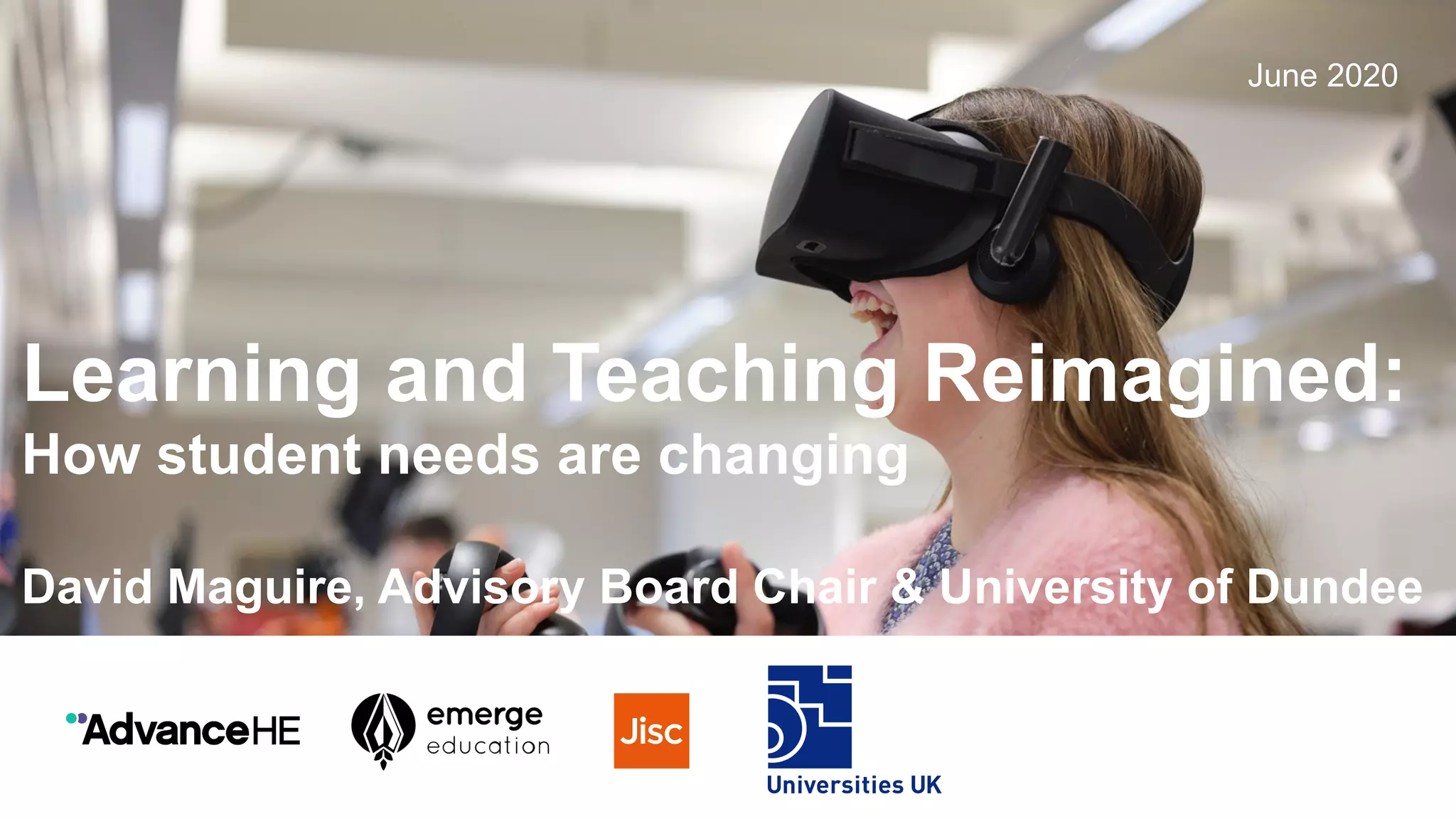
Learning and Teaching Reimagined:
How student needs are changing
David Maguire, Advisory Board Chair & University of Dundee
June 2020
Impact of Covid-19 on learning and teaching
1.Profound impact on 2019/20
Rapid move to remote teaching
Highlighted problems, issues and gaps
2.Planning for 2020/21
Searching for answers
Building capability
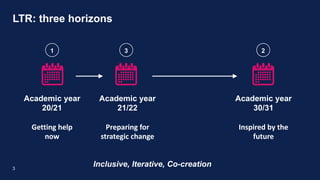
LTR: three horizons
3
Academic year
20/21
Getting help
now
Academic year
21/22
Preparing for
strategic change
Academic year
30/31
Inspired by the
future
1 3 2
Inclusive, Iterative, Co-creation
Deliverables
4
July
Resources on best practices for delivering online learning and teaching
October
University leaders: framework and roadmap for strategic change by 2021/22
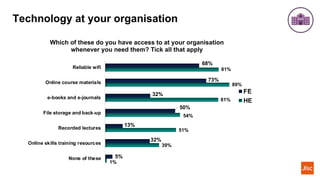
Sector organisations: teaching approaches and support needs for 2021/22
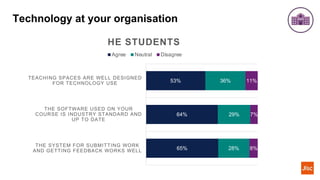
All: vision for UK as world leader in technology enabled learning and teaching
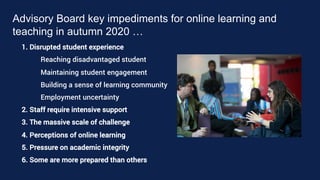
Advisory Board key impediments for online learning and
teaching in autumn 2020 …
1. Disrupted student experience
Reaching disadvantaged student
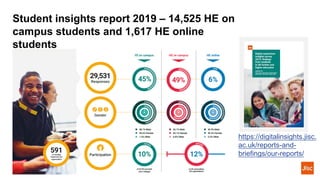
Maintaining student engagement
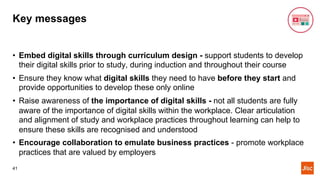
Building a sense of learning community
Employment uncertainty
2. Staff require intensive support
3. The massive scale of challenge
4. Perceptions of online learning
5. Pressure on academic integrity
6. Some are more prepared than others
University of Dundee changing student needs
1. Differential impact of Covid-19 on students
Access to Internet and good computer/phone
Home working environment
Mental health
Loss of income
2. Students come to uni for
Education
Job training
Accreditation
‘The Student Experience’
3. Concerns about funding regime and using credit to get through
4. More engagement with uni politics and governance
How are students’ needs changing?
June 2020
Session plan
• Why understanding your students’ needs matters
• Student discussion
• The HEPI/Advance HE Student Academic Experience Survey
2020
• How are students in higher education actually using
technology?
• Q&A and discussion
8
Now is our chance to transform quickly and reshape our thinking
in how we deliver a first class student academic
experience…We must develop a compelling proposition for
students. And if we listen to students, they can help us.
Alison Johns Advance HE CE
There has never been a more important moment to ask students
in UK higher education institutions what they think about their
own lives
Nick Hillman Hepi
AdvanceHE and HEPI Student Academic Experience Survey
Why listen to students?
•Institutional financial security
•Marketing and promotion
•Quality of delivery
•Widening participation
•Reputation and competition
•Business development
Learning and teaching reimagined - overview10
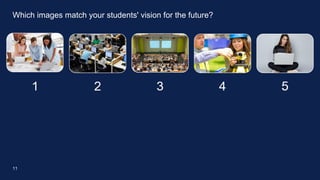
Which images match your students' vision for the future?
11
Why did you choose those images?
12
What do we know about what students want?
1. Students view of value for money and spending priorities
2. Campus’ experience including international students
3. Graduate employability and access to work placements
4. Student mental health and wellbeing
5. Outcomes for underrepresented students
6. Student expectations of technology, teaching and
assessment
13
Student Discussion
The student voice
Learning and teaching reimagined - overview14
The Student Academic Experience Survey 2020
Jonathan Neves, Head of Business Intelligence & Surveys, Advance HE
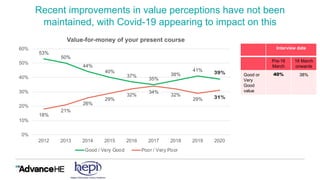
Recent improvements in value perceptions have not been
maintained, with Covid-19 appearing to impact on this
53%
50%
44%
40%
37%
35%
38%
41%
39%
18%
21%
26%
29%
32%
34%
32%
29% 31%
0%
10%
20%
30%
40%
50%
60%
2012 2013 2014 2015 2016 2017 2018 2019 2020
Value-for-money of your present course
Good / Very Good Poor / Very Poor
Interview date
Pre-16
March
16 March
onwards
Good or
Very
Good
value
40% 38%
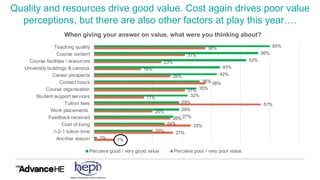
Quality and resources drive good value. Cost again drives poor value
perceptions, but there are also other factors at play this year….
7%
27%
33%
26%
20%
57%
17%
31%
38%
26%
16%
23%
31%
38%
1%
20%
24%
27%
29%
29%
32%
35%
36%
42%
43%
52%
56%
60%
Another reason
1-2-1 tuition time
Cost of living
Feedback received
Work placements
Tuition fees
Student support services
Course organisation
Contact hours
Career prospects
University buildings & campus
Course facilities / resources
Course content
Teaching quality
When giving your answer on value, what were you thinking about?
Perceive good / very good value Perceive poor / very poor value
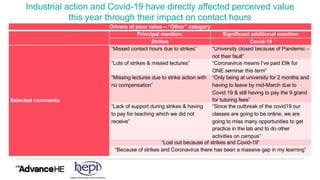
Industrial action and Covid-19 have directly affected perceived value
this year through their impact on contact hours
Drivers of poor value – “Other” category
Principal mention: Significant additional mention:
Strikes Covid-19
Selected comments
“Missed contact hours due to strikes” “University closed because of Pandemic –
not their fault”
“Lots of strikes & missed lectures” “Coronavirus means I’ve paid £9k for
ONE seminar this term”
“Missing lectures due to strike action with
no compensation”
“Only being at university for 2 months and
having to leave by mid-March due to
Covid 19 & still having to pay the 9 grand
for tutoring fees”
“Lack of support during strikes & having
to pay for teaching which we did not
receive”
“Since the outbreak of the covid19 our
classes are going to be online, we are
going to miss many opportunities to get
practice in the lab and to do other
activities on campus”
“Lost out because of strikes and Covid-19”
“Because of strikes and Coronavirus there has been a massive gap in my learning”
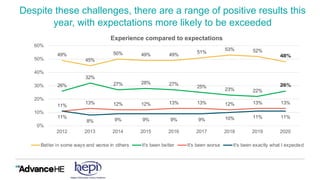
Despite these challenges, there are a range of positive results this
year, with expectations more likely to be exceeded
49%
45%
50% 49% 49%
51%
53% 52%
48%
26%
32%
27% 28% 27%
25%
23% 22%
26%
11%
13% 12% 12% 13% 13% 12% 13% 13%
11%
8% 9% 9% 9% 9% 10% 11% 11%
0%
10%
20%
30%
40%
50%
60%
2012 2013 2014 2015 2016 2017 2018 2019 2020
Experience compared to expectations
Better in some ways and worse in others It's been better It's been worse It's been exactly what I expected
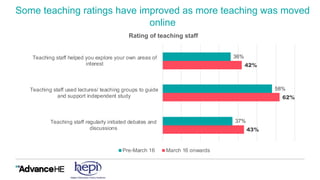
Some teaching ratings have improved as more teaching was moved
online
43%
62%
42%
37%
58%
36%
Teaching staff regularly initiated debates and
discussions
Teaching staff used lectures/ teaching groups to guide
and support independent study
Teaching staff helped you explore your own areas of
interest
Rating of teaching staff
Pre-March 16 March 16 onwards
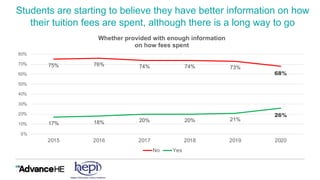
Students are starting to believe they have better information on how
their tuition fees are spent, although there is a long way to go
75% 76% 74% 74% 73%
68%
17% 18% 20% 20% 21%
26%
0%
10%
20%
30%
40%
50%
60%
70%
80%
2015 2016 2017 2018 2019 2020
Whether provided with enough information
on how fees spent
No Yes
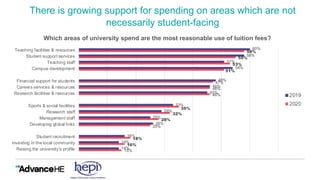
There is growing support for spending on areas which are not
necessarily student-facing
15%
16%
18%
25%
28%
32%
35%
46%
46%
47%
51%
53%
55%
58%
14%
14%
16%
26%
25%
29%
33%
45%
46%
48%
54%
51%
58%
60%
Raising the university's profile
Investing in the local community
Student recruitment
Developing global links
Management staff
Research staff
Sports & social facilities
Research facilities & resources
Careers services & resources
Financial support for students
Campus development
Teaching staff
Student support services
Teaching facilities & resources
Which areas of university spend are the most reasonable use of tuition fees?
2019
2020
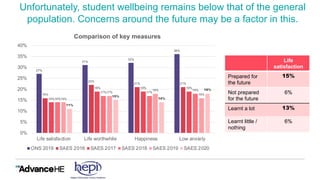
Unfortunately, student wellbeing remains below that of the general
population. Concerns around the future may be a factor in this.
27%
31%
32%
36%
16%
22%
21% 21%
14%
19% 19% 19%
14%
17% 17%
18%
14%
17%
18%
16%
11%
15%
14%
18%
0%
5%
10%
15%
20%
25%
30%
35%
40%
Life satisfaction Life worthwhile Happiness Low anxiety
Comparison of key measures
ONS 2019 SAES 2016 SAES 2017 SAES 2018 SAES 2019 SAES 2020
Life
satisfaction
Prepared for
the future
15%
Not prepared
for the future
6%
Learnt a lot 13%
Learnt little /
nothing
6%
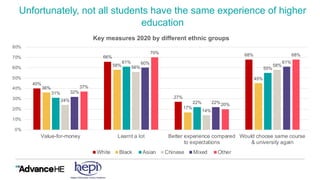
Unfortunately, not all students have the same experience of higher
education
40%
66%
27%
68%
36%
58%
17%
45%
31%
61%
22%
55%
24%
56%
14%
58%
32%
60%
22%
61%
37%
70%
20%
68%
0%
10%
20%
30%
40%
50%
60%
70%
80%
Value-for-money Learnt a lot Better experience compared
to expectations
Would choose same course
& university again
Key measures 2020 by different ethnic groups
White Black Asian Chinese Mixed Other
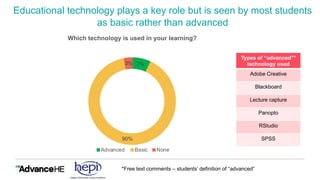
Educational technology plays a key role but is seen by most students
as basic rather than advanced
7%
90%
3%
Which technology is used in your learning?
Advanced Basic None
Types of “advanced”*
technology used
Adobe Creative
Blackboard
Lecture capture
Panopto
RStudio
SPSS
*Free text comments – students’ definition of “advanced”
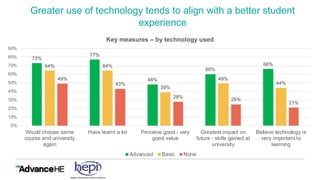
Greater use of technology tends to align with a better student
experience
73%
77%
48%
60%
66%64% 64%
39%
49%
44%
49%
43%
28%
25%
21%
0%
10%
20%
30%
40%
50%
60%
70%
80%
90%
Would choose same
course and university
again
Have learnt a lot Perceive good / very
good value
Greatest impact on
future - skills gained at
university
Believe technology is
very important to
learning
Key measures – by technology used
Advanced Basic None
How are students in higher education
actually using technology?
Sarah Knight, Head of data and digital capability, Jisc
#digitalstudent
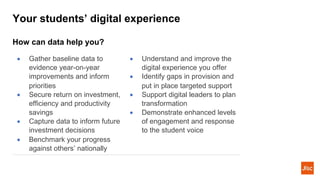
Your students’ digital experience
How can data help you?
• Gather baseline data to
evidence year-on-year
improvements and inform
priorities
• Secure return on investment,
efficiency and productivity
savings
• Capture data to inform future
investment decisions
• Benchmark your progress
against others’ nationally
• Understand and improve the
digital experience you offer
• Identify gaps in provision and
put in place targeted support
• Support digital leaders to plan
transformation
• Demonstrate enhanced levels
of engagement and response
to the student voice
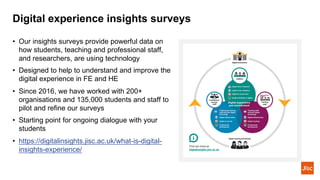
Digital experience insights surveys
• Our insights surveys provide powerful data on
how students, teaching and professional staff,
and researchers, are using technology
• Designed to help to understand and improve the
digital experience in FE and HE
• Since 2016, we have worked with 200+
organisations and 135,000 students and staff to
pilot and refine our surveys
• Starting point for ongoing dialogue with your
students
• https://digitalinsights.jisc.ac.uk/what-is-digital-
insights-experience/
Digital experience insights student survey 2020
Coming soon…full report published in September
• 20,609 HE student responses from 37 universities to 2020
surveys with pre and post lockdown data
• Theme one: you and your technology
• Theme two: technology at your organisation
• Theme three: technology in your learning
• Theme four: developing your digital skills
• Custom questions added to local surveys to capture Covid
experiences
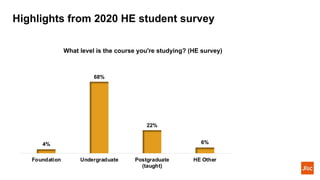
Highlights from 2020 HE student survey
4%
68%
22%
6%
Foundation Undergraduate Postgraduate
(taught)
HE Other
What level is the course you're studying? (HE survey)
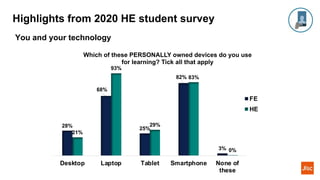
Highlights from 2020 HE student survey
You and your technology
28%
68%
25%
82%
3%
21%
93%
29%
83%
0%
Desktop Laptop Tablet Smartphone None of
these
Which of these PERSONALLY owned devices do you use
for learning? Tick all that apply
FE
HE
Technology at your organisation
68%
73%
32%
50%
13%
32%
5%
81%
89%
81%
54%
51%
39%
1%
Reliable wifi
Online course materials
e-books and e-journals
File storage and back-up
Recorded lectures
Online skills training resources
None of these
Which of these do you have access to at your organisation
whenever you need them? Tick all that apply
FE
HE
Technology at your organisation
53%
64%
65%
36%
29%
28%
11%
7%
8%
TEACHING SPACES ARE WELL DESIGNED
FOR TECHNOLOGY USE
THE SOFTWARE USED ON YOUR
COURSE IS INDUSTRY STANDARD AND
UP TO DATE
THE SYSTEM FOR SUBMITTING WORK
AND GETTING FEEDBACK WORKS WELL
HE STUDENTS
Agree Neutral Disagree
Technology at your organisation
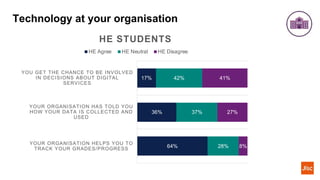
17%
36%
64%
42%
37%
28%
41%
27%
8%
YOU GET THE CHANCE TO BE INVOLVED
IN DECISIONS ABOUT DIGITAL
SERVICES
YOUR ORGANISATION HAS TOLD YOU
HOW YOUR DATA IS COLLECTED AND
USED
YOUR ORGANISATION HELPS YOU TO
TRACK YOUR GRADES/PROGRESS
HE STUDENTS
HE Agree HE Neutral HE Disagree
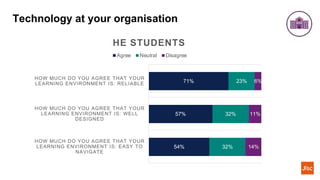
Technology at your organisation
71%
57%
54%
23%
32%
32%
6%
11%
14%
HOW MUCH DO YOU AGREE THAT YOUR
LEARNING ENVIRONMENT IS: RELIABLE
HOW MUCH DO YOU AGREE THAT YOUR
LEARNING ENVIRONMENT IS: WELL
DESIGNED
HOW MUCH DO YOU AGREE THAT YOUR
LEARNING ENVIRONMENT IS: EASY TO
NAVIGATE
HE STUDENTS
Agree Neutral Disagree
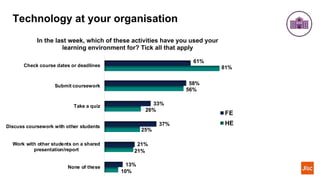
Technology at your organisation
61%
58%
33%
37%
21%
13%
81%
56%
26%
25%
21%
10%
Check course dates or deadlines
Submit coursework
Take a quiz
Discuss coursework with other students
Work with other students on a shared
presentation/report
None of these
In the last week, which of these activities have you used your
learning environment for? Tick all that apply
FE
HE
Technology at your organisation
68%
80%
75%
27%
17%
20%
5%
3%
5%
SUPPORTS YOU TO USE YOUR OWN
DIGITAL DEVICES
LETS YOU ACCESS ONLINE SYSTEMS AND
SERVICES FROM ANYWHERE
COMMUNICATES EFFECTIVELY ONLINE (EG
EMAIL, MESSAGING, NOTIFICATIONS)
HE STUDENTS
Agree Neutral Disagree
Student insights report 2019 – 14,525 HE on
campus students and 1,617 HE online
students
40
• https://digitalinsights.jisc.
ac.uk/reports-and-
briefings/our-reports/
Key messages
• Embed digital skills through curriculum design - support students to develop
their digital skills prior to study, during induction and throughout their course
• Ensure they know what digital skills they need to have before they start and
provide opportunities to develop these only online
• Raise awareness of the importance of digital skills - not all students are fully
aware of the importance of digital skills within the workplace. Clear articulation
and alignment of study and workplace practices throughout learning can help to
ensure these skills are recognised and understood
• Encourage collaboration to emulate business practices - promote workplace
practices that are valued by employers
41
Hearing from you…
• Do these results
align with the experiences of
your students?
• Which result surprised you the
most?
• Download the 2019 report and 'at
a glance’ HE summary from
• https://digitalinsights.jisc.ac.uk/rep
orts-and-briefings/our-reports /
42
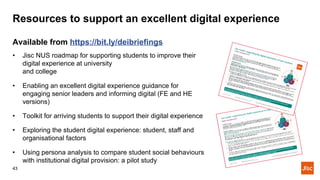
Resources to support an excellent digital experience
43
Available from https://bit.ly/deibriefings
• Jisc NUS roadmap for supporting students to improve their
digital experience at university
and college
• Enabling an excellent digital experience guidance for
engaging senior leaders and informing digital (FE and HE
versions)
• Toolkit for arriving students to support their digital experience
• Exploring the student digital experience: student, staff and
organisational factors
• Using persona analysis to compare student social behaviours
with institutional digital provision: a pilot study
Sign up to run student, teaching and professional services
staff 21/20 surveys:
https://digitalinsights.jisc.ac.uk/subscribe/find-out-more/
Download the full reports and 'at a glance' HE and FE
summaries: https://digitalinsights.jisc.ac.uk/reports-and-
briefings/our-reports/
Join our Insights community:
• Click on jiscmail.ac.uk/JISC-DIGITALINSIGHTS-
COP and join by clicking on the 'Subscribe or
Unsubscribe' button
• Follow #digitalstudent
Final questions and observations
customerservices@jisc.ac.uk
jisc.ac.uk
Louisa Dale
Director of insight, Jisc
louisa.dale@jisc.ac.uk
4 Portwall Lane,
Bristol, BS1 6NB
learningandteachingreimagined
@jisc.ac.uk

Learning and teaching reimagined - how are student needs changing?

  • 1.
    Learning and TeachingReimagined: How student needs are changing David Maguire, Advisory Board Chair & University of Dundee June 2020
  • 2.
    Impact of Covid-19on learning and teaching 1.Profound impact on 2019/20 Rapid move to remote teaching Highlighted problems, issues and gaps 2.Planning for 2020/21 Searching for answers Building capability
  • 3.
    LTR: three horizons 3 Academicyear 20/21 Getting help now Academic year 21/22 Preparing for strategic change Academic year 30/31 Inspired by the future 1 3 2 Inclusive, Iterative, Co-creation
  • 4.
    Deliverables 4 July Resources on bestpractices for delivering online learning and teaching October University leaders: framework and roadmap for strategic change by 2021/22 Sector organisations: teaching approaches and support needs for 2021/22 All: vision for UK as world leader in technology enabled learning and teaching
  • 5.
    Advisory Board keyimpediments for online learning and teaching in autumn 2020 … 1. Disrupted student experience Reaching disadvantaged student Maintaining student engagement Building a sense of learning community Employment uncertainty 2. Staff require intensive support 3. The massive scale of challenge 4. Perceptions of online learning 5. Pressure on academic integrity 6. Some are more prepared than others
  • 6.
    University of Dundeechanging student needs 1. Differential impact of Covid-19 on students Access to Internet and good computer/phone Home working environment Mental health Loss of income 2. Students come to uni for Education Job training Accreditation ‘The Student Experience’ 3. Concerns about funding regime and using credit to get through 4. More engagement with uni politics and governance
  • 7.
    How are students’needs changing? June 2020
  • 8.
    Session plan • Whyunderstanding your students’ needs matters • Student discussion • The HEPI/Advance HE Student Academic Experience Survey 2020 • How are students in higher education actually using technology? • Q&A and discussion 8
  • 9.
    Now is ourchance to transform quickly and reshape our thinking in how we deliver a first class student academic experience…We must develop a compelling proposition for students. And if we listen to students, they can help us. Alison Johns Advance HE CE There has never been a more important moment to ask students in UK higher education institutions what they think about their own lives Nick Hillman Hepi AdvanceHE and HEPI Student Academic Experience Survey
  • 10.
    Why listen tostudents? •Institutional financial security •Marketing and promotion •Quality of delivery •Widening participation •Reputation and competition •Business development Learning and teaching reimagined - overview10
  • 11.
    Which images matchyour students' vision for the future? 11
  • 12.
    Why did youchoose those images? 12
  • 13.
    What do weknow about what students want? 1. Students view of value for money and spending priorities 2. Campus’ experience including international students 3. Graduate employability and access to work placements 4. Student mental health and wellbeing 5. Outcomes for underrepresented students 6. Student expectations of technology, teaching and assessment 13
  • 14.
    Student Discussion The studentvoice Learning and teaching reimagined - overview14
  • 15.
    The Student AcademicExperience Survey 2020 Jonathan Neves, Head of Business Intelligence & Surveys, Advance HE
  • 16.
    Recent improvements invalue perceptions have not been maintained, with Covid-19 appearing to impact on this 53% 50% 44% 40% 37% 35% 38% 41% 39% 18% 21% 26% 29% 32% 34% 32% 29% 31% 0% 10% 20% 30% 40% 50% 60% 2012 2013 2014 2015 2016 2017 2018 2019 2020 Value-for-money of your present course Good / Very Good Poor / Very Poor Interview date Pre-16 March 16 March onwards Good or Very Good value 40% 38%
  • 17.
    Quality and resourcesdrive good value. Cost again drives poor value perceptions, but there are also other factors at play this year…. 7% 27% 33% 26% 20% 57% 17% 31% 38% 26% 16% 23% 31% 38% 1% 20% 24% 27% 29% 29% 32% 35% 36% 42% 43% 52% 56% 60% Another reason 1-2-1 tuition time Cost of living Feedback received Work placements Tuition fees Student support services Course organisation Contact hours Career prospects University buildings & campus Course facilities / resources Course content Teaching quality When giving your answer on value, what were you thinking about? Perceive good / very good value Perceive poor / very poor value
  • 18.
    Industrial action andCovid-19 have directly affected perceived value this year through their impact on contact hours Drivers of poor value – “Other” category Principal mention: Significant additional mention: Strikes Covid-19 Selected comments “Missed contact hours due to strikes” “University closed because of Pandemic – not their fault” “Lots of strikes & missed lectures” “Coronavirus means I’ve paid £9k for ONE seminar this term” “Missing lectures due to strike action with no compensation” “Only being at university for 2 months and having to leave by mid-March due to Covid 19 & still having to pay the 9 grand for tutoring fees” “Lack of support during strikes & having to pay for teaching which we did not receive” “Since the outbreak of the covid19 our classes are going to be online, we are going to miss many opportunities to get practice in the lab and to do other activities on campus” “Lost out because of strikes and Covid-19” “Because of strikes and Coronavirus there has been a massive gap in my learning”
  • 19.
    Despite these challenges,there are a range of positive results this year, with expectations more likely to be exceeded 49% 45% 50% 49% 49% 51% 53% 52% 48% 26% 32% 27% 28% 27% 25% 23% 22% 26% 11% 13% 12% 12% 13% 13% 12% 13% 13% 11% 8% 9% 9% 9% 9% 10% 11% 11% 0% 10% 20% 30% 40% 50% 60% 2012 2013 2014 2015 2016 2017 2018 2019 2020 Experience compared to expectations Better in some ways and worse in others It's been better It's been worse It's been exactly what I expected
  • 20.
    Some teaching ratingshave improved as more teaching was moved online 43% 62% 42% 37% 58% 36% Teaching staff regularly initiated debates and discussions Teaching staff used lectures/ teaching groups to guide and support independent study Teaching staff helped you explore your own areas of interest Rating of teaching staff Pre-March 16 March 16 onwards
  • 21.
    Students are startingto believe they have better information on how their tuition fees are spent, although there is a long way to go 75% 76% 74% 74% 73% 68% 17% 18% 20% 20% 21% 26% 0% 10% 20% 30% 40% 50% 60% 70% 80% 2015 2016 2017 2018 2019 2020 Whether provided with enough information on how fees spent No Yes
  • 22.
    There is growingsupport for spending on areas which are not necessarily student-facing 15% 16% 18% 25% 28% 32% 35% 46% 46% 47% 51% 53% 55% 58% 14% 14% 16% 26% 25% 29% 33% 45% 46% 48% 54% 51% 58% 60% Raising the university's profile Investing in the local community Student recruitment Developing global links Management staff Research staff Sports & social facilities Research facilities & resources Careers services & resources Financial support for students Campus development Teaching staff Student support services Teaching facilities & resources Which areas of university spend are the most reasonable use of tuition fees? 2019 2020
  • 23.
    Unfortunately, student wellbeingremains below that of the general population. Concerns around the future may be a factor in this. 27% 31% 32% 36% 16% 22% 21% 21% 14% 19% 19% 19% 14% 17% 17% 18% 14% 17% 18% 16% 11% 15% 14% 18% 0% 5% 10% 15% 20% 25% 30% 35% 40% Life satisfaction Life worthwhile Happiness Low anxiety Comparison of key measures ONS 2019 SAES 2016 SAES 2017 SAES 2018 SAES 2019 SAES 2020 Life satisfaction Prepared for the future 15% Not prepared for the future 6% Learnt a lot 13% Learnt little / nothing 6%
  • 24.
    Unfortunately, not allstudents have the same experience of higher education 40% 66% 27% 68% 36% 58% 17% 45% 31% 61% 22% 55% 24% 56% 14% 58% 32% 60% 22% 61% 37% 70% 20% 68% 0% 10% 20% 30% 40% 50% 60% 70% 80% Value-for-money Learnt a lot Better experience compared to expectations Would choose same course & university again Key measures 2020 by different ethnic groups White Black Asian Chinese Mixed Other
  • 25.
    Educational technology playsa key role but is seen by most students as basic rather than advanced 7% 90% 3% Which technology is used in your learning? Advanced Basic None Types of “advanced”* technology used Adobe Creative Blackboard Lecture capture Panopto RStudio SPSS *Free text comments – students’ definition of “advanced”
  • 26.
    Greater use oftechnology tends to align with a better student experience 73% 77% 48% 60% 66%64% 64% 39% 49% 44% 49% 43% 28% 25% 21% 0% 10% 20% 30% 40% 50% 60% 70% 80% 90% Would choose same course and university again Have learnt a lot Perceive good / very good value Greatest impact on future - skills gained at university Believe technology is very important to learning Key measures – by technology used Advanced Basic None
  • 27.
    How are studentsin higher education actually using technology? Sarah Knight, Head of data and digital capability, Jisc #digitalstudent
  • 28.
    Your students’ digitalexperience How can data help you? • Gather baseline data to evidence year-on-year improvements and inform priorities • Secure return on investment, efficiency and productivity savings • Capture data to inform future investment decisions • Benchmark your progress against others’ nationally • Understand and improve the digital experience you offer • Identify gaps in provision and put in place targeted support • Support digital leaders to plan transformation • Demonstrate enhanced levels of engagement and response to the student voice
  • 29.
    Digital experience insightssurveys • Our insights surveys provide powerful data on how students, teaching and professional staff, and researchers, are using technology • Designed to help to understand and improve the digital experience in FE and HE • Since 2016, we have worked with 200+ organisations and 135,000 students and staff to pilot and refine our surveys • Starting point for ongoing dialogue with your students • https://digitalinsights.jisc.ac.uk/what-is-digital- insights-experience/
  • 30.
    Digital experience insightsstudent survey 2020 Coming soon…full report published in September • 20,609 HE student responses from 37 universities to 2020 surveys with pre and post lockdown data • Theme one: you and your technology • Theme two: technology at your organisation • Theme three: technology in your learning • Theme four: developing your digital skills • Custom questions added to local surveys to capture Covid experiences
  • 31.
    Highlights from 2020HE student survey 4% 68% 22% 6% Foundation Undergraduate Postgraduate (taught) HE Other What level is the course you're studying? (HE survey)
  • 32.
    Highlights from 2020HE student survey You and your technology 28% 68% 25% 82% 3% 21% 93% 29% 83% 0% Desktop Laptop Tablet Smartphone None of these Which of these PERSONALLY owned devices do you use for learning? Tick all that apply FE HE
  • 33.
    Technology at yourorganisation 68% 73% 32% 50% 13% 32% 5% 81% 89% 81% 54% 51% 39% 1% Reliable wifi Online course materials e-books and e-journals File storage and back-up Recorded lectures Online skills training resources None of these Which of these do you have access to at your organisation whenever you need them? Tick all that apply FE HE
  • 34.
    Technology at yourorganisation 53% 64% 65% 36% 29% 28% 11% 7% 8% TEACHING SPACES ARE WELL DESIGNED FOR TECHNOLOGY USE THE SOFTWARE USED ON YOUR COURSE IS INDUSTRY STANDARD AND UP TO DATE THE SYSTEM FOR SUBMITTING WORK AND GETTING FEEDBACK WORKS WELL HE STUDENTS Agree Neutral Disagree
  • 35.
    Technology at yourorganisation 17% 36% 64% 42% 37% 28% 41% 27% 8% YOU GET THE CHANCE TO BE INVOLVED IN DECISIONS ABOUT DIGITAL SERVICES YOUR ORGANISATION HAS TOLD YOU HOW YOUR DATA IS COLLECTED AND USED YOUR ORGANISATION HELPS YOU TO TRACK YOUR GRADES/PROGRESS HE STUDENTS HE Agree HE Neutral HE Disagree
  • 36.
    Technology at yourorganisation 71% 57% 54% 23% 32% 32% 6% 11% 14% HOW MUCH DO YOU AGREE THAT YOUR LEARNING ENVIRONMENT IS: RELIABLE HOW MUCH DO YOU AGREE THAT YOUR LEARNING ENVIRONMENT IS: WELL DESIGNED HOW MUCH DO YOU AGREE THAT YOUR LEARNING ENVIRONMENT IS: EASY TO NAVIGATE HE STUDENTS Agree Neutral Disagree
  • 37.
    Technology at yourorganisation 61% 58% 33% 37% 21% 13% 81% 56% 26% 25% 21% 10% Check course dates or deadlines Submit coursework Take a quiz Discuss coursework with other students Work with other students on a shared presentation/report None of these In the last week, which of these activities have you used your learning environment for? Tick all that apply FE HE
  • 38.
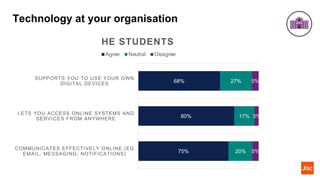
    Technology at yourorganisation 68% 80% 75% 27% 17% 20% 5% 3% 5% SUPPORTS YOU TO USE YOUR OWN DIGITAL DEVICES LETS YOU ACCESS ONLINE SYSTEMS AND SERVICES FROM ANYWHERE COMMUNICATES EFFECTIVELY ONLINE (EG EMAIL, MESSAGING, NOTIFICATIONS) HE STUDENTS Agree Neutral Disagree
  • 39.
    Student insights report2019 – 14,525 HE on campus students and 1,617 HE online students 40 • https://digitalinsights.jisc. ac.uk/reports-and- briefings/our-reports/
  • 40.
    Key messages • Embeddigital skills through curriculum design - support students to develop their digital skills prior to study, during induction and throughout their course • Ensure they know what digital skills they need to have before they start and provide opportunities to develop these only online • Raise awareness of the importance of digital skills - not all students are fully aware of the importance of digital skills within the workplace. Clear articulation and alignment of study and workplace practices throughout learning can help to ensure these skills are recognised and understood • Encourage collaboration to emulate business practices - promote workplace practices that are valued by employers 41
  • 41.
    Hearing from you… •Do these results align with the experiences of your students? • Which result surprised you the most? • Download the 2019 report and 'at a glance’ HE summary from • https://digitalinsights.jisc.ac.uk/rep orts-and-briefings/our-reports / 42
  • 42.
    Resources to supportan excellent digital experience 43 Available from https://bit.ly/deibriefings • Jisc NUS roadmap for supporting students to improve their digital experience at university and college • Enabling an excellent digital experience guidance for engaging senior leaders and informing digital (FE and HE versions) • Toolkit for arriving students to support their digital experience • Exploring the student digital experience: student, staff and organisational factors • Using persona analysis to compare student social behaviours with institutional digital provision: a pilot study
  • 43.
    Sign up torun student, teaching and professional services staff 21/20 surveys: https://digitalinsights.jisc.ac.uk/subscribe/find-out-more/ Download the full reports and 'at a glance' HE and FE summaries: https://digitalinsights.jisc.ac.uk/reports-and- briefings/our-reports/ Join our Insights community: • Click on jiscmail.ac.uk/JISC-DIGITALINSIGHTS- COP and join by clicking on the 'Subscribe or Unsubscribe' button • Follow #digitalstudent
  • 44.
    Final questions andobservations
  • 45.
    customerservices@jisc.ac.uk jisc.ac.uk Louisa Dale Director ofinsight, Jisc louisa.dale@jisc.ac.uk 4 Portwall Lane, Bristol, BS1 6NB learningandteachingreimagined @jisc.ac.uk