Dr. Prasenjit Gogoi
Masters in Emergency Medicine,
Fortis Hospital
Anandapur, Kolkata
KEY ISSUES
 What is the extent of the problem ?
 Why does these it occur ?
 What can be done ?
 Existing laws
The scars
you can’t
see are the
hardest to
heal.
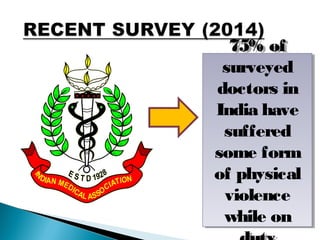
75% of
surveyed
doctors in
India have
suffered
some form
of physical
violence
while on
75% of
surveyed
doctors in
India have
suffered
some form
of physical
violence
while on
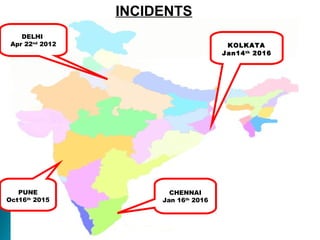
KOLKATA
Jan14th
2016
DELHI
Apr 22nd
2012
CHENNAI
Jan 16th
2016
PUNE
Oct16th
2015
INCIDENTS
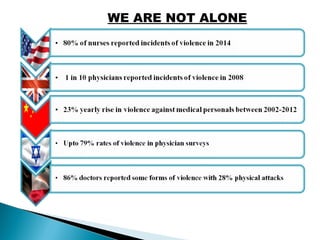
WE ARE NOT ALONE
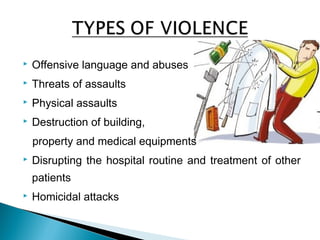
 Offensive language and abuses
 Threats of assaults
 Physical assaults
 Destruction of building,
property and medical equipments
 Disrupting the hospital routine and treatment of other
patients
 Homicidal attacks
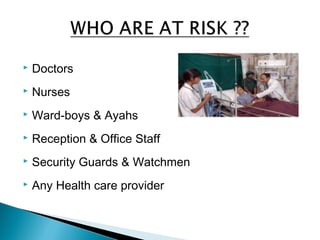
 Doctors
 Nurses
 Ward-boys & Ayahs
 Reception & Office Staff
 Security Guards & Watchmen
 Any Health care provider
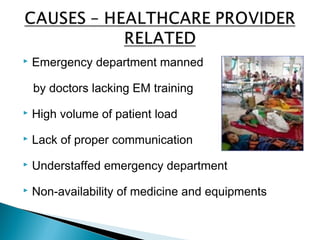
 Emergency department manned
by doctors lacking EM training
 High volume of patient load
 Lack of proper communication
 Understaffed emergency department
 Non-availability of medicine and equipments
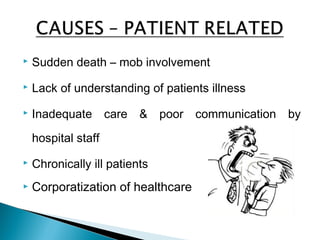
 Sudden death – mob involvement
 Lack of understanding of patients illness
 Inadequate care & poor communication by
hospital staff
 Chronically ill patients
 Corporatization of healthcare
 The Indian Medical Council (Professional
Conduct, Etiquette and Ethics) Regulations, 2002
 Need for more trained Emergency Medicine
doctors
 Improve conditions in Emergency Departments of
hospitals
 Crowd control
 Display information on boards
 Treat patients with respect
 Need for more counsellors for better
communication
 Shortage and planning issues need to be
addressed
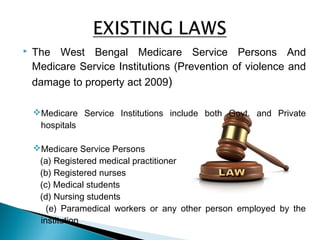
 The West Bengal Medicare Service Persons And
Medicare Service Institutions (Prevention of violence and
damage to property act 2009)
Medicare Service Institutions include both Govt. and Private
hospitals
Medicare Service Persons
(a) Registered medical practitioner
(b) Registered nurses
(c) Medical students
(d) Nursing students
(e) Paramedical workers or any other person employed by the
institution
 Any Offender
(a) Imprisonment upto 3 years
(b) Fine upto fifty thousand rupees
(c) Offences committed are cognizable and non-
bailable
(d) Pay compensation for the damage- if failed
recovered under Bengal Public Demands
Recovery Act 1913
 Watch for signals that may be
associated with impending violence
 Maintain behavior that helps diffuse anger
 Be alert
 Be quick to act
 Workplace violence in the emergency department
is like an epidemic in all societies
 No universal strategy exists to prevent violence
 Identify the risk factors and develop strategies to
reduce them
 Hospitals should develop comprehensive violence
prevention program
Violence in emergency_department

Violence in emergency_department

  • 1.
    Dr. Prasenjit Gogoi Mastersin Emergency Medicine, Fortis Hospital Anandapur, Kolkata
  • 2.
    KEY ISSUES  Whatis the extent of the problem ?  Why does these it occur ?  What can be done ?  Existing laws The scars you can’t see are the hardest to heal.
  • 3.
    75% of surveyed doctors in Indiahave suffered some form of physical violence while on 75% of surveyed doctors in India have suffered some form of physical violence while on
  • 4.
  • 5.
  • 6.
     Offensive languageand abuses  Threats of assaults  Physical assaults  Destruction of building, property and medical equipments  Disrupting the hospital routine and treatment of other patients  Homicidal attacks
  • 7.
     Doctors  Nurses Ward-boys & Ayahs  Reception & Office Staff  Security Guards & Watchmen  Any Health care provider
  • 8.
     Emergency departmentmanned by doctors lacking EM training  High volume of patient load  Lack of proper communication  Understaffed emergency department  Non-availability of medicine and equipments
  • 9.
     Sudden death– mob involvement  Lack of understanding of patients illness  Inadequate care & poor communication by hospital staff  Chronically ill patients  Corporatization of healthcare
  • 11.
     The IndianMedical Council (Professional Conduct, Etiquette and Ethics) Regulations, 2002  Need for more trained Emergency Medicine doctors  Improve conditions in Emergency Departments of hospitals  Crowd control
  • 12.
     Display informationon boards  Treat patients with respect  Need for more counsellors for better communication  Shortage and planning issues need to be addressed
  • 13.
     The WestBengal Medicare Service Persons And Medicare Service Institutions (Prevention of violence and damage to property act 2009) Medicare Service Institutions include both Govt. and Private hospitals Medicare Service Persons (a) Registered medical practitioner (b) Registered nurses (c) Medical students (d) Nursing students (e) Paramedical workers or any other person employed by the institution
  • 14.
     Any Offender (a)Imprisonment upto 3 years (b) Fine upto fifty thousand rupees (c) Offences committed are cognizable and non- bailable (d) Pay compensation for the damage- if failed recovered under Bengal Public Demands Recovery Act 1913
  • 15.
     Watch forsignals that may be associated with impending violence  Maintain behavior that helps diffuse anger  Be alert  Be quick to act
  • 16.
     Workplace violencein the emergency department is like an epidemic in all societies  No universal strategy exists to prevent violence  Identify the risk factors and develop strategies to reduce them  Hospitals should develop comprehensive violence prevention program