SEIZURE,
CONVULSION
AND
EPILEPSY
Ms SAHELI CHAKRABORTY
1ST YEAR MSc NURSING
RINER
INTRODUCTION :-
 The brain is the center that controls and regulates all voluntary
and involuntary responses in the body.
 It consists of nerve cells that normally communicate with each
other through electrical activity.
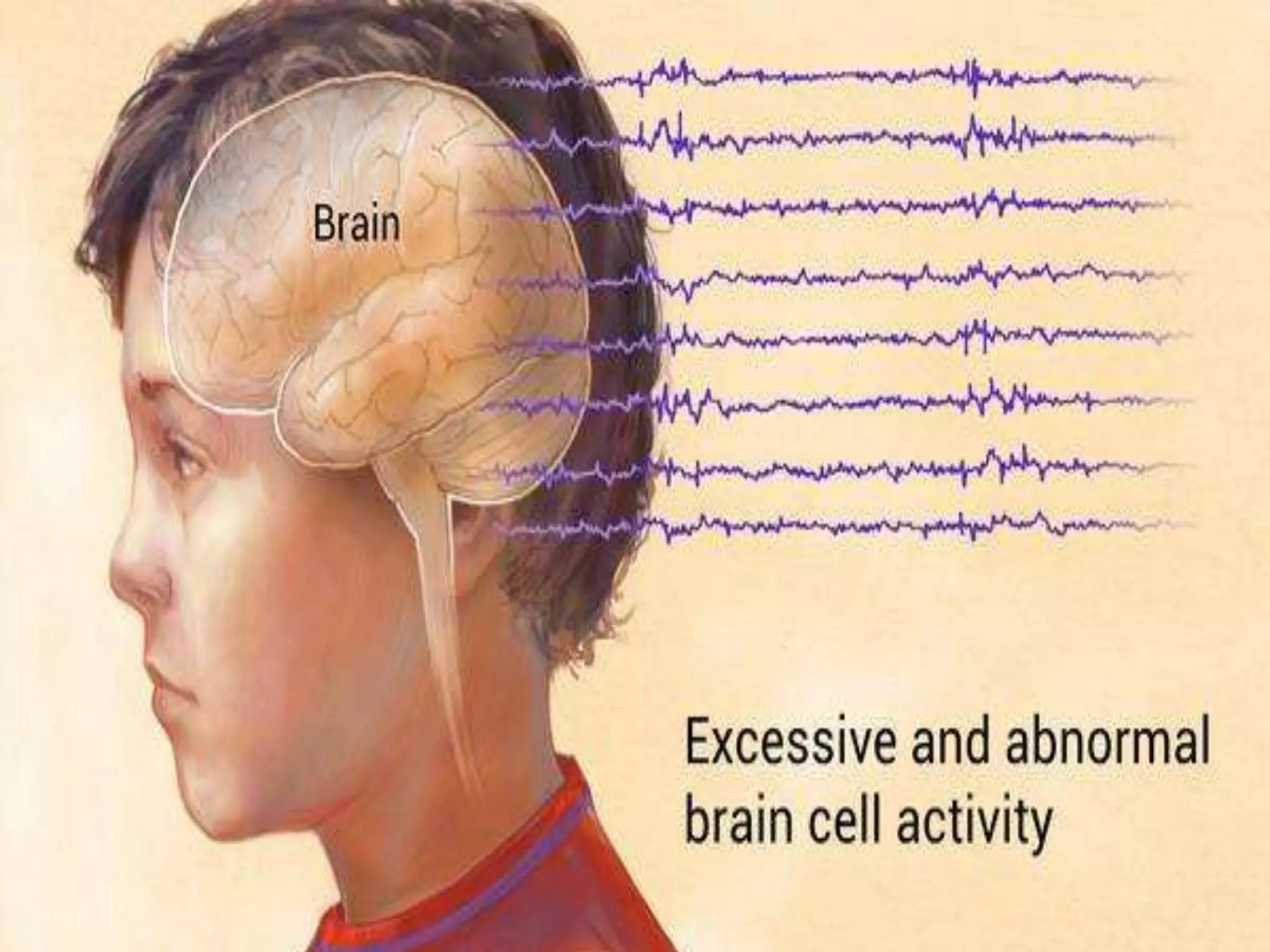
 A seizure is a sudden, uncontrolled electrical disturbance in the
brain, results in changes in behaviour, movements ,feelings,
and in levels of consciousness.
 If the person has two or more seizures or a tendency to have
recurrent seizures, than it is called as epilepsy.
 Most seizures last from 30 seconds to 2 minutes. A
seizure that lasts longer than 5 minutes is a medical
emergency.
DEFINITION:-
 A Seizure is a paroxysmal, uncontrolled
electrical discharges of neurons in the brain that
interrupts normal function results in episodes of
abnormal motor, sensory, autonomic or psychic
activity (or a combination of these).
 Seizure are sudden, abnormal electrical
discharges from the brain that results changes in
sensation, behaviour, movements, perceptions or
consciousness.
 CONVULSION:- Seizure associated with motor
component results in sudden, abnormal, irregular, involuntary
contraction of the muscles of the body and thus results in
uncontrolled shaking of the body.
The term convulsion is sometimes used as a synonym
for seizure.
EPILEPSY:-
The word epilepsy derived from Greek Word
‘Epilepsia’ which means ‘Seizure’.
 Epilepsy is a group of syndromes characterized by
unprovoked, recurring seizure/convulsions, over time.
 Epilepsy is a 2 or more unprovoked seizures and convulsions
in more than 24 hours apart.
INCIDENCE AND PREVALENCE :-
 The CDC study survey of 2015 provided the report of incidence of
active epilepsy ,rose from 2.3 million (2010) to 3.4 million people
in 2015 in US.
 It is estimated that there are more than 10 million persons
with epilepsy in India. Its prevalence is about 1% in our
population.
 The prevalence is higher in the rural compared to urban population.
 Approximately 50 million people worldwide have epilepsy,
making it one of the most common neurological diseases globally.
 Epilepsy is the 4th most common neurological problem.
 Affects people of all ages.
 People with epilepsy respond to treatment approximately 70% of
the time.
TYPES
OF
SEIZURE
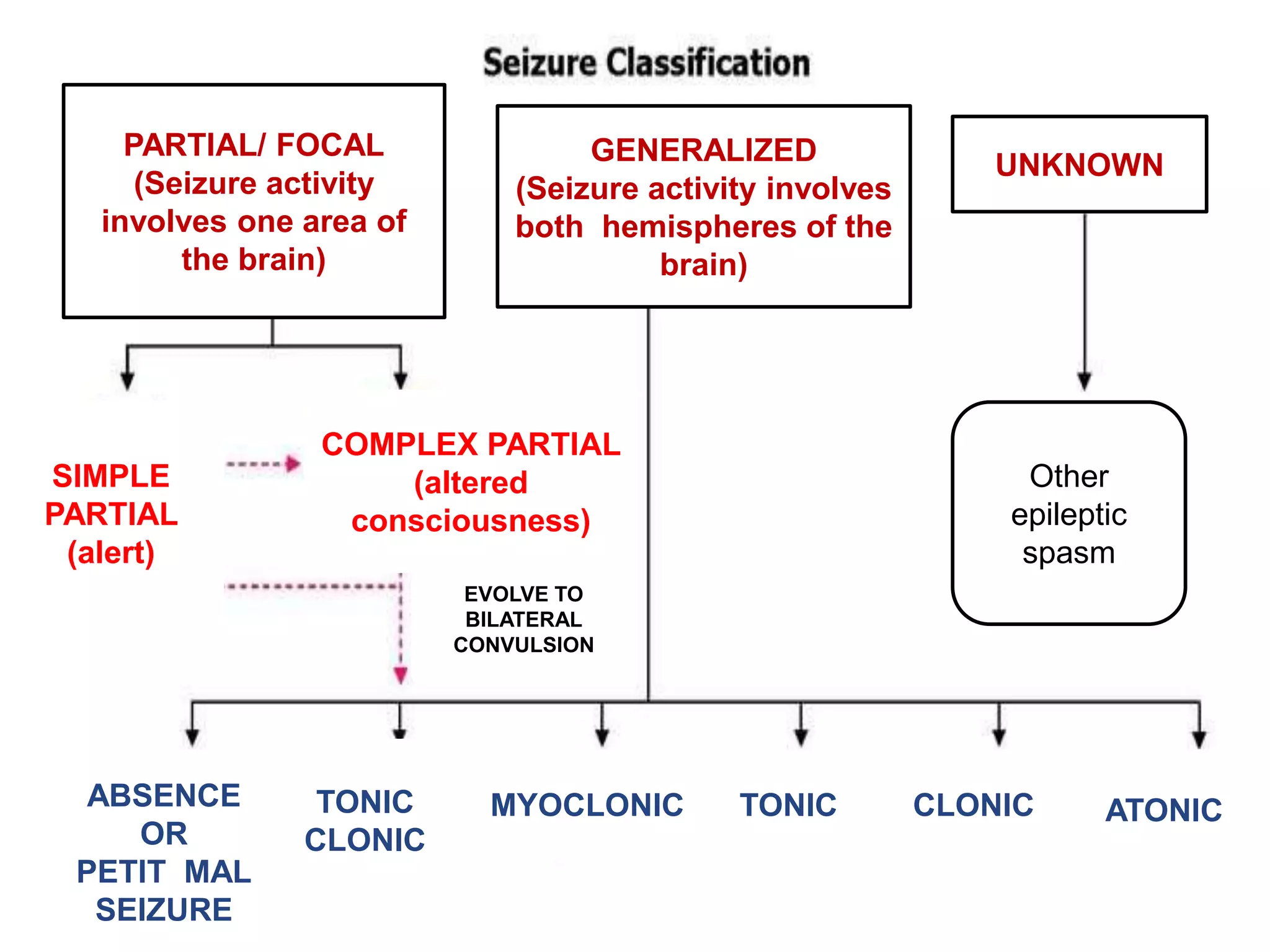
SIMPLE
PARTIAL
(alert)
COMPLEX PARTIAL
(altered
consciousness)
PARTIAL/ FOCAL
(Seizure activity
involves one area of
the brain)
GENERALIZED
(Seizure activity involves
both hemispheres of the
brain)
TONIC
CLONIC
ABSENCE
OR
PETIT MAL
SEIZURE
MYOCLONIC TONIC CLONIC ATONIC
EVOLVE TO
BILATERAL
CONVULSION
UNKNOWN
Other
epileptic
spasm
PARTIAL / FOCAL SEIZURE:
 Partial seizures takes place when abnormal
electrical brain function occurs in one or more areas
of one side of the brain.
 One third of the person with partial seizures may
experience an aura before seizure occurs. An aura
is a strange feeling either consisting of visual
changes, hearing abnormalities or changes in the
sense of smell.
 Partial seizure is divided into 2 categories.
1. Simple Partial Seizure
2. Complex Partial Seizure
1. SIMPLE PARTIAL SEIZURE :
 The seizure typically last less than 1 minute.
 These seizure do not result in loss of consciousness.
Symptoms include:
 Sudden and unexplained feeling of joy, anger, sadness.
 Involuntary jerking of the part of the body such as an arm,
leg.
 Spontaneous sensory symptoms such as tingling, vertigo,
and flashing lights.
 Person also may hear, smell, taste, see or feel things that
are not real.
 The person may also experience sweating, nausea, or
become pale.
2. COMPLEX PARTIAL SEIZURE :-
 In this type of seizure the person has a change in or loss
of consciousness for a period of time.
 Commonly occur in the temporal lobe of the brain.
Symptoms include:
 Non purposeful movements such as hand rubbing,
chewing, swallowing, gagging , lip smacking, screaming,
crying, laughing, running, walking in circle, .
 Repetitious movement such as blinking, twitching, mouth
movement etc.
 When the person regains consciousness the person may
complains of being tired or sleepy after seizure.
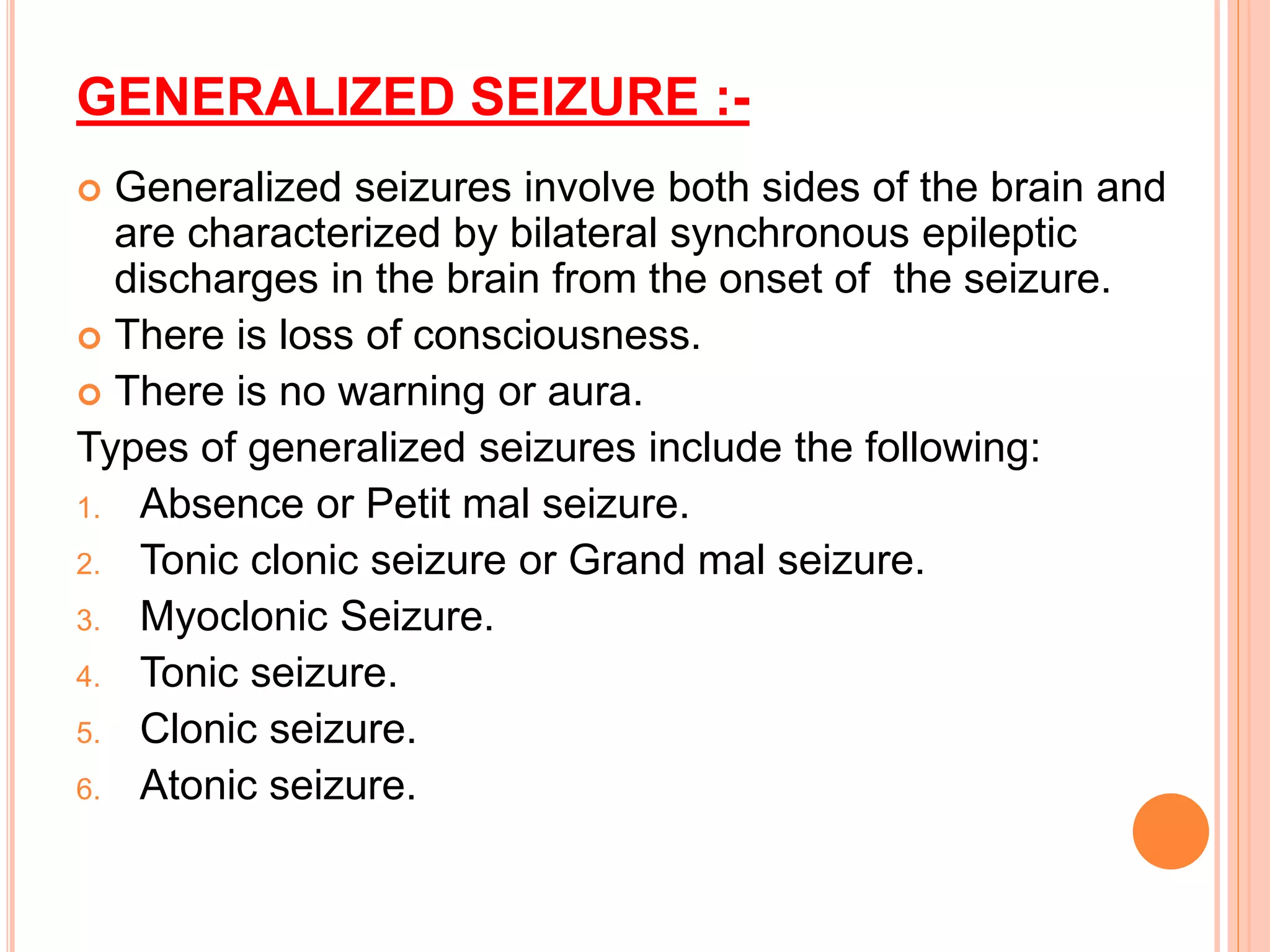
GENERALIZED SEIZURE :-
 Generalized seizures involve both sides of the brain and
are characterized by bilateral synchronous epileptic
discharges in the brain from the onset of the seizure.
 There is loss of consciousness.
 There is no warning or aura.
Types of generalized seizures include the following:
1. Absence or Petit mal seizure.
2. Tonic clonic seizure or Grand mal seizure.
3. Myoclonic Seizure.
4. Tonic seizure.
5. Clonic seizure.
6. Atonic seizure.
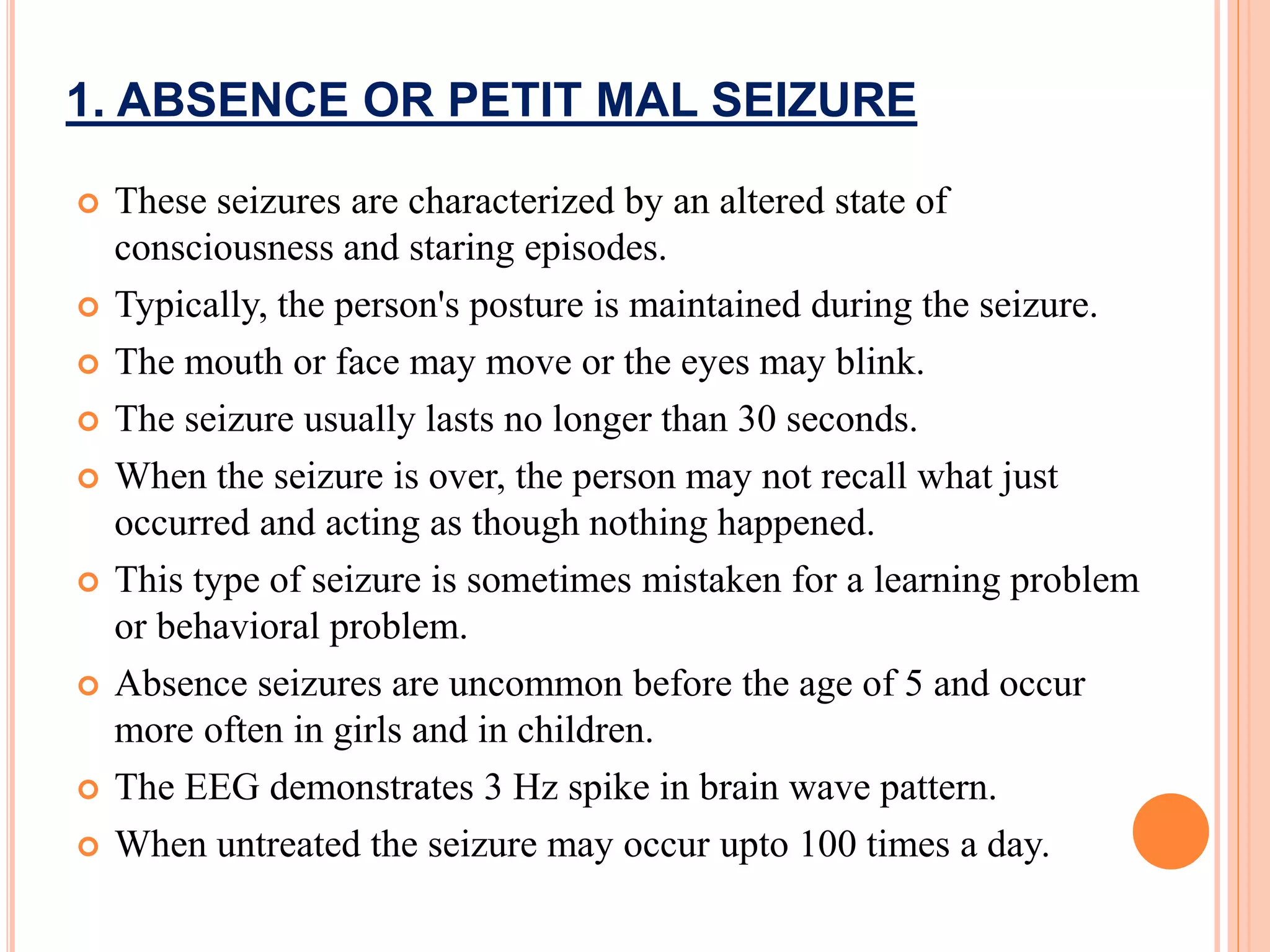
1. ABSENCE OR PETIT MAL SEIZURE
 These seizures are characterized by an altered state of
consciousness and staring episodes.
 Typically, the person's posture is maintained during the seizure.
 The mouth or face may move or the eyes may blink.
 The seizure usually lasts no longer than 30 seconds.
 When the seizure is over, the person may not recall what just
occurred and acting as though nothing happened.
 This type of seizure is sometimes mistaken for a learning problem
or behavioral problem.
 Absence seizures are uncommon before the age of 5 and occur
more often in girls and in children.
 The EEG demonstrates 3 Hz spike in brain wave pattern.
 When untreated the seizure may occur upto 100 times a day.
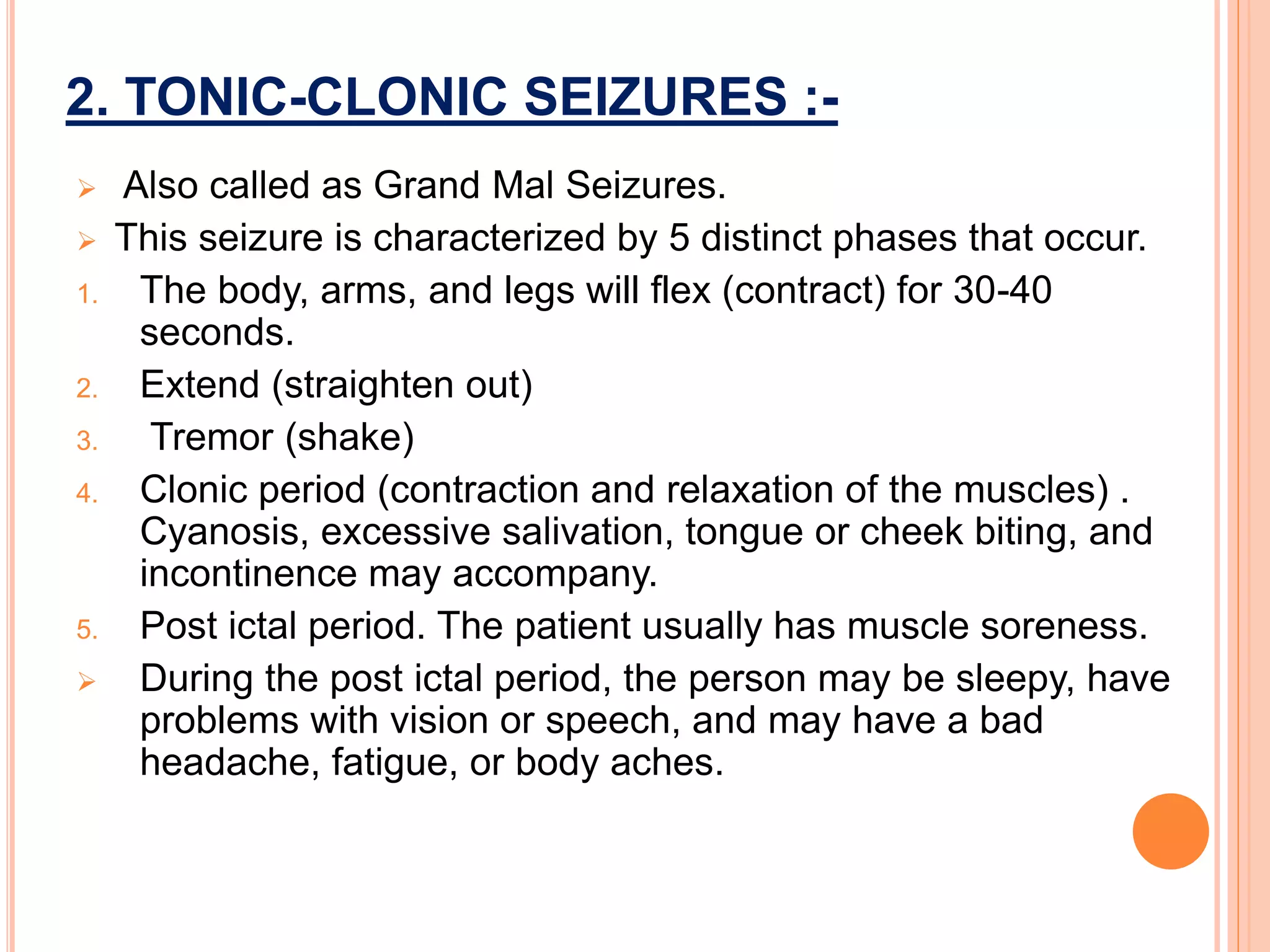
2. TONIC-CLONIC SEIZURES :-
 Also called as Grand Mal Seizures.
 This seizure is characterized by 5 distinct phases that occur.
1. The body, arms, and legs will flex (contract) for 30-40
seconds.
2. Extend (straighten out)
3. Tremor (shake)
4. Clonic period (contraction and relaxation of the muscles) .
Cyanosis, excessive salivation, tongue or cheek biting, and
incontinence may accompany.
5. Post ictal period. The patient usually has muscle soreness.
 During the post ictal period, the person may be sleepy, have
problems with vision or speech, and may have a bad
headache, fatigue, or body aches.
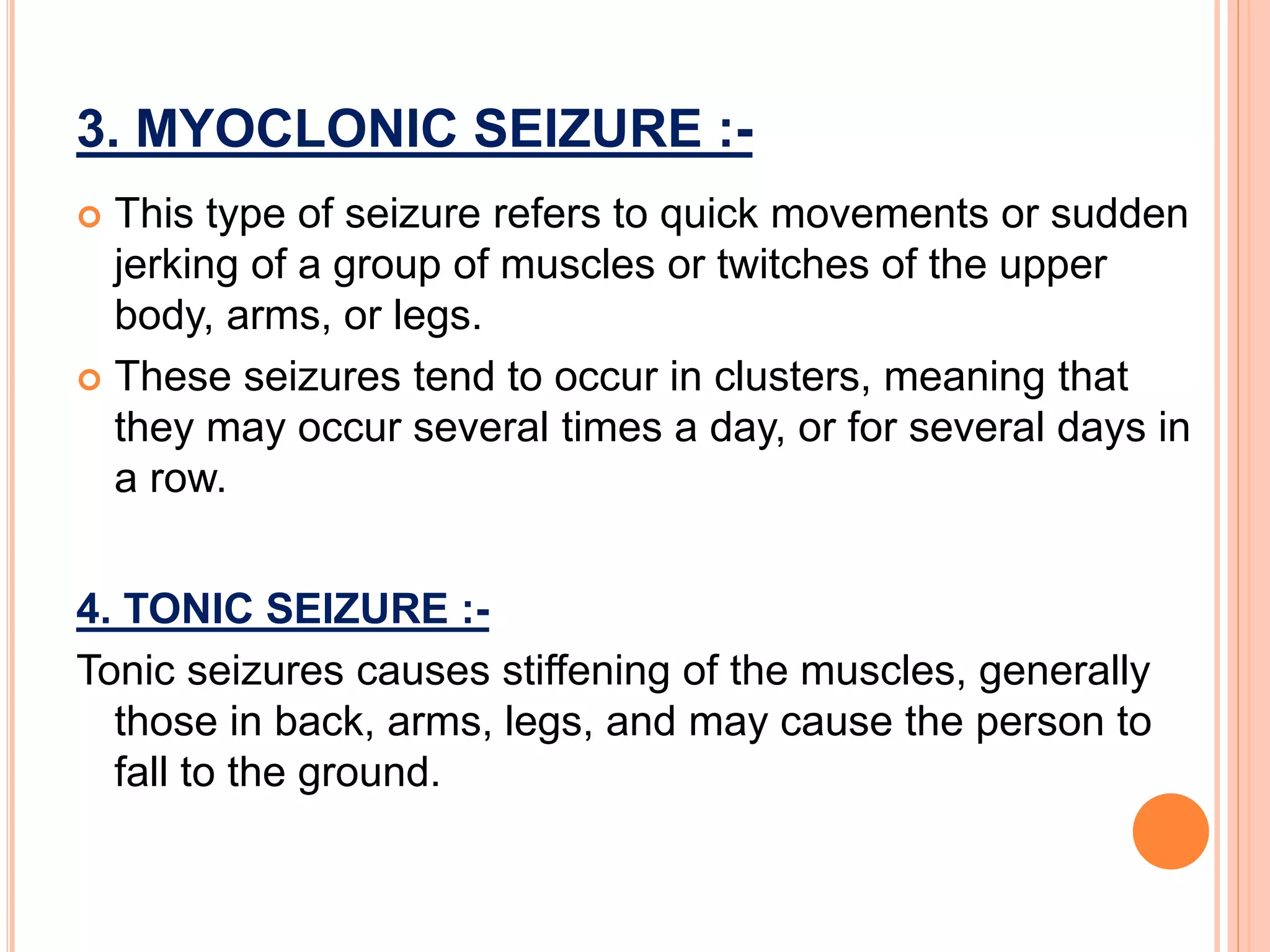
3. MYOCLONIC SEIZURE :-
 This type of seizure refers to quick movements or sudden
jerking of a group of muscles or twitches of the upper
body, arms, or legs.
 These seizures tend to occur in clusters, meaning that
they may occur several times a day, or for several days in
a row.
4. TONIC SEIZURE :-
Tonic seizures causes stiffening of the muscles, generally
those in back, arms, legs, and may cause the person to
fall to the ground.
5. CLONIC SEIZURE :-
 These type of seizures are begins with loss of
consciousness and sudden loss of muscle tone followed
by limb jerking that may or may not be symmetric .
 Symptoms include rhythmic , jerking muscle contractions
usually affecting the arms, neck and face.
6. ATONIC SEIZURE:-
 Also known as ‘Drop Attack’.
 Seizure involves either a tonic episode or a paroxysmal
loss of muscle tone and begins suddenly with the person
falling to the ground.
 Conscious usually returns once the person hits in the
ground and they have the great risk of head injury.
PHASES OF SEIZURE:
1. Prodomal phase.
2. The aural phase.
3. The ictal phase.
4. The post ictal phase.
ETIOLOGY :-
The exact cause of the seizure may not be known, the more
common seizures are caused by the following:
 In newborns and infants:
 birth trauma
 congenital (present at birth) problems
 fever
 metabolic or chemical imbalances in the body
 Genetic influence.
 In children, adolescents, and adults:
 alcohol or drugs
 head trauma
 infection
 Developmental disorder such as autism, down syndrome.
 unknown reasons
 Other possible causes of seizures may include the
following:
 brain tumor
 neurological problems
 drug withdrawal
 Overdose of antidepressants and other medications .
 Stroke or Transient Ischemic Attack.
 Dementia such as Alzheimers diseases.
 Traumatic brain injury.
 Infections including Brain abscess, meningitis,
encephalitis, AIDS.
 Abnormal blood vessels in the brain.
 Exposure to led , carbon monoxide, and many other
poison.
PATHOPHYSIOLOGY
CLINICAL FEAURES:-
The person may have varying degrees of symptoms
depending upon the type of seizure. The following are
general symptoms of a seizure or warning signs of
seizures. Symptoms or warning signs may include:
 staring
 jerking movements of the arms and legs
 stiffening of the body
 loss of consciousness
 breathing problems or breathing stops
 loss of bowel or bladder control
 falling suddenly for no apparent reason
 not responding to noise or words for brief periods
 appearing confused or in a haze
 sleepiness and irritable upon waking in the morning
 nodding the head
 periods of rapid eye blinking and staring
 During the seizure, the person's lips may become
bluish and breathing may not be normal.
 The movements are often followed by a period of
sleep or disorientation.
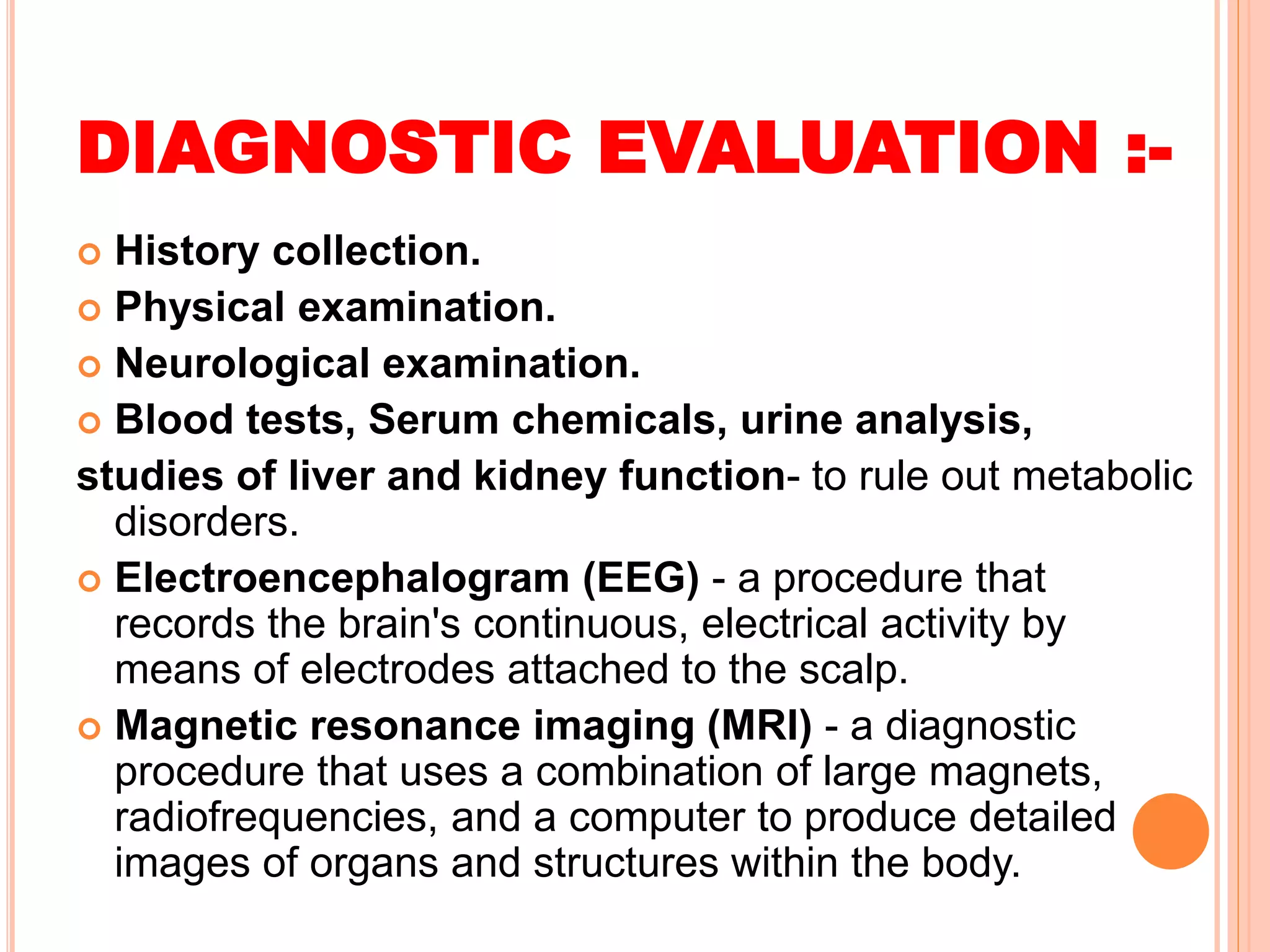
DIAGNOSTIC EVALUATION :-
 History collection.
 Physical examination.
 Neurological examination.
 Blood tests, Serum chemicals, urine analysis,
studies of liver and kidney function- to rule out metabolic
disorders.
 Electroencephalogram (EEG) - a procedure that
records the brain's continuous, electrical activity by
means of electrodes attached to the scalp.
 Magnetic resonance imaging (MRI) - a diagnostic
procedure that uses a combination of large magnets,
radiofrequencies, and a computer to produce detailed
images of organs and structures within the body.
 Computed tomography scan (Also called a CT
or CAT scan.) - a diagnostic imaging procedure
that uses a combination of x-rays and computer
technology to produce cross-sectional images
(often called slices), both horizontally and vertically,
of the body.
 lumbar puncture (spinal tap) - a special needle is
placed into the lower back, into the spinal canal.
This is the area around the spinal cord. The
pressure in the spinal canal and brain can then be
measured. A small amount of cerebral spinal fluid
(CSF) can be removed and sent for testing to
determine if there is an infection or other problems.
CSF is the fluid that bathes the brain and spinal
cord.
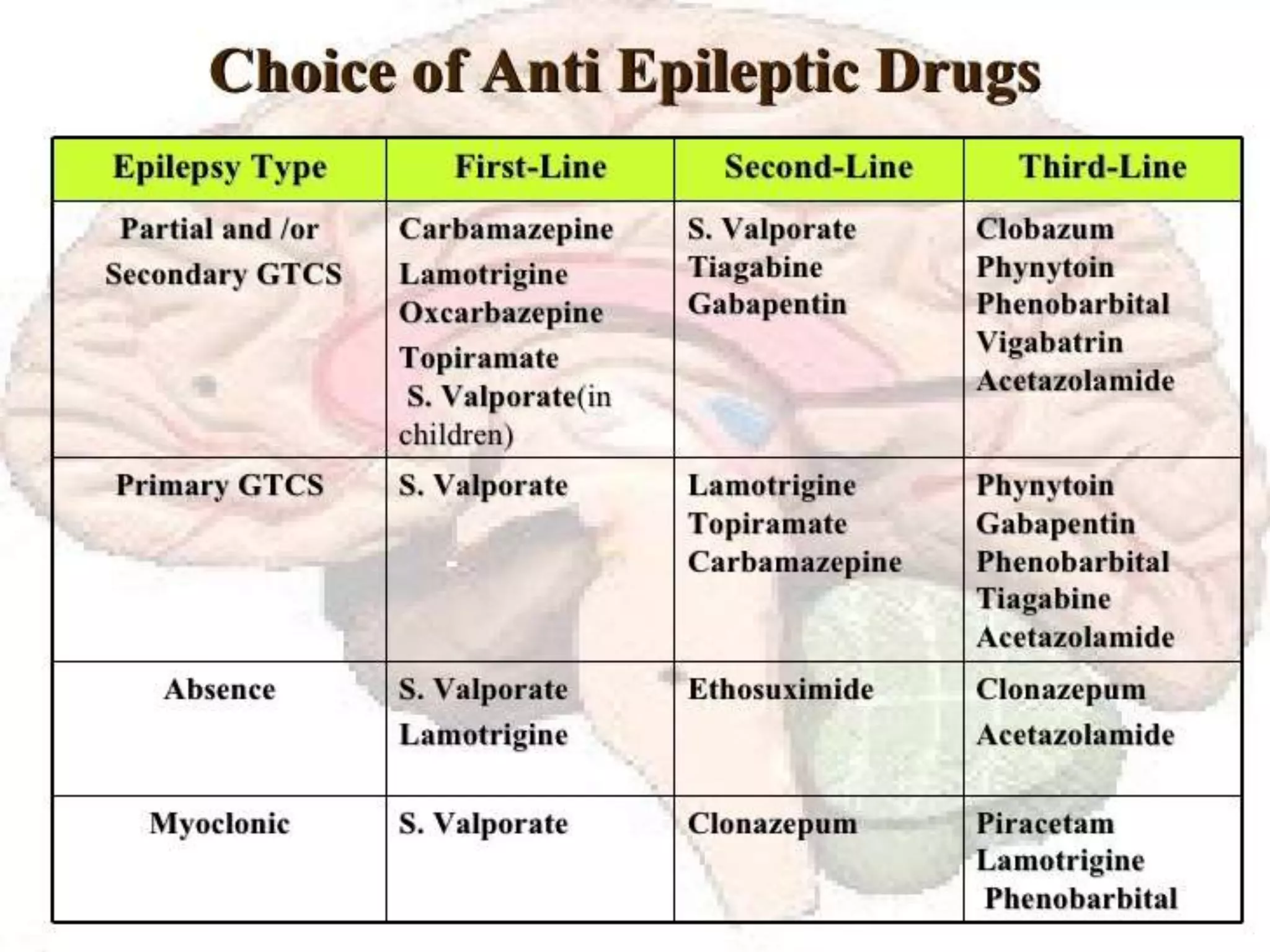
MANAGEMENT
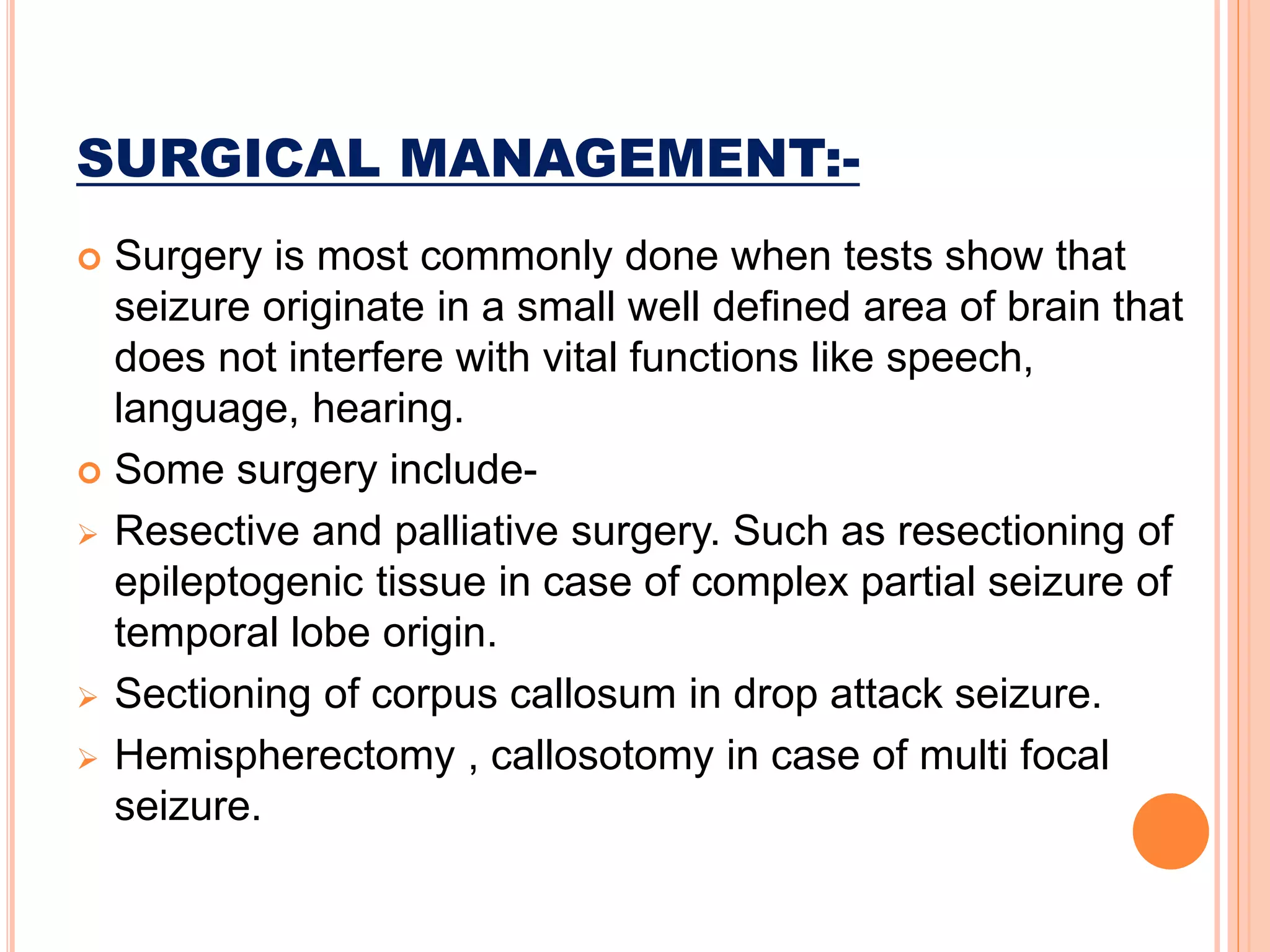
SURGICAL MANAGEMENT:-
 Surgery is most commonly done when tests show that
seizure originate in a small well defined area of brain that
does not interfere with vital functions like speech,
language, hearing.
 Some surgery include-
 Resective and palliative surgery. Such as resectioning of
epileptogenic tissue in case of complex partial seizure of
temporal lobe origin.
 Sectioning of corpus callosum in drop attack seizure.
 Hemispherectomy , callosotomy in case of multi focal
seizure.
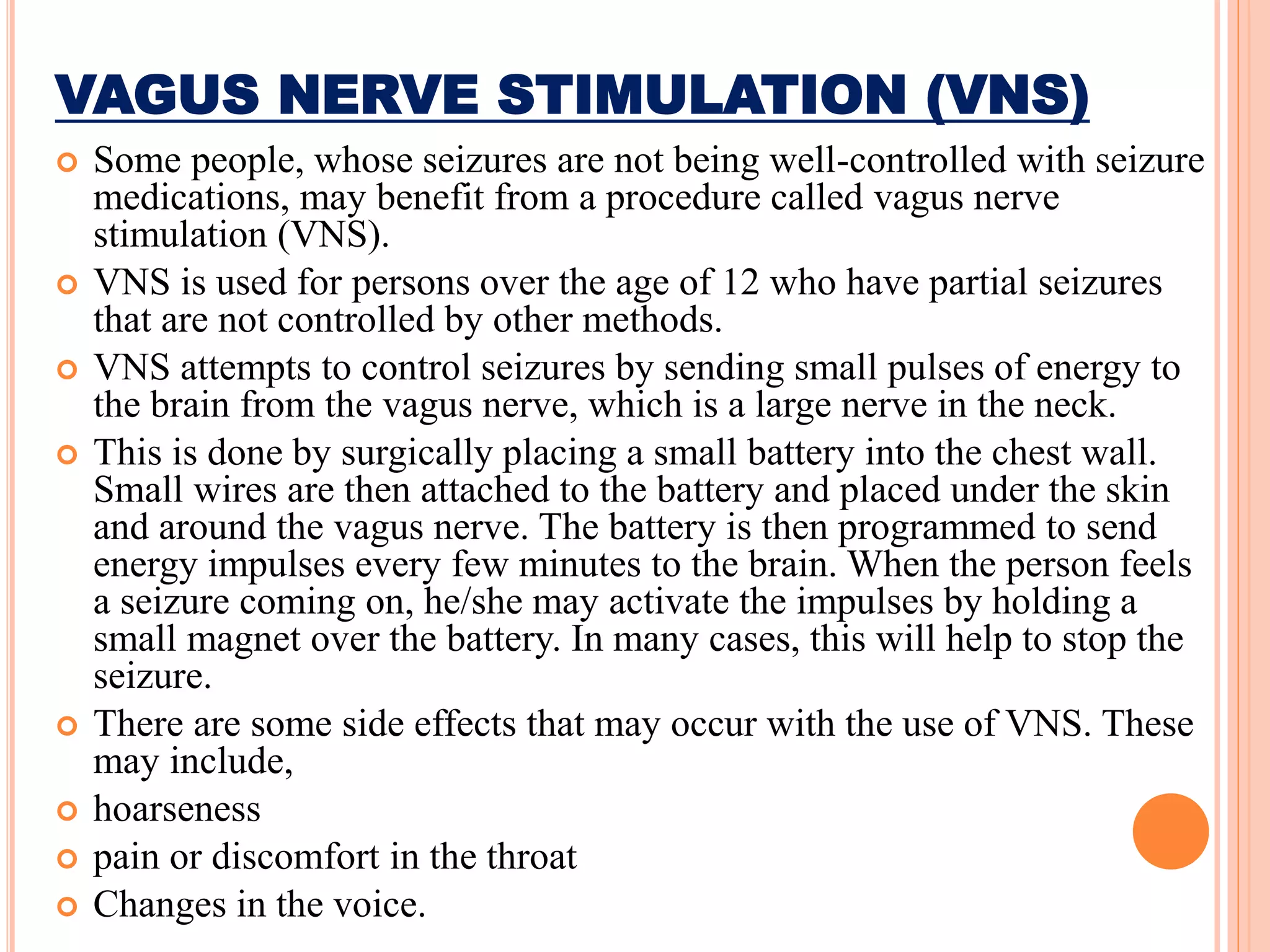
VAGUS NERVE STIMULATION (VNS)
 Some people, whose seizures are not being well-controlled with seizure
medications, may benefit from a procedure called vagus nerve
stimulation (VNS).
 VNS is used for persons over the age of 12 who have partial seizures
that are not controlled by other methods.
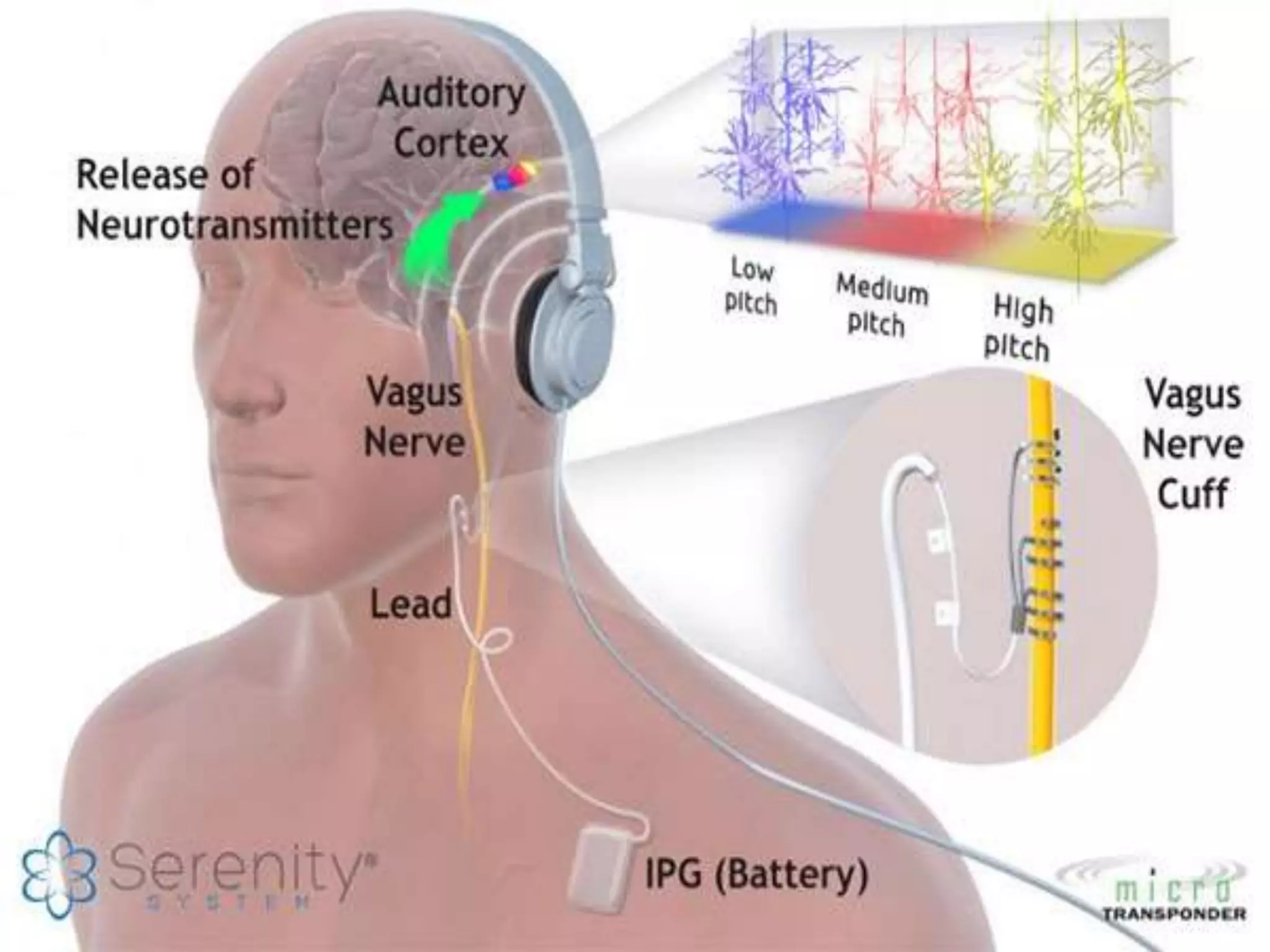
 VNS attempts to control seizures by sending small pulses of energy to
the brain from the vagus nerve, which is a large nerve in the neck.
 This is done by surgically placing a small battery into the chest wall.
Small wires are then attached to the battery and placed under the skin
and around the vagus nerve. The battery is then programmed to send
energy impulses every few minutes to the brain. When the person feels
a seizure coming on, he/she may activate the impulses by holding a
small magnet over the battery. In many cases, this will help to stop the
seizure.
 There are some side effects that may occur with the use of VNS. These
may include,
 hoarseness
 pain or discomfort in the throat
 Changes in the voice.
NURSING MANAGEMENT
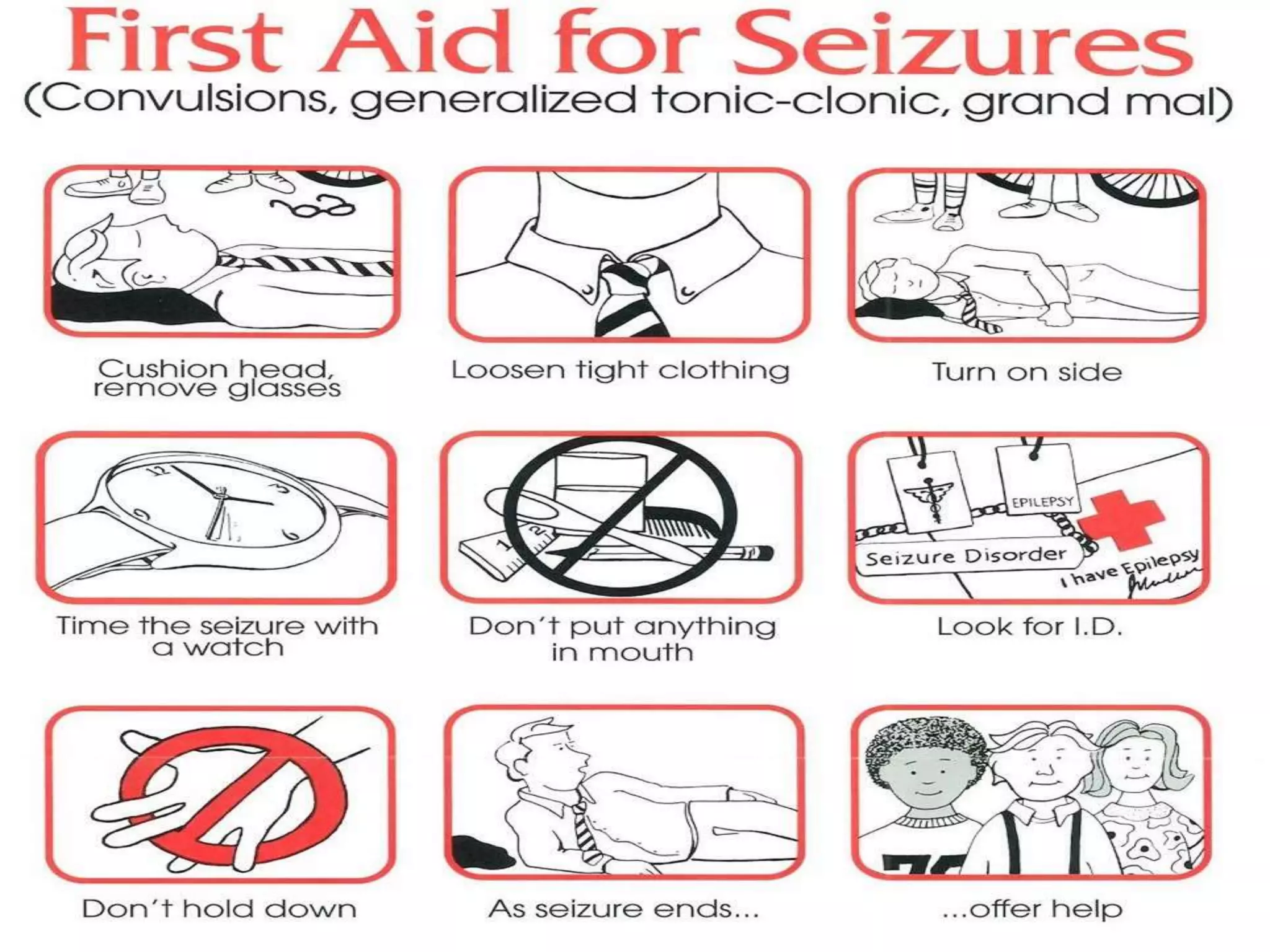
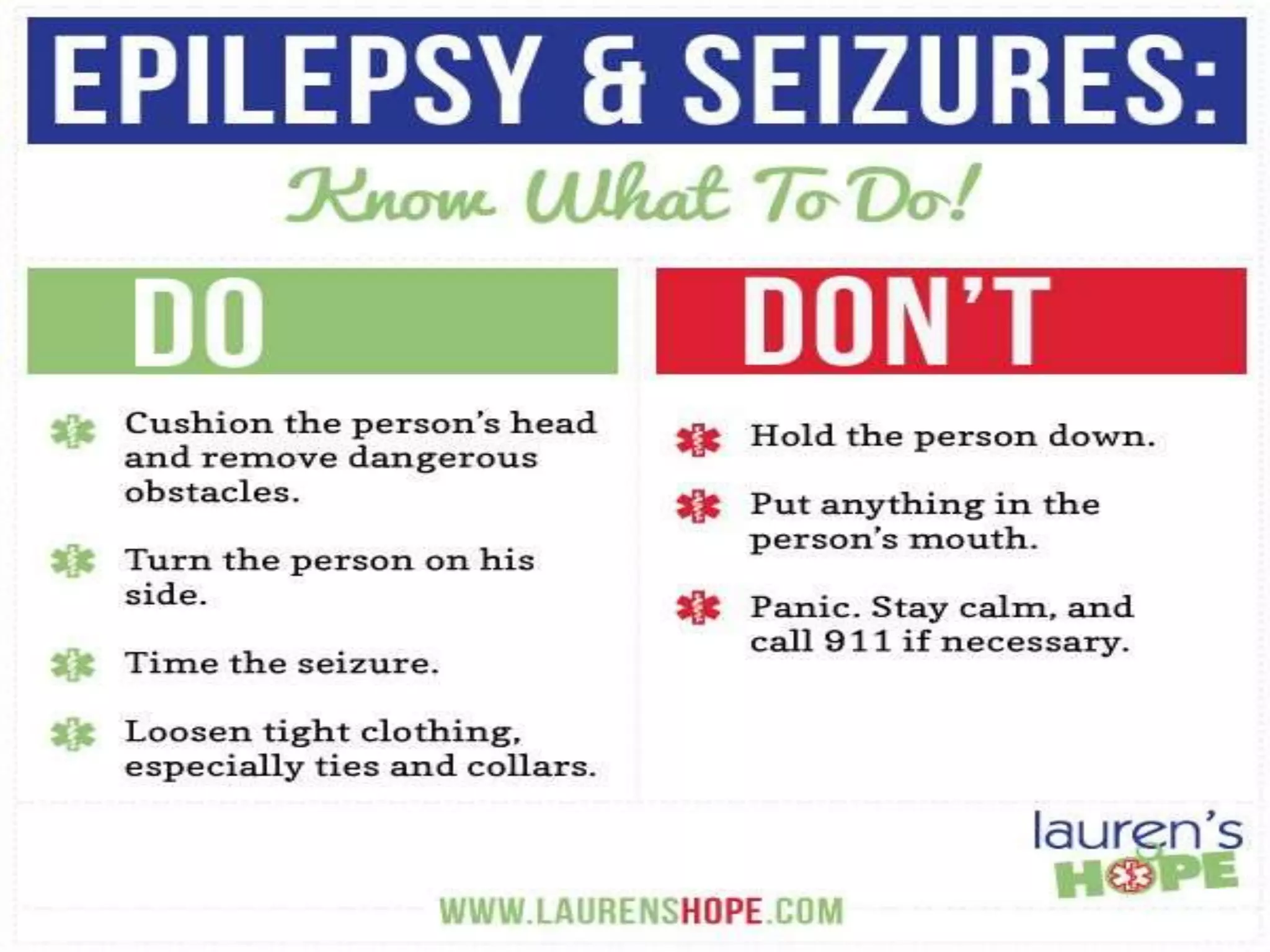
 Move harmful object out of the way.
 Cushion the head
 Protect the person from falling.
 Side rails of bed should be padded to prevent injury , if
the patient’s extremity hits against them.
 Loosen ties and tight fitting clothing.
 Do not put anything in the patient’s mouth.
 The individual should not be restrained because they may
increase the risk of injury.
 If the person started to vomiting turn the person on his
/her left side to protect the airway and to help drain away
any mouth secretions.
 Suction the airway and make it clear and patent. But do
not force an airway in once the seizure has begun.
 If the person is not breathing start the rescue breathing
and seek immediate medical attention.
 Observe the length of seizure, the movements involved,
direction of head and eye movements and the time it
takes to return to full consciousness and alertness. And
the information should be reported to the medical
profession.
PSYCHOLOGICAL TREATMENT:-
It include-
 Psychosocial counselling.
 Relaxation therapy.
 Cognitive behaviour therapy.
COMPLICATION :-
Status epilepticus-
It is a acute prolonged seizure activity that occur full
recovery of consciousness between attacks.
 Last 30 minutes without impairment of consciousness.
 Vigorous muscular contraction may interfere with respiration
and may cause hypoxia to the brain and leads to brain
damage.
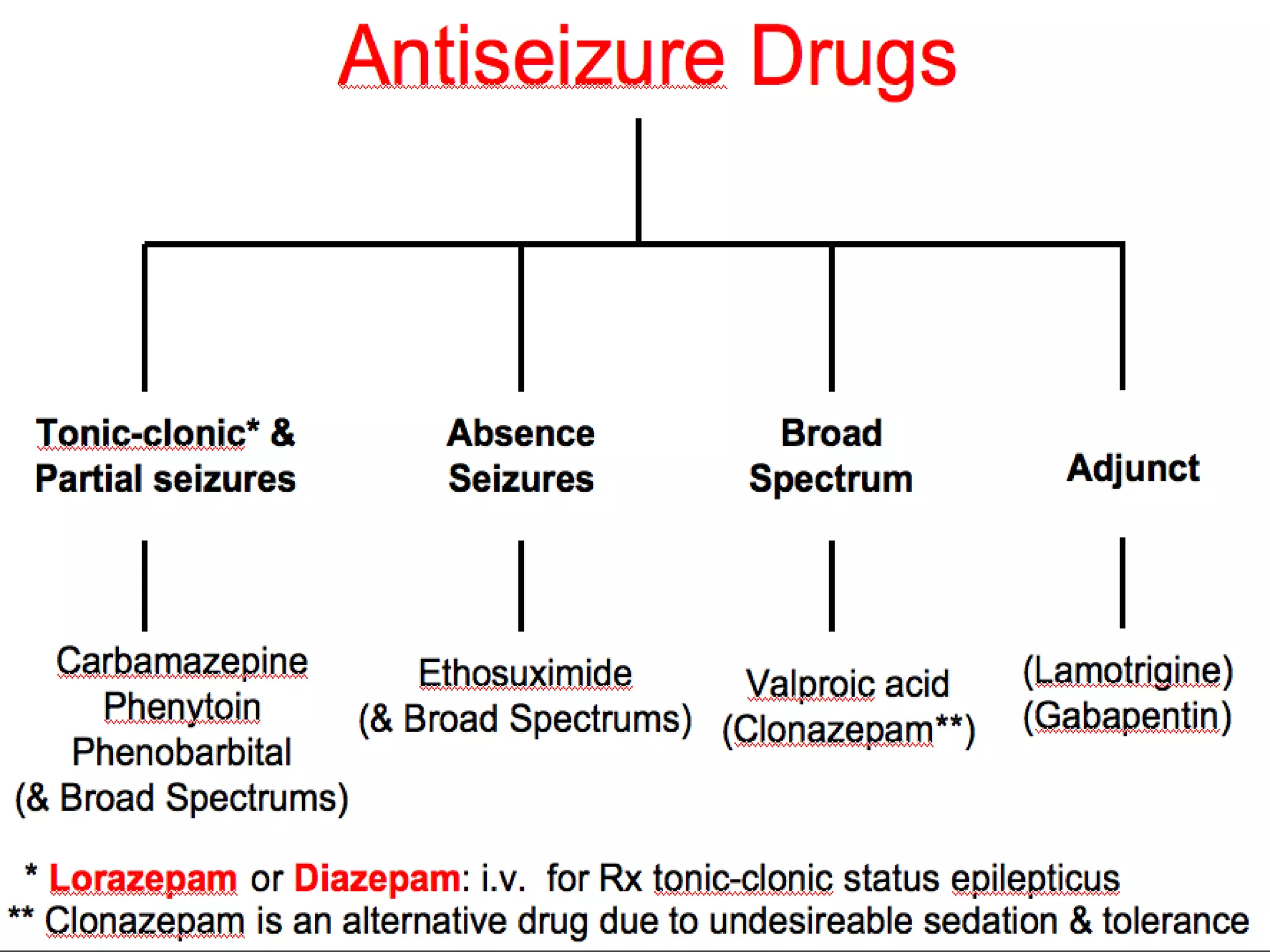
 Treatment-
 Adequate oxygenation.
 IV Diazepam, Lorazepam,
 Phenytoin and phenobarbital are administered later to
maintain a seizure free state.
Seizure and epilepsy

Seizure and epilepsy

  • 1.
  • 2.
    INTRODUCTION :-  Thebrain is the center that controls and regulates all voluntary and involuntary responses in the body.  It consists of nerve cells that normally communicate with each other through electrical activity.  A seizure is a sudden, uncontrolled electrical disturbance in the brain, results in changes in behaviour, movements ,feelings, and in levels of consciousness.  If the person has two or more seizures or a tendency to have recurrent seizures, than it is called as epilepsy.  Most seizures last from 30 seconds to 2 minutes. A seizure that lasts longer than 5 minutes is a medical emergency.
  • 4.
    DEFINITION:-  A Seizureis a paroxysmal, uncontrolled electrical discharges of neurons in the brain that interrupts normal function results in episodes of abnormal motor, sensory, autonomic or psychic activity (or a combination of these).  Seizure are sudden, abnormal electrical discharges from the brain that results changes in sensation, behaviour, movements, perceptions or consciousness.
  • 5.
     CONVULSION:- Seizureassociated with motor component results in sudden, abnormal, irregular, involuntary contraction of the muscles of the body and thus results in uncontrolled shaking of the body. The term convulsion is sometimes used as a synonym for seizure. EPILEPSY:- The word epilepsy derived from Greek Word ‘Epilepsia’ which means ‘Seizure’.  Epilepsy is a group of syndromes characterized by unprovoked, recurring seizure/convulsions, over time.  Epilepsy is a 2 or more unprovoked seizures and convulsions in more than 24 hours apart.
  • 6.
    INCIDENCE AND PREVALENCE:-  The CDC study survey of 2015 provided the report of incidence of active epilepsy ,rose from 2.3 million (2010) to 3.4 million people in 2015 in US.  It is estimated that there are more than 10 million persons with epilepsy in India. Its prevalence is about 1% in our population.  The prevalence is higher in the rural compared to urban population.  Approximately 50 million people worldwide have epilepsy, making it one of the most common neurological diseases globally.  Epilepsy is the 4th most common neurological problem.  Affects people of all ages.  People with epilepsy respond to treatment approximately 70% of the time.
  • 7.
  • 8.
    SIMPLE PARTIAL (alert) COMPLEX PARTIAL (altered consciousness) PARTIAL/ FOCAL (Seizureactivity involves one area of the brain) GENERALIZED (Seizure activity involves both hemispheres of the brain) TONIC CLONIC ABSENCE OR PETIT MAL SEIZURE MYOCLONIC TONIC CLONIC ATONIC EVOLVE TO BILATERAL CONVULSION UNKNOWN Other epileptic spasm
  • 9.
    PARTIAL / FOCALSEIZURE:  Partial seizures takes place when abnormal electrical brain function occurs in one or more areas of one side of the brain.  One third of the person with partial seizures may experience an aura before seizure occurs. An aura is a strange feeling either consisting of visual changes, hearing abnormalities or changes in the sense of smell.  Partial seizure is divided into 2 categories. 1. Simple Partial Seizure 2. Complex Partial Seizure
  • 10.
    1. SIMPLE PARTIALSEIZURE :  The seizure typically last less than 1 minute.  These seizure do not result in loss of consciousness. Symptoms include:  Sudden and unexplained feeling of joy, anger, sadness.  Involuntary jerking of the part of the body such as an arm, leg.  Spontaneous sensory symptoms such as tingling, vertigo, and flashing lights.  Person also may hear, smell, taste, see or feel things that are not real.  The person may also experience sweating, nausea, or become pale.
  • 11.
    2. COMPLEX PARTIALSEIZURE :-  In this type of seizure the person has a change in or loss of consciousness for a period of time.  Commonly occur in the temporal lobe of the brain. Symptoms include:  Non purposeful movements such as hand rubbing, chewing, swallowing, gagging , lip smacking, screaming, crying, laughing, running, walking in circle, .  Repetitious movement such as blinking, twitching, mouth movement etc.  When the person regains consciousness the person may complains of being tired or sleepy after seizure.
  • 12.
    GENERALIZED SEIZURE :- Generalized seizures involve both sides of the brain and are characterized by bilateral synchronous epileptic discharges in the brain from the onset of the seizure.  There is loss of consciousness.  There is no warning or aura. Types of generalized seizures include the following: 1. Absence or Petit mal seizure. 2. Tonic clonic seizure or Grand mal seizure. 3. Myoclonic Seizure. 4. Tonic seizure. 5. Clonic seizure. 6. Atonic seizure.
  • 13.
    1. ABSENCE ORPETIT MAL SEIZURE  These seizures are characterized by an altered state of consciousness and staring episodes.  Typically, the person's posture is maintained during the seizure.  The mouth or face may move or the eyes may blink.  The seizure usually lasts no longer than 30 seconds.  When the seizure is over, the person may not recall what just occurred and acting as though nothing happened.  This type of seizure is sometimes mistaken for a learning problem or behavioral problem.  Absence seizures are uncommon before the age of 5 and occur more often in girls and in children.  The EEG demonstrates 3 Hz spike in brain wave pattern.  When untreated the seizure may occur upto 100 times a day.
  • 14.
    2. TONIC-CLONIC SEIZURES:-  Also called as Grand Mal Seizures.  This seizure is characterized by 5 distinct phases that occur. 1. The body, arms, and legs will flex (contract) for 30-40 seconds. 2. Extend (straighten out) 3. Tremor (shake) 4. Clonic period (contraction and relaxation of the muscles) . Cyanosis, excessive salivation, tongue or cheek biting, and incontinence may accompany. 5. Post ictal period. The patient usually has muscle soreness.  During the post ictal period, the person may be sleepy, have problems with vision or speech, and may have a bad headache, fatigue, or body aches.
  • 15.
    3. MYOCLONIC SEIZURE:-  This type of seizure refers to quick movements or sudden jerking of a group of muscles or twitches of the upper body, arms, or legs.  These seizures tend to occur in clusters, meaning that they may occur several times a day, or for several days in a row. 4. TONIC SEIZURE :- Tonic seizures causes stiffening of the muscles, generally those in back, arms, legs, and may cause the person to fall to the ground.
  • 16.
    5. CLONIC SEIZURE:-  These type of seizures are begins with loss of consciousness and sudden loss of muscle tone followed by limb jerking that may or may not be symmetric .  Symptoms include rhythmic , jerking muscle contractions usually affecting the arms, neck and face. 6. ATONIC SEIZURE:-  Also known as ‘Drop Attack’.  Seizure involves either a tonic episode or a paroxysmal loss of muscle tone and begins suddenly with the person falling to the ground.  Conscious usually returns once the person hits in the ground and they have the great risk of head injury.
  • 17.
    PHASES OF SEIZURE: 1.Prodomal phase. 2. The aural phase. 3. The ictal phase. 4. The post ictal phase.
  • 18.
    ETIOLOGY :- The exactcause of the seizure may not be known, the more common seizures are caused by the following:  In newborns and infants:  birth trauma  congenital (present at birth) problems  fever  metabolic or chemical imbalances in the body  Genetic influence.  In children, adolescents, and adults:  alcohol or drugs  head trauma  infection  Developmental disorder such as autism, down syndrome.  unknown reasons
  • 19.
     Other possiblecauses of seizures may include the following:  brain tumor  neurological problems  drug withdrawal  Overdose of antidepressants and other medications .  Stroke or Transient Ischemic Attack.  Dementia such as Alzheimers diseases.  Traumatic brain injury.  Infections including Brain abscess, meningitis, encephalitis, AIDS.  Abnormal blood vessels in the brain.  Exposure to led , carbon monoxide, and many other poison.
  • 20.
  • 21.
    CLINICAL FEAURES:- The personmay have varying degrees of symptoms depending upon the type of seizure. The following are general symptoms of a seizure or warning signs of seizures. Symptoms or warning signs may include:  staring  jerking movements of the arms and legs  stiffening of the body  loss of consciousness  breathing problems or breathing stops  loss of bowel or bladder control  falling suddenly for no apparent reason
  • 22.
     not respondingto noise or words for brief periods  appearing confused or in a haze  sleepiness and irritable upon waking in the morning  nodding the head  periods of rapid eye blinking and staring  During the seizure, the person's lips may become bluish and breathing may not be normal.  The movements are often followed by a period of sleep or disorientation.
  • 23.
    DIAGNOSTIC EVALUATION :- History collection.  Physical examination.  Neurological examination.  Blood tests, Serum chemicals, urine analysis, studies of liver and kidney function- to rule out metabolic disorders.  Electroencephalogram (EEG) - a procedure that records the brain's continuous, electrical activity by means of electrodes attached to the scalp.  Magnetic resonance imaging (MRI) - a diagnostic procedure that uses a combination of large magnets, radiofrequencies, and a computer to produce detailed images of organs and structures within the body.
  • 24.
     Computed tomographyscan (Also called a CT or CAT scan.) - a diagnostic imaging procedure that uses a combination of x-rays and computer technology to produce cross-sectional images (often called slices), both horizontally and vertically, of the body.  lumbar puncture (spinal tap) - a special needle is placed into the lower back, into the spinal canal. This is the area around the spinal cord. The pressure in the spinal canal and brain can then be measured. A small amount of cerebral spinal fluid (CSF) can be removed and sent for testing to determine if there is an infection or other problems. CSF is the fluid that bathes the brain and spinal cord.
  • 25.
  • 30.
    SURGICAL MANAGEMENT:-  Surgeryis most commonly done when tests show that seizure originate in a small well defined area of brain that does not interfere with vital functions like speech, language, hearing.  Some surgery include-  Resective and palliative surgery. Such as resectioning of epileptogenic tissue in case of complex partial seizure of temporal lobe origin.  Sectioning of corpus callosum in drop attack seizure.  Hemispherectomy , callosotomy in case of multi focal seizure.
  • 31.
    VAGUS NERVE STIMULATION(VNS)  Some people, whose seizures are not being well-controlled with seizure medications, may benefit from a procedure called vagus nerve stimulation (VNS).  VNS is used for persons over the age of 12 who have partial seizures that are not controlled by other methods.  VNS attempts to control seizures by sending small pulses of energy to the brain from the vagus nerve, which is a large nerve in the neck.  This is done by surgically placing a small battery into the chest wall. Small wires are then attached to the battery and placed under the skin and around the vagus nerve. The battery is then programmed to send energy impulses every few minutes to the brain. When the person feels a seizure coming on, he/she may activate the impulses by holding a small magnet over the battery. In many cases, this will help to stop the seizure.  There are some side effects that may occur with the use of VNS. These may include,  hoarseness  pain or discomfort in the throat  Changes in the voice.
  • 33.
    NURSING MANAGEMENT  Moveharmful object out of the way.  Cushion the head  Protect the person from falling.  Side rails of bed should be padded to prevent injury , if the patient’s extremity hits against them.  Loosen ties and tight fitting clothing.  Do not put anything in the patient’s mouth.  The individual should not be restrained because they may increase the risk of injury.  If the person started to vomiting turn the person on his /her left side to protect the airway and to help drain away any mouth secretions.
  • 34.
     Suction theairway and make it clear and patent. But do not force an airway in once the seizure has begun.  If the person is not breathing start the rescue breathing and seek immediate medical attention.  Observe the length of seizure, the movements involved, direction of head and eye movements and the time it takes to return to full consciousness and alertness. And the information should be reported to the medical profession. PSYCHOLOGICAL TREATMENT:- It include-  Psychosocial counselling.  Relaxation therapy.  Cognitive behaviour therapy.
  • 35.
    COMPLICATION :- Status epilepticus- Itis a acute prolonged seizure activity that occur full recovery of consciousness between attacks.  Last 30 minutes without impairment of consciousness.  Vigorous muscular contraction may interfere with respiration and may cause hypoxia to the brain and leads to brain damage.  Treatment-  Adequate oxygenation.  IV Diazepam, Lorazepam,  Phenytoin and phenobarbital are administered later to maintain a seizure free state.