CENTRIC RELATION, THE BASIC 
REFERENCE
A. Introduction. 
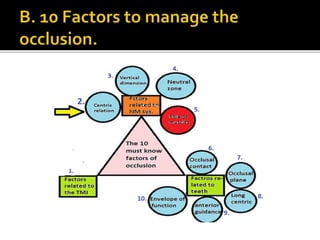
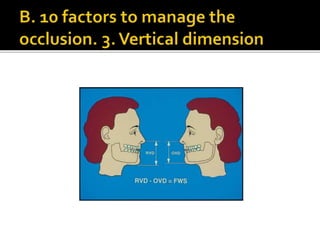
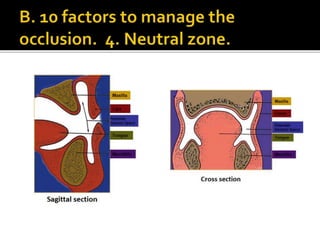
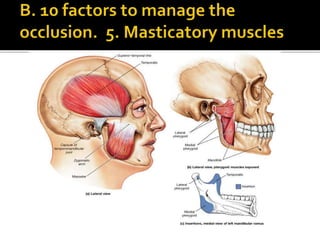
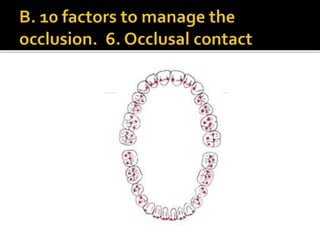
B. 10 factors to manage the occlusion. 
C. Relevant terms. 
-Centric relation. 
- Maximum intercuspation position MIP. 
-Centric occlusion. 
D. Significance. 
E. Dental procedures which reference MIP or CO ? 
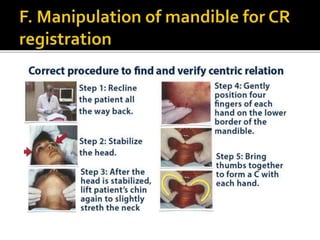
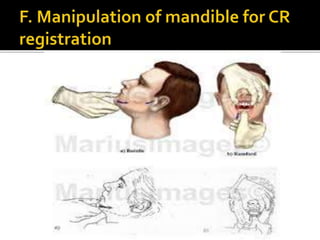
F. Manipulation of mandible for CR registration. 
G. Articulators.
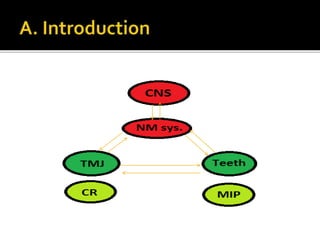
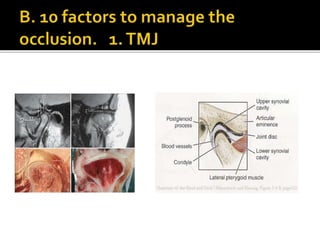
 Masticatory system is composed of 2 main 
parts; 
 1. Active part represented by the NM system. 
 2. Passive part represented by the TMJ and 
the teeth. 
 The NM system is controlled by the CNS. 
 These 2 elements are connected instantly by 
sensitive receptors.
 In the absence of pathology, these elements work in 
synergy and harmony. 
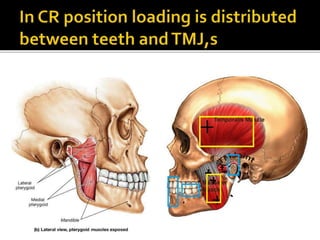
 Maintaining this comfort done by balanced 
distribution of the elevator muscle forces between 
the teeth and the TMJ. 
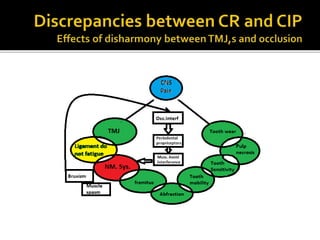
 Pathology and disturbances affect mainly the teeth so 
that the relationship in the same and opposite jaw. 
 Disturbances of the occlusion affect the existent 
harmony with the TMJ and the NM system. 
 This disharmony leads to pathologic manifestations in 
the TMJ and the muscles.
 Treating the affected teeth or replacing the 
missing ones need to integrate them in the 
masticatory system. The treatment reference 
could be; 
 The MIP or the occlusion in centric relation CO. 
 In 10% of population the MIP coincide with the 
CR (occlusion in CR position) 
 Discrepancies between MIP and CR is frequently 
present and may lead to pathologic conditions in 
certain situation.
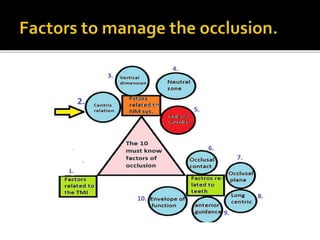
 The 10 must know factors of occlusion. 
Understand these factors and you will never 
have to treat occlusal problems by guessing. 
Dawson
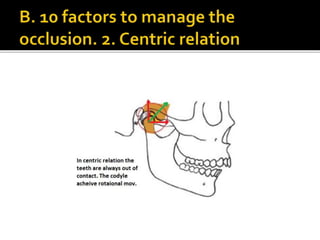
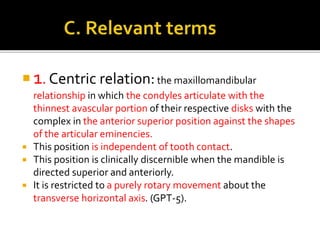
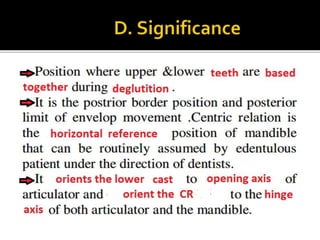
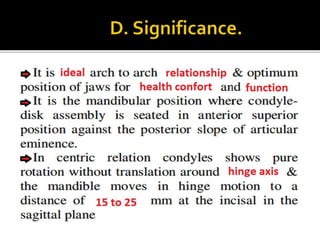
 1. Centric relation: the maxillomandibular 
relationship in which the condyles articulate with the 
thinnest avascular portion of their respective disks with the 
complex in the anterior superior position against the shapes 
of the articular eminencies. 
 This position is independent of tooth contact. 
 This position is clinically discernible when the mandible is 
directed superior and anteriorly. 
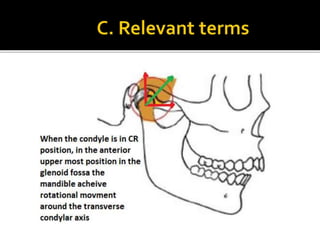
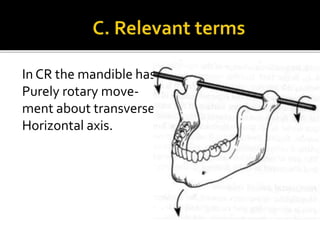
 It is restricted to a purely rotary movement about the 
transverse horizontal axis. (GPT-5).
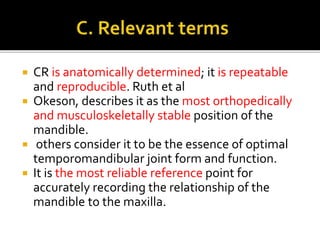
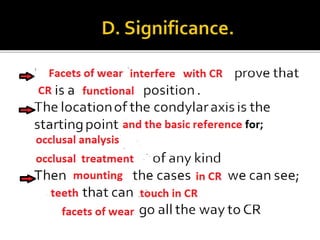
 CR is anatomically determined; it is repeatable 
and reproducible. Ruth et al 
 Okeson, describes it as the most orthopedically 
and musculoskeletally stable position of the 
mandible. 
 others consider it to be the essence of optimal 
temporomandibular joint form and function. 
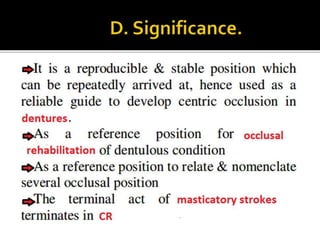
 It is the most reliable reference point for 
accurately recording the relationship of the 
mandible to the maxilla.
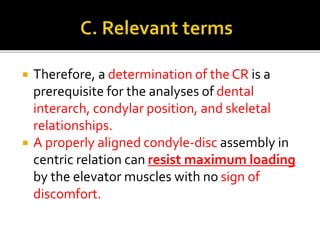
 Therefore, a determination of the CR is a 
prerequisite for the analyses of dental 
interarch, condylar position, and skeletal 
relationships. 
 A properly aligned condyle-disc assembly in 
centric relation can resist maximum loading 
by the elevator muscles with no sign of 
discomfort.
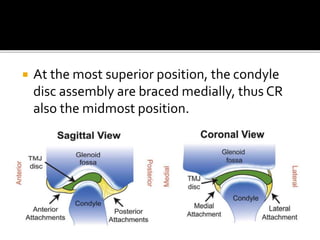
 At the most superior position, the condyle 
disc assembly are braced medially, thus CR 
also the midmost position.
In CR the mandible has 
Purely rotary move-ment 
about transverse 
Horizontal axis.
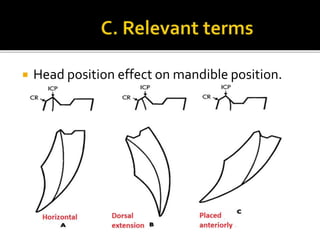
 Head position effect on mandible position.
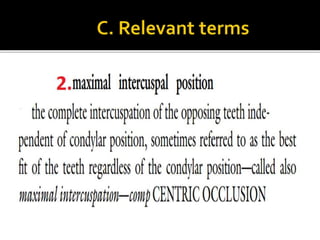
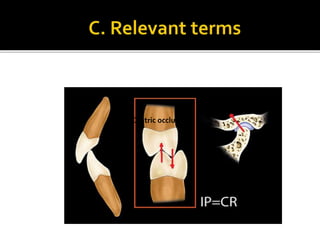
 3.centric occlusion; the occlusion of opposing 
teeth when the mandible is in centric relation. 
This may or may not coincide with the 
maximal intercuspal position.
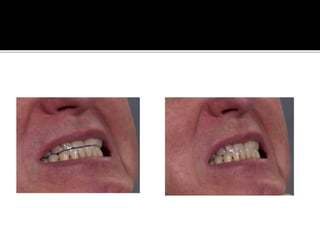
Centric occlusion
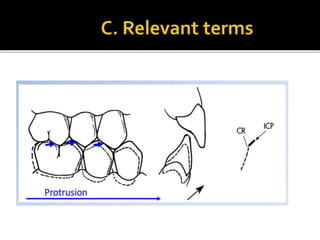
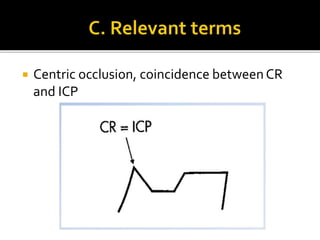
 Centric occlusion, coincidence between CR 
and ICP
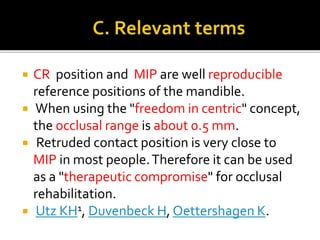
 CR position and MIP are well reproducible 
reference positions of the mandible. 
 When using the "freedom in centric" concept, 
the occlusal range is about 0.5 mm. 
 Retruded contact position is very close to 
MIP in most people. Therefore it can be used 
as a "therapeutic compromise" for occlusal 
rehabilitation. 
 Utz KH1, Duvenbeck H, Oettershagen K.
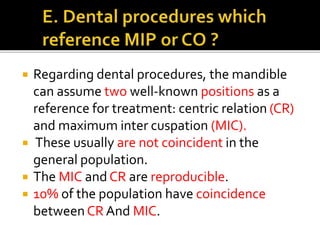
 Regarding dental procedures, the mandible 
can assume two well-known positions as a 
reference for treatment: centric relation (CR) 
and maximum inter cuspation (MIC). 
 These usually are not coincident in the 
general population. 
 The MIC and CR are reproducible. 
 10% of the population have coincidence 
between CR And MIC.
 all simple procedures related to occlusal 
surfaces where the ( VDO) and the MIC 
position are not affected, in this case the 
reference is MIC. 
Fillings and single crown. 
Missing tooth replacement of limited span 
( FPD or RPD).
 In which cases CR is considered as basic 
reference? 
 Missing of all the upper or lower posterior teeth 
or both. 
 Cases where the VDO is affected. 
 Severe dental wear. 
 Missing of all the upper or lower teeth or both. 
 Signs and symptoms in masticatory system 
(TMJ, NMS, Teeth) where the OCC. Is involved. 
 Cases need full mouth rehabilitation. 
 In orthodontic treatment where discrepancy 
between CR and MIC position is more than 3mm.
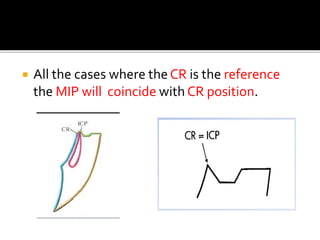
 All the cases where the CR is the reference 
the MIP will coincide with CR position.
 Avoiding damage caused by premature 
contact or occlusal interference put the 
codyles away from their position in CR 
 The ability of the dentist to modify the 
occlusion and reprogram the condylar 
position and muscle response is easily 
demonstrated clinically in occlusal treatment 
procedures.
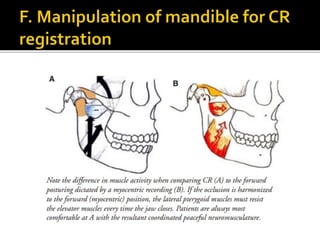
 . After several jaw closures the muscles 
reprogrammed the condylar position to 
complement the prevailing occlusion. 
 This manipulation should avoid tooth 
contact. Otherwise prematurity will affect 
again the position of the condyles in CR. 
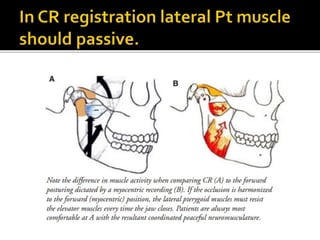
 This manipulation should be achieved 
without pain or stress which indicates 
relaxation of the lower lateral pt muscle 
responsible for mandible deviation.
 So that closure of the mandible is achieved by 
elevator muscles. 
 Guiding the mandible to CR position should 
never let the Pt. feels any stress or discomfort 
in the TMJ, otherwise a iatrogenic TMD may 
occur.
 Kontor et al, researched reproducibility and 
spatial patterning of CR record by using 
 1. swallowing. 
 2.Chin-point guidance. 
 3.Chin-point guidance with anterior jig. 
 4.Bilateral manipulation. ( Dawson ) 
 Bilateral manipulation allowed the greatest 
reproducibility, followed by chin point 
guidance. Swallowing was the least 
consistent.
 Achieving dental work or occlusion analysis in 
the laboratory require mounting the models on 
the articulator. 
 An instrument which simulates closely the 
mandible and TMJ movements. 
 Different types of articulators are exposed, the 
development of these instruments is closely 
related to the continual development in 
understanding the anatomy, physiology, 
biomechanics of occlusion, NMS, TMJ,and 
mandibular movements.
 Improperly using the most sophisticated 
articulator results in poor job quality but 
attentive using of simple instrument can give 
acceptable results. 
 Without exact information we are only 
guessing. 
 Therefore, for an articulator to be acceptable, it 
must be anatomically correct and 
 should allow enough adjustment to 
accommodate a majority of patients.
 The following parameters need be 
considered: 
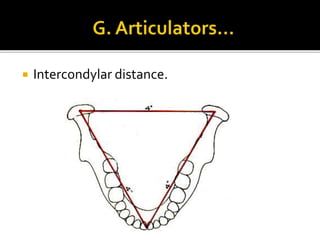
 1. Intercondylar distance 
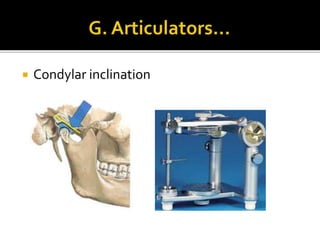
 2. Condylar inclination 
 3. Mandibular arc of closure 
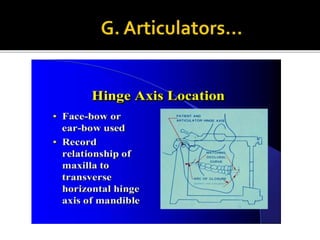
 4. Hinge axis position [Centric Relation (CR) 
and Centric Occlusion (CO)]
 Intercondylar distance.
 Condylar inclination
 Why use a semi adjustable articulator? 
 • Greater accuracy 
 • Savings in chairside adjustment time 
 • Eliminate iatrogenic occlusal interferences 
 • Improved doctor/laboratory relations 
 • Increase patient’s perception of care and skill 
level 
 • Revenue source for the practice and laboratory 
 …and finally, because it is the right thing to do.
 Chairside refinement is the last step to 
integrate the prosthesis in the masticatory 
complex which result in patient comfort due 
to the synergy between the different 
components of the masticatory system. This 
adjustment is controlled by the nervous 
sensitive receptors.
THANKS FOR 
YOUR ATTENTION

Centric relation

  • 1.
    CENTRIC RELATION, THEBASIC REFERENCE
  • 2.
    A. Introduction. B.10 factors to manage the occlusion. C. Relevant terms. -Centric relation. - Maximum intercuspation position MIP. -Centric occlusion. D. Significance. E. Dental procedures which reference MIP or CO ? F. Manipulation of mandible for CR registration. G. Articulators.
  • 3.
     Masticatory systemis composed of 2 main parts;  1. Active part represented by the NM system.  2. Passive part represented by the TMJ and the teeth.  The NM system is controlled by the CNS.  These 2 elements are connected instantly by sensitive receptors.
  • 5.
     In theabsence of pathology, these elements work in synergy and harmony.  Maintaining this comfort done by balanced distribution of the elevator muscle forces between the teeth and the TMJ.  Pathology and disturbances affect mainly the teeth so that the relationship in the same and opposite jaw.  Disturbances of the occlusion affect the existent harmony with the TMJ and the NM system.  This disharmony leads to pathologic manifestations in the TMJ and the muscles.
  • 6.
     Treating theaffected teeth or replacing the missing ones need to integrate them in the masticatory system. The treatment reference could be;  The MIP or the occlusion in centric relation CO.  In 10% of population the MIP coincide with the CR (occlusion in CR position)  Discrepancies between MIP and CR is frequently present and may lead to pathologic conditions in certain situation.
  • 8.
     The 10must know factors of occlusion. Understand these factors and you will never have to treat occlusal problems by guessing. Dawson
  • 21.
     1. Centricrelation: the maxillomandibular relationship in which the condyles articulate with the thinnest avascular portion of their respective disks with the complex in the anterior superior position against the shapes of the articular eminencies.  This position is independent of tooth contact.  This position is clinically discernible when the mandible is directed superior and anteriorly.  It is restricted to a purely rotary movement about the transverse horizontal axis. (GPT-5).
  • 22.
     CR isanatomically determined; it is repeatable and reproducible. Ruth et al  Okeson, describes it as the most orthopedically and musculoskeletally stable position of the mandible.  others consider it to be the essence of optimal temporomandibular joint form and function.  It is the most reliable reference point for accurately recording the relationship of the mandible to the maxilla.
  • 23.
     Therefore, adetermination of the CR is a prerequisite for the analyses of dental interarch, condylar position, and skeletal relationships.  A properly aligned condyle-disc assembly in centric relation can resist maximum loading by the elevator muscles with no sign of discomfort.
  • 26.
     At themost superior position, the condyle disc assembly are braced medially, thus CR also the midmost position.
  • 28.
    In CR themandible has Purely rotary move-ment about transverse Horizontal axis.
  • 32.
     Head positioneffect on mandible position.
  • 33.
     3.centric occlusion;the occlusion of opposing teeth when the mandible is in centric relation. This may or may not coincide with the maximal intercuspal position.
  • 34.
  • 35.
     Centric occlusion,coincidence between CR and ICP
  • 36.
     CR positionand MIP are well reproducible reference positions of the mandible.  When using the "freedom in centric" concept, the occlusal range is about 0.5 mm.  Retruded contact position is very close to MIP in most people. Therefore it can be used as a "therapeutic compromise" for occlusal rehabilitation.  Utz KH1, Duvenbeck H, Oettershagen K.
  • 41.
     Regarding dentalprocedures, the mandible can assume two well-known positions as a reference for treatment: centric relation (CR) and maximum inter cuspation (MIC).  These usually are not coincident in the general population.  The MIC and CR are reproducible.  10% of the population have coincidence between CR And MIC.
  • 42.
     all simpleprocedures related to occlusal surfaces where the ( VDO) and the MIC position are not affected, in this case the reference is MIC. Fillings and single crown. Missing tooth replacement of limited span ( FPD or RPD).
  • 43.
     In whichcases CR is considered as basic reference?  Missing of all the upper or lower posterior teeth or both.  Cases where the VDO is affected.  Severe dental wear.  Missing of all the upper or lower teeth or both.  Signs and symptoms in masticatory system (TMJ, NMS, Teeth) where the OCC. Is involved.  Cases need full mouth rehabilitation.  In orthodontic treatment where discrepancy between CR and MIC position is more than 3mm.
  • 44.
     All thecases where the CR is the reference the MIP will coincide with CR position.
  • 45.
     Avoiding damagecaused by premature contact or occlusal interference put the codyles away from their position in CR  The ability of the dentist to modify the occlusion and reprogram the condylar position and muscle response is easily demonstrated clinically in occlusal treatment procedures.
  • 46.
     . Afterseveral jaw closures the muscles reprogrammed the condylar position to complement the prevailing occlusion.  This manipulation should avoid tooth contact. Otherwise prematurity will affect again the position of the condyles in CR.  This manipulation should be achieved without pain or stress which indicates relaxation of the lower lateral pt muscle responsible for mandible deviation.
  • 48.
     So thatclosure of the mandible is achieved by elevator muscles.  Guiding the mandible to CR position should never let the Pt. feels any stress or discomfort in the TMJ, otherwise a iatrogenic TMD may occur.
  • 49.
     Kontor etal, researched reproducibility and spatial patterning of CR record by using  1. swallowing.  2.Chin-point guidance.  3.Chin-point guidance with anterior jig.  4.Bilateral manipulation. ( Dawson )  Bilateral manipulation allowed the greatest reproducibility, followed by chin point guidance. Swallowing was the least consistent.
  • 52.
     Achieving dentalwork or occlusion analysis in the laboratory require mounting the models on the articulator.  An instrument which simulates closely the mandible and TMJ movements.  Different types of articulators are exposed, the development of these instruments is closely related to the continual development in understanding the anatomy, physiology, biomechanics of occlusion, NMS, TMJ,and mandibular movements.
  • 53.
     Improperly usingthe most sophisticated articulator results in poor job quality but attentive using of simple instrument can give acceptable results.  Without exact information we are only guessing.  Therefore, for an articulator to be acceptable, it must be anatomically correct and  should allow enough adjustment to accommodate a majority of patients.
  • 54.
     The followingparameters need be considered:  1. Intercondylar distance  2. Condylar inclination  3. Mandibular arc of closure  4. Hinge axis position [Centric Relation (CR) and Centric Occlusion (CO)]
  • 55.
  • 56.
  • 58.
     Why usea semi adjustable articulator?  • Greater accuracy  • Savings in chairside adjustment time  • Eliminate iatrogenic occlusal interferences  • Improved doctor/laboratory relations  • Increase patient’s perception of care and skill level  • Revenue source for the practice and laboratory  …and finally, because it is the right thing to do.
  • 59.
     Chairside refinementis the last step to integrate the prosthesis in the masticatory complex which result in patient comfort due to the synergy between the different components of the masticatory system. This adjustment is controlled by the nervous sensitive receptors.
  • 60.
    THANKS FOR YOURATTENTION

Editor's Notes

  • #23  consider it to be the essence of optimal temporomandibular joint form and function
  • #60 Insist on the occlusal adjustment by removing all the premature contact between CR and MIP and interferences