PRINCIPLES OF OCCLUSION
BY
Dr AYESHA SADAF
LEARNING OBJECTIVES.
Students should be able to
1) Enlist five principles of occlusion
2) understand the clinical implication of these Principles
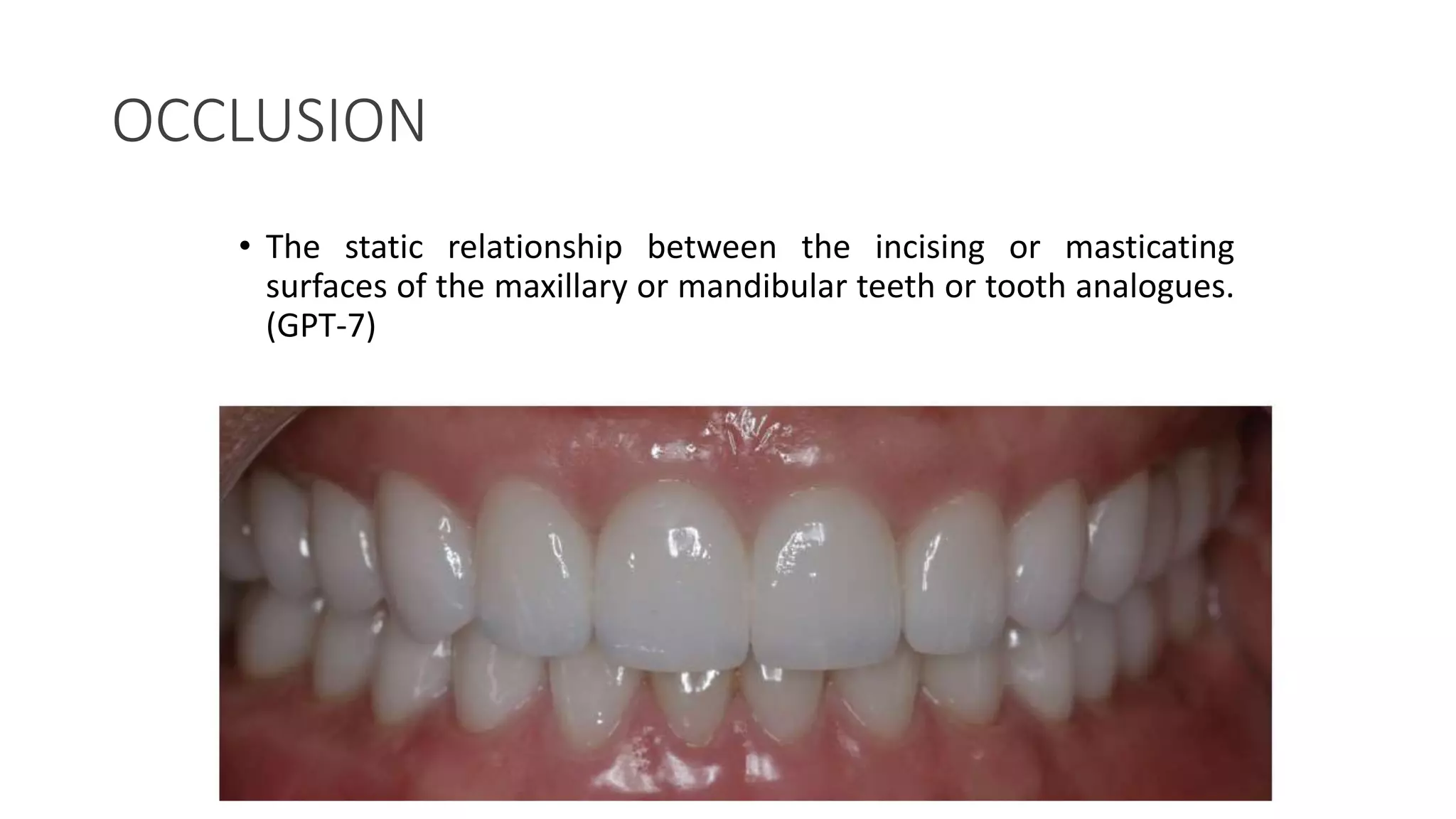
OCCLUSION
• The static relationship between the incising or masticating
surfaces of the maxillary or mandibular teeth or tooth analogues.
(GPT-7)
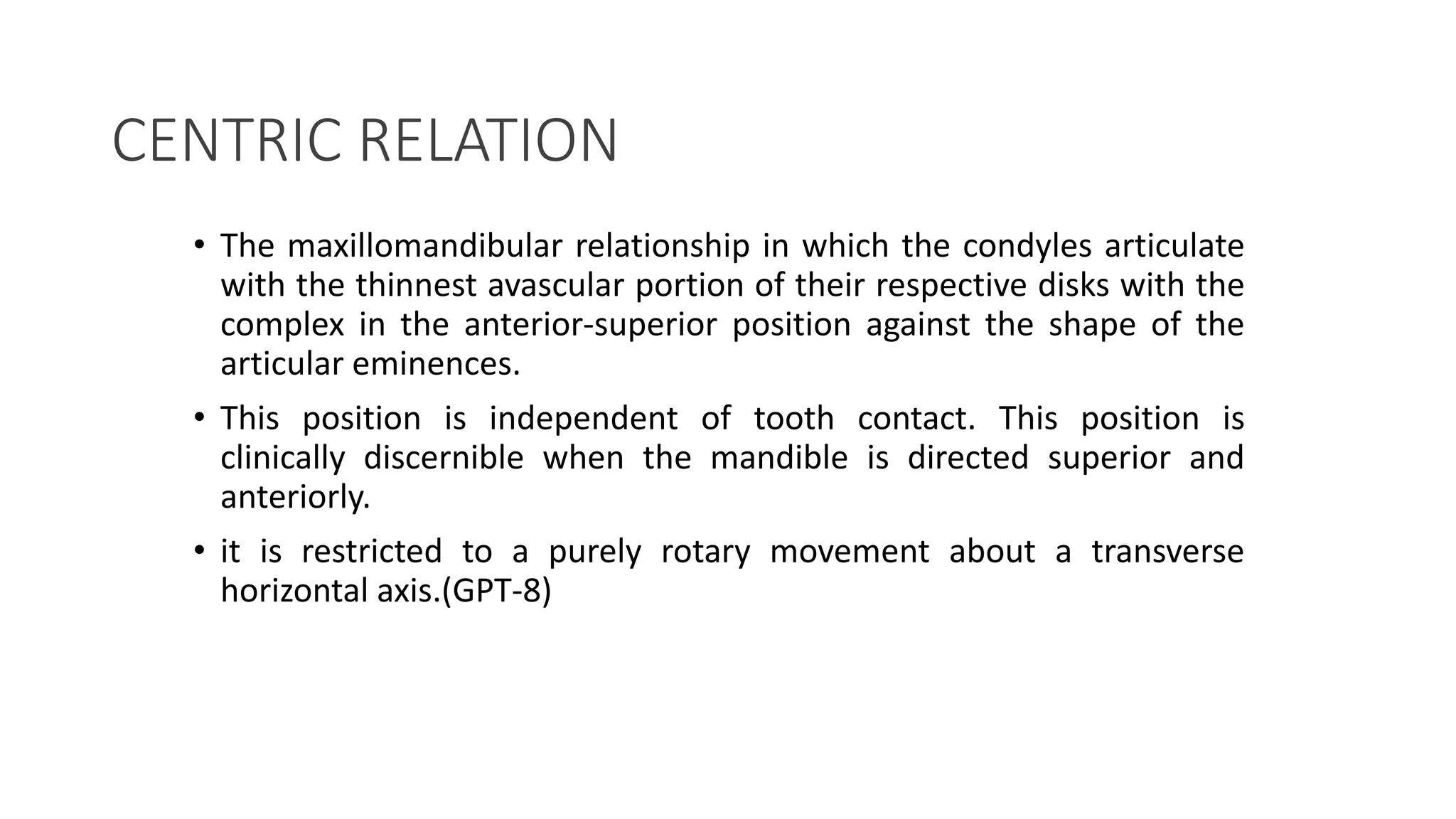
CENTRIC RELATION
• The maxillomandibular relationship in which the condyles articulate
with the thinnest avascular portion of their respective disks with the
complex in the anterior-superior position against the shape of the
articular eminences.
• This position is independent of tooth contact. This position is
clinically discernible when the mandible is directed superior and
anteriorly.
• it is restricted to a purely rotary movement about a transverse
horizontal axis.(GPT-8)
CENTRIC OCCLUSION
• The occlusion of opposing teeth when the mandible is
in centric relation.(GPT-7)
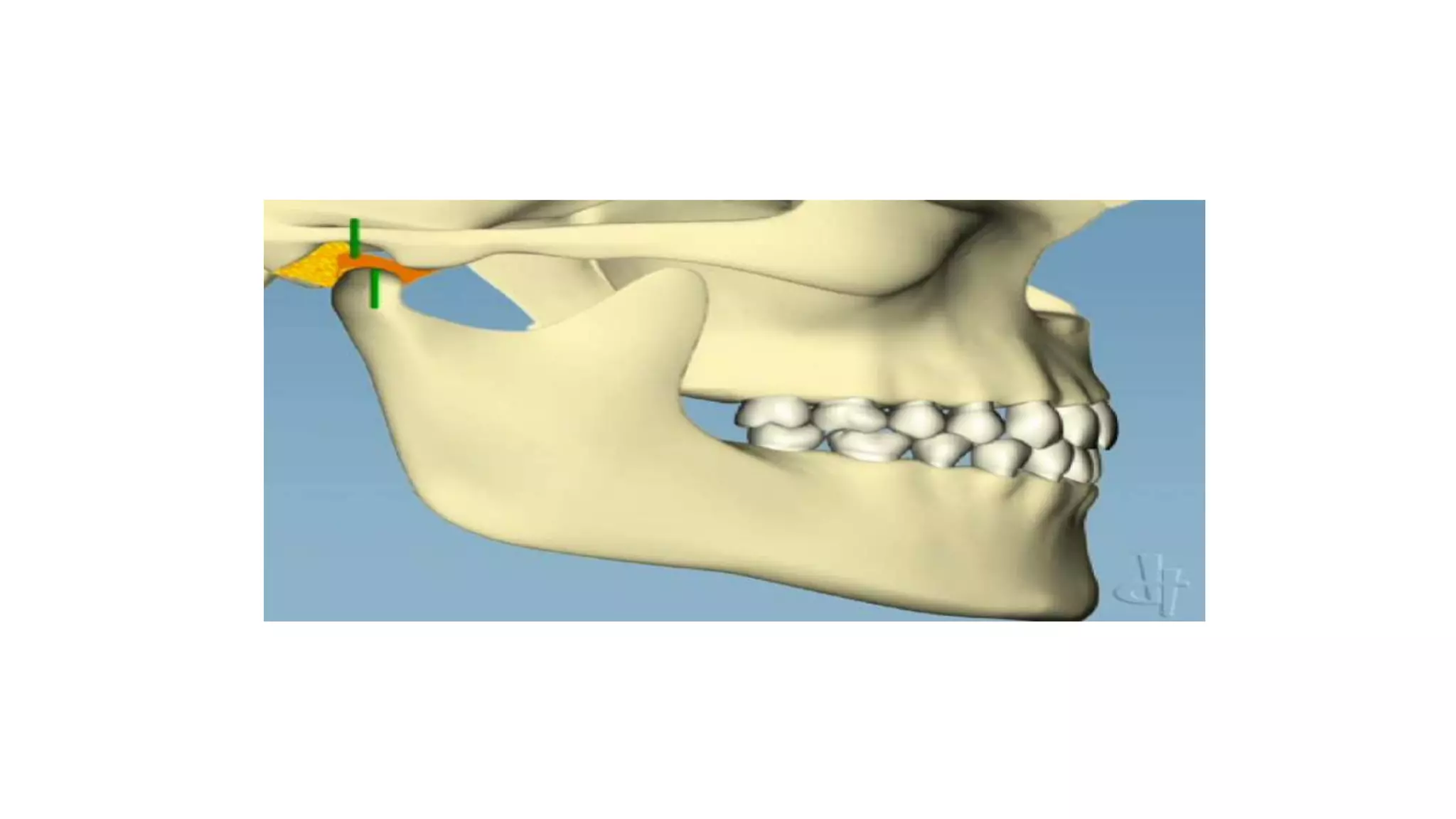
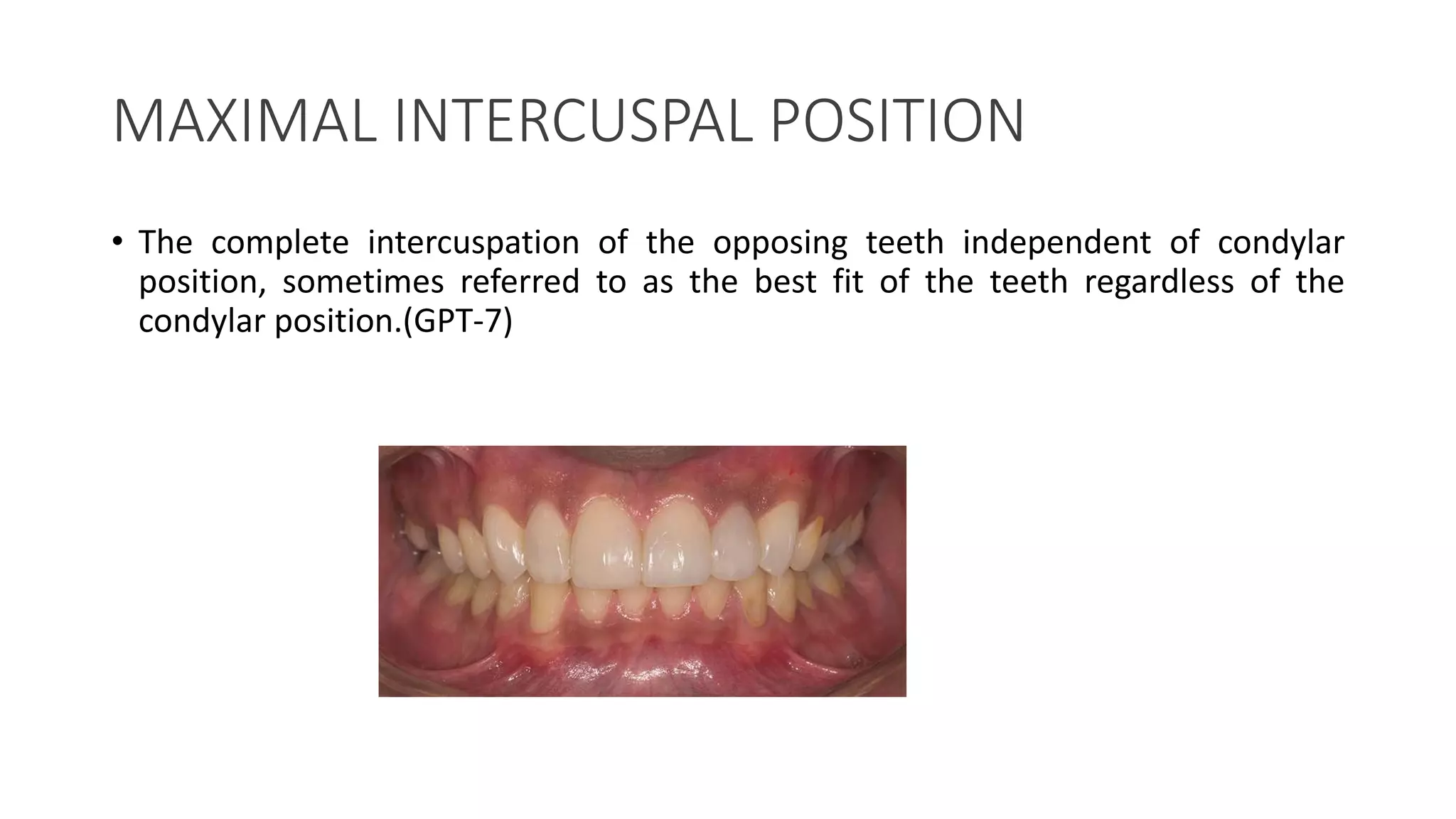
MAXIMAL INTERCUSPAL POSITION
• The complete intercuspation of the opposing teeth independent of condylar
position, sometimes referred to as the best fit of the teeth regardless of the
condylar position.(GPT-7)
Significance of Principles of occlusion
in restorative Dentistry
• Long term Occlusal stability
• Carry out occlusal analysis
• Reduce the stress on masticatory system
• Increasing the longevity of restorations
Principles of occlusion
1. Maximal intercuspation (MI) around Centric Relation (CR)
2. Mutually protected occlusion
3. Importance of anterior guidance
4. Non-working side interferences
5.Posterior stability
Maximal intercuspation (MI) around Centric
Relation (CR)
• CR is a 3 dimensional position
• It is the most reproducible, repeatable position of the mandible.
• It is an area not a pinpoint position.
• It is the position where muscles are most relaxed.
CR is the ideal starting point in starting the good
Restorative dentistry.
LONG CENTRIC
• Roughly 10% of patients close directly into MI when the condyles are
in CR.
• In the remaining 90% of the population maximum intercuspation
occurs slightly forward from the retruded position of the mandible to
the maxilla.
• However, contact between opposing teeth and the resultant
proprioceptive response guides the mandible repeatedly into the
habitual ICP, so there is a slide from RCP to MI
2. MUTUALLY PROTECTED OCCLUSION
/Canine guided
• In maximum intercuspation, the posterior teeth protect the
anterior teeth
• in protrusion the anterior teeth contact with incisal edges
protecting the canines and the posterior teeth which have no contact.
• In lateral movement upper and lower canines contact with
each other protecting the anterior and posterior teeth i.e. there is no
contact between the anterior and posterior teeth
3. The importance of anterior Guidance
The anterior guidance is created by the contact between the mandibular
anterior teeth and the lingual surfaces of the maxillary anterior teeth,
with a resulting non-interference with the movements of the patient’s
mandible in function.
Importance of anterior Guidance
• Establishment of acceptable anterior guidance would be the key
initial step that must be taken.
• When the anterior guidance is in harmony with the function of teeth
and the muscular apparatus, then it is in harmony with the “Envelope
of Function”.
4. Non-Working side Interference
• In a lateral excursion, the nonworking side should have no tooth
contacts.
• If the teeth on the non-working side make the first contact this is
considered to be non-working side interference. This is un-desriable.
5. POSTERIOR STABILITY
While restoring a posterior tooth the occlusal anatomy of the teeth
should be recreated to copy the morphology of the neigh bouring teeth
CONSEQUENCES OF NOT FOLLOWING THE
PRINICIPLES OF OCCLUSION
Restorations and areas of the tooth that were not in
occlusion before the restoration was placed may
contact prematurely in occlusion resulting in the
fracture of the tooth or the restoration.
• Teeth that were previously sound with relatively small restorations may crack as a result
of the newly altered occlusion. Restorations that are left too high are a considerable
source of discomfort for the patient and a problem for the dentist.
• The patient may complain of toothache and occasionally headache, muscle soreness, and
TMJ pain.
• The restoration may break or the cusp may fracture. The surface of the tooth opposing
the high restoration may be worn down or the cusp may crack or there may be tooth
mobility or drifting.
• Some of these alterations that will occur in the patient’s occlusion may be difficult to
correct at a later stage.
• Occlusal surfaces of indirect restorations should need minimal adjustment.
• Inaccuracies can occur in the working impression, the opposing impression, the occlusal
record, the lab mounting of the casts, and inadequate provisional restoration
IDEAL OCCLUSION
At tooth level An ideal occlusion will provide:
• Multiple simultaneous contacts
• No cuspal incline contacts
• Occlusal contacts that are in line with the long axis of the tooth
• Smooth and, wherever possible, shallow guidance contacts.
The articulatory system level
An ideal occlusion will provide:
• Centric Occlusion occurring in Centric Relation
• Freedom in Centric Occlusion •
• No posterior interferences (anterior guidance at the front of the
mouth).
At patient level
An ideal occlusion will be within the neuromuscular
tolerances of that patient at that time in their life.

Principles of occlusion.pptx

  • 1.
  • 2.
    LEARNING OBJECTIVES. Students shouldbe able to 1) Enlist five principles of occlusion 2) understand the clinical implication of these Principles
  • 3.
    OCCLUSION • The staticrelationship between the incising or masticating surfaces of the maxillary or mandibular teeth or tooth analogues. (GPT-7)
  • 4.
    CENTRIC RELATION • Themaxillomandibular relationship in which the condyles articulate with the thinnest avascular portion of their respective disks with the complex in the anterior-superior position against the shape of the articular eminences. • This position is independent of tooth contact. This position is clinically discernible when the mandible is directed superior and anteriorly. • it is restricted to a purely rotary movement about a transverse horizontal axis.(GPT-8)
  • 6.
    CENTRIC OCCLUSION • Theocclusion of opposing teeth when the mandible is in centric relation.(GPT-7)
  • 7.
    MAXIMAL INTERCUSPAL POSITION •The complete intercuspation of the opposing teeth independent of condylar position, sometimes referred to as the best fit of the teeth regardless of the condylar position.(GPT-7)
  • 8.
    Significance of Principlesof occlusion in restorative Dentistry • Long term Occlusal stability • Carry out occlusal analysis • Reduce the stress on masticatory system • Increasing the longevity of restorations
  • 10.
    Principles of occlusion 1.Maximal intercuspation (MI) around Centric Relation (CR) 2. Mutually protected occlusion 3. Importance of anterior guidance 4. Non-working side interferences 5.Posterior stability
  • 11.
    Maximal intercuspation (MI)around Centric Relation (CR) • CR is a 3 dimensional position • It is the most reproducible, repeatable position of the mandible. • It is an area not a pinpoint position. • It is the position where muscles are most relaxed.
  • 12.
    CR is theideal starting point in starting the good Restorative dentistry.
  • 13.
    LONG CENTRIC • Roughly10% of patients close directly into MI when the condyles are in CR. • In the remaining 90% of the population maximum intercuspation occurs slightly forward from the retruded position of the mandible to the maxilla. • However, contact between opposing teeth and the resultant proprioceptive response guides the mandible repeatedly into the habitual ICP, so there is a slide from RCP to MI
  • 14.
    2. MUTUALLY PROTECTEDOCCLUSION /Canine guided • In maximum intercuspation, the posterior teeth protect the anterior teeth • in protrusion the anterior teeth contact with incisal edges protecting the canines and the posterior teeth which have no contact. • In lateral movement upper and lower canines contact with each other protecting the anterior and posterior teeth i.e. there is no contact between the anterior and posterior teeth
  • 15.
    3. The importanceof anterior Guidance The anterior guidance is created by the contact between the mandibular anterior teeth and the lingual surfaces of the maxillary anterior teeth, with a resulting non-interference with the movements of the patient’s mandible in function.
  • 16.
    Importance of anteriorGuidance • Establishment of acceptable anterior guidance would be the key initial step that must be taken. • When the anterior guidance is in harmony with the function of teeth and the muscular apparatus, then it is in harmony with the “Envelope of Function”.
  • 17.
    4. Non-Working sideInterference • In a lateral excursion, the nonworking side should have no tooth contacts. • If the teeth on the non-working side make the first contact this is considered to be non-working side interference. This is un-desriable.
  • 18.
    5. POSTERIOR STABILITY Whilerestoring a posterior tooth the occlusal anatomy of the teeth should be recreated to copy the morphology of the neigh bouring teeth
  • 19.
    CONSEQUENCES OF NOTFOLLOWING THE PRINICIPLES OF OCCLUSION Restorations and areas of the tooth that were not in occlusion before the restoration was placed may contact prematurely in occlusion resulting in the fracture of the tooth or the restoration.
  • 20.
    • Teeth thatwere previously sound with relatively small restorations may crack as a result of the newly altered occlusion. Restorations that are left too high are a considerable source of discomfort for the patient and a problem for the dentist. • The patient may complain of toothache and occasionally headache, muscle soreness, and TMJ pain. • The restoration may break or the cusp may fracture. The surface of the tooth opposing the high restoration may be worn down or the cusp may crack or there may be tooth mobility or drifting. • Some of these alterations that will occur in the patient’s occlusion may be difficult to correct at a later stage. • Occlusal surfaces of indirect restorations should need minimal adjustment. • Inaccuracies can occur in the working impression, the opposing impression, the occlusal record, the lab mounting of the casts, and inadequate provisional restoration
  • 25.
    IDEAL OCCLUSION At toothlevel An ideal occlusion will provide: • Multiple simultaneous contacts • No cuspal incline contacts • Occlusal contacts that are in line with the long axis of the tooth • Smooth and, wherever possible, shallow guidance contacts.
  • 26.
    The articulatory systemlevel An ideal occlusion will provide: • Centric Occlusion occurring in Centric Relation • Freedom in Centric Occlusion • • No posterior interferences (anterior guidance at the front of the mouth).
  • 27.
    At patient level Anideal occlusion will be within the neuromuscular tolerances of that patient at that time in their life.