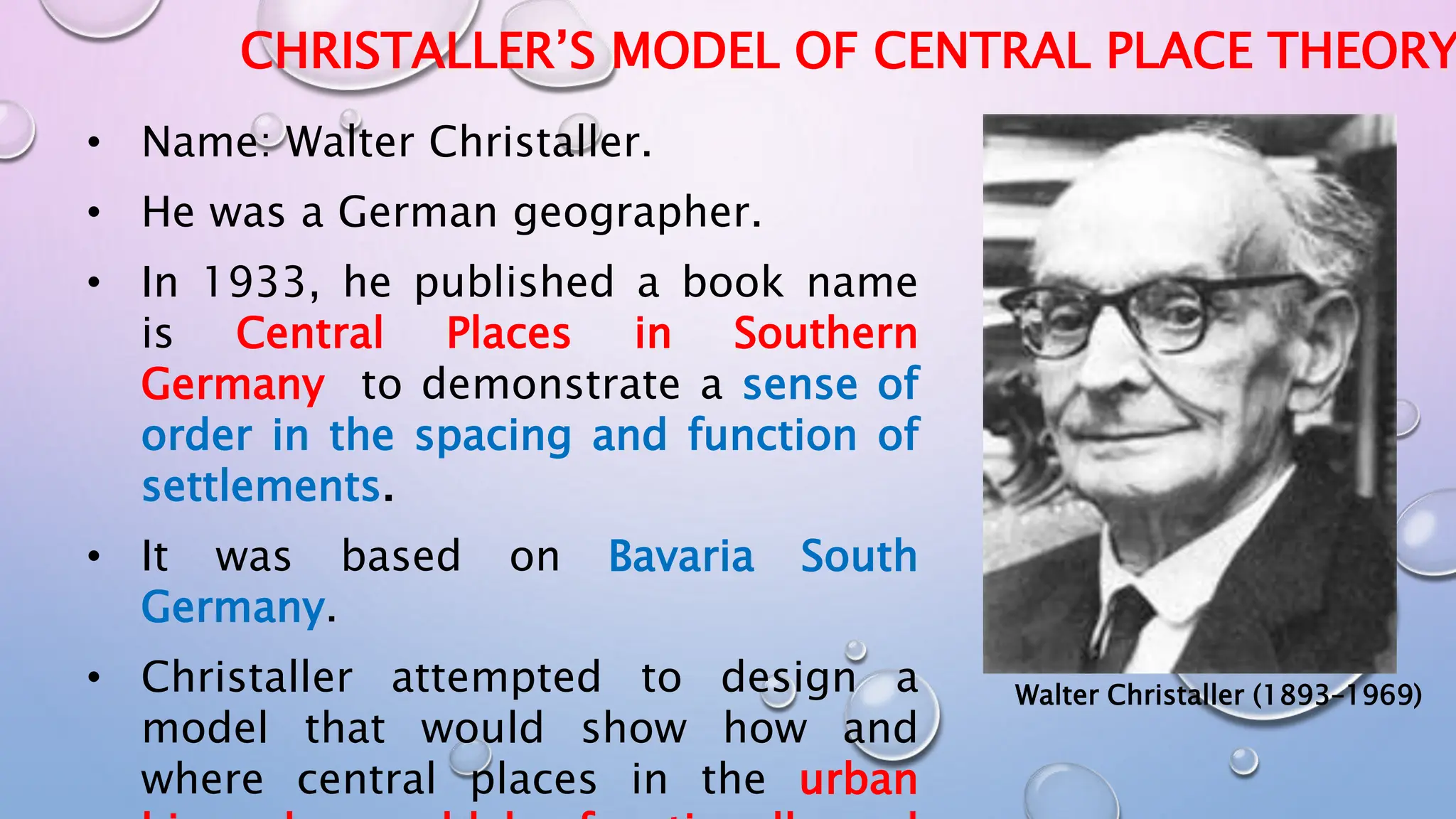
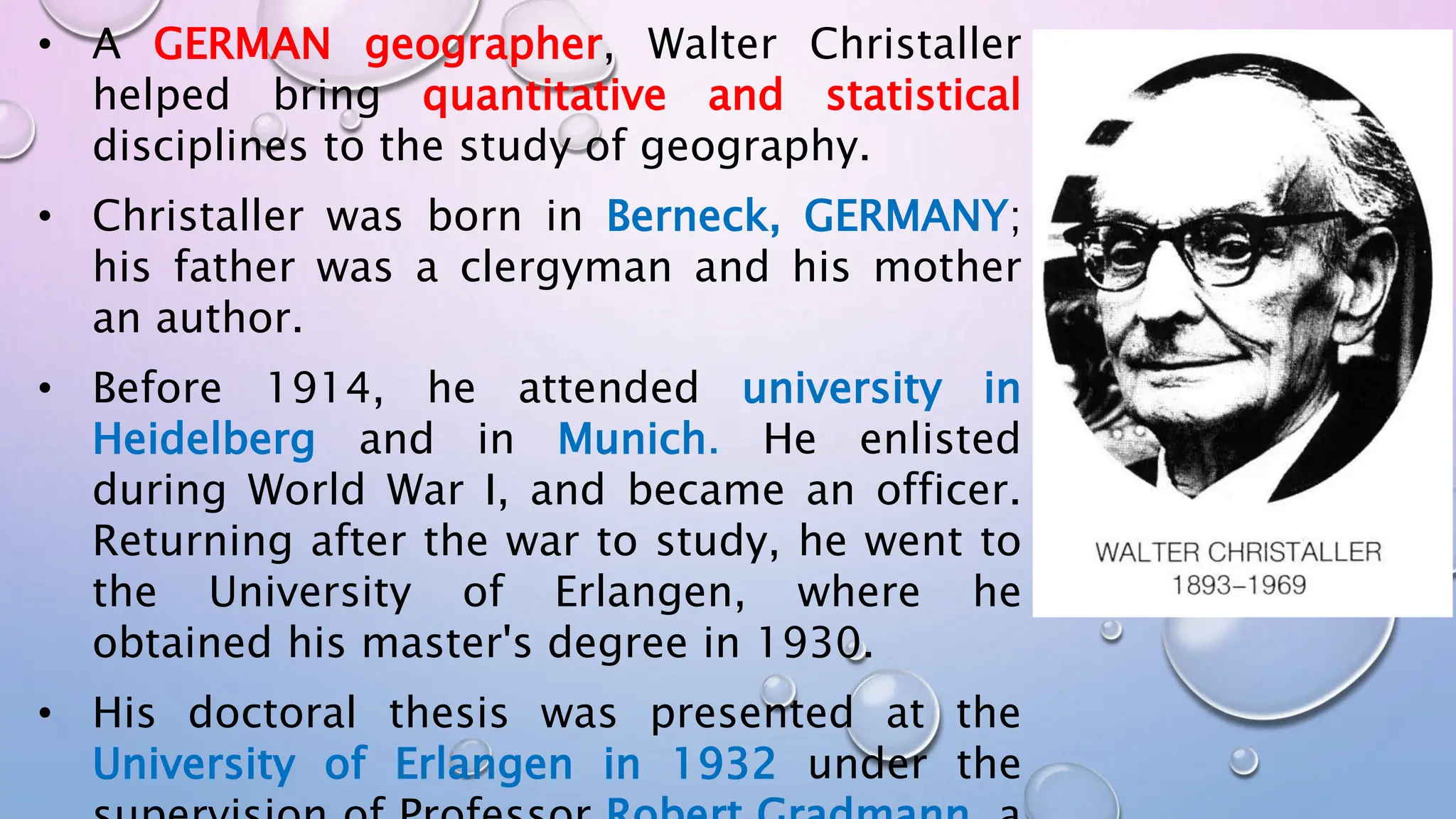
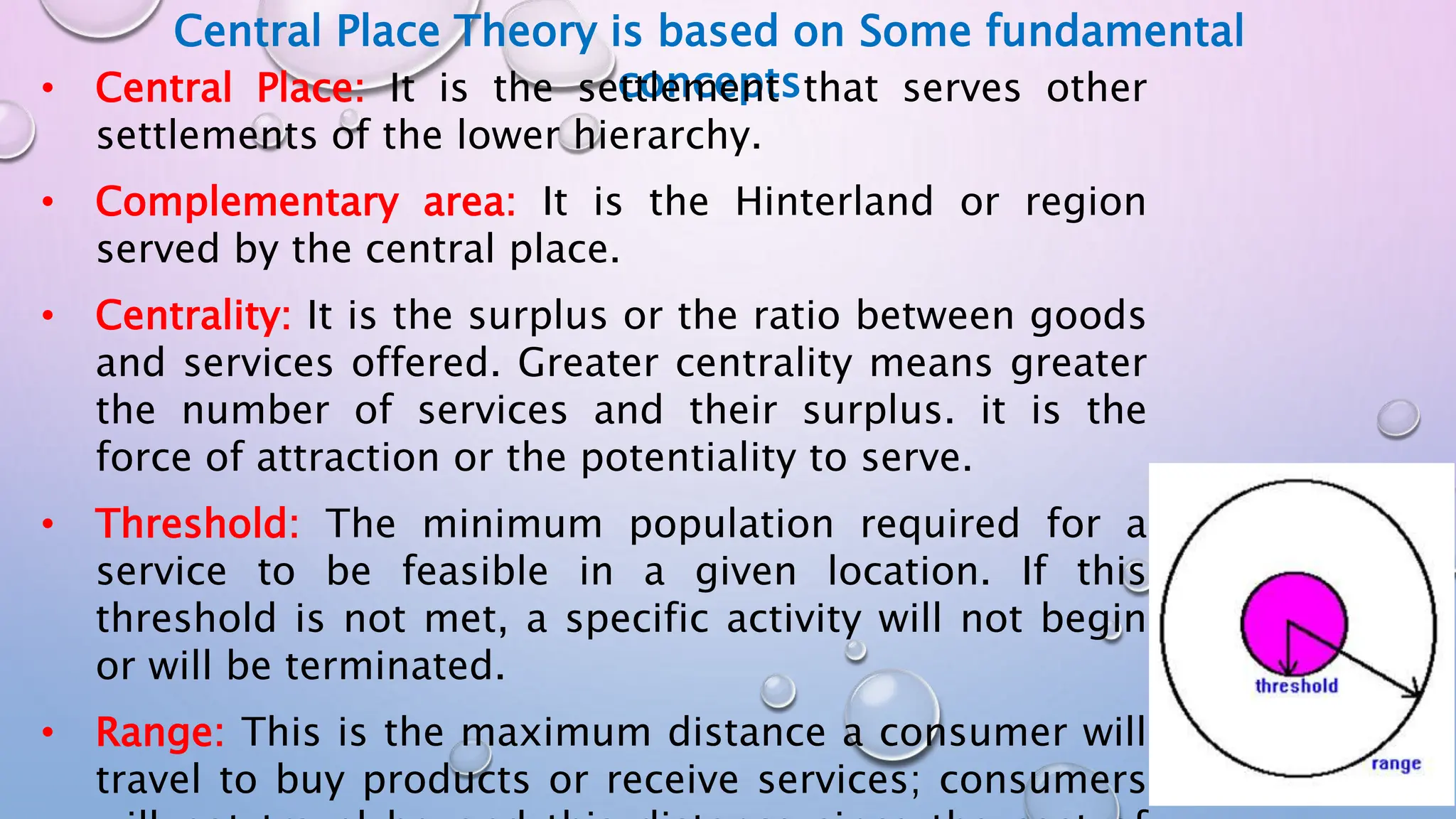
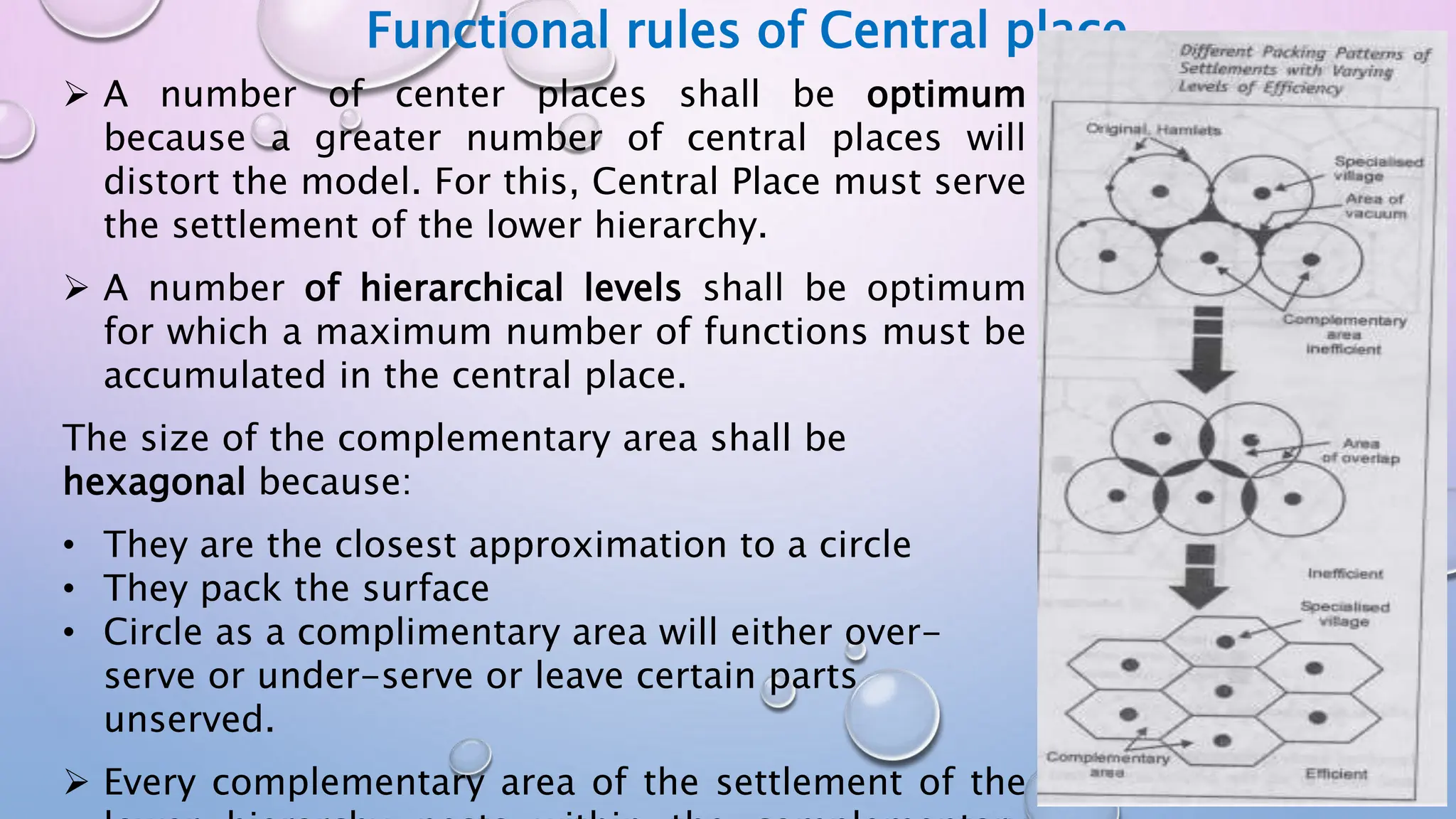
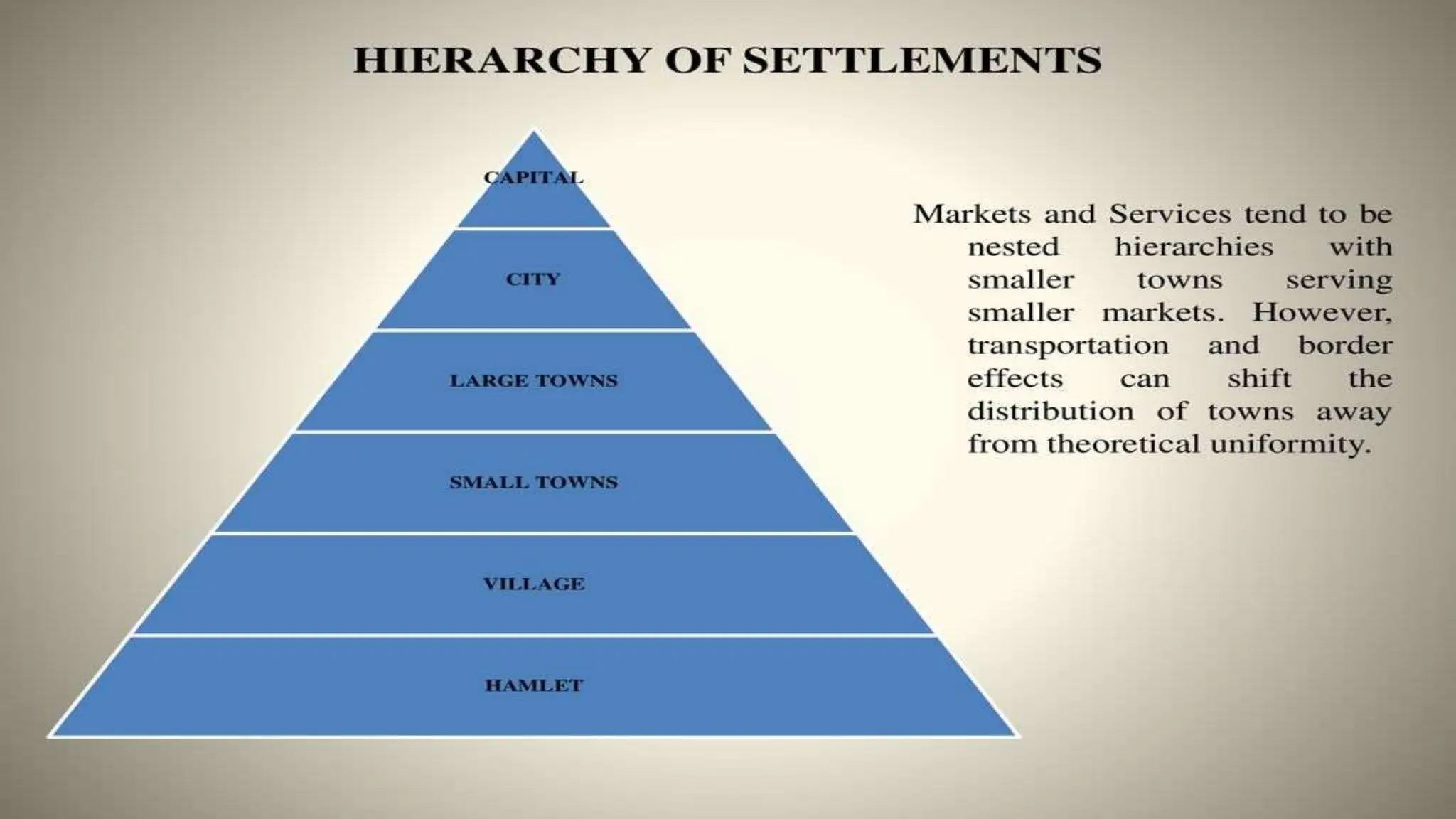
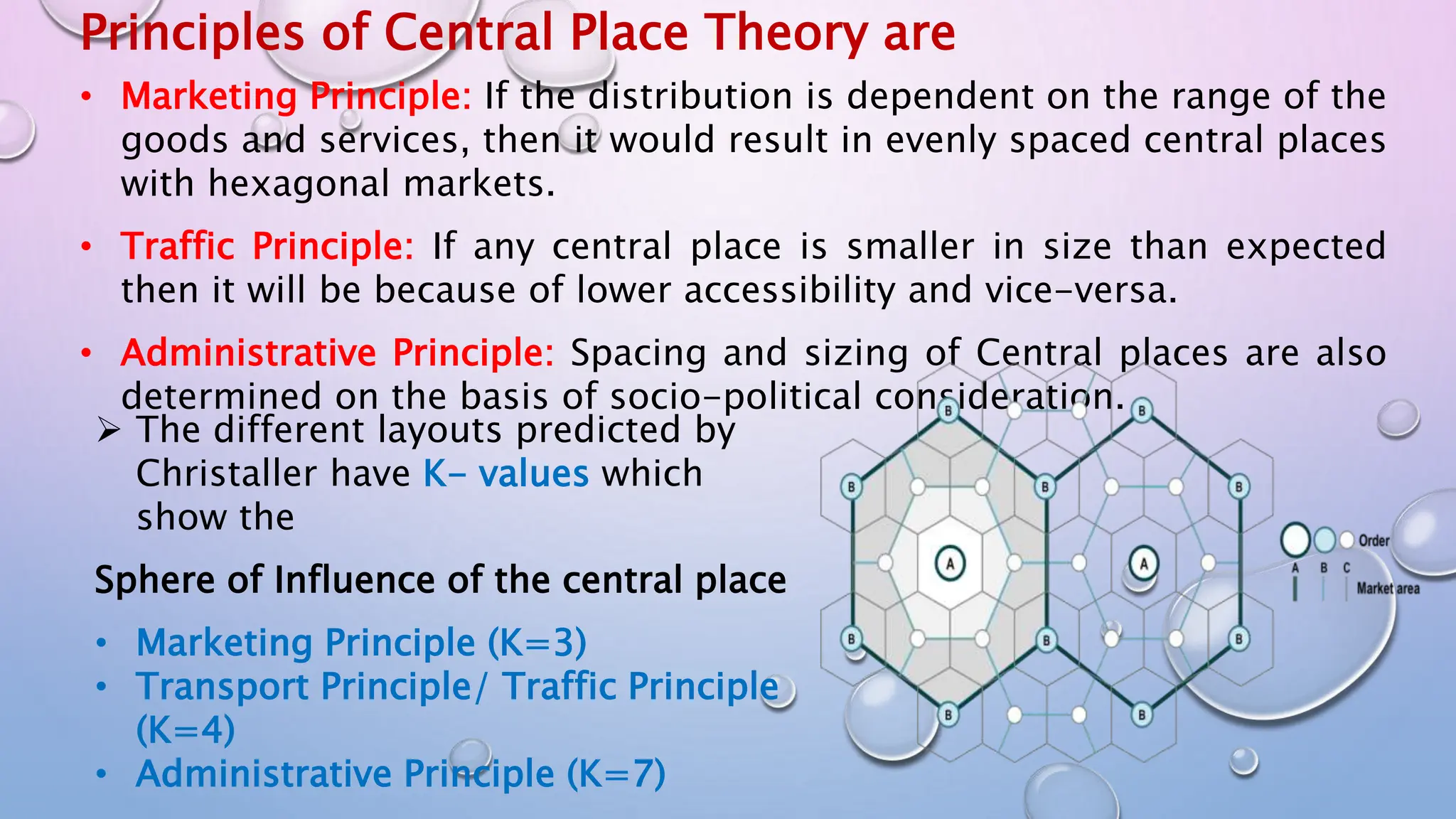
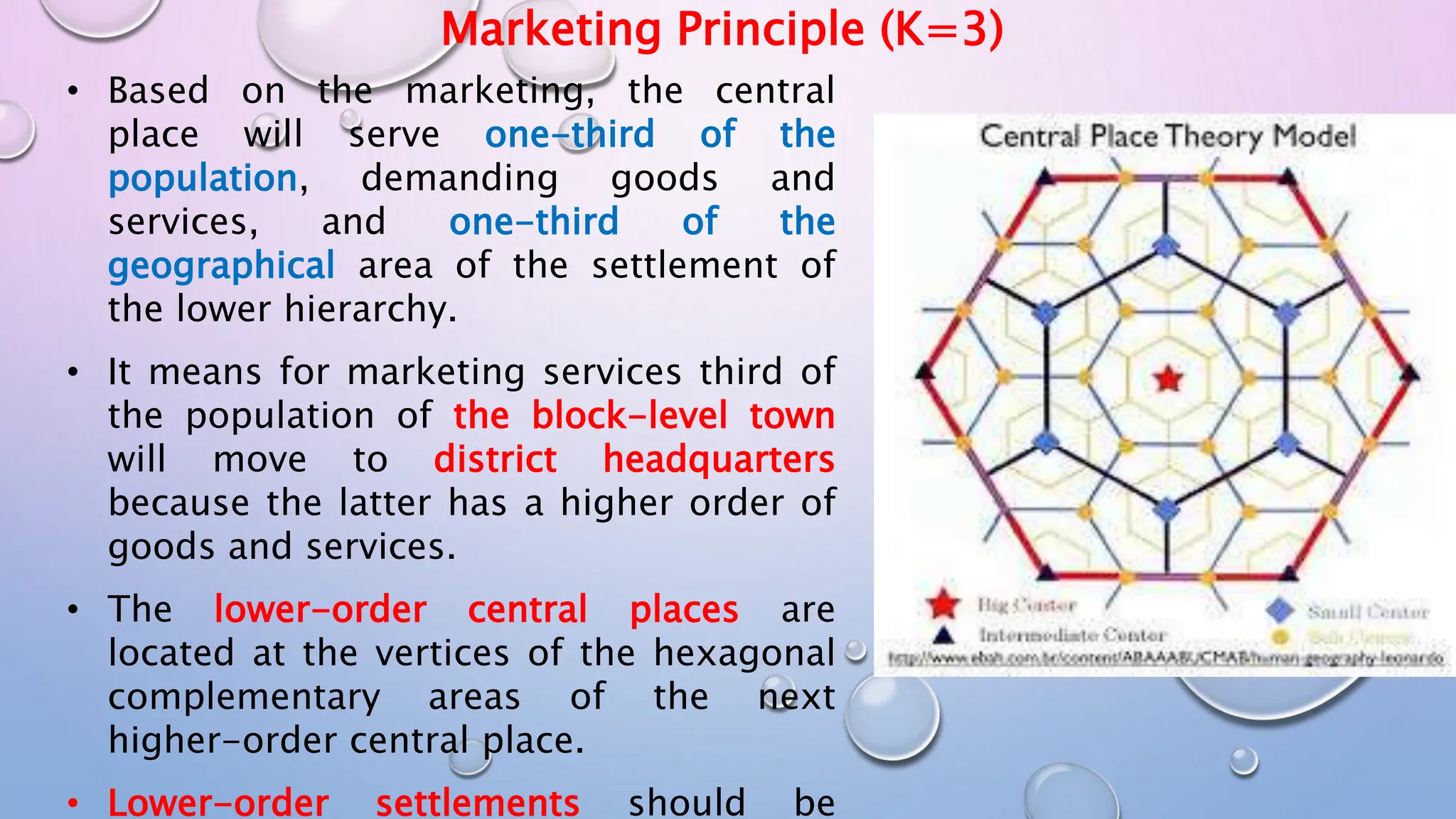
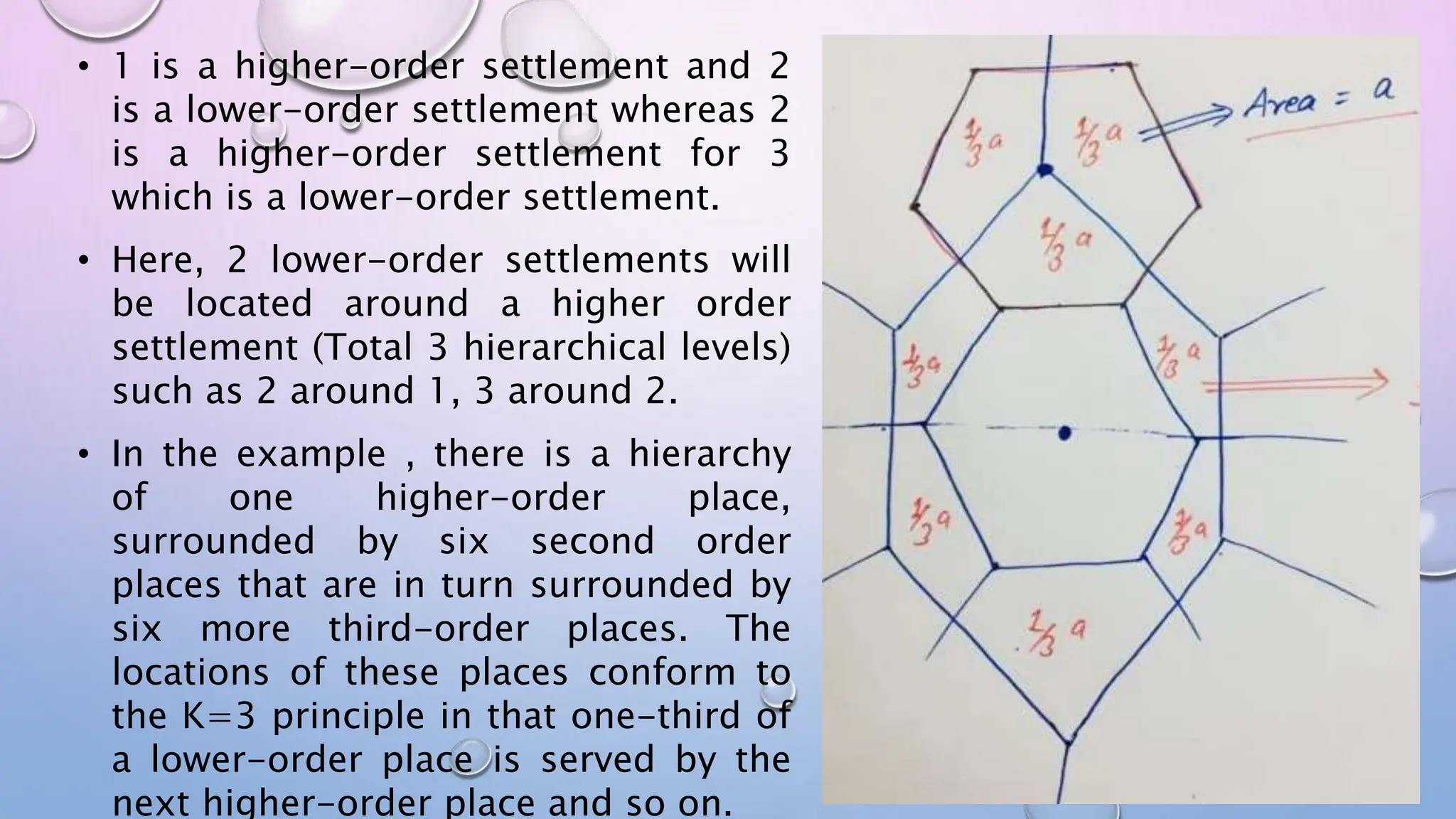
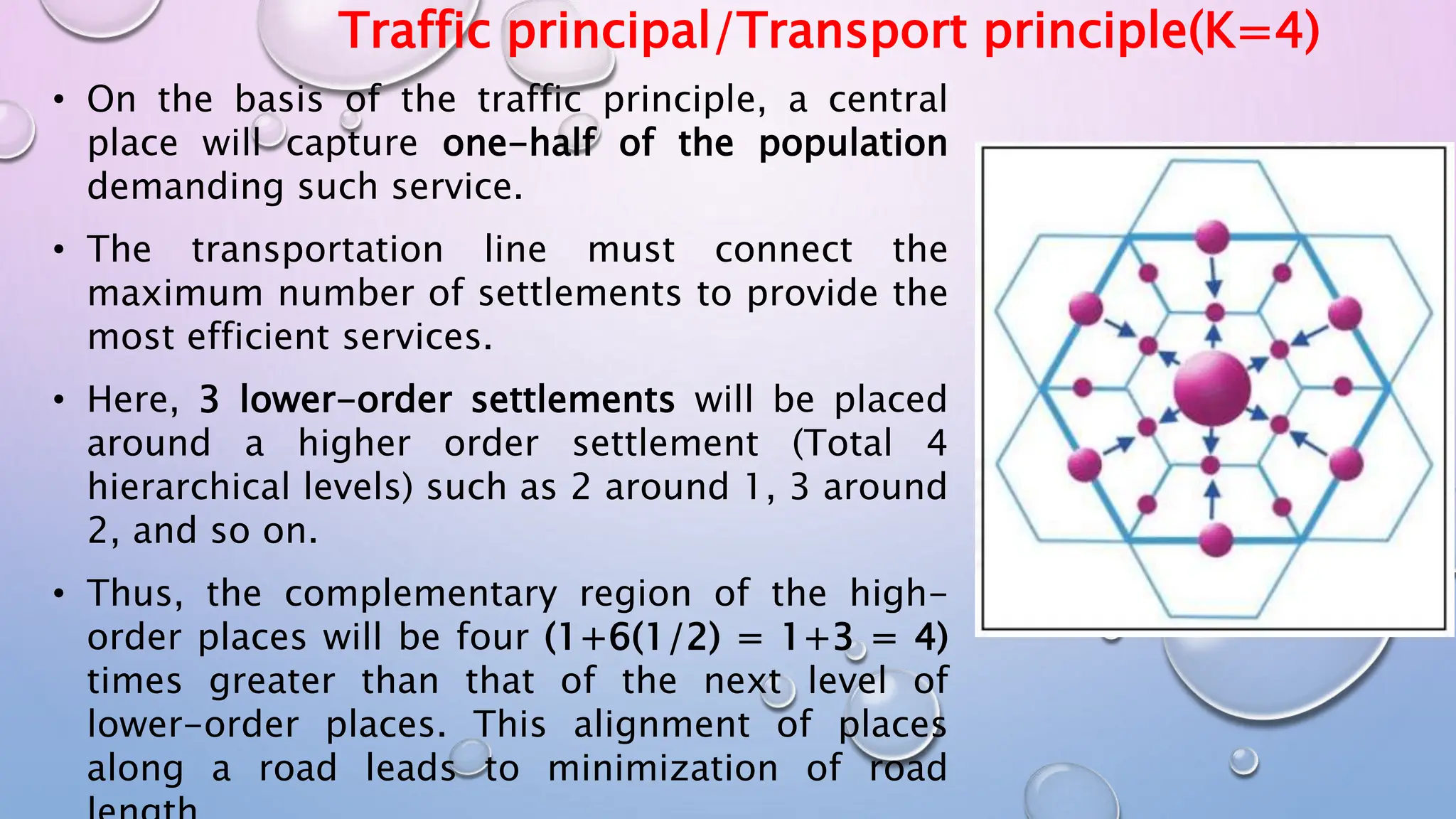
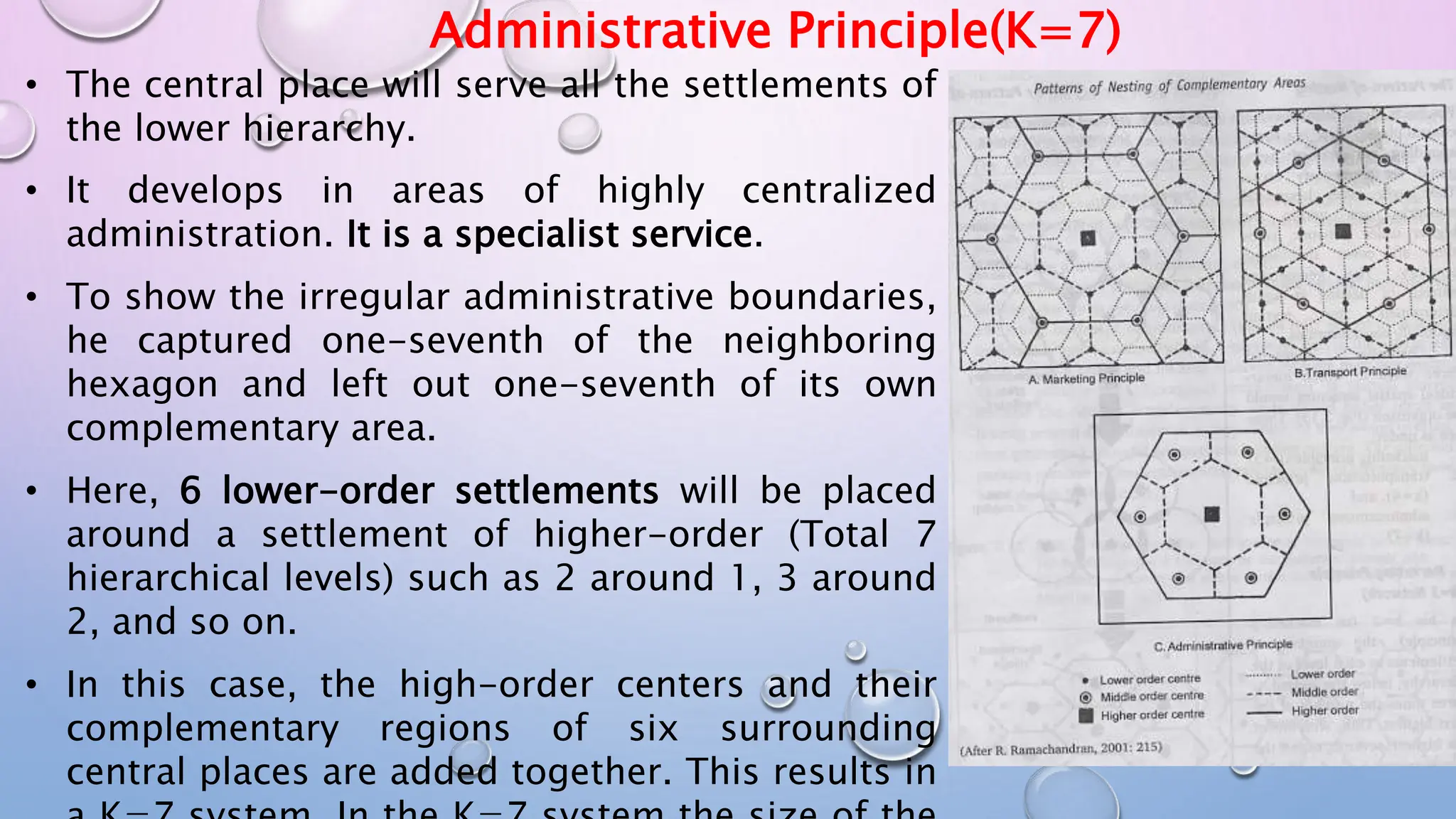
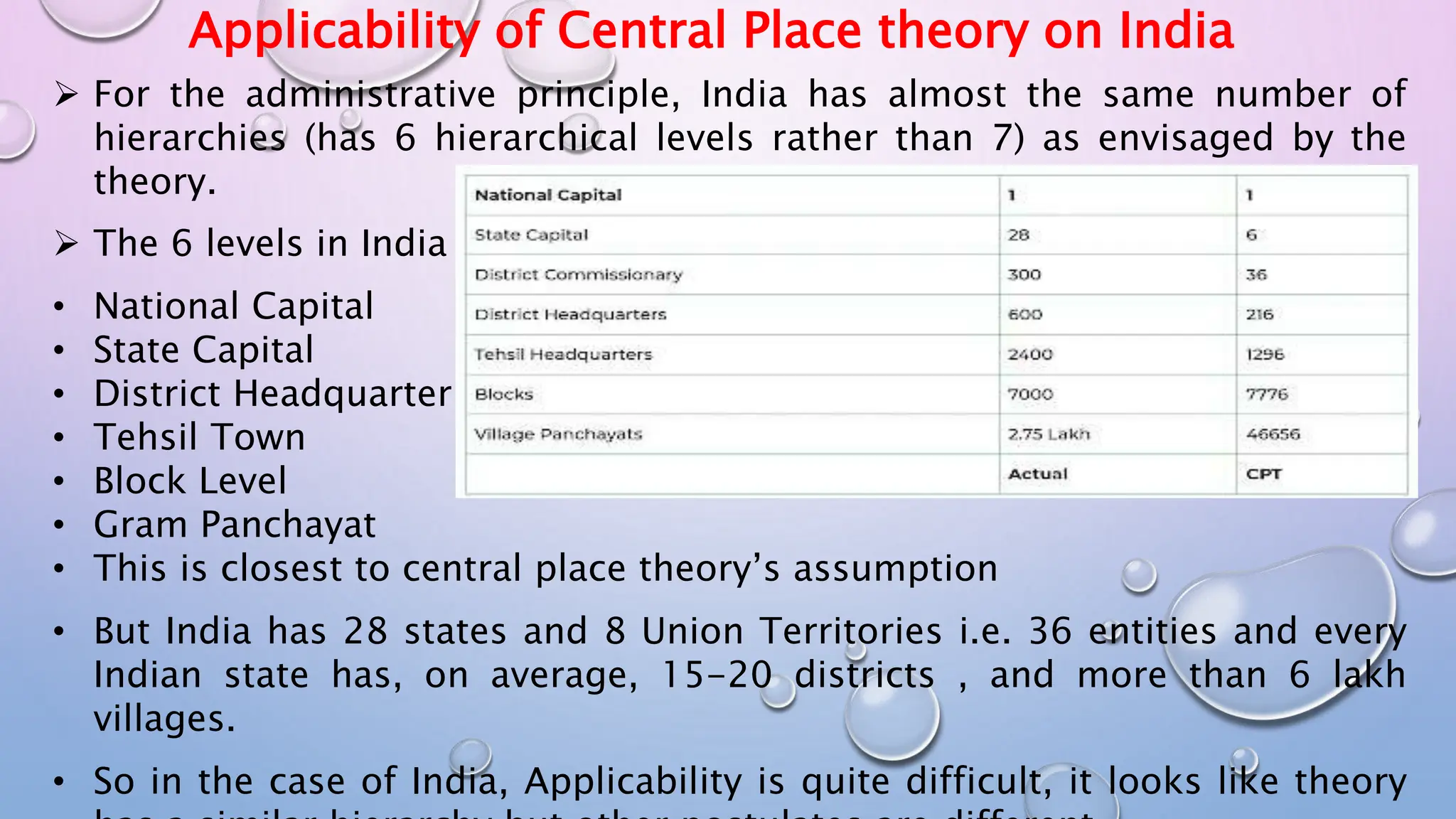
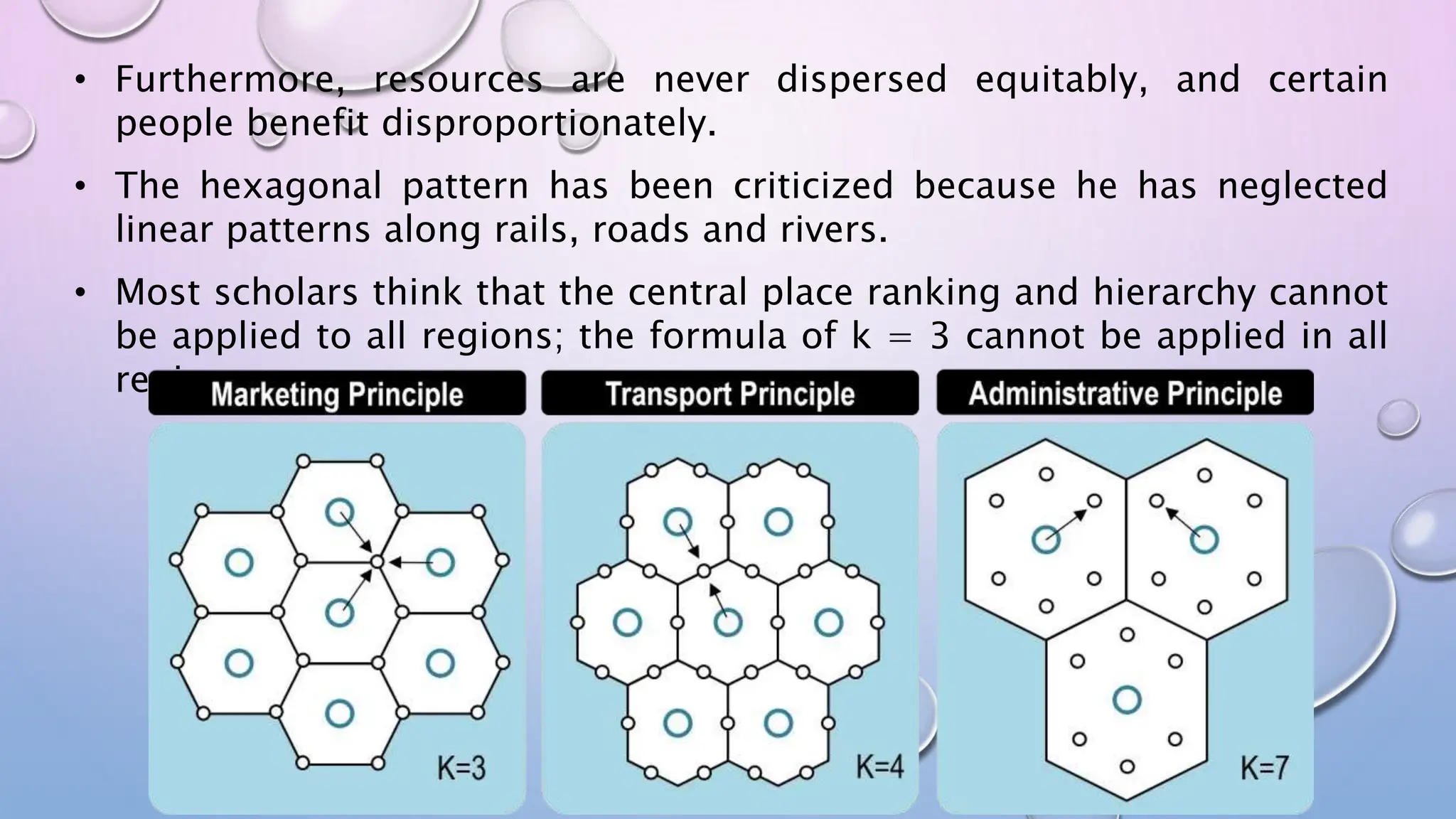
Central Place Theory, proposed by geographer Walter Christaller in 1933, describes the size, distribution, and function of urban settlements, primarily in Bavaria, Germany. It outlines several assumptions about population distribution, resource availability, and competition to explain how central places provide goods and services to surrounding areas, using principles that establish hierarchical layouts of settlements. While the theory has its applications, particularly in India, it has faced criticism for its unrealistic assumptions and inability to account for modern economic complexities.