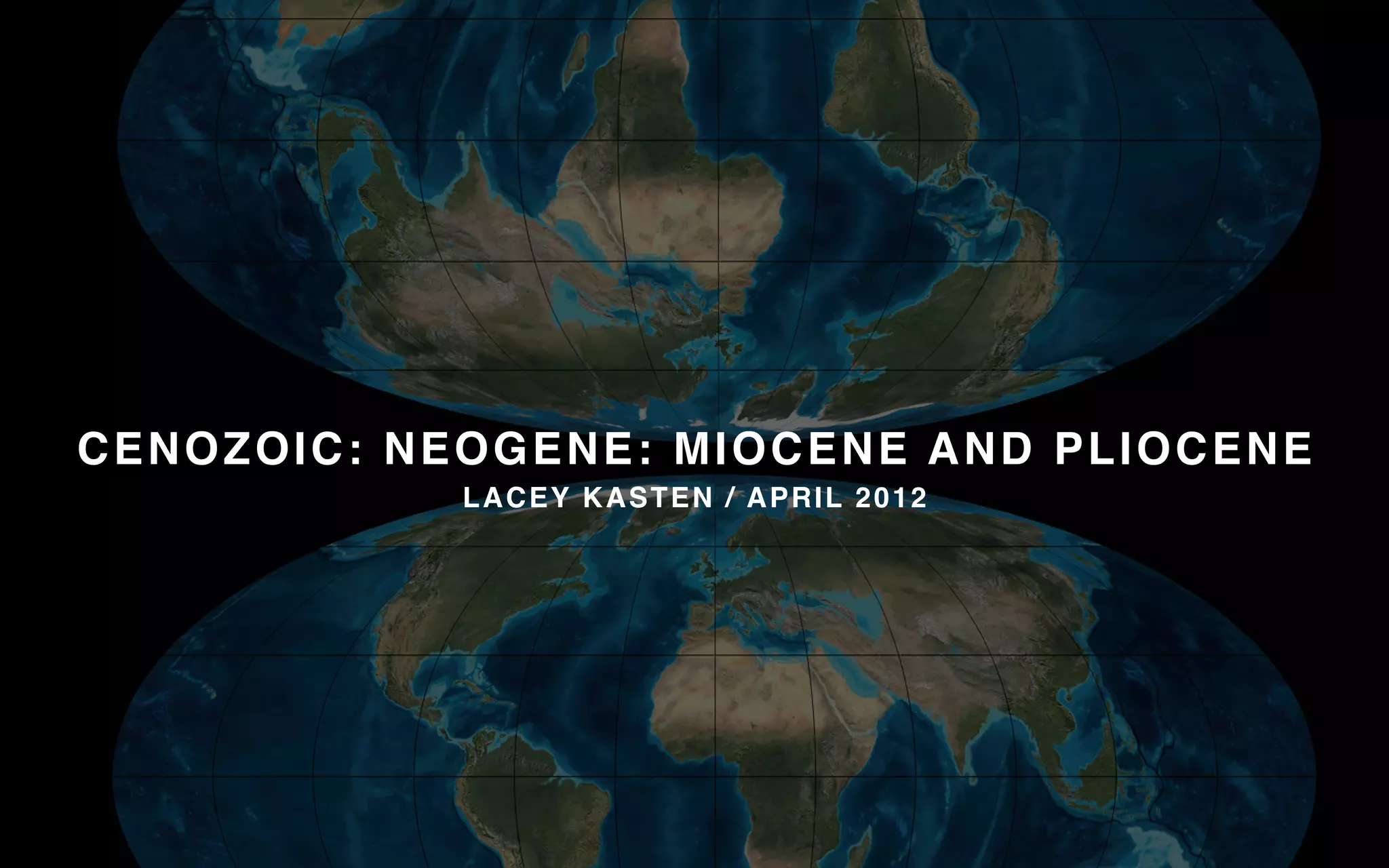
Cenoz oic : N e og e n e : M i o c e n e a n d P l i o cene
La c e y Kas t e n / Ap ri l 2 0 1 2
Continental Movement: Miocene
North America:
• Sierra Nevada & Cascade mountain
ranges are formed.
• The Panama isthmus begins to form
a connection between North and South
America.
Eurasia:
• The Tethys Sea connection between
the Mediterranean and Indian Ocean is
severed
• The Paratethys barrier is periodically
disrupted allowing migration

Africa:
• Rifting occurred in East Africa
• The African-Arabian plate united with
Eurasia
Antarctica:
• Became isolated from the other
continents leading to the formation of a
circumpolar ocean circulation
South America:
• The Andes mountains rise due to plate
tectonics.
Climate Changes: Miocene
North America:
• Non-seasonal and drier mid-continent climate
occurred due to mountain range development
• The increasing occurrences of drought and an
overall decrease in absolute rainfall promoted
drier climates.
• Grasslands began to spread, radiating large
herbivores and carnivores into extinction.
Australia:
• An overall increase aridity occurred as it
continued to drift northwards
• The continent went through many wet and dry
periods, decreasing rainforests.

Eurasia:
• Severing of the Tethys Sea caused the
increase in aridity in Southern Europe.
Africa:
• The union of the continents of Africa and
Eurasia caused interruption and contraction of
the Tethys Sea, thereby depleting the primary
source of atmospheric moisture in that area.
Antarctica:
• The antarctic polar ice cap was allowed to
develop. This accelerated the development of
global seasonality, aridity, and enhanced global
cooling.
Life Forms: Miocene
• A major shift occurred when
kelp forests and grasslands
became more diversified.
• Open vegetation systems
(deserts, tundra, and
grasslands) became more
common than closed vegetation
systems (such as forests).
• This led to a rediversification
of temperate ecosystems and
many morphological changes in
animals.

• Mammals and birds in
particular developed new
forms, whether as fast-running
herbivores, large predatory
mammals and birds, or small
quick birds and rodents.
• By the end of the Miocene 95%
of modern seed plant families
existed.
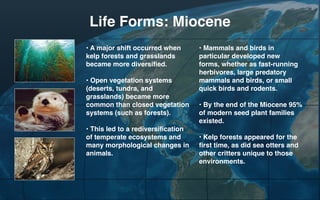
• Kelp forests appeared for the
first time, as did sea otters and
other critters unique to those
environments.
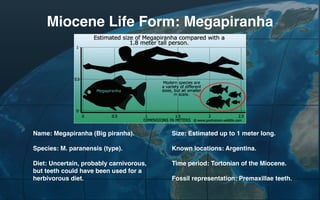
Miocene Life Form: Megapiranha

Name: Megapiranha ‭(‬Big piranha‭)‬.

Size: Estimated up to‭ ‬1‭ ‬meter long.

Species: M.‭ ‬paranensis‭ (‬type‭)‬.

Known locations: Argentina.

Diet: Uncertain,‭ ‬probably carnivorous,‭
‬but teeth could have been used for a
herbivorous diet.

Time period: Tortonian of the Miocene.
Fossil representation: Premaxillae teeth.
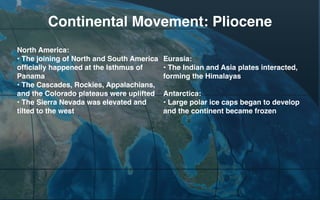
Continental Movement: Pliocene
North America:
• The joining of North and South America
officially happened at the Isthmus of
Panama
• The Cascades, Rockies, Appalachians,
and the Colorado plateaus were uplifted
• The Sierra Nevada was elevated and
tilted to the west

Eurasia:
• The Indian and Asia plates interacted,
forming the Himalayas
Antarctica:
• Large polar ice caps began to develop
and the continent became frozen
Climate Changes: Pliocene
• Climate cooling was significant in the • This long term cooling, actually
Pliocene epoch.
started in the Eocene and continued up
to the ice ages of the next epoch.
• The beginning of the epoch saw
numerous fluctuations in temperature, • Generally, the climate was warmer
which gave way to the general cooling than modern day temperatures,
trend towards the end of the Pliocene. although significant cooling was
occurring on a global scale.
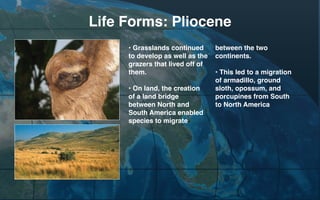
Life Forms: Pliocene
• Grasslands continued
to develop as well as the
grazers that lived off of
them.
• On land, the creation
of a land bridge
between North and
South America enabled
species to migrate

between the two
continents.
• This led to a migration
of armadillo, ground
sloth, opossum, and
porcupines from South
to North America
References -“Megapiranha.” Prehistoric Wildlife. Web. 09 Apr. 2012. <http://www.prehistoric-wildlife.com/
species/m/megapiranha.html>.
“The Miocene Epoch.” UCMP. Web. 09 Apr. 2012. <http://www.ucmp.berkeley.edu/tertiary/miocene.
php>.
“PIRANHA PICTURES: Yard-long “Megapiranha” Fossil Found.” National Geographic. National
Geographic Society. Web. 09 Apr. 2012. <http://news.nationalgeographic.com/news/2009/06/photogalleries/giant-piranha-pictures-evolution/index.html>.
“The Pliocene Epoch.” UCMP. Web. 09 Apr. 2012. <http://www.ucmp.berkeley.edu/tertiary/pliocene.
php>.

Cenozoic: Neogene: Miocene: and Pliocene

  • 1.
    Cenoz oic :N e og e n e : M i o c e n e a n d P l i o cene La c e y Kas t e n / Ap ri l 2 0 1 2
  • 2.
    Continental Movement: Miocene NorthAmerica: • Sierra Nevada & Cascade mountain ranges are formed. • The Panama isthmus begins to form a connection between North and South America. Eurasia: • The Tethys Sea connection between the Mediterranean and Indian Ocean is severed • The Paratethys barrier is periodically disrupted allowing migration Africa: • Rifting occurred in East Africa • The African-Arabian plate united with Eurasia Antarctica: • Became isolated from the other continents leading to the formation of a circumpolar ocean circulation South America: • The Andes mountains rise due to plate tectonics.
  • 3.
    Climate Changes: Miocene NorthAmerica: • Non-seasonal and drier mid-continent climate occurred due to mountain range development • The increasing occurrences of drought and an overall decrease in absolute rainfall promoted drier climates. • Grasslands began to spread, radiating large herbivores and carnivores into extinction. Australia: • An overall increase aridity occurred as it continued to drift northwards • The continent went through many wet and dry periods, decreasing rainforests. Eurasia: • Severing of the Tethys Sea caused the increase in aridity in Southern Europe. Africa: • The union of the continents of Africa and Eurasia caused interruption and contraction of the Tethys Sea, thereby depleting the primary source of atmospheric moisture in that area. Antarctica: • The antarctic polar ice cap was allowed to develop. This accelerated the development of global seasonality, aridity, and enhanced global cooling.
  • 4.
    Life Forms: Miocene •A major shift occurred when kelp forests and grasslands became more diversified. • Open vegetation systems (deserts, tundra, and grasslands) became more common than closed vegetation systems (such as forests). • This led to a rediversification of temperate ecosystems and many morphological changes in animals. • Mammals and birds in particular developed new forms, whether as fast-running herbivores, large predatory mammals and birds, or small quick birds and rodents. • By the end of the Miocene 95% of modern seed plant families existed. • Kelp forests appeared for the first time, as did sea otters and other critters unique to those environments.
  • 5.
    Miocene Life Form:Megapiranha Name: Megapiranha ‭(‬Big piranha‭)‬. Size: Estimated up to‭ ‬1‭ ‬meter long. Species: M.‭ ‬paranensis‭ (‬type‭)‬. Known locations: Argentina. Diet: Uncertain,‭ ‬probably carnivorous,‭ ‬but teeth could have been used for a herbivorous diet. Time period: Tortonian of the Miocene. Fossil representation: Premaxillae teeth.
  • 6.
    Continental Movement: Pliocene NorthAmerica: • The joining of North and South America officially happened at the Isthmus of Panama • The Cascades, Rockies, Appalachians, and the Colorado plateaus were uplifted • The Sierra Nevada was elevated and tilted to the west Eurasia: • The Indian and Asia plates interacted, forming the Himalayas Antarctica: • Large polar ice caps began to develop and the continent became frozen
  • 7.
    Climate Changes: Pliocene •Climate cooling was significant in the • This long term cooling, actually Pliocene epoch. started in the Eocene and continued up to the ice ages of the next epoch. • The beginning of the epoch saw numerous fluctuations in temperature, • Generally, the climate was warmer which gave way to the general cooling than modern day temperatures, trend towards the end of the Pliocene. although significant cooling was occurring on a global scale.
  • 8.
    Life Forms: Pliocene •Grasslands continued to develop as well as the grazers that lived off of them. • On land, the creation of a land bridge between North and South America enabled species to migrate between the two continents. • This led to a migration of armadillo, ground sloth, opossum, and porcupines from South to North America
  • 9.
    References -“Megapiranha.” PrehistoricWildlife. Web. 09 Apr. 2012. <http://www.prehistoric-wildlife.com/ species/m/megapiranha.html>. “The Miocene Epoch.” UCMP. Web. 09 Apr. 2012. <http://www.ucmp.berkeley.edu/tertiary/miocene. php>. “PIRANHA PICTURES: Yard-long “Megapiranha” Fossil Found.” National Geographic. National Geographic Society. Web. 09 Apr. 2012. <http://news.nationalgeographic.com/news/2009/06/photogalleries/giant-piranha-pictures-evolution/index.html>. “The Pliocene Epoch.” UCMP. Web. 09 Apr. 2012. <http://www.ucmp.berkeley.edu/tertiary/pliocene. php>.