PANGAEA
Supercontinent
Dynamic Planet
 Earth’s crust is broken into different plates
 These plates are in continuous motion
 Their movement shape continents and oceans
 Also causes events and forms spectacular features below and
above surface
 Continents join and break apart due to tectonic forces
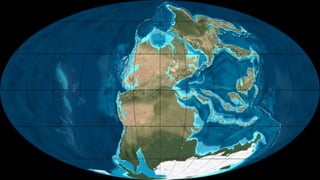
Pangaea
 Most recent supercontinent
 Derived from Greek word meaning, “All Land”
 First proposed by German scientist Alfred Wegener
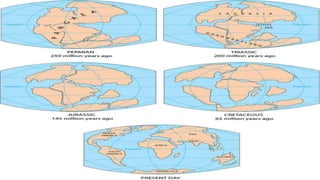
 This supercontinent existed from Permian epoch upto Jurassic
 It was surrounded by single ocean Panthalassa
Birth of Pangaea
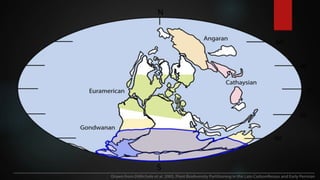
 Around 300 mya the northwestern part of the ancient
continent of Gondwana near the South Pole, collided
with the southern part of the Euramerican continent
 Gondwana consisted of South America, Africa, India,
Australia and Antarctica
 Euramerican consisted of North America and Eurasia,
their collision formed the Appalachian mountains
 Eventually the Angaran continent, located near the North Pole,
began to move south and collided with the northern part of
Euramerican by about 270 million years ago.
 Another separate landmass, Cathaysia, which was made up of
north and south China that was not a part of the larger
Pangea landmass.
 Once it was completely formed, Pangea covered around one-
third of the Earth's surface
Breaking of Pangaea
 This supercontinent started breaking apart in Jurassic
period
 First split into two main landmasses (Gondwana and
Laurasia)
 New ocean called Tethys formed between Gondwana
and Laurasia
 Slowly Laurasia broke into North America and Eurasia
 Gondwana broke into African, south America, India,
Australia and Antarctica
 The first new oceans to form were the central and
southern Atlantic
 About 180 million years ago the central Atlantic Ocean
opened up between North America and northwestern
Africa
 Around 140 million years ago the South Atlantic Ocean
formed when South America separated from the west
coast of southern Africa
 The Indian Ocean formed when India separated from
Antarctica and Australia and about 80 million years ago
 North America and Europe, Australia and Antarctica, India
and Madagascar separated also
Evidence of Plate
movement
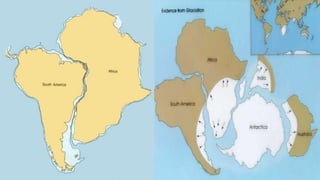
 Continents fit each other like Jigsaw puzzle
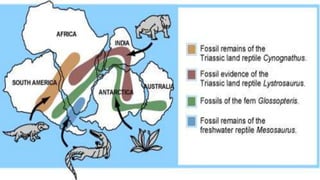
 Fossils of widely spread animals and plants species
 Coal distribution, as coal is formed in warm, wet climates but scientists has
discovered coal in Antarctica
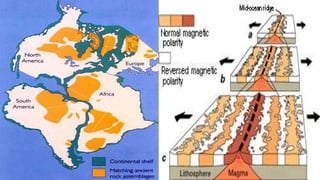
 Magnetic properties of rocks showing same specific direction of alignment
of magnetic minerals
 Glaciation found in India and Australia although they are far away from
poles
Life on Pangaea
Marine Life
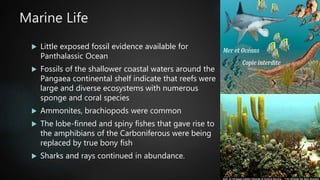
 Little exposed fossil evidence available for
Panthalassic Ocean
 Fossils of the shallower coastal waters around the
Pangaea continental shelf indicate that reefs were
large and diverse ecosystems with numerous
sponge and coral species
 Ammonites, brachiopods were common
 The lobe-finned and spiny fishes that gave rise to
the amphibians of the Carboniferous were being
replaced by true bony fish
 Sharks and rays continued in abundance.
Plants
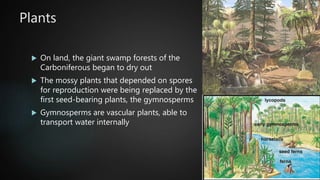
 On land, the giant swamp forests of the
Carboniferous began to dry out
 The mossy plants that depended on spores
for reproduction were being replaced by the
first seed-bearing plants, the gymnosperms
 Gymnosperms are vascular plants, able to
transport water internally
Land Animals
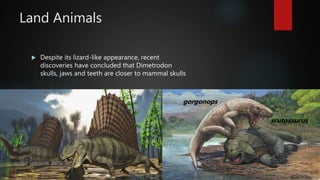
 Despite its lizard-like appearance, recent
discoveries have concluded that Dimetrodon
skulls, jaws and teeth are closer to mammal skulls
scutosaurus
gorgonops
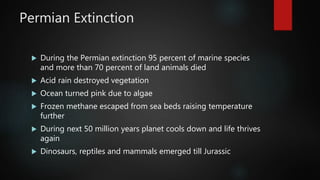
Permian Extinction
 During the Permian extinction 95 percent of marine species
and more than 70 percent of land animals died
 Acid rain destroyed vegetation
 Ocean turned pink due to algae
 Frozen methane escaped from sea beds raising temperature
further
 During next 50 million years planet cools down and life thrives
again
 Dinosaurs, reptiles and mammals emerged till Jurassic
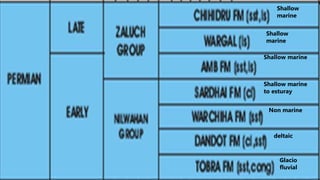
Permian formations in Pakistan
Glacio
fluvial
Shallow marine
to esturay
Non marine
Shallow marine
Shallow
marine
Shallow
marine
deltaic
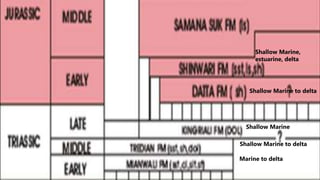
Marine to delta
Shallow Marine to delta
Shallow Marine
Shallow Marine to delta
Shallow Marine,
estuarine, delta
References
 https://www.universetoday.com/73678/what-is-pangea/
 https://en.wikipedia.org/wiki/Pangaea
 https://www.thoughtco.com/what-is-pangea-1435303
 https://www.livescience.com/38218-facts-about-pangaea.html
Pangaea the super continent

Pangaea the super continent

  • 1.
  • 2.
  • 3.
     Earth’s crustis broken into different plates  These plates are in continuous motion  Their movement shape continents and oceans  Also causes events and forms spectacular features below and above surface  Continents join and break apart due to tectonic forces
  • 4.
  • 5.
     Most recentsupercontinent  Derived from Greek word meaning, “All Land”  First proposed by German scientist Alfred Wegener  This supercontinent existed from Permian epoch upto Jurassic  It was surrounded by single ocean Panthalassa
  • 6.
  • 7.
     Around 300mya the northwestern part of the ancient continent of Gondwana near the South Pole, collided with the southern part of the Euramerican continent  Gondwana consisted of South America, Africa, India, Australia and Antarctica  Euramerican consisted of North America and Eurasia, their collision formed the Appalachian mountains
  • 8.
     Eventually theAngaran continent, located near the North Pole, began to move south and collided with the northern part of Euramerican by about 270 million years ago.  Another separate landmass, Cathaysia, which was made up of north and south China that was not a part of the larger Pangea landmass.  Once it was completely formed, Pangea covered around one- third of the Earth's surface
  • 11.
  • 12.
     This supercontinentstarted breaking apart in Jurassic period  First split into two main landmasses (Gondwana and Laurasia)  New ocean called Tethys formed between Gondwana and Laurasia  Slowly Laurasia broke into North America and Eurasia  Gondwana broke into African, south America, India, Australia and Antarctica
  • 13.
     The firstnew oceans to form were the central and southern Atlantic  About 180 million years ago the central Atlantic Ocean opened up between North America and northwestern Africa  Around 140 million years ago the South Atlantic Ocean formed when South America separated from the west coast of southern Africa  The Indian Ocean formed when India separated from Antarctica and Australia and about 80 million years ago  North America and Europe, Australia and Antarctica, India and Madagascar separated also
  • 15.
  • 16.
     Continents fiteach other like Jigsaw puzzle  Fossils of widely spread animals and plants species  Coal distribution, as coal is formed in warm, wet climates but scientists has discovered coal in Antarctica  Magnetic properties of rocks showing same specific direction of alignment of magnetic minerals  Glaciation found in India and Australia although they are far away from poles
  • 20.
  • 21.
    Marine Life  Littleexposed fossil evidence available for Panthalassic Ocean  Fossils of the shallower coastal waters around the Pangaea continental shelf indicate that reefs were large and diverse ecosystems with numerous sponge and coral species  Ammonites, brachiopods were common  The lobe-finned and spiny fishes that gave rise to the amphibians of the Carboniferous were being replaced by true bony fish  Sharks and rays continued in abundance.
  • 22.
    Plants  On land,the giant swamp forests of the Carboniferous began to dry out  The mossy plants that depended on spores for reproduction were being replaced by the first seed-bearing plants, the gymnosperms  Gymnosperms are vascular plants, able to transport water internally
  • 23.
    Land Animals  Despiteits lizard-like appearance, recent discoveries have concluded that Dimetrodon skulls, jaws and teeth are closer to mammal skulls scutosaurus gorgonops
  • 24.
    Permian Extinction  Duringthe Permian extinction 95 percent of marine species and more than 70 percent of land animals died  Acid rain destroyed vegetation  Ocean turned pink due to algae  Frozen methane escaped from sea beds raising temperature further  During next 50 million years planet cools down and life thrives again  Dinosaurs, reptiles and mammals emerged till Jurassic
  • 25.
  • 26.
    Glacio fluvial Shallow marine to esturay Nonmarine Shallow marine Shallow marine Shallow marine deltaic
  • 27.
    Marine to delta ShallowMarine to delta Shallow Marine Shallow Marine to delta Shallow Marine, estuarine, delta
  • 28.
    References  https://www.universetoday.com/73678/what-is-pangea/  https://en.wikipedia.org/wiki/Pangaea https://www.thoughtco.com/what-is-pangea-1435303  https://www.livescience.com/38218-facts-about-pangaea.html