Cells (Cytology)
BIOL 1306
Ebeling
Learning Objectives
1.Describe the properties of a cell.
2.Identify the components common to all cells.
3.Compare and contrast the cells that characterize the three domains of life.
4.Explain how the chemical structure of phospholipids enables them to form a bilayer in water.
5.Explain why a biological membrane has selective permeability.
6.Identify different functions of membrane proteins.
7.Compare and contrast the ways that molecules move across membranes.
8.Explain the relationship between diffusion and concentration gradients.
9.Explain how processes of passive transport work including Osmosis and Diffusion
10.Explain how mechanisms of active transport work including the Sodium-Potassium Pump
11.Explain how larger objects/molecules cross membranes including: Exocytosis and Endocytosis
12.Predict when each of these transport mechanisms might be in use
13.Identify the functions of the organelles in eukaryotic cells.
14.Describe how organelles interact in carrying out a cell’s function.
15.Compare and contrast the structure and function of cytoskeletal proteins
16.Compare and contrast different cell junctions in animal cells.
17.Explain the function of plasmodesmata in plant cells.
All Organisms Are
Composed of Cells
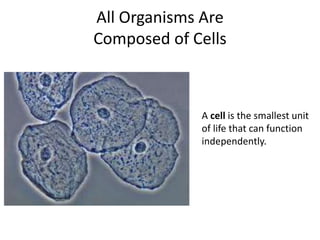
A cell is the smallest unit
of life that can function
independently.
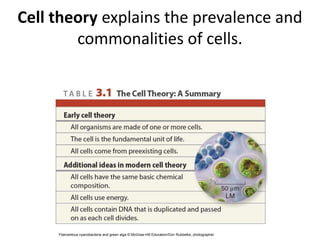
Cell theory explains the prevalence and
commonalities of cells.
Filamentous cyanobacteria and green alga © McGraw-Hill Education/Don Rubbelke, photographer
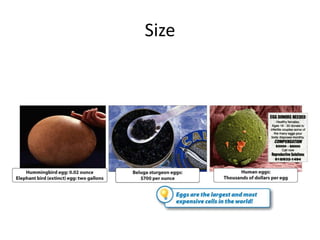
Size
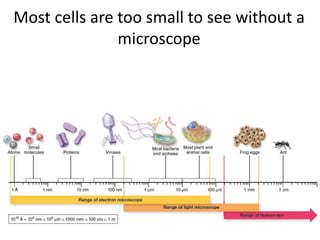
Most cells are too small to see without a
microscope
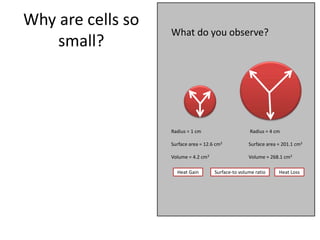
What do you observe?
Radius = 1 cm Radius = 4 cm
Surface area = 12.6 cm2 Surface area = 201.1 cm2
Volume = 4.2 cm3 Volume = 268.1 cm3
Heat Gain Heat Loss
Surface-to volume ratio
Thermo-
How?
Why are cells so
small?
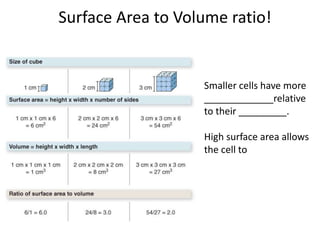
Surface Area to Volume ratio!
Smaller cells have more
_____________relative
to their _________.
High surface area allows
the cell to
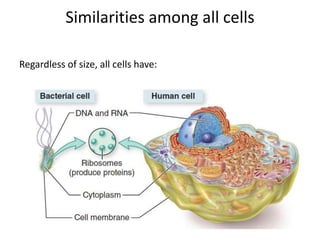
Similarities among all cells
Regardless of size, all cells have:
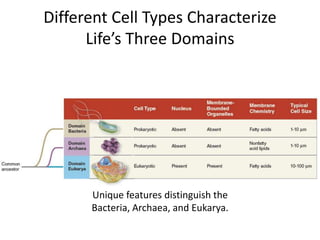
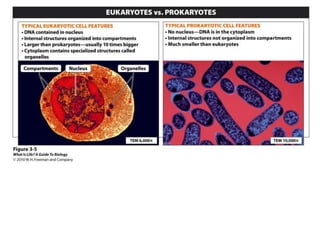
Different Cell Types Characterize
Life’s Three Domains
Unique features distinguish the
Bacteria, Archaea, and Eukarya.
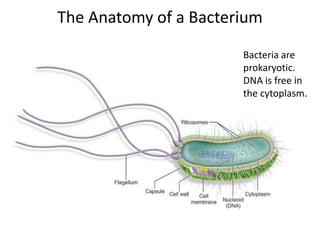
The Anatomy of a Bacterium
Bacteria are
prokaryotic.
DNA is free in
the cytoplasm.
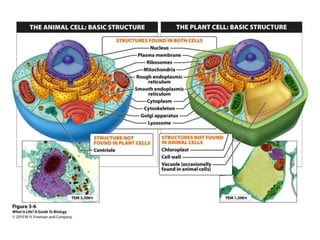
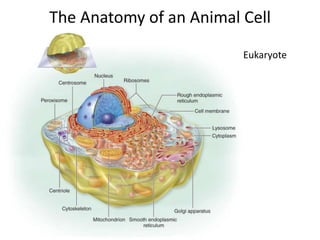
The Anatomy of an Animal Cell
Eukaryote
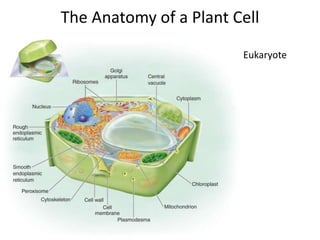
The Anatomy of a Plant Cell
Eukaryote
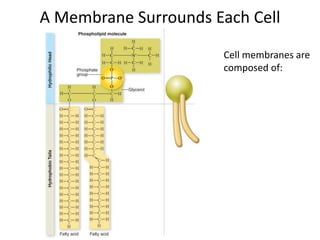
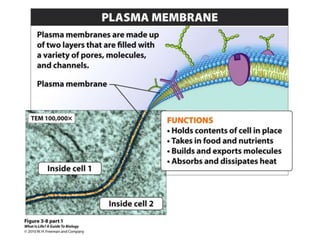
A Membrane Surrounds Each Cell
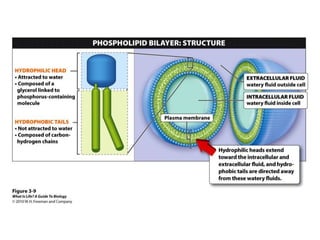
Cell membranes are
composed of:
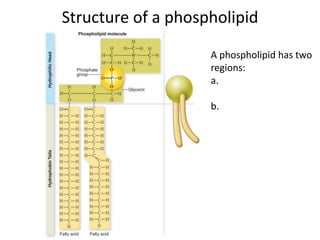
A phospholipid has two
regions:
a.
b.
Structure of a phospholipid
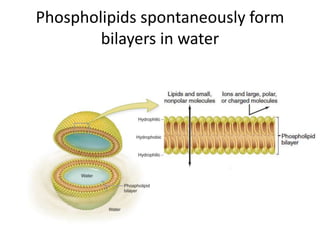
Phospholipids spontaneously form
bilayers in water
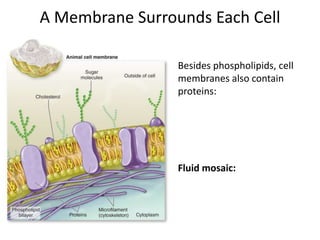
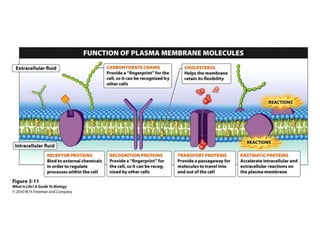
Besides phospholipids, cell
membranes also contain
proteins:
Fluid mosaic:
A Membrane Surrounds Each Cell
Cells (cytology) pt 1

Cells (cytology) pt 1

  • 1.
  • 2.
    Learning Objectives 1.Describe theproperties of a cell. 2.Identify the components common to all cells. 3.Compare and contrast the cells that characterize the three domains of life. 4.Explain how the chemical structure of phospholipids enables them to form a bilayer in water. 5.Explain why a biological membrane has selective permeability. 6.Identify different functions of membrane proteins. 7.Compare and contrast the ways that molecules move across membranes. 8.Explain the relationship between diffusion and concentration gradients. 9.Explain how processes of passive transport work including Osmosis and Diffusion 10.Explain how mechanisms of active transport work including the Sodium-Potassium Pump 11.Explain how larger objects/molecules cross membranes including: Exocytosis and Endocytosis 12.Predict when each of these transport mechanisms might be in use 13.Identify the functions of the organelles in eukaryotic cells. 14.Describe how organelles interact in carrying out a cell’s function. 15.Compare and contrast the structure and function of cytoskeletal proteins 16.Compare and contrast different cell junctions in animal cells. 17.Explain the function of plasmodesmata in plant cells.
  • 3.
    All Organisms Are Composedof Cells A cell is the smallest unit of life that can function independently.
  • 4.
    Cell theory explainsthe prevalence and commonalities of cells. Filamentous cyanobacteria and green alga © McGraw-Hill Education/Don Rubbelke, photographer
  • 5.
  • 6.
    Most cells aretoo small to see without a microscope
  • 7.
    What do youobserve? Radius = 1 cm Radius = 4 cm Surface area = 12.6 cm2 Surface area = 201.1 cm2 Volume = 4.2 cm3 Volume = 268.1 cm3 Heat Gain Heat Loss Surface-to volume ratio Thermo- How? Why are cells so small?
  • 8.
    Surface Area toVolume ratio! Smaller cells have more _____________relative to their _________. High surface area allows the cell to
  • 9.
    Similarities among allcells Regardless of size, all cells have:
  • 10.
    Different Cell TypesCharacterize Life’s Three Domains Unique features distinguish the Bacteria, Archaea, and Eukarya.
  • 12.
    The Anatomy ofa Bacterium Bacteria are prokaryotic. DNA is free in the cytoplasm.
  • 14.
    The Anatomy ofan Animal Cell Eukaryote
  • 15.
    The Anatomy ofa Plant Cell Eukaryote
  • 16.
    A Membrane SurroundsEach Cell Cell membranes are composed of:
  • 17.
    A phospholipid hastwo regions: a. b. Structure of a phospholipid
  • 18.
  • 20.
    Besides phospholipids, cell membranesalso contain proteins: Fluid mosaic: A Membrane Surrounds Each Cell