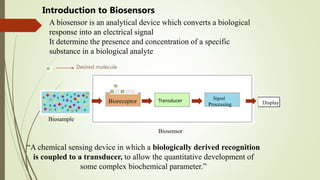
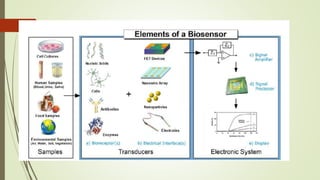
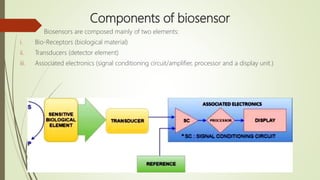
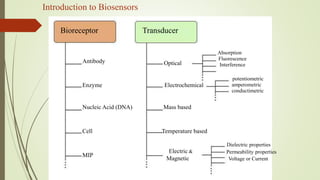
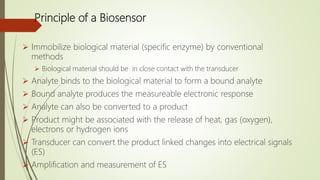
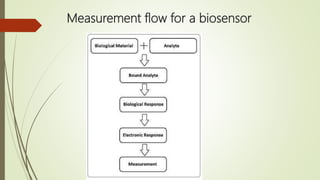
i. A biosensor consists of a bioreceptor element and a transducer. The bioreceptor detects the analyte and the transducer converts the biological response into an electrical signal.
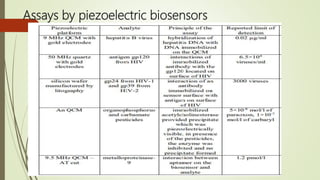
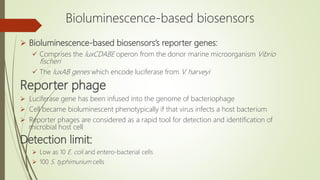
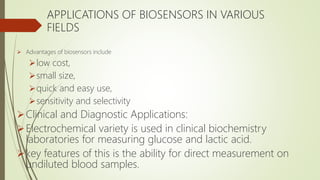
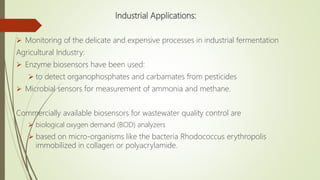
ii. Biosensors have various applications in clinical diagnosis, food safety, environmental monitoring and more. Electrochemical biosensors are commonly used in clinical settings to detect glucose and lactate levels. Optical and piezoelectric biosensors also have applications in detecting pathogens, chemicals and other biomolecules.
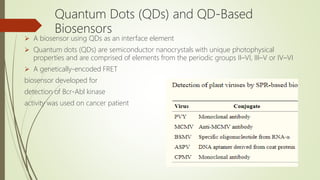
iii. Emerging technologies like quantum dots are expanding biosensor applications. For example, quantum dot biosensors show potential in noninvasive glucose monitoring and cancer detection. Overall, biosensors provide sensitive, rapid and cost-effective