By Leonardo k Goes
In our day to day life, we come across several
things. Have you ever wondered what each of
 these things is made up of ? You may
observed that some things appear to be made
of similar repetitive unite. The respective units
are called “building block" of these things
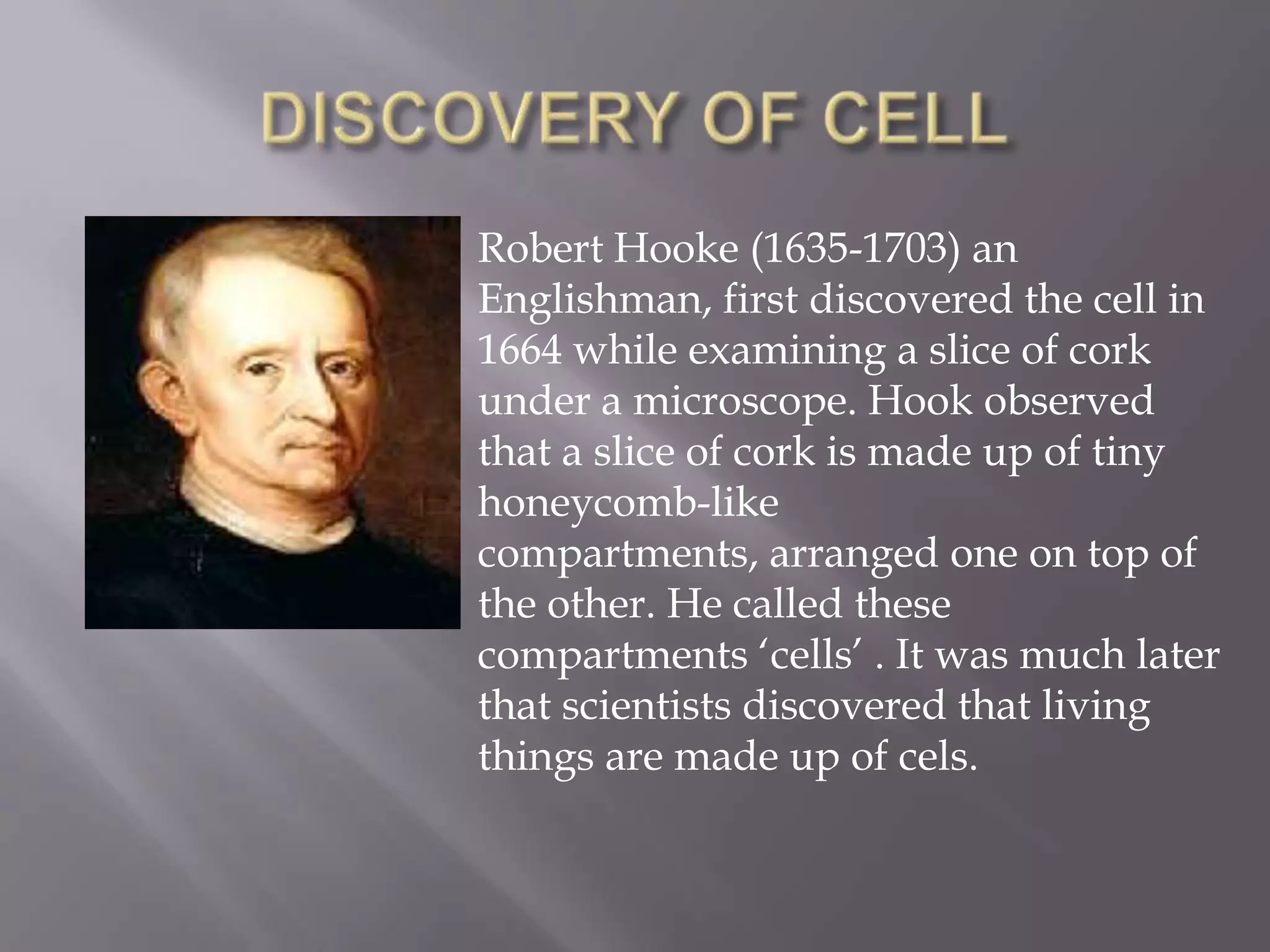
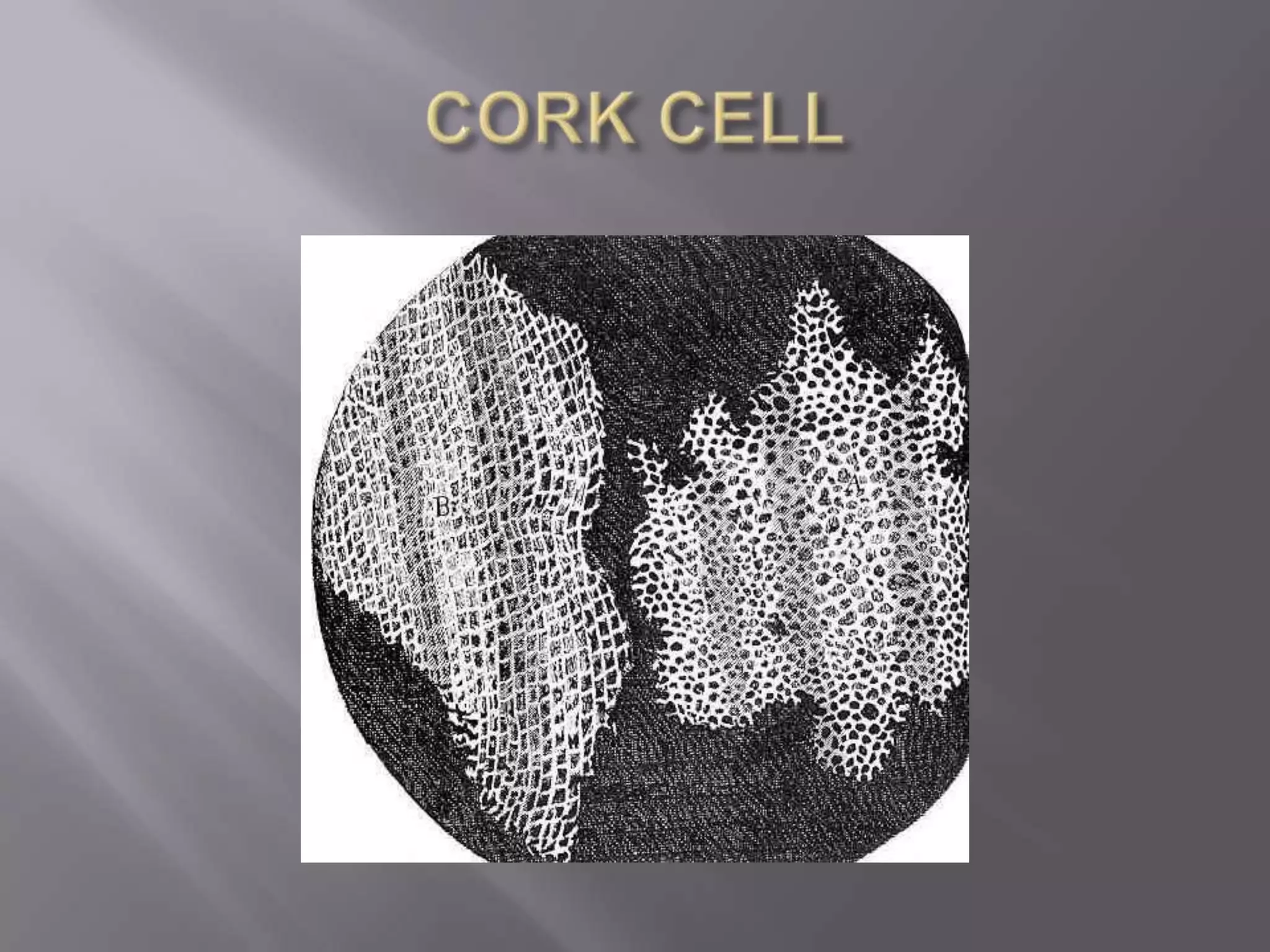
Robert Hooke (1635-1703) an
Englishman, first discovered the cell in
1664 while examining a slice of cork
under a microscope. Hook observed
that a slice of cork is made up of tiny
honeycomb-like
compartments, arranged one on top of
the other. He called these
compartments ‘cells’ . It was much later
that scientists discovered that living
things are made up of cels.
Today biologists study living things based on cell
theory proposed by tow German
   scientists, Matthias Schleiden and Theodor
   Schwann. The
cell theory states that
1) All organisms are made of one or more cells

2) Cells arise from pre-existing cells

You may be amazed to know that irrespective of
number of cells an organism is made up of, cell
theory applies to every organism in the world.
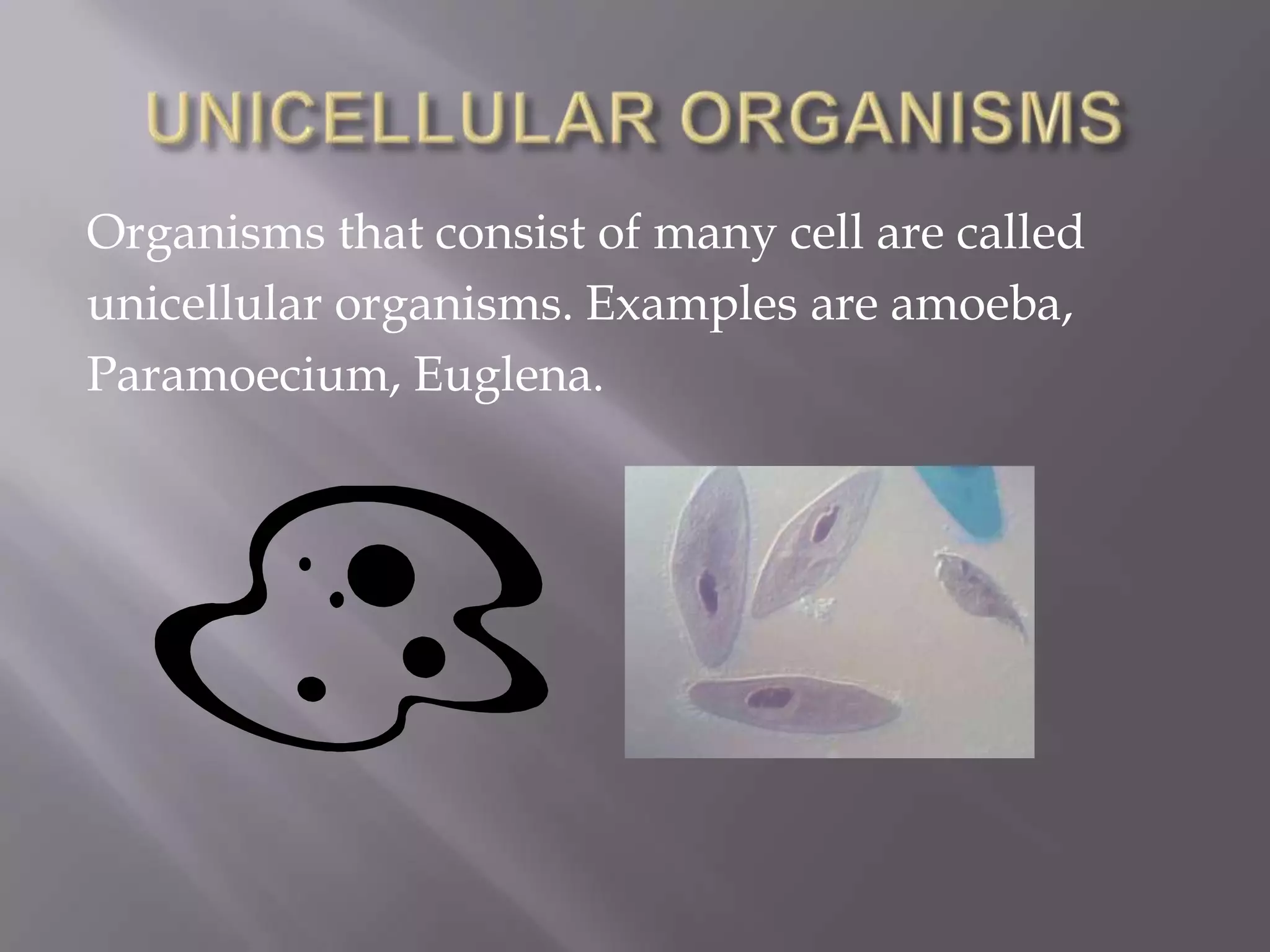
Organisms that consist of many cell are called
unicellular organisms. Examples are amoeba,
Paramoecium, Euglena.
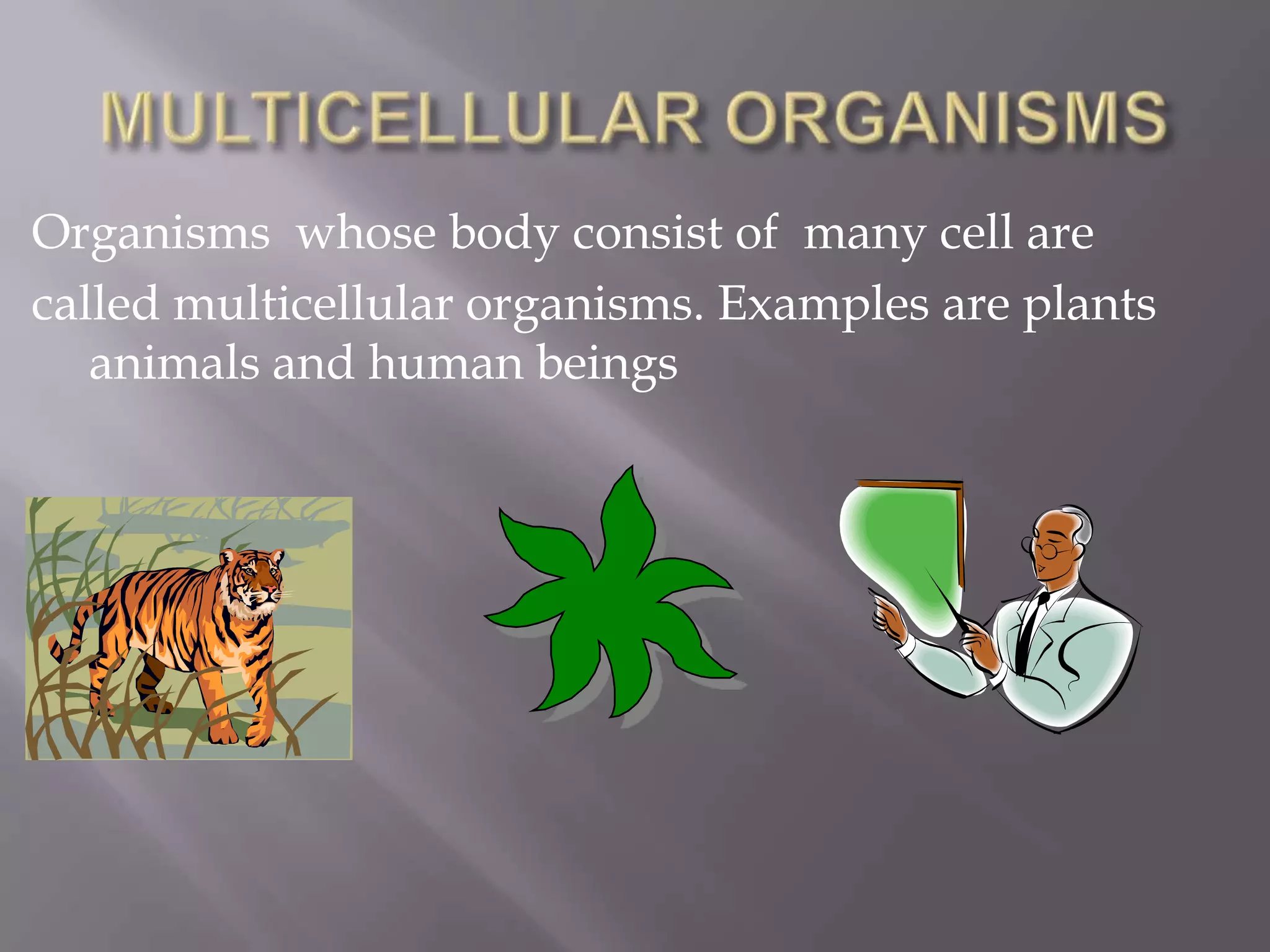
Organisms whose body consist of many cell are
called multicellular organisms. Examples are plants
   animals and human beings
Cells exist in different shapes. They can be disc-
shaped, polygonal, rectangular, branched, or even
irregular. The shape of a cell depends on the on
the specific function it performs.
 Most cells are microscopic and cannot be seen
with a naked eye. Cell size may vary from
micrometer to a few centimeters. The generally
range in size from 0.1 to 0.5 micrometers. The
Largest cell is the egg of an ostrich 170 millimeter
in diameter.
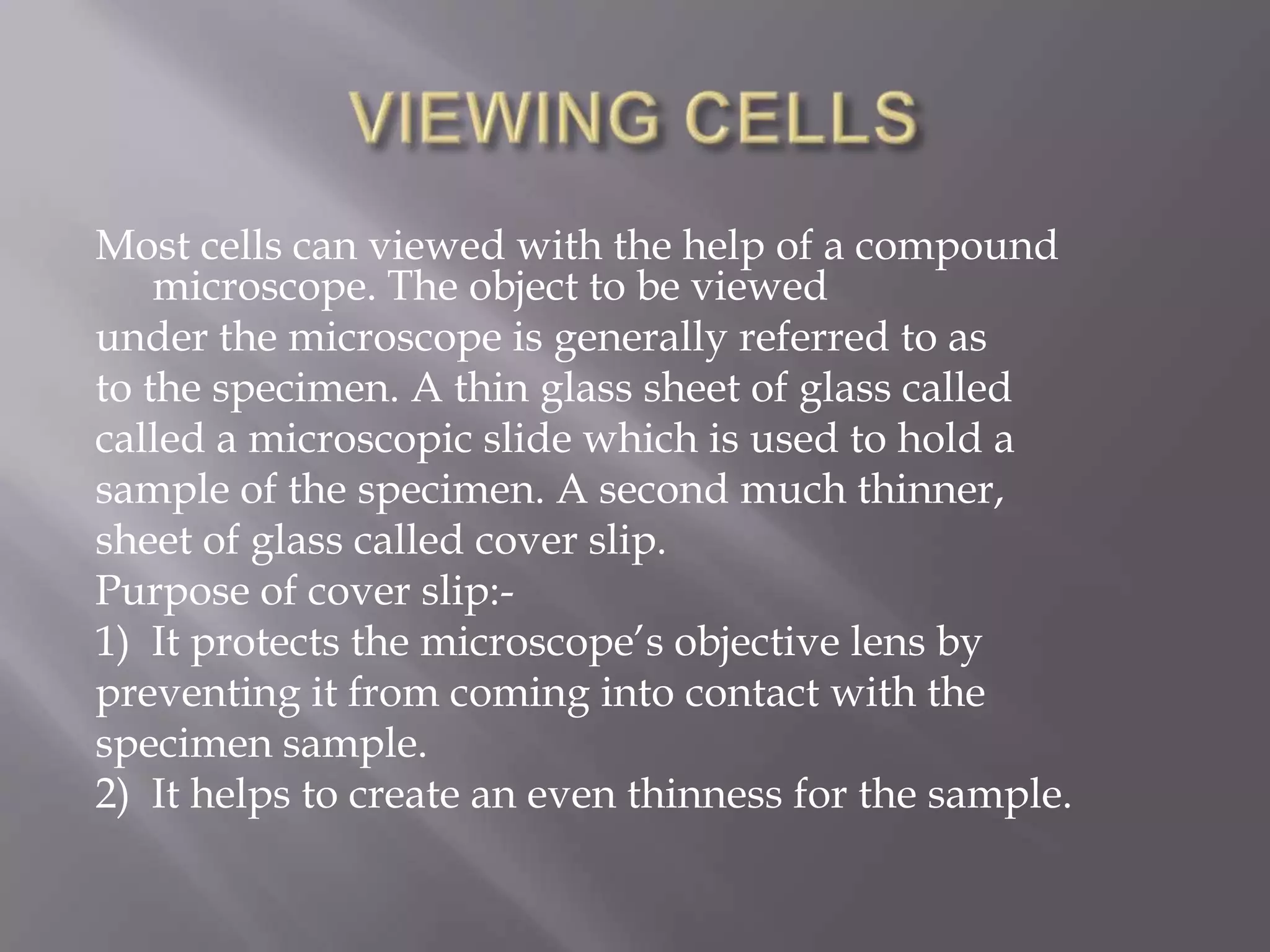
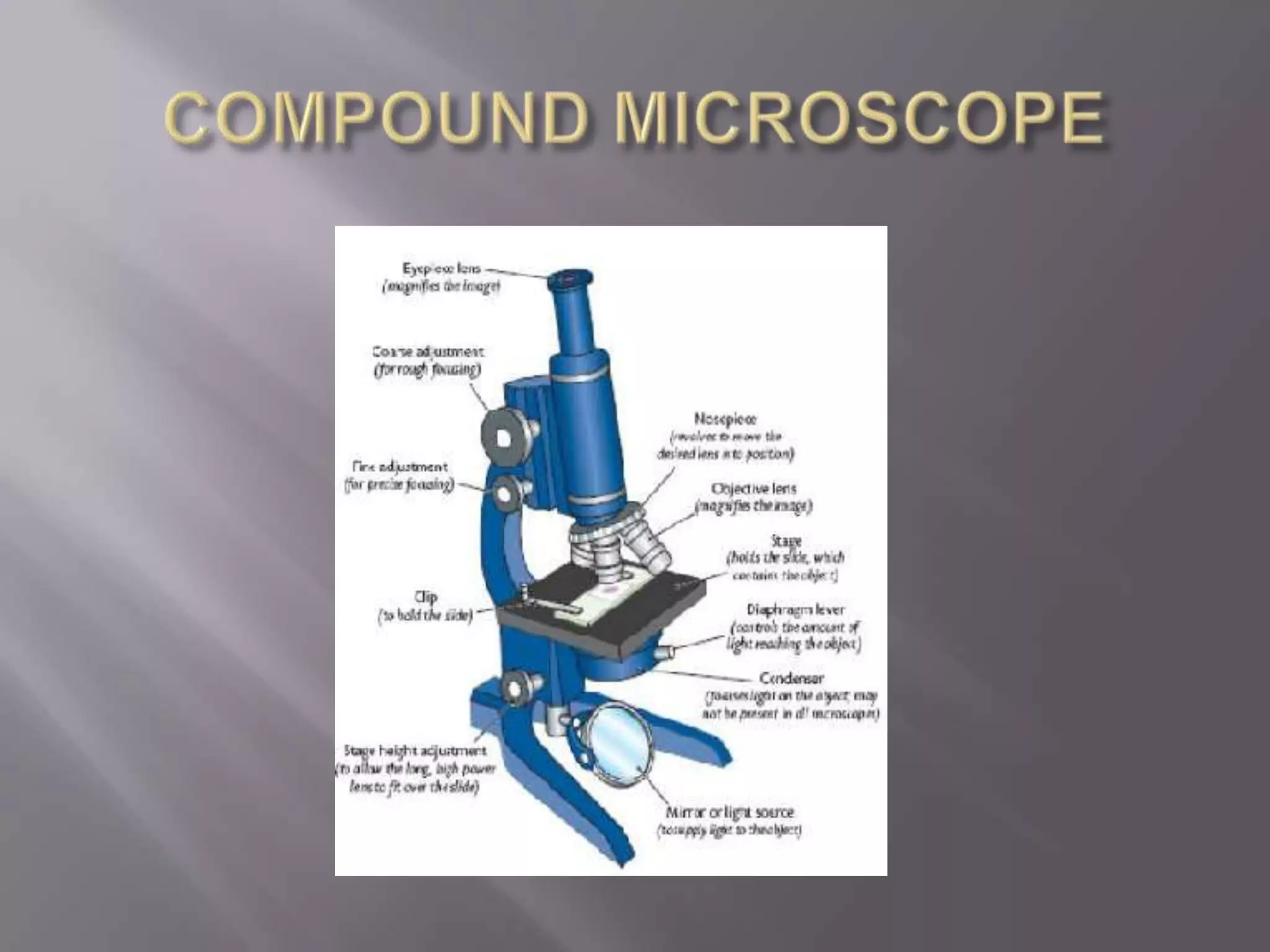
Most cells can viewed with the help of a compound
    microscope. The object to be viewed
under the microscope is generally referred to as
to the specimen. A thin glass sheet of glass called
called a microscopic slide which is used to hold a
sample of the specimen. A second much thinner,
sheet of glass called cover slip.
Purpose of cover slip:-
1) It protects the microscope’s objective lens by
preventing it from coming into contact with the
specimen sample.
2) It helps to create an even thinness for the sample.
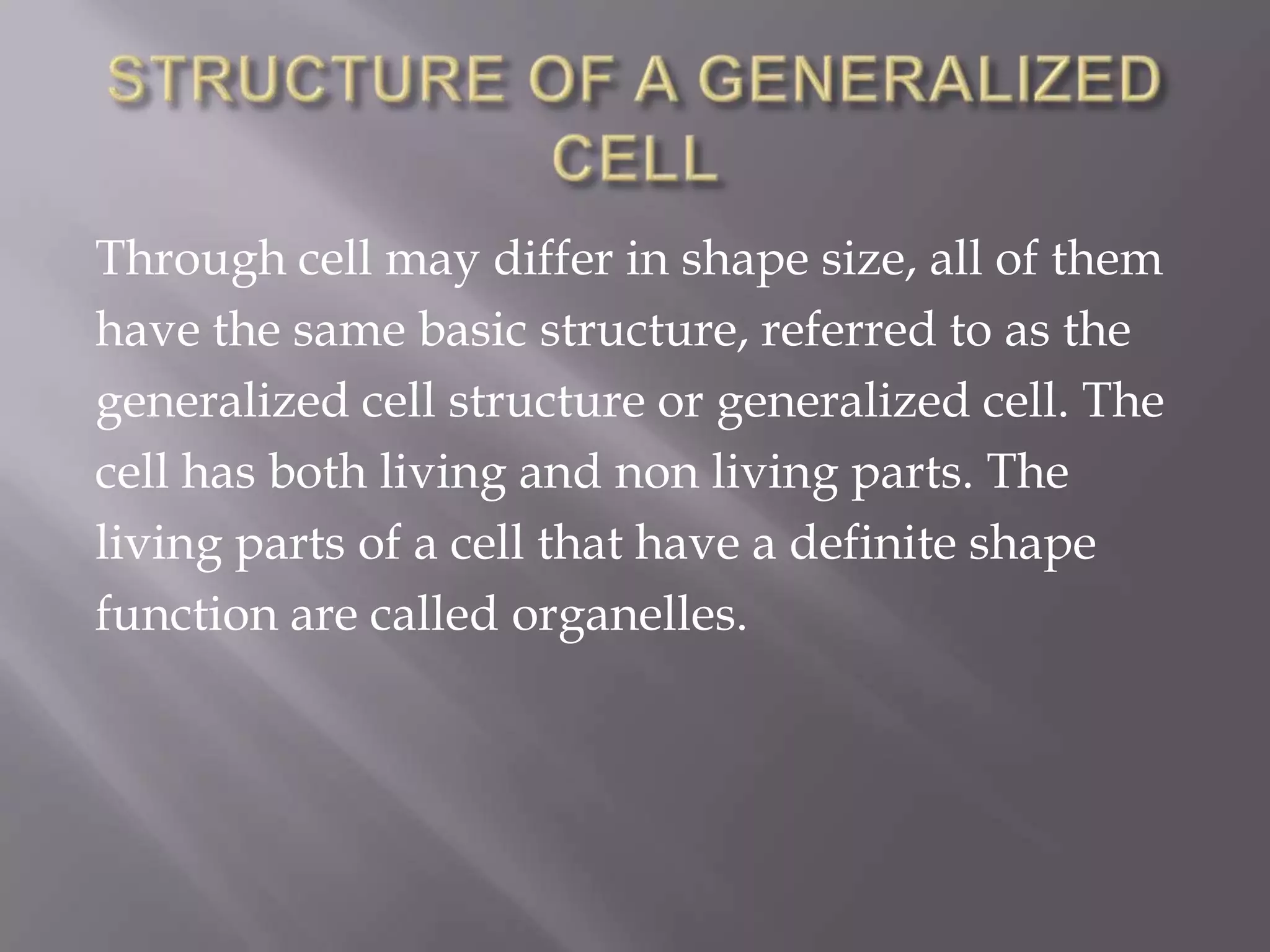
Through cell may differ in shape size, all of them
have the same basic structure, referred to as the
generalized cell structure or generalized cell. The
cell has both living and non living parts. The
living parts of a cell that have a definite shape
function are called organelles.
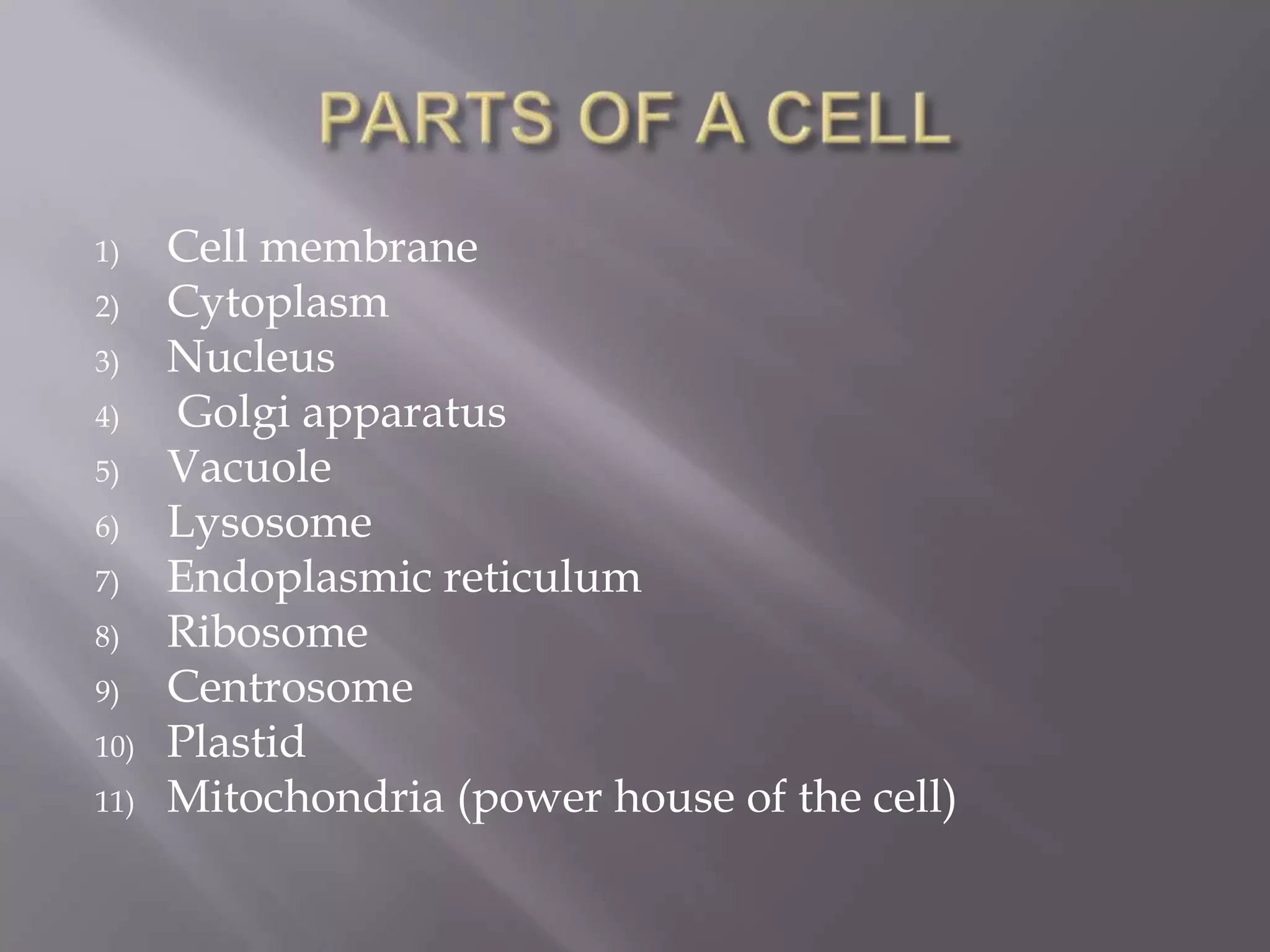
1)    Cell membrane
2)    Cytoplasm
3)    Nucleus
4)    Golgi apparatus
5)    Vacuole
6)    Lysosome
7)    Endoplasmic reticulum
8)    Ribosome
9)    Centrosome
10)   Plastid
11)   Mitochondria (power house of the cell)
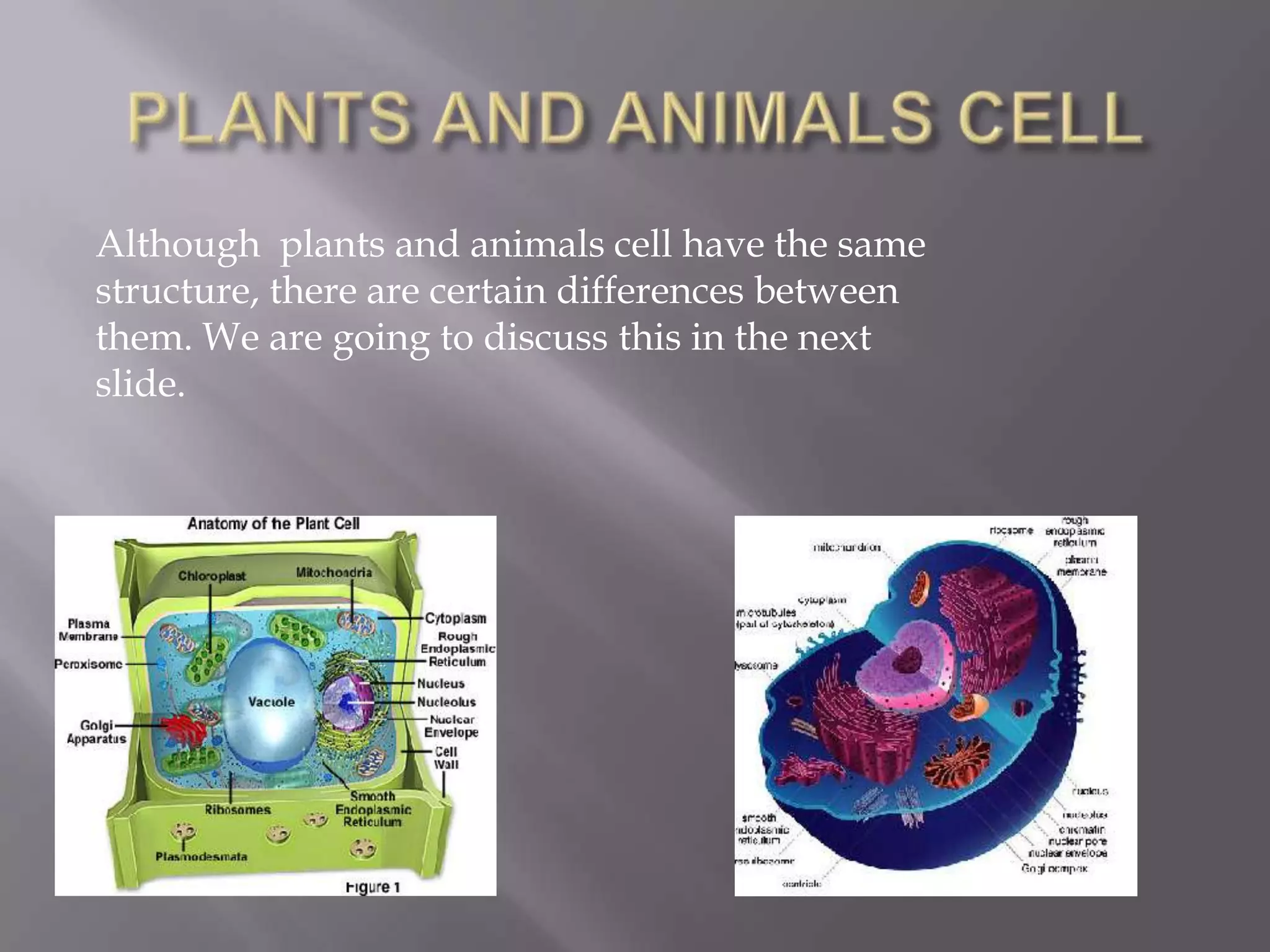
Although plants and animals cell have the same
structure, there are certain differences between
them. We are going to discuss this in the next
slide.
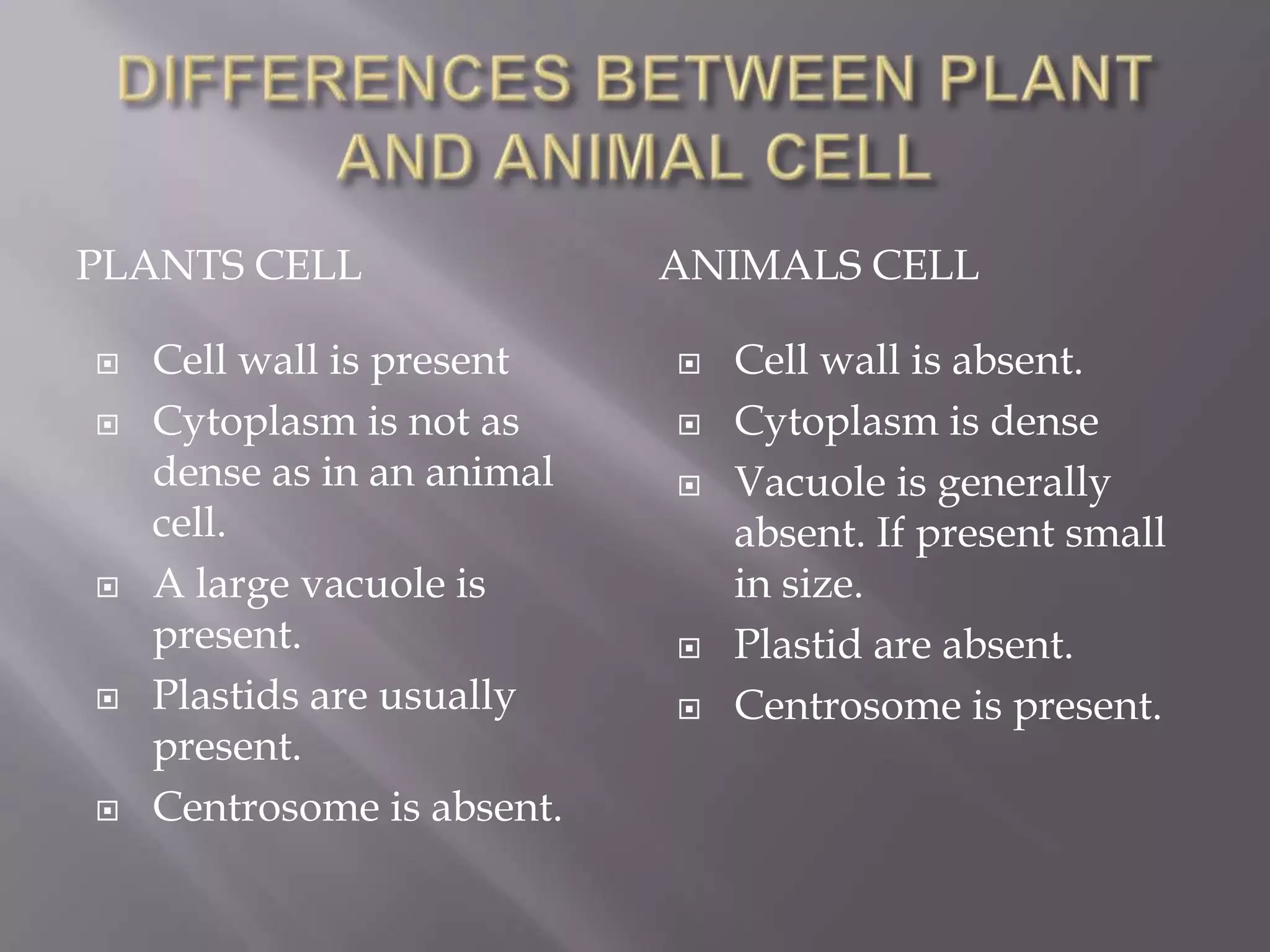
PLANTS CELL                 ANIMALS CELL

   Cell wall is present       Cell wall is absent.
   Cytoplasm is not as        Cytoplasm is dense
    dense as in an animal      Vacuole is generally
    cell.                       absent. If present small
   A large vacuole is          in size.
    present.                   Plastid are absent.
   Plastids are usually       Centrosome is present.
    present.
   Centrosome is absent.
Leonardo Goes

Cell project by Leonardo

  • 1.
  • 2.
    In our dayto day life, we come across several things. Have you ever wondered what each of these things is made up of ? You may observed that some things appear to be made of similar repetitive unite. The respective units are called “building block" of these things
  • 3.
    Robert Hooke (1635-1703)an Englishman, first discovered the cell in 1664 while examining a slice of cork under a microscope. Hook observed that a slice of cork is made up of tiny honeycomb-like compartments, arranged one on top of the other. He called these compartments ‘cells’ . It was much later that scientists discovered that living things are made up of cels.
  • 5.
    Today biologists studyliving things based on cell theory proposed by tow German scientists, Matthias Schleiden and Theodor Schwann. The cell theory states that 1) All organisms are made of one or more cells 2) Cells arise from pre-existing cells You may be amazed to know that irrespective of number of cells an organism is made up of, cell theory applies to every organism in the world.
  • 6.
    Organisms that consistof many cell are called unicellular organisms. Examples are amoeba, Paramoecium, Euglena.
  • 7.
    Organisms whose bodyconsist of many cell are called multicellular organisms. Examples are plants animals and human beings
  • 8.
    Cells exist indifferent shapes. They can be disc- shaped, polygonal, rectangular, branched, or even irregular. The shape of a cell depends on the on the specific function it performs. Most cells are microscopic and cannot be seen with a naked eye. Cell size may vary from micrometer to a few centimeters. The generally range in size from 0.1 to 0.5 micrometers. The Largest cell is the egg of an ostrich 170 millimeter in diameter.
  • 9.
    Most cells canviewed with the help of a compound microscope. The object to be viewed under the microscope is generally referred to as to the specimen. A thin glass sheet of glass called called a microscopic slide which is used to hold a sample of the specimen. A second much thinner, sheet of glass called cover slip. Purpose of cover slip:- 1) It protects the microscope’s objective lens by preventing it from coming into contact with the specimen sample. 2) It helps to create an even thinness for the sample.
  • 11.
    Through cell maydiffer in shape size, all of them have the same basic structure, referred to as the generalized cell structure or generalized cell. The cell has both living and non living parts. The living parts of a cell that have a definite shape function are called organelles.
  • 12.
    1) Cell membrane 2) Cytoplasm 3) Nucleus 4) Golgi apparatus 5) Vacuole 6) Lysosome 7) Endoplasmic reticulum 8) Ribosome 9) Centrosome 10) Plastid 11) Mitochondria (power house of the cell)
  • 13.
    Although plants andanimals cell have the same structure, there are certain differences between them. We are going to discuss this in the next slide.
  • 14.
    PLANTS CELL ANIMALS CELL  Cell wall is present  Cell wall is absent.  Cytoplasm is not as  Cytoplasm is dense dense as in an animal  Vacuole is generally cell. absent. If present small  A large vacuole is in size. present.  Plastid are absent.  Plastids are usually  Centrosome is present. present.  Centrosome is absent.
  • 15.