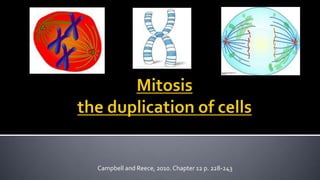
Campbell and Reece, 2010. Chapter 12 p. 228-243
Chromosomes form when the chromatin network in the
nucleus of the cell, coil up, shortens and thickens.
 Each organism has a specific amount of chromosomes.
 All humans have 46 chromosomes.
 These chromosomes are arranged in identical pairs called
homologous chromosome pairs –
 Therefore humans have 23 homologous pairs of
chromosomes.
 These chromosomes is only visible during cell division
processes.
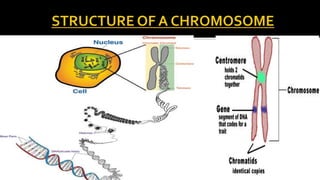
 One chromosome consist of 2 chromatids and one
centromere that attach the chromatids together.
 Each chromatid consist of genes which in turn consist of
DNA.

The cell cycle includes the following phases:
 Interphase (include G1- , S- [DNA synthesis] and G2 phase)
 Mitosis
 Cytokinesis
 Growth
 Allow an organism to grow.
 Repairs damaged cells/tissue.
 Replace dead cells/tissue.
 Reproduction in some simple

organisms.


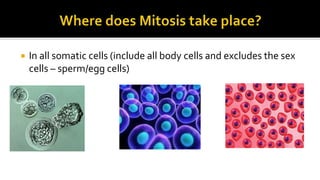
In all somatic cells (include all body cells and excludes the sex
cells – sperm/egg cells)


CONSIST OF A FEW PHASES:
 INTERPHASE
 PROPHASE

 METAPHASE
 ANAPHASE
 TELOPHASE




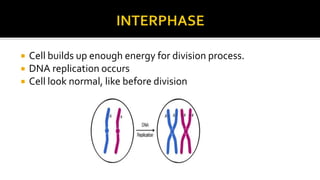
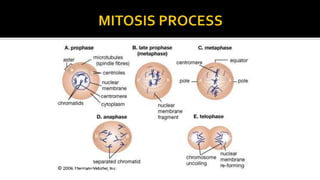
Cell builds up enough energy for division process.
DNA replication occurs
Cell look normal, like before division





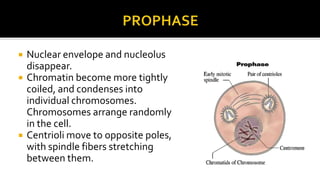
Nuclear envelope and nucleolus
disappear.
Chromatin become more tightly
coiled, and condenses into
individual chromosomes.
Chromosomes arrange randomly
in the cell.
Centrioli move to opposite poles,
with spindle fibers stretching
between them.



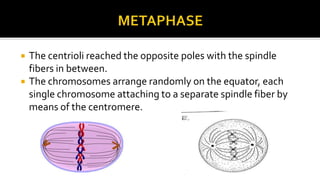
The centrioli reached the opposite poles with the spindle
fibers in between.
The chromosomes arrange randomly on the equator, each
single chromosome attaching to a separate spindle fiber by
means of the centromere.




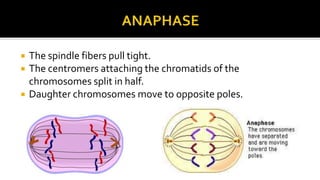
The spindle fibers pull tight.
The centromers attaching the chromatids of the
chromosomes split in half.
Daughter chromosomes move to opposite poles.






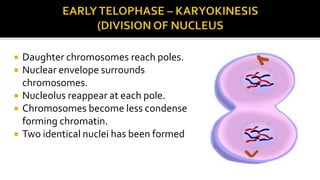
Daughter chromosomes reach poles.
Nuclear envelope surrounds
chromosomes.
Nucleolus reappear at each pole.
Chromosomes become less condense
forming chromatin.
Two identical nuclei has been formed




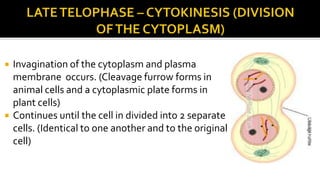
Invagination of the cytoplasm and plasma
membrane occurs. (Cleavage furrow forms in
animal cells and a cytoplasmic plate forms in
plant cells)
Continues until the cell in divided into 2 separate
cells. (Identical to one another and to the original
cell)







Cancer is caused by the loss of cell cycle controls
in cancer cells.
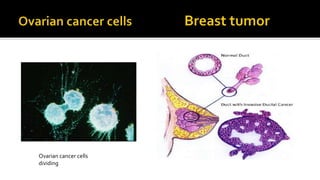
Cancer cells usually continue to divide well
beyond a single layer, forming a clump of
overlapping cells called a tumor.
Malignant tumors invade surrounding tissues and
can metastasize exporting cancer cells to other
parts of the body, where they may form secondary
tumors.
They do not exhibit anchorage dependence or
density dependent inhibition.
Ovarian cancer cells
dividing


Campbell, N.A., Reece, J.B., Urry, L.A., Cain, M.L.,
Wasserman, S.A., Minorsky, P.V., Jackson, R.B. 2010. Biology
Eighth Edition. Pearson International. 12:228-243,242-243.

Mitosis powerpoint

  • 1.
    Campbell and Reece,2010. Chapter 12 p. 228-243
  • 2.
    Chromosomes form whenthe chromatin network in the nucleus of the cell, coil up, shortens and thickens.  Each organism has a specific amount of chromosomes.  All humans have 46 chromosomes.  These chromosomes are arranged in identical pairs called homologous chromosome pairs –  Therefore humans have 23 homologous pairs of chromosomes.  These chromosomes is only visible during cell division processes.  One chromosome consist of 2 chromatids and one centromere that attach the chromatids together.  Each chromatid consist of genes which in turn consist of DNA. 
  • 4.
    The cell cycleincludes the following phases:  Interphase (include G1- , S- [DNA synthesis] and G2 phase)  Mitosis  Cytokinesis  Growth
  • 5.
     Allow anorganism to grow.  Repairs damaged cells/tissue.  Replace dead cells/tissue.  Reproduction in some simple organisms.
  • 6.
     In all somaticcells (include all body cells and excludes the sex cells – sperm/egg cells)
  • 7.
     CONSIST OF AFEW PHASES:  INTERPHASE  PROPHASE  METAPHASE  ANAPHASE  TELOPHASE
  • 8.
       Cell builds upenough energy for division process. DNA replication occurs Cell look normal, like before division
  • 9.
       Nuclear envelope andnucleolus disappear. Chromatin become more tightly coiled, and condenses into individual chromosomes. Chromosomes arrange randomly in the cell. Centrioli move to opposite poles, with spindle fibers stretching between them.
  • 10.
      The centrioli reachedthe opposite poles with the spindle fibers in between. The chromosomes arrange randomly on the equator, each single chromosome attaching to a separate spindle fiber by means of the centromere.
  • 11.
       The spindle fiberspull tight. The centromers attaching the chromatids of the chromosomes split in half. Daughter chromosomes move to opposite poles.
  • 12.
         Daughter chromosomes reachpoles. Nuclear envelope surrounds chromosomes. Nucleolus reappear at each pole. Chromosomes become less condense forming chromatin. Two identical nuclei has been formed
  • 13.
      Invagination of thecytoplasm and plasma membrane occurs. (Cleavage furrow forms in animal cells and a cytoplasmic plate forms in plant cells) Continues until the cell in divided into 2 separate cells. (Identical to one another and to the original cell)
  • 15.
        Cancer is causedby the loss of cell cycle controls in cancer cells. Cancer cells usually continue to divide well beyond a single layer, forming a clump of overlapping cells called a tumor. Malignant tumors invade surrounding tissues and can metastasize exporting cancer cells to other parts of the body, where they may form secondary tumors. They do not exhibit anchorage dependence or density dependent inhibition.
  • 16.
  • 17.
     Campbell, N.A., Reece,J.B., Urry, L.A., Cain, M.L., Wasserman, S.A., Minorsky, P.V., Jackson, R.B. 2010. Biology Eighth Edition. Pearson International. 12:228-243,242-243.