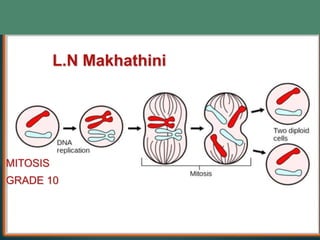
L.N Makhathini
MITOSIS
GRADE 10
Mitosis
What is Mitosis?
Mitosis defined
 Mitosis is the process, in the cell cycle, by which a
cell duplicates into two genetically alike
(identical) daughter cells.
Important Cell Structures
Involved in Mitosis
 Chromatid – each strand of a duplicated
chromosome
 Centromere – the area where each pair of chromatids
is joined
 Centrioles – tiny structures located in the cytoplasm of
animal cells that help organize the spindle
 Spindle – a fanlike microtubule structure that helps
separate the chromatids
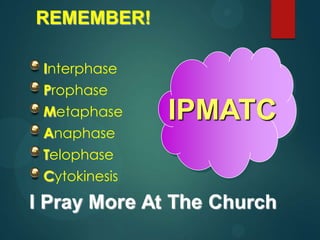
REMEMBER!
Interphase
Prophase
Metaphase
Anaphase
Telophase
Cytokinesis
IPMATC
Stages of Mitosis
- INTERPHASE
- PROPHASE
- METAPHASE
- ANAPHASE
- TELOPHASE
- CYTOKINESIS
Interphase
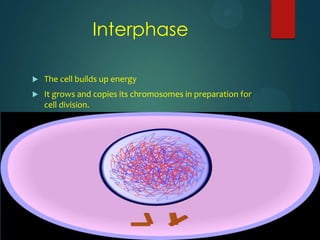
 The cell builds up energy
 It grows and copies its chromosomes in preparation for
cell division.
Prophase
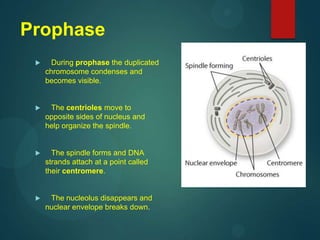
 During prophase the duplicated
chromosome condenses and
becomes visible.
 The centrioles move to
opposite sides of nucleus and
help organize the spindle.
 The spindle forms and DNA
strands attach at a point called
their centromere.
 The nucleolus disappears and
nuclear envelope breaks down.
Metaphase
 the centromeres of the duplicated
chromosomes line up across the
center of the cell.
 The spindle fibers connect the
centromere of each chromosome
to the two poles of the spindle.
Anaphase
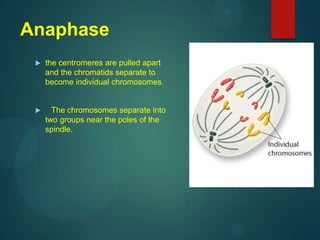
 the centromeres are pulled apart
and the chromatids separate to
become individual chromosomes.
 The chromosomes separate into
two groups near the poles of the
spindle.
Telophase
 the chromosomes spread out
into a tangle of chromatin.
 A nuclear envelope re-forms
around each cluster of
chromosomes.
 The spindle breaks apart, and
a nucleolus becomes visible in
each daughter nucleus.
Cytokinesis
 How do daughter cells split apart after mitosis?
 Cytokinesis completes the process of cell division – it splits one cell into
two.
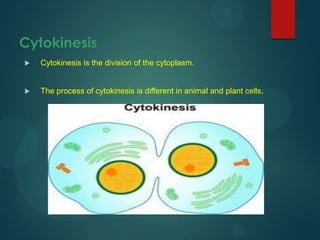
 Cytokinesis is the division of the cytoplasm.
 The process of cytokinesis is different in animal and plant cells.
Cytokinesis
Cytokinesis in Animal
Cells The cell membrane is drawn in until the cytoplasm is pinched into
two equal parts.
 Each part contains its own nucleus and organelles.
Cytokinesis in Plant Cells
 In plants, the cell membrane is not flexible enough to
draw inward because of the rigid cell wall.
 Instead, a cell plate forms between the divided nuclei
that develops into cell membranes.
 A cell wall then forms in between the two new
membranes.
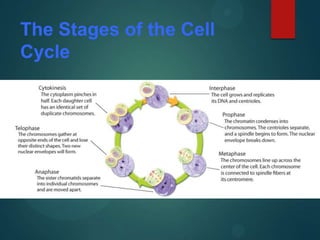
The Stages of the Cell
Cycle
Resources
-Biology 7th Edition. 2005. Campbell and Reece
- Google Images
http://images.google.com/imghp?hl=en&tab=
wi
 John Bender. Mitosis Tutorial.
http://www.slideshare.net/jbrander/mitosis-tutorial
 GUGULETHU MTHAMBO. Mitosis Presentation.
http://www.slideshare.net/201224785/mitosis-life-sci

Lindo mitosis 140309070845-phpapp01

  • 1.
  • 2.
  • 3.
    Mitosis defined  Mitosisis the process, in the cell cycle, by which a cell duplicates into two genetically alike (identical) daughter cells.
  • 4.
    Important Cell Structures Involvedin Mitosis  Chromatid – each strand of a duplicated chromosome  Centromere – the area where each pair of chromatids is joined  Centrioles – tiny structures located in the cytoplasm of animal cells that help organize the spindle  Spindle – a fanlike microtubule structure that helps separate the chromatids
  • 5.
  • 6.
    Stages of Mitosis -INTERPHASE - PROPHASE - METAPHASE - ANAPHASE - TELOPHASE - CYTOKINESIS
  • 7.
    Interphase  The cellbuilds up energy  It grows and copies its chromosomes in preparation for cell division.
  • 8.
    Prophase  During prophasethe duplicated chromosome condenses and becomes visible.  The centrioles move to opposite sides of nucleus and help organize the spindle.  The spindle forms and DNA strands attach at a point called their centromere.  The nucleolus disappears and nuclear envelope breaks down.
  • 9.
    Metaphase  the centromeresof the duplicated chromosomes line up across the center of the cell.  The spindle fibers connect the centromere of each chromosome to the two poles of the spindle.
  • 10.
    Anaphase  the centromeresare pulled apart and the chromatids separate to become individual chromosomes.  The chromosomes separate into two groups near the poles of the spindle.
  • 11.
    Telophase  the chromosomesspread out into a tangle of chromatin.  A nuclear envelope re-forms around each cluster of chromosomes.  The spindle breaks apart, and a nucleolus becomes visible in each daughter nucleus.
  • 12.
    Cytokinesis  How dodaughter cells split apart after mitosis?  Cytokinesis completes the process of cell division – it splits one cell into two.
  • 13.
     Cytokinesis isthe division of the cytoplasm.  The process of cytokinesis is different in animal and plant cells. Cytokinesis
  • 14.
    Cytokinesis in Animal CellsThe cell membrane is drawn in until the cytoplasm is pinched into two equal parts.  Each part contains its own nucleus and organelles.
  • 15.
    Cytokinesis in PlantCells  In plants, the cell membrane is not flexible enough to draw inward because of the rigid cell wall.  Instead, a cell plate forms between the divided nuclei that develops into cell membranes.  A cell wall then forms in between the two new membranes.
  • 16.
    The Stages ofthe Cell Cycle
  • 17.
    Resources -Biology 7th Edition.2005. Campbell and Reece - Google Images http://images.google.com/imghp?hl=en&tab= wi  John Bender. Mitosis Tutorial. http://www.slideshare.net/jbrander/mitosis-tutorial  GUGULETHU MTHAMBO. Mitosis Presentation. http://www.slideshare.net/201224785/mitosis-life-sci