Mitosis is the process by which a eukaryotic cell
separates the chromosomes in its cell nucleus into two
identical sets, in two separate nuclei. It is generally
followed immediately by cytokines is, which divides the
nuclei, cytoplasm, organelles and cell membrane into
two cells containing roughly equal shares of these
cellular components. Karyokinesis and cytokinesis
together define the mitotic (M) phase of the cell cycle—
the division of the mother cell into two daughter
cells, genetically identical to each other and to their
parent cell. This accounts for approximately 10% of the
cell cycle.
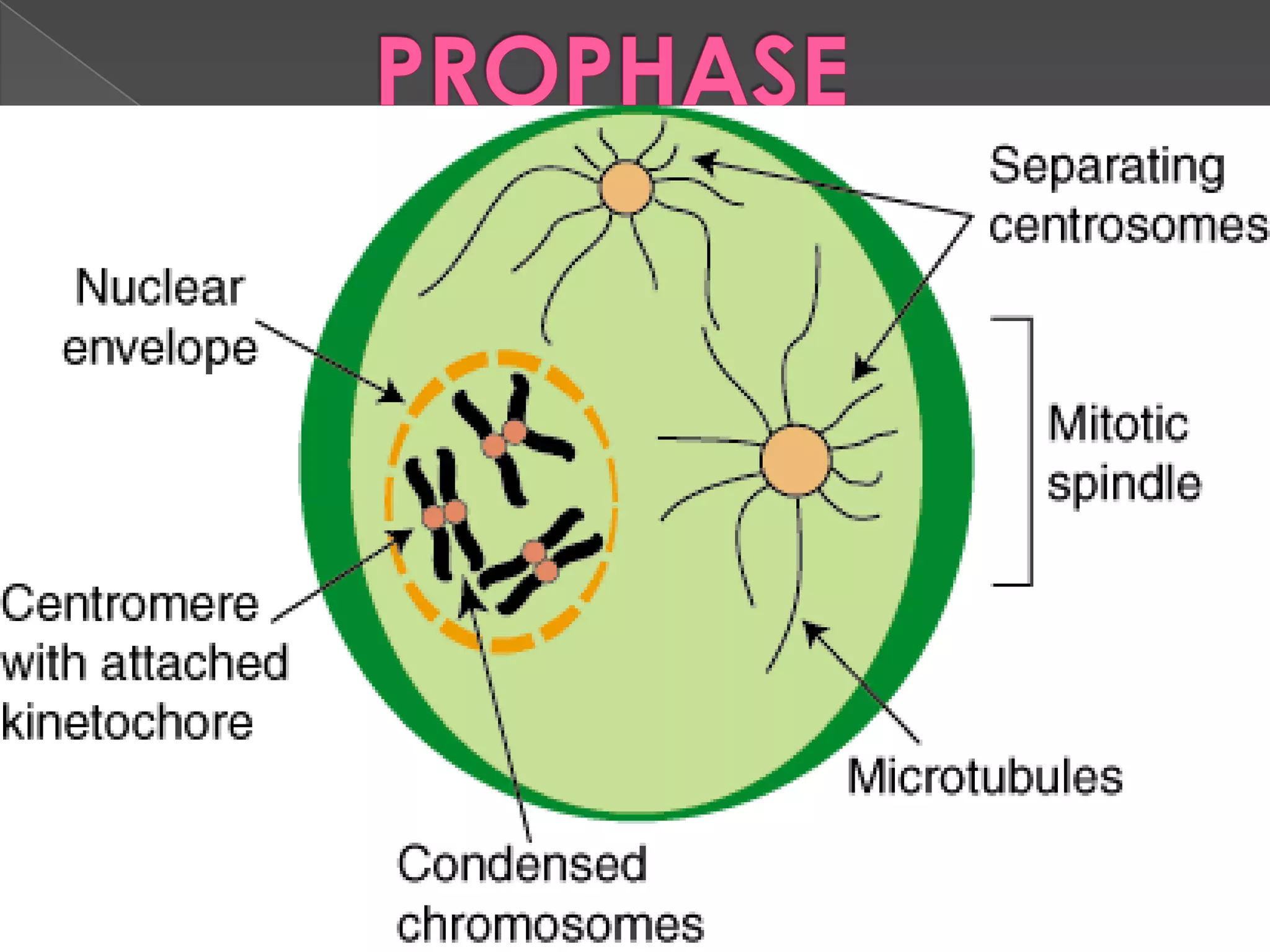
During this first mitotic stage, the nucleolus fades and
chromatin (replicated DNA and associated proteins)
condenses into chromosomes. Each replicated
chromosome comprises two chromatids, both with the
same genetic information. Microtubules of the
cytoskeleton, responsible for cell shape, motility and
attachment to other cells during
interphase, disassemble. And the building blocks of
these microtubules are used to grow the mitotic spindle
from the region of the centrosomes.
In short the chromatin condenses into chromosomes;
centrioles move toward opposite poles of the cell.
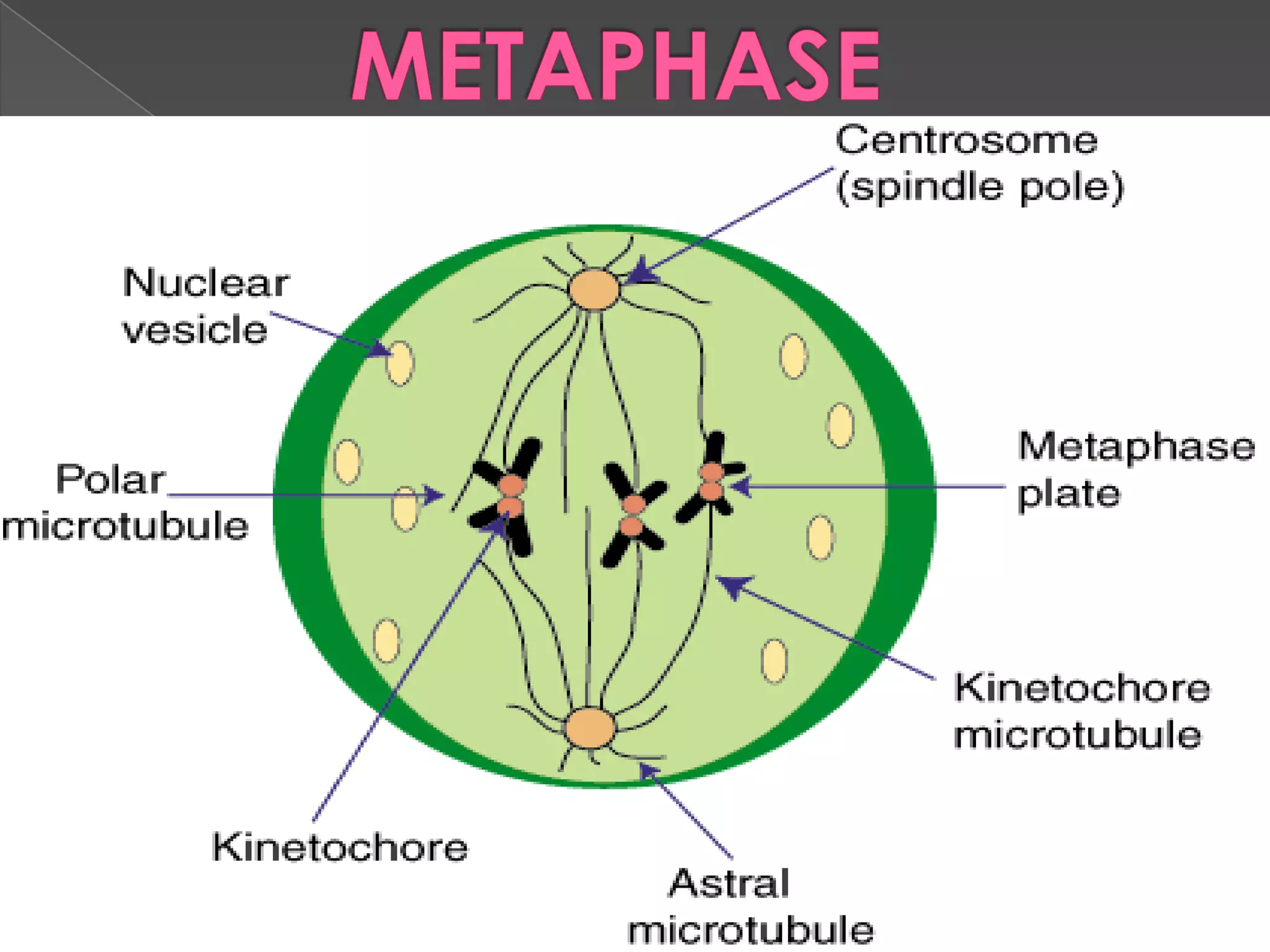
The nuclear membrane disappears completely.
In animal cells, the two pair of centrioles align at
opposite poles of the cell.
Polar fibers (microtubules that make up the spindle
fibers) continue to extend from the poles to the center of
the cell.
Chromosomes move randomly until they attach (at
their kinetochores) to polar fibers from both sides of
their centromeres.
Chromosomes align at the metaphase plate at right
angles to the spindle poles.
Chromosomes are held at the metaphase plate by the
equal forces of the polar fibers pushing on the
centromeres of the chromosomes.
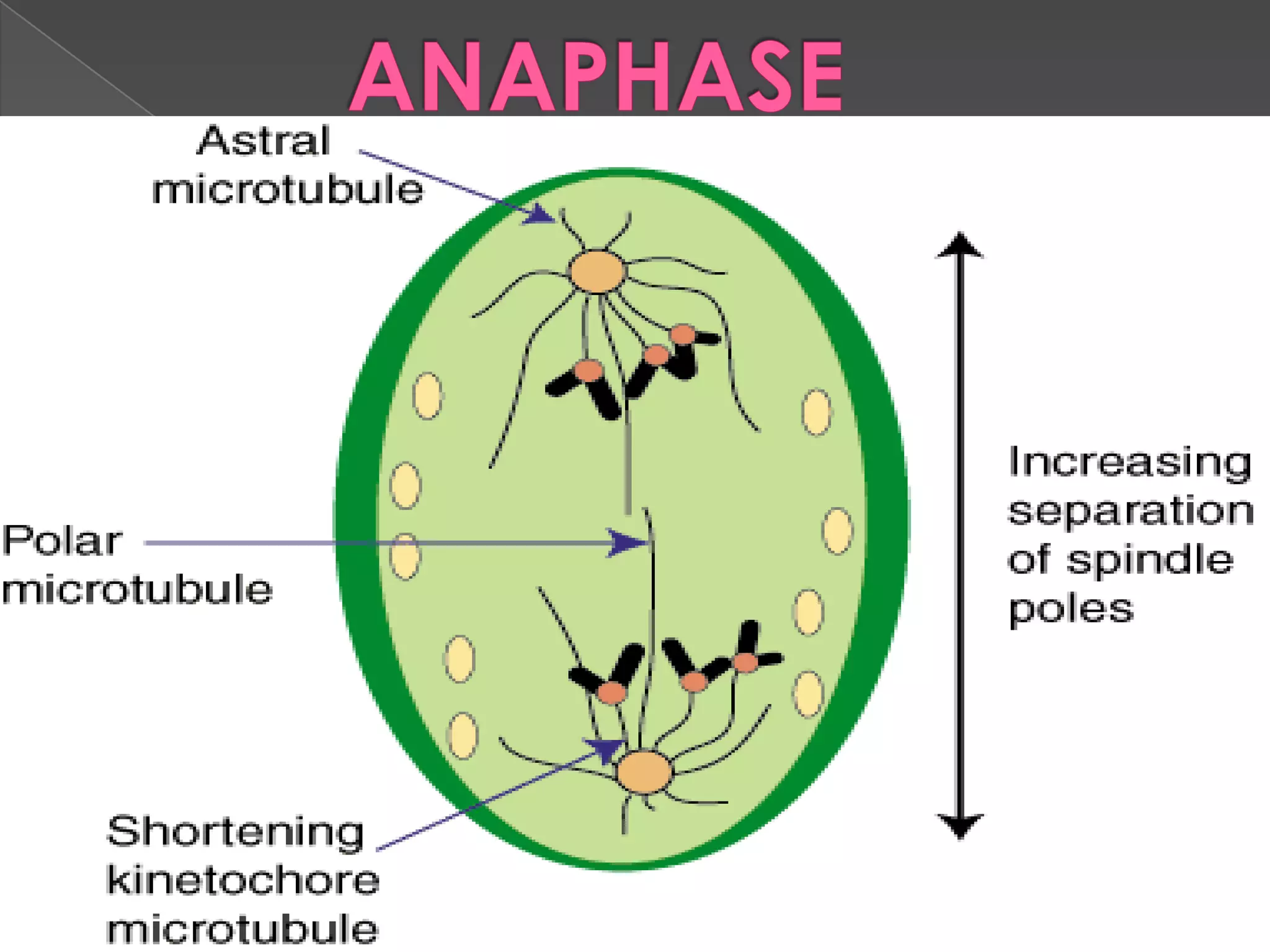
When every kinetochores is attached to a cluster of
microtubules and the chromosomes have lined up along the
metaphase plate, the cell proceeds to anaphase then proteins
that bind sister chromatids together are cleaved. These sister
chromatids now become separate daughter
chromosomes, and are pulled apart by shortening
kinetochores microtubules and move toward the respective
centrosomes to which they are attached. Next, the non
kinetochores microtubules elongate, pulling the centrosomes
(and the set of chromosomes to which they are attached)
apart to opposite ends of the cell. The force that causes the
centrosomes to move towards the ends of the cell is still
unknown, although there is a theory that suggests that the
rapid assembly and breakdown of microtubules may cause
movement .
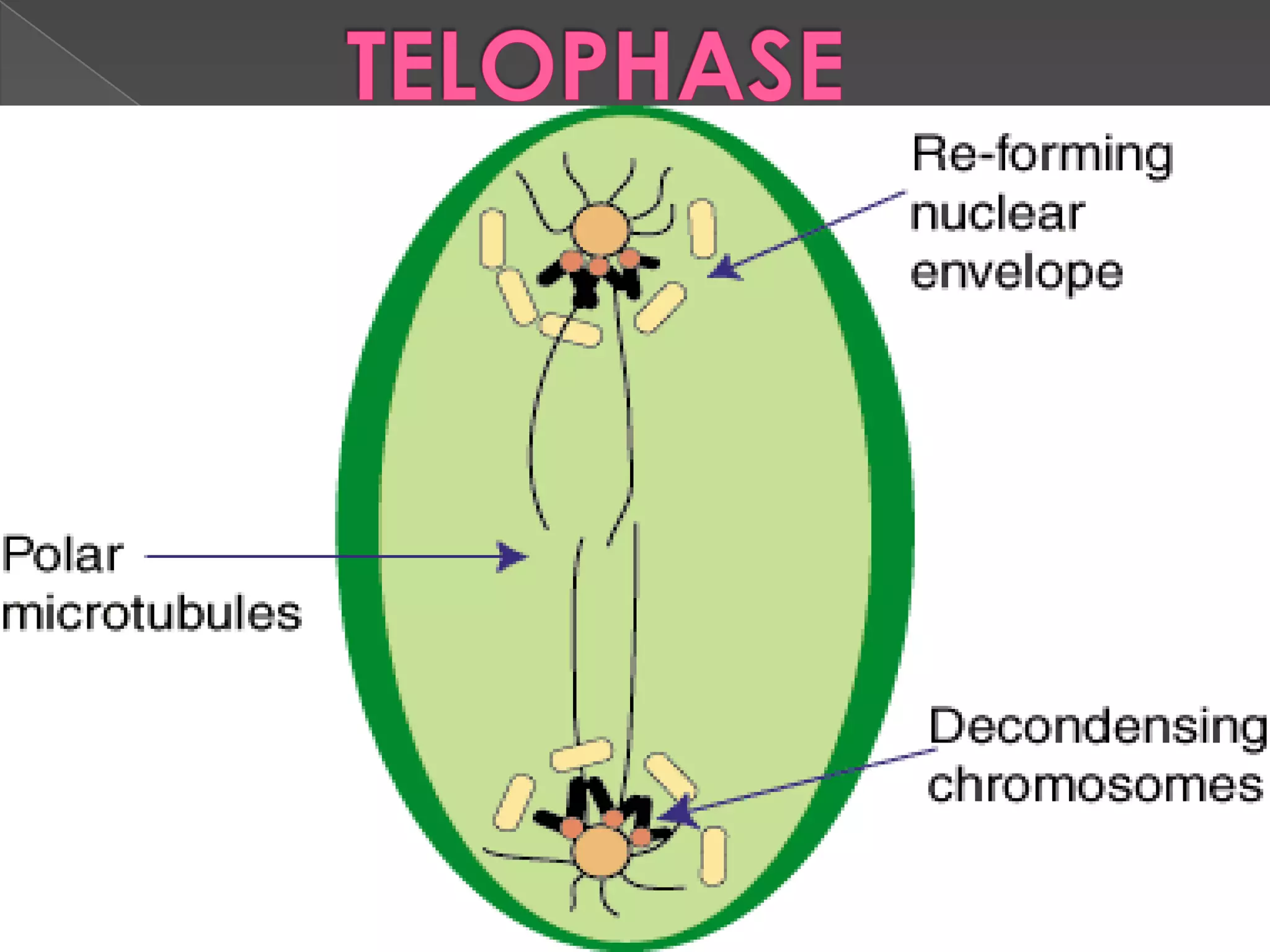
In Telophase, the chromosomes are cordoned off into
 distinct new nuclei in the emerging daughter cells
 The polar fibers continue to lengthen.
 Nuclei (plural form of nucleus) begin to form at opposite
 poles.
 The nuclear envelopes of these nuclei are formed
 from remnant pieces of the parent cell's nuclear
 envelope and from pieces of the endomembrane
 system.
 Nucleoli (plural form of nucleolus) also reappear.
 Chromatin fibers of chromosomes uncoil.
After these changes, Telophase/mitosis is largely
 complete and the genetic "contents" of one cell have
 been divided equally into two.
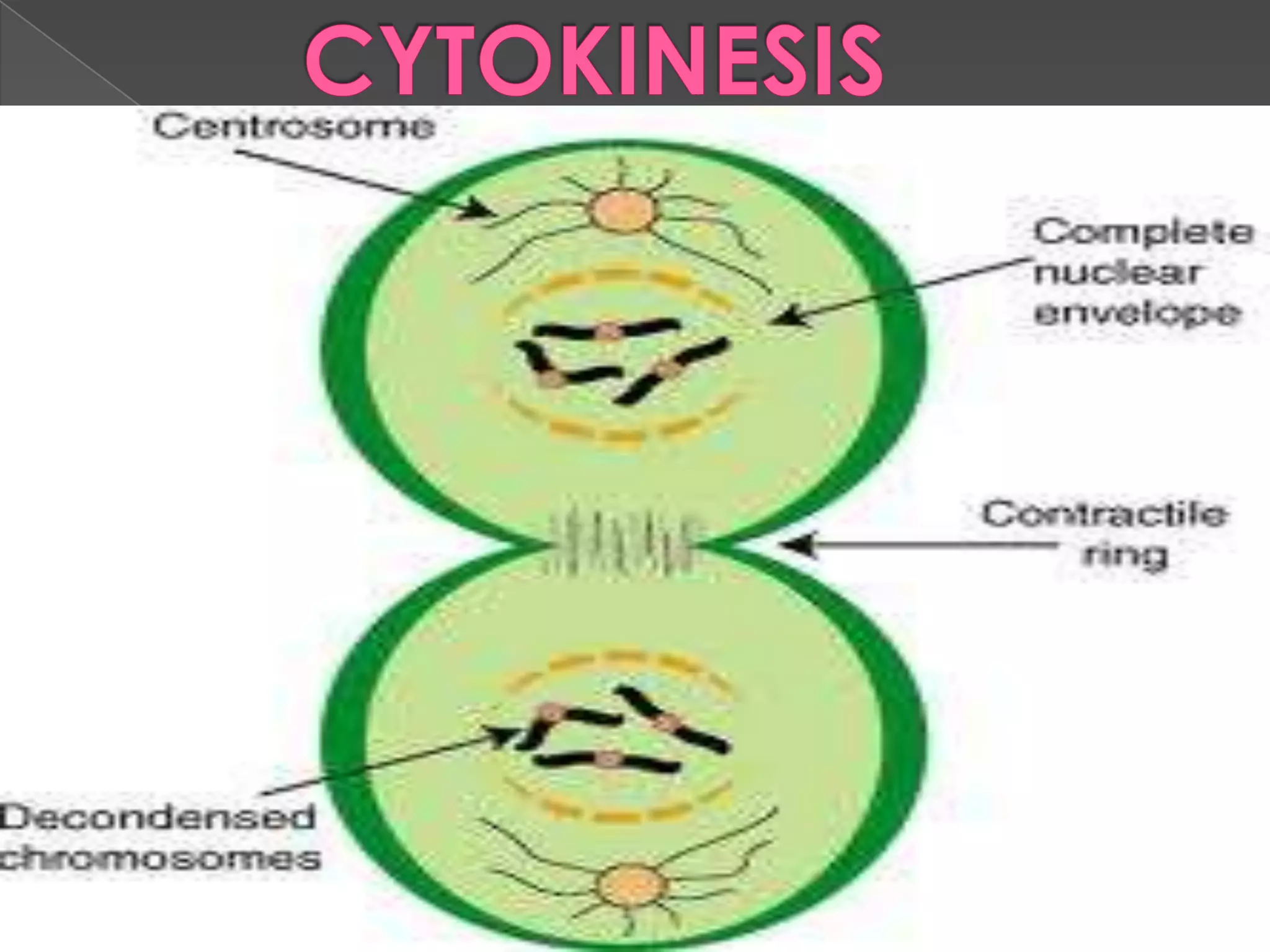
Cytokinesis is the division in two of the cytoplasm. It
occurs near or after the end of nuclear division.
In animals, the cell membrane folds in all around the
cell. From the outside, the cell looks like a half-deflated
balloon that has an invisible thread looped around it; as
cytokinesis proceeds the thread is increasingly
tightened. Really, the tightening is by protein fibers of
the cytoskeleton, orientated in various directions just
below the cell membrane.
 In Plant cells , the Golgi body manufactures a plate
(middle lamella) of vesicles in a plane between the two
daughter-nuclei. This plate spreads out from the center
of the cell, eventually abutting against the cell
membrane all round the cell in that plane. The cell then
lays down a cell wall, replacing callose with cellulose
and pectin.
Mitosis plays a very vital role in maintenance of chromosomal set
    and its importance is following :
1.Growth. The number of cells within an organism increases by
mitosis and this is the basis of growth in multicellular organisms.
2.Cell Replacement. Cells are constantly sloughed off, dying and
being replaced by new ones in the skin and digestive tract. When
damaged tissues are repaired, the new cells must be exact co
function of cells.
3.Regeneration. Some pies of the cells being replaced so as to
retain normal animals can regenerate parts of the body, and
production of new cells are achieved by mitosis.
4.Vegetative Reproduction. Some plants produce offspring which
are genetically similar to themselves. These offspring are called
clones. It is a method of multiplication in unicellular organisms
means asexual reproduction.
The cell goes through dramatic changes in ultra structure, its
organelles disintegrate and reform in a matter of hours, and
chromosomes are jostled constantly by probing microtubules.
Chromosomes may become damaged. An arm of the
chromosome may be broken and the fragment
lost, causing deletion. The fragment may incorrectly reattach to
another, non-homologous chromosome, causing translocation.
It may reattach back to the original chromosome, but in
reverse orientation, causing chromosomal inversion. Or, it may
be treated erroneously as a separate
chromosome, causing chromosomal duplication. The effects of
these genetic abnormalities depend on the specific nature of
the error and can range from no noticeable effect at all to
organism death. Tumors are caused, They could be benign
and malignant. Cancer is essentially a disease related to
mitosis, involving a breakdown in the regulation process such
that there is uncontrolled cell replication.

Presentation1

  • 2.
    Mitosis is theprocess by which a eukaryotic cell separates the chromosomes in its cell nucleus into two identical sets, in two separate nuclei. It is generally followed immediately by cytokines is, which divides the nuclei, cytoplasm, organelles and cell membrane into two cells containing roughly equal shares of these cellular components. Karyokinesis and cytokinesis together define the mitotic (M) phase of the cell cycle— the division of the mother cell into two daughter cells, genetically identical to each other and to their parent cell. This accounts for approximately 10% of the cell cycle.
  • 3.
    During this firstmitotic stage, the nucleolus fades and chromatin (replicated DNA and associated proteins) condenses into chromosomes. Each replicated chromosome comprises two chromatids, both with the same genetic information. Microtubules of the cytoskeleton, responsible for cell shape, motility and attachment to other cells during interphase, disassemble. And the building blocks of these microtubules are used to grow the mitotic spindle from the region of the centrosomes. In short the chromatin condenses into chromosomes; centrioles move toward opposite poles of the cell.
  • 5.
    The nuclear membranedisappears completely. In animal cells, the two pair of centrioles align at opposite poles of the cell. Polar fibers (microtubules that make up the spindle fibers) continue to extend from the poles to the center of the cell. Chromosomes move randomly until they attach (at their kinetochores) to polar fibers from both sides of their centromeres. Chromosomes align at the metaphase plate at right angles to the spindle poles. Chromosomes are held at the metaphase plate by the equal forces of the polar fibers pushing on the centromeres of the chromosomes.
  • 7.
    When every kinetochoresis attached to a cluster of microtubules and the chromosomes have lined up along the metaphase plate, the cell proceeds to anaphase then proteins that bind sister chromatids together are cleaved. These sister chromatids now become separate daughter chromosomes, and are pulled apart by shortening kinetochores microtubules and move toward the respective centrosomes to which they are attached. Next, the non kinetochores microtubules elongate, pulling the centrosomes (and the set of chromosomes to which they are attached) apart to opposite ends of the cell. The force that causes the centrosomes to move towards the ends of the cell is still unknown, although there is a theory that suggests that the rapid assembly and breakdown of microtubules may cause movement .
  • 9.
    In Telophase, thechromosomes are cordoned off into distinct new nuclei in the emerging daughter cells The polar fibers continue to lengthen. Nuclei (plural form of nucleus) begin to form at opposite poles. The nuclear envelopes of these nuclei are formed from remnant pieces of the parent cell's nuclear envelope and from pieces of the endomembrane system. Nucleoli (plural form of nucleolus) also reappear. Chromatin fibers of chromosomes uncoil. After these changes, Telophase/mitosis is largely complete and the genetic "contents" of one cell have been divided equally into two.
  • 11.
    Cytokinesis is thedivision in two of the cytoplasm. It occurs near or after the end of nuclear division. In animals, the cell membrane folds in all around the cell. From the outside, the cell looks like a half-deflated balloon that has an invisible thread looped around it; as cytokinesis proceeds the thread is increasingly tightened. Really, the tightening is by protein fibers of the cytoskeleton, orientated in various directions just below the cell membrane. In Plant cells , the Golgi body manufactures a plate (middle lamella) of vesicles in a plane between the two daughter-nuclei. This plate spreads out from the center of the cell, eventually abutting against the cell membrane all round the cell in that plane. The cell then lays down a cell wall, replacing callose with cellulose and pectin.
  • 13.
    Mitosis plays avery vital role in maintenance of chromosomal set and its importance is following : 1.Growth. The number of cells within an organism increases by mitosis and this is the basis of growth in multicellular organisms. 2.Cell Replacement. Cells are constantly sloughed off, dying and being replaced by new ones in the skin and digestive tract. When damaged tissues are repaired, the new cells must be exact co function of cells. 3.Regeneration. Some pies of the cells being replaced so as to retain normal animals can regenerate parts of the body, and production of new cells are achieved by mitosis. 4.Vegetative Reproduction. Some plants produce offspring which are genetically similar to themselves. These offspring are called clones. It is a method of multiplication in unicellular organisms means asexual reproduction.
  • 14.
    The cell goesthrough dramatic changes in ultra structure, its organelles disintegrate and reform in a matter of hours, and chromosomes are jostled constantly by probing microtubules. Chromosomes may become damaged. An arm of the chromosome may be broken and the fragment lost, causing deletion. The fragment may incorrectly reattach to another, non-homologous chromosome, causing translocation. It may reattach back to the original chromosome, but in reverse orientation, causing chromosomal inversion. Or, it may be treated erroneously as a separate chromosome, causing chromosomal duplication. The effects of these genetic abnormalities depend on the specific nature of the error and can range from no noticeable effect at all to organism death. Tumors are caused, They could be benign and malignant. Cancer is essentially a disease related to mitosis, involving a breakdown in the regulation process such that there is uncontrolled cell replication.