STRUCTURE AND FUNCTIONS
BIOLOGY
INTRODUCTION
• The basic structural unit of an organ is known as the cell.
• In 1665, Robert Hooke discovered the cell.
• A cell is a living organism.
• A human body has trillions of cells, which vary in shapes and
sizes.
• The organism, which is made up of more than one cell, is
known as multicellular organism.
• The single-celled organisms are known as unicellular
organism. E.g. Amoeba.
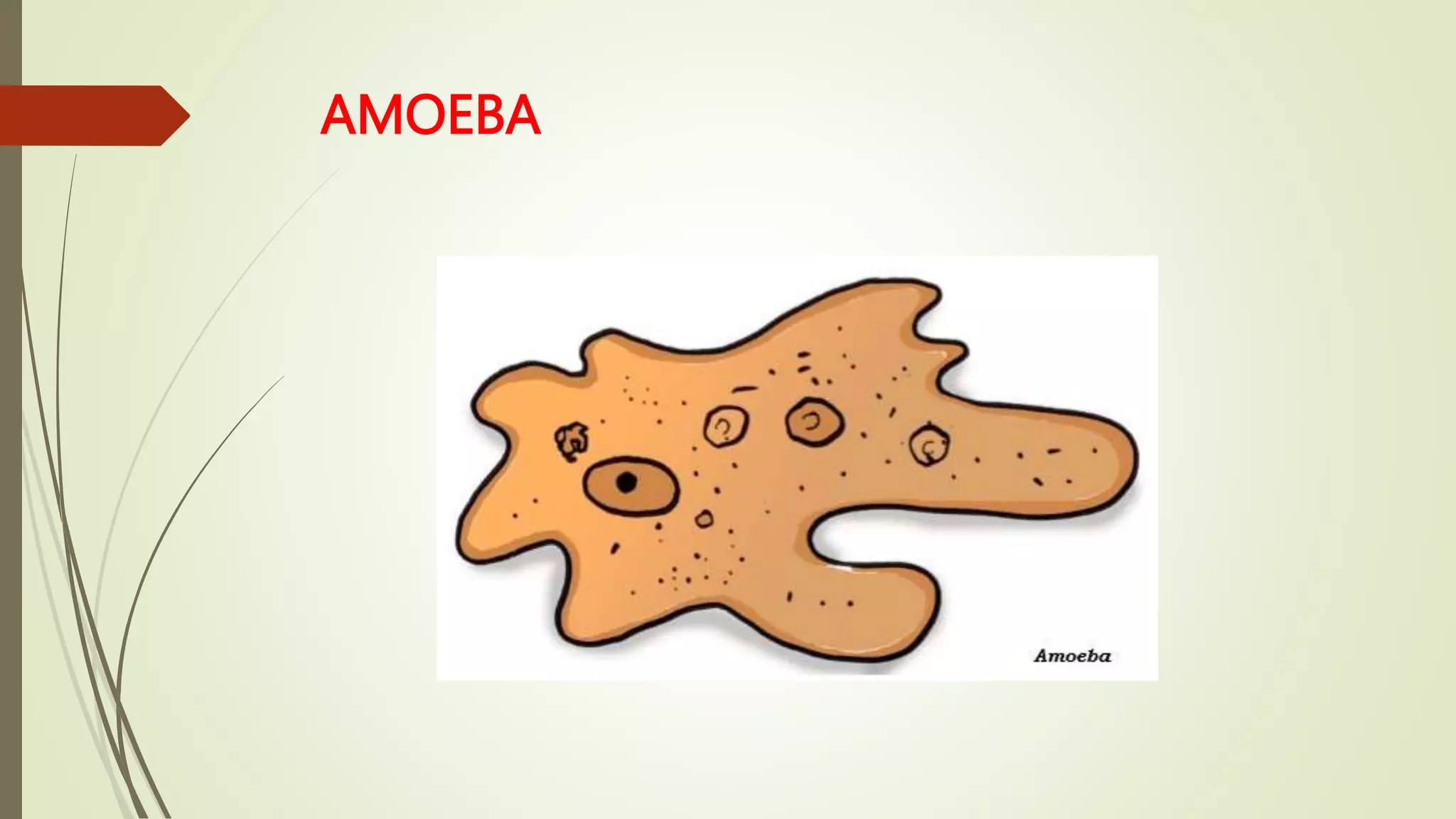
AMOEBA
• A single-celled organism performs all the essential functions
that a multicellular organism performs.
• Unlike other organisms, Amoeba has no definite shape; so, it
keeps on changing its shape.
• Amoeba has pseudopodia, which means – pseudo means
false and podia means feet.
• Amoeba is a full-fledged organism capable of independent
existence.
• Shape of the cells are normally round, spherical, or elongated.
• Protoplasm is known as the living substance of the cell.
• The cells having nuclear substances without
nuclear membrane are known as prokaryotic
cells. E.g. bacteria and blue green algae.
• The cells having well organized nucleus with a
nuclear membrane are designated
as eukaryotic cells. All multicellular organisms
are eukaryotic cells.
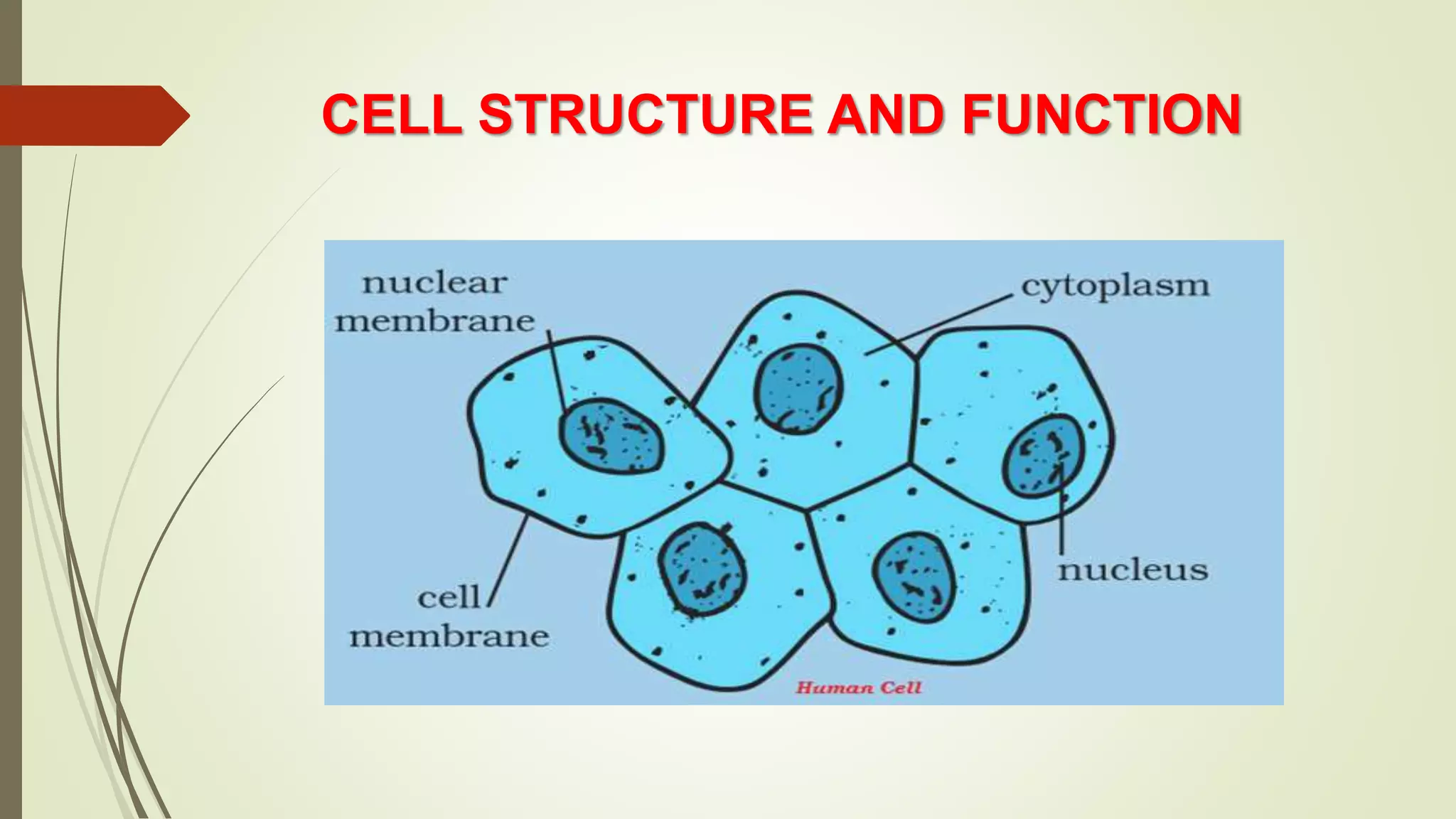
CELL STRUCTURE AND FUNCTION
• The basic parts of a cell are cell membrane, cytoplasm, and nucleus.
• Cell membrane is also known as the plasma membrane.
• The plasma membrane is porous and allows certain substances or
materials move both inward and outward.
• The central dense round structure in the center is known
as nucleus.
• The jelly-like substance between the nucleus and the cell
membrane (as shown in the above image) is known as cytoplasm.
• Different organelles of cells are also present in the cytoplasm such
as Mitochondria, Golgi bodies, Ribosomes, etc.
• Cell membrane is also known as the plasma membrane.
• The plasma membrane is porous and allows certain
substances or materials move both inward and outward.
• Different organelles of cells are also present in the
cytoplasm such as Mitochondria, Golgi bodies,
Ribosomes, etc.
 Located in central part, nucleus is almost in spherical shape.
 Nucleus is separated from the cytoplasm by a porous membrane known as the
nuclear membrane.
 The smaller and spherical structure, found inside the nucleus, is known as
nucleolus.
 Nucleus contains thread-like structures known as chromosomes.
 Chromosomes carry genes and help in inheriting the characteristics of the
parents to the offspring.
 Gene is a fundamental unit of inheritance in living organisms.
 The entire constituents of a living cell are known as protoplasm, which include
nucleus and cytoplasm.
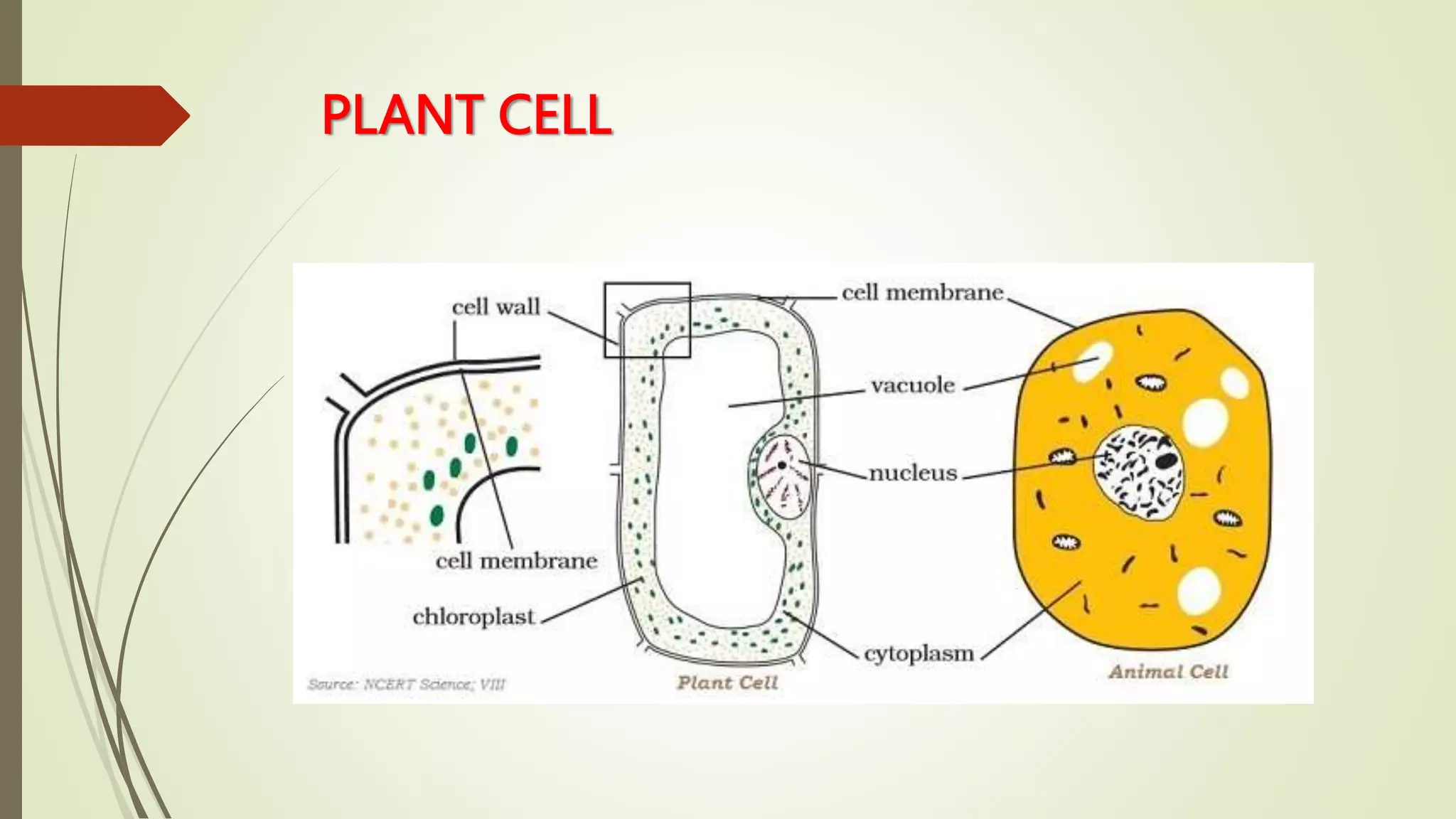
PLANT CELL
• The cell membrane provides shape to the cells of plants and
animals.
• In plant cell, cell wall is an additional covering over the cell
membrane.
• An animal cell does not have cell wall.
• Cell wall gives shape and rigidity to plant cells.
• Cell wall gives protection, plant cells need protection against
varying temperature, high wind speed, atmospheric moisture, etc.
• Bacterial cell also has a cell wall.
• Usually, most of the cells are microscopic in size and are not visible
to the naked eye.
• The size of smallest cell is 0.1 to 0.5 micrometer found in bacteria.
• The size of largest cell is 170 mm × 130 mm, found in the egg of an
ostrich.
• The size of the cells however has no relation with the size of the
body of the animal or plant.
• Some small colored bodies in the cytoplasm of the cells are
known as plastids.
• Plastids are found in different colors.
• Some plastids have green pigment and known
as chlorophyll.
• Green colored plastids are known as chloroplasts.
• Chloroplasts give green color to the leaves.
• Chlorophyll is essential for the photosynthesis.
THANK YOU!!

STRUCTURE AND FUNCTIONS.pptx

  • 1.
  • 2.
    INTRODUCTION • The basicstructural unit of an organ is known as the cell. • In 1665, Robert Hooke discovered the cell. • A cell is a living organism. • A human body has trillions of cells, which vary in shapes and sizes. • The organism, which is made up of more than one cell, is known as multicellular organism. • The single-celled organisms are known as unicellular organism. E.g. Amoeba.
  • 3.
  • 4.
    • A single-celledorganism performs all the essential functions that a multicellular organism performs. • Unlike other organisms, Amoeba has no definite shape; so, it keeps on changing its shape. • Amoeba has pseudopodia, which means – pseudo means false and podia means feet. • Amoeba is a full-fledged organism capable of independent existence. • Shape of the cells are normally round, spherical, or elongated. • Protoplasm is known as the living substance of the cell.
  • 5.
    • The cellshaving nuclear substances without nuclear membrane are known as prokaryotic cells. E.g. bacteria and blue green algae. • The cells having well organized nucleus with a nuclear membrane are designated as eukaryotic cells. All multicellular organisms are eukaryotic cells.
  • 6.
  • 7.
    • The basicparts of a cell are cell membrane, cytoplasm, and nucleus. • Cell membrane is also known as the plasma membrane. • The plasma membrane is porous and allows certain substances or materials move both inward and outward. • The central dense round structure in the center is known as nucleus. • The jelly-like substance between the nucleus and the cell membrane (as shown in the above image) is known as cytoplasm. • Different organelles of cells are also present in the cytoplasm such as Mitochondria, Golgi bodies, Ribosomes, etc.
  • 8.
    • Cell membraneis also known as the plasma membrane. • The plasma membrane is porous and allows certain substances or materials move both inward and outward. • Different organelles of cells are also present in the cytoplasm such as Mitochondria, Golgi bodies, Ribosomes, etc.
  • 9.
     Located incentral part, nucleus is almost in spherical shape.  Nucleus is separated from the cytoplasm by a porous membrane known as the nuclear membrane.  The smaller and spherical structure, found inside the nucleus, is known as nucleolus.  Nucleus contains thread-like structures known as chromosomes.  Chromosomes carry genes and help in inheriting the characteristics of the parents to the offspring.  Gene is a fundamental unit of inheritance in living organisms.  The entire constituents of a living cell are known as protoplasm, which include nucleus and cytoplasm.
  • 10.
  • 11.
    • The cellmembrane provides shape to the cells of plants and animals. • In plant cell, cell wall is an additional covering over the cell membrane. • An animal cell does not have cell wall. • Cell wall gives shape and rigidity to plant cells. • Cell wall gives protection, plant cells need protection against varying temperature, high wind speed, atmospheric moisture, etc. • Bacterial cell also has a cell wall. • Usually, most of the cells are microscopic in size and are not visible to the naked eye. • The size of smallest cell is 0.1 to 0.5 micrometer found in bacteria. • The size of largest cell is 170 mm × 130 mm, found in the egg of an ostrich. • The size of the cells however has no relation with the size of the body of the animal or plant.
  • 12.
    • Some smallcolored bodies in the cytoplasm of the cells are known as plastids. • Plastids are found in different colors. • Some plastids have green pigment and known as chlorophyll. • Green colored plastids are known as chloroplasts. • Chloroplasts give green color to the leaves. • Chlorophyll is essential for the photosynthesis.
  • 13.