C.N MAKAMU
201443410
TEACHING STUDIES
2017/09/18
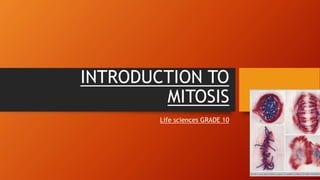
INTRODUCTION TO
MITOSIS
Life sciences GRADE 10
What is mitosis?
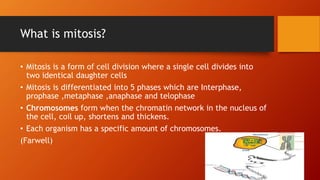
• Mitosis is a form of cell division where a single cell divides into
two identical daughter cells
• Mitosis is differentiated into 5 phases which are Interphase,
prophase ,metaphase ,anaphase and telophase
• Chromosomes form when the chromatin network in the nucleus of
the cell, coil up, shortens and thickens.
• Each organism has a specific amount of chromosomes.
(Farwell)
Importance of mitosis
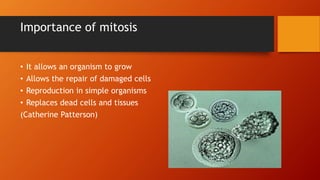
• It allows an organism to grow
• Allows the repair of damaged cells
• Reproduction in simple organisms
• Replaces dead cells and tissues
(Catherine Patterson)
Where does mitosis take place ?
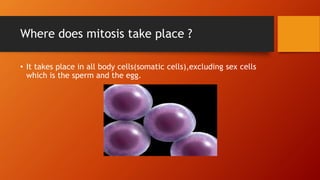
• It takes place in all body cells(somatic cells),excluding sex cells
which is the sperm and the egg.
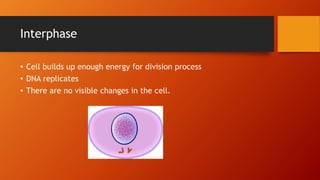
Interphase
• Cell builds up enough energy for division process
• DNA replicates
• There are no visible changes in the cell.
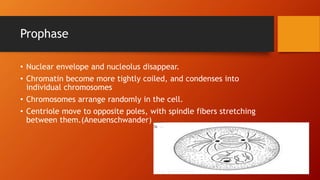
Prophase
• Nuclear envelope and nucleolus disappear.
• Chromatin become more tightly coiled, and condenses into
individual chromosomes
• Chromosomes arrange randomly in the cell.
• Centriole move to opposite poles, with spindle fibers stretching
between them.(Aneuenschwander)
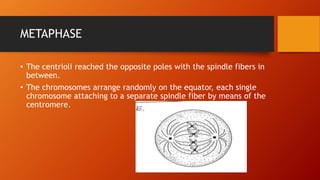
METAPHASE
• The centrioli reached the opposite poles with the spindle fibers in
between.
• The chromosomes arrange randomly on the equator, each single
chromosome attaching to a separate spindle fiber by means of the
centromere.
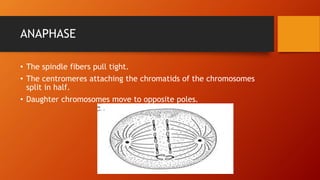
ANAPHASE
• The spindle fibers pull tight.
• The centromeres attaching the chromatids of the chromosomes
split in half.
• Daughter chromosomes move to opposite poles.
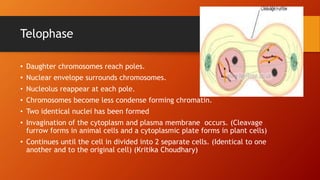
Telophase
• Daughter chromosomes reach poles.
• Nuclear envelope surrounds chromosomes.
• Nucleolus reappear at each pole.
• Chromosomes become less condense forming chromatin.
• Two identical nuclei has been formed
• Invagination of the cytoplasm and plasma membrane occurs. (Cleavage
furrow forms in animal cells and a cytoplasmic plate forms in plant cells)
• Continues until the cell in divided into 2 separate cells. (Identical to one
another and to the original cell) (Kritika Choudhary)
references
• THESE SLIDES WERE ADAPTED FROM THE FOLLOWING SLIDES ON
SLIDE SHARE:
Farrell w (Mitosis power point)
Catherine Patterson (Cell division mitosis and meiosis)
Shimaa Sherif (Cell division and cell cycle)
Aneuenschwander (Cell cycle PowerPoint)
Kritika Choudhary (Presentation on cell cycle )

Introduction to mitosis

  • 1.
  • 2.
  • 3.
    What is mitosis? •Mitosis is a form of cell division where a single cell divides into two identical daughter cells • Mitosis is differentiated into 5 phases which are Interphase, prophase ,metaphase ,anaphase and telophase • Chromosomes form when the chromatin network in the nucleus of the cell, coil up, shortens and thickens. • Each organism has a specific amount of chromosomes. (Farwell)
  • 4.
    Importance of mitosis •It allows an organism to grow • Allows the repair of damaged cells • Reproduction in simple organisms • Replaces dead cells and tissues (Catherine Patterson)
  • 5.
    Where does mitosistake place ? • It takes place in all body cells(somatic cells),excluding sex cells which is the sperm and the egg.
  • 6.
    Interphase • Cell buildsup enough energy for division process • DNA replicates • There are no visible changes in the cell.
  • 7.
    Prophase • Nuclear envelopeand nucleolus disappear. • Chromatin become more tightly coiled, and condenses into individual chromosomes • Chromosomes arrange randomly in the cell. • Centriole move to opposite poles, with spindle fibers stretching between them.(Aneuenschwander)
  • 8.
    METAPHASE • The centriolireached the opposite poles with the spindle fibers in between. • The chromosomes arrange randomly on the equator, each single chromosome attaching to a separate spindle fiber by means of the centromere.
  • 9.
    ANAPHASE • The spindlefibers pull tight. • The centromeres attaching the chromatids of the chromosomes split in half. • Daughter chromosomes move to opposite poles.
  • 10.
    Telophase • Daughter chromosomesreach poles. • Nuclear envelope surrounds chromosomes. • Nucleolus reappear at each pole. • Chromosomes become less condense forming chromatin. • Two identical nuclei has been formed • Invagination of the cytoplasm and plasma membrane occurs. (Cleavage furrow forms in animal cells and a cytoplasmic plate forms in plant cells) • Continues until the cell in divided into 2 separate cells. (Identical to one another and to the original cell) (Kritika Choudhary)
  • 11.
    references • THESE SLIDESWERE ADAPTED FROM THE FOLLOWING SLIDES ON SLIDE SHARE: Farrell w (Mitosis power point) Catherine Patterson (Cell division mitosis and meiosis) Shimaa Sherif (Cell division and cell cycle) Aneuenschwander (Cell cycle PowerPoint) Kritika Choudhary (Presentation on cell cycle )