Theory/ introduction 
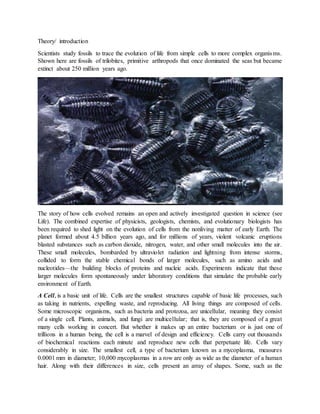
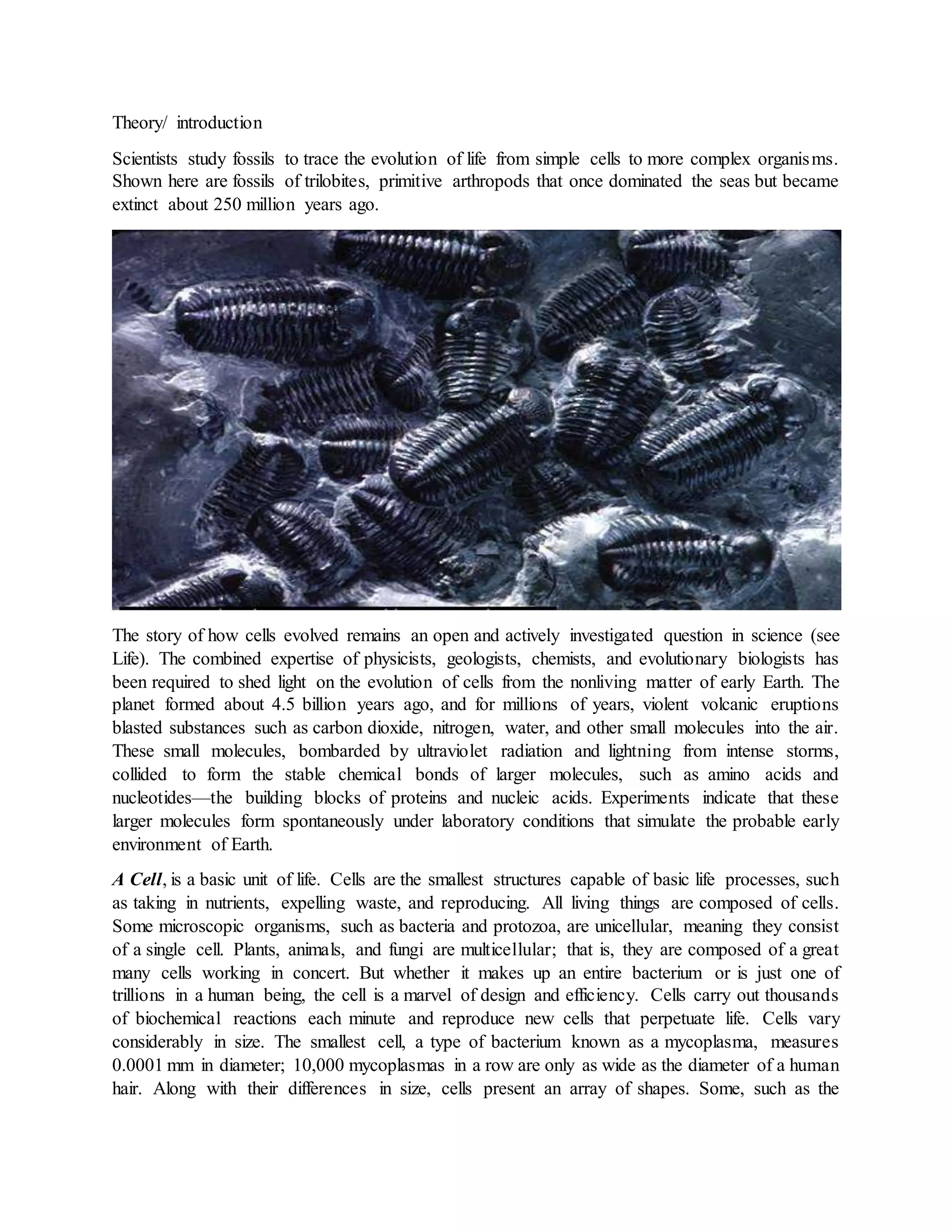
Scientists study fossils to trace the evolution of life from simple cells to more complex organisms. 
Shown here are fossils of trilobites, primitive arthropods that once dominated the seas but became 
extinct about 250 million years ago. 
The story of how cells evolved remains an open and actively investigated question in science (see 
Life). The combined expertise of physicists, geologists, chemists, and evolutionary biologists has 
been required to shed light on the evolution of cells from the nonliving matter of early Earth. The 
planet formed about 4.5 billion years ago, and for millions of years, violent volcanic eruptions 
blasted substances such as carbon dioxide, nitrogen, water, and other small molecules into the air. 
These small molecules, bombarded by ultraviolet radiation and lightning from intense storms, 
collided to form the stable chemical bonds of larger molecules, such as amino acids and 
nucleotides—the building blocks of proteins and nucleic acids. Experiments indicate that these 
larger molecules form spontaneously under laboratory conditions that simulate the probable early 
environment of Earth. 
A Cell, is a basic unit of life. Cells are the smallest structures capable of basic life processes, such 
as taking in nutrients, expelling waste, and reproducing. All living things are composed of cells. 
Some microscopic organisms, such as bacteria and protozoa, are unicellular, meaning they consist 
of a single cell. Plants, animals, and fungi are multicellular; that is, they are composed of a great 
many cells working in concert. But whether it makes up an entire bacterium or is just one of 
trillions in a human being, the cell is a marvel of design and efficiency. Cells carry out thousands 
of biochemical reactions each minute and reproduce new cells that perpetuate life. Cells vary 
considerably in size. The smallest cell, a type of bacterium known as a mycoplasma, measures 
0.0001 mm in diameter; 10,000 mycoplasmas in a row are only as wide as the diameter of a human 
hair. Along with their differences in size, cells present an array of shapes. Some, such as the
bacterium Escherichia coli, resemble rods. The paramecium, a type of protozoan, is slipper shaped; 
and the amoeba, another protozoan, has an irregular form that changes shape as it moves around. 
Plant cells typically resemble boxes or cubes. In humans, the outermost layers of skin cells are flat, 
while muscle cells are long and thin. Some nerve cells, with their elongated, tentacle- like 
extensions, suggest an octopus. In multicellular organisms, shape is typically tailored to the cell’s 
job. For example, flat skin cells pack tightly into a layer that protects the underlying tissues from 
invasion by bacteria. Long, thin muscle cells contract readily to move bones. The numerous 
extensions from a nerve cell enable it to connect to several other nerve cells in order to send and 
receive messages rapidly and efficiently. Each cell is a model of independence and self-containment. 
Like some miniature, walled city in perpetual rush hour, the cell constantly bustles 
with traffic, shuttling essential molecules from place to place to carry out the business of living. 
Despite their individuality, however, cells also display a remarkable ability to join, communicate, 
and coordinate with other cells. The human body, for example, consists of an estimated 20 to 30 
trillion cells. Dozens of different kinds of cells are organized into specialized groups called tissues. 
Tendons and bones, for example, are composed of connective tissue, whereas skin and mucous 
membranes are built from epithelial tissue. Different tissue types are assembled into organs, which 
are structures specialized to perform particular functions. Examples of organs include the heart, 
stomach, and brain. Organs, in turn, are organized into systems such as the circulatory, digestive, 
or nervous systems. All together, these assembled organ systems form the human body. The 
components of cells are molecules, nonliving structures formed by the union of atoms. Small 
molecules serve as building blocks for larger molecules. Proteins, nucleic acids, carbohydrates, 
and lipids, which include fats and oils, are the four major molecules that underlie cell structure and 
also participate in cell functions. For example, a tightly organized arrangement of lipids, proteins, 
and protein-sugar compounds forms the plasma membrane, or outer boundary, of certain cells. The 
organelles, membrane-bound compartments in cells, are built largely from proteins. Biochemica l 
reactions in cells are guided by enzymes, specialized proteins that speed up chemical reactions. 
The nucleic acid deoxyribonucleic acid (DNA) contains the hereditary information for cells, and 
another nucleic acid, ribonucleic acid (RNA), works with DNA to build the thousands of proteins 
the cell needs.
Animal Cell 
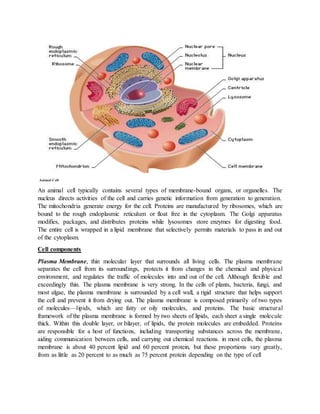
An animal cell typically contains several types of membrane-bound organs, or organelles. The 
nucleus directs activities of the cell and carries genetic information from generation to generation. 
The mitochondria generate energy for the cell. Proteins are manufactured by ribosomes, which are 
bound to the rough endoplasmic reticulum or float free in the cytoplasm. The Golgi apparatus 
modifies, packages, and distributes proteins while lysosomes store enzymes for digesting food. 
The entire cell is wrapped in a lipid membrane that selectively permits materials to pass in and out 
of the cytoplasm. 
Cell components 
Plasma Membrane, thin molecular layer that surrounds all living cells. The plasma membrane 
separates the cell from its surroundings, protects it from changes in the chemical and physical 
environment, and regulates the traffic of molecules into and out of the cell. Although flexible and 
exceedingly thin. The plasma membrane is very strong. In the cells of plants, bacteria, fungi, and 
most algae, the plasma membrane is surrounded by a cell wall, a rigid structure that helps support 
the cell and prevent it from drying out. The plasma membrane is composed primarily of two types 
of molecules—lipids, which are fatty or oily molecules, and proteins. The basic structural 
framework of the plasma membrane is formed by two sheets of lipids, each sheet a single molecule 
thick. Within this double layer, or bilayer, of lipids, the protein molecules are embedded. Proteins 
are responsible for a host of functions, including transporting substances across the membrane, 
aiding communication between cells, and carrying out chemical reactions. in most cells, the plasma 
membrane is about 40 percent lipid and 60 percent protein, but these proportions vary greatly, 
from as little as 20 percent to as much as 75 percent protein depending on the type of cell
Mitochondria, small cellular structures, or organelles, found in the cytoplasm of eukaryotic cells 
(cells with a nucleus). Mitochondria are responsible for converting nutrients into the energy-yielding 
molecule adenosine triphosphate (ATP) to fuel the cell's activities. This function, known 
as aerobic respiration, is the reason mitochondria are frequently referred to as the powerhouse of 
the cell. Mitochondria are unusual organelles in that they contain deoxyribonucleic acid (DNA), 
typically found in the cell’s nucleus, and ribosomes, protein-producing organelles abundant in the 
cytoplasm. Within the mitochondria, the DNA directs the ribosomes to produce proteins, many of 
which function as enzymes, or biological catalysts, in ATP production. The number of 
mitochondria in a cell depends on the cell's function. Cells with particularly heavy energy 
demands, such as muscle cells, have more mitochondria than other cells. 
Golgi apparatus, also Golgi body or Golgi complex, network of stacked sacs found within 
nucleated cells that store, package, and distribute the proteins and lipids made in the endoplasmic 
reticulum. Proteins and lipids manufactured in the endoplasmic reticulum bud off in tiny, hollow 
structures, or vesicles, and fuse with the cis cisterna of the Golgi apparatus. The proteins and lipids 
move progressively through the stack of cisternae until they reach the trans cisterna. There they 
may be modified by the attachment of lipids or carbohydrates. The proteins and lipids are enclosed 
in a membrane to form a vesicle so that they do not affect the rest of the cell. The vesicles are then 
sorted and their destination is determined. Proteins that are meant to return to the endoplasmic 
reticulum carry a distinctive tag. The Golgi apparatus recognizes the tag and transports the proteins 
back to the endoplasmic reticulum. Some proteins and lipids are sent to the surface of the cell to 
be released into the external environment. Others are transferred to the small structures that hold 
digestive enzymes, called lysosomes. The Golgi apparatus also manufactures long-chained sugars 
called polysaccharides that cells secrete into their external environments. Examples include 
cellulose and pectin used to construct plant cell walls, and the polysaccharides in the mucus of 
animal cells. 
Lysosome, membrane-bound sac found in nucleated cells that contains digestive enzymes that 
break down complex molecules in the body. Lysosomes are numerous in disease-fighting cells, 
such as white blood cells, that destroy harmful invaders or cell debris. Lysosomes vary greatly in 
size, typically ranging from 0.05 to 0.5 micrometers in diameter. Each lysosome is surrounded by 
a membrane that protects the cell from the lysosome’s digestive enzymes—if the lysosome breaks 
open, the enzymes would destroy the cell. Proteins embedded in the lysosome membrane protect 
the activity of the enzymes by maintaining the proper internal acidity. Membrane proteins also 
transport digested products out of the lysosome. Lysosome enzymes are manufactured in the rough 
endoplasmic reticulum and processed in the Golgi apparatus. They are delivered by sacs known as 
transport vesicles to fuse with three types of membrane-bound structures: endosomes, 
phagosomes, and autophagosomes. Endosomes form when the cell membrane surrounds 
nutritional molecules like polysaccharides, complex lipids, nucleic acids, or proteins. In a process 
called endocytosis, these molecules are broken down for reuse. Phagosomes form when the cell 
membrane engulfs large objects, like debris from sites of injury or inflammation or disease-causing 
bacteria, in a process called phagocytosis. Autophagosomes form when the endoplasmic reticulum 
wraps around spent cell structures, such as mitochondria, that are destined for recycling. In all 
cases the digestive enzymes supplied by the lysosomes digest the membrane-bound objects into
simple compounds that are delivered to the cytoplasm as new cell-building materials. Lysosome 
enzyme disorders can cause disease. Infants born with Tay-Sachs disease lack an enzyme that 
breaks down a complex lipid called ganglioside. When this lipid accumulates in the body, it 
damages the central nervous system, causes mental retardation, and results in death by age five. 
The inflammation and pain associated with rheumatoid arthritis and gout are related to the escape 
of lysosome enzymes. Some scientists classify plant vacuoles as a type of lysosome. These 
membrane-bound structures are much larger than other lysosomes, measuring up to 20 
micrometers in diameter. Vacuoles maintain water pressure within plant cells, called turgor, 
preventing wilting. Vacuoles may also provide long-term storage of polysaccharides, lipids, 
proteins, pigments, and harmful materials such as rubber or opium that may deter predators. 
Centriole is a rod-shaped structure in cell in an animal cell, a two-part rod-shaped structure with the 
parts lying at right angles to each other, located in pairs near the nucleus. During cell division, 
centrioles move to opposite ends of the cell and form the poles of the spindle fibers that pull the 
chromosomes apart. 
Endoplasmic Reticulum (ER), an extensive network of tubes that manufacture, process, and 
transport materials within nucleated cells. The ER consists of a continuous membrane in the form 
of branching tubules and flattened sacs that extend throughout the cytoplasm (the cell’s contents 
outside of the nucleus) and connect to the double membrane that surrounds the nucleus. There are 
two types of ER: rough and smooth. The outer surface of rough ER is covered with tiny structures 
called ribosomes, where protein synthesis occurs. Proteins are created as long polypeptide chains, 
some of which require modification. These proteins are transported into the rough ER, where 
enzymes fold and link them into the three dimensional shape that completes their structure. The 
rough ER also transports proteins either to regions of the cell where they are needed or to the Golgi 
apparatus, from which they may be exported from the cell. Rough ER is particularly dense in cells 
that manufacture proteins for export. White blood cells, for example, which produce and secrete 
antibodies, contain abundant rough ER. Smooth ER lacks ribosomes and so has a smooth 
appearance. It is involved in the synthesis of most of the lipids that make up the cell membrane, as 
well as membranes surrounding other cell structures like mitochondria. It also manufacture s 
carbohydrates, stores carbohydrates and lipids, and detoxifies alcohol and drugs such as morphine 
and phenobarbital. Cells that specialize in lipid and carbohydrate metabolism, such as brain and 
muscle cells, or those that carry out detoxification, such as liver cells, tend to have smoother ER. 
Smooth ER also is involved in the uptake and release of calcium to mediate some types of cellula r 
activity. In skeletal muscle cells, for example, the release of calcium from the smooth ER triggers. 
Nucleus, membrane-bound structure of a cell that plays two crucial roles. The nucleus carries the 
cell’s genetic information that determines if the organism will develop, for instance, into a tree or a 
human; and it directs most cell activities including growth, metabolism, and reproduction by 
regulating protein synthesis (the manufacture of long chains of amino acids). The presence of a 
nucleus distinguishes the more complex eukaryotic cells of plants and animals from the simpler 
prokaryotic cells of bacteria and cyanobacteria that lack a nucleus. The nucleus is the most 
prominent structure in the cell. It is typically round and occupies about 10 percent of the cell’s total 
volume. The nucleus is wrapped in a double-layered membrane called the nuclear envelope. The
space between the nuclear envelope layers is called perinuclear space. The nuclear envelope is 
attached to a network of membrane-enclosed tubules that extends throughout the cell called the 
endoplasmic reticulum. The nuclear envelope is perforated by many holes, called nuclear pores, 
which permit the movement of selected molecules between the nucleus and the rest of the cell, while 
blocking the passage of other molecules. The nucleus contains the nucleolus, which manufacture s 
protein-producing structures called ribosomes. Genetic information in the form of deoxyribonucle ic 
acid (DNA) is stored in threadlike, tangled structures called chromatin within the nucleus. During 
the process of cell division known as mitosis, in which the nucleus divides, the chromatin condense 
into several distinct structures called chromosomes. Each time the cell divides, the heredity 
information carried in the chromosomes is passed to the two newly formed cells. The DNA in the 
nucleus also contains the instructions for regulating the amount and types of proteins made by the 
cell. These instructions are copied, or transcribed, into a type of ribonucleic acid (RNA) called 
messenger RNA (mRNA). The mRNA is transported from the nucleus to ribosomes, where proteins 
are assembled. 
Gap junction is the space between cells: a passage through the membranes of adjacent cells that 
allows the transfer of small molecules or ions between cells. 
Macular adherens/Desmosome is a patch that welds cells together: a small patch of interlocking 
fibers between the outer membranes of adjacent cells that helps to hold cells together in tissues such 
as skin. 
References 
 Thomson A.D & cotton R.D, (1983), Lecture notes on pathology, 3rd edition, Blackwell 
scientific publications, oxford, London. 
 Norman F. & Cheville D.V.M. (1976), cell pathology, 1st edition, the IOWA state univers it y 
press/ AMES, USA.

Cell pathology assignment

  • 1.
    Theory/ introduction Scientistsstudy fossils to trace the evolution of life from simple cells to more complex organisms. Shown here are fossils of trilobites, primitive arthropods that once dominated the seas but became extinct about 250 million years ago. The story of how cells evolved remains an open and actively investigated question in science (see Life). The combined expertise of physicists, geologists, chemists, and evolutionary biologists has been required to shed light on the evolution of cells from the nonliving matter of early Earth. The planet formed about 4.5 billion years ago, and for millions of years, violent volcanic eruptions blasted substances such as carbon dioxide, nitrogen, water, and other small molecules into the air. These small molecules, bombarded by ultraviolet radiation and lightning from intense storms, collided to form the stable chemical bonds of larger molecules, such as amino acids and nucleotides—the building blocks of proteins and nucleic acids. Experiments indicate that these larger molecules form spontaneously under laboratory conditions that simulate the probable early environment of Earth. A Cell, is a basic unit of life. Cells are the smallest structures capable of basic life processes, such as taking in nutrients, expelling waste, and reproducing. All living things are composed of cells. Some microscopic organisms, such as bacteria and protozoa, are unicellular, meaning they consist of a single cell. Plants, animals, and fungi are multicellular; that is, they are composed of a great many cells working in concert. But whether it makes up an entire bacterium or is just one of trillions in a human being, the cell is a marvel of design and efficiency. Cells carry out thousands of biochemical reactions each minute and reproduce new cells that perpetuate life. Cells vary considerably in size. The smallest cell, a type of bacterium known as a mycoplasma, measures 0.0001 mm in diameter; 10,000 mycoplasmas in a row are only as wide as the diameter of a human hair. Along with their differences in size, cells present an array of shapes. Some, such as the
  • 2.
    bacterium Escherichia coli,resemble rods. The paramecium, a type of protozoan, is slipper shaped; and the amoeba, another protozoan, has an irregular form that changes shape as it moves around. Plant cells typically resemble boxes or cubes. In humans, the outermost layers of skin cells are flat, while muscle cells are long and thin. Some nerve cells, with their elongated, tentacle- like extensions, suggest an octopus. In multicellular organisms, shape is typically tailored to the cell’s job. For example, flat skin cells pack tightly into a layer that protects the underlying tissues from invasion by bacteria. Long, thin muscle cells contract readily to move bones. The numerous extensions from a nerve cell enable it to connect to several other nerve cells in order to send and receive messages rapidly and efficiently. Each cell is a model of independence and self-containment. Like some miniature, walled city in perpetual rush hour, the cell constantly bustles with traffic, shuttling essential molecules from place to place to carry out the business of living. Despite their individuality, however, cells also display a remarkable ability to join, communicate, and coordinate with other cells. The human body, for example, consists of an estimated 20 to 30 trillion cells. Dozens of different kinds of cells are organized into specialized groups called tissues. Tendons and bones, for example, are composed of connective tissue, whereas skin and mucous membranes are built from epithelial tissue. Different tissue types are assembled into organs, which are structures specialized to perform particular functions. Examples of organs include the heart, stomach, and brain. Organs, in turn, are organized into systems such as the circulatory, digestive, or nervous systems. All together, these assembled organ systems form the human body. The components of cells are molecules, nonliving structures formed by the union of atoms. Small molecules serve as building blocks for larger molecules. Proteins, nucleic acids, carbohydrates, and lipids, which include fats and oils, are the four major molecules that underlie cell structure and also participate in cell functions. For example, a tightly organized arrangement of lipids, proteins, and protein-sugar compounds forms the plasma membrane, or outer boundary, of certain cells. The organelles, membrane-bound compartments in cells, are built largely from proteins. Biochemica l reactions in cells are guided by enzymes, specialized proteins that speed up chemical reactions. The nucleic acid deoxyribonucleic acid (DNA) contains the hereditary information for cells, and another nucleic acid, ribonucleic acid (RNA), works with DNA to build the thousands of proteins the cell needs.
  • 3.
    Animal Cell Ananimal cell typically contains several types of membrane-bound organs, or organelles. The nucleus directs activities of the cell and carries genetic information from generation to generation. The mitochondria generate energy for the cell. Proteins are manufactured by ribosomes, which are bound to the rough endoplasmic reticulum or float free in the cytoplasm. The Golgi apparatus modifies, packages, and distributes proteins while lysosomes store enzymes for digesting food. The entire cell is wrapped in a lipid membrane that selectively permits materials to pass in and out of the cytoplasm. Cell components Plasma Membrane, thin molecular layer that surrounds all living cells. The plasma membrane separates the cell from its surroundings, protects it from changes in the chemical and physical environment, and regulates the traffic of molecules into and out of the cell. Although flexible and exceedingly thin. The plasma membrane is very strong. In the cells of plants, bacteria, fungi, and most algae, the plasma membrane is surrounded by a cell wall, a rigid structure that helps support the cell and prevent it from drying out. The plasma membrane is composed primarily of two types of molecules—lipids, which are fatty or oily molecules, and proteins. The basic structural framework of the plasma membrane is formed by two sheets of lipids, each sheet a single molecule thick. Within this double layer, or bilayer, of lipids, the protein molecules are embedded. Proteins are responsible for a host of functions, including transporting substances across the membrane, aiding communication between cells, and carrying out chemical reactions. in most cells, the plasma membrane is about 40 percent lipid and 60 percent protein, but these proportions vary greatly, from as little as 20 percent to as much as 75 percent protein depending on the type of cell
  • 4.
    Mitochondria, small cellularstructures, or organelles, found in the cytoplasm of eukaryotic cells (cells with a nucleus). Mitochondria are responsible for converting nutrients into the energy-yielding molecule adenosine triphosphate (ATP) to fuel the cell's activities. This function, known as aerobic respiration, is the reason mitochondria are frequently referred to as the powerhouse of the cell. Mitochondria are unusual organelles in that they contain deoxyribonucleic acid (DNA), typically found in the cell’s nucleus, and ribosomes, protein-producing organelles abundant in the cytoplasm. Within the mitochondria, the DNA directs the ribosomes to produce proteins, many of which function as enzymes, or biological catalysts, in ATP production. The number of mitochondria in a cell depends on the cell's function. Cells with particularly heavy energy demands, such as muscle cells, have more mitochondria than other cells. Golgi apparatus, also Golgi body or Golgi complex, network of stacked sacs found within nucleated cells that store, package, and distribute the proteins and lipids made in the endoplasmic reticulum. Proteins and lipids manufactured in the endoplasmic reticulum bud off in tiny, hollow structures, or vesicles, and fuse with the cis cisterna of the Golgi apparatus. The proteins and lipids move progressively through the stack of cisternae until they reach the trans cisterna. There they may be modified by the attachment of lipids or carbohydrates. The proteins and lipids are enclosed in a membrane to form a vesicle so that they do not affect the rest of the cell. The vesicles are then sorted and their destination is determined. Proteins that are meant to return to the endoplasmic reticulum carry a distinctive tag. The Golgi apparatus recognizes the tag and transports the proteins back to the endoplasmic reticulum. Some proteins and lipids are sent to the surface of the cell to be released into the external environment. Others are transferred to the small structures that hold digestive enzymes, called lysosomes. The Golgi apparatus also manufactures long-chained sugars called polysaccharides that cells secrete into their external environments. Examples include cellulose and pectin used to construct plant cell walls, and the polysaccharides in the mucus of animal cells. Lysosome, membrane-bound sac found in nucleated cells that contains digestive enzymes that break down complex molecules in the body. Lysosomes are numerous in disease-fighting cells, such as white blood cells, that destroy harmful invaders or cell debris. Lysosomes vary greatly in size, typically ranging from 0.05 to 0.5 micrometers in diameter. Each lysosome is surrounded by a membrane that protects the cell from the lysosome’s digestive enzymes—if the lysosome breaks open, the enzymes would destroy the cell. Proteins embedded in the lysosome membrane protect the activity of the enzymes by maintaining the proper internal acidity. Membrane proteins also transport digested products out of the lysosome. Lysosome enzymes are manufactured in the rough endoplasmic reticulum and processed in the Golgi apparatus. They are delivered by sacs known as transport vesicles to fuse with three types of membrane-bound structures: endosomes, phagosomes, and autophagosomes. Endosomes form when the cell membrane surrounds nutritional molecules like polysaccharides, complex lipids, nucleic acids, or proteins. In a process called endocytosis, these molecules are broken down for reuse. Phagosomes form when the cell membrane engulfs large objects, like debris from sites of injury or inflammation or disease-causing bacteria, in a process called phagocytosis. Autophagosomes form when the endoplasmic reticulum wraps around spent cell structures, such as mitochondria, that are destined for recycling. In all cases the digestive enzymes supplied by the lysosomes digest the membrane-bound objects into
  • 5.
    simple compounds thatare delivered to the cytoplasm as new cell-building materials. Lysosome enzyme disorders can cause disease. Infants born with Tay-Sachs disease lack an enzyme that breaks down a complex lipid called ganglioside. When this lipid accumulates in the body, it damages the central nervous system, causes mental retardation, and results in death by age five. The inflammation and pain associated with rheumatoid arthritis and gout are related to the escape of lysosome enzymes. Some scientists classify plant vacuoles as a type of lysosome. These membrane-bound structures are much larger than other lysosomes, measuring up to 20 micrometers in diameter. Vacuoles maintain water pressure within plant cells, called turgor, preventing wilting. Vacuoles may also provide long-term storage of polysaccharides, lipids, proteins, pigments, and harmful materials such as rubber or opium that may deter predators. Centriole is a rod-shaped structure in cell in an animal cell, a two-part rod-shaped structure with the parts lying at right angles to each other, located in pairs near the nucleus. During cell division, centrioles move to opposite ends of the cell and form the poles of the spindle fibers that pull the chromosomes apart. Endoplasmic Reticulum (ER), an extensive network of tubes that manufacture, process, and transport materials within nucleated cells. The ER consists of a continuous membrane in the form of branching tubules and flattened sacs that extend throughout the cytoplasm (the cell’s contents outside of the nucleus) and connect to the double membrane that surrounds the nucleus. There are two types of ER: rough and smooth. The outer surface of rough ER is covered with tiny structures called ribosomes, where protein synthesis occurs. Proteins are created as long polypeptide chains, some of which require modification. These proteins are transported into the rough ER, where enzymes fold and link them into the three dimensional shape that completes their structure. The rough ER also transports proteins either to regions of the cell where they are needed or to the Golgi apparatus, from which they may be exported from the cell. Rough ER is particularly dense in cells that manufacture proteins for export. White blood cells, for example, which produce and secrete antibodies, contain abundant rough ER. Smooth ER lacks ribosomes and so has a smooth appearance. It is involved in the synthesis of most of the lipids that make up the cell membrane, as well as membranes surrounding other cell structures like mitochondria. It also manufacture s carbohydrates, stores carbohydrates and lipids, and detoxifies alcohol and drugs such as morphine and phenobarbital. Cells that specialize in lipid and carbohydrate metabolism, such as brain and muscle cells, or those that carry out detoxification, such as liver cells, tend to have smoother ER. Smooth ER also is involved in the uptake and release of calcium to mediate some types of cellula r activity. In skeletal muscle cells, for example, the release of calcium from the smooth ER triggers. Nucleus, membrane-bound structure of a cell that plays two crucial roles. The nucleus carries the cell’s genetic information that determines if the organism will develop, for instance, into a tree or a human; and it directs most cell activities including growth, metabolism, and reproduction by regulating protein synthesis (the manufacture of long chains of amino acids). The presence of a nucleus distinguishes the more complex eukaryotic cells of plants and animals from the simpler prokaryotic cells of bacteria and cyanobacteria that lack a nucleus. The nucleus is the most prominent structure in the cell. It is typically round and occupies about 10 percent of the cell’s total volume. The nucleus is wrapped in a double-layered membrane called the nuclear envelope. The
  • 6.
    space between thenuclear envelope layers is called perinuclear space. The nuclear envelope is attached to a network of membrane-enclosed tubules that extends throughout the cell called the endoplasmic reticulum. The nuclear envelope is perforated by many holes, called nuclear pores, which permit the movement of selected molecules between the nucleus and the rest of the cell, while blocking the passage of other molecules. The nucleus contains the nucleolus, which manufacture s protein-producing structures called ribosomes. Genetic information in the form of deoxyribonucle ic acid (DNA) is stored in threadlike, tangled structures called chromatin within the nucleus. During the process of cell division known as mitosis, in which the nucleus divides, the chromatin condense into several distinct structures called chromosomes. Each time the cell divides, the heredity information carried in the chromosomes is passed to the two newly formed cells. The DNA in the nucleus also contains the instructions for regulating the amount and types of proteins made by the cell. These instructions are copied, or transcribed, into a type of ribonucleic acid (RNA) called messenger RNA (mRNA). The mRNA is transported from the nucleus to ribosomes, where proteins are assembled. Gap junction is the space between cells: a passage through the membranes of adjacent cells that allows the transfer of small molecules or ions between cells. Macular adherens/Desmosome is a patch that welds cells together: a small patch of interlocking fibers between the outer membranes of adjacent cells that helps to hold cells together in tissues such as skin. References  Thomson A.D & cotton R.D, (1983), Lecture notes on pathology, 3rd edition, Blackwell scientific publications, oxford, London.  Norman F. & Cheville D.V.M. (1976), cell pathology, 1st edition, the IOWA state univers it y press/ AMES, USA.