© 2007 Cisco Systems, Inc. All rights reserved. Cisco Public 1
OSI Transport Layer
Network Fundamentals – Chapter 4
2© 2007 Cisco Systems, Inc. All rights reserved. Cisco Public
Objectives
 Explain the role of Transport Layer protocols and
services in supporting communications across data
networks
 Analyze the application and operation of TCP
mechanisms that support reliability
 Analyze the application and operation of TCP
mechanisms that support reassembly and manage
data loss.
 Analyze the operation of UDP to support
communicate between two processes on end devices
3© 2007 Cisco Systems, Inc. All rights reserved. Cisco Public
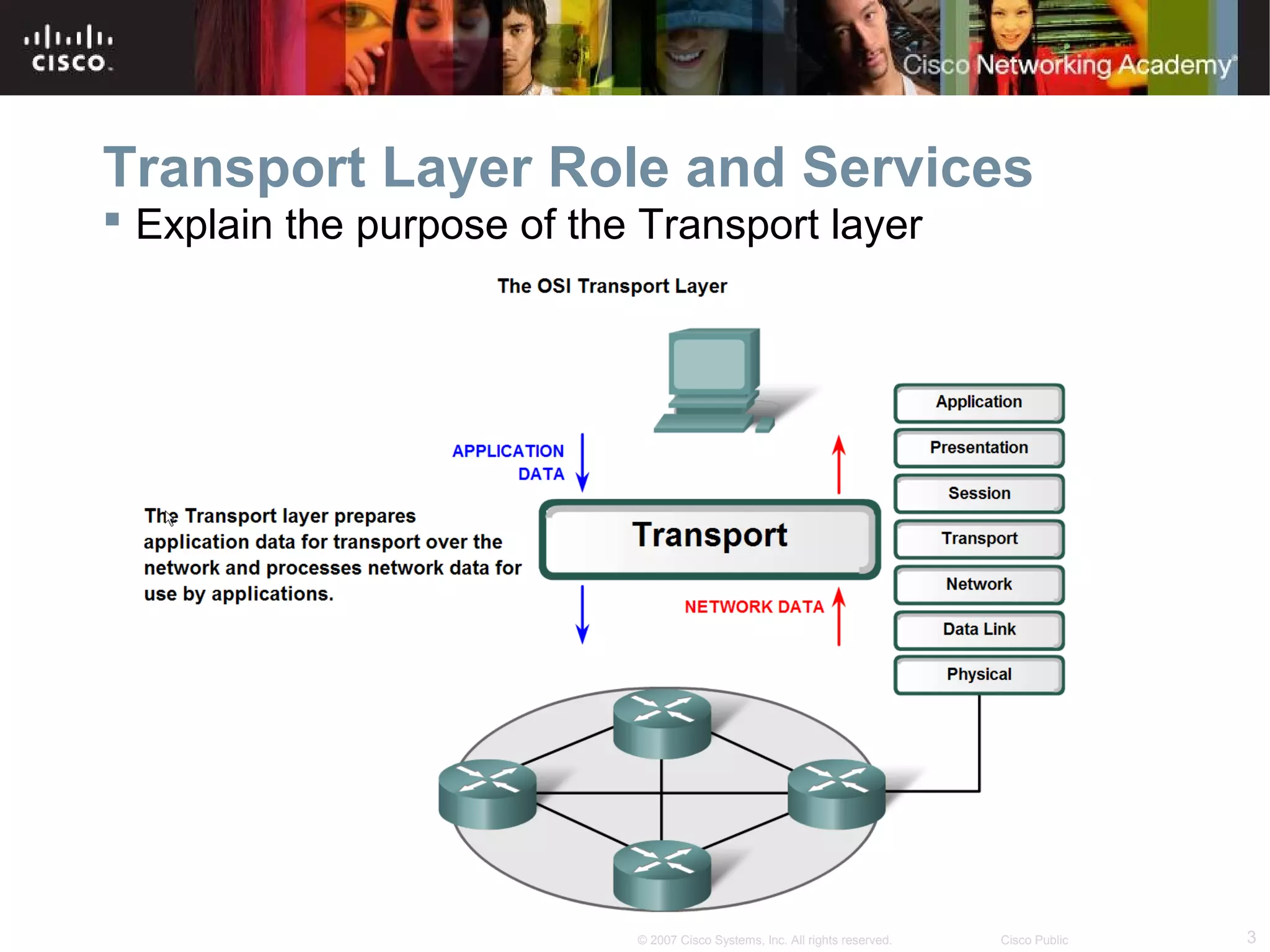
Transport Layer Role and Services
 Explain the purpose of the Transport layer
4© 2007 Cisco Systems, Inc. All rights reserved. Cisco Public
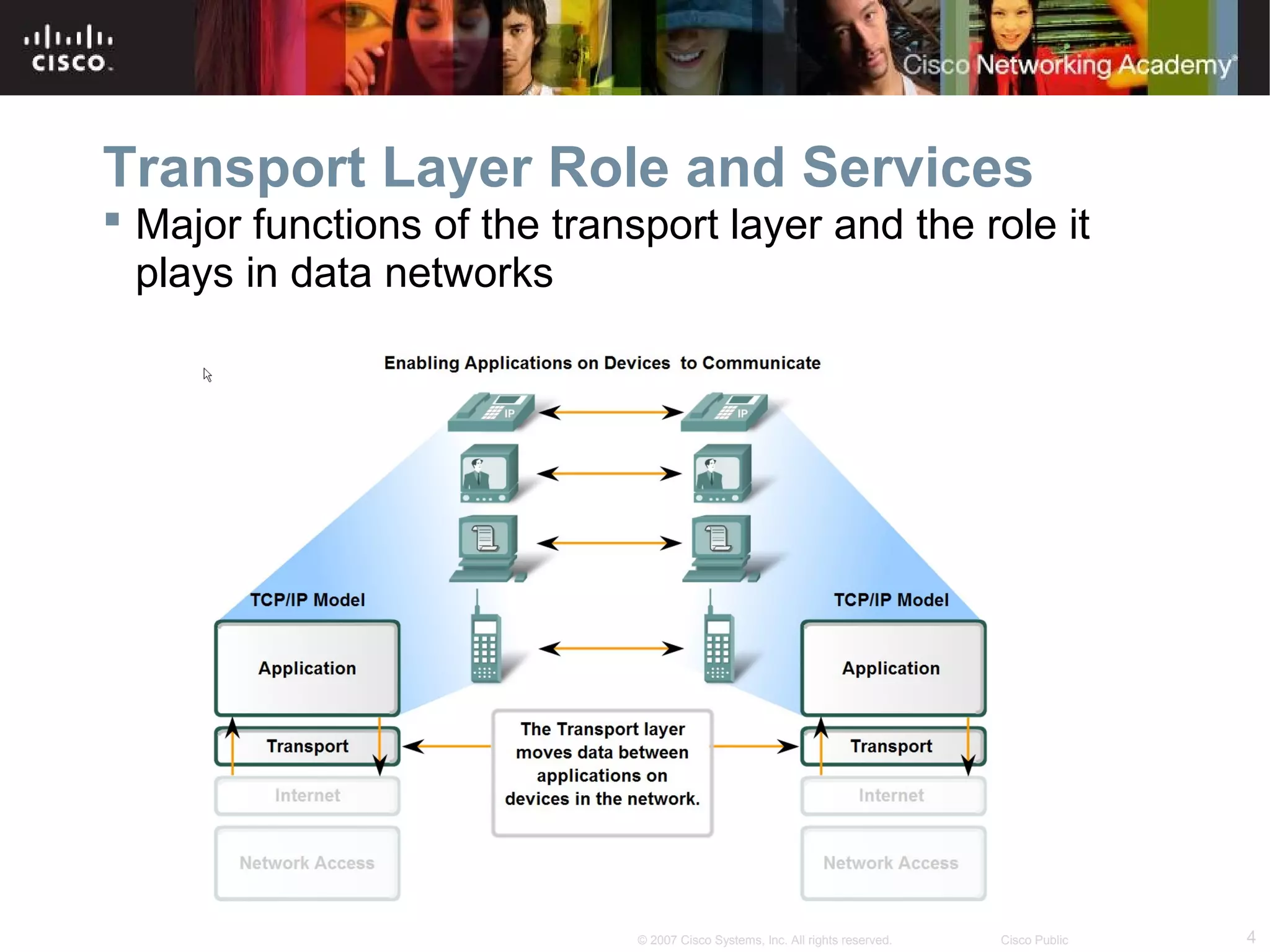
Transport Layer Role and Services
 Major functions of the transport layer and the role it
plays in data networks
5© 2007 Cisco Systems, Inc. All rights reserved. Cisco Public
Transport Layer Role and Services
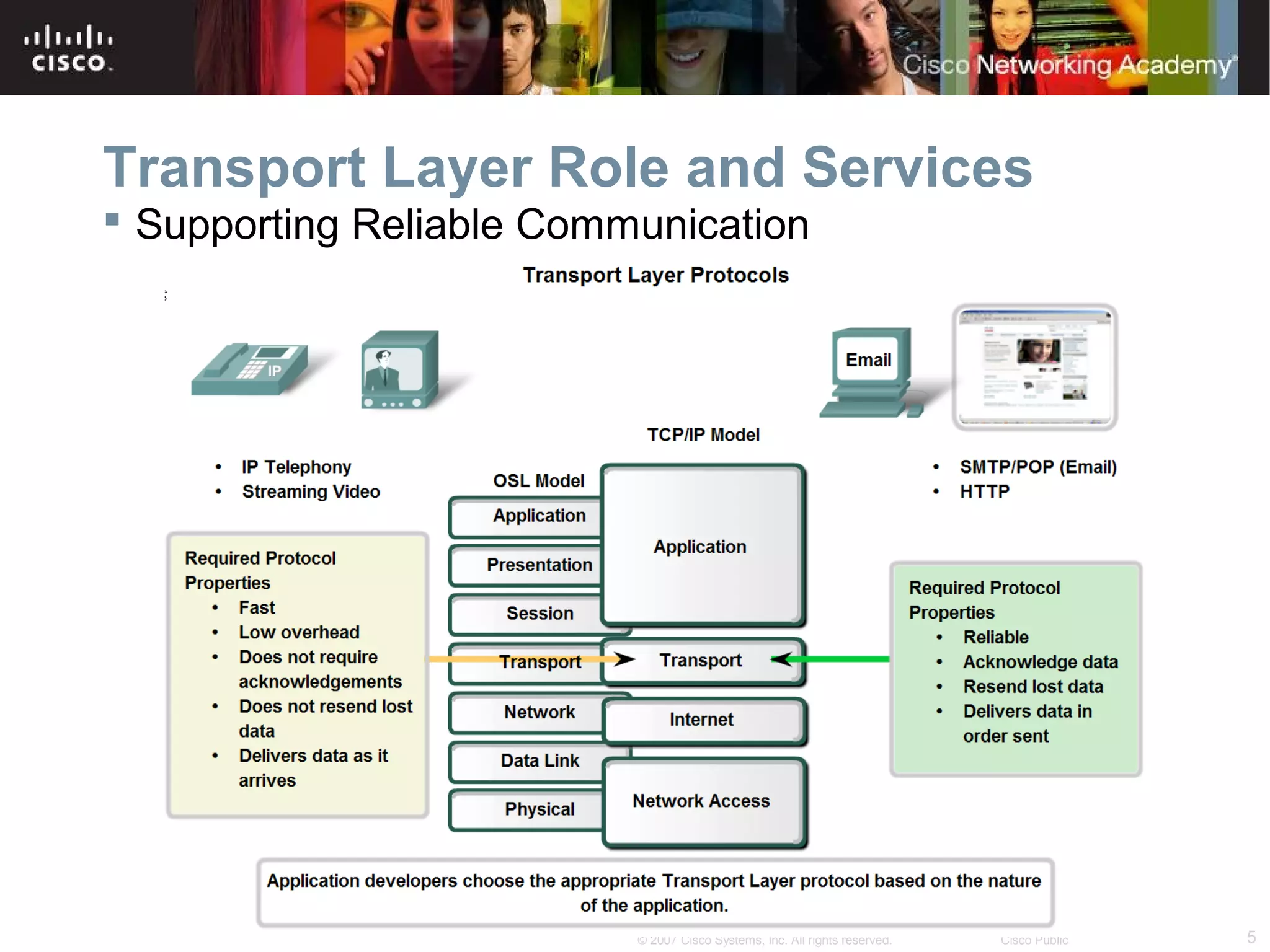
 Supporting Reliable Communication
6© 2007 Cisco Systems, Inc. All rights reserved. Cisco Public
Transport Layer Role and Services
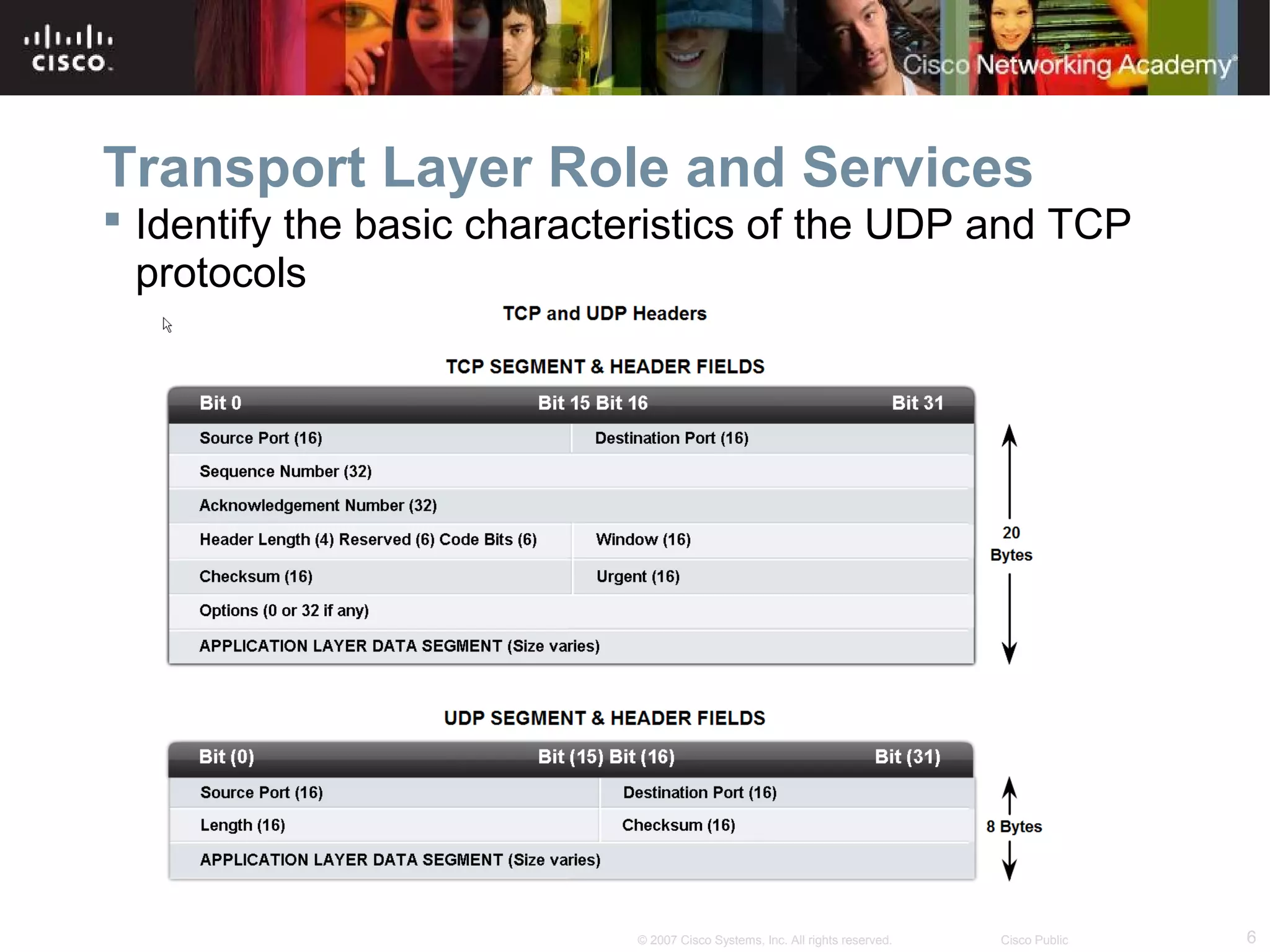
 Identify the basic characteristics of the UDP and TCP
protocols
7© 2007 Cisco Systems, Inc. All rights reserved. Cisco Public
Transport Layer Role and Services
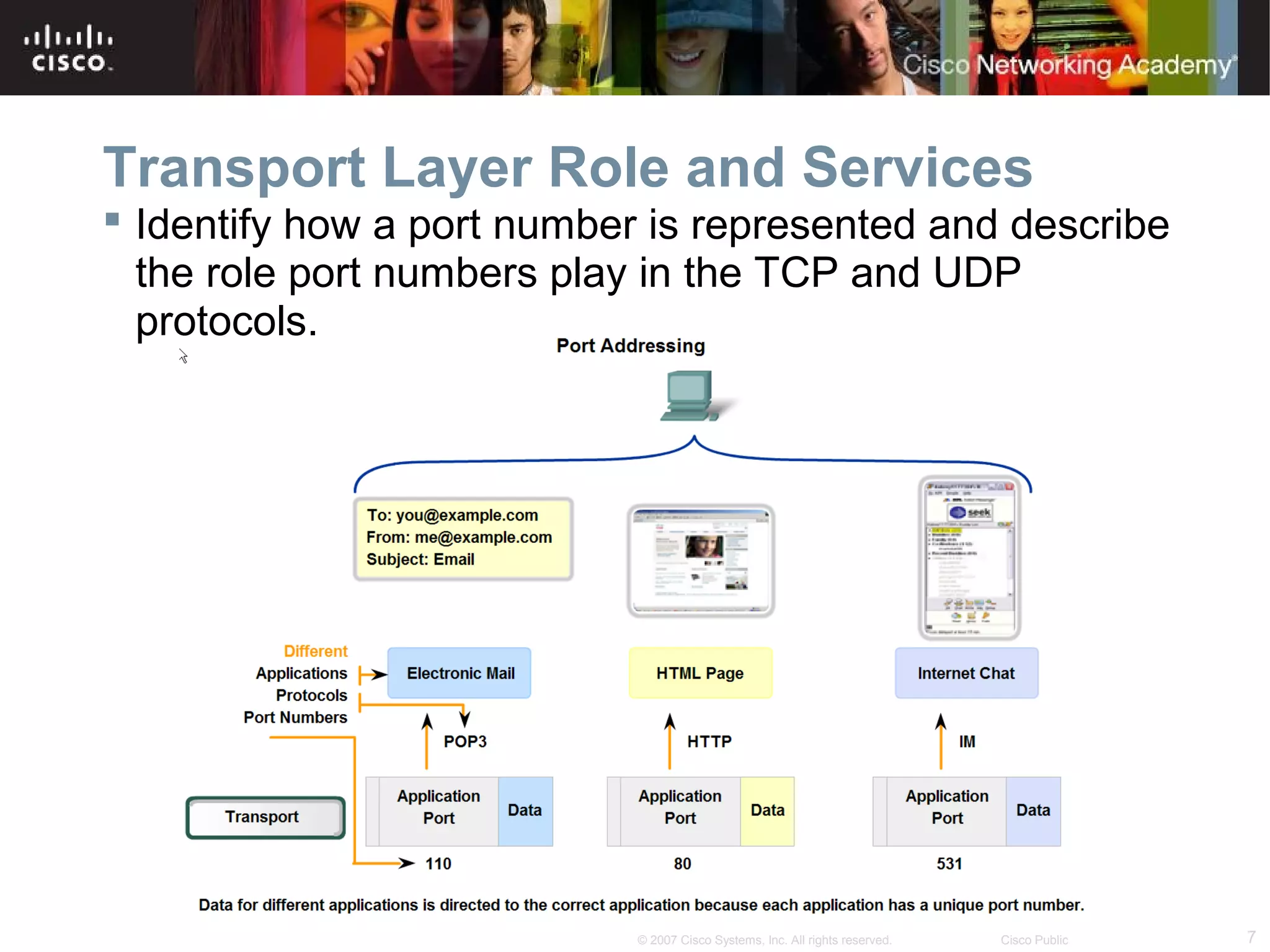
 Identify how a port number is represented and describe
the role port numbers play in the TCP and UDP
protocols.
8© 2007 Cisco Systems, Inc. All rights reserved. Cisco Public
Transport Layer Role and Services
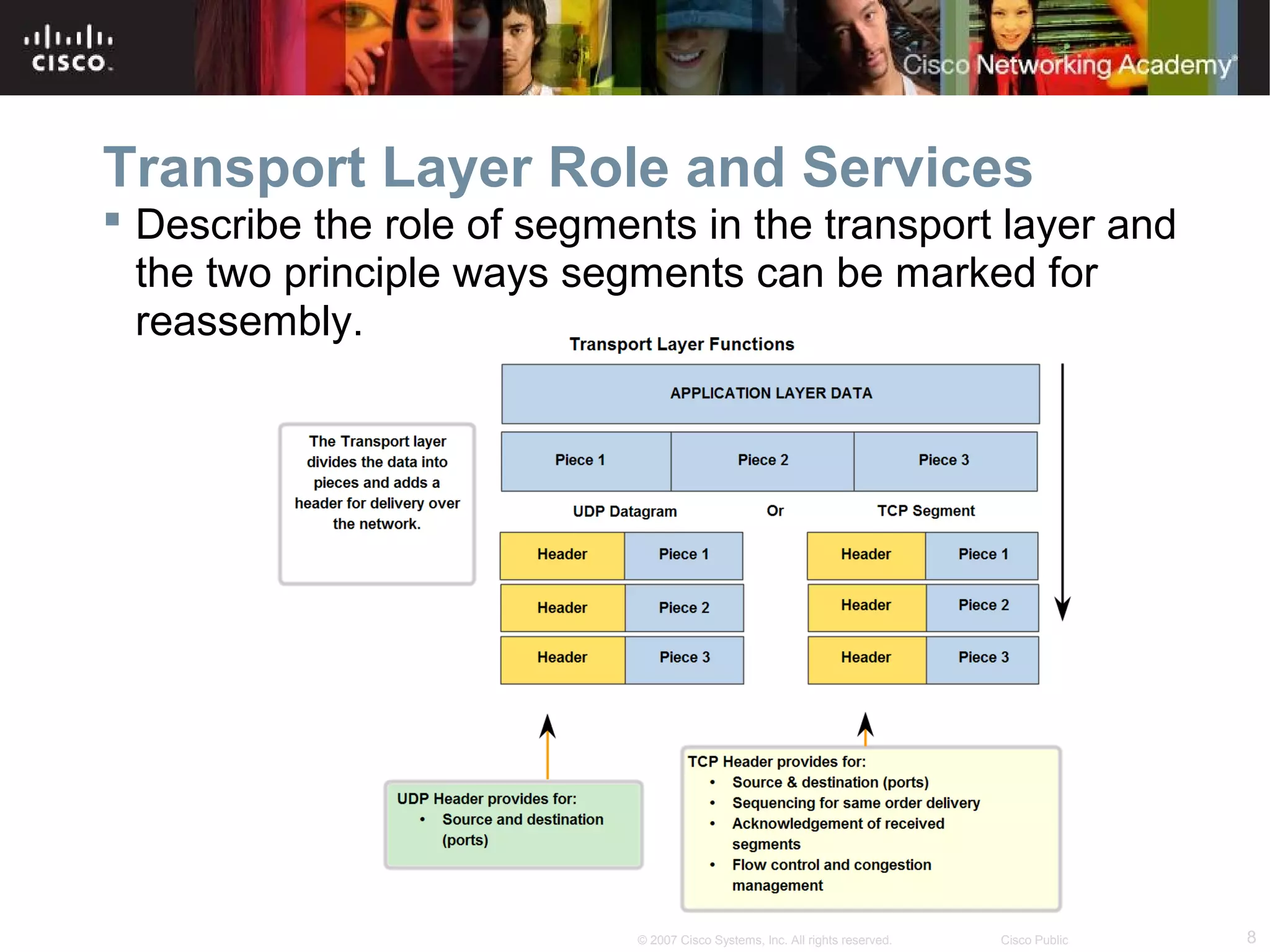
 Describe the role of segments in the transport layer and
the two principle ways segments can be marked for
reassembly.
9© 2007 Cisco Systems, Inc. All rights reserved. Cisco Public
Application and Operation of TCP Mechanisms
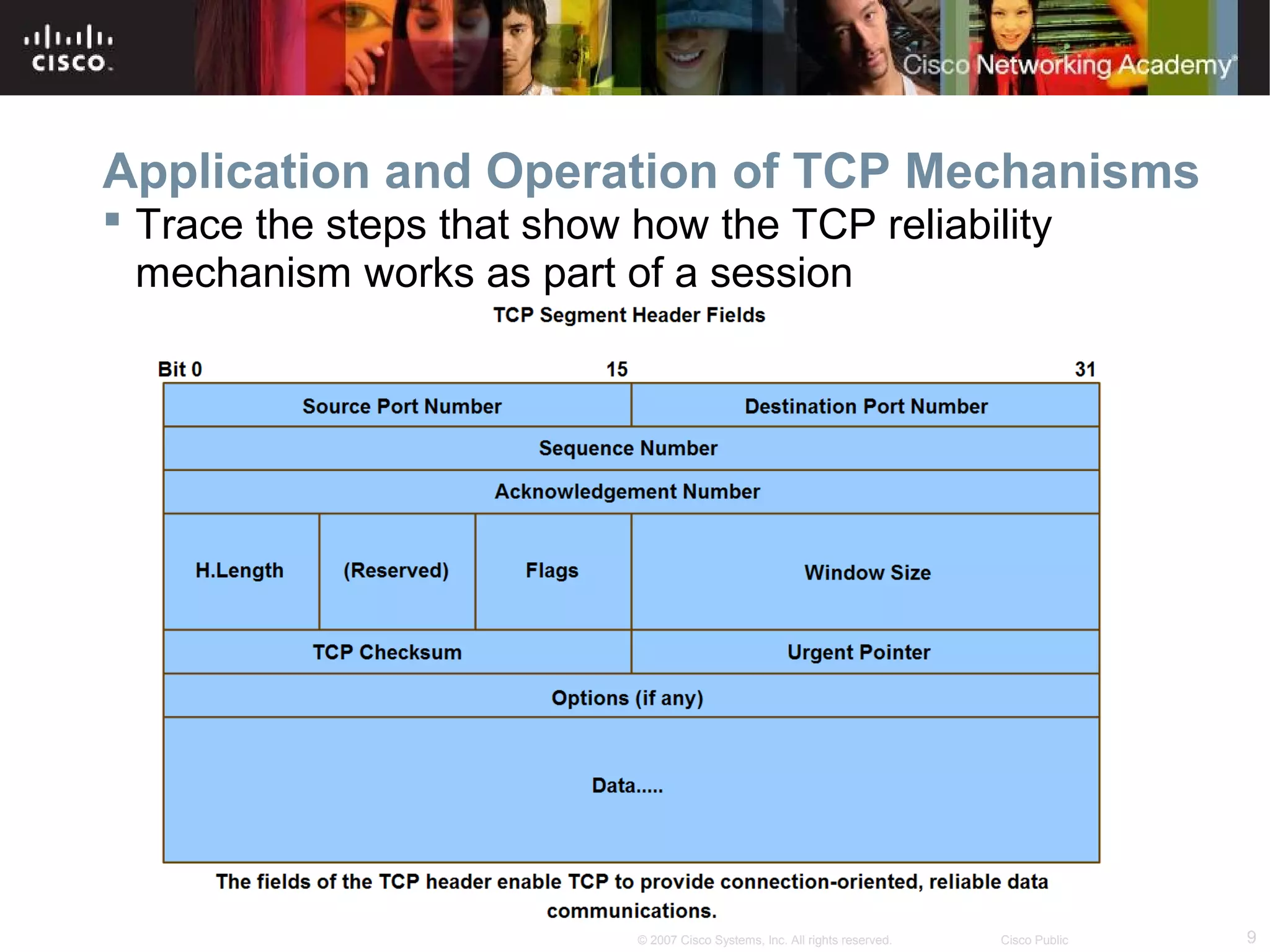
 Trace the steps that show how the TCP reliability
mechanism works as part of a session
10© 2007 Cisco Systems, Inc. All rights reserved. Cisco Public
Application and Operation of TCP Mechanisms
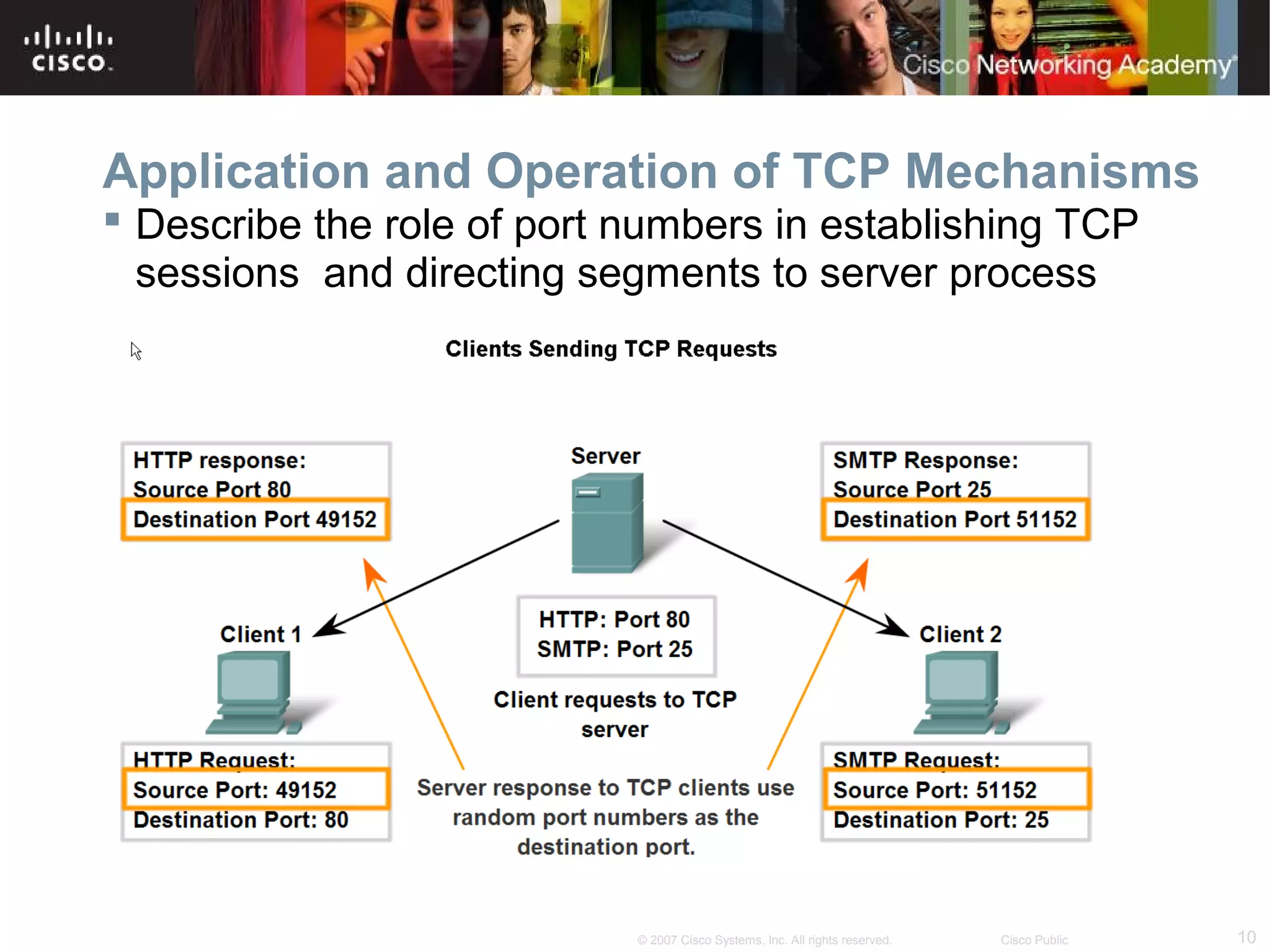
 Describe the role of port numbers in establishing TCP
sessions and directing segments to server process
11© 2007 Cisco Systems, Inc. All rights reserved. Cisco Public
Application and Operation of TCP Mechanisms
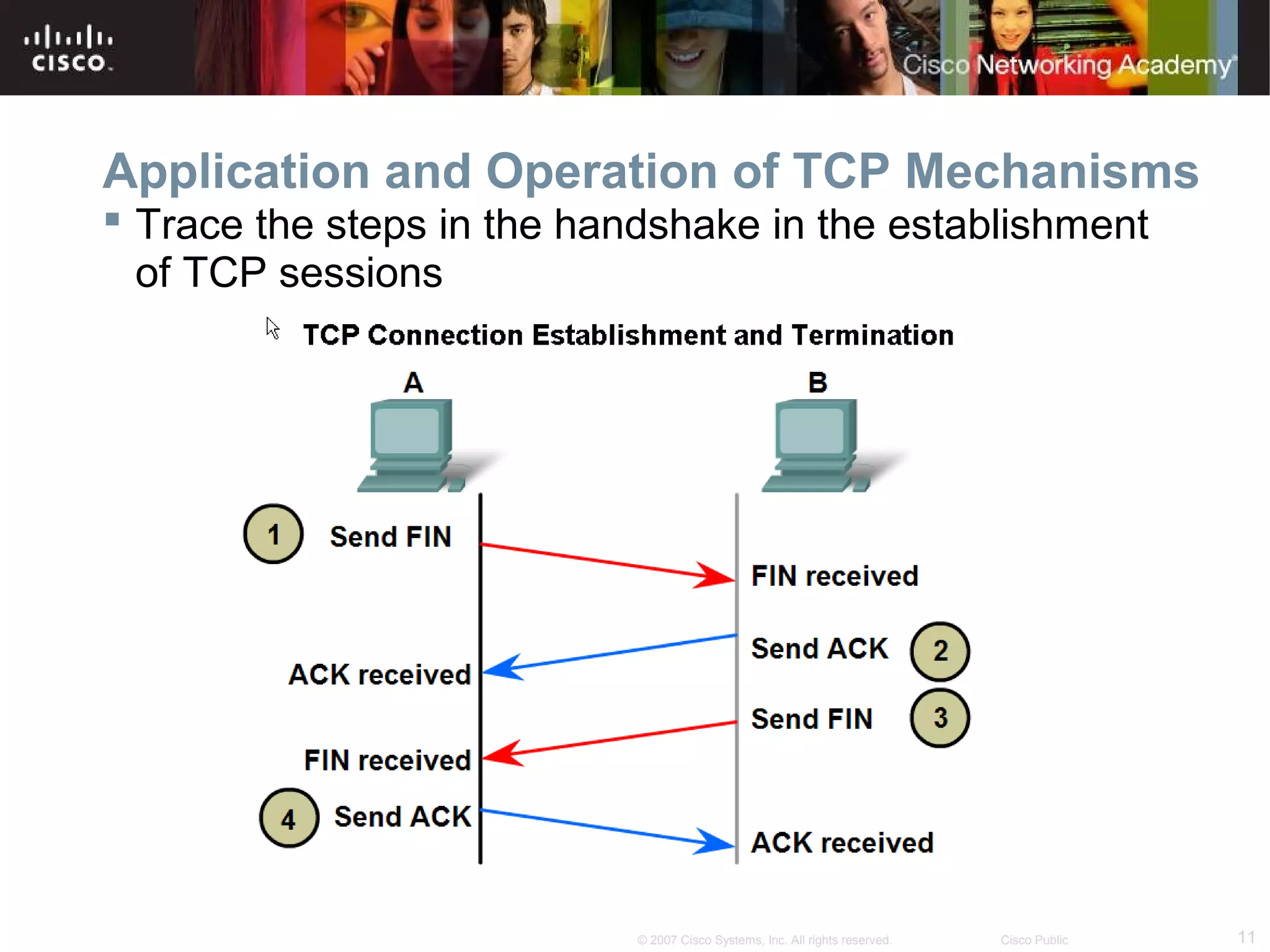
 Trace the steps in the handshake in the establishment
of TCP sessions
12© 2007 Cisco Systems, Inc. All rights reserved. Cisco Public
Application and Operation of TCP Mechanisms
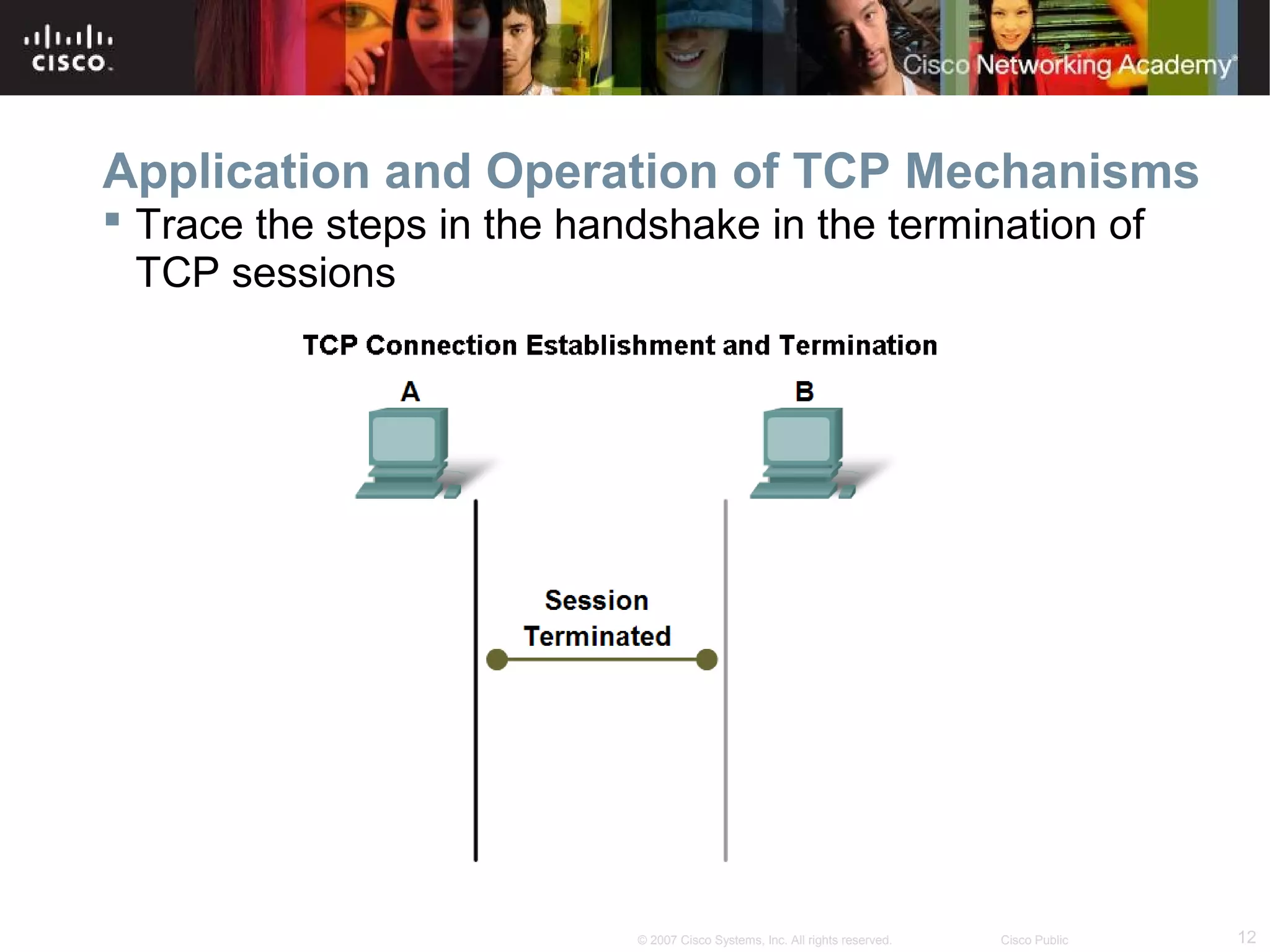
 Trace the steps in the handshake in the termination of
TCP sessions
13© 2007 Cisco Systems, Inc. All rights reserved. Cisco Public
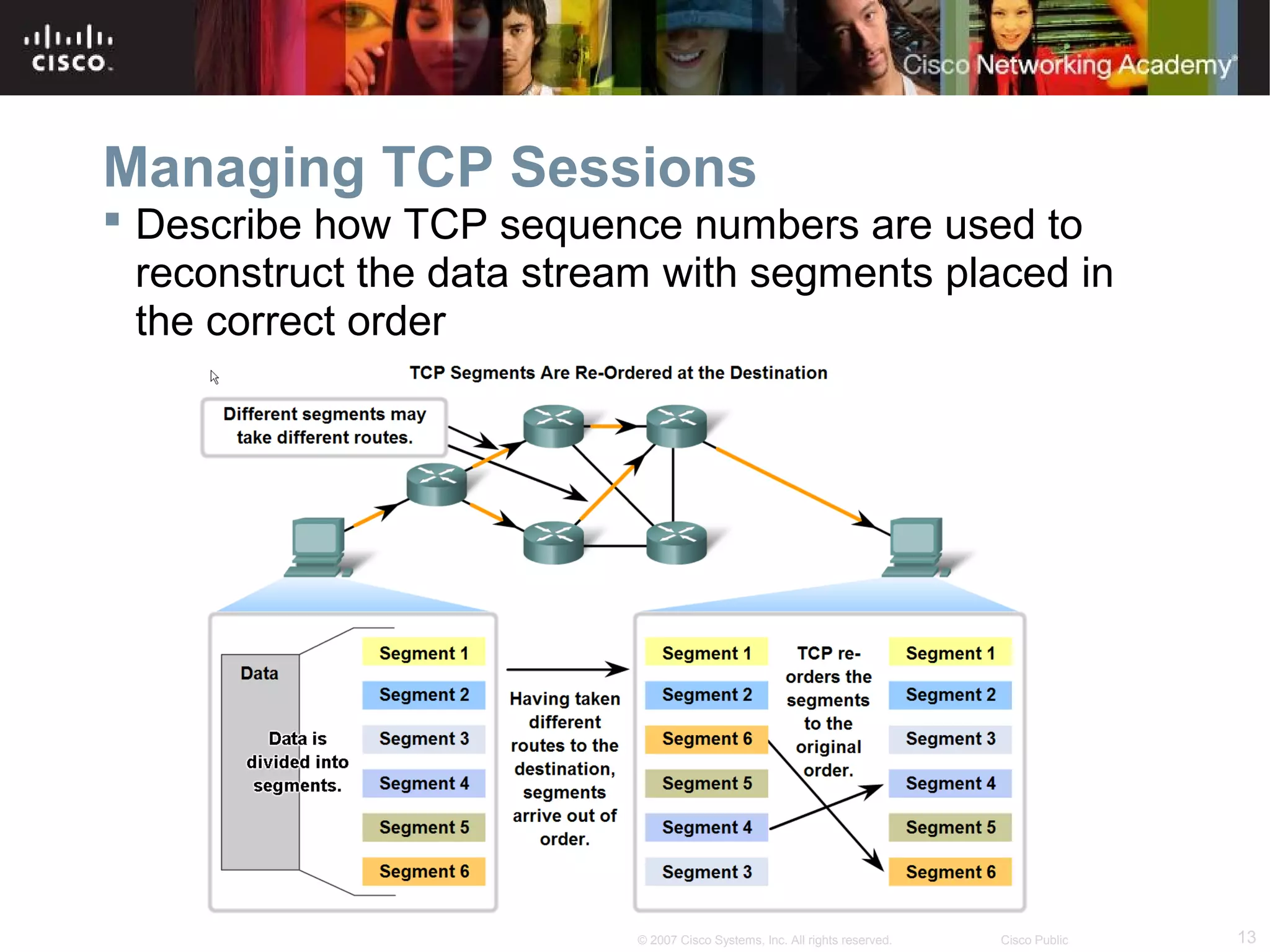
Managing TCP Sessions
 Describe how TCP sequence numbers are used to
reconstruct the data stream with segments placed in
the correct order
14© 2007 Cisco Systems, Inc. All rights reserved. Cisco Public
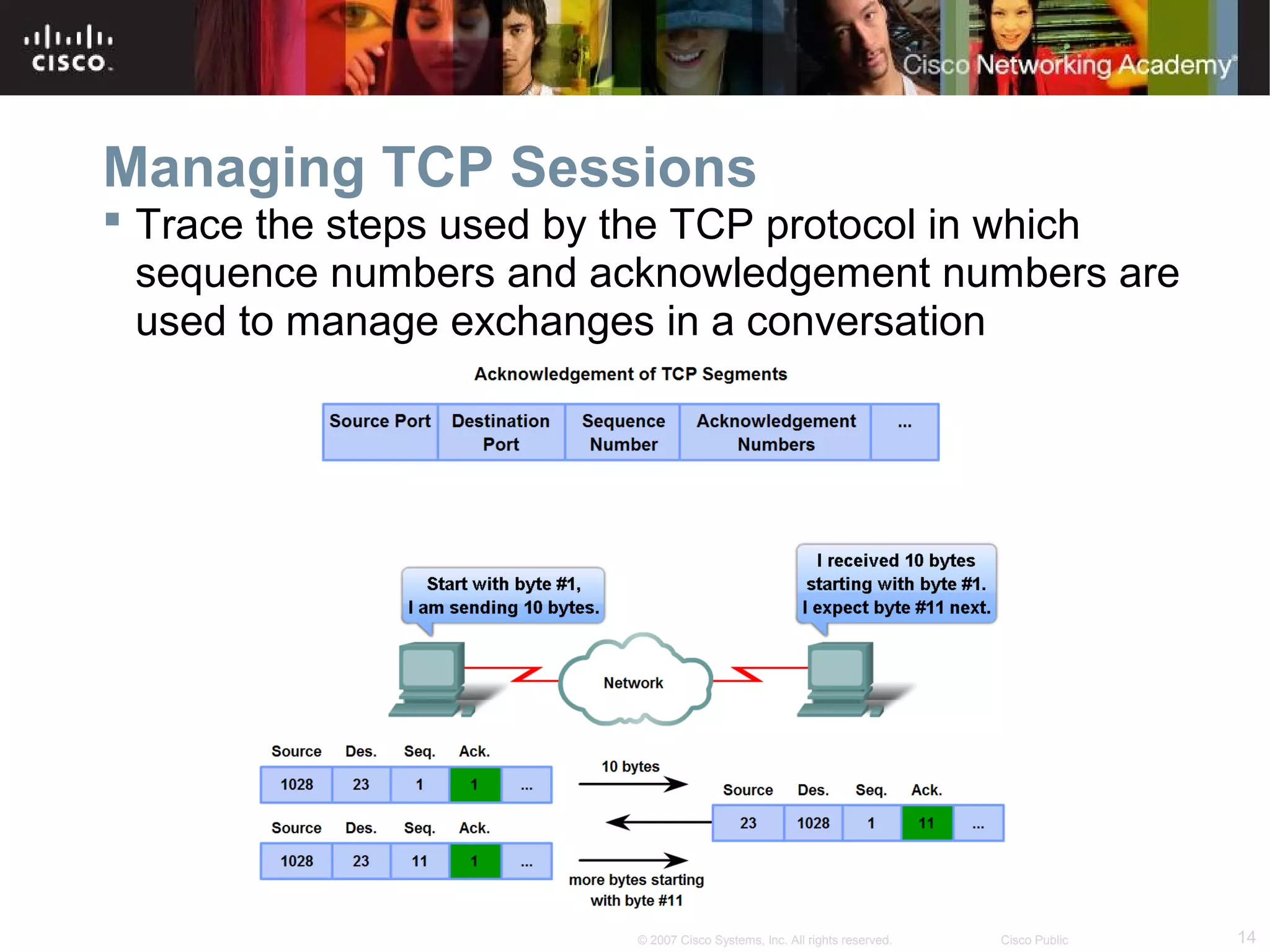
Managing TCP Sessions
 Trace the steps used by the TCP protocol in which
sequence numbers and acknowledgement numbers are
used to manage exchanges in a conversation
15© 2007 Cisco Systems, Inc. All rights reserved. Cisco Public
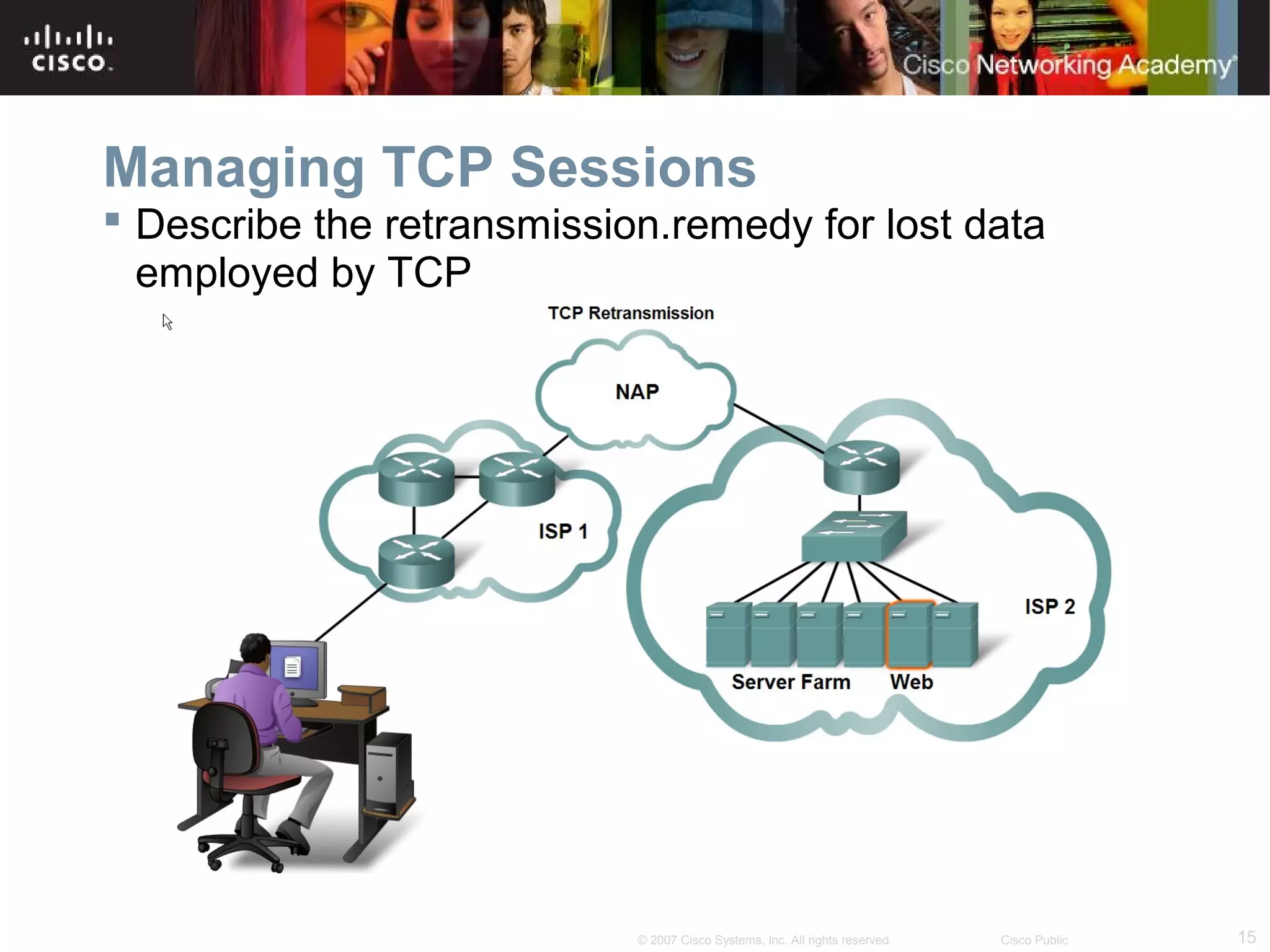
Managing TCP Sessions
 Describe the retransmission.remedy for lost data
employed by TCP
16© 2007 Cisco Systems, Inc. All rights reserved. Cisco Public
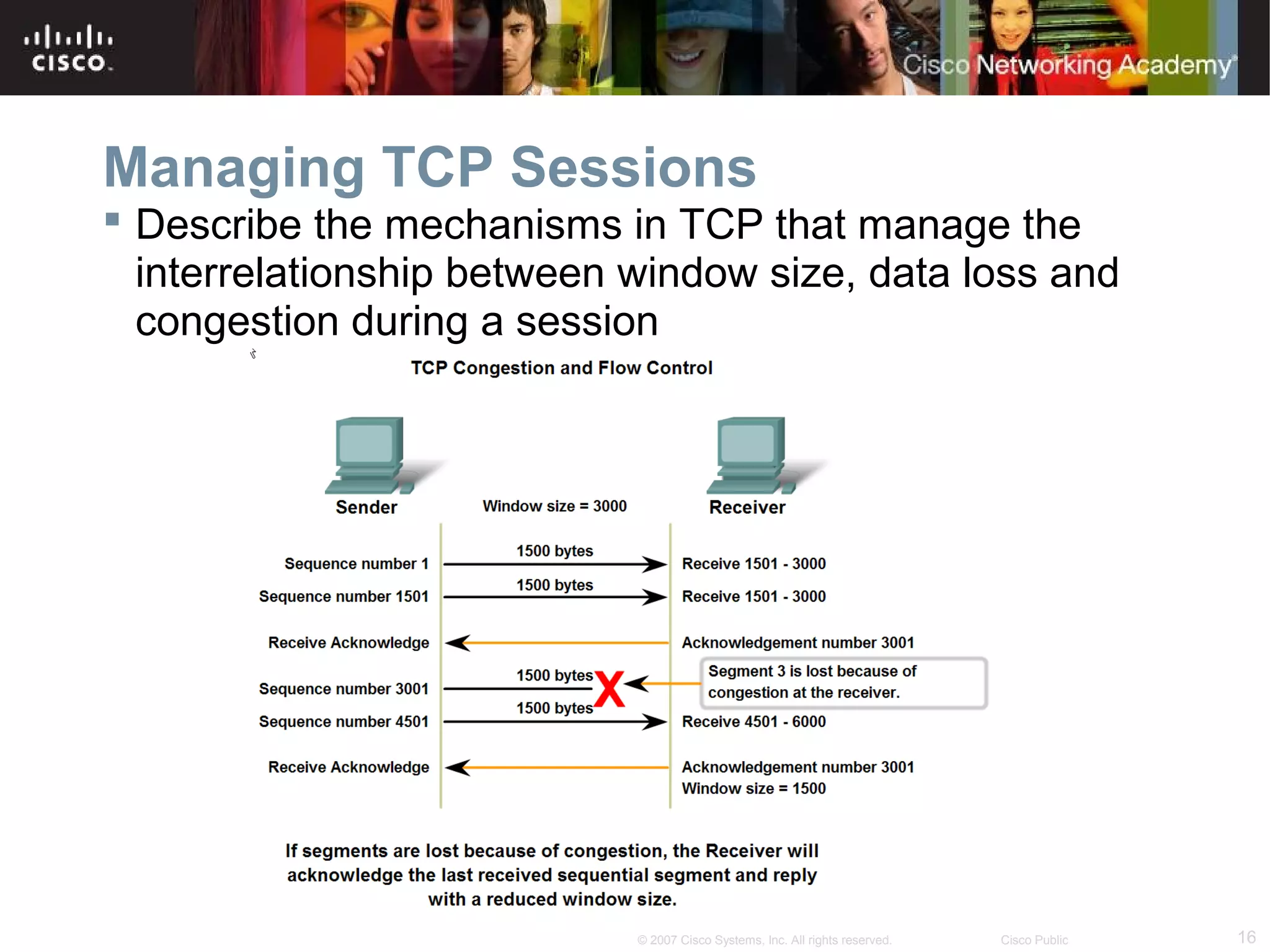
Managing TCP Sessions
 Describe the mechanisms in TCP that manage the
interrelationship between window size, data loss and
congestion during a session
17© 2007 Cisco Systems, Inc. All rights reserved. Cisco Public
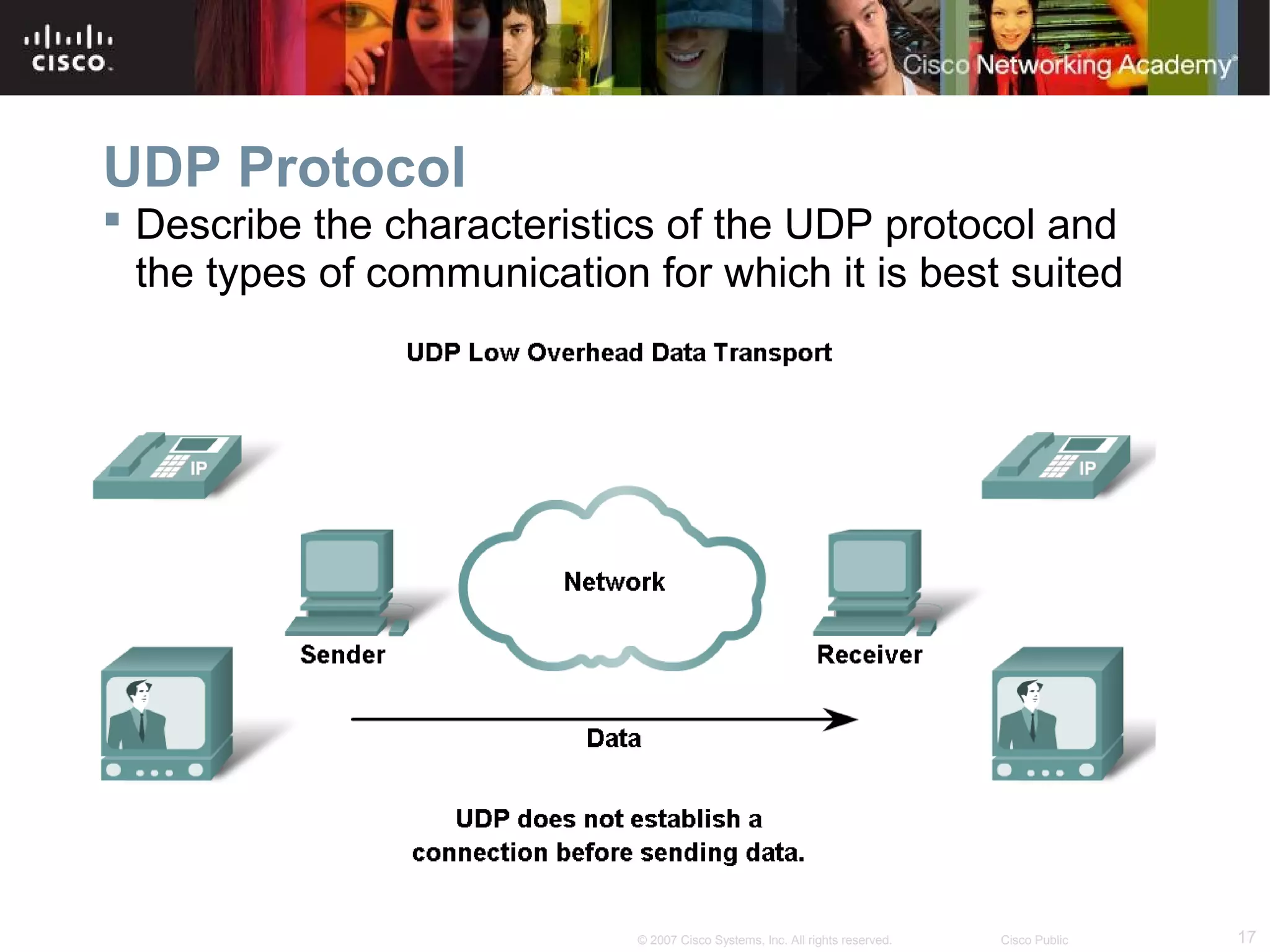
UDP Protocol
 Describe the characteristics of the UDP protocol and
the types of communication for which it is best suited
18© 2007 Cisco Systems, Inc. All rights reserved. Cisco Public
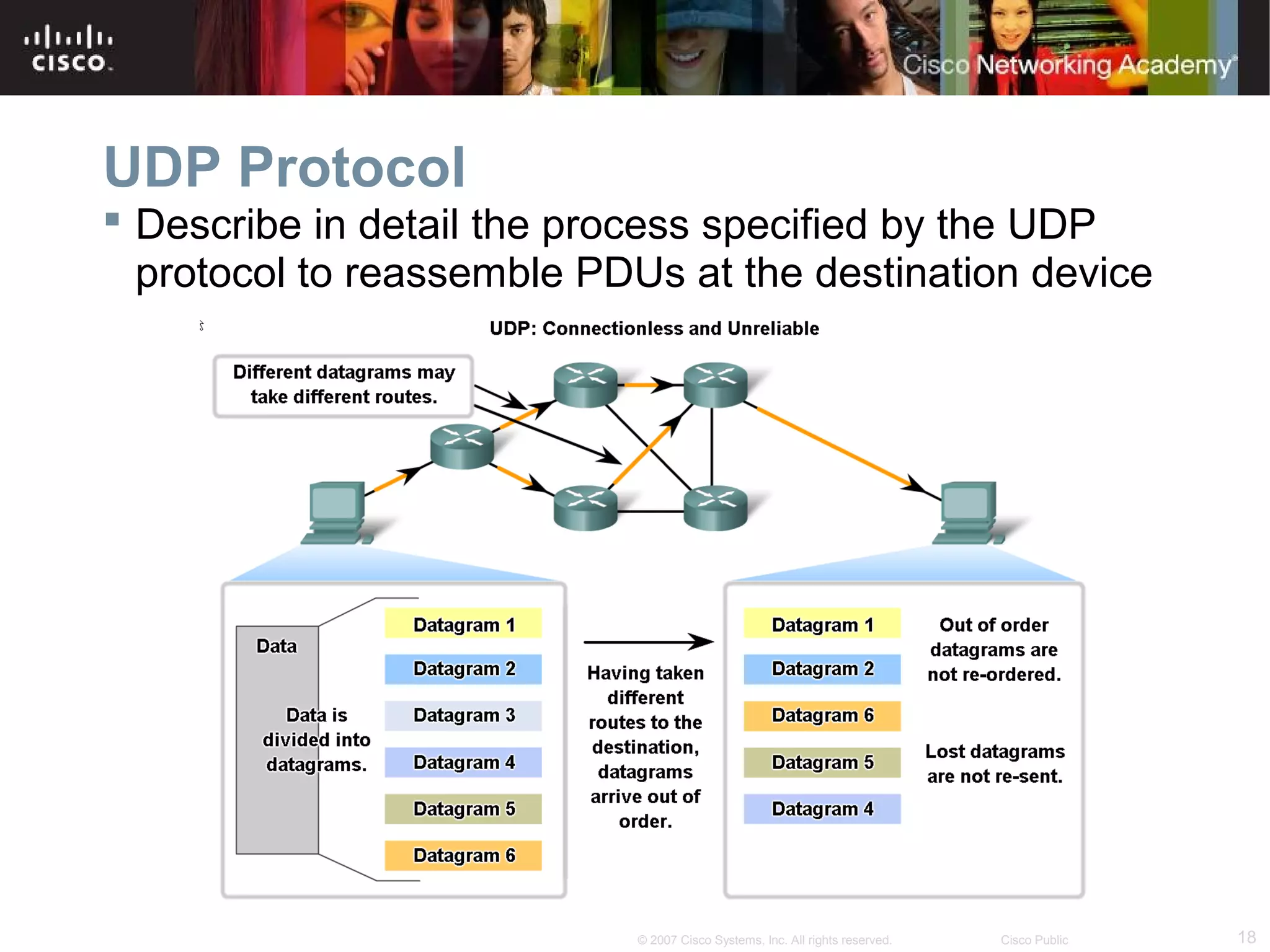
UDP Protocol
 Describe in detail the process specified by the UDP
protocol to reassemble PDUs at the destination device
19© 2007 Cisco Systems, Inc. All rights reserved. Cisco Public
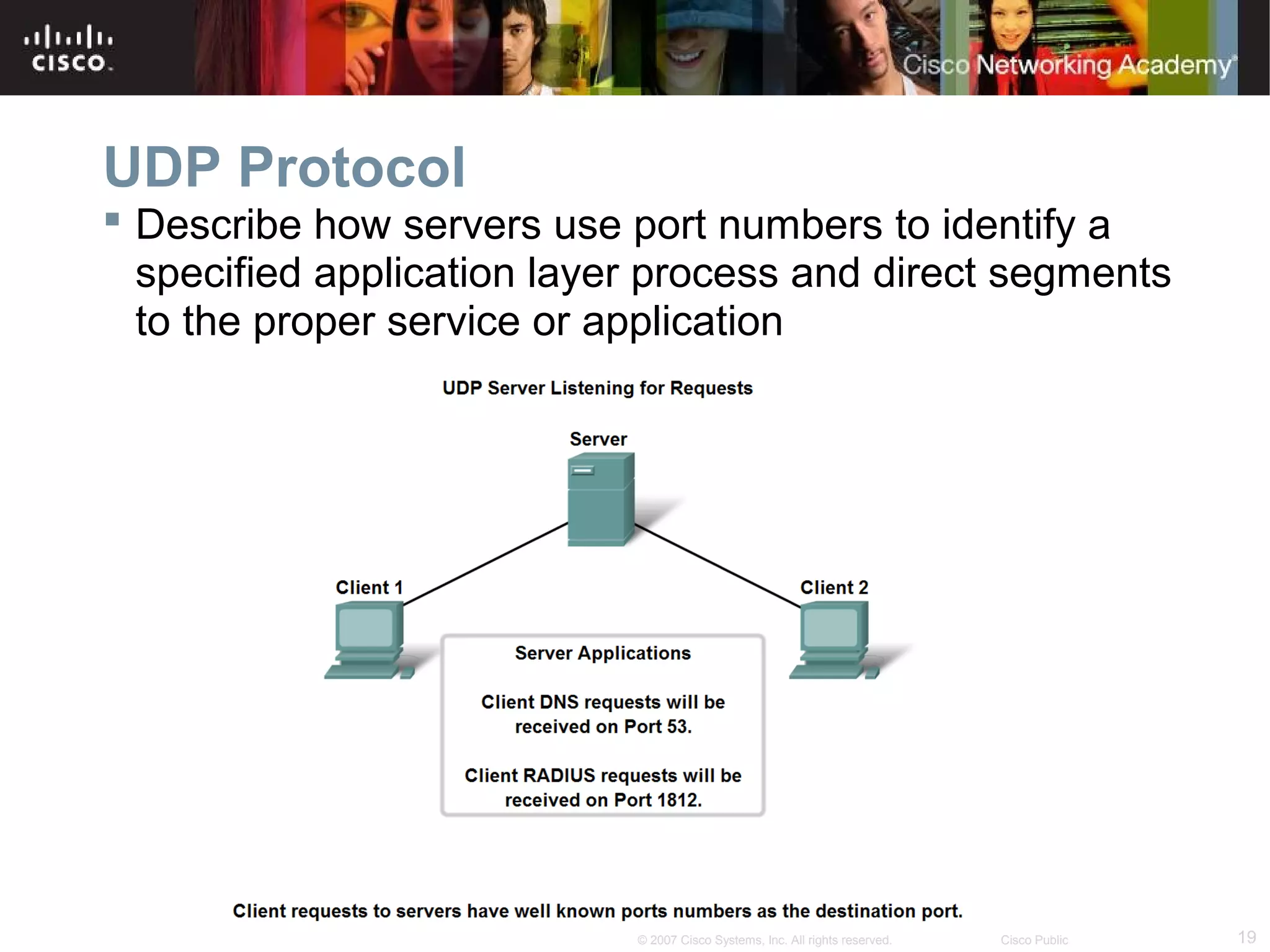
UDP Protocol
 Describe how servers use port numbers to identify a
specified application layer process and direct segments
to the proper service or application
20© 2007 Cisco Systems, Inc. All rights reserved. Cisco Public
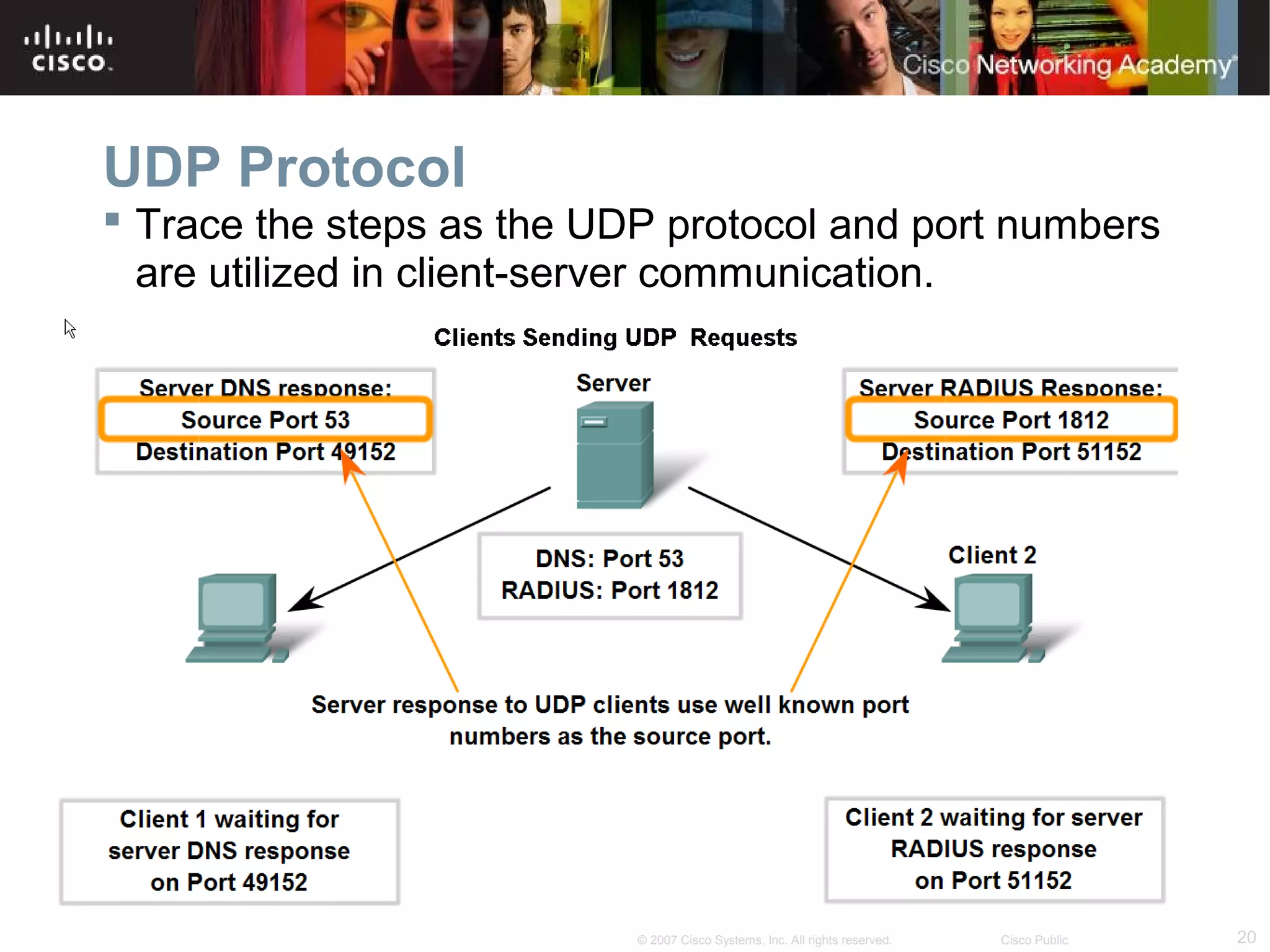
UDP Protocol
 Trace the steps as the UDP protocol and port numbers
are utilized in client-server communication.
21© 2007 Cisco Systems, Inc. All rights reserved. Cisco Public
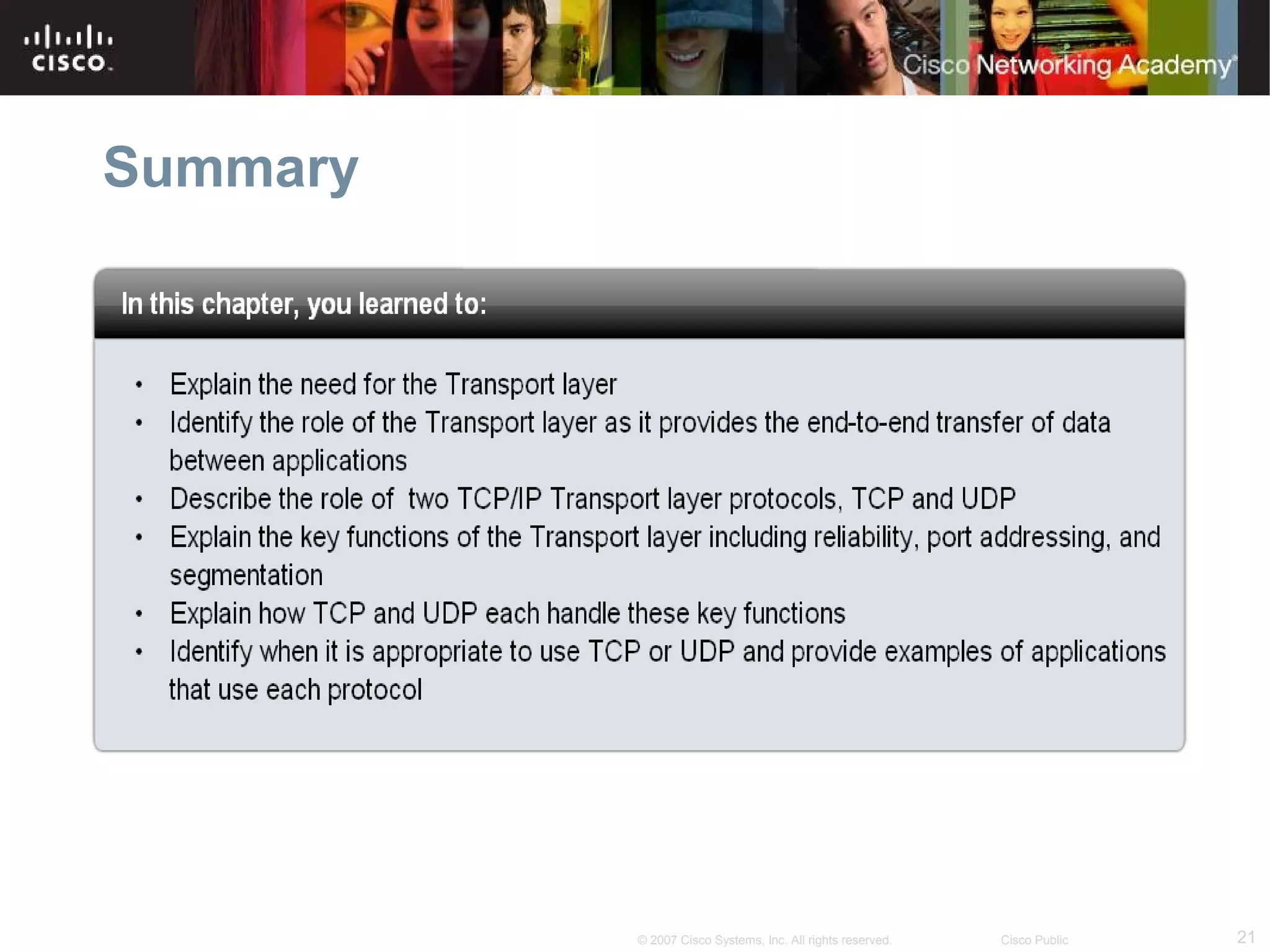
Summary
22© 2007 Cisco Systems, Inc. All rights reserved. Cisco Public

CCNA Exploration 1 - Chapter 4

  • 1.
    © 2007 CiscoSystems, Inc. All rights reserved. Cisco Public 1 OSI Transport Layer Network Fundamentals – Chapter 4
  • 2.
    2© 2007 CiscoSystems, Inc. All rights reserved. Cisco Public Objectives  Explain the role of Transport Layer protocols and services in supporting communications across data networks  Analyze the application and operation of TCP mechanisms that support reliability  Analyze the application and operation of TCP mechanisms that support reassembly and manage data loss.  Analyze the operation of UDP to support communicate between two processes on end devices
  • 3.
    3© 2007 CiscoSystems, Inc. All rights reserved. Cisco Public Transport Layer Role and Services  Explain the purpose of the Transport layer
  • 4.
    4© 2007 CiscoSystems, Inc. All rights reserved. Cisco Public Transport Layer Role and Services  Major functions of the transport layer and the role it plays in data networks
  • 5.
    5© 2007 CiscoSystems, Inc. All rights reserved. Cisco Public Transport Layer Role and Services  Supporting Reliable Communication
  • 6.
    6© 2007 CiscoSystems, Inc. All rights reserved. Cisco Public Transport Layer Role and Services  Identify the basic characteristics of the UDP and TCP protocols
  • 7.
    7© 2007 CiscoSystems, Inc. All rights reserved. Cisco Public Transport Layer Role and Services  Identify how a port number is represented and describe the role port numbers play in the TCP and UDP protocols.
  • 8.
    8© 2007 CiscoSystems, Inc. All rights reserved. Cisco Public Transport Layer Role and Services  Describe the role of segments in the transport layer and the two principle ways segments can be marked for reassembly.
  • 9.
    9© 2007 CiscoSystems, Inc. All rights reserved. Cisco Public Application and Operation of TCP Mechanisms  Trace the steps that show how the TCP reliability mechanism works as part of a session
  • 10.
    10© 2007 CiscoSystems, Inc. All rights reserved. Cisco Public Application and Operation of TCP Mechanisms  Describe the role of port numbers in establishing TCP sessions and directing segments to server process
  • 11.
    11© 2007 CiscoSystems, Inc. All rights reserved. Cisco Public Application and Operation of TCP Mechanisms  Trace the steps in the handshake in the establishment of TCP sessions
  • 12.
    12© 2007 CiscoSystems, Inc. All rights reserved. Cisco Public Application and Operation of TCP Mechanisms  Trace the steps in the handshake in the termination of TCP sessions
  • 13.
    13© 2007 CiscoSystems, Inc. All rights reserved. Cisco Public Managing TCP Sessions  Describe how TCP sequence numbers are used to reconstruct the data stream with segments placed in the correct order
  • 14.
    14© 2007 CiscoSystems, Inc. All rights reserved. Cisco Public Managing TCP Sessions  Trace the steps used by the TCP protocol in which sequence numbers and acknowledgement numbers are used to manage exchanges in a conversation
  • 15.
    15© 2007 CiscoSystems, Inc. All rights reserved. Cisco Public Managing TCP Sessions  Describe the retransmission.remedy for lost data employed by TCP
  • 16.
    16© 2007 CiscoSystems, Inc. All rights reserved. Cisco Public Managing TCP Sessions  Describe the mechanisms in TCP that manage the interrelationship between window size, data loss and congestion during a session
  • 17.
    17© 2007 CiscoSystems, Inc. All rights reserved. Cisco Public UDP Protocol  Describe the characteristics of the UDP protocol and the types of communication for which it is best suited
  • 18.
    18© 2007 CiscoSystems, Inc. All rights reserved. Cisco Public UDP Protocol  Describe in detail the process specified by the UDP protocol to reassemble PDUs at the destination device
  • 19.
    19© 2007 CiscoSystems, Inc. All rights reserved. Cisco Public UDP Protocol  Describe how servers use port numbers to identify a specified application layer process and direct segments to the proper service or application
  • 20.
    20© 2007 CiscoSystems, Inc. All rights reserved. Cisco Public UDP Protocol  Trace the steps as the UDP protocol and port numbers are utilized in client-server communication.
  • 21.
    21© 2007 CiscoSystems, Inc. All rights reserved. Cisco Public Summary
  • 22.
    22© 2007 CiscoSystems, Inc. All rights reserved. Cisco Public