This document provides an overview of Ethernet networking concepts including:
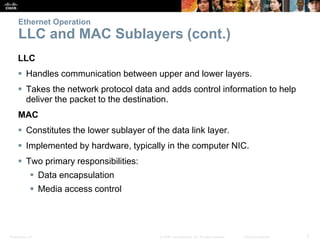
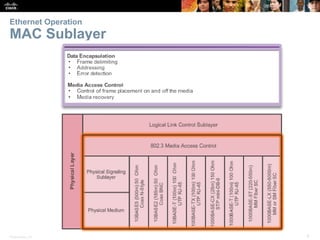
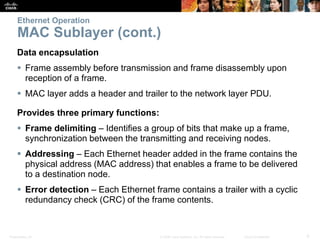
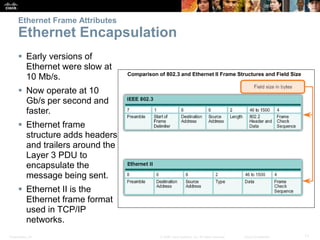
- How Ethernet frames are encapsulated and the purpose of the MAC sublayers.
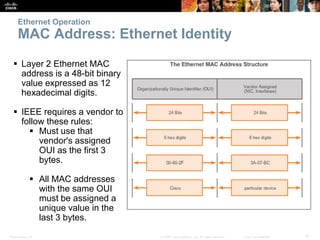
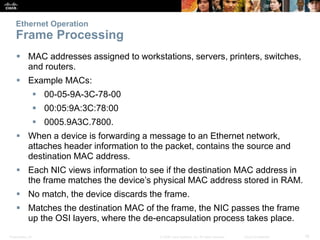
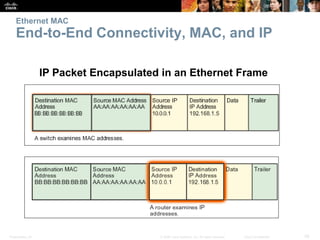
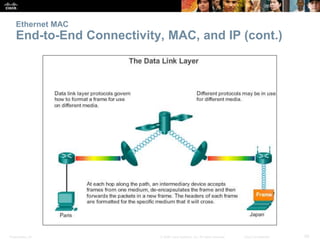
- How MAC addresses are assigned and their role in end-to-end communication.
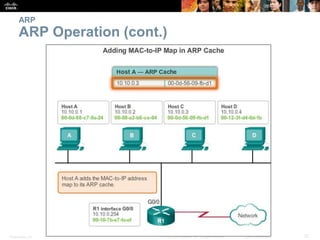
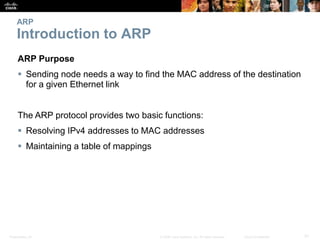
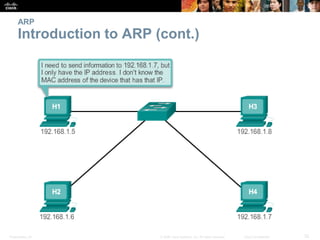
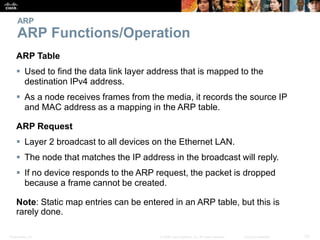
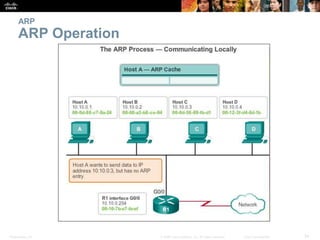
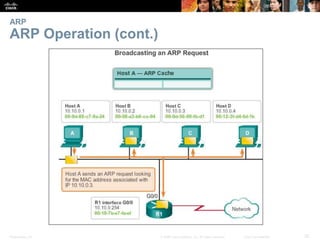
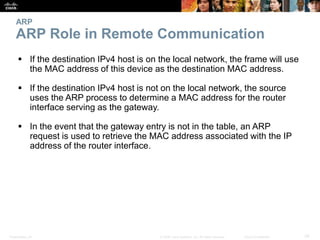
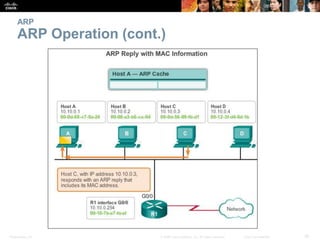
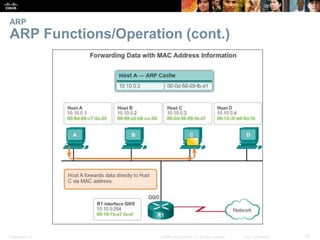
- The purpose and process of ARP for resolving IP addresses to MAC addresses.
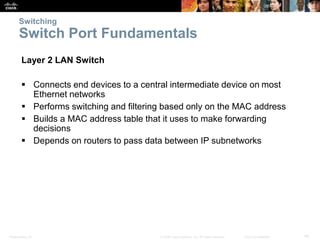
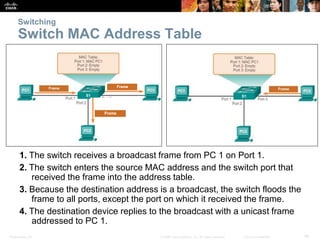
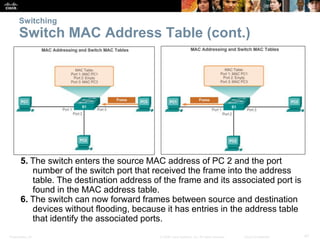
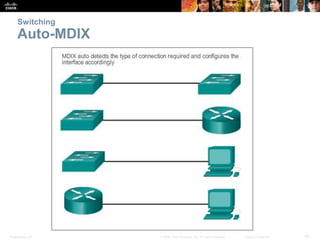
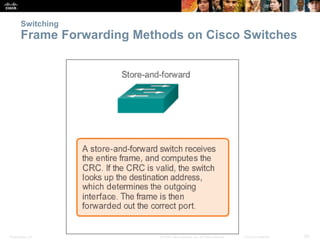
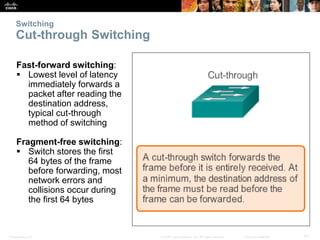
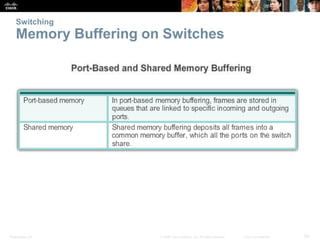
- Basic functions of network switches including building the MAC address table and frame forwarding methods like cut-through switching.
Chapter 5 introduces Ethernet technology, its objectives, and a structured overview of the contents.
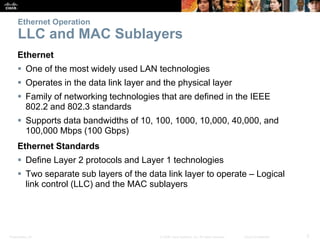
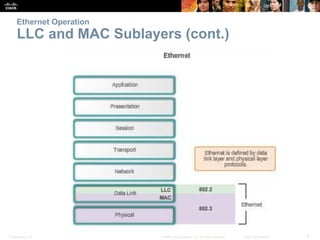
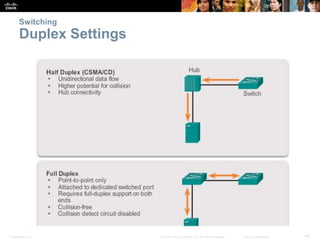
Discusses Ethernet protocol layers including LLC and MAC, operation principles, and bandwidth specifications.
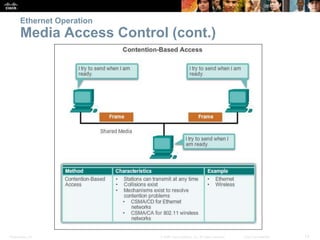
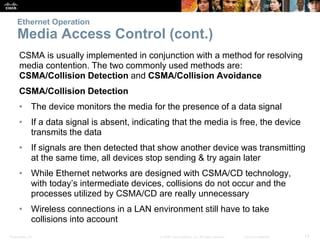
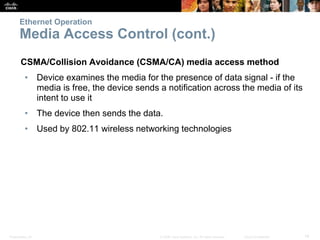
Details MAC layer operations including frame assembly, media access control via CSMA/CD and CSMA/CA.
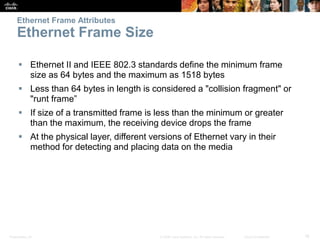
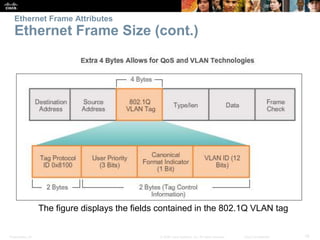
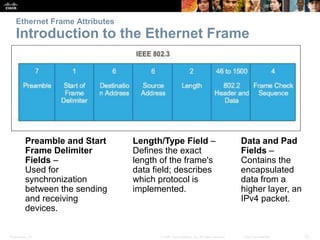
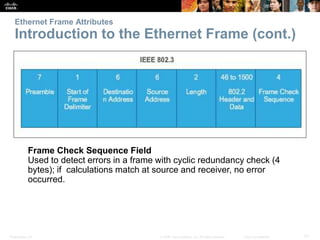
Explains Ethernet frame structure, size attributes, encapsulation methods, and fields within the frame.
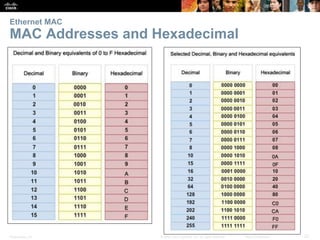
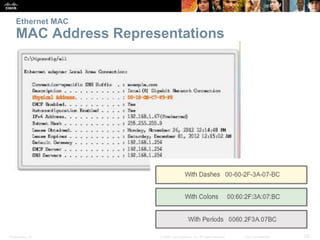
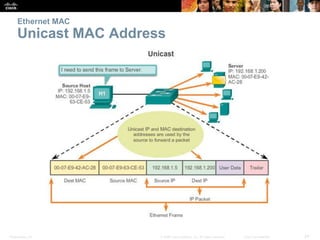
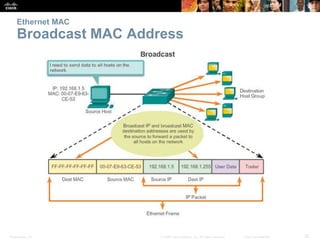
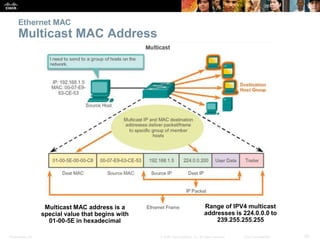
Describes MAC address types including unicast, broadcast, and multicast addresses with examples.
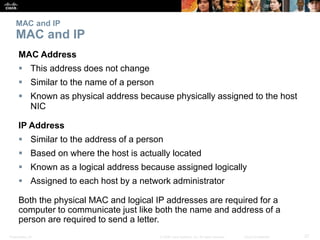
Explains the roles of MAC and IP addresses in network communication and their essential characteristics.
Introduction to ARP, its purpose, and how it resolves IP to MAC addresses within networks.
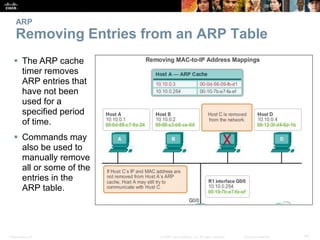
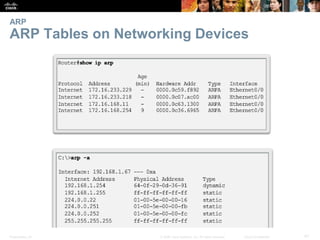
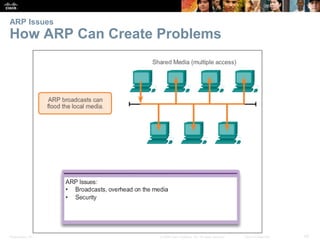
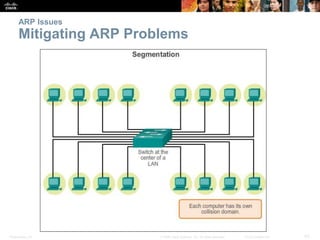
Details ARP operation, table management, issues it can cause, and mitigation strategies.
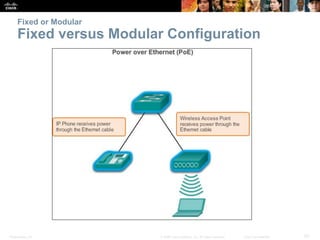
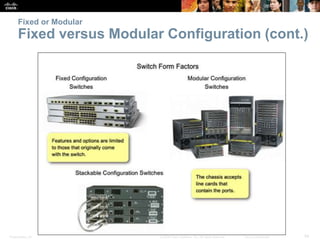
Explains Layer 2 switches, their MAC address table, and compares fixed versus modular configurations.
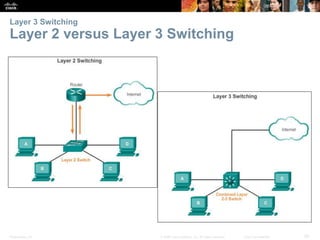
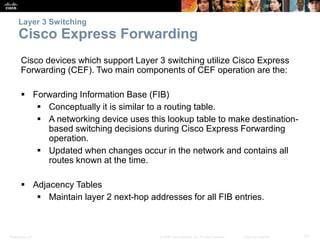
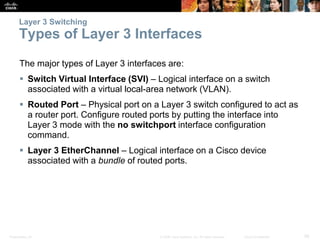
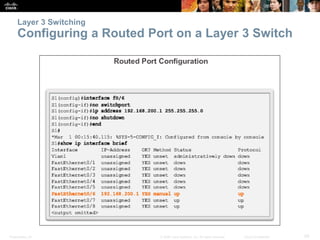
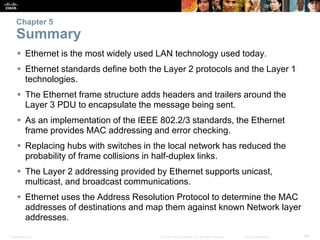
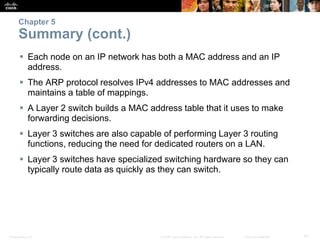
Describes Layer 3 switch functionalities, including Cisco Express Forwarding and interface types.Summarizes key points about Ethernet technology, MAC and IP addressing, ARP, and switching capabilities.