Jenni Proctor
                             Career Clarity
                http://careerclarity.com.au
http://claritycareermanagement.com.au/
               jenni@careerclarity.com.au
CHOICES
  CHANGE
CONFIDENCE
CHALLENGES
Crisis of confidence
 Personal
 Organisational
 Others
Changes
 Ways of doing things
 New technology
 Cultural changes
 Atmospheric shifts
Stress
 Deadlines
 Demands
 Clarity of work role
People
 Bullying
 Age and generations
 Being overlooked
 Poor management
 Communication issues
It’s all about attitude
Mind set
 What you think
 What you believe
 How you respond
 How others perceive you
Fear factor
 Don’t want to end up worse off
 Consider the options from every angle
 Research
 Evaluate the options – Consider Plus, Minus and
  Interesting factors
 Learn to have an optimistic viewpoint
   Visualise what you want rather than worry about what
    you fear
Fear Issues – Going backwards
 What is the worst that could happen?
 What is the BEST that could happen?
 What is the most likely outcome?
 Listen to your instinct as well as your logical mind
Fear issues - Study
Study
 Your results at school have NOTHING to do with your
  capabilities
 Be certain this is what you want to do
 Access support
 Do your best……….but don’t kill yourself in the process!
What is resilience?
 Ability to “bounce back”
 Reduces the impact of negative experiences
 Long term stressors…..coping strategies
 Short term stressors……dealing with it
 Different people deal in different ways
   Health and wellbeing
   Individual factors – genetics, personality
   Life history and experience
   Social and community support
Indicators of resilience
 Make and carry out realistic plans
 Positive/optimistic view of self
 Confidence in strengths and abilities
 Skills in communication
 Skills in problem solving
 Able to manage strong emotions and impulses
Living with resilience
   Allow yourself to be imperfect
   Take time for YOU. Do things you enjoy
   Get involved in things that matter to you
   Be active
   Spend time with people who make you feel good
   Laugh
   Relationships
   Overcome procrastination, one step at a time
   Perspective
   Focus on things you can control
   Accept help and support
A resilient mindset
 Accept Change……It’s inevitable
 Avoid viewing problems as impossible
 Develop a hopeful outlook – Optimism is learned
    Visualise what you want rather than worry about what
     you fear
 Progress towards realistic goals
    “What is one thing I can do today that will help me
     move in the direction I want to go?”
A resilient mindset
 Take decisive action. Don’t hide your head in the
    sand!
   Keep things in perspective. Avoid catastrophizing
   Nurture a positive image of yourself
   Trust your instincts and your ability to solve problems
   Take opportunities for self-discovery and growth
Developing a positive mindset
The Mental Toolbox – www.thementaltoolbox.com
 Register
 Select city
 CODE: JP3265
 Course sells for $1997
 $197 if you use this code 
Shifting the thoughts
Shift from old thinking to a new way of thinking
 I’ve always done things     Recognise that new ways might be
    this way                     better in today’s world
   I’m too old                 Your age can’t change but the way
   Life should be more          you think of yourself can.
    fair                        Life isn’t fair but it can be more
   With experience comes        forgiving than in the past eg work
    wisdom, opportunities,       styles, disabilities, training.
    promotions etc              Real wisdom = adaptability
   Good manners are            Fast paced world. Need to be
    essential                    resilient and a bit thick-skinned 
Improving interpersonal skills
   Smile 
   Be appreciative
   Pay attention to others. Show them respect
   Practice active listening
   Bringing people together….fairness, respect, inclusion
   Resolve conflicts
   Communicate clearly and carefully
   Keep a sense of humour, but not at others’ expense
   Empathy – See things from others’ perspectives
   Don’t whinge!
Dealing with life changes
 Victim vs Taking Control
 Accept reality
 Try to find some positives in the situation
 Actively make new plans to suit the circumstances
 Create an Action Plan
 Break your goals down into bite sized chunks
 Deal with a day at a time if that’s all you can manage.
Setting SMART goals
S – Specific
M – Measureable
A – Actionable
R – Realistic
T – Time-bound
Accessing your Allies
 Who are your allies at work?
 Who are your allies out of work?
 Who can you talk to with honesty?
 Your networks
 Who can help you with your goals?
 Six degrees of separation
Time flies…………….
 Who are you reporting to?
 When?
 What will you have done by then?
 What will happen if you don’t do what you say you are
 going to do?
Taking Action
 Nothing changes if you don’t take action
 What is stopping you?
 Procrastination = Bad habit
 Procrastination = Fear of something
 What is your lack of action costing you?
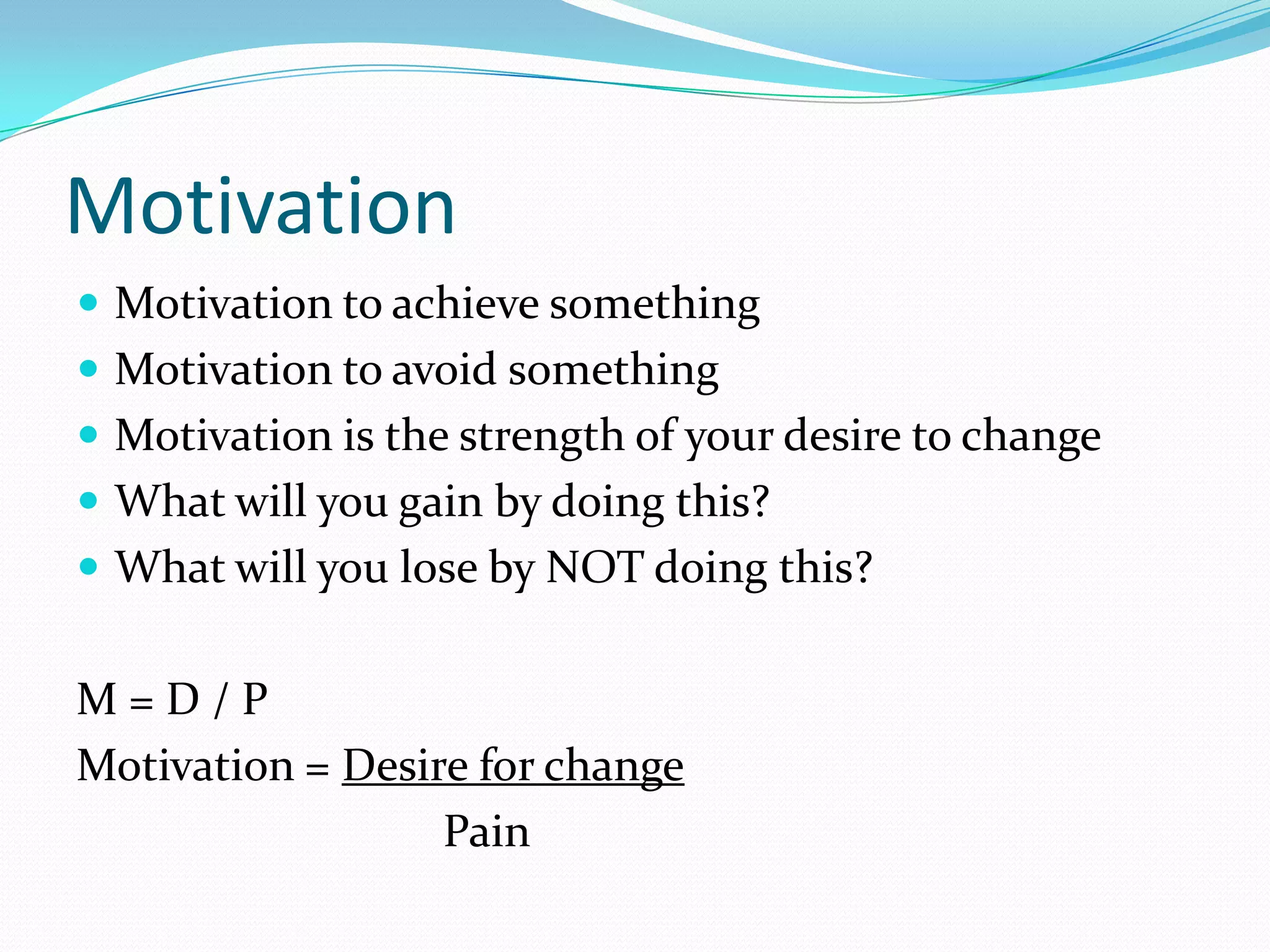
Motivation
 Motivation to achieve something
 Motivation to avoid something
 Motivation is the strength of your desire to change
 What will you gain by doing this?
 What will you lose by NOT doing this?


M=D/P
Motivation = Desire for change
                  Pain
Jenni Proctor
                             Career Clarity
                http://careerclarity.com.au
http://claritycareermanagement.com.au/
               jenni@careerclarity.com.au

Career Change Series confidence

  • 1.
    Jenni Proctor Career Clarity http://careerclarity.com.au http://claritycareermanagement.com.au/ jenni@careerclarity.com.au
  • 2.
  • 3.
    Crisis of confidence Personal  Organisational  Others
  • 4.
    Changes  Ways ofdoing things  New technology  Cultural changes  Atmospheric shifts
  • 5.
  • 6.
    People  Bullying  Ageand generations  Being overlooked  Poor management  Communication issues
  • 7.
    It’s all aboutattitude Mind set  What you think  What you believe  How you respond  How others perceive you
  • 8.
    Fear factor  Don’twant to end up worse off  Consider the options from every angle  Research  Evaluate the options – Consider Plus, Minus and Interesting factors  Learn to have an optimistic viewpoint  Visualise what you want rather than worry about what you fear
  • 9.
    Fear Issues –Going backwards  What is the worst that could happen?  What is the BEST that could happen?  What is the most likely outcome?  Listen to your instinct as well as your logical mind
  • 10.
    Fear issues -Study Study  Your results at school have NOTHING to do with your capabilities  Be certain this is what you want to do  Access support  Do your best……….but don’t kill yourself in the process!
  • 11.
    What is resilience? Ability to “bounce back”  Reduces the impact of negative experiences  Long term stressors…..coping strategies  Short term stressors……dealing with it  Different people deal in different ways  Health and wellbeing  Individual factors – genetics, personality  Life history and experience  Social and community support
  • 12.
    Indicators of resilience Make and carry out realistic plans  Positive/optimistic view of self  Confidence in strengths and abilities  Skills in communication  Skills in problem solving  Able to manage strong emotions and impulses
  • 13.
    Living with resilience  Allow yourself to be imperfect  Take time for YOU. Do things you enjoy  Get involved in things that matter to you  Be active  Spend time with people who make you feel good  Laugh  Relationships  Overcome procrastination, one step at a time  Perspective  Focus on things you can control  Accept help and support
  • 14.
    A resilient mindset Accept Change……It’s inevitable  Avoid viewing problems as impossible  Develop a hopeful outlook – Optimism is learned  Visualise what you want rather than worry about what you fear  Progress towards realistic goals  “What is one thing I can do today that will help me move in the direction I want to go?”
  • 15.
    A resilient mindset Take decisive action. Don’t hide your head in the sand!  Keep things in perspective. Avoid catastrophizing  Nurture a positive image of yourself  Trust your instincts and your ability to solve problems  Take opportunities for self-discovery and growth
  • 16.
    Developing a positivemindset The Mental Toolbox – www.thementaltoolbox.com  Register  Select city  CODE: JP3265  Course sells for $1997  $197 if you use this code 
  • 17.
    Shifting the thoughts Shiftfrom old thinking to a new way of thinking  I’ve always done things  Recognise that new ways might be this way better in today’s world  I’m too old  Your age can’t change but the way  Life should be more you think of yourself can. fair  Life isn’t fair but it can be more  With experience comes forgiving than in the past eg work wisdom, opportunities, styles, disabilities, training. promotions etc  Real wisdom = adaptability  Good manners are  Fast paced world. Need to be essential resilient and a bit thick-skinned 
  • 18.
    Improving interpersonal skills  Smile   Be appreciative  Pay attention to others. Show them respect  Practice active listening  Bringing people together….fairness, respect, inclusion  Resolve conflicts  Communicate clearly and carefully  Keep a sense of humour, but not at others’ expense  Empathy – See things from others’ perspectives  Don’t whinge!
  • 19.
    Dealing with lifechanges  Victim vs Taking Control  Accept reality  Try to find some positives in the situation  Actively make new plans to suit the circumstances  Create an Action Plan  Break your goals down into bite sized chunks  Deal with a day at a time if that’s all you can manage.
  • 20.
    Setting SMART goals S– Specific M – Measureable A – Actionable R – Realistic T – Time-bound
  • 21.
    Accessing your Allies Who are your allies at work?  Who are your allies out of work?  Who can you talk to with honesty?  Your networks  Who can help you with your goals?  Six degrees of separation
  • 22.
    Time flies…………….  Whoare you reporting to?  When?  What will you have done by then?  What will happen if you don’t do what you say you are going to do?
  • 23.
    Taking Action  Nothingchanges if you don’t take action  What is stopping you?  Procrastination = Bad habit  Procrastination = Fear of something  What is your lack of action costing you?
  • 24.
    Motivation  Motivation toachieve something  Motivation to avoid something  Motivation is the strength of your desire to change  What will you gain by doing this?  What will you lose by NOT doing this? M=D/P Motivation = Desire for change Pain
  • 25.
    Jenni Proctor Career Clarity http://careerclarity.com.au http://claritycareermanagement.com.au/ jenni@careerclarity.com.au