Introduction
- Emergency life saving procedure.
- When heart, lung (Breathing) stop.
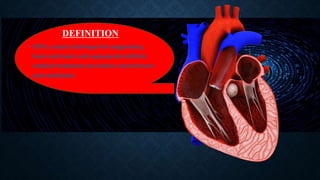
DEFINITION
• CPR is a basic technique for oxygenating
brain and heart until appropriate definite
medical treatment can restore normal heart
and ventilation.
•BLS ( Basic life support)
ACLS ( Advanced cardiac life
support)
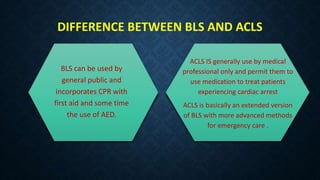
BLS can be used by
general public and
incorporates CPR with
first aid and some time
the use of AED.
ACLS IS generally use by medical
professional only and permit them to
use medication to treat patients
experiencing cardiac arrest
ACLS is basically an extended version
of BLS with more advanced methods
for emergency care .
INDICATIONS
• Cardiac and Respiratory arrest
• Co2 poisoning
• Drug poisoning.
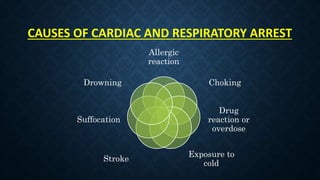
CAUSES OF CARDIAC AND RESPIRATORY ARREST
Allergic
reaction
Choking
Drug
reaction or
overdose
Exposure to
cold
Stroke
Suffocation
Drowning
PURPOSE OF CPR
To restore and maintain breathing and circulation and to provide
oxygen and blood flow to the heart , brain and other vital organs.
To Prevent irreversible brain damage from anoxia
To maintain an open and clear airways
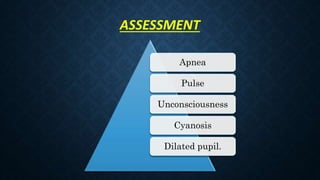
ASSESSMENT
Apnea
Pulse
Unconsciousness
Cyanosis
Dilated pupil.
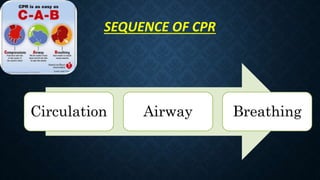
SEQUENCE OF CPR
Circulation Airway Breathing
PROCEDURE
Scene safety
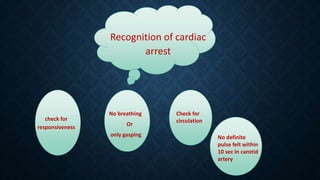
Recognition of cardiac
arrest
check for
responsiveness
Check for
circulation
No breathing
Or
only gasping No definite
pulse felt within
10 sec In carotid
artery
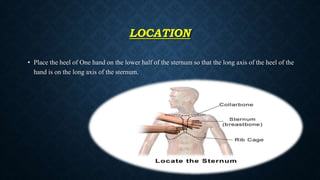
LOCATION
• Place the heel of One hand on the lower half of the sternum so that the long axis of the heel of the
hand is on the long axis of the sternum.
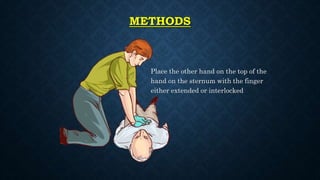
METHODS
Place the other hand on the top of the
hand on the sternum with the finger
either extended or interlocked
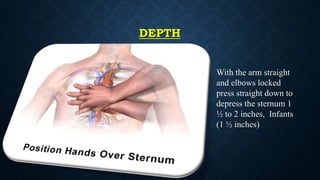
DEPTH
With the arm straight
and elbows locked
press straight down to
depress the sternum 1
½ to 2 inches, Infants
(1 ½ inches)
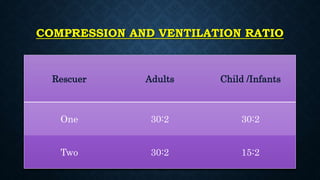
COMPRESSION AND VENTILATION RATIO
Rescuer Adults Child /Infants
One 30:2 30:2
Two 30:2 15:2
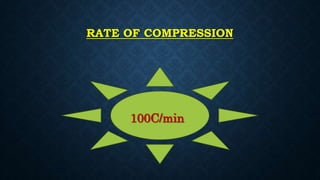
RATE OF COMPRESSION
100C/min
AIRWAYS
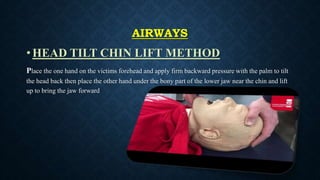
• HEAD TILT CHIN LIFT METHOD
Place the one hand on the victims forehead and apply firm backward pressure with the palm to tilt
the head back then place the other hand under the bony part of the lower jaw near the chin and lift
up to bring the jaw forward
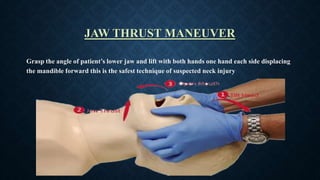
JAW THRUST MANEUVER
Grasp the angle of patient’s lower jaw and lift with both hands one hand each side displacing
the mandible forward this is the safest technique of suspected neck injury
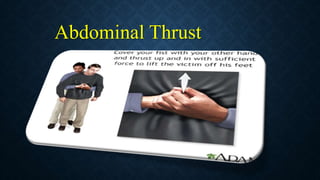
Abdominal Thrust
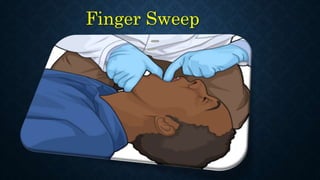
Finger Sweep
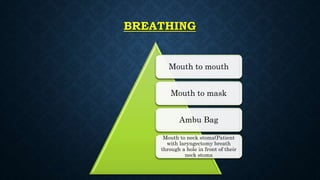
BREATHING
Mouth to mouth
Mouth to mask
Ambu Bag
Mouth to neck stoma(Patient
with laryngectomy breath
through a hole in front of their
neck stoma
Re evaluate the patient after every five cycles /
2 minute.
Power on AED once it is available
Ensure ACLS team is on the way
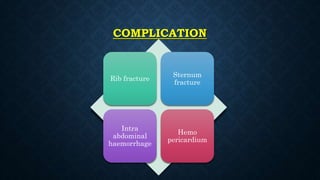
COMPLICATION
Rib fracture
Sternum
fracture
Intra
abdominal
haemorrhage
Hemo
pericardium
CPR CONSISTS OF SIX PARTS
• Airway
• Breathing
• Circulation
• Drugs /defibrillation
• Endocardial intubation
• Fluids
DRUGS USED IN CPR
• Epinephrine (Administered every three to five minutes early in CPR for
asystole ,ventricular fibrillation)
• Vasopressin (As an alternative to epinephrine every three to five minutes for
asystole. bradycardia)
• Atropine used for (Asystole) (Pulseless electrical activity)
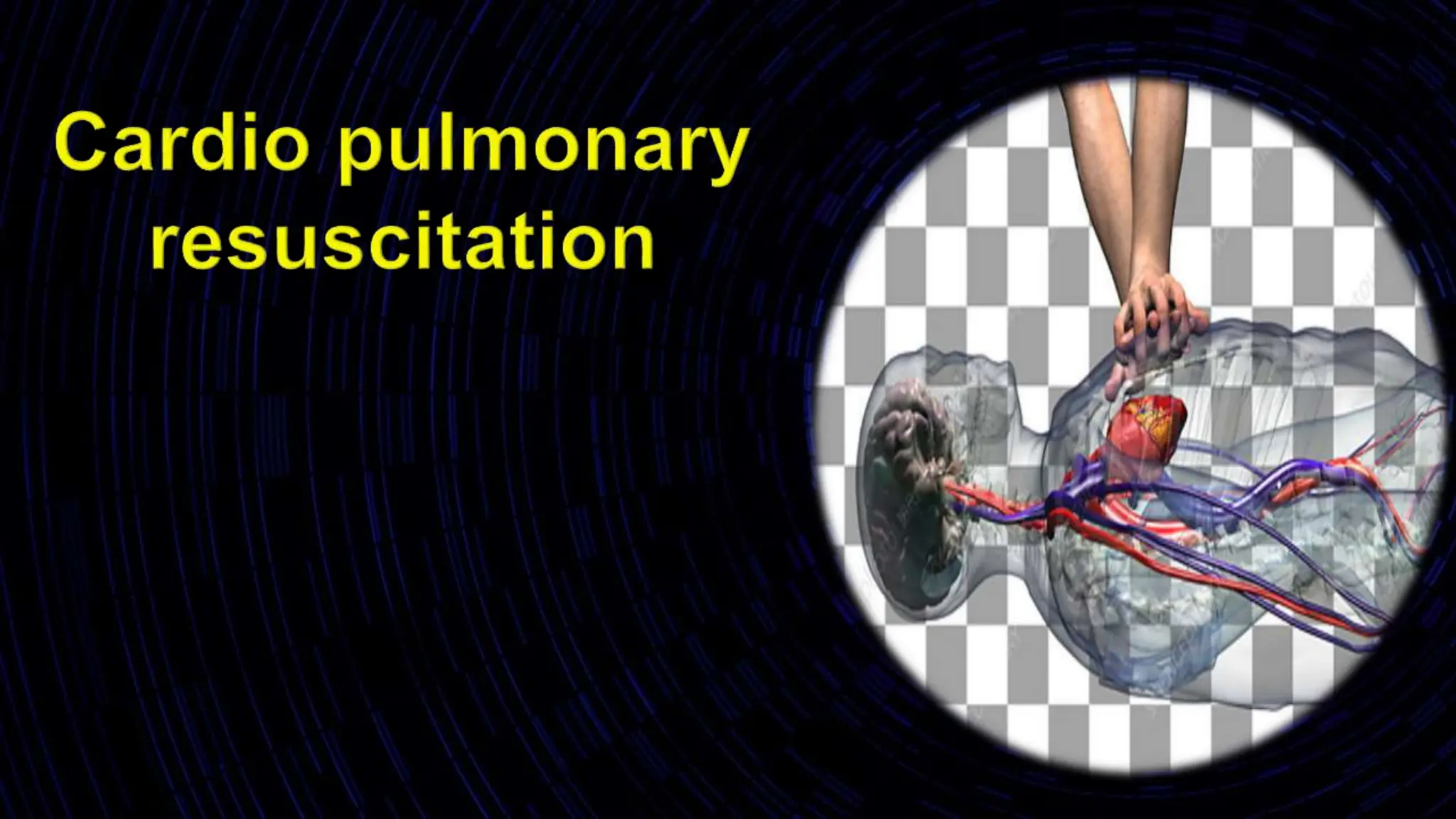
Cardio Pulmonary Resuscitation PPT  (CPR)

Cardio Pulmonary Resuscitation PPT (CPR)

  • 2.
    Introduction - Emergency lifesaving procedure. - When heart, lung (Breathing) stop.
  • 3.
    DEFINITION • CPR isa basic technique for oxygenating brain and heart until appropriate definite medical treatment can restore normal heart and ventilation.
  • 4.
    •BLS ( Basiclife support) ACLS ( Advanced cardiac life support)
  • 5.
    BLS can beused by general public and incorporates CPR with first aid and some time the use of AED. ACLS IS generally use by medical professional only and permit them to use medication to treat patients experiencing cardiac arrest ACLS is basically an extended version of BLS with more advanced methods for emergency care .
  • 6.
    INDICATIONS • Cardiac andRespiratory arrest • Co2 poisoning • Drug poisoning.
  • 7.
    CAUSES OF CARDIACAND RESPIRATORY ARREST Allergic reaction Choking Drug reaction or overdose Exposure to cold Stroke Suffocation Drowning
  • 8.
    PURPOSE OF CPR Torestore and maintain breathing and circulation and to provide oxygen and blood flow to the heart , brain and other vital organs. To Prevent irreversible brain damage from anoxia To maintain an open and clear airways
  • 9.
  • 10.
  • 11.
  • 12.
    Recognition of cardiac arrest checkfor responsiveness Check for circulation No breathing Or only gasping No definite pulse felt within 10 sec In carotid artery
  • 13.
    LOCATION • Place theheel of One hand on the lower half of the sternum so that the long axis of the heel of the hand is on the long axis of the sternum.
  • 14.
    METHODS Place the otherhand on the top of the hand on the sternum with the finger either extended or interlocked
  • 15.
    DEPTH With the armstraight and elbows locked press straight down to depress the sternum 1 ½ to 2 inches, Infants (1 ½ inches)
  • 16.
    COMPRESSION AND VENTILATIONRATIO Rescuer Adults Child /Infants One 30:2 30:2 Two 30:2 15:2
  • 17.
  • 18.
    AIRWAYS • HEAD TILTCHIN LIFT METHOD Place the one hand on the victims forehead and apply firm backward pressure with the palm to tilt the head back then place the other hand under the bony part of the lower jaw near the chin and lift up to bring the jaw forward
  • 19.
    JAW THRUST MANEUVER Graspthe angle of patient’s lower jaw and lift with both hands one hand each side displacing the mandible forward this is the safest technique of suspected neck injury
  • 20.
  • 21.
  • 22.
    BREATHING Mouth to mouth Mouthto mask Ambu Bag Mouth to neck stoma(Patient with laryngectomy breath through a hole in front of their neck stoma
  • 23.
    Re evaluate thepatient after every five cycles / 2 minute. Power on AED once it is available Ensure ACLS team is on the way
  • 24.
  • 25.
    CPR CONSISTS OFSIX PARTS • Airway • Breathing • Circulation • Drugs /defibrillation • Endocardial intubation • Fluids
  • 26.
    DRUGS USED INCPR • Epinephrine (Administered every three to five minutes early in CPR for asystole ,ventricular fibrillation) • Vasopressin (As an alternative to epinephrine every three to five minutes for asystole. bradycardia) • Atropine used for (Asystole) (Pulseless electrical activity)