CODE BLUE
(Floor room)
 DEFINITION
 CODE BLUE CALL
 CODE BLUE TEAM
 BASIC COMPONENT
 DOCUMENTATION
 INITIATION OF CODE BLUE
 CPR
 RULES
 CODE BLUE (ACLS,BLS)
 DRUGS
INDEX
 A hospital code used to indicate a patient
requiring immediate resuscitation.
 An emergency condition announced in hospital or
institution in which a patient is in
cardiopulmonary arrest, requiring a team of
provider sometimes called code team.
 To rush to specific location & begin immediate
resuscitation efforts.
DEFINITION
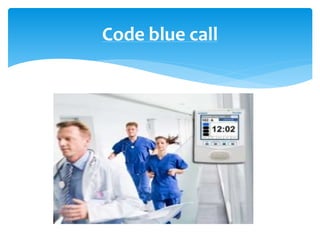
Code blue call
 To call code blue dial code blue number.
 Any phone in the hospital can be used to call
code blue team.
 It will alert locating and they will page the
code team.
HOW DO YOU CALL CODE BLUE ?
 The first responder is not actually a member of a
team but is the person who identifies and
confirms cardiopulmonary arrest.
1-Medical specialist/ ER specialist (Team leader).
2-ICU resident on duty (Airway).
3-Anesthesia resident (Specialist).
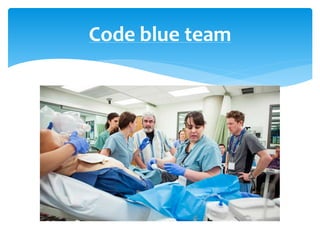
Code blue team
4-Resident on duty in charge of the patient
(compressor 1).
5-Medical resident on duty (compressor 2).
6-Nursing supervisor on duty (communicator).
Continue……..
7-ICU nurse (Vascular access).
8-Ward shift incharge.
9-`Bed side nurse (RN 1)---Recorder
10-Ward nurse (RN 2)-----Runner
11-Airway assistance
Continue…….
Code blue team
Crash cart-
Cardiac monitor
Defibrillator
Emergency medicine
Laryngoscope
AMBU bag
Miscellaneous medical supplies
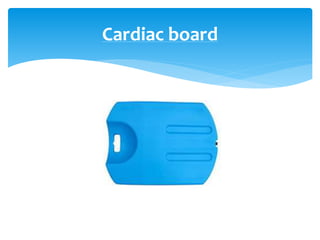
Cardiac board
Basic component
Crash tolly
Laryngoscope
Cardiac board
 Always check the crash cart for these
emergency drugs.(Quantity, expiration date)
before starting you shift.
 By failing to prepare you are preparing to fail
in your role of saving lives
REMEMBER
 Code team leader
 Written order
 Code note
 Charge nurse
 All patient data pertaining to the event.
 Medication administered
 Completing the chart
 Nurse note/charging.
Documentation
If cardiac arrest in ICU will be
managed by ICU team an code is
not announced
NOTE-
1- The first responder is not CPR certified will call
for help and dial code blue number to initiate
code blue providing the following information
slowly & clearly and repeating the information if
necessary.
 Responder identify the location of the patient.
INITITATION OF CODE BLUE
2- If first responder is BLS certified.
 She/he will start ABCs OR CPR, attached
defibrillator immediately upon arrived of this
equipment and continue CPR until code team
arrives a team leader takes over.
Continue…
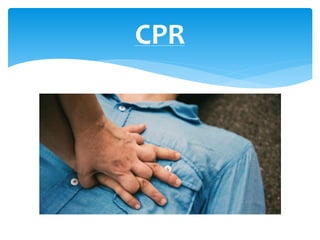
CPR
1- Announce attention code blue in (area) three
times clearly and bleep the code blue team.
2- The team leader will identify self as leader &
start conducting the procedure systemically
after analyzing the rhythm.
3- Each member of the team will start
performing own role under guidance of the
team leader till told the stop.
The switch board will….
4-Any change in role will be as per direction of
the team leader and all must stay an the scene
till allowed by him/her.
5- The team leader will allow team member to
stand down or return to regular duty.
Continue…..
RULE-1
• Calm down & do not panic.
• In case of emergency-
RUN LIKE HELL
REMEMBER-
RUN LIKE HELL
 Always start with the BCLS.
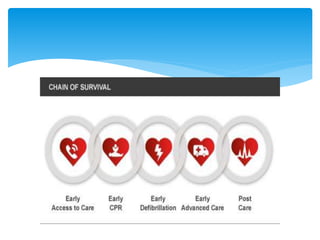
 The 5 links in adult chain of survival are-
1- Early access
2-Early CPR
3-Rapid defibrillation
4- Effective advanced life support.
5- Integrated post cardiac arrest care.
RULE- 2
Chain of survival
.
1- ACLS (Pulseless)
2-BLS(Pulseless)
 Sudden pulse loss & decrease perfusion in vital
organs.
 ACLS
Pulseless shockable rhythm.
There are 2 types of rhythm-
1-VT
2-VF
Code blue
 A fast rhythm that originate in one of the
ventricle of the heart this is potentially life
threatening arrhythmia because it may lead to VF
& sudden death.
Ventricular tachycardia
VT
 A turbulent, disorganized electrical activity of
the heart in such a way that the recorded ECG
deflection continuously change in shape
magnitude and direction.
Ventricular fibrilation
VF
 Continue CPR
 Record ECG
 Shock (If no rhythm)
 Drugs-
.
 Epinephrine (IV)-
 Dose- 1 mg 3-5 min. repeat
 3rd round IV amioderone 300 mg repeat after
few minuet dose will be 150 mg.
 IV mg – 1-2 mg also can be given pulseless VT
shockable rhythm.
Drugs
 Pulseless non shockable rhythm.
 Asystole -No rhythm no pulseless
electrical activity.
 CPR-
 Epinephrine 1 mg 3-5 min IV
 Atropine upto 3 mg---- check pulse,if pulse is
there shift the patient in ICU 24-48 hrs.
BLS
 6T
 Tension pneumothorax(air within the pleural space).
 Cardiac tamponed (fluid collection in the pericardial cavity)
 Thrombosis (blood clot within the blood vessels)
 pulmonary MI (pulmonary congestion)
 Trauma
 Toxins
What is the cause of shockable rhythm?
 6H
 Hypovolemia (loss of body fluid )
 Hypoxia (depletion of oxygen in tissue)
 Acidosis (Decrease of blood PH-7.35-7.45)
 Hyperkalemia(Increased Potassium 3.5-5.5meq/L)
 Hypokalemia
 Hypothermia (Decrease in body temp. 35-38 C)
Continue…..
GET LOST

Shweta code blue

  • 1.
  • 2.
     DEFINITION  CODEBLUE CALL  CODE BLUE TEAM  BASIC COMPONENT  DOCUMENTATION  INITIATION OF CODE BLUE  CPR  RULES  CODE BLUE (ACLS,BLS)  DRUGS INDEX
  • 3.
     A hospitalcode used to indicate a patient requiring immediate resuscitation.  An emergency condition announced in hospital or institution in which a patient is in cardiopulmonary arrest, requiring a team of provider sometimes called code team.  To rush to specific location & begin immediate resuscitation efforts. DEFINITION
  • 4.
  • 5.
     To callcode blue dial code blue number.  Any phone in the hospital can be used to call code blue team.  It will alert locating and they will page the code team. HOW DO YOU CALL CODE BLUE ?
  • 6.
     The firstresponder is not actually a member of a team but is the person who identifies and confirms cardiopulmonary arrest. 1-Medical specialist/ ER specialist (Team leader). 2-ICU resident on duty (Airway). 3-Anesthesia resident (Specialist). Code blue team
  • 7.
    4-Resident on dutyin charge of the patient (compressor 1). 5-Medical resident on duty (compressor 2). 6-Nursing supervisor on duty (communicator). Continue……..
  • 8.
    7-ICU nurse (Vascularaccess). 8-Ward shift incharge. 9-`Bed side nurse (RN 1)---Recorder 10-Ward nurse (RN 2)-----Runner 11-Airway assistance Continue…….
  • 9.
  • 10.
    Crash cart- Cardiac monitor Defibrillator Emergencymedicine Laryngoscope AMBU bag Miscellaneous medical supplies Cardiac board Basic component
  • 11.
  • 12.
  • 13.
  • 14.
     Always checkthe crash cart for these emergency drugs.(Quantity, expiration date) before starting you shift.  By failing to prepare you are preparing to fail in your role of saving lives REMEMBER
  • 15.
     Code teamleader  Written order  Code note  Charge nurse  All patient data pertaining to the event.  Medication administered  Completing the chart  Nurse note/charging. Documentation
  • 16.
    If cardiac arrestin ICU will be managed by ICU team an code is not announced NOTE-
  • 17.
    1- The firstresponder is not CPR certified will call for help and dial code blue number to initiate code blue providing the following information slowly & clearly and repeating the information if necessary.  Responder identify the location of the patient. INITITATION OF CODE BLUE
  • 18.
    2- If firstresponder is BLS certified.  She/he will start ABCs OR CPR, attached defibrillator immediately upon arrived of this equipment and continue CPR until code team arrives a team leader takes over. Continue…
  • 19.
  • 20.
    1- Announce attentioncode blue in (area) three times clearly and bleep the code blue team. 2- The team leader will identify self as leader & start conducting the procedure systemically after analyzing the rhythm. 3- Each member of the team will start performing own role under guidance of the team leader till told the stop. The switch board will….
  • 21.
    4-Any change inrole will be as per direction of the team leader and all must stay an the scene till allowed by him/her. 5- The team leader will allow team member to stand down or return to regular duty. Continue…..
  • 22.
    RULE-1 • Calm down& do not panic. • In case of emergency- RUN LIKE HELL REMEMBER-
  • 23.
  • 24.
     Always startwith the BCLS.  The 5 links in adult chain of survival are- 1- Early access 2-Early CPR 3-Rapid defibrillation 4- Effective advanced life support. 5- Integrated post cardiac arrest care. RULE- 2 Chain of survival
  • 25.
  • 26.
    1- ACLS (Pulseless) 2-BLS(Pulseless) Sudden pulse loss & decrease perfusion in vital organs.  ACLS Pulseless shockable rhythm. There are 2 types of rhythm- 1-VT 2-VF Code blue
  • 27.
     A fastrhythm that originate in one of the ventricle of the heart this is potentially life threatening arrhythmia because it may lead to VF & sudden death. Ventricular tachycardia
  • 28.
  • 29.
     A turbulent,disorganized electrical activity of the heart in such a way that the recorded ECG deflection continuously change in shape magnitude and direction. Ventricular fibrilation
  • 30.
  • 31.
     Continue CPR Record ECG  Shock (If no rhythm)  Drugs- .
  • 32.
     Epinephrine (IV)- Dose- 1 mg 3-5 min. repeat  3rd round IV amioderone 300 mg repeat after few minuet dose will be 150 mg.  IV mg – 1-2 mg also can be given pulseless VT shockable rhythm. Drugs
  • 33.
     Pulseless nonshockable rhythm.  Asystole -No rhythm no pulseless electrical activity.  CPR-  Epinephrine 1 mg 3-5 min IV  Atropine upto 3 mg---- check pulse,if pulse is there shift the patient in ICU 24-48 hrs. BLS
  • 34.
     6T  Tensionpneumothorax(air within the pleural space).  Cardiac tamponed (fluid collection in the pericardial cavity)  Thrombosis (blood clot within the blood vessels)  pulmonary MI (pulmonary congestion)  Trauma  Toxins What is the cause of shockable rhythm?
  • 35.
     6H  Hypovolemia(loss of body fluid )  Hypoxia (depletion of oxygen in tissue)  Acidosis (Decrease of blood PH-7.35-7.45)  Hyperkalemia(Increased Potassium 3.5-5.5meq/L)  Hypokalemia  Hypothermia (Decrease in body temp. 35-38 C) Continue…..
  • 36.