Capsim Management Simulations, IncResults Donna RobinsonFall of 2009www.capsim.com
Newman UniversityCourseStrategy ManagementObjective Within a risk free environment students are able to view alternative strategies  and demonstrate business acumen.Students responsible Coordinate strategy ForecastingImplement tactics forResearch & DevelopmentMarketingProductionFinanceTQM
Objective of SimulationDemonstrate effectiveness of multi-disciplines Various business units working together as a teamStrategic thinking to accomplish advantageAcquire Business acumenRecognize interaction and impact various parts of business  unitsAchieve an awareness CompetitionStakeholdersPractical exhibit improve the effectiveness of the business
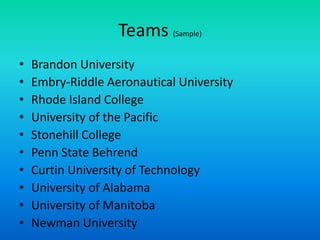
Teams (Sample)Brandon UniversityEmbry-Riddle Aeronautical UniversityRhode Island CollegeUniversity of the PacificStonehill CollegePenn State BehrendCurtin University of TechnologyUniversity of AlabamaUniversity of ManitobaNewman University
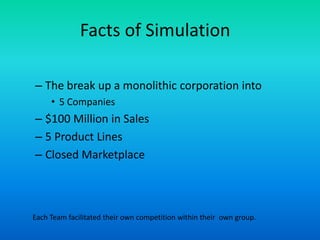
Facts of Simulation	The break up a monolithic corporation into5 Companies$100 Million in Sales5 Product LinesClosed MarketplaceEach Team facilitated their own competition within their  own group.
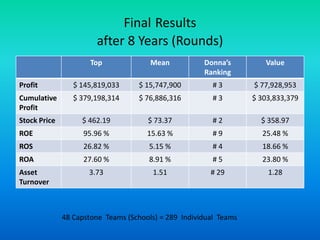
FinalResultsafter 8 Years (Rounds)48 Capstone  Teams (Schools) = 289  Individual  Teams
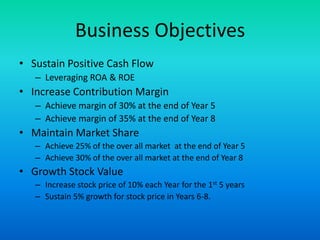
Business ObjectivesSustain Positive Cash FlowLeveraging ROA & ROEIncrease Contribution MarginAchieve margin of 30% at the end of Year 5Achieve margin of 35% at the end of Year 8Maintain Market ShareAchieve 25% of the over all market  at the end of Year 5Achieve 30% of the over all market at the end of Year 8Growth Stock ValueIncrease stock price of 10% each Year for the 1st 5 yearsSustain 5% growth for stock price in Years 6-8.
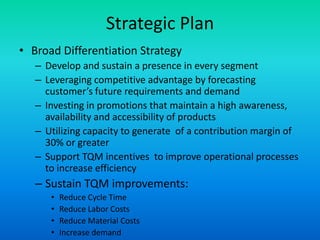
Strategic PlanBroad Differentiation StrategyDevelop and sustain a presence in every segmentLeveraging competitive advantage by forecasting customer’s future requirements and demandInvesting in promotions that maintain a high awareness,  availability and accessibility of productsUtilizing capacity to generate  of a contribution margin of 30% or greaterSupport TQM incentives  to improve operational processes to increase efficiencySustain TQM improvements:Reduce Cycle TimeReduce Labor CostsReduce Material CostsIncrease demand
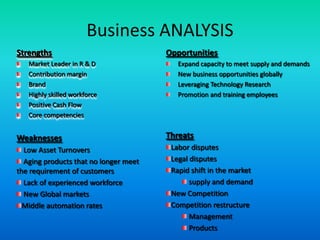
Business ANALYSISOpportunitiesExpand capacity to meet supply and demandsNew business opportunities globally Leveraging Technology ResearchPromotion and training employeesStrengthsMarket Leader in R & DContribution margin BrandHighly skilled workforcePositive Cash FlowCore competenciesThreatsLabor disputesLegal disputes Rapid shift in the market supply and demandNew CompetitionCompetition restructure  Management  ProductsWeaknesses Low Asset Turnovers Aging products that no longer meet the requirement of customers Lack of experienced workforce New Global markets Middle automation rates
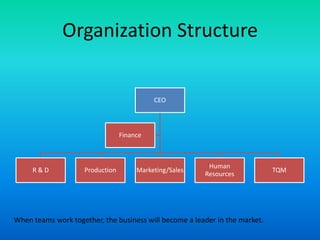
Organization StructureWhen teams work together, the business will become a leader in the market.
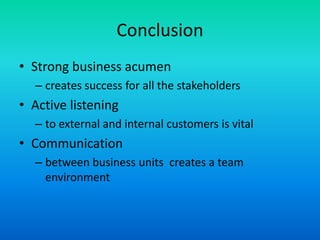
ConclusionStrong business acumen creates success for all the stakeholdersActive listening to external and internal customers is vitalCommunication between business units  creates a team environment

Capsim Management Results

  • 1.
    Capsim Management Simulations,IncResults Donna RobinsonFall of 2009www.capsim.com
  • 2.
    Newman UniversityCourseStrategy ManagementObjectiveWithin a risk free environment students are able to view alternative strategies and demonstrate business acumen.Students responsible Coordinate strategy ForecastingImplement tactics forResearch & DevelopmentMarketingProductionFinanceTQM
  • 3.
    Objective of SimulationDemonstrateeffectiveness of multi-disciplines Various business units working together as a teamStrategic thinking to accomplish advantageAcquire Business acumenRecognize interaction and impact various parts of business unitsAchieve an awareness CompetitionStakeholdersPractical exhibit improve the effectiveness of the business
  • 4.
    Teams (Sample)Brandon UniversityEmbry-RiddleAeronautical UniversityRhode Island CollegeUniversity of the PacificStonehill CollegePenn State BehrendCurtin University of TechnologyUniversity of AlabamaUniversity of ManitobaNewman University
  • 5.
    Facts of Simulation Thebreak up a monolithic corporation into5 Companies$100 Million in Sales5 Product LinesClosed MarketplaceEach Team facilitated their own competition within their own group.
  • 6.
    FinalResultsafter 8 Years(Rounds)48 Capstone Teams (Schools) = 289 Individual Teams
  • 7.
    Business ObjectivesSustain PositiveCash FlowLeveraging ROA & ROEIncrease Contribution MarginAchieve margin of 30% at the end of Year 5Achieve margin of 35% at the end of Year 8Maintain Market ShareAchieve 25% of the over all market at the end of Year 5Achieve 30% of the over all market at the end of Year 8Growth Stock ValueIncrease stock price of 10% each Year for the 1st 5 yearsSustain 5% growth for stock price in Years 6-8.
  • 8.
    Strategic PlanBroad DifferentiationStrategyDevelop and sustain a presence in every segmentLeveraging competitive advantage by forecasting customer’s future requirements and demandInvesting in promotions that maintain a high awareness, availability and accessibility of productsUtilizing capacity to generate of a contribution margin of 30% or greaterSupport TQM incentives to improve operational processes to increase efficiencySustain TQM improvements:Reduce Cycle TimeReduce Labor CostsReduce Material CostsIncrease demand
  • 9.
    Business ANALYSISOpportunitiesExpand capacityto meet supply and demandsNew business opportunities globally Leveraging Technology ResearchPromotion and training employeesStrengthsMarket Leader in R & DContribution margin BrandHighly skilled workforcePositive Cash FlowCore competenciesThreatsLabor disputesLegal disputes Rapid shift in the market supply and demandNew CompetitionCompetition restructure Management ProductsWeaknesses Low Asset Turnovers Aging products that no longer meet the requirement of customers Lack of experienced workforce New Global markets Middle automation rates
  • 10.
    Organization StructureWhen teamswork together, the business will become a leader in the market.
  • 11.
    ConclusionStrong business acumencreates success for all the stakeholdersActive listening to external and internal customers is vitalCommunication between business units creates a team environment