CANCER
BY MERIN ALICE GEORGE
What is Cancer?
• Cancer is the uncontrolled growth of abnormal cells anywhere in a body.
• When cells grow old or become damaged, they die, and new cells take their
place through a process called cell division to form new cells.
• Sometimes this orderly process breaks down, and abnormal or damaged cells
grow and multiply when they shouldn’t.
• These cells may form tumors, which are lumps of tissue. Tumors can be
cancerous or not cancerous (benign). When removed, benign tumors usually
don’t grow back, whereas cancerous tumors sometimes do.
• Causative agents – chemical , toxic compound exposures ,ionizing radiation etc.
• Cancerous tumors spread into, or invade, nearby tissues and can travel to distant
places in the body to form new tumors -a process called metastasis.
• Cancerous tumors may also be called malignant tumors.
• Many cancers form solid tumors, but cancers of the blood, such as leukemias,
generally do not.
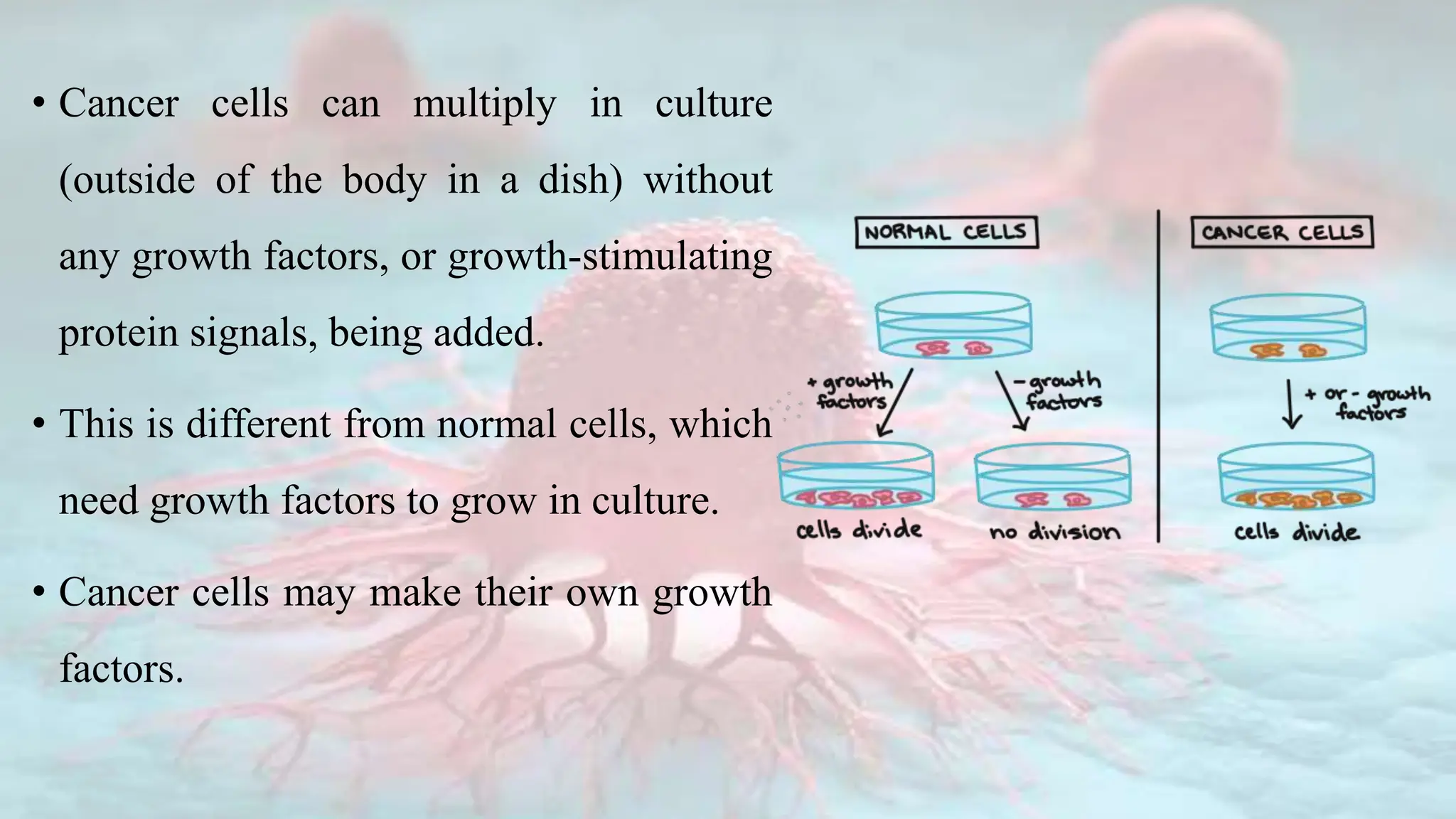
• Cancer cells can multiply in culture
(outside of the body in a dish) without
any growth factors, or growth-stimulating
protein signals, being added.
• This is different from normal cells, which
need growth factors to grow in culture.
• Cancer cells may make their own growth
factors.
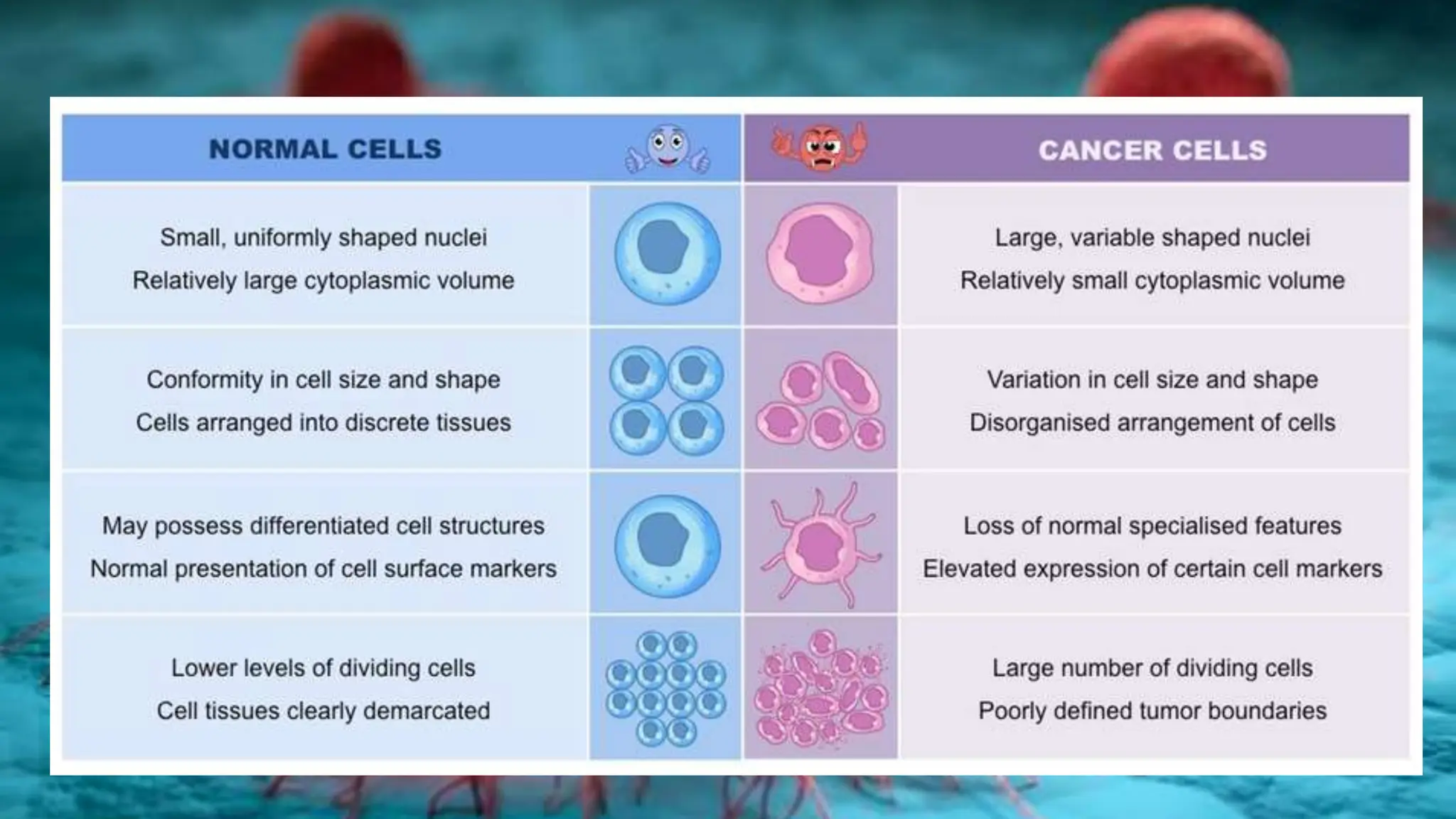
Differences between Cancer Cells and Normal Cells
Cancer cells differ from normal cells in many ways. For instance, cancer cells:
CANCER CELLS NORMAL CELLS
1. Grow in the absence of signals telling them to
grow.
1. Normal cells only grow when they receive such
signals
2. No programmed cell death 2.Programmed cell death takes place.
3. invade into nearby areas and spread to other areas
of the body.
3. Normal cells stop growing when they encounter other
cells, and most normal cells do not move around the
body.
4. Hide from the immune system. 4. The immune system normally eliminates damaged or
abnormal cells.
5. Accumulate multiple changes in their
chromosomes, such as duplications and deletions of
chromosome parts.
5. Remains the same
How Does Cancer Develop?
• Genetic changes that cause cancer can happen
because:
• Of errors that occur as cells divide.
• Damage to DNA caused by harmful
substances in the environment, mutagens and
ultraviolet rays from the sun.
• The body normally eliminates cells with damaged DNA before they
turn cancerous.
• But the body’s ability to do so goes down as we age. There is a higher
risk of cancer later in life.
When Cancer Spreads
• A cancer that has spread from the place where it first
formed to another place in the body is called metastatic
cancer.
• The process by which cancer cells spread to other
parts of the body is called metastasis.
• In metastasis, cancer cells break away from where they
first formed (primary cancer), travel through the blood
or lymph system, and form new tumors (metastatic
tumors) in other parts of the body
• and promote growth of new blood vessels, a process
called angiogenesis (which gives tumor cells a source of
oxygen and nutrients)
Multi-hit Model for Cancer Induction (I)
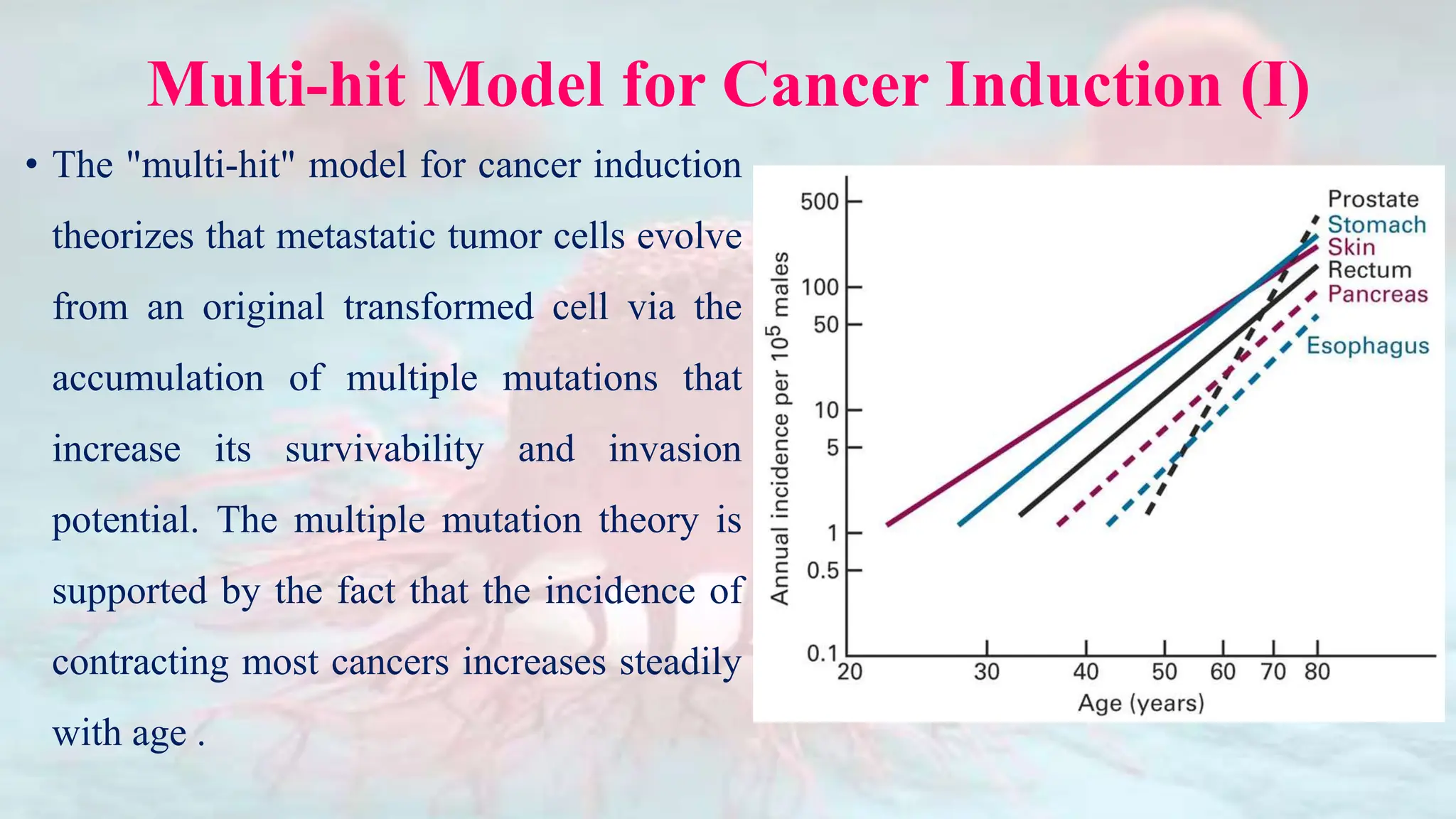
• The "multi-hit" model for cancer induction
theorizes that metastatic tumor cells evolve
from an original transformed cell via the
accumulation of multiple mutations that
increase its survivability and invasion
potential. The multiple mutation theory is
supported by the fact that the incidence of
contracting most cancers increases steadily
with age .
Multi-hit Model for Cancer Induction (II)
• Studies with transgenic mice also
support the multi-hit model for cancer
induction.
• The combined expression of the rasV12
oncogene and over-expression of the
myc proto-oncogene causes a higher
frequency of tumors in mice than when
either gene is expressed alone.
Cell cycle and Cancer
• Mitosis is closely controlled by the genes inside every cell. Sometimes this
control can go wrong.
• If that happens in just a single cell, it can replicate itself to make new cells that
are also out of control. These are cancer cells.
• In cancer, mitosis is uncontrolled.
** (Normal cell) Cell cycle
checkpoint- START- mid G1 phase.
• This checkpoint is regulated by D
type cyclins in association with
CDK4.
• If a cell is driven past START
checkpoint by cyclinD/CDK4
complex-It gets committed to next
round of replication.
START
checkpoint
• In tumor cells, check points in cell cycle are typically deregulated.
• This deregulation is due to genetic defects in the machinery that lowers the
amount of cyclin D/CDK4(The genes encoding CyclinD/CDK4 maybe
mutated.
• Cells with START checkpoints are dysfunctional are prone to be cancerous.
• Normal cells are programmed to pause at the START checkpoint to ensure
repair is completed before Dna replication.
• In Cancer cells –START is dysfunctional-move to S phase without repairing the
damage.
• Mutations that result from replication of unrepaired Dna may accumulate and
cause further deregulation of cell cycle.
• A clone of cells with dysfunctional START checkpoint may therefore become
aggressively cancerous.
Proto Oncogenes and Oncogenes
• Proto-oncogenes : Normal cellular genes whose products promote cell
proliferation. Protooncogenes are regulatory genes.Eg. ras.
• Oncogenes : Mutated or over expressed versions of proto-oncogenes that
function autonomously having lost dependence on normal growth promoting
signals.
• Onco-proteins : A protein encoded by an oncogene that drives increasedcell
proliferation
PROTO ONCOGENES
• Proto-oncogenes play important roles in controlling cell division and cell death
during our growth and development.
• Proto oncogenes may encode growth factors, growth factor receptors , signal
transducers, transcription factors or cell cycle components.
**Normally Proto Oncogene Normal cell proliferation
Proto oncogenes oncogenes oncoproteins
(constitutively active-Cancer).
***Once a proto-oncogene is activated by a mutation, we then refer to it as an
oncogene.
mutation
Many factor activate protooncogenes
1. Chemical carcinogens
2. Chromosomal translocation
3. γ-rays
4. Spontaneous mutation
5. Point mutations
6. Gene Amplifications
Activation of protooncogenes”
leading to formation of Oncogenes.
Different mechanisms of activation of
Protooncogenes:
Different mechanisms of activation of Protooncogenes:
Chromosomal translocation:
• Rearrangement of genetic material by splitting off a small fragment of chromosome which
is joined to another chromosome.
• Over expression of proto oncogenes-
Myc
• The Myc gene is associated with a type of cancer called Burkitt’s lymphoma. It occurs
when a chromosomal translocation moves a gene enhancer sequence near the Myc proto-
oncogene.
eg: Burkitts lymphoma
Chronic myeloid leukemia
• Burkitt lymphoma results from chromosome
translocations that involve the Myc gene.
• A chromosome translocation means that a
chromosome is broken, which allows it to
associate with parts of other chromosomes.
• The classic chromosome translocation in
Burkitt lymophoma involves chromosome 8, the
site of the Myc gene.
• This changes the pattern of Myc's expression,
thereby disrupting its usual function in
controlling cell growth and proliferation.
Gene amplification
• Certain DNA sequence is amplified several fold in some cancers.
• Studies then demonstrated that three protooncogene families-
• myc, erb B, and ras-are amplified in a significant number of human
tumors.
Mutations:
• Mutations activate protooncogenes through structural alterations.
• Various types of mutations, such as base substitutions, deletions, and Insertions, are
capable of activating protooncogenes.
• In human tumors the most characterized oncogene mutations are base substitutions
(point mutations) that change a single amino acid within the protein.
• Mutations in DNA that give rise to cancer may be inherited or caused by chemical
carcinogens, radiation, viruses, and by replication errors that are not repaired.
Point mutation
• Point mutations are frequently detected in the ras family of protooncogenes
(K-ras, H-ras, and N-ras).
• Inactive ras is in bound state with GDP.
• When cells are stimulated by GEF, ras get activated by exchanging GDP for
GTP.
• In normal cells, the activity of ras is short lived because of GTPase activity.
• Point mutation cause altered ras lacking GTPase activity
Normally
• In normal cell ras is
protooncogene.
• RasGDP Ras GTP
conversion takes place.
• In Cancer cell Ras GTP
gets accumulated.
• Ras ,Raf are proto oncogenes---after mutation---thy are onco
• RAS proteins are important for normal development. Active RAS drives the
growth, proliferation, and migration of cells.
• In normal cells RAS receives signals and obeys those signals to rapidly
switch between the active (GTP) form and the inactive (GDP form) states.
Mutated RAS* is stuck in the active state, ignores signals to the
contrary, and drives cells to become cancerous.
Growth factors
• Growth factors can also influence normal cell differentiation, and
constitutive activation of growth-promoting pathways in cancer cells can
modulate the cell phenotype leading to cancer.
• Normal amount of growth factor---
- Needed for normal cell growth.
• Excess GF---acts as Oncogene
• RTK is an example for growth
factor receptors.
• Receptor tyrosine kinases (RTKs) are a
subclass of tyrosine kinases that are
involved in mediating cell-to-cell
communication and controlling a wide
range of complex biological functions,
including cell growth.
• Constitutive activation by gain of function
mutation confer oncogenic properties upon
normal cells and trigger RTK-induced
oncogenesis
Oncogenes
• An oncogene is a mutated gene that contributes to the development of a cancer.
• In their normal, unmutated state, oncogenes are called proto-oncogenes,
and they play roles in the regulation of cell division****
Tumor suppressor genes
• Tumor suppressor genes are normal genes that slow down cell division, repair
DNA mistakes, or tell cells when to die (a process known as apoptosis or
programmed cell death). They play an important role in preventing the
development of cancer cells. Tumor suppressor proteins( products of TSG).
• Tumor suppressor genes are also known as antioncogenes
• When tumor suppressor genes don't work properly, cells can grow out of
control, which can lead to cancer.
• In normal cells –TSG –regulates cell growth- prevent oncogenesis
TSG mutation----Oncogenesis.*****
Some examples of tumor suppressor genes associated with cancer include:
• RB: The suppressor gene responsible for retinoblastoma
• p53 gene: The p53 gene creates protein p53 which regulates gene repair in cells.
Mutations in this gene are implicated in cancers.
• BRCA1/BRCA2 genes: These genes are responsible for around 5 percent to 10
percent of breast cancers, but both BRCA1 gene mutations and BRCA2 gene
mutations are associated with an increased risk of other cancers as well. (BRCA2
is also linked to an increased lung cancer risk in women.)
• APC gene: These genes are associated with an increased risk of colon cancer in people
with familial adenomatous polyposis.
• PTEN gene: When the gene is mutated, there is a greater risk that cancer cells will
"break off" or metastasize.
• Loss of function of these genes is a key event in carcinogenesis.
• *****Both copies of a specific tumor suppressor gene pair need to be
mutated to cause a change in cell growth and tumor formation to happen.
• Tumor suppressor genes are said to be recessive at the cellular level******
• Both Normal alleles of Normal Function of TSG
Tumor Suppressor Gene ( TSG)
• One normal allele(active)
another abnormal allele(inactive) Normal Function of TSG
of TSG (Heterozygous) (m+)
Both abnormal alleles( inactive ) Loss of Function of ( TSG)
of TSG (mm)
Tumor.
Retinoblastoma Gene ( RB Gene)
• First discovered Tumor suppressor gene. The retinoblastoma tumor suppressor
protein (RB) is mutated or inactivated in a majority of cancers
• Chromosome 13q14.
• Retinoblastoma: is a childhood tumor with inactivation of this gene.
• Retinoblastoma can occur as hereditary or sporadic form.
What Causes Retinoblastoma?
• Early in fetal development, well before birth, cells in the retina of the eye
divide to make new cells to fill the retina.
• At a certain point, these cells normally stop dividing and become mature
retinal cells. But sometimes something goes wrong with this process.
• Instead of maturing, some retinal cells continue to grow out of control, which
can lead to retinoblastoma.
Role of Rb in cell cycle
• RB is to restrict cell proliferation by suppressing gene expression through direct
inhibition of the E2F family of transcription factor.
P53 Gene –Guardian of Genome
• This is a tumor suppressor gene ( its activity stops the formation of tumors) If a person
inherits only one functional copy of the p53 gene from their parents, they are predisposed to
cancer and usually develop several independent tumors in a variety of tissues in early
adulthood. This condition is rare, and is known as Li-Fraumeni syndrome.
• Located on 17p13, first discovered in 1979
• The p53 protein is the product of p53 gene
• P-protein
• 53- weight of the protein, 53 kDa
• Located in almost all normal tissues
• Is one of the most commonly mutated gene in cancer
Function
• Regulation of Cell cycle
• DNA repair
• Apoptosis
• Prevents neoplastic transformation either by cell cycle arrest or by
triggering apoptosis.
Rb acts here
Dna Damage Triggers expression of p53gene Increased p53 levels
Arrest of cell cycle at G1 Phase Prevent Cell from entering S
phase of cell cycle
Allows time for the DNA repair to take place
DNA Repaired p53 induces
Dna repair genes DNA Not Repaired
P53 degrades
Cell cycle continues Permanent Apoptosis
arrest/senescence
P53 –Guardian of Genome
• p21 cyclin-dependent kinase (CDK)
inhibitors
• Induces cell-cycle arrest by binding
and inhibiting CDK4 and
CDK6/cyclin D complexes .
• Resulting in de-phosphorylation and
activation of the retinoblastoma (RB)
pocket proteins that function together
with E2F transcription factors to
repress the transcription of cell cycle-
related genes.
What happens when p53 is inactivated?
DNA damage
No p53/inactivated p53-mutated p53/
no tumour suppression
Cell cycle progresses with damaged
dna
No cell cycle arrest---Neoplastic
transformation.
Chromosomal rearrangement and Cancer
Translocation is a structural Aberration of Chromosome
Translocation is a structural aberration – where a segment of a chromosome
gets translocated to another chromosome.Two types of chromosome
translocation:
Homologous translocation: Exchange of segments between homologous
chromosomes.
Heterologous translocation : Between the non homologous chromosome
Reciprocal translocation.
Philadelphia chromosome is due to heterologous
translocation
• The chromosome abnormality that causes chronic myeloid leukemia (CML).
• The Ph chromosome is an abnormally short chromosome 22 that is one of
the two chromosomes involved in a translocation with chromosome 9.
• This translocation takes place in a single bone marrow cell and, through the
process of clonal expansion (the production of many cells from this one mutant
cell)
• It gives rise to the leukemia.
• ABL and BCR are normal genes on chromosomes 9 and 22 respectively.
• The ABL gene encodes a tyrosine kinase enzyme whose activity is tightly
regulated (controlled).
• In the formation of the Ph translocation, two fusion genes are generated: BCR-
ABL on the Ph chromosome and ABL-BCR on the chromosome 9 participating
in the translocation.
• The Philadelphia (Ph) chromosome is an abbreviated chromosome 22 that was
shortchanged in a reciprocal exchange of material with chromosome 9.
• This translocation occurs in a cell in the bone-marrow, and causes CML It is
also found in a form of acute lymphoblastic leukemia (ALL).
• On a molecular level the Philadelphia chromosome translocation results in the
production of a fusion protein.
• A large portion of a gene, called ABL, on chromosome 9 is translocated to the
BCR gene on chromosome 22.
• The two gene segments are fused and ultimately produce a chimeric protein
that is larger than the normal ABL protein.
• The malignant state is a consequence of this process.
• In Burkitt's lymphoma, a
translocation between chromosomes
8 and 14 places the c-myc gene
under the control of the enhancer
region.
• This results in high expression of c-
myc and excessive cell division
leading to cancer.
Types of Cancer:
• Carcinoma – this cancer begins in the skin or in tissues that line or cover internal
organs. There are different subtypes, including adenocarcinoma, basal cell carcinoma,
squamous cell carcinoma and transitional cell carcinoma
• Sarcoma – this cancer begins in the connective or supportive tissues such as bone,
cartilage, fat, muscle or blood vessels
• Leukaemia – this is cancer of the white blood cells. It starts in the tissues that make
blood cells such as the bone marrow.
• Lymphoma and myeloma – these cancers begin in the cells of the immune system.
• Brain and spinal cord cancers – these are known as central nervous system cancers
Carcinomas
• Carcinomas start in epithelial tissues.
These tissues:
• Cover the outside of the body such as
the skin
• cover and line all the organs inside the
body such as the organs of the digestive
system. line the body cavities such as
the inside of the chest cavity and the
abdominal cavity.
• There are different types of epithelial
cells and these can develop into
different types of carcinoma. These
include:
• squamous cell carcinoma
• adenocarcinoma
• transitional cell carcinoma
• basal cell carcinoma
Squamous cell carcinoma
Adenocarcinoma
Adenocarcinomas start in glandular cells called
adenomatous cells.
Transitional cell carcinoma
Transitional cells are cells that can stretch as an organ expands
Basal cell carcinoma
Basal cells line the deepest layer of skin cells. Cancers that start in these
cells are called basal cell carcinomas
.
Sarcomas
• Sarcomas start in connective tissues. These are the supporting tissues of the
body. Connective tissues include the bones, cartilage, tendons and fibrous
tissue that support organs.
• Sarcomas are much less common than carcinomas. There are 2 main types:
• bone sarcomas
• soft tissue sarcomas
• These make up less than 1 in every 100 cancers (1%) diagnosed every year.
• Bone sarcomas- Sarcomas of bone start from bone cells.
Soft tissue sarcomas
• Soft tissue sarcomas are rare but the most common types start in cartilage or
muscle.
Cartilage
• Cancer of the cartilage is called chondrosarcoma.
Muscle
• Cancer of muscle cells is called rhabdomyosarcoma or leiomyosarcoma.
Leukaemias – cancers of blood cells
• Leukaemia is cancer of the white blood cells. The bone marrow makes too many white
blood cells. The blood cells are not fully formed and so they don't work properly. The
abnormal cells build up in the blood.
Lymphomas and myeloma
• Other types of cancer are lymphomas and myeloma, They are cancers of the lymphatic
system.
• The lymphatic system is a system of tubes and glands in the body that filters body fluid
and fights infection.
Myeloma
• Myeloma is a cancer that starts in plasma cells. Plasma cells are a type of
white blood cell made in the bone marrow.
Brain and spinal cord cancers
The most common type of brain tumour develops from glial cells. It is called
glioma. Some tumours that start in the brain or spinal cord are non cancerous
(benign) and grow very slowly.
GENETIC PATHWAYS TO CANCER
1. Gain of function mutation Convert Proto oncogenes to Oncogenes:
Oncogenes are derived from proto oncogenes which are genes that encode
proteins having function in normal cells.
• They are dominant or “gain of function” mutations.
• They may lead to genetic instability, preventing a cell from becoming a victim
of apoptosis or promote metastasis.
4 mechanisms that can produce oncogene from proto oncogene are:
a) Point mutation
b) Chromosomal translocation
c)Amplification.
2. Loss of function of tumor suppressor genes creates oncogenes.
• Mutations that inactivate tumor suppressor genes, called loss-of-function
mutations, are often point mutations or small deletions that disrupt the function
of the protein that is encoded by the gene.
• Chromosomal deletions or breaks that delete the tumor suppressor gene; or
instances of somatic recombination during which the normal gene copy is
replaced with a mutant copy.
Recessive mutations.
CANCER...................................pptx

CANCER...................................pptx

  • 1.
  • 2.
    What is Cancer? •Cancer is the uncontrolled growth of abnormal cells anywhere in a body. • When cells grow old or become damaged, they die, and new cells take their place through a process called cell division to form new cells. • Sometimes this orderly process breaks down, and abnormal or damaged cells grow and multiply when they shouldn’t. • These cells may form tumors, which are lumps of tissue. Tumors can be cancerous or not cancerous (benign). When removed, benign tumors usually don’t grow back, whereas cancerous tumors sometimes do.
  • 7.
    • Causative agents– chemical , toxic compound exposures ,ionizing radiation etc. • Cancerous tumors spread into, or invade, nearby tissues and can travel to distant places in the body to form new tumors -a process called metastasis. • Cancerous tumors may also be called malignant tumors. • Many cancers form solid tumors, but cancers of the blood, such as leukemias, generally do not.
  • 9.
    • Cancer cellscan multiply in culture (outside of the body in a dish) without any growth factors, or growth-stimulating protein signals, being added. • This is different from normal cells, which need growth factors to grow in culture. • Cancer cells may make their own growth factors.
  • 10.
    Differences between CancerCells and Normal Cells Cancer cells differ from normal cells in many ways. For instance, cancer cells: CANCER CELLS NORMAL CELLS 1. Grow in the absence of signals telling them to grow. 1. Normal cells only grow when they receive such signals 2. No programmed cell death 2.Programmed cell death takes place. 3. invade into nearby areas and spread to other areas of the body. 3. Normal cells stop growing when they encounter other cells, and most normal cells do not move around the body. 4. Hide from the immune system. 4. The immune system normally eliminates damaged or abnormal cells. 5. Accumulate multiple changes in their chromosomes, such as duplications and deletions of chromosome parts. 5. Remains the same
  • 14.
    How Does CancerDevelop? • Genetic changes that cause cancer can happen because: • Of errors that occur as cells divide. • Damage to DNA caused by harmful substances in the environment, mutagens and ultraviolet rays from the sun.
  • 15.
    • The bodynormally eliminates cells with damaged DNA before they turn cancerous. • But the body’s ability to do so goes down as we age. There is a higher risk of cancer later in life.
  • 16.
    When Cancer Spreads •A cancer that has spread from the place where it first formed to another place in the body is called metastatic cancer. • The process by which cancer cells spread to other parts of the body is called metastasis. • In metastasis, cancer cells break away from where they first formed (primary cancer), travel through the blood or lymph system, and form new tumors (metastatic tumors) in other parts of the body • and promote growth of new blood vessels, a process called angiogenesis (which gives tumor cells a source of oxygen and nutrients)
  • 18.
    Multi-hit Model forCancer Induction (I) • The "multi-hit" model for cancer induction theorizes that metastatic tumor cells evolve from an original transformed cell via the accumulation of multiple mutations that increase its survivability and invasion potential. The multiple mutation theory is supported by the fact that the incidence of contracting most cancers increases steadily with age .
  • 19.
    Multi-hit Model forCancer Induction (II) • Studies with transgenic mice also support the multi-hit model for cancer induction. • The combined expression of the rasV12 oncogene and over-expression of the myc proto-oncogene causes a higher frequency of tumors in mice than when either gene is expressed alone.
  • 21.
    Cell cycle andCancer • Mitosis is closely controlled by the genes inside every cell. Sometimes this control can go wrong. • If that happens in just a single cell, it can replicate itself to make new cells that are also out of control. These are cancer cells. • In cancer, mitosis is uncontrolled.
  • 22.
    ** (Normal cell)Cell cycle checkpoint- START- mid G1 phase. • This checkpoint is regulated by D type cyclins in association with CDK4. • If a cell is driven past START checkpoint by cyclinD/CDK4 complex-It gets committed to next round of replication. START checkpoint
  • 23.
    • In tumorcells, check points in cell cycle are typically deregulated. • This deregulation is due to genetic defects in the machinery that lowers the amount of cyclin D/CDK4(The genes encoding CyclinD/CDK4 maybe mutated. • Cells with START checkpoints are dysfunctional are prone to be cancerous. • Normal cells are programmed to pause at the START checkpoint to ensure repair is completed before Dna replication. • In Cancer cells –START is dysfunctional-move to S phase without repairing the damage.
  • 24.
    • Mutations thatresult from replication of unrepaired Dna may accumulate and cause further deregulation of cell cycle. • A clone of cells with dysfunctional START checkpoint may therefore become aggressively cancerous.
  • 25.
    Proto Oncogenes andOncogenes • Proto-oncogenes : Normal cellular genes whose products promote cell proliferation. Protooncogenes are regulatory genes.Eg. ras. • Oncogenes : Mutated or over expressed versions of proto-oncogenes that function autonomously having lost dependence on normal growth promoting signals. • Onco-proteins : A protein encoded by an oncogene that drives increasedcell proliferation
  • 26.
    PROTO ONCOGENES • Proto-oncogenesplay important roles in controlling cell division and cell death during our growth and development. • Proto oncogenes may encode growth factors, growth factor receptors , signal transducers, transcription factors or cell cycle components. **Normally Proto Oncogene Normal cell proliferation Proto oncogenes oncogenes oncoproteins (constitutively active-Cancer). ***Once a proto-oncogene is activated by a mutation, we then refer to it as an oncogene. mutation
  • 27.
    Many factor activateprotooncogenes 1. Chemical carcinogens 2. Chromosomal translocation 3. γ-rays 4. Spontaneous mutation 5. Point mutations 6. Gene Amplifications Activation of protooncogenes” leading to formation of Oncogenes.
  • 28.
    Different mechanisms ofactivation of Protooncogenes:
  • 29.
    Different mechanisms ofactivation of Protooncogenes: Chromosomal translocation: • Rearrangement of genetic material by splitting off a small fragment of chromosome which is joined to another chromosome. • Over expression of proto oncogenes- Myc • The Myc gene is associated with a type of cancer called Burkitt’s lymphoma. It occurs when a chromosomal translocation moves a gene enhancer sequence near the Myc proto- oncogene. eg: Burkitts lymphoma Chronic myeloid leukemia
  • 30.
    • Burkitt lymphomaresults from chromosome translocations that involve the Myc gene. • A chromosome translocation means that a chromosome is broken, which allows it to associate with parts of other chromosomes. • The classic chromosome translocation in Burkitt lymophoma involves chromosome 8, the site of the Myc gene. • This changes the pattern of Myc's expression, thereby disrupting its usual function in controlling cell growth and proliferation.
  • 32.
    Gene amplification • CertainDNA sequence is amplified several fold in some cancers. • Studies then demonstrated that three protooncogene families- • myc, erb B, and ras-are amplified in a significant number of human tumors.
  • 33.
    Mutations: • Mutations activateprotooncogenes through structural alterations. • Various types of mutations, such as base substitutions, deletions, and Insertions, are capable of activating protooncogenes. • In human tumors the most characterized oncogene mutations are base substitutions (point mutations) that change a single amino acid within the protein. • Mutations in DNA that give rise to cancer may be inherited or caused by chemical carcinogens, radiation, viruses, and by replication errors that are not repaired.
  • 34.
    Point mutation • Pointmutations are frequently detected in the ras family of protooncogenes (K-ras, H-ras, and N-ras). • Inactive ras is in bound state with GDP. • When cells are stimulated by GEF, ras get activated by exchanging GDP for GTP. • In normal cells, the activity of ras is short lived because of GTPase activity. • Point mutation cause altered ras lacking GTPase activity
  • 35.
  • 37.
    • In normalcell ras is protooncogene. • RasGDP Ras GTP conversion takes place. • In Cancer cell Ras GTP gets accumulated.
  • 38.
    • Ras ,Rafare proto oncogenes---after mutation---thy are onco
  • 39.
    • RAS proteinsare important for normal development. Active RAS drives the growth, proliferation, and migration of cells. • In normal cells RAS receives signals and obeys those signals to rapidly switch between the active (GTP) form and the inactive (GDP form) states. Mutated RAS* is stuck in the active state, ignores signals to the contrary, and drives cells to become cancerous.
  • 40.
    Growth factors • Growthfactors can also influence normal cell differentiation, and constitutive activation of growth-promoting pathways in cancer cells can modulate the cell phenotype leading to cancer.
  • 41.
    • Normal amountof growth factor--- - Needed for normal cell growth. • Excess GF---acts as Oncogene • RTK is an example for growth factor receptors.
  • 42.
    • Receptor tyrosinekinases (RTKs) are a subclass of tyrosine kinases that are involved in mediating cell-to-cell communication and controlling a wide range of complex biological functions, including cell growth. • Constitutive activation by gain of function mutation confer oncogenic properties upon normal cells and trigger RTK-induced oncogenesis
  • 43.
    Oncogenes • An oncogeneis a mutated gene that contributes to the development of a cancer. • In their normal, unmutated state, oncogenes are called proto-oncogenes, and they play roles in the regulation of cell division****
  • 44.
    Tumor suppressor genes •Tumor suppressor genes are normal genes that slow down cell division, repair DNA mistakes, or tell cells when to die (a process known as apoptosis or programmed cell death). They play an important role in preventing the development of cancer cells. Tumor suppressor proteins( products of TSG). • Tumor suppressor genes are also known as antioncogenes • When tumor suppressor genes don't work properly, cells can grow out of control, which can lead to cancer. • In normal cells –TSG –regulates cell growth- prevent oncogenesis TSG mutation----Oncogenesis.*****
  • 45.
    Some examples oftumor suppressor genes associated with cancer include: • RB: The suppressor gene responsible for retinoblastoma • p53 gene: The p53 gene creates protein p53 which regulates gene repair in cells. Mutations in this gene are implicated in cancers. • BRCA1/BRCA2 genes: These genes are responsible for around 5 percent to 10 percent of breast cancers, but both BRCA1 gene mutations and BRCA2 gene mutations are associated with an increased risk of other cancers as well. (BRCA2 is also linked to an increased lung cancer risk in women.)
  • 46.
    • APC gene:These genes are associated with an increased risk of colon cancer in people with familial adenomatous polyposis. • PTEN gene: When the gene is mutated, there is a greater risk that cancer cells will "break off" or metastasize. • Loss of function of these genes is a key event in carcinogenesis. • *****Both copies of a specific tumor suppressor gene pair need to be mutated to cause a change in cell growth and tumor formation to happen. • Tumor suppressor genes are said to be recessive at the cellular level******
  • 48.
    • Both Normalalleles of Normal Function of TSG Tumor Suppressor Gene ( TSG) • One normal allele(active) another abnormal allele(inactive) Normal Function of TSG of TSG (Heterozygous) (m+) Both abnormal alleles( inactive ) Loss of Function of ( TSG) of TSG (mm) Tumor.
  • 49.
    Retinoblastoma Gene (RB Gene) • First discovered Tumor suppressor gene. The retinoblastoma tumor suppressor protein (RB) is mutated or inactivated in a majority of cancers • Chromosome 13q14. • Retinoblastoma: is a childhood tumor with inactivation of this gene. • Retinoblastoma can occur as hereditary or sporadic form.
  • 50.
    What Causes Retinoblastoma? •Early in fetal development, well before birth, cells in the retina of the eye divide to make new cells to fill the retina. • At a certain point, these cells normally stop dividing and become mature retinal cells. But sometimes something goes wrong with this process. • Instead of maturing, some retinal cells continue to grow out of control, which can lead to retinoblastoma.
  • 51.
    Role of Rbin cell cycle • RB is to restrict cell proliferation by suppressing gene expression through direct inhibition of the E2F family of transcription factor.
  • 53.
    P53 Gene –Guardianof Genome • This is a tumor suppressor gene ( its activity stops the formation of tumors) If a person inherits only one functional copy of the p53 gene from their parents, they are predisposed to cancer and usually develop several independent tumors in a variety of tissues in early adulthood. This condition is rare, and is known as Li-Fraumeni syndrome. • Located on 17p13, first discovered in 1979 • The p53 protein is the product of p53 gene • P-protein • 53- weight of the protein, 53 kDa • Located in almost all normal tissues • Is one of the most commonly mutated gene in cancer
  • 54.
    Function • Regulation ofCell cycle • DNA repair • Apoptosis • Prevents neoplastic transformation either by cell cycle arrest or by triggering apoptosis.
  • 55.
  • 56.
    Dna Damage Triggersexpression of p53gene Increased p53 levels Arrest of cell cycle at G1 Phase Prevent Cell from entering S phase of cell cycle Allows time for the DNA repair to take place DNA Repaired p53 induces Dna repair genes DNA Not Repaired P53 degrades Cell cycle continues Permanent Apoptosis arrest/senescence P53 –Guardian of Genome
  • 57.
    • p21 cyclin-dependentkinase (CDK) inhibitors • Induces cell-cycle arrest by binding and inhibiting CDK4 and CDK6/cyclin D complexes . • Resulting in de-phosphorylation and activation of the retinoblastoma (RB) pocket proteins that function together with E2F transcription factors to repress the transcription of cell cycle- related genes.
  • 59.
    What happens whenp53 is inactivated? DNA damage No p53/inactivated p53-mutated p53/ no tumour suppression Cell cycle progresses with damaged dna No cell cycle arrest---Neoplastic transformation.
  • 61.
    Chromosomal rearrangement andCancer Translocation is a structural Aberration of Chromosome Translocation is a structural aberration – where a segment of a chromosome gets translocated to another chromosome.Two types of chromosome translocation: Homologous translocation: Exchange of segments between homologous chromosomes. Heterologous translocation : Between the non homologous chromosome Reciprocal translocation.
  • 62.
    Philadelphia chromosome isdue to heterologous translocation • The chromosome abnormality that causes chronic myeloid leukemia (CML). • The Ph chromosome is an abnormally short chromosome 22 that is one of the two chromosomes involved in a translocation with chromosome 9. • This translocation takes place in a single bone marrow cell and, through the process of clonal expansion (the production of many cells from this one mutant cell) • It gives rise to the leukemia.
  • 63.
    • ABL andBCR are normal genes on chromosomes 9 and 22 respectively. • The ABL gene encodes a tyrosine kinase enzyme whose activity is tightly regulated (controlled). • In the formation of the Ph translocation, two fusion genes are generated: BCR- ABL on the Ph chromosome and ABL-BCR on the chromosome 9 participating in the translocation. • The Philadelphia (Ph) chromosome is an abbreviated chromosome 22 that was shortchanged in a reciprocal exchange of material with chromosome 9.
  • 64.
    • This translocationoccurs in a cell in the bone-marrow, and causes CML It is also found in a form of acute lymphoblastic leukemia (ALL). • On a molecular level the Philadelphia chromosome translocation results in the production of a fusion protein. • A large portion of a gene, called ABL, on chromosome 9 is translocated to the BCR gene on chromosome 22. • The two gene segments are fused and ultimately produce a chimeric protein that is larger than the normal ABL protein. • The malignant state is a consequence of this process.
  • 67.
    • In Burkitt'slymphoma, a translocation between chromosomes 8 and 14 places the c-myc gene under the control of the enhancer region. • This results in high expression of c- myc and excessive cell division leading to cancer.
  • 68.
    Types of Cancer: •Carcinoma – this cancer begins in the skin or in tissues that line or cover internal organs. There are different subtypes, including adenocarcinoma, basal cell carcinoma, squamous cell carcinoma and transitional cell carcinoma • Sarcoma – this cancer begins in the connective or supportive tissues such as bone, cartilage, fat, muscle or blood vessels • Leukaemia – this is cancer of the white blood cells. It starts in the tissues that make blood cells such as the bone marrow. • Lymphoma and myeloma – these cancers begin in the cells of the immune system. • Brain and spinal cord cancers – these are known as central nervous system cancers
  • 69.
    Carcinomas • Carcinomas startin epithelial tissues. These tissues: • Cover the outside of the body such as the skin • cover and line all the organs inside the body such as the organs of the digestive system. line the body cavities such as the inside of the chest cavity and the abdominal cavity.
  • 70.
    • There aredifferent types of epithelial cells and these can develop into different types of carcinoma. These include: • squamous cell carcinoma • adenocarcinoma • transitional cell carcinoma • basal cell carcinoma Squamous cell carcinoma Adenocarcinoma Adenocarcinomas start in glandular cells called adenomatous cells.
  • 71.
    Transitional cell carcinoma Transitionalcells are cells that can stretch as an organ expands Basal cell carcinoma Basal cells line the deepest layer of skin cells. Cancers that start in these cells are called basal cell carcinomas .
  • 72.
    Sarcomas • Sarcomas startin connective tissues. These are the supporting tissues of the body. Connective tissues include the bones, cartilage, tendons and fibrous tissue that support organs. • Sarcomas are much less common than carcinomas. There are 2 main types: • bone sarcomas • soft tissue sarcomas • These make up less than 1 in every 100 cancers (1%) diagnosed every year. • Bone sarcomas- Sarcomas of bone start from bone cells.
  • 73.
    Soft tissue sarcomas •Soft tissue sarcomas are rare but the most common types start in cartilage or muscle. Cartilage • Cancer of the cartilage is called chondrosarcoma. Muscle • Cancer of muscle cells is called rhabdomyosarcoma or leiomyosarcoma.
  • 74.
    Leukaemias – cancersof blood cells • Leukaemia is cancer of the white blood cells. The bone marrow makes too many white blood cells. The blood cells are not fully formed and so they don't work properly. The abnormal cells build up in the blood. Lymphomas and myeloma • Other types of cancer are lymphomas and myeloma, They are cancers of the lymphatic system. • The lymphatic system is a system of tubes and glands in the body that filters body fluid and fights infection.
  • 75.
    Myeloma • Myeloma isa cancer that starts in plasma cells. Plasma cells are a type of white blood cell made in the bone marrow. Brain and spinal cord cancers The most common type of brain tumour develops from glial cells. It is called glioma. Some tumours that start in the brain or spinal cord are non cancerous (benign) and grow very slowly.
  • 76.
    GENETIC PATHWAYS TOCANCER 1. Gain of function mutation Convert Proto oncogenes to Oncogenes: Oncogenes are derived from proto oncogenes which are genes that encode proteins having function in normal cells. • They are dominant or “gain of function” mutations. • They may lead to genetic instability, preventing a cell from becoming a victim of apoptosis or promote metastasis. 4 mechanisms that can produce oncogene from proto oncogene are: a) Point mutation b) Chromosomal translocation c)Amplification.
  • 77.
    2. Loss offunction of tumor suppressor genes creates oncogenes. • Mutations that inactivate tumor suppressor genes, called loss-of-function mutations, are often point mutations or small deletions that disrupt the function of the protein that is encoded by the gene. • Chromosomal deletions or breaks that delete the tumor suppressor gene; or instances of somatic recombination during which the normal gene copy is replaced with a mutant copy. Recessive mutations.