Movements Shots and Angles 
The camera maybe static, 
which means that it does 
not move. Short duration 
but highly effective.
Zoom Shot 
Static, can move towards or 
further away from the 
subject, can be obvious or 
can be subtle.
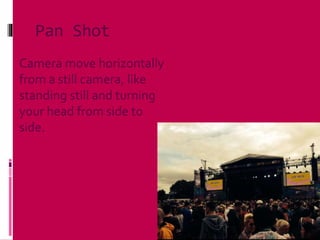
Pan Shot 
Camera move horizontally 
from a still camera, like 
standing still and turning 
your head from side to 
side.
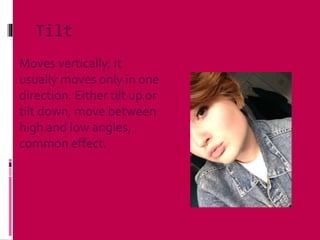
Tilt 
Moves vertically, it 
usually moves only in one 
direction. Either tilt up or 
tilt down, move between 
high and low angles, 
common effect.
Crane Shot 
Lifted above the 
ground, mounted on a 
crane/ mechanical 
arm, it can create 
drama to stimulate 
flying or swooping 
through a scene
Tracking Shot 
The entire camera 
moves, to move 
smoothly, the entire 
camera is mounted on 
a dolly and these are 
also known as dolly 
shots.
Canted Angle Shot 
Camera is placed on an 
angle to film the angle 
to film the action. 
Used as Point of View 
shot, to create 
interesting speed 
images.
Handheld Shot 
Held by a person, 
these are used to 
produce a bumpy and 
jerky look, and were 
made popular after the 
“Blair witch project” 
Sense of reality.
Eye Level Angle 
Realistic, audience 
sense of involvement, 
same level as the 
subject.
High Angle Shot 
Create a sense of 
weakness, 
vulnerability, draw a 
subjective shot, or 
wanting more of the 
background, from 
above.
Low Angle Shot 
Primarily used to 
created intimidation 
from below.
Dolly Shots
Pushing Shot 
Focus on one or more 
character, add tension 
and characters 
feelings, fast more can 
make a comic 
approach
Pull Back Reveal 
Can reveal the 
emotion of a 
character, go from 
close up to reveal a 
characters position to 
increase 
understanding of the 
scene
Expanding Dolly Shot 
Character moving 
quicker than camera, it 
equals distances.
Contract Shots 
Camera moving, 
creates drama, reveals 
more about the 
subjects

Camera angles

  • 1.
    Movements Shots andAngles The camera maybe static, which means that it does not move. Short duration but highly effective.
  • 2.
    Zoom Shot Static,can move towards or further away from the subject, can be obvious or can be subtle.
  • 3.
    Pan Shot Cameramove horizontally from a still camera, like standing still and turning your head from side to side.
  • 4.
    Tilt Moves vertically,it usually moves only in one direction. Either tilt up or tilt down, move between high and low angles, common effect.
  • 5.
    Crane Shot Liftedabove the ground, mounted on a crane/ mechanical arm, it can create drama to stimulate flying or swooping through a scene
  • 6.
    Tracking Shot Theentire camera moves, to move smoothly, the entire camera is mounted on a dolly and these are also known as dolly shots.
  • 7.
    Canted Angle Shot Camera is placed on an angle to film the angle to film the action. Used as Point of View shot, to create interesting speed images.
  • 8.
    Handheld Shot Heldby a person, these are used to produce a bumpy and jerky look, and were made popular after the “Blair witch project” Sense of reality.
  • 9.
    Eye Level Angle Realistic, audience sense of involvement, same level as the subject.
  • 10.
    High Angle Shot Create a sense of weakness, vulnerability, draw a subjective shot, or wanting more of the background, from above.
  • 11.
    Low Angle Shot Primarily used to created intimidation from below.
  • 12.
  • 13.
    Pushing Shot Focuson one or more character, add tension and characters feelings, fast more can make a comic approach
  • 14.
    Pull Back Reveal Can reveal the emotion of a character, go from close up to reveal a characters position to increase understanding of the scene
  • 15.
    Expanding Dolly Shot Character moving quicker than camera, it equals distances.
  • 16.
    Contract Shots Cameramoving, creates drama, reveals more about the subjects