V.NIVEDHA
 Introduction
 Definition
 Etiology
 Incidence
 Radiographic interpretation
 Histopathology
 Mechanisms of hard tissue formation
 Management of canals with calcific metamorphosis
 Maxillary central and lateral incisor
 Mandibular incisor and canine
 Location and penetration
 Penetration and negotiation
 Helpful considerations
 Prognosis
 Does the tooth need root canal therapy
 Surgical endodontic considerations
 Summary
 References
 Calcific metamorphosis (CM) is seen commonly in the dental pulp after
traumatic tooth injuries and is recognized clinically as early as 3 months
after injury
 Calcific metamorphosis is characterized by deposition of hard tissue within
the root canal space and yellow discoloration of the clinical crown
 Opinion differs among practitioners as to whether to treat these cases upon
early detection of CM or to observe them until symptoms or radiographic
signs of pulpal necrosis are detected.
 Approximately 3.8% to 24% of traumatized teeth develop varying degrees
of CM.
 Studies indicate that of these, approximately 1% to 16% will develop
pulpal necrosis.
 Most of the literature does not support endodontic intervention unless
periradicular pathosis is detected or the involved tooth becomes
symptomatic.
 It may be advisable to manage cases demonstrating CM through
observation and periodic examination,
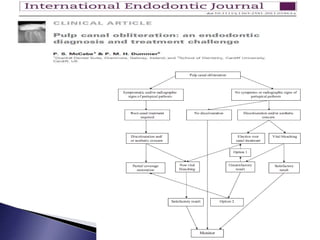
 Calcific metamorphosis (CM) is defined as a pulpal response to trauma that
is characterized by deposition of hard tissue within the root canal space
 It has also been referred to as pulp canal obliteration.
 CM is seen commonly after traumatic tooth injuries and is recognized
clinically as early as 3 months after injury, but in most instances it is not
detected for about 1 year.
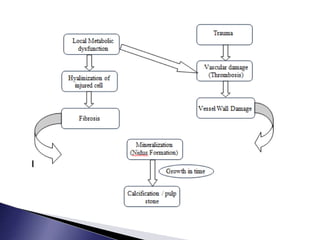
 Although the exact mechanism of CM is still unknown, damage to the
neurovascular supply of the pulp is probably related significantly to this
process.
 Teeth presenting with radiographic evidence of CM are considered to be
undergoing pathologic changes by some clinicians.
 In this respect, the diagnostic status and treatment planning decisions
regarding teeth with CM remain controversial
 Calcific metamorphosis occurs commonly in young adults because of
trauma.
 It is evident usually in the anterior region of the mouth and can partially or
totally obliterate the canal space radiographically.
 The clinical picture of CM has been described by Patterson and Mitchell as
a tooth that is darker in hue than the adjacent teeth and exhibits a dark
yellow color because of a decrease in translucency from a greater thickness
of dentin under the enamel .
 These authors considered CM a pathologic condition and recommended
either root canal treatment or extraction of the tooth.
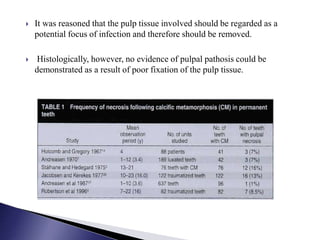
 It was reasoned that the pulp tissue involved should be regarded as a
potential focus of infection and therefore should be removed.
 Histologically, however, no evidence of pulpal pathosis could be
demonstrated as a result of poor fixation of the pulp tissue.
 They concluded that CM may be a pathologic deviation from the normal
pulp.
 As a result, the only definitive criterion for choice of treatment for these
teeth was the appearance of a peri radicular rarefaction.
 Calcific metamorphosis was more common in teeth with incomplete root
development and crown fracture and was related to the type of luxation
injury.
 Calcific metamorphosis was considered to be an accelerated deposition of
dentin in response to trauma, and early endodontic intervention was not
supported.
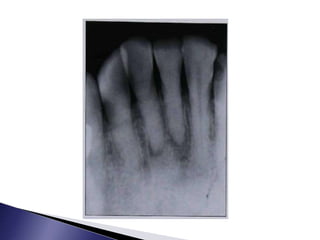
 The radiographic appearance of CM is partial or total obliteration of the
pulp canal space with a normal periodontal membrane space and intact
lamina dura.
 A thickening of the periodontal ligament space or periradicular
radiolucency may be observed with or without subjective symptoms .
 Complete radiographic obliteration of the root canal space, however, does
not necessarily mean the absence of the pulp or canal space; in the majority
of these cases there is a pulp canal space with pulpal tissue.
 Histopathologic studies designed to assess the pulpal status of teeth with
CM have failed to show any inflammatory component indicative of a
pathologic process.
 This may be a result of multiple causes, including but not limited to poor
tissue fixation, specimen sectioning, and the investigator's interpretation.
 On the other hand, Patterson and Mitchell considered CM a pathologic
process but could not prove it histologically because they based their
conclusion on one case with a poorly fixed pulpal tissue.
 The pulps of 20 maxillary permanent incisors were evaluated
microscopically by Lundberg and Cvek.
 The teeth were treated endodontically because of progressive hard tissue
formation in the canal space.
 The tissue changes were characterized by a varied increase in collagen
content and a marked decrease in the number of Cells.
 Osteoid tissue with included cells was found adjacent to mineralized areas in
the pulp, with only one pulp showing moderate lymphocytic inflammatory
infiltrate because of further trauma.
 They concluded that tissue changes in the pulps of teeth with CM do not
indicate the necessity for root canal treatment,
 Torneck described CM as a tertiary dentin response to trauma that is
highly irregular in pattern and calcification and contains a maze of small
irregular spaces and cul-de-sacs that extend from the pulp chamber to the
apical foramen.
 Such irregularities were less common when the rate of calcification was
slower, with the dentin deposition occurring only on the periphery of the
pulp space.
 The dentin structure was also more regular, being principally of a tubular
type that is supported at times by a small but Identifiable pulp in the more
central portion of the root.
 Fischer indicated that CM was a response to trauma with progressive hard
tissue formation, with maintenance of vital tissue and a pulp space
observed up to the apical foramen .
 He argued, however, that such cases require root canal treatment because
of reduced cellular content leading to decreased ability for healing,
therefore making the pulpal tissue more susceptible to infection.
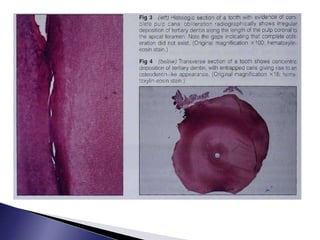
 The histopathologic appearance of pulp canal obliteration in traumatized
primary incisors shows three types of calcific tissue occluding the pulp
lumen: dentin like, bone like, and fibrotic.
 Recently, Holan described tube-like structures that extended along the
entire length of the pulp canal.
 These were separated from the root dentin by normal pulp tissue but
connected to the dentin in some of the sites evaluated.
 The mechanism of hard tissue formation during CM is not yet clear.
 Several hypotheses have been proposed to explain this phenomenon,
Torneck hypothesized that the deposition of hard tissue is either as a result
of stimulation of the pre-existing odontoblasts or by loss of their regulatory
mechanism.
 On the other hand, Andreasen described CM as a response to severe injury
to the neurovascular supply to the pulp, which after healing leads to
accelerated dentin deposition and is closely related to the loss and re-
establishmcnt of the pulpal neural supply.
 Neither mechanism has been proven or studied, and further investigation is
required to provide an evidence-based understanding of this occurrence.
 Calcific metamorphosis is characterized by an osteoid tissue that is
produced by the odontoblasts at the periphery of the pulp space or can be
produced by undifferentiated pulpal cells that undergo differentiation as a
result of the traumatic injury.
 This results in a simultaneous deposition of a dentin-like tissue along the
periphery of the pulp space (root canal walls) and within the pulp space
proper (root canal).
 These tissues can eventually fuse with one another, producing the
radiographic appearance of a root canal space that has become rapidly and
completely calcified.
 Ten Cate identified this process as the deposition of tertiary or reparative
dentin in response to irritation or trauma.
 Reparative odontoblasts are somehow able to differentiate from dental
pulp cells in the absence of any epithelial influence.
 During the development of the tooth, the undifferentiated
ectomesenchymal cell of the dental papilla divides into two daughter cells.
 One daughter cell is influenced by the epithelial cells and differentiates into
an odontoblast, while the second daughter cell that is not exposed to the
epithelial influence persists as a subodontoblast cell, which under certain
influences differentiates into odontoblast- like cells and deposits dentin-like
hard tissue.
 Reparative dentin or tertiary dentin is deposited at specific sites in
response to injury, and rate of deposition depends on the degree of injury.
 The more severe the injury, the more rapid the rate of dentin deposition,
with possibly as much as 3.5 mu m in a single day.
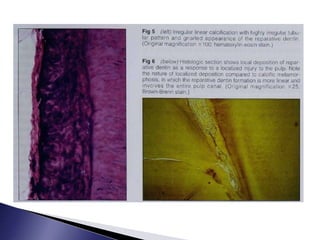
 This results in accelerated hard tissue formation that traps some pulpal cells
and gives the histologic appearance of osteodentin with an irregular tubular
pattern.
 Evidence indicates that reparative dentin is produced by odontoblast-like
cells and incorporates type I and III collagen in its matrix, which exhibits
diminished phosphophoryn content."
 The cells constituting this hard tissue originate from cell divisions in
deeper layers of the pulp, and the type of cells that divide has not been
established.
 They might be undifferentiated perivascular cells, pulpal fibroblasts, or
cells formed from the odontoblast lineage but not exposed to the final
epithelial influence.
 These newly differentiated cells first express a mixture of collagen
(including types 1, II, 111, and IV), which forms a matrix surface. The
deposition of fibronectin on predentin provides the mechanism for
positioning the cells that then produce a matrix of type I and II collagen
that accepts mineral in the absence of phosphophoryn.
 There is much discussion as to whether the mineralized tissue so formed is
truly dentin, because the original odontoblasts express type I collagen and
phosphophoryn.
 After concussion or subluxation injuries, the affected teeth do not always
react to sensibility tests for some time (Andreasen 1970). This lack of a
response can be reversible, and it is possible that after some weeks,
sensibility tests will show positive results (Andreasen 1970, de Cleen
2002).
 In the presence of PCO, it is generally accepted that sensibility tests are
unreliable (Holcomb & Gregory 1967, Robertson et al. 1996, Oginni et al.
2009).
 There is a progressive decrease in the response to thermal and electrical
pulp testing as PCO becomes more pronounced (Patersson & Mitchell
1965, Schindler & Gullickson 1988, Oginni et al. 2009).
 It has also been reported there is a significant difference to electric pulp
testing between partially obliterated teeth compared to those that were
totally obliterated (Oginni et al. 2009);
 teeth with partial pulpal obliteration were more responsive than those teeth
that were totally obliterated with significantly more nonresponsive teeth in
the totally obliterated group (Oginni et al. 2009).
 It is generally accepted that the absence of a positive response to the
electric pulp test does not automatically imply pulp necrosis (Holcomb &
Gregory 1967, Schindler & Gullickson 1988, Robertson et al. 1996, Oginni
et al. 2009).
 The management of canals with CM is similar to the management of pulpal
spaces with any form of calcification.
 Usually, the teeth involved with CM are anterior teeth that were subjected
to trauma at a young age.
 The literature supports the fact that most teeth with the radiographic
appearance of CM exhibit a persisting narrow pulp canal space that is not
usually detectable radiographicaliy.
 Even under these circumstances, most canals can be located and
negotiated.'
 To locate the calcified orifice, the practitioner first mentally visualizes and
projects the normal spatial relationship of the pulp space onto a radiograph
of the calcified tooth.
 Then, the two-dimensional radiographic image is correlated with the three-
dimensional morphology of the tooth.Thereafter, access preparation is
initiated, with the rotary instrument directed toward the presumed location
of the pulpal space.
 This approach requires knowledge of the normal pulp chamber location,
tooth canal anatomy, and the long axis of the roots. Accurate radiographs
are essential for preoperative visualization and periodic assessment of bur
penetration and orientation.
 Finally, the practitioner must be able to recognize the calcified orifice when
it has been reached.
 Normal root anatomy
 In the past, textbooks on root canal morphology have often overlooked an
important anatomic fact: The canal space is always located in the cross-
sectional center of the root.
 Similarly, the pulp chamber is (or was, before calcification) located in the
cross-sectional center of the crown
 In a tooth with a calcified pulp chamber, the distance from the occlusal
surface to the projected pulp chamber floor is measured from the
preoperative radiograph.
 An access cavity of normal size and shape is created in the crown to a
depth equal to that of the pulp chamber floor in a noncalcified tooth.
 A second important aspect of normal root canal anatomy is the geometric
pattern of canal orifices found in the pulp chambers of teeth with multiple
canals.
 These geometric patterns and their potential variations must be mentally
projected onto the calcified pulp chamber floor, with consideration for the
direction of the canals as they leave the pulp chamber.
 This requires an astute integration of two-dimensional radiographic
findings with three-dimensional tooth anatomy, coupled with a safe and
dexterous movement of the rotary instrument on the pulpal floor
 In maxillary incisors, the root canal is located in the cross-sectional center
of the root .
 If esthetics and structural integrity were disregarded, the ideal location of
the access preparation would be through the incisal edge; however, the
standard access preparation for this tooth is in the exact center of the
palatal surface of the crown bucco lingually and inciso gingivally.
 At an angle of roughly 45 degrees to the long axis, bur pcnctration of 3 to 4
mm will generally intersect with the pulp chamber in average-sized teeth.
 In a calcified chamber, however, continued penetration at 45 degrees to the
long axis will eventually pass over the canal entirely and result in
perforation of the labial root surface below the gingival attachment,
 Therefore, when the chamber is calcified and the canal has not been
located after 3 to 4 mm of penetration, the bur must be rotated to be as
parallel to the long axis of the tooth as possible to prevent perforation.
 Penetration proceeds down the lingual aspect of the access preparation,
with frequent exploration for the orifice with the DG-16 endodontic
explorer.
 In deep excavations, the bur may be changed to a long shank No, 2 round
bur with frequent visual and radiographic reassessment of direction
 The most common canal morphology for these teeth is a single canal;
however, a second canal, if present, will almost invariably be found lingual
to the first.
 In incisors and canines, second canals are particularly difficult to locate
(even where minimal calcification is present) because of angulation of the
anatomic crown or the location of the standard access cavity on the lingual
aspect.
 After the main canal is located and debrided, it is important to widen the
orifice lingually and probe for the second orifice using a No, 8 or 10 K file
with an abrupt curve placed 1 or 2 mm from the tip of the file.
 If the canal is not located with this technique, the use of No, 2, 3, and 4
Gates-Glidden drills on the lingual surface may be very helpful in
uncovering the orifice of a lingual canal.
 The drill is used in the manner of the round bur and is drawn up the lingual
surface in a sweeping motion, With the advent of canal-orifice shapers, the
technique of increasing the orifice has been enhanced.
 The most important instrument for orifice location is the DG-16 explorer.
In firm probing during excavation Ï of the pulp chamber floor, the explorer
will not penetrate and "stick" in solid dentin;
 however, if an orifice is present, firm pressure will force the instrument
slightly into the orifice, and it will resist dislodgment, ‘ or stick.
 To minimize perforation, reconfirm the location of the canal
radiographically, leaving the explorer : in place. At this point, a fine
instrument, usually a No, 8 or 10 K file, is placed into the orifice, and an
attempt is made to negotiate the canal. Some practitioners prefer to use a
No, 6 K file initially to negotiate the canal.
 however, these instruments are very fine and lack stiffness in their shafts. If
the canal is highly calcified or ‘ packed with necrotic debris, the No, 6 K
file will bend and curl instead of penetrating.
 An alternative option is to use instruments with reduced flutes, such as a
Canal Pathfinder (JS Dental), or instruments with greater shaft strength,
such as the Pathfinder CS (Kerr), which are more likely to penetrate even
highly calcified canals.
 Here also, the canal Orifice Shapers (DENTSPLY) will enhance rapid
canal penetration.
 When faced with trying to locate the canal orifice, many practitioners have
chosen to use magnification in the form of enhanced glasses or a
microscope.
 Although it may be advantageous to be able to see the position of the
orifice under magnification, this approach will not aid the clinician who
does not know where to look for the orifice.
 The anatomic features of the pulp chamber floor are an essential tool for
locating the orifices and should be preserved as much as possible.
 Examining the color changes in the floor with high magnification will aid
in locating canal orifices.
 Because of curvature in the coronal 1 or 2 mm of many canals, it is
necessary to remove the cervical ledge or bulge.
 If the orifice still cannot be negotiated with a fine instrument, drill 1 or 2
mm into the center of the orifice with a No, 2 round bur on slow speed and
use the explorer to re-establish the canal orifice.
 When counter sinking or toughing in an area where an orifice is located, be
sure that the pulp chamber is dry.
 The slow-speed rotating bur will remove white dentin chips that
accumulate in the orifice.
 After a light stream of air is blown into the chamber, these dentin chips
appear as white spots on the dark floor of the chamber and serve as
markers for exploration or further counter sinking.
 Upon entry, the file is carefully rotated and teased apically around the
canal curves, Chelating agents such as REDTA (Roth Drug), RC-prep
(Premier Dental Products), and Glide (Dentsply) are seldom of value in
locating the orifice but can be useful during canal negotiation.
 Once the orifice bas been located, it is advisable to enlarge the coronal
third to improve tactile sensation and better apical penetration.
 A 21-nim No, 8 K file is the initial instrument of choice to negotiate the
calcified canal. A No, 10 K file is usually too large, and a No, 6 K file is
too weak to apply any firm apical pressure, particularly if curved.
 Likewise, the use of nickel-titanium files is contraindicated for this purpose
because of lack of strength in the long axis of the file. The 21-mm-long K
file Is flexible enough to negotiate around curvatures of calcifications.
 If the canal is longer than 21 mm, it is simple to change to a 25-mm
instrument once 21 mm of penetration has been achieved.
 Before the file is inserted into the canal, a small curve is placed in its apical
1 mm.
 The point on the rubber stop is then aligned with the curve. In negotiating
the fine-curved canal, the curved instrument must be directed along the
pathway the canal is most likely to follow; consequently, it is vitally
important to know what direction the curve in the instrument is pointed.
 This is easily accomplished by observing the rubber stop on the instrument
shaft.
 ' Irrigate copiously at all times with 2,5% to 5.25% NaOCl, which
enhances dissolution of organic debris lubricates the canal, and keeps
dentin chips and pieces of calcified material in solution
 • Advance instruments slowly in calcified canals,
 • Clean the instrument on withdrawal and inspect it before reinserting it
into the canal.
 • Do not remove the instrument when it has reached the approximate canal,
rather, obtain a radiograph to ascertain the position of the file,
 • Do not use acids (hydrochloric acid) or alkalis (sodium hydroxide) to aid
in canal penetration,
 • Use chelating pastes or solutions to assist in canal penetration.
 • Use ultrasonic instruments in the pulp chamber to loosen debris in the
canal orifices.
 • Flare the canal orifice in a crown-down fashion and enlarge the
negotiated canal space to improve tactile perception in continued canal
penetration.
 • Use of newer, nickel-titanium rotary orifice-penetrating instruments
should be considered when possible.
 The prognosis of teeth with CM treated with nonsurgical root canal
treatment has been investigated by Cvek et al They examined 54 nonvital
incisors with post traumatically reduced pulpal lamina with a follow-up of
4 years.
 Healing was found in 80%.
 They filled the canals with resin-chloroform and gutta-percha points. This
could be another factor involved in decreasing the success rate, because
considerable shrinkage in gutta percha occurs when chloroform
evaporates,“ There have been no studies that compare the relative success
rates of calcified canals treated using a surgical approach.
 Adherence to the principles of radiographic interpretation, recognition of
the presence of CM with pathologic sequelae, and use of the techniques
described in managing these cases will in many cases result in successful
management of a case that may have been deemed untreatable.
 In 1965, Patterson and Mitchell felt that a tooth that had signs of calcific
metamorphosis due to trauma should be regarded as a potential focus for
infection and that root canal therapy should be initiated.
 However, further research and clinical observation provided the foundation
for current guidelines.
 The Naval Academy study found that over a four year period only 3/41
(7.3%) of teeth with CM developed pulpal necrosis, and as a result the only
definitive criterion for endodontic treatment was the appearance of a
periapical radiolucency.
 Jacobsen and Kerekes conducted a study of 122 traumatized teeth in which
partial canal obliteration was identified in 36% of the cases and total canal
obliteration in 64%.
 Only 13% eventually developed pulpal necrosis. Smith [19] performed a
literature review and found that teeth with calcific metamorphosis have a
low incidence of periapical pathosis development (0-16%) and
recommended delaying treatment until symptoms or radiographic changes
develop.
 The development of CM following trauma does not justify prophylactic
root canal therapy.
 According to Fischer (1974) CM was a response to trauma with
progressive hard tissue formation, with maintenance of vital tissue & pulp
space observed up to the apical foramen.
 He argued, that such cases require endodontic treatment because of
reduced cellular content leading to decreased ability for healing, therefore
making the pulpal tissue more susceptible.
 Worman has described CM as either a reparative or retrogressive change.
According to him, root canal treatment is not only futile but also
contraindicated, for this obliteration in itself is a perfect root canal
treatment.
 Lundberg & Cvek (1980) evaluated 20 pulps from traumatized permanent
incisors with reduced pulpal lumen under microscope.
 The tissue changes were characterized by a varied increase in collagen
content and a marked decrease in number of cells. They concluded that
tissue changes in the pulp of teeth with CM do not indicate the necessity
for root canal therapy.
 Often, symptomatic teeth that exhibit complete CM radiographically or in
which the canals cannot be negotiated must be treated with periradicular
surgery.
 Subsequent to trauma, a rapid, disorganized calcification that characterizes
CM can occur; pulpal remnants may become entrapped in this
calcification.
 Ultimately, these pockets of tissue necroses but are contained within the
dentin. Once a root-end resection is performed, many of the pockets of
necrotic tissue may be opened to the periradicular fissures, resulting in
persistent chronic inflammation with possible sinus tract involvement
subsequent to surgery.
 Even a second root-end resection does not solve the problem, and
ultimately extraction may occur
 If this situation truly exists, very little can be done short of complete root-
end fill of the entire root face, as suggested many years ago by Castenfeldt,
or possibly using a surface layer of glass ionomer or a layer of composite.
 Presently advocated techniques of preparing a concave root face, followed
by a dentin bonding agent and resin composite root-end fill, appear
promising and may negate the problem of contaminated tissue debris at the
resected root end.
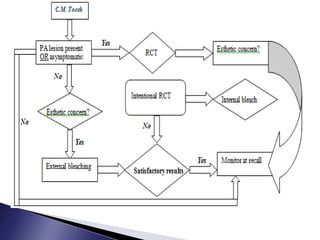
 If the tooth with trauma becomes discolored and the patient has esthetic
concerns, external bleaching should be considered first.
 However, since the decrease in translucency and acquisition of a yellowish
color is due to irregular reparative dentin formation, external bleaching of the
enamel may not achieve a clinically successful result.
 Intentional root canal treatment may be performed to facilitate internal
bleaching. This may be carried out whether the pulp is vital or necrotic.
 Rotstein and Walton felt such teeth could be bleached with fair esthetic results
A study by Friedman et al found that after a recall period of 1-8 years, 79% of
internally bleached teeth had clinically acceptable clinically acceptable or
better esthetics.
 Approximately 3.8% to 24% of traumatized teeth develop varying degrees
of calcific metamorphosis.
 Although there are different opinions on the management of pulps
exhibiting canal obliteration, studies indicate that the incidence of pulpal
necrosis in these teeth is between 1% and 16%.
 Histologic examination of pulpal tissue from teeth demonstrating closure
of the pulpal lumina revealed no significant inflammation that would
warrant root canal treatment.
 Most of the literature does not support endodontic intervention unless
periradicular pathosis is detected or the involved tooth becomes
symptomatic.
 Because the overall failure rate of nonsurgical root canal treatment is
between 10% and 19%, it may be advisable to manage cases demonstrating
calcific metamorphosis through observation and periodic examination.
 If the pulp tissue becomes necrotic and a periradicular radiolucency
develops, nonsurgical root canal treatment has been shown to be successful
80% of the time
 Calcific metamorphosis: A challenge in endodontic diagnosis and treatment
Article in Quintessence international · July 2001, James Leo Gutmann
 Calcific metamorphosis Commander Patrick J. Munley, DC, USN and
Captain Gary G. Goodell, DC, USN Clinical Update Naval Postgraduate
Dental School National Naval Medical Center 8901 Wisconsin Ave
Bethesda, Maryland 20889-5602
 Calcific metamorphosis – a review nilima borkar1, dr. shail jaggi1, dr.
varsha pandit1, soumya shetty2 issn: 0976-3104
 Calcific Metamorphosis: A Review Shoaib Haider Siddiqui - BDS
(Pakistan), MDentSci Restorative Dentistry (University of Leeds, UK)
Ahmed Nabil Mohamed – BDS, MSc, DSc International Journal of Health
Sciences, Qassim University, Vol. 10, No. 3 (July-Sept 2016)
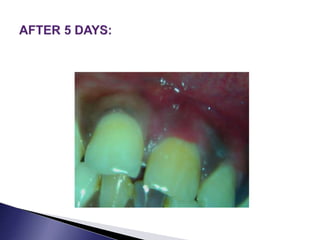
 PATIENT DETAILS:
 NAME: X
 AGE/SEX: 25yrs/ male
 ADDRESS: Madurai
 OP NO: 19- 00625
 DATE REPORTED: 11.01.19
 Patient reported to the department with a complaint
of discoloured tooth in the upper front region of the
jaw
 History of unesthetic appearance
 History of trauma before 2 years
 There was no relevant medical history
 Patient has normal food habits, and brushes twice daily using brush and
paste
 Patient is alert, cooperative, conscious and well-oriented
 Facial symmetry present
 TMJ is normal
 Cervical lymph nodes not palpable
 There is no extraoral swelling evident
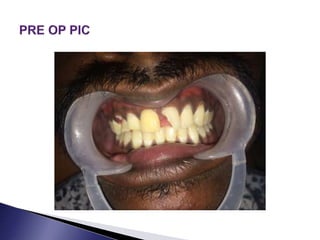
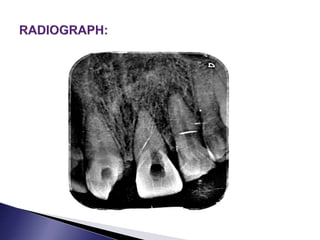
 Discoloured 11
 Fractured 21, ellis class 111
 Tender on percussion present in 11,21
 No swelling evident
 No sinus tract or abscess evident
 NO response in 11
 Immediate exaggerated response,pain in 21
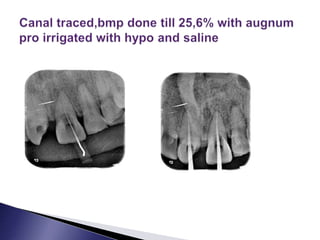
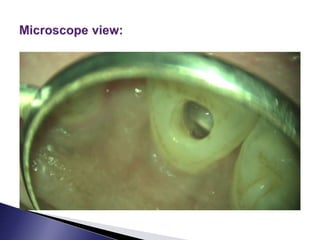
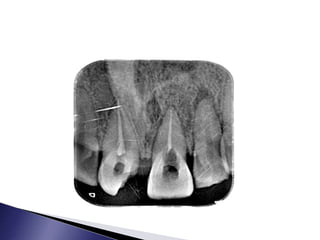
 Calcific metamorphosis in 11
 Symptomatic pulp with irreversible pulpitis in 21
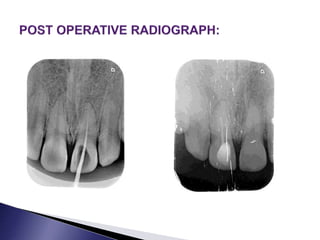
 Root canal treatment in 11,21
 PATIENT DETAILS:
 NAME: Mani
 AGE/SEX: 35yrs/ male
 ADDRESS: Madurai
 OP NO: 18- 16418
 DATE REPORTED: 05.09.18
 Patient reported to the department with a complaint
of pain in the upper front region of the jaw
 History of throbbing pain which aggravates on
mastication and relieves on medication
 History of trauma before 2 years
 There was no relevant medical history
 Patient has normal food habits, and brushes twice daily using brush and
paste
 Patient is alert, cooperative, conscious and well-oriented
 Facial symmetry present
 TMJ is normal
 Cervical lymph nodes palpable
 There is no extraoral swelling evident
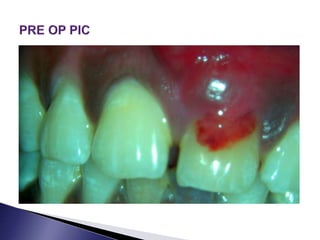
 Discoloured 21
 Tender on percussion present in 21
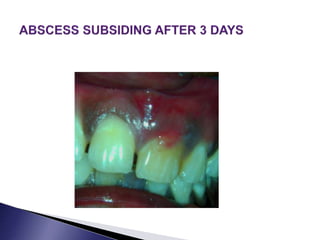
 swelling evident
 abscess evident
 NO response in 21
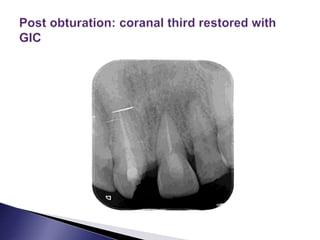
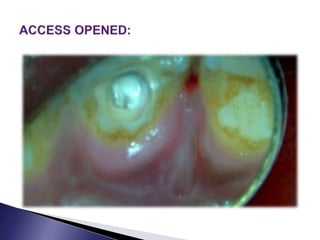
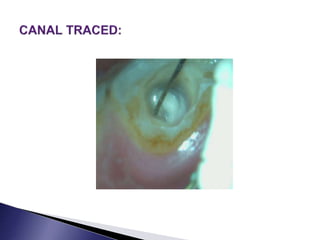
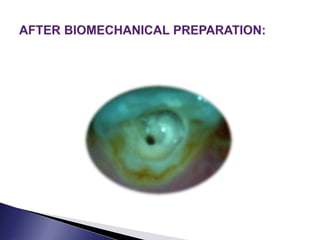
 Calcific metamorphosis in 21
 Root canal treatment in 21
Calcific metamorphosis

Calcific metamorphosis

  • 1.
  • 2.
     Introduction  Definition Etiology  Incidence  Radiographic interpretation  Histopathology  Mechanisms of hard tissue formation  Management of canals with calcific metamorphosis  Maxillary central and lateral incisor  Mandibular incisor and canine  Location and penetration  Penetration and negotiation
  • 3.
     Helpful considerations Prognosis  Does the tooth need root canal therapy  Surgical endodontic considerations  Summary  References
  • 4.
     Calcific metamorphosis(CM) is seen commonly in the dental pulp after traumatic tooth injuries and is recognized clinically as early as 3 months after injury  Calcific metamorphosis is characterized by deposition of hard tissue within the root canal space and yellow discoloration of the clinical crown  Opinion differs among practitioners as to whether to treat these cases upon early detection of CM or to observe them until symptoms or radiographic signs of pulpal necrosis are detected.
  • 5.
     Approximately 3.8%to 24% of traumatized teeth develop varying degrees of CM.  Studies indicate that of these, approximately 1% to 16% will develop pulpal necrosis.  Most of the literature does not support endodontic intervention unless periradicular pathosis is detected or the involved tooth becomes symptomatic.  It may be advisable to manage cases demonstrating CM through observation and periodic examination,
  • 6.
     Calcific metamorphosis(CM) is defined as a pulpal response to trauma that is characterized by deposition of hard tissue within the root canal space  It has also been referred to as pulp canal obliteration.  CM is seen commonly after traumatic tooth injuries and is recognized clinically as early as 3 months after injury, but in most instances it is not detected for about 1 year.  Although the exact mechanism of CM is still unknown, damage to the neurovascular supply of the pulp is probably related significantly to this process.
  • 7.
     Teeth presentingwith radiographic evidence of CM are considered to be undergoing pathologic changes by some clinicians.  In this respect, the diagnostic status and treatment planning decisions regarding teeth with CM remain controversial
  • 8.
     Calcific metamorphosisoccurs commonly in young adults because of trauma.  It is evident usually in the anterior region of the mouth and can partially or totally obliterate the canal space radiographically.  The clinical picture of CM has been described by Patterson and Mitchell as a tooth that is darker in hue than the adjacent teeth and exhibits a dark yellow color because of a decrease in translucency from a greater thickness of dentin under the enamel .  These authors considered CM a pathologic condition and recommended either root canal treatment or extraction of the tooth.
  • 9.
     It wasreasoned that the pulp tissue involved should be regarded as a potential focus of infection and therefore should be removed.  Histologically, however, no evidence of pulpal pathosis could be demonstrated as a result of poor fixation of the pulp tissue.
  • 10.
     They concludedthat CM may be a pathologic deviation from the normal pulp.  As a result, the only definitive criterion for choice of treatment for these teeth was the appearance of a peri radicular rarefaction.  Calcific metamorphosis was more common in teeth with incomplete root development and crown fracture and was related to the type of luxation injury.  Calcific metamorphosis was considered to be an accelerated deposition of dentin in response to trauma, and early endodontic intervention was not supported.
  • 11.
     The radiographicappearance of CM is partial or total obliteration of the pulp canal space with a normal periodontal membrane space and intact lamina dura.  A thickening of the periodontal ligament space or periradicular radiolucency may be observed with or without subjective symptoms .  Complete radiographic obliteration of the root canal space, however, does not necessarily mean the absence of the pulp or canal space; in the majority of these cases there is a pulp canal space with pulpal tissue.
  • 13.
     Histopathologic studiesdesigned to assess the pulpal status of teeth with CM have failed to show any inflammatory component indicative of a pathologic process.  This may be a result of multiple causes, including but not limited to poor tissue fixation, specimen sectioning, and the investigator's interpretation.  On the other hand, Patterson and Mitchell considered CM a pathologic process but could not prove it histologically because they based their conclusion on one case with a poorly fixed pulpal tissue.
  • 14.
     The pulpsof 20 maxillary permanent incisors were evaluated microscopically by Lundberg and Cvek.  The teeth were treated endodontically because of progressive hard tissue formation in the canal space.  The tissue changes were characterized by a varied increase in collagen content and a marked decrease in the number of Cells.  Osteoid tissue with included cells was found adjacent to mineralized areas in the pulp, with only one pulp showing moderate lymphocytic inflammatory infiltrate because of further trauma.  They concluded that tissue changes in the pulps of teeth with CM do not indicate the necessity for root canal treatment,
  • 15.
     Torneck describedCM as a tertiary dentin response to trauma that is highly irregular in pattern and calcification and contains a maze of small irregular spaces and cul-de-sacs that extend from the pulp chamber to the apical foramen.  Such irregularities were less common when the rate of calcification was slower, with the dentin deposition occurring only on the periphery of the pulp space.  The dentin structure was also more regular, being principally of a tubular type that is supported at times by a small but Identifiable pulp in the more central portion of the root.
  • 16.
     Fischer indicatedthat CM was a response to trauma with progressive hard tissue formation, with maintenance of vital tissue and a pulp space observed up to the apical foramen .  He argued, however, that such cases require root canal treatment because of reduced cellular content leading to decreased ability for healing, therefore making the pulpal tissue more susceptible to infection.  The histopathologic appearance of pulp canal obliteration in traumatized primary incisors shows three types of calcific tissue occluding the pulp lumen: dentin like, bone like, and fibrotic.
  • 17.
     Recently, Holandescribed tube-like structures that extended along the entire length of the pulp canal.  These were separated from the root dentin by normal pulp tissue but connected to the dentin in some of the sites evaluated.
  • 19.
     The mechanismof hard tissue formation during CM is not yet clear.  Several hypotheses have been proposed to explain this phenomenon, Torneck hypothesized that the deposition of hard tissue is either as a result of stimulation of the pre-existing odontoblasts or by loss of their regulatory mechanism.  On the other hand, Andreasen described CM as a response to severe injury to the neurovascular supply to the pulp, which after healing leads to accelerated dentin deposition and is closely related to the loss and re- establishmcnt of the pulpal neural supply.
  • 20.
     Neither mechanismhas been proven or studied, and further investigation is required to provide an evidence-based understanding of this occurrence.  Calcific metamorphosis is characterized by an osteoid tissue that is produced by the odontoblasts at the periphery of the pulp space or can be produced by undifferentiated pulpal cells that undergo differentiation as a result of the traumatic injury.  This results in a simultaneous deposition of a dentin-like tissue along the periphery of the pulp space (root canal walls) and within the pulp space proper (root canal).
  • 21.
     These tissuescan eventually fuse with one another, producing the radiographic appearance of a root canal space that has become rapidly and completely calcified.  Ten Cate identified this process as the deposition of tertiary or reparative dentin in response to irritation or trauma.  Reparative odontoblasts are somehow able to differentiate from dental pulp cells in the absence of any epithelial influence.  During the development of the tooth, the undifferentiated ectomesenchymal cell of the dental papilla divides into two daughter cells.
  • 22.
     One daughtercell is influenced by the epithelial cells and differentiates into an odontoblast, while the second daughter cell that is not exposed to the epithelial influence persists as a subodontoblast cell, which under certain influences differentiates into odontoblast- like cells and deposits dentin-like hard tissue.  Reparative dentin or tertiary dentin is deposited at specific sites in response to injury, and rate of deposition depends on the degree of injury.  The more severe the injury, the more rapid the rate of dentin deposition, with possibly as much as 3.5 mu m in a single day.
  • 23.
     This resultsin accelerated hard tissue formation that traps some pulpal cells and gives the histologic appearance of osteodentin with an irregular tubular pattern.  Evidence indicates that reparative dentin is produced by odontoblast-like cells and incorporates type I and III collagen in its matrix, which exhibits diminished phosphophoryn content."
  • 25.
     The cellsconstituting this hard tissue originate from cell divisions in deeper layers of the pulp, and the type of cells that divide has not been established.  They might be undifferentiated perivascular cells, pulpal fibroblasts, or cells formed from the odontoblast lineage but not exposed to the final epithelial influence.  These newly differentiated cells first express a mixture of collagen (including types 1, II, 111, and IV), which forms a matrix surface. The deposition of fibronectin on predentin provides the mechanism for positioning the cells that then produce a matrix of type I and II collagen that accepts mineral in the absence of phosphophoryn.
  • 26.
     There ismuch discussion as to whether the mineralized tissue so formed is truly dentin, because the original odontoblasts express type I collagen and phosphophoryn.
  • 29.
     After concussionor subluxation injuries, the affected teeth do not always react to sensibility tests for some time (Andreasen 1970). This lack of a response can be reversible, and it is possible that after some weeks, sensibility tests will show positive results (Andreasen 1970, de Cleen 2002).  In the presence of PCO, it is generally accepted that sensibility tests are unreliable (Holcomb & Gregory 1967, Robertson et al. 1996, Oginni et al. 2009).  There is a progressive decrease in the response to thermal and electrical pulp testing as PCO becomes more pronounced (Patersson & Mitchell 1965, Schindler & Gullickson 1988, Oginni et al. 2009).
  • 30.
     It hasalso been reported there is a significant difference to electric pulp testing between partially obliterated teeth compared to those that were totally obliterated (Oginni et al. 2009);  teeth with partial pulpal obliteration were more responsive than those teeth that were totally obliterated with significantly more nonresponsive teeth in the totally obliterated group (Oginni et al. 2009).  It is generally accepted that the absence of a positive response to the electric pulp test does not automatically imply pulp necrosis (Holcomb & Gregory 1967, Schindler & Gullickson 1988, Robertson et al. 1996, Oginni et al. 2009).
  • 31.
     The managementof canals with CM is similar to the management of pulpal spaces with any form of calcification.  Usually, the teeth involved with CM are anterior teeth that were subjected to trauma at a young age.  The literature supports the fact that most teeth with the radiographic appearance of CM exhibit a persisting narrow pulp canal space that is not usually detectable radiographicaliy.  Even under these circumstances, most canals can be located and negotiated.'
  • 32.
     To locatethe calcified orifice, the practitioner first mentally visualizes and projects the normal spatial relationship of the pulp space onto a radiograph of the calcified tooth.  Then, the two-dimensional radiographic image is correlated with the three- dimensional morphology of the tooth.Thereafter, access preparation is initiated, with the rotary instrument directed toward the presumed location of the pulpal space.  This approach requires knowledge of the normal pulp chamber location, tooth canal anatomy, and the long axis of the roots. Accurate radiographs are essential for preoperative visualization and periodic assessment of bur penetration and orientation.
  • 33.
     Finally, thepractitioner must be able to recognize the calcified orifice when it has been reached.  Normal root anatomy  In the past, textbooks on root canal morphology have often overlooked an important anatomic fact: The canal space is always located in the cross- sectional center of the root.  Similarly, the pulp chamber is (or was, before calcification) located in the cross-sectional center of the crown
  • 34.
     In atooth with a calcified pulp chamber, the distance from the occlusal surface to the projected pulp chamber floor is measured from the preoperative radiograph.  An access cavity of normal size and shape is created in the crown to a depth equal to that of the pulp chamber floor in a noncalcified tooth.  A second important aspect of normal root canal anatomy is the geometric pattern of canal orifices found in the pulp chambers of teeth with multiple canals.
  • 35.
     These geometricpatterns and their potential variations must be mentally projected onto the calcified pulp chamber floor, with consideration for the direction of the canals as they leave the pulp chamber.  This requires an astute integration of two-dimensional radiographic findings with three-dimensional tooth anatomy, coupled with a safe and dexterous movement of the rotary instrument on the pulpal floor
  • 36.
     In maxillaryincisors, the root canal is located in the cross-sectional center of the root .  If esthetics and structural integrity were disregarded, the ideal location of the access preparation would be through the incisal edge; however, the standard access preparation for this tooth is in the exact center of the palatal surface of the crown bucco lingually and inciso gingivally.  At an angle of roughly 45 degrees to the long axis, bur pcnctration of 3 to 4 mm will generally intersect with the pulp chamber in average-sized teeth.  In a calcified chamber, however, continued penetration at 45 degrees to the long axis will eventually pass over the canal entirely and result in perforation of the labial root surface below the gingival attachment,
  • 37.
     Therefore, whenthe chamber is calcified and the canal has not been located after 3 to 4 mm of penetration, the bur must be rotated to be as parallel to the long axis of the tooth as possible to prevent perforation.  Penetration proceeds down the lingual aspect of the access preparation, with frequent exploration for the orifice with the DG-16 endodontic explorer.  In deep excavations, the bur may be changed to a long shank No, 2 round bur with frequent visual and radiographic reassessment of direction
  • 38.
     The mostcommon canal morphology for these teeth is a single canal; however, a second canal, if present, will almost invariably be found lingual to the first.  In incisors and canines, second canals are particularly difficult to locate (even where minimal calcification is present) because of angulation of the anatomic crown or the location of the standard access cavity on the lingual aspect.  After the main canal is located and debrided, it is important to widen the orifice lingually and probe for the second orifice using a No, 8 or 10 K file with an abrupt curve placed 1 or 2 mm from the tip of the file.
  • 39.
     If thecanal is not located with this technique, the use of No, 2, 3, and 4 Gates-Glidden drills on the lingual surface may be very helpful in uncovering the orifice of a lingual canal.  The drill is used in the manner of the round bur and is drawn up the lingual surface in a sweeping motion, With the advent of canal-orifice shapers, the technique of increasing the orifice has been enhanced.
  • 40.
     The mostimportant instrument for orifice location is the DG-16 explorer. In firm probing during excavation Ï of the pulp chamber floor, the explorer will not penetrate and "stick" in solid dentin;  however, if an orifice is present, firm pressure will force the instrument slightly into the orifice, and it will resist dislodgment, ‘ or stick.  To minimize perforation, reconfirm the location of the canal radiographically, leaving the explorer : in place. At this point, a fine instrument, usually a No, 8 or 10 K file, is placed into the orifice, and an attempt is made to negotiate the canal. Some practitioners prefer to use a No, 6 K file initially to negotiate the canal.
  • 41.
     however, theseinstruments are very fine and lack stiffness in their shafts. If the canal is highly calcified or ‘ packed with necrotic debris, the No, 6 K file will bend and curl instead of penetrating.  An alternative option is to use instruments with reduced flutes, such as a Canal Pathfinder (JS Dental), or instruments with greater shaft strength, such as the Pathfinder CS (Kerr), which are more likely to penetrate even highly calcified canals.  Here also, the canal Orifice Shapers (DENTSPLY) will enhance rapid canal penetration.
  • 42.
     When facedwith trying to locate the canal orifice, many practitioners have chosen to use magnification in the form of enhanced glasses or a microscope.  Although it may be advantageous to be able to see the position of the orifice under magnification, this approach will not aid the clinician who does not know where to look for the orifice.  The anatomic features of the pulp chamber floor are an essential tool for locating the orifices and should be preserved as much as possible.  Examining the color changes in the floor with high magnification will aid in locating canal orifices.
  • 43.
     Because ofcurvature in the coronal 1 or 2 mm of many canals, it is necessary to remove the cervical ledge or bulge.  If the orifice still cannot be negotiated with a fine instrument, drill 1 or 2 mm into the center of the orifice with a No, 2 round bur on slow speed and use the explorer to re-establish the canal orifice.  When counter sinking or toughing in an area where an orifice is located, be sure that the pulp chamber is dry.  The slow-speed rotating bur will remove white dentin chips that accumulate in the orifice.
  • 44.
     After alight stream of air is blown into the chamber, these dentin chips appear as white spots on the dark floor of the chamber and serve as markers for exploration or further counter sinking.  Upon entry, the file is carefully rotated and teased apically around the canal curves, Chelating agents such as REDTA (Roth Drug), RC-prep (Premier Dental Products), and Glide (Dentsply) are seldom of value in locating the orifice but can be useful during canal negotiation.
  • 45.
     Once theorifice bas been located, it is advisable to enlarge the coronal third to improve tactile sensation and better apical penetration.  A 21-nim No, 8 K file is the initial instrument of choice to negotiate the calcified canal. A No, 10 K file is usually too large, and a No, 6 K file is too weak to apply any firm apical pressure, particularly if curved.  Likewise, the use of nickel-titanium files is contraindicated for this purpose because of lack of strength in the long axis of the file. The 21-mm-long K file Is flexible enough to negotiate around curvatures of calcifications.  If the canal is longer than 21 mm, it is simple to change to a 25-mm instrument once 21 mm of penetration has been achieved.
  • 46.
     Before thefile is inserted into the canal, a small curve is placed in its apical 1 mm.  The point on the rubber stop is then aligned with the curve. In negotiating the fine-curved canal, the curved instrument must be directed along the pathway the canal is most likely to follow; consequently, it is vitally important to know what direction the curve in the instrument is pointed.  This is easily accomplished by observing the rubber stop on the instrument shaft.
  • 47.
     ' Irrigatecopiously at all times with 2,5% to 5.25% NaOCl, which enhances dissolution of organic debris lubricates the canal, and keeps dentin chips and pieces of calcified material in solution  • Advance instruments slowly in calcified canals,  • Clean the instrument on withdrawal and inspect it before reinserting it into the canal.  • Do not remove the instrument when it has reached the approximate canal, rather, obtain a radiograph to ascertain the position of the file,
  • 48.
     • Donot use acids (hydrochloric acid) or alkalis (sodium hydroxide) to aid in canal penetration,  • Use chelating pastes or solutions to assist in canal penetration.  • Use ultrasonic instruments in the pulp chamber to loosen debris in the canal orifices.  • Flare the canal orifice in a crown-down fashion and enlarge the negotiated canal space to improve tactile perception in continued canal penetration.  • Use of newer, nickel-titanium rotary orifice-penetrating instruments should be considered when possible.
  • 49.
     The prognosisof teeth with CM treated with nonsurgical root canal treatment has been investigated by Cvek et al They examined 54 nonvital incisors with post traumatically reduced pulpal lamina with a follow-up of 4 years.  Healing was found in 80%.  They filled the canals with resin-chloroform and gutta-percha points. This could be another factor involved in decreasing the success rate, because considerable shrinkage in gutta percha occurs when chloroform evaporates,“ There have been no studies that compare the relative success rates of calcified canals treated using a surgical approach.
  • 50.
     Adherence tothe principles of radiographic interpretation, recognition of the presence of CM with pathologic sequelae, and use of the techniques described in managing these cases will in many cases result in successful management of a case that may have been deemed untreatable.
  • 51.
     In 1965,Patterson and Mitchell felt that a tooth that had signs of calcific metamorphosis due to trauma should be regarded as a potential focus for infection and that root canal therapy should be initiated.  However, further research and clinical observation provided the foundation for current guidelines.  The Naval Academy study found that over a four year period only 3/41 (7.3%) of teeth with CM developed pulpal necrosis, and as a result the only definitive criterion for endodontic treatment was the appearance of a periapical radiolucency.
  • 52.
     Jacobsen andKerekes conducted a study of 122 traumatized teeth in which partial canal obliteration was identified in 36% of the cases and total canal obliteration in 64%.  Only 13% eventually developed pulpal necrosis. Smith [19] performed a literature review and found that teeth with calcific metamorphosis have a low incidence of periapical pathosis development (0-16%) and recommended delaying treatment until symptoms or radiographic changes develop.  The development of CM following trauma does not justify prophylactic root canal therapy.
  • 53.
     According toFischer (1974) CM was a response to trauma with progressive hard tissue formation, with maintenance of vital tissue & pulp space observed up to the apical foramen.  He argued, that such cases require endodontic treatment because of reduced cellular content leading to decreased ability for healing, therefore making the pulpal tissue more susceptible.  Worman has described CM as either a reparative or retrogressive change. According to him, root canal treatment is not only futile but also contraindicated, for this obliteration in itself is a perfect root canal treatment.
  • 54.
     Lundberg &Cvek (1980) evaluated 20 pulps from traumatized permanent incisors with reduced pulpal lumen under microscope.  The tissue changes were characterized by a varied increase in collagen content and a marked decrease in number of cells. They concluded that tissue changes in the pulp of teeth with CM do not indicate the necessity for root canal therapy.
  • 55.
     Often, symptomaticteeth that exhibit complete CM radiographically or in which the canals cannot be negotiated must be treated with periradicular surgery.  Subsequent to trauma, a rapid, disorganized calcification that characterizes CM can occur; pulpal remnants may become entrapped in this calcification.  Ultimately, these pockets of tissue necroses but are contained within the dentin. Once a root-end resection is performed, many of the pockets of necrotic tissue may be opened to the periradicular fissures, resulting in persistent chronic inflammation with possible sinus tract involvement subsequent to surgery.
  • 56.
     Even asecond root-end resection does not solve the problem, and ultimately extraction may occur  If this situation truly exists, very little can be done short of complete root- end fill of the entire root face, as suggested many years ago by Castenfeldt, or possibly using a surface layer of glass ionomer or a layer of composite.  Presently advocated techniques of preparing a concave root face, followed by a dentin bonding agent and resin composite root-end fill, appear promising and may negate the problem of contaminated tissue debris at the resected root end.
  • 57.
     If thetooth with trauma becomes discolored and the patient has esthetic concerns, external bleaching should be considered first.  However, since the decrease in translucency and acquisition of a yellowish color is due to irregular reparative dentin formation, external bleaching of the enamel may not achieve a clinically successful result.  Intentional root canal treatment may be performed to facilitate internal bleaching. This may be carried out whether the pulp is vital or necrotic.  Rotstein and Walton felt such teeth could be bleached with fair esthetic results A study by Friedman et al found that after a recall period of 1-8 years, 79% of internally bleached teeth had clinically acceptable clinically acceptable or better esthetics.
  • 60.
     Approximately 3.8%to 24% of traumatized teeth develop varying degrees of calcific metamorphosis.  Although there are different opinions on the management of pulps exhibiting canal obliteration, studies indicate that the incidence of pulpal necrosis in these teeth is between 1% and 16%.  Histologic examination of pulpal tissue from teeth demonstrating closure of the pulpal lumina revealed no significant inflammation that would warrant root canal treatment.  Most of the literature does not support endodontic intervention unless periradicular pathosis is detected or the involved tooth becomes symptomatic.
  • 61.
     Because theoverall failure rate of nonsurgical root canal treatment is between 10% and 19%, it may be advisable to manage cases demonstrating calcific metamorphosis through observation and periodic examination.  If the pulp tissue becomes necrotic and a periradicular radiolucency develops, nonsurgical root canal treatment has been shown to be successful 80% of the time
  • 62.
     Calcific metamorphosis:A challenge in endodontic diagnosis and treatment Article in Quintessence international · July 2001, James Leo Gutmann  Calcific metamorphosis Commander Patrick J. Munley, DC, USN and Captain Gary G. Goodell, DC, USN Clinical Update Naval Postgraduate Dental School National Naval Medical Center 8901 Wisconsin Ave Bethesda, Maryland 20889-5602  Calcific metamorphosis – a review nilima borkar1, dr. shail jaggi1, dr. varsha pandit1, soumya shetty2 issn: 0976-3104  Calcific Metamorphosis: A Review Shoaib Haider Siddiqui - BDS (Pakistan), MDentSci Restorative Dentistry (University of Leeds, UK) Ahmed Nabil Mohamed – BDS, MSc, DSc International Journal of Health Sciences, Qassim University, Vol. 10, No. 3 (July-Sept 2016)
  • 63.
     PATIENT DETAILS: NAME: X  AGE/SEX: 25yrs/ male  ADDRESS: Madurai  OP NO: 19- 00625  DATE REPORTED: 11.01.19
  • 64.
     Patient reportedto the department with a complaint of discoloured tooth in the upper front region of the jaw  History of unesthetic appearance
  • 65.
     History oftrauma before 2 years  There was no relevant medical history  Patient has normal food habits, and brushes twice daily using brush and paste  Patient is alert, cooperative, conscious and well-oriented
  • 66.
     Facial symmetrypresent  TMJ is normal  Cervical lymph nodes not palpable  There is no extraoral swelling evident
  • 67.
     Discoloured 11 Fractured 21, ellis class 111  Tender on percussion present in 11,21  No swelling evident  No sinus tract or abscess evident
  • 69.
     NO responsein 11  Immediate exaggerated response,pain in 21
  • 70.
     Calcific metamorphosisin 11  Symptomatic pulp with irreversible pulpitis in 21
  • 71.
     Root canaltreatment in 11,21
  • 79.
     PATIENT DETAILS: NAME: Mani  AGE/SEX: 35yrs/ male  ADDRESS: Madurai  OP NO: 18- 16418  DATE REPORTED: 05.09.18
  • 80.
     Patient reportedto the department with a complaint of pain in the upper front region of the jaw  History of throbbing pain which aggravates on mastication and relieves on medication
  • 81.
     History oftrauma before 2 years  There was no relevant medical history  Patient has normal food habits, and brushes twice daily using brush and paste  Patient is alert, cooperative, conscious and well-oriented
  • 82.
     Facial symmetrypresent  TMJ is normal  Cervical lymph nodes palpable  There is no extraoral swelling evident
  • 83.
     Discoloured 21 Tender on percussion present in 21  swelling evident  abscess evident
  • 85.
  • 86.
  • 87.
     Root canaltreatment in 21