C2PT Catalyst Process Technology
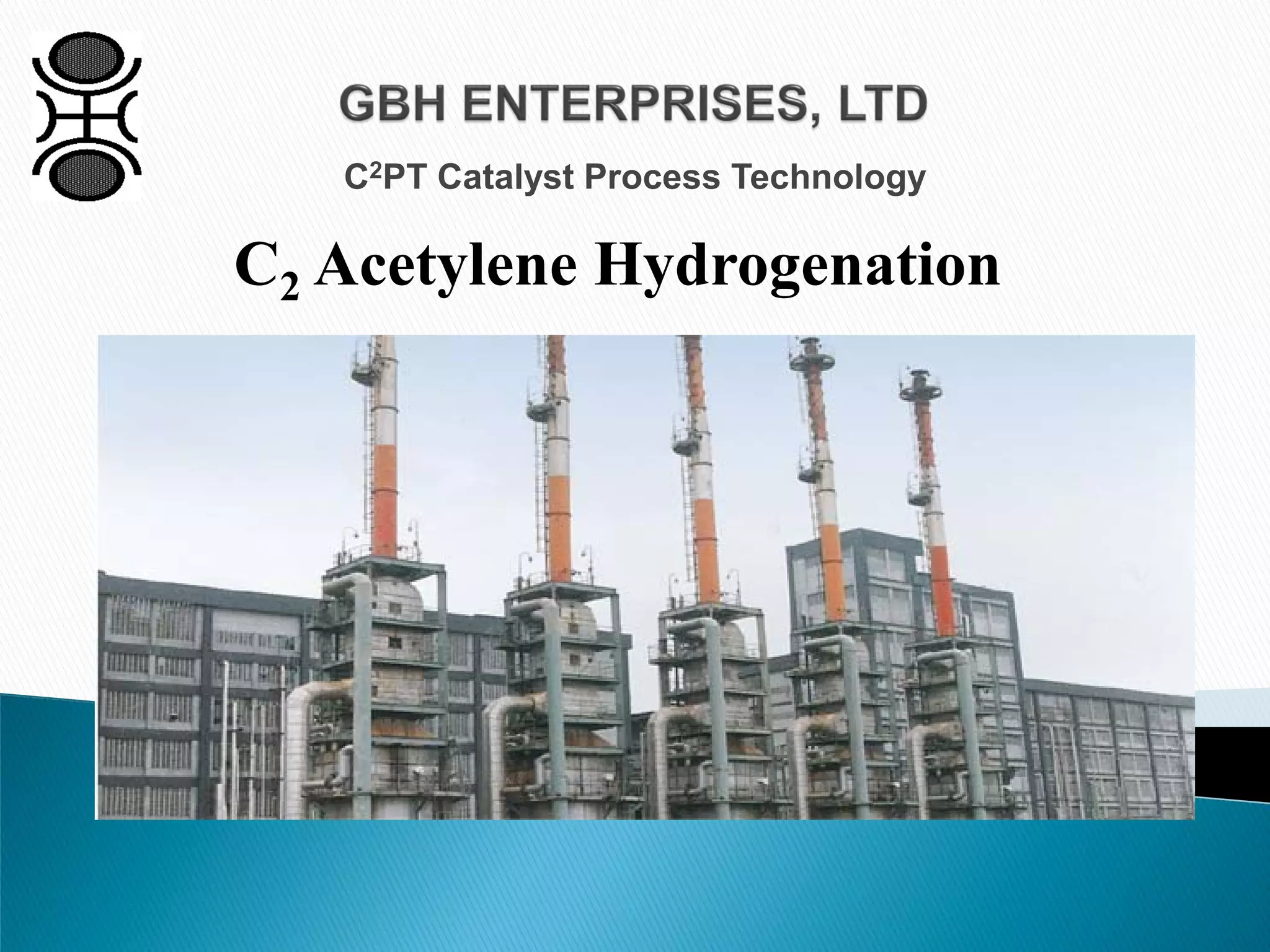
C2 Acetylene Hydrogenation
Ethane
usually recovered from natural gas fields mainly USA
Propane/butane
recovered from gas fields middle east, Texas etc. Kuwait has a large butane
recovery system. Also can come from LNG plants
Refinery naphtha / condensate
C5 to C7 paraffin based low octane naphtha from refineries also from natural
gas / oil well head production
Light and heavy gas oils
refinery based (200 to 350°C) AGO and (350 to 550 °C) VGO
The more paraffinic the feedstock the higher the ethylene
yields and the greater the value of the co-products
Feedstock Sources
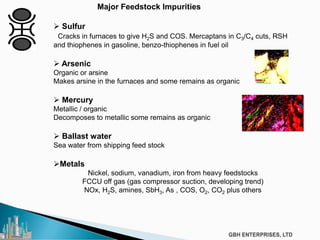
 Sulfur
Cracks in furnaces to give H2S and COS. Mercaptans in C3/C4 cuts, RSH
and thiophenes in gasoline, benzo-thiophenes in fuel oil
 Arsenic
Organic or arsine
Makes arsine in the furnaces and some remains as organic
 Mercury
Metallic / organic
Decomposes to metallic some remains as organic
 Ballast water
Sea water from shipping feed stock
Metals
Nickel, sodium, vanadium, iron from heavy feedstocks
FCCU off gas (gas compressor suction, developing trend)
NOx, H2S, amines, SbH3, As , COS, O2, CO2 plus others
Major Feedstock Impurities
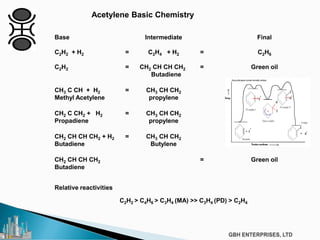
Base Intermediate Final
C2H2 + H2 = C2H4 + H2 = C2H6
C2H2 = CH2 CH CH CH2
Butadiene
= Green oil
CH3 C CH + H2
Methyl Acetylene
= CH3 CH CH2
propylene
CH2 C CH2 + H2
Propadiene
= CH3 CH CH2
propylene
CH2 CH CH CH2 + H2
Butadiene
= CH3 CH CH2
Butylene
CH2 CH CH CH2
Butadiene
= Green oil
Relative reactivities
C2H2 > C4H6 > C3H4 (MA) >> C3H4 (PD) > C2H4
Acetylene Basic Chemistry
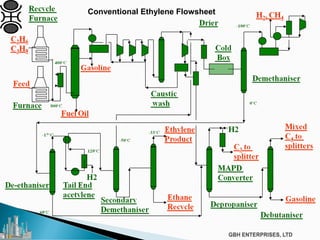
Conventional Ethylene Flowsheet
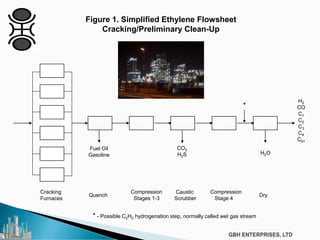
Cracking
Furnaces
Quench
Compression
Stages 1-3
Caustic
Scrubber
Compression
Stage 4
Dry
Figure 1. Simplified Ethylene Flowsheet
Cracking/Preliminary Clean-Up
Fuel Oil
Gasoline
CO2
H2S H2O
H2
CO
C1
C2
C3
C4
C5+
*
* - Possible C2H2 hydrogenation step, normally called wet gas stream
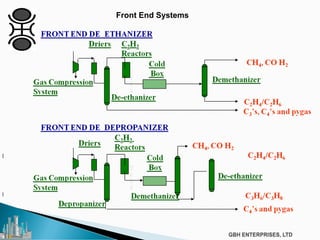
Front End Systems
H2
CO
CH4
C2H2
C2H4
C2H6
C3H4
C3H6
C3H8
C4H6
C4H8
C4H10
C5+
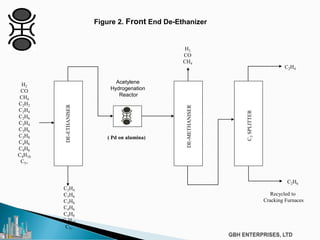
Figure 2. Front End De-Ethanizer
C3H4
C3H6
C3H8
C4H6
C4H8
C4H10
C5+
DE-ETHANISER
DE-METHANISER
C2SPLITTER
H2
CO
CH4
C2H4
C2H6
Acetylene
Hydrogenation
Reactor
Recycled to
Cracking Furnaces
( Pd on alumina)
H2
CO
CH4
C2H2
C2H4
C2H6
C3H4
C3H6
C3H8
C4H6
C4H8
C4H10
C5+
C4H6
C4H8
C4H10
C5+
DE-PROPANISER
DE-METHANISER
DE-ETHANISER
H2
CO
CH4
C3H4
C3H6
C3H8
C2SPLITTER
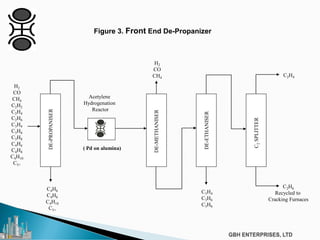
Figure 3. Front End De-Propanizer
Acetylene
Hydrogenation
Reactor
C2H4
C2H6
Recycled to
Cracking Furnaces
( Pd on alumina)
DE-METHANISER
DE-ETHANISER
C2SPLITTER
H2
CO
CH4
C2H2
C2H4
C2H6
C3H4
C3H6
C3H8
C4H6
C4H8
C4H10
C5+
H2
CO
CH4
C3H4
C3H6
C3H8
C4H6
C4H8
C4H10
C5+
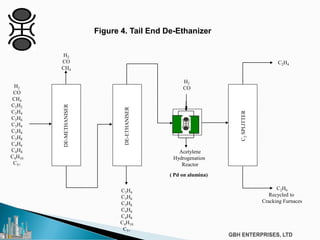
Acetylene
Hydrogenation
Reactor
H2
CO
Figure 4. Tail End De-Ethanizer
C2H6
Recycled to
Cracking Furnaces
C2H4
( Pd on alumina)
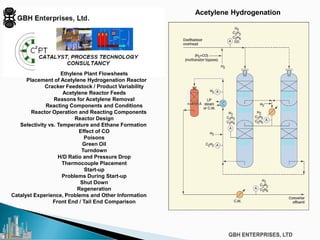
Ethylene Plant Flowsheets
Placement of Acetylene Hydrogenation Reactor
Cracker Feedstock / Product Variability
Acetylene Reactor Feeds
Reasons for Acetylene Removal
Reacting Components and Conditions
Reactor Operation and Reacting Components
Reactor Design
Selectivity vs. Temperature and Ethane Formation
Effect of CO
Poisons
Green Oil
Turndown
H/D Ratio and Pressure Drop
Thermocouple Placement
Start-up
Problems During Start-up
Shut Down
Regeneration
Catalyst Experience, Problems and Other Information
Front End / Tail End Comparison
Acetylene Hydrogenation
C2 Acetylene Hydrogenation

C2 Acetylene Hydrogenation