Metro Update on the Regional Transportation Plan November 4, 2009 Congress for the New Urbanism  Project for Transportation Reform Summit Metro Councilor Rex Burkholder
New RTP direction to respond Outcomes tied to public values Investing in transportation to create great communities that foster economic vitality  Strategic, innovative solutions Transportation performance, land use and quality of life effects considered
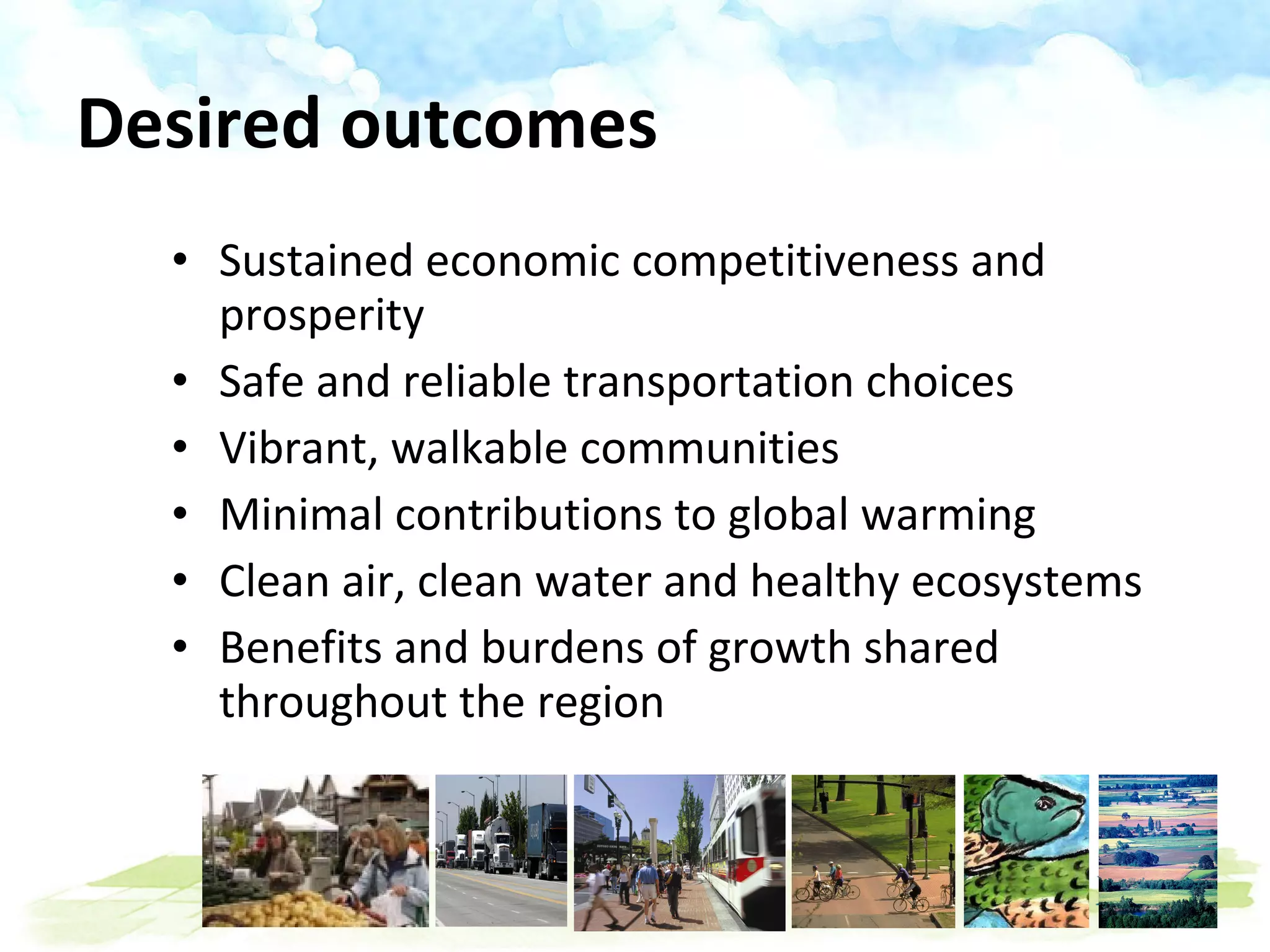
Sustained economic competitiveness and prosperity Safe and reliable transportation choices Vibrant, walkable communities Minimal contributions to global warming Clean air, clean water and healthy ecosystems Benefits and burdens of growth shared throughout the region Desired outcomes
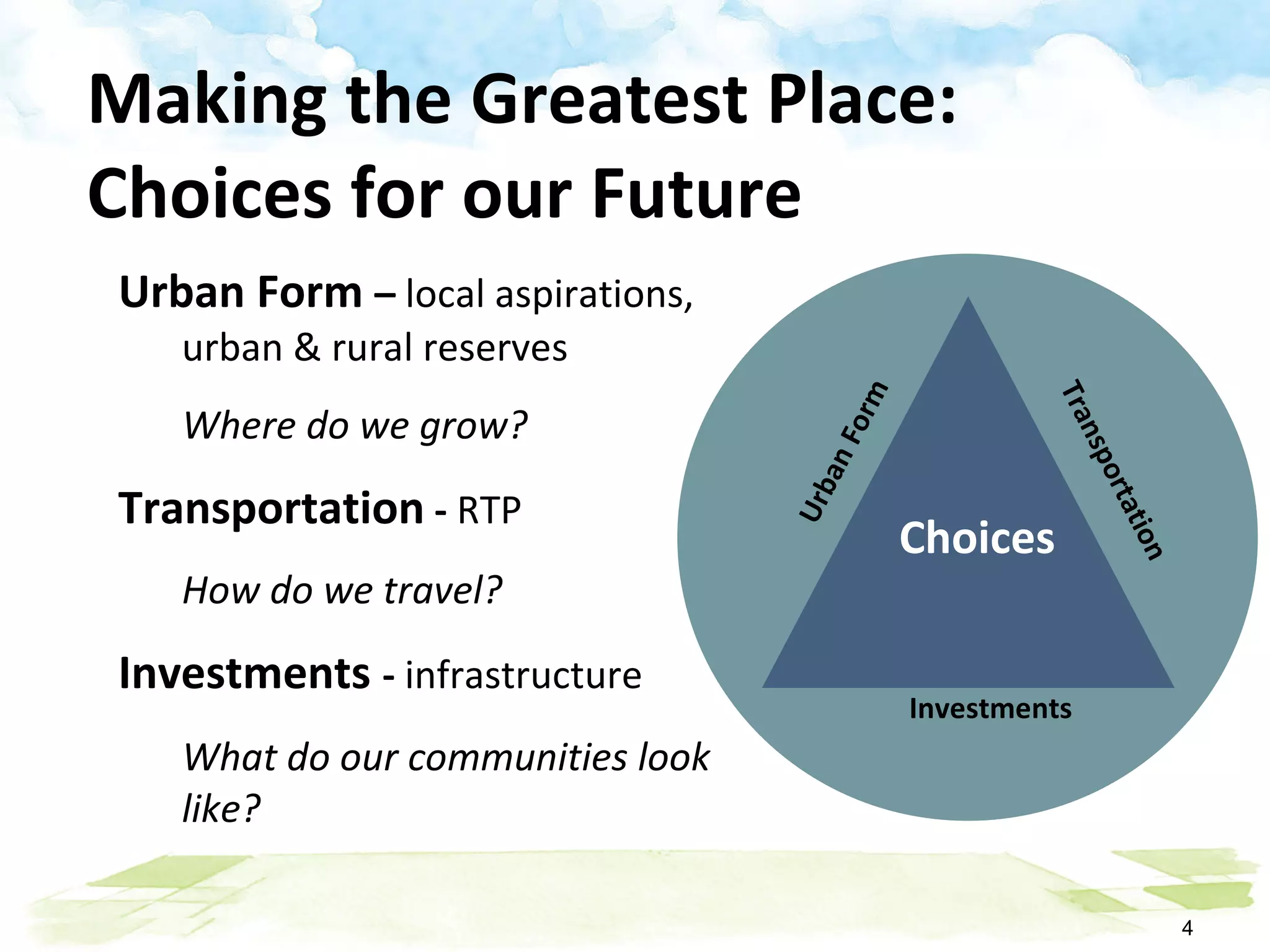
Making the Greatest Place: Choices for our Future Urban Form  –  local aspirations, urban & rural reserves Where do we grow?   Transportation  -  RTP How do we travel? Investments  -  infrastructure What do our communities look like? Urban Form Investments Transportation Choices
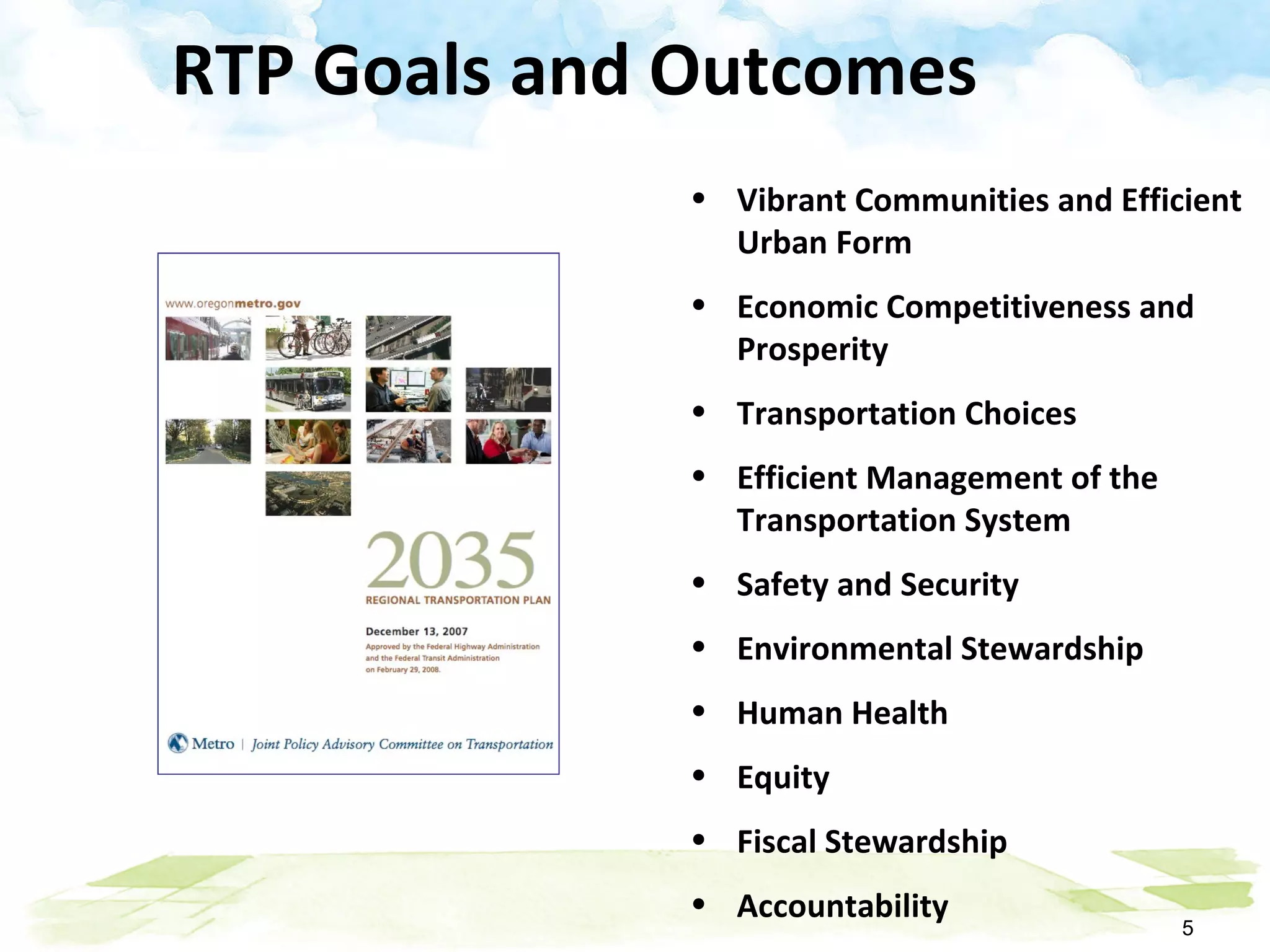
Vibrant Communities and Efficient Urban Form Economic Competitiveness and Prosperity Transportation Choices Efficient Management of the Transportation System Safety and Security Environmental Stewardship Human Health Equity Fiscal Stewardship Accountability RTP Goals and Outcomes
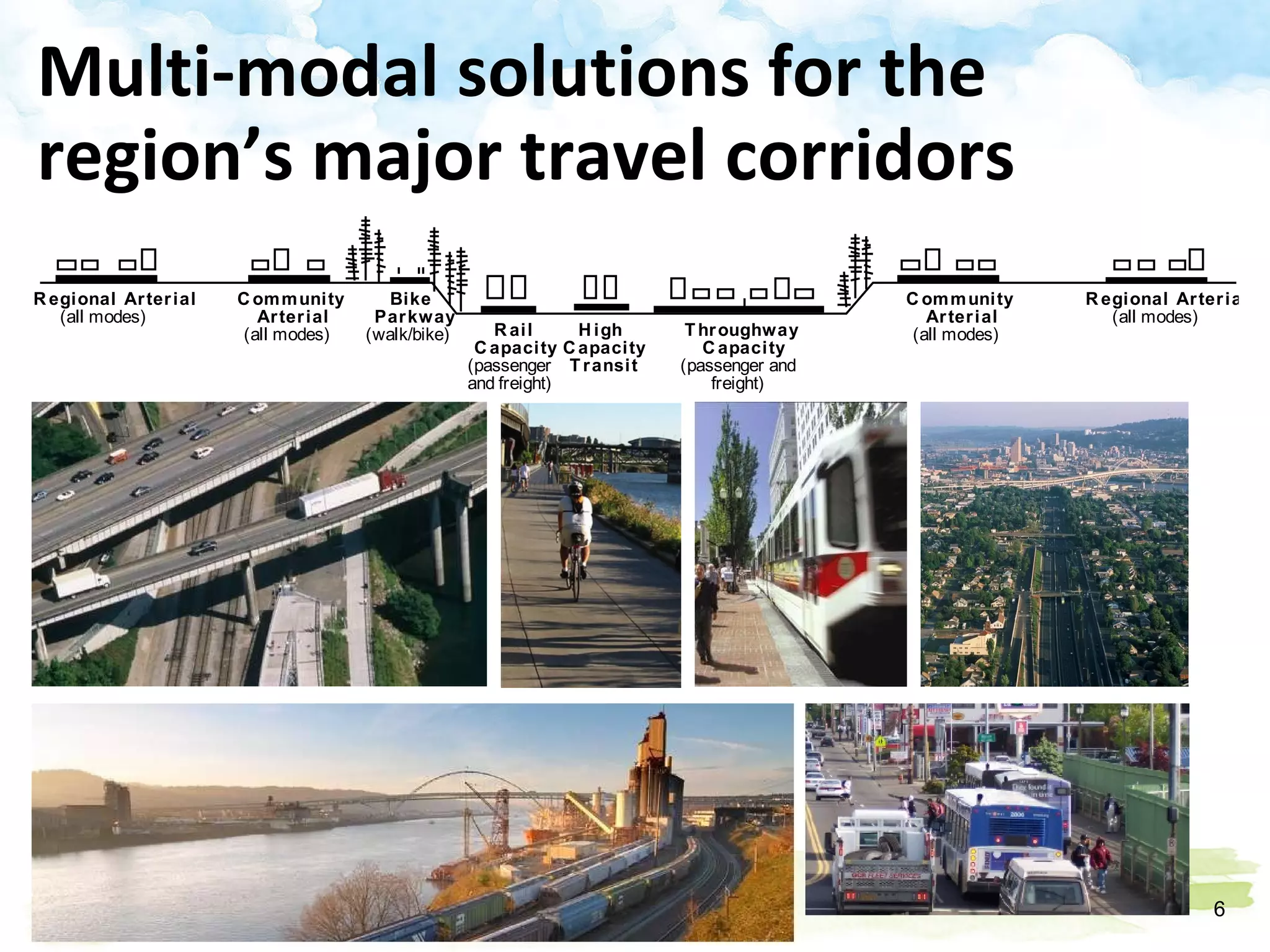
Multi-modal solutions for the region’s major travel corridors
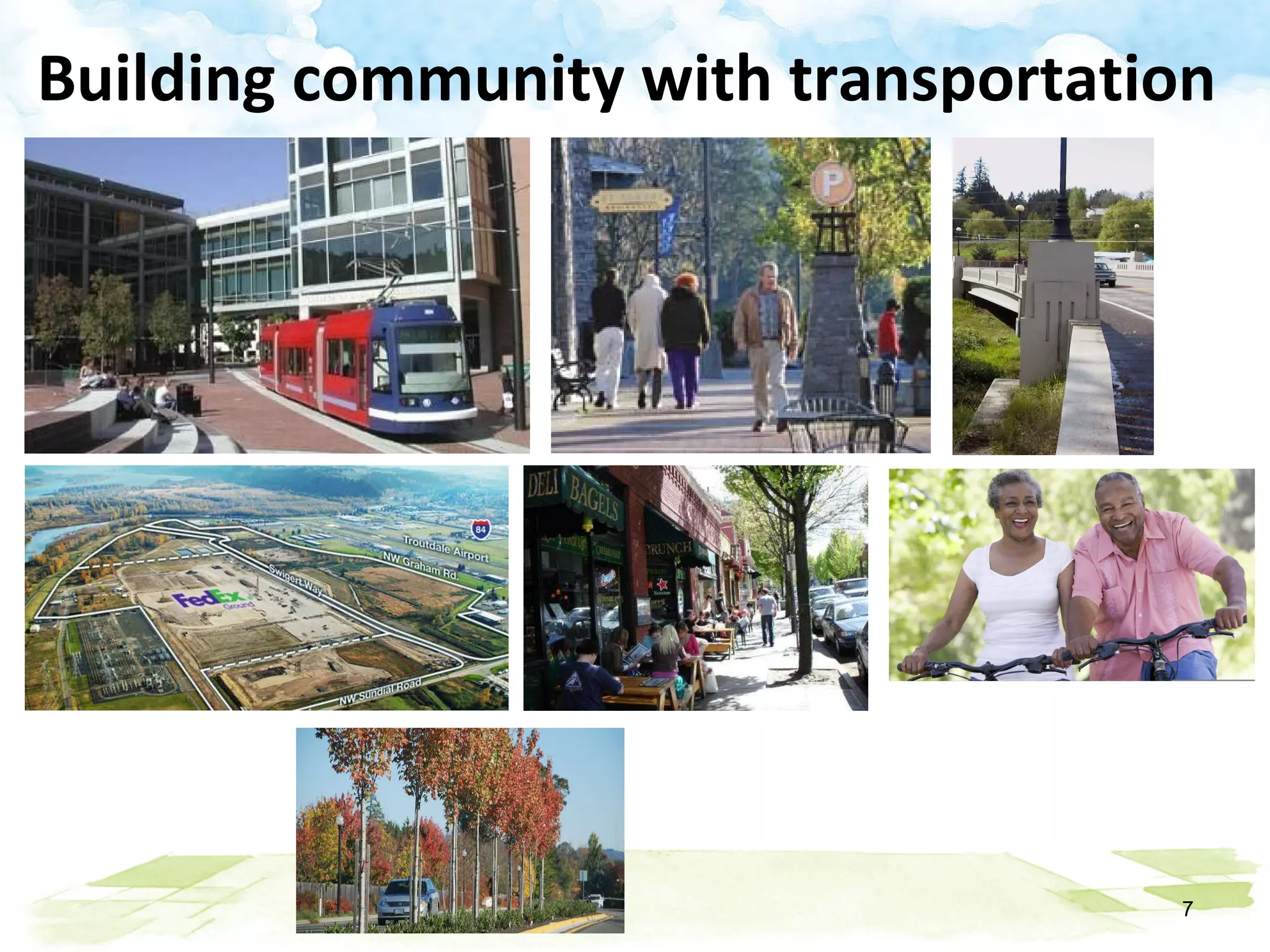
Building community with transportation
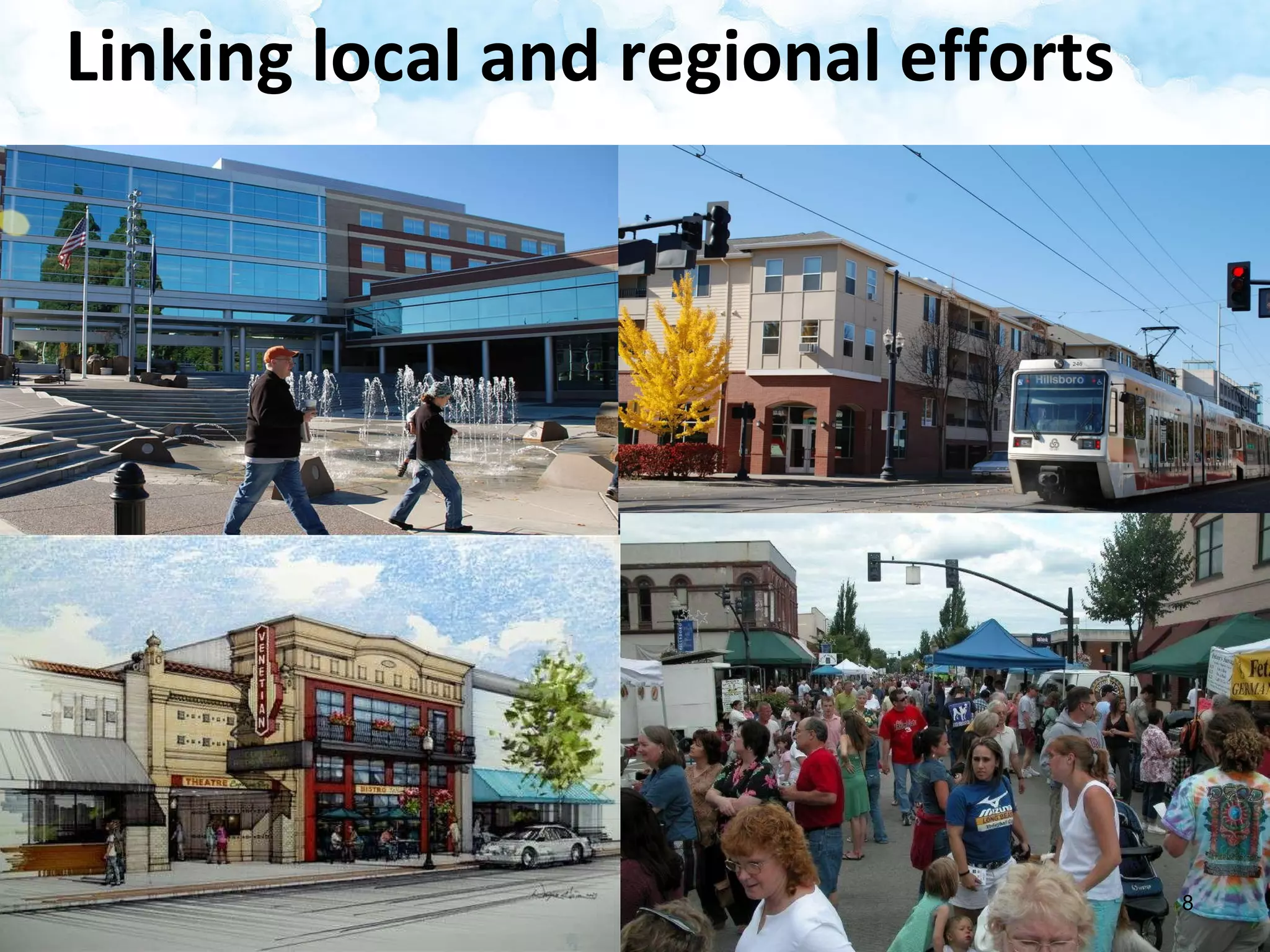
Linking local and regional efforts
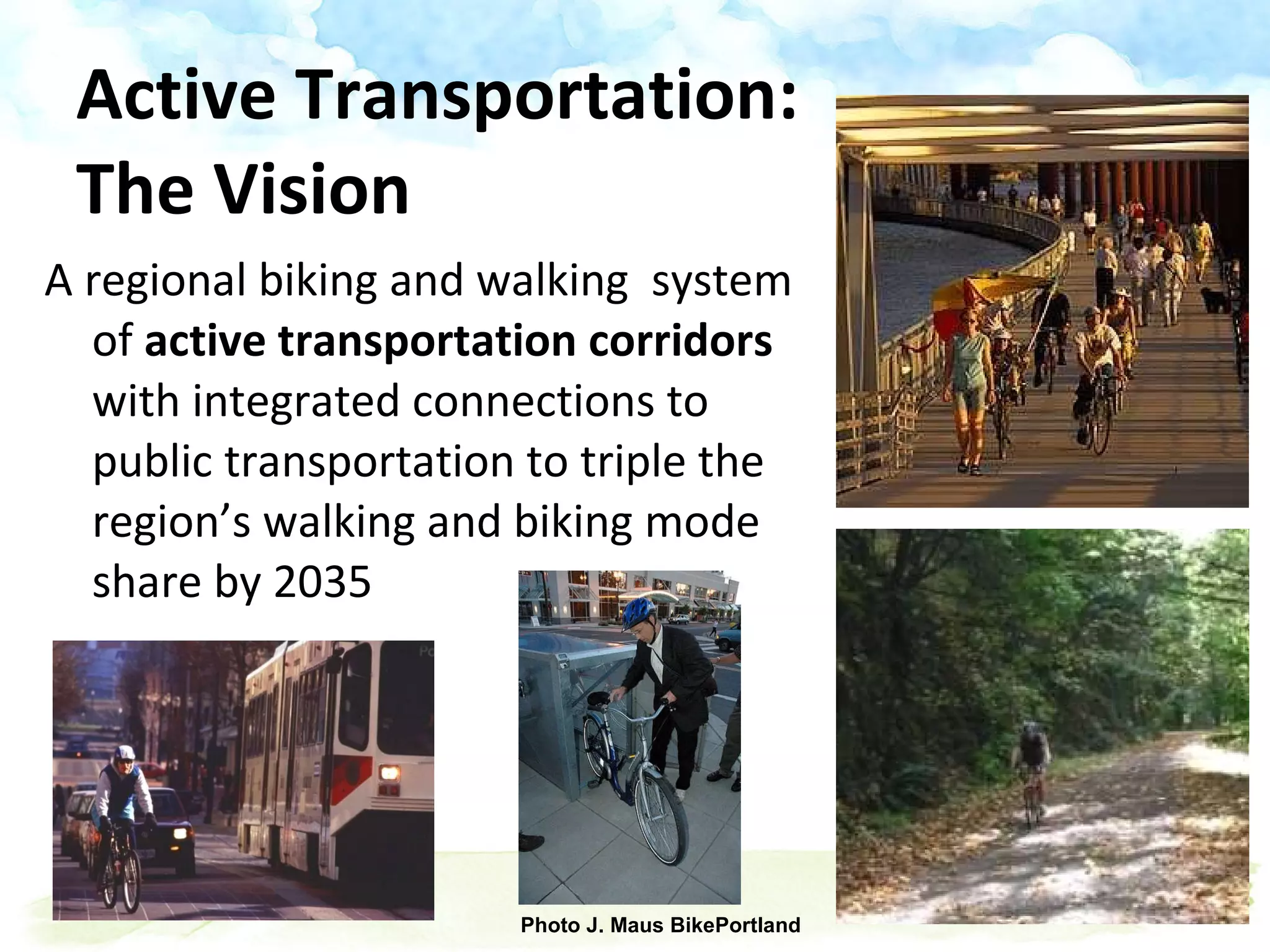
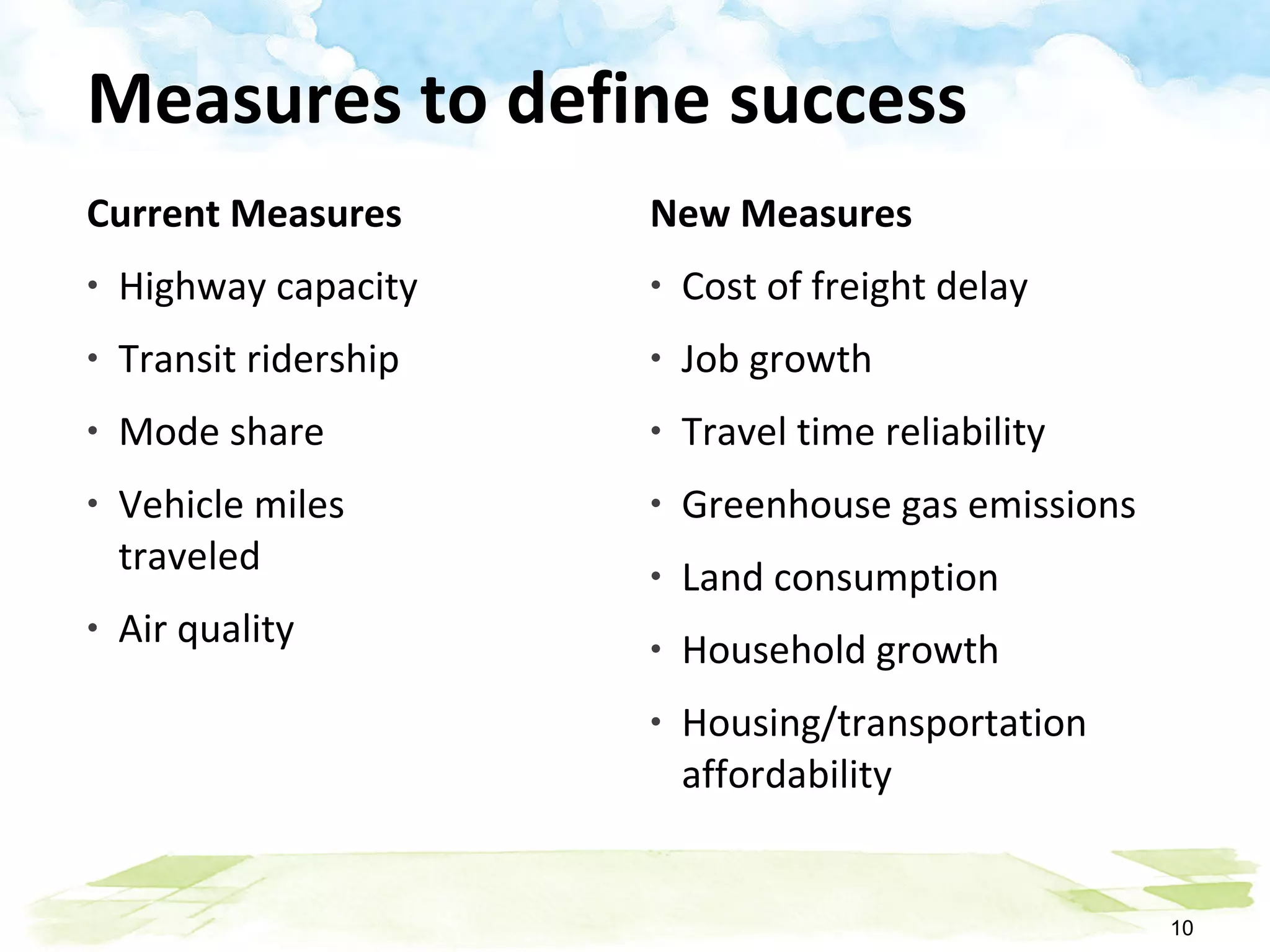
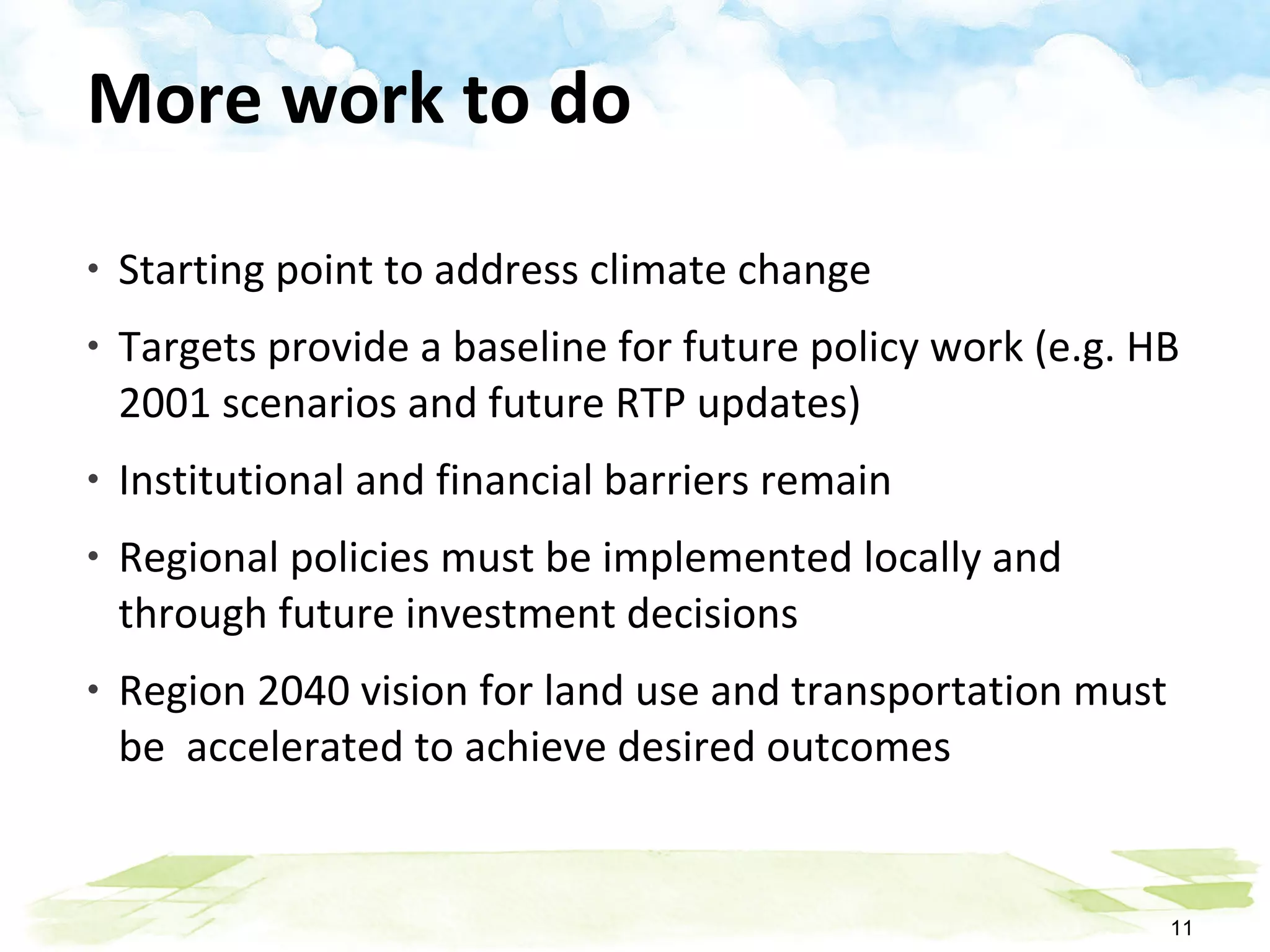
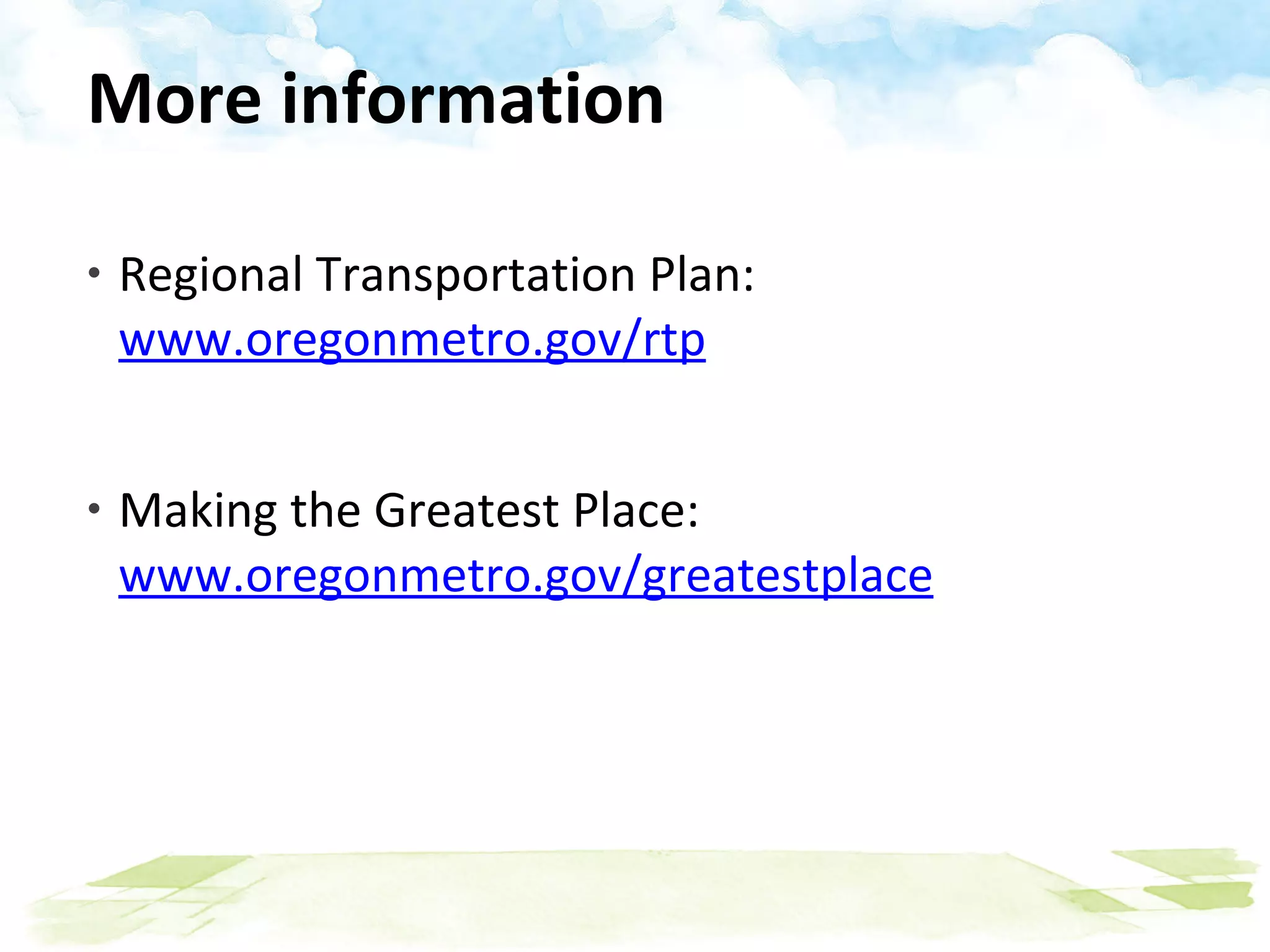
Active Transportation: The Vision A regional biking and walking  system of  active transportation corridors  with integrated connections to public transportation to triple the region’s walking and biking mode share by 2035 Photo J. Maus BikePortland
Measures to define success Current Measures Highway capacity Transit ridership Mode share Vehicle miles traveled Air quality New Measures Cost of freight delay Job growth Travel time reliability Greenhouse gas emissions Land consumption Household growth Housing/transportation affordability
More work to do Starting point to address climate change Targets provide a baseline for future policy work (e.g. HB 2001 scenarios and future RTP updates) Institutional and financial barriers remain Regional policies must be implemented locally and through future investment decisions Region 2040 vision for land use and transportation must be  accelerated to achieve desired outcomes
More information Regional Transportation Plan:  www.oregonmetro.gov/rtp Making the Greatest Place:  www.oregonmetro.gov/greatestplace
Rex Burkholder District 5 rex.burkholder@oregonmetro.gov  503-797-1546 www.oregonmetro.gov

Metro Update on the Regional Transportation Plan

  • 1.
    Metro Update onthe Regional Transportation Plan November 4, 2009 Congress for the New Urbanism Project for Transportation Reform Summit Metro Councilor Rex Burkholder
  • 2.
    New RTP directionto respond Outcomes tied to public values Investing in transportation to create great communities that foster economic vitality Strategic, innovative solutions Transportation performance, land use and quality of life effects considered
  • 3.
    Sustained economic competitivenessand prosperity Safe and reliable transportation choices Vibrant, walkable communities Minimal contributions to global warming Clean air, clean water and healthy ecosystems Benefits and burdens of growth shared throughout the region Desired outcomes
  • 4.
    Making the GreatestPlace: Choices for our Future Urban Form – local aspirations, urban & rural reserves Where do we grow? Transportation - RTP How do we travel? Investments - infrastructure What do our communities look like? Urban Form Investments Transportation Choices
  • 5.
    Vibrant Communities andEfficient Urban Form Economic Competitiveness and Prosperity Transportation Choices Efficient Management of the Transportation System Safety and Security Environmental Stewardship Human Health Equity Fiscal Stewardship Accountability RTP Goals and Outcomes
  • 6.
    Multi-modal solutions forthe region’s major travel corridors
  • 7.
  • 8.
    Linking local andregional efforts
  • 9.
    Active Transportation: TheVision A regional biking and walking system of active transportation corridors with integrated connections to public transportation to triple the region’s walking and biking mode share by 2035 Photo J. Maus BikePortland
  • 10.
    Measures to definesuccess Current Measures Highway capacity Transit ridership Mode share Vehicle miles traveled Air quality New Measures Cost of freight delay Job growth Travel time reliability Greenhouse gas emissions Land consumption Household growth Housing/transportation affordability
  • 11.
    More work todo Starting point to address climate change Targets provide a baseline for future policy work (e.g. HB 2001 scenarios and future RTP updates) Institutional and financial barriers remain Regional policies must be implemented locally and through future investment decisions Region 2040 vision for land use and transportation must be accelerated to achieve desired outcomes
  • 12.
    More information RegionalTransportation Plan: www.oregonmetro.gov/rtp Making the Greatest Place: www.oregonmetro.gov/greatestplace
  • 13.
    Rex Burkholder District5 rex.burkholder@oregonmetro.gov 503-797-1546 www.oregonmetro.gov

Editor's Notes

  • #4 As a region, we all know what we each of us want for our communities, and MPAC and the Metro Council endorsed these principles back in May that define a successful region: People live and work in vibrant communities where they can choose to walk for pleasure and to meet their everyday needs. Current and future residents benefit from the region's sustained economic competitiveness and prosperity. People have safe and reliable transportation choices that enhance their quality of life. The region is a leader in minimizing contributions to global warming. Current and future generations enjoy clean air, clean water and healthy ecosystems. The benefits and burdens of growth and change are distributed equitably. These are lofty principles, but the Metro Council can’t wave a magic wand and make it happen. Achieving these outcomes will require an enhanced understanding of how the decisions made at the local level affect the results on the ground. There will be a series of discussions this fall for you and other leaders to get engaged in to help shape regional decisions in the coming year. I’ll talk more about them later.
  • #5 The region has choices for how to handle the potential need. Many of those choices will occur at the city and county level. Collectively, what we decide to do can position the region to be adaptable and sustainable or it can leave us ill-prepared for the future.
  • #6 The Regional Transportation Plan is a key tool to implement the 2040 vision. Transportation is the fabric that ties together a community and links it to other parts of the region and state. Metro’s unique responsibility for regional planning provides an opportunity for the Regional Transportation Plan update to better link the plan to the region’s broader goals for land use, the economy and environmental protection. With this RTP we focused on the outcomes we want to achieve first. That was the primary focus of the federal component of the update in addition to bring the plan up to date with federal requirements. The state component will use outcomes to plan for and prioritize investments in the regional transportation system. The plan includes new goals for how we plan for and invest in our transportation system and advances new policies to accomplish that vision.
  • #7 Interconnected system of 24 multi-modal corridors that move people and goods Provide primary access to 2040 land uses Multi-jurisdictional Sub-areas of the region The region’s mobility corridors provide primary access to industry and freight intermodal facilities such as PDX as well as the region’s major centers of activity and jobs whether its Downtown portland, downtown hillsboro, Kruse way This comprehensive view of mobility builds on past policies that we need to manage congestion in a comprehensive manner to protect the region’s highways for longer-trips and freight movement and provide for shorter trips and community travel on arterials and collector streets.
  • #10 The vision is for a complete system. Corridors are a set of routes, facilities and programs that achieve a particular transportation objective – getting from home to work, getting to nature, etc. Build fully functioning system elements that support complete bicycle and pedestrian trips from origin to destination. We cannot expect to achieve full potential with incomplete corridors any more than we could expect performance from a highway or rail line constructed a hundred yards here and there. The “complete trips” approach supports employers and workers by connecting the places people live with their place of work. Integrate with other modes of travel, with growth management plans and policies, and with sensitivity to environmental protection. This project is developed, proposed, and supported by a broad coalition of organizations in the Portland region who are working together to achieve the necessary integration.