Downloaded 400 times
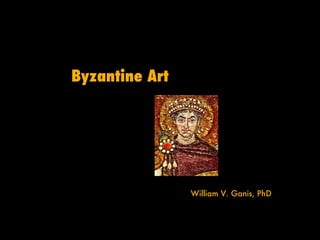
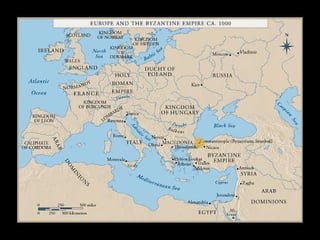
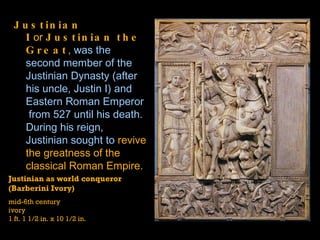
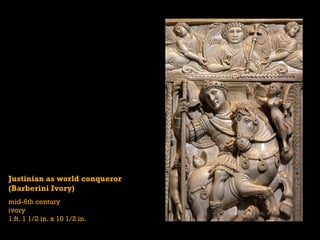
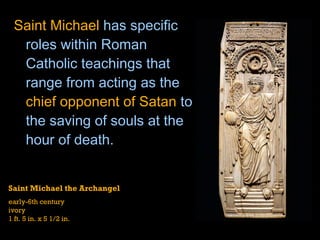
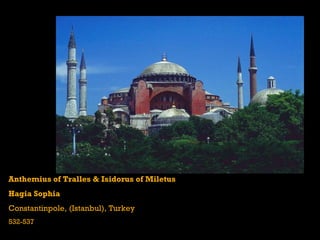
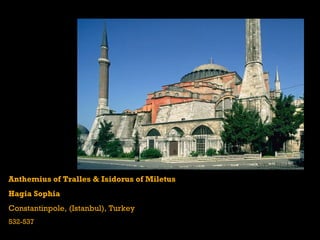
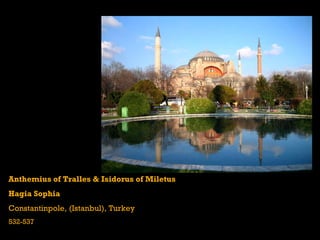
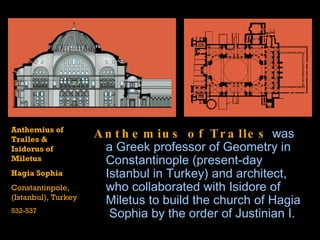
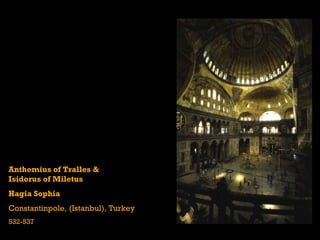
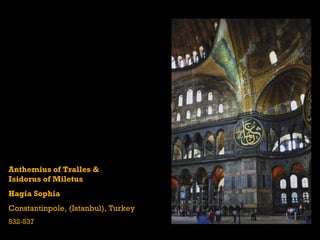
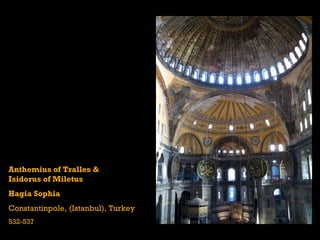
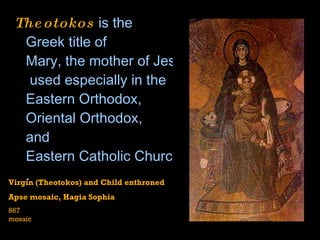
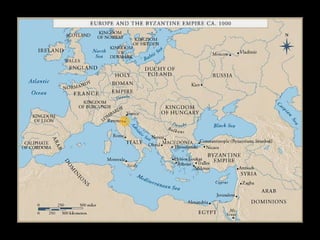
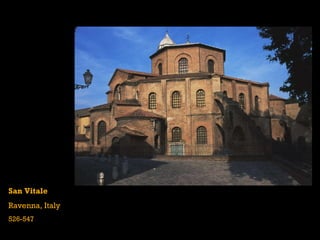
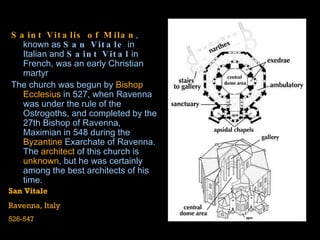
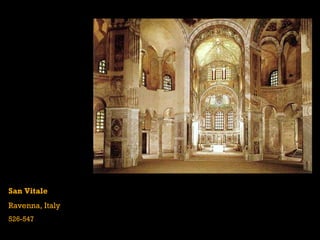
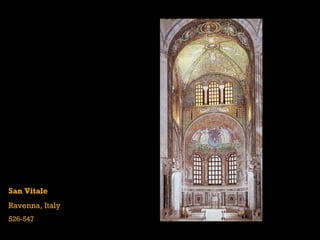
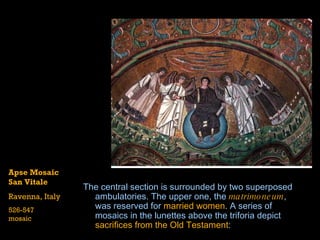
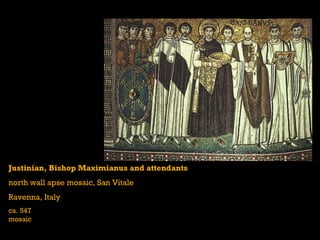
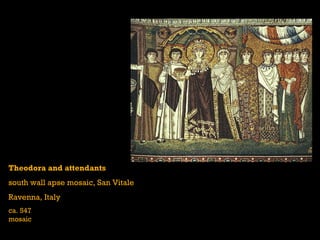
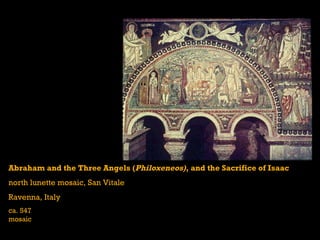
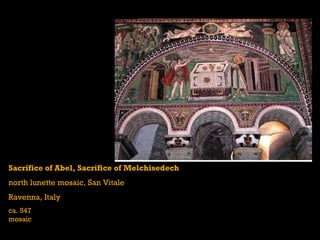
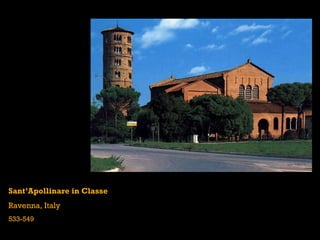
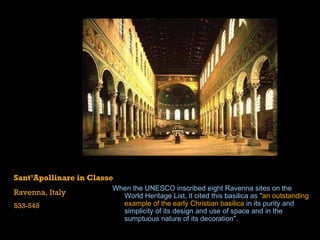
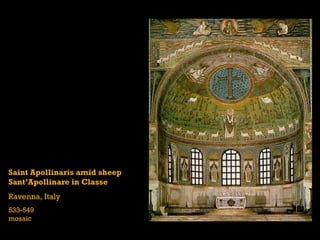
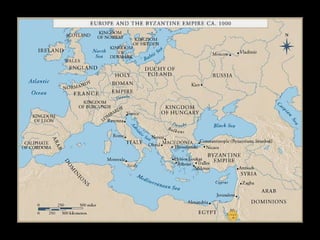
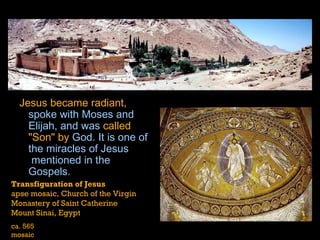
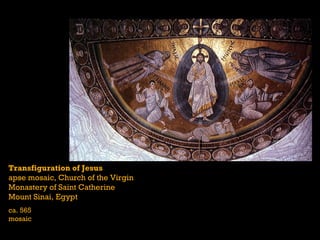
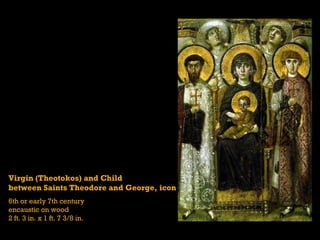
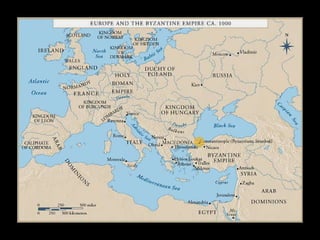
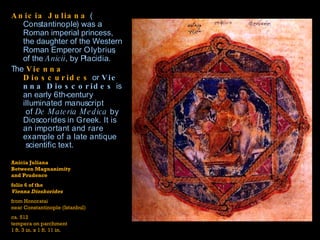
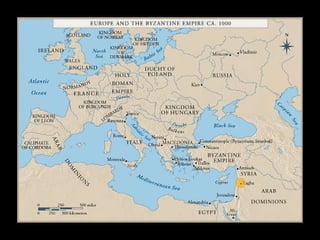
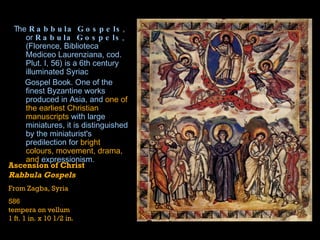
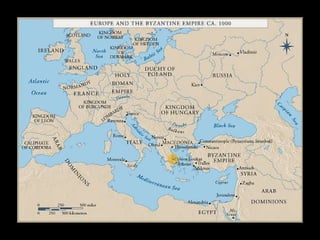
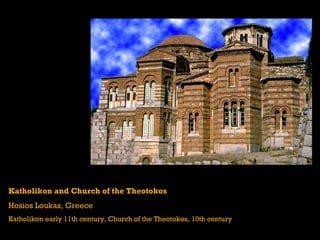
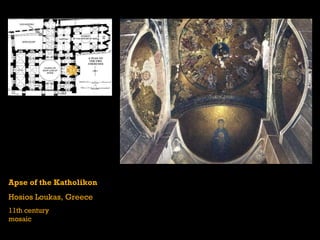
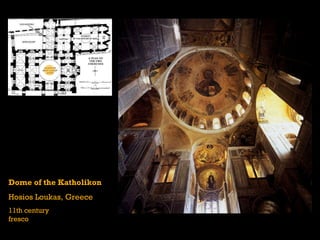
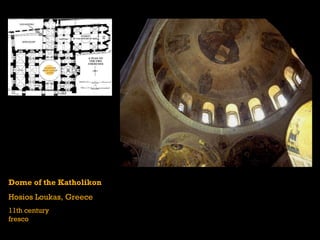
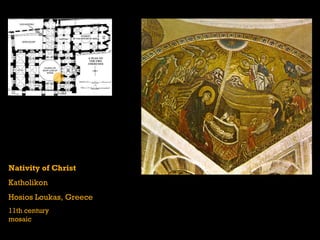
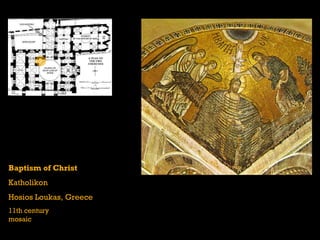
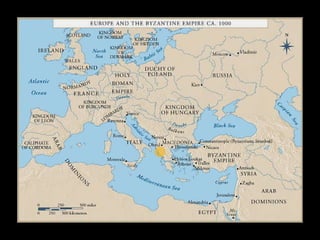
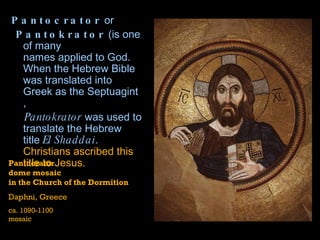
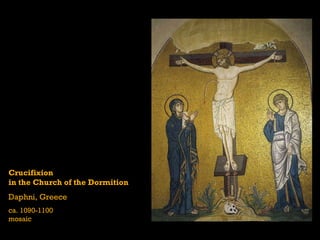
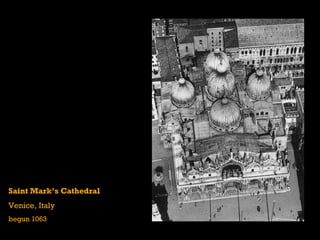
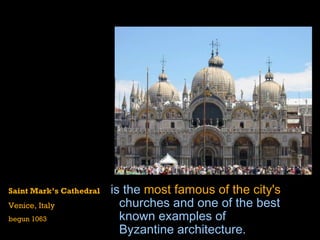
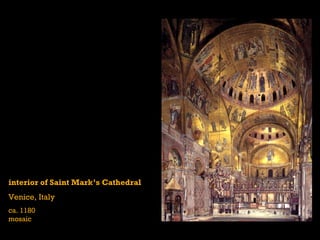
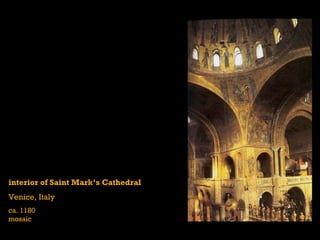
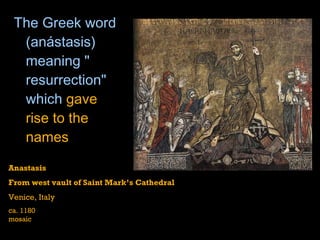
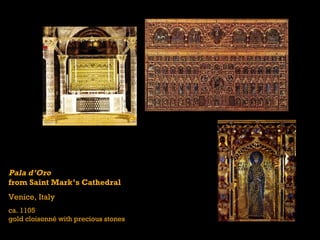
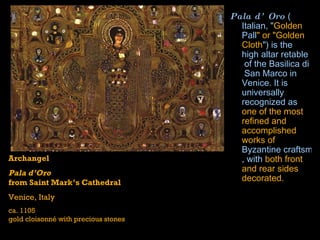
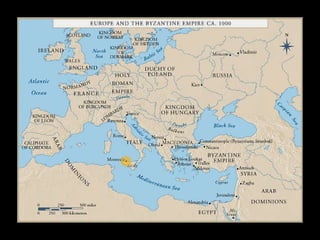
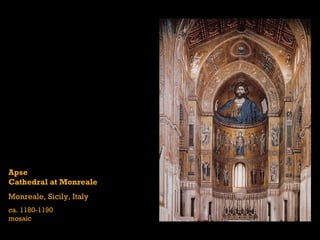
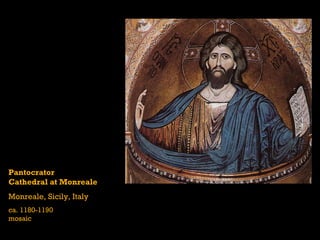
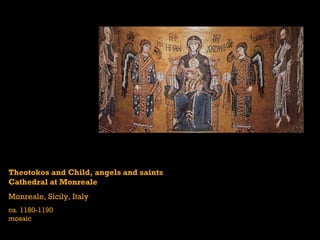
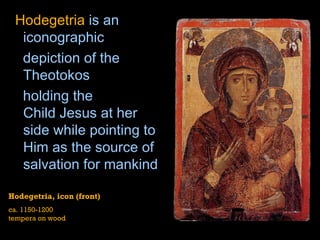
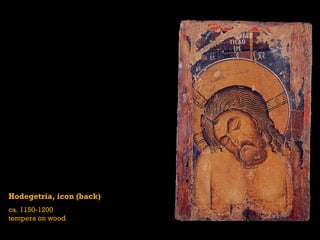
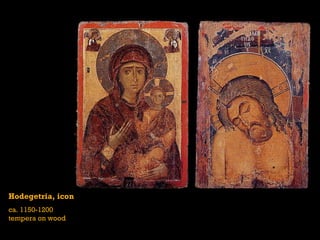
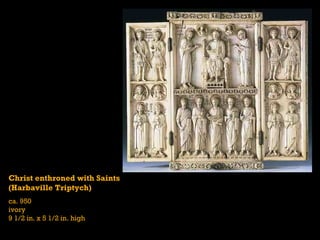
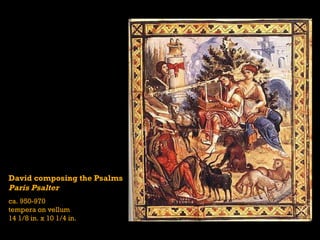
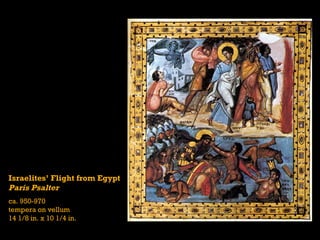
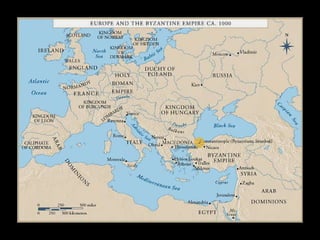
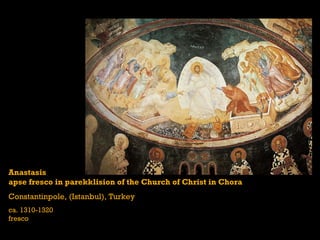
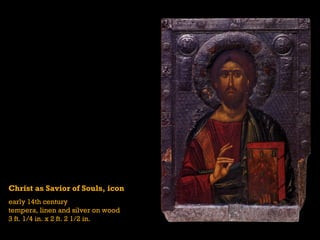
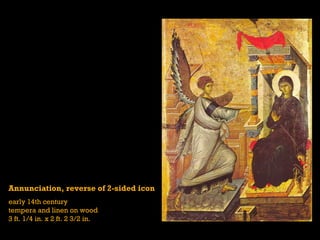
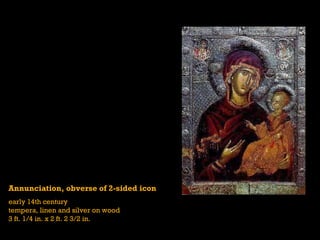
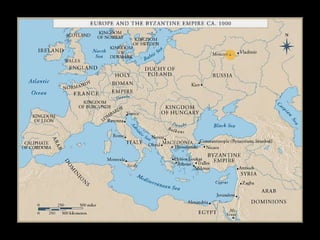
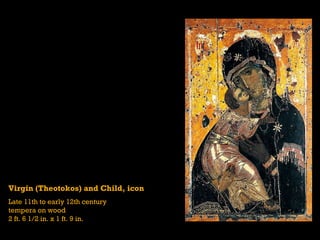
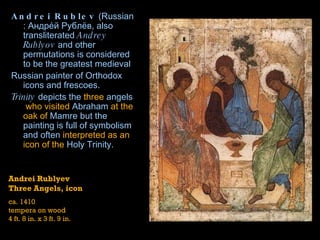
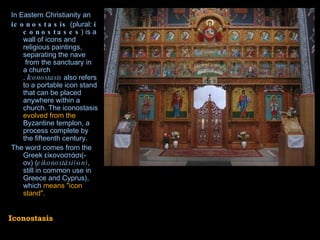


Byzantine art developed after Constantine moved the capital of the Roman Empire to Constantinople in the 4th century. Art was primarily created for the Eastern Orthodox Church and featured somber, flat figures in mosaics and paintings with little realism. Iconoclasm prohibited depicting people from 726 to the 9th century. Sculpture was limited to ivory book covers. Major works included the Hagia Sophia and mosaics at Ravenna and the Kiev catacombs that depicted biblical and theological themes through the 15th century fall of Constantinople.


