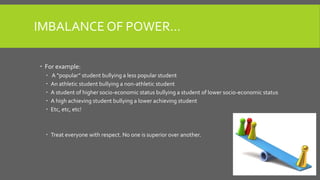
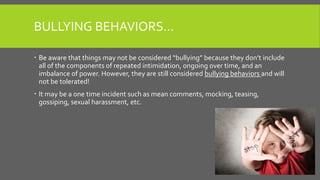
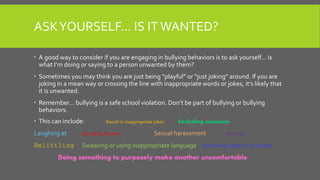
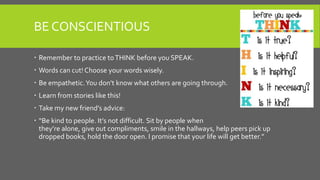
This document discusses bullying prevention. It defines bullying as intentionally committing repeated acts over time that cause physical or psychological harm, where there is an imbalance of power between the bully and victim. It notes bullying requires intimidation, occurring repeatedly and over time, with a power imbalance. Examples of power imbalances include popularity, athletics, socioeconomic status, and academic achievement. While some acts like mean comments may not meet all bullying criteria, they are still considered bullying behaviors. The document encourages students to consider if actions or words are unwanted by the target, and to think before speaking to avoid hurtful language or jokes. It promotes being kind, helpful, and empathetic towards others.





![Bullying [autosaved]](https://cdn.slidesharecdn.com/ss_thumbnails/bullyingautosaved-131223011427-phpapp01-thumbnail.jpg?width=640&height=640&fit=bounds)


