Bullying in the School
What it looks like and what to do about it
Bullying
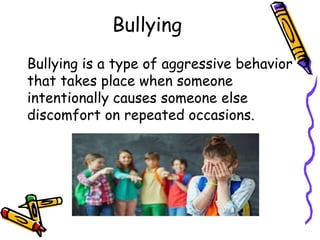
Bullying is a type of aggressive behavior
that takes place when someone
intentionally causes someone else
discomfort on repeated occasions.
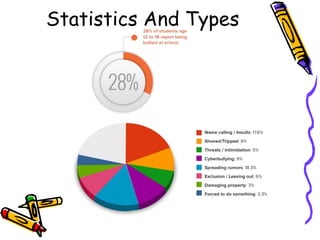
Forms of bullying
PHYSICAL
• This form of bullying can be visually detected. This type of maltreatment involves physically
contacting the student (kicking, hitting etc.). It can also entail stealing or hiding the belongings of
the affected students.
VERBAL
• This form of bullying is difficult to detect, unless the adult is in the presence of the participants. It
involves name calling, insults, offensive and threatening language.
INTIMIDATION
• This aspect could include gestures or comments, spreading rumours or stories, graffiti and defacing
property
CYBERBULLYING
• This is the modern extension of bullying. This occurs via the Internet, mobile phones or other cyber
technology. This can include: (1) sending malicious text, e-mail, or instant messages (2) posting
defamatory pictures or messages about others in blogs or on websites (3) using someone else’s user
name to spread rumors or lies about someone.
• More commonly, students are using sites such as Facebook to carry out bullying tactics.
SOCIAL BULLYING
This type of bullying may take the form of ostracism, spreading rumors, causing public embarrassment,
or telling falsities behind someone’s back.
Characteristics that may be
displayed by a student who is being
bullied:
• Unexplained bruises
• A decline in academic performance
• Anxiety in the class
• An unusual sadness or withdrawal
from peers.
Statistics And Types
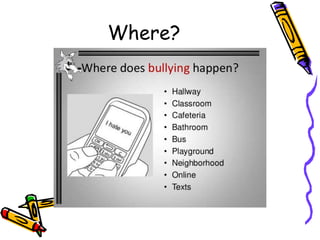
Where?
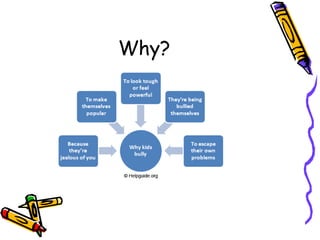
Why?
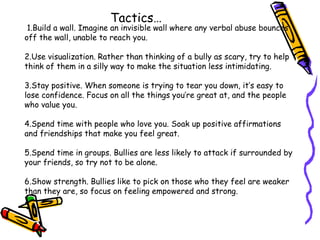
1.Build a wall. Imagine an invisible wall where any verbal abuse bounces
off the wall, unable to reach you.
2.Use visualization. Rather than thinking of a bully as scary, try to help
think of them in a silly way to make the situation less intimidating.
3.Stay positive. When someone is trying to tear you down, it’s easy to
lose confidence. Focus on all the things you’re great at, and the people
who value you.
4.Spend time with people who love you. Soak up positive affirmations
and friendships that make you feel great.
5.Spend time in groups. Bullies are less likely to attack if surrounded by
your friends, so try not to be alone.
6.Show strength. Bullies like to pick on those who they feel are weaker
than they are, so focus on feeling empowered and strong.
Tactics…
What should you do if you see someone being bullied?
• Students who see their classmates or other acquaintances being bullied can utilize
numerous approaches to help resolve the issues
• Don’t give bullies what they want. More than anything, bullies love an audience. Rather
than standing and watching, walk away and go get help. You can also encourage others
to do the same.
• Keep the rumors at bay. If you hear something about someone that isn’t true, stop it
in its tracks and make sure not to repeat the gossip. Remember how you would feel if
someone was telling untrue things about you.
• Be an advocate for the victim. Unless the situation feels unsafe, in which case you
should get a school leader, try to defend the person being attacked. Bullies hate being
made to feel uncool, and calling them out for their behavior may make them think
twice.
• Tell an adult. Especially when still in school, bullies will often be scared of an adult
finding out and getting into trouble. If you are worried the bully will find out who told,
ask the adult to keep the conversation private.
• Encourage the victim to speak with an adult. Often those who are bullied can feel like
it’s somehow their fault. Encourage them to talk to a school counselor and perhaps
offer to accompany them.
• Offer support. Showing the victim that you care can mean more to them than you
know. Even if you aren’t close, try to be friendly in the days after the event, it can
really make a difference.
Source: http://www.bullyfree.com/resources/teachers.php
Case Study
Case Study #1 Source: www.pathwayscourses.samhsa.gov
Henry is 11 years old and attends an Elementary School which is located a
few blocks from his home. He is in the sixth grade and is an average
student. Henry has always been a bit shy and somewhat anxious around his
peers. He just moved to this city 3 months ago and has not yet made any
friends at the new school, though he does have a "best friend" at his old
school. Henry is quite tall and thin for his age and is very self-conscious
about his appearance.
Over the past month, Henry has become increasingly withdrawn. Several
weeks ago he came home with a tear in his favorite jacket. When his
mother asked him what happened, he hurriedly said it was an accident. He
goes straight to his room after school and shuts the door. His mother has
noticed that he has become more irritable and is often tearful, but when
she tries to talk to him about this, he tells her to go away. She is worried
about him but, thinks this is a phase he's going through because they've
just moved to a new city, etc. She also worries about making Henry too
dependent on her if she gets too involved in his problems.
You hear through others that Henry is being teased by his classmates
several times a week. In particular, two children -a girl and a boy,make fun
of the way he looks and have convinced most of his classmates to avoid him
at lunch.
Discussion Questions
• Does a problem exist? If so, what is it?
• How could you encourage Henry to talk about
what is happening?
• Who are the people you may want to talk to about
this problem?
• Who are the bullies? The victim? The witnesses?
• What are some of the warning signs Henry
displays?
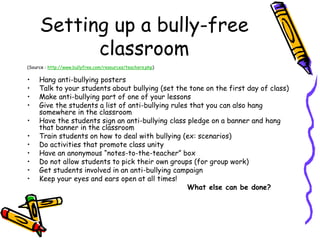
Setting up a bully-free
classroom
(Source : http://www.bullyfree.com/resources/teachers.php)
• Hang anti-bullying posters
• Talk to your students about bullying (set the tone on the first day of class)
• Make anti-bullying part of one of your lessons
• Give the students a list of anti-bullying rules that you can also hang
somewhere in the classroom
• Have the students sign an anti-bullying class pledge on a banner and hang
that banner in the classroom
• Train students on how to deal with bullying (ex: scenarios)
• Do activities that promote class unity
• Have an anonymous “notes-to-the-teacher” box
• Do not allow students to pick their own groups (for group work)
• Get students involved in an anti-bullying campaign
• Keep your eyes and ears open at all times!
What else can be done?
A lot of people are afraid to tell the
truth, to say no. That's where
toughness comes into play. Toughness
is not being a bully. It's having
backbone.
- Robert Kiyosaki
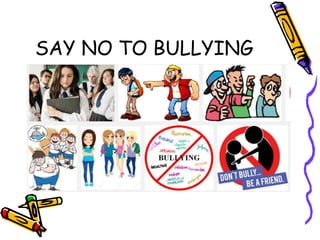
SAY NO TO BULLYING
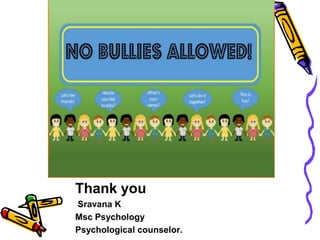
Thank you
Sravana K
Msc Psychology
Psychological counselor.

Bullying in the Classroom.ppt

  • 1.
    Bullying in theSchool What it looks like and what to do about it
  • 2.
    Bullying Bullying is atype of aggressive behavior that takes place when someone intentionally causes someone else discomfort on repeated occasions.
  • 3.
    Forms of bullying PHYSICAL •This form of bullying can be visually detected. This type of maltreatment involves physically contacting the student (kicking, hitting etc.). It can also entail stealing or hiding the belongings of the affected students. VERBAL • This form of bullying is difficult to detect, unless the adult is in the presence of the participants. It involves name calling, insults, offensive and threatening language. INTIMIDATION • This aspect could include gestures or comments, spreading rumours or stories, graffiti and defacing property CYBERBULLYING • This is the modern extension of bullying. This occurs via the Internet, mobile phones or other cyber technology. This can include: (1) sending malicious text, e-mail, or instant messages (2) posting defamatory pictures or messages about others in blogs or on websites (3) using someone else’s user name to spread rumors or lies about someone. • More commonly, students are using sites such as Facebook to carry out bullying tactics. SOCIAL BULLYING This type of bullying may take the form of ostracism, spreading rumors, causing public embarrassment, or telling falsities behind someone’s back.
  • 4.
    Characteristics that maybe displayed by a student who is being bullied: • Unexplained bruises • A decline in academic performance • Anxiety in the class • An unusual sadness or withdrawal from peers.
  • 5.
  • 6.
  • 7.
  • 8.
    1.Build a wall.Imagine an invisible wall where any verbal abuse bounces off the wall, unable to reach you. 2.Use visualization. Rather than thinking of a bully as scary, try to help think of them in a silly way to make the situation less intimidating. 3.Stay positive. When someone is trying to tear you down, it’s easy to lose confidence. Focus on all the things you’re great at, and the people who value you. 4.Spend time with people who love you. Soak up positive affirmations and friendships that make you feel great. 5.Spend time in groups. Bullies are less likely to attack if surrounded by your friends, so try not to be alone. 6.Show strength. Bullies like to pick on those who they feel are weaker than they are, so focus on feeling empowered and strong. Tactics…
  • 9.
    What should youdo if you see someone being bullied? • Students who see their classmates or other acquaintances being bullied can utilize numerous approaches to help resolve the issues • Don’t give bullies what they want. More than anything, bullies love an audience. Rather than standing and watching, walk away and go get help. You can also encourage others to do the same. • Keep the rumors at bay. If you hear something about someone that isn’t true, stop it in its tracks and make sure not to repeat the gossip. Remember how you would feel if someone was telling untrue things about you. • Be an advocate for the victim. Unless the situation feels unsafe, in which case you should get a school leader, try to defend the person being attacked. Bullies hate being made to feel uncool, and calling them out for their behavior may make them think twice. • Tell an adult. Especially when still in school, bullies will often be scared of an adult finding out and getting into trouble. If you are worried the bully will find out who told, ask the adult to keep the conversation private. • Encourage the victim to speak with an adult. Often those who are bullied can feel like it’s somehow their fault. Encourage them to talk to a school counselor and perhaps offer to accompany them. • Offer support. Showing the victim that you care can mean more to them than you know. Even if you aren’t close, try to be friendly in the days after the event, it can really make a difference.
  • 10.
  • 11.
    Case Study Case Study#1 Source: www.pathwayscourses.samhsa.gov Henry is 11 years old and attends an Elementary School which is located a few blocks from his home. He is in the sixth grade and is an average student. Henry has always been a bit shy and somewhat anxious around his peers. He just moved to this city 3 months ago and has not yet made any friends at the new school, though he does have a "best friend" at his old school. Henry is quite tall and thin for his age and is very self-conscious about his appearance. Over the past month, Henry has become increasingly withdrawn. Several weeks ago he came home with a tear in his favorite jacket. When his mother asked him what happened, he hurriedly said it was an accident. He goes straight to his room after school and shuts the door. His mother has noticed that he has become more irritable and is often tearful, but when she tries to talk to him about this, he tells her to go away. She is worried about him but, thinks this is a phase he's going through because they've just moved to a new city, etc. She also worries about making Henry too dependent on her if she gets too involved in his problems. You hear through others that Henry is being teased by his classmates several times a week. In particular, two children -a girl and a boy,make fun of the way he looks and have convinced most of his classmates to avoid him at lunch.
  • 12.
    Discussion Questions • Doesa problem exist? If so, what is it? • How could you encourage Henry to talk about what is happening? • Who are the people you may want to talk to about this problem? • Who are the bullies? The victim? The witnesses? • What are some of the warning signs Henry displays?
  • 13.
    Setting up abully-free classroom (Source : http://www.bullyfree.com/resources/teachers.php) • Hang anti-bullying posters • Talk to your students about bullying (set the tone on the first day of class) • Make anti-bullying part of one of your lessons • Give the students a list of anti-bullying rules that you can also hang somewhere in the classroom • Have the students sign an anti-bullying class pledge on a banner and hang that banner in the classroom • Train students on how to deal with bullying (ex: scenarios) • Do activities that promote class unity • Have an anonymous “notes-to-the-teacher” box • Do not allow students to pick their own groups (for group work) • Get students involved in an anti-bullying campaign • Keep your eyes and ears open at all times! What else can be done?
  • 14.
    A lot ofpeople are afraid to tell the truth, to say no. That's where toughness comes into play. Toughness is not being a bully. It's having backbone. - Robert Kiyosaki
  • 15.
    SAY NO TOBULLYING
  • 16.
    Thank you Sravana K MscPsychology Psychological counselor.