Sticks and stones    can break my bones……
                 and names can always hurt me……


St David‟s is “a place where faith is respected and encouraged, a deeply
human place where people find understanding and friendship.” Each
student is valued and respected as an individual and included within the
college ethos .

St David‟s operates a zero-tolerance policy towards bullying and all
incidents of bullying will be taken very seriously.
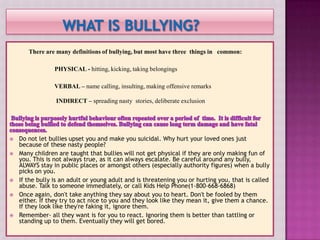
There are many definitions of bullying, but most have three things in common:

                 PHYSICAL - hitting, kicking, taking belongings

                 VERBAL – name calling, insulting, making offensive remarks

                 INDIRECT – spreading nasty stories, deliberate exclusion


   Do not let bullies upset you and make you suicidal. Why hurt your loved ones just
    because of these nasty people?
   Many children are taught that bullies will not get physical if they are only making fun of
    you. This is not always true, as it can always escalate. Be careful around any bully,
    ALWAYS stay in public places or amongst others (especially authority figures) when a bully
    picks on you.
   If the bully is an adult or young adult and is threatening you or hurting you, that is called
    abuse. Talk to someone immediately, or call Kids Help Phone(1-800-668-6868)
   Once again, don't take anything they say about you to heart. Don't be fooled by them
    either. If they try to act nice to you and they look like they mean it, give them a chance.
    If they look like they're faking it, ignore them.
   Remember- all they want is for you to react. Ignoring them is better than tattling or
    standing up to them. Eventually they will get bored.
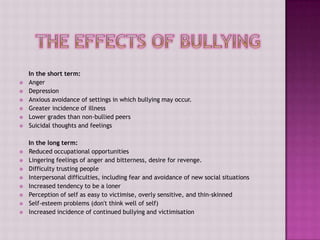
In the short term:
   Anger
   Depression
   Anxious avoidance of settings in which bullying may occur.
   Greater incidence of illness
   Lower grades than non-bullied peers
   Suicidal thoughts and feelings

    In the long term:
   Reduced occupational opportunities
   Lingering feelings of anger and bitterness, desire for revenge.
   Difficulty trusting people
   Interpersonal difficulties, including fear and avoidance of new social situations
   Increased tendency to be a loner
   Perception of self as easy to victimise, overly sensitive, and thin-skinned
   Self-esteem problems (don't think well of self)
   Increased incidence of continued bullying and victimisation
“I was the bully but by the time I realised the hurt and
pain I was causing ,my victim had taken his life.
I have to live with this sentence now . . . . I am so sorry.”
It is thought that one in ten children are bullied at school, almost
twice the number than a decade ago.
Suicide continues to be one of the leading causes of death among
children under the age of 14. is a term used to describe suicide as the
result of bullying. New bullying statistics 2010 are reporting that
there is a strong connection between bullying, being bullied and
suicide, according to a new study from the Yale School of Medicine.
Suicide rates are continuing to grow among adolescents, and have
grown more than 50 percent in the past 30 years.
While it is now well known that bullying is very damaging to its
victims, it is still not generally considered to be a serious issue.
Throughout time immemorial victims have been told to "toughen up",
"stop whining", to "get a thicker skin" or to “fight back”. When a
victim of bullying attempts to get help, he/she is frequently betrayed
by the authorities or told "no one likes a tattle-tale". Considering the
devastating and sometimes fatal consequences of bullying, society
must re-examine its attitude to this issue.
Bullying will cause depression. Depression is the leading cause in all cases of
suicide. According to the American Psychiatric Association over half of all kids
who suffer from depression will eventually attempt suicide and seven percent
will be successful. Every ½ hour a youth who has been bullied will complete
suicide. Another estimated 19,000 victims of bullying will attempt suicide this
year. This is as a result of:


   Exposure to relentless physical and/or emotional bullying by peers
   Experiencing continuous resultant pain due to the bullying
   Having to incessantly relive humiliating moments that are repeatedly
    brought up by peers as a means of torment
   Having no other friends to rely on for support or encouragement while
    being bullied regularly
   Being the victim of bullying by an authority figure (parent, teacher, coach,
    etc.)
   Bullying can include various types of behaviour from physical attacks, to destroying
    one's personal property or clothing, verbal abuse, starting rumours, name calling,
    verbal attacks online as well as other forms of cyber bullying.
    For teens and children who feel they are being bullied, it is important to address
    the matter with a parent or teacher right away. It may feel like you are telling on
    someone for doing something wrong, and that admission might get you in trouble
    with the bully later. However, this is not the case. In the majority of cases when a
    bully is reported, the bullying stops because the bully is faced with dire
    repercussions or they are sent away to a juvenile detention centre.
   If you see bullying occur, it is just as important to tell a trusted adult about the
    situation. There are many ways to try and prevent bullying from getting worse and
    by reporting incidents, you can help cut down on future cases of bullying involving
    other victims. Maintaining a strong sense of self and good overall self-esteem is
    another way to ensure you won't be a victim of bullying attacks since bullies
    generally only prey on those they feel are weaker than them. This is also why it is
    important to have a solid group of friends that will have your back if a bully does try
    to attack in some way.
    Parents, be sure to talk to your children and teens about bullying and how to
    prevent it from happening to them or their peers. Make sure they know the
    importance of reporting such incidents and ways to handle a bully.
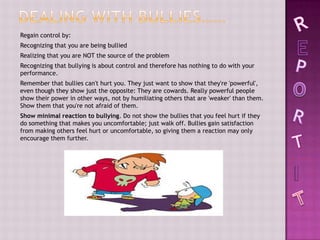
Regain control by:
Recognizing that you are being bullied
Realizing that you are NOT the source of the problem
Recognizing that bullying is about control and therefore has nothing to do with your
performance.
Remember that bullies can't hurt you. They just want to show that they're 'powerful',
even though they show just the opposite: They are cowards. Really powerful people
show their power in other ways, not by humiliating others that are 'weaker' than them.
Show them that you're not afraid of them.
Show minimal reaction to bullying. Do not show the bullies that you feel hurt if they
do something that makes you uncomfortable; just walk off. Bullies gain satisfaction
from making others feel hurt or uncomfortable, so giving them a reaction may only
encourage them further.
Everyone experiences friendship difficulties – they „fall out‟ with
friends, they discover people who they do not like or get on with. Part
of the growing up process involves developing the skills to deal with
these normal „rough & tumbles‟. Asking for adult support can help you
find strategies for managing, such as: ignoring, walking away and
seeking alternatives. It is only when unpleasant behaviour is directed at
them persistently, hurtfully and intentionally that we say bullying is
happening.

If you think you, a friend, or someone you know is being bullied, please
tell an adult, such as a parent or teacher straight away. Early
intervention can prevent the situation escalating and getting out of
hand.

            ************************************************

Bullying slideshow

  • 2.
    Sticks and stones can break my bones…… and names can always hurt me…… St David‟s is “a place where faith is respected and encouraged, a deeply human place where people find understanding and friendship.” Each student is valued and respected as an individual and included within the college ethos . St David‟s operates a zero-tolerance policy towards bullying and all incidents of bullying will be taken very seriously.
  • 3.
    There are manydefinitions of bullying, but most have three things in common: PHYSICAL - hitting, kicking, taking belongings VERBAL – name calling, insulting, making offensive remarks INDIRECT – spreading nasty stories, deliberate exclusion  Do not let bullies upset you and make you suicidal. Why hurt your loved ones just because of these nasty people?  Many children are taught that bullies will not get physical if they are only making fun of you. This is not always true, as it can always escalate. Be careful around any bully, ALWAYS stay in public places or amongst others (especially authority figures) when a bully picks on you.  If the bully is an adult or young adult and is threatening you or hurting you, that is called abuse. Talk to someone immediately, or call Kids Help Phone(1-800-668-6868)  Once again, don't take anything they say about you to heart. Don't be fooled by them either. If they try to act nice to you and they look like they mean it, give them a chance. If they look like they're faking it, ignore them.  Remember- all they want is for you to react. Ignoring them is better than tattling or standing up to them. Eventually they will get bored.
  • 4.
    In the shortterm:  Anger  Depression  Anxious avoidance of settings in which bullying may occur.  Greater incidence of illness  Lower grades than non-bullied peers  Suicidal thoughts and feelings In the long term:  Reduced occupational opportunities  Lingering feelings of anger and bitterness, desire for revenge.  Difficulty trusting people  Interpersonal difficulties, including fear and avoidance of new social situations  Increased tendency to be a loner  Perception of self as easy to victimise, overly sensitive, and thin-skinned  Self-esteem problems (don't think well of self)  Increased incidence of continued bullying and victimisation
  • 6.
    “I was thebully but by the time I realised the hurt and pain I was causing ,my victim had taken his life. I have to live with this sentence now . . . . I am so sorry.”
  • 7.
    It is thoughtthat one in ten children are bullied at school, almost twice the number than a decade ago. Suicide continues to be one of the leading causes of death among children under the age of 14. is a term used to describe suicide as the result of bullying. New bullying statistics 2010 are reporting that there is a strong connection between bullying, being bullied and suicide, according to a new study from the Yale School of Medicine. Suicide rates are continuing to grow among adolescents, and have grown more than 50 percent in the past 30 years. While it is now well known that bullying is very damaging to its victims, it is still not generally considered to be a serious issue. Throughout time immemorial victims have been told to "toughen up", "stop whining", to "get a thicker skin" or to “fight back”. When a victim of bullying attempts to get help, he/she is frequently betrayed by the authorities or told "no one likes a tattle-tale". Considering the devastating and sometimes fatal consequences of bullying, society must re-examine its attitude to this issue.
  • 8.
    Bullying will causedepression. Depression is the leading cause in all cases of suicide. According to the American Psychiatric Association over half of all kids who suffer from depression will eventually attempt suicide and seven percent will be successful. Every ½ hour a youth who has been bullied will complete suicide. Another estimated 19,000 victims of bullying will attempt suicide this year. This is as a result of:  Exposure to relentless physical and/or emotional bullying by peers  Experiencing continuous resultant pain due to the bullying  Having to incessantly relive humiliating moments that are repeatedly brought up by peers as a means of torment  Having no other friends to rely on for support or encouragement while being bullied regularly  Being the victim of bullying by an authority figure (parent, teacher, coach, etc.)
  • 9.
    Bullying can include various types of behaviour from physical attacks, to destroying one's personal property or clothing, verbal abuse, starting rumours, name calling, verbal attacks online as well as other forms of cyber bullying.  For teens and children who feel they are being bullied, it is important to address the matter with a parent or teacher right away. It may feel like you are telling on someone for doing something wrong, and that admission might get you in trouble with the bully later. However, this is not the case. In the majority of cases when a bully is reported, the bullying stops because the bully is faced with dire repercussions or they are sent away to a juvenile detention centre.  If you see bullying occur, it is just as important to tell a trusted adult about the situation. There are many ways to try and prevent bullying from getting worse and by reporting incidents, you can help cut down on future cases of bullying involving other victims. Maintaining a strong sense of self and good overall self-esteem is another way to ensure you won't be a victim of bullying attacks since bullies generally only prey on those they feel are weaker than them. This is also why it is important to have a solid group of friends that will have your back if a bully does try to attack in some way.  Parents, be sure to talk to your children and teens about bullying and how to prevent it from happening to them or their peers. Make sure they know the importance of reporting such incidents and ways to handle a bully.
  • 11.
    Regain control by: Recognizingthat you are being bullied Realizing that you are NOT the source of the problem Recognizing that bullying is about control and therefore has nothing to do with your performance. Remember that bullies can't hurt you. They just want to show that they're 'powerful', even though they show just the opposite: They are cowards. Really powerful people show their power in other ways, not by humiliating others that are 'weaker' than them. Show them that you're not afraid of them. Show minimal reaction to bullying. Do not show the bullies that you feel hurt if they do something that makes you uncomfortable; just walk off. Bullies gain satisfaction from making others feel hurt or uncomfortable, so giving them a reaction may only encourage them further.
  • 12.
    Everyone experiences friendshipdifficulties – they „fall out‟ with friends, they discover people who they do not like or get on with. Part of the growing up process involves developing the skills to deal with these normal „rough & tumbles‟. Asking for adult support can help you find strategies for managing, such as: ignoring, walking away and seeking alternatives. It is only when unpleasant behaviour is directed at them persistently, hurtfully and intentionally that we say bullying is happening. If you think you, a friend, or someone you know is being bullied, please tell an adult, such as a parent or teacher straight away. Early intervention can prevent the situation escalating and getting out of hand. ************************************************