Building High Performance Team

Module (03)
TEAM MANAGEMENT
Module (03) Team Management
3.1

Establishing Team Rules

3.2

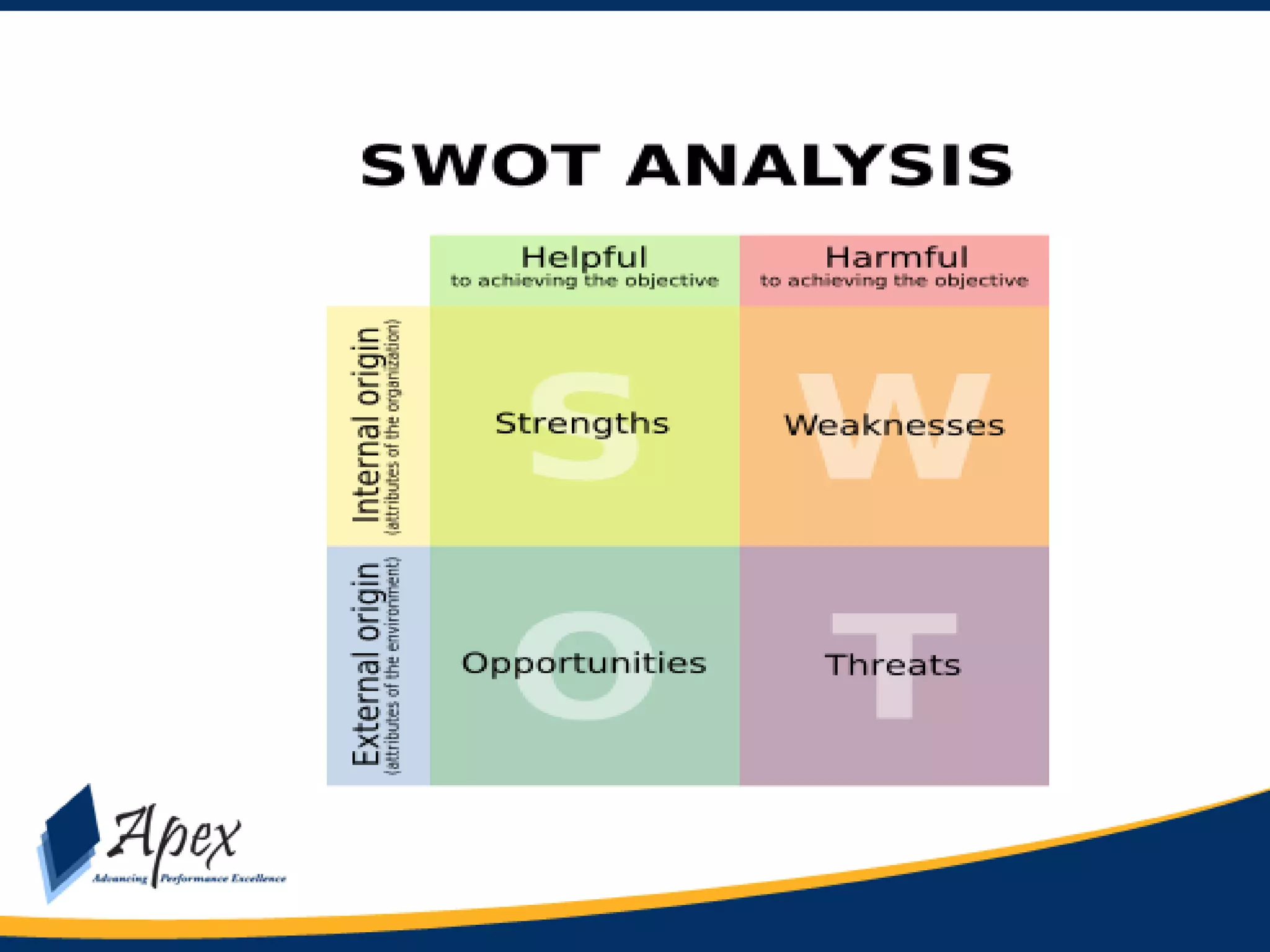
SWOT Analysis

3.3

Importance of 3 C’s

3.4

Trust, Commitment & Loyalty

3.5

Introduce Change

3.6

Team Expectation
3.1 Establishing Team Rules:
If not all team members participate in the team-building
process, it may not be effective. Setting rules at the beginning of
the process ensures that all team members know what is

expected of them.
Guidelines guide team members on how to interact to ensure
the process is successful. If the team-building process will take

place over a series of sessions, require that team members
attend all sessions.
Require that all team members show respect toward one
another during team-building sessions and define what it means
to show respect.
A consensus on behavioral norms and team processes increases
a team’s ability to stay focused on objectives. This helps teams
develop and agree on rules and procedures that will help the
team function efficiently and productively.

 Avoid or resolve Conflict among team members.
 Establish norms of Behavior of the TEAM.
 Encourage Listening and Brainstorming.
 Achieve consensus on Work Processes and Flow Control.
 Lay the foundation for Self-management and Facilitation.
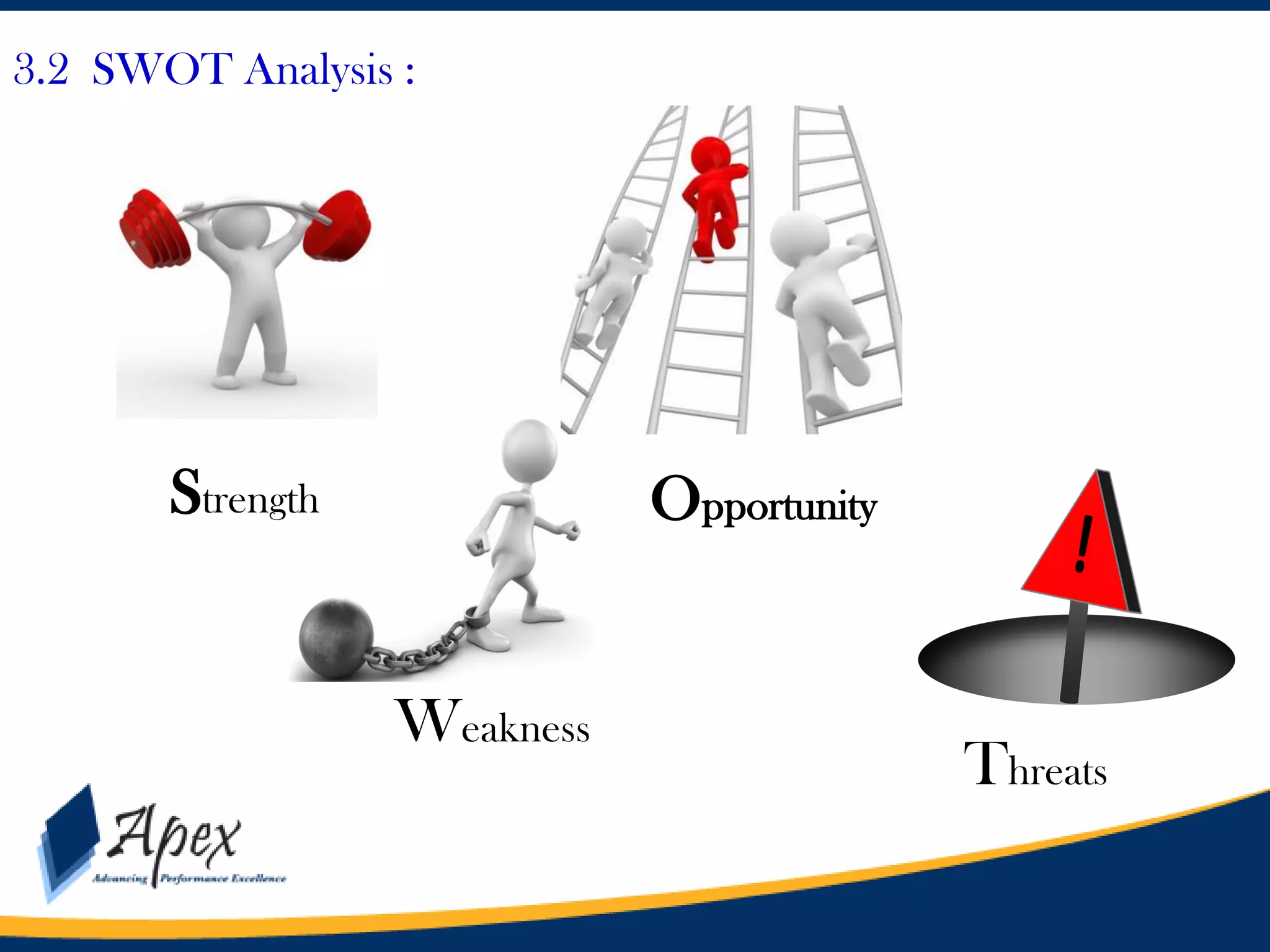
3.2 SWOT Analysis :

Strength

Opportunity

Weakness

Threats
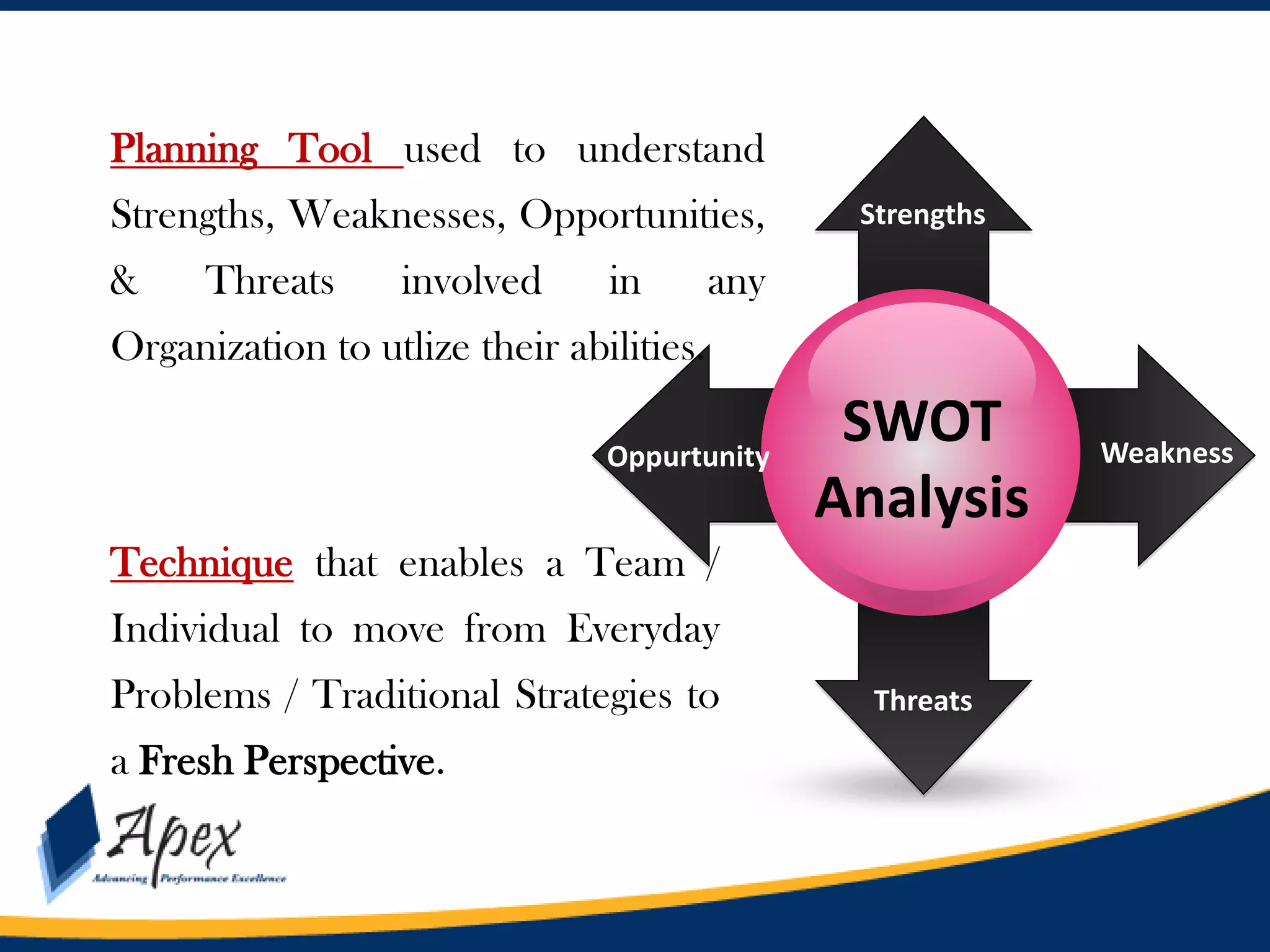
Planning Tool used to understand
Strengths, Weaknesses, Opportunities,
&

Threats

involved

in

Strengths

any

Organization to utlize their abilities.
Oppurtunity

SWOT
Analysis

Technique that enables a Team /
Individual to move from Everyday
Problems / Traditional Strategies to
a Fresh Perspective.

Threats

Weakness
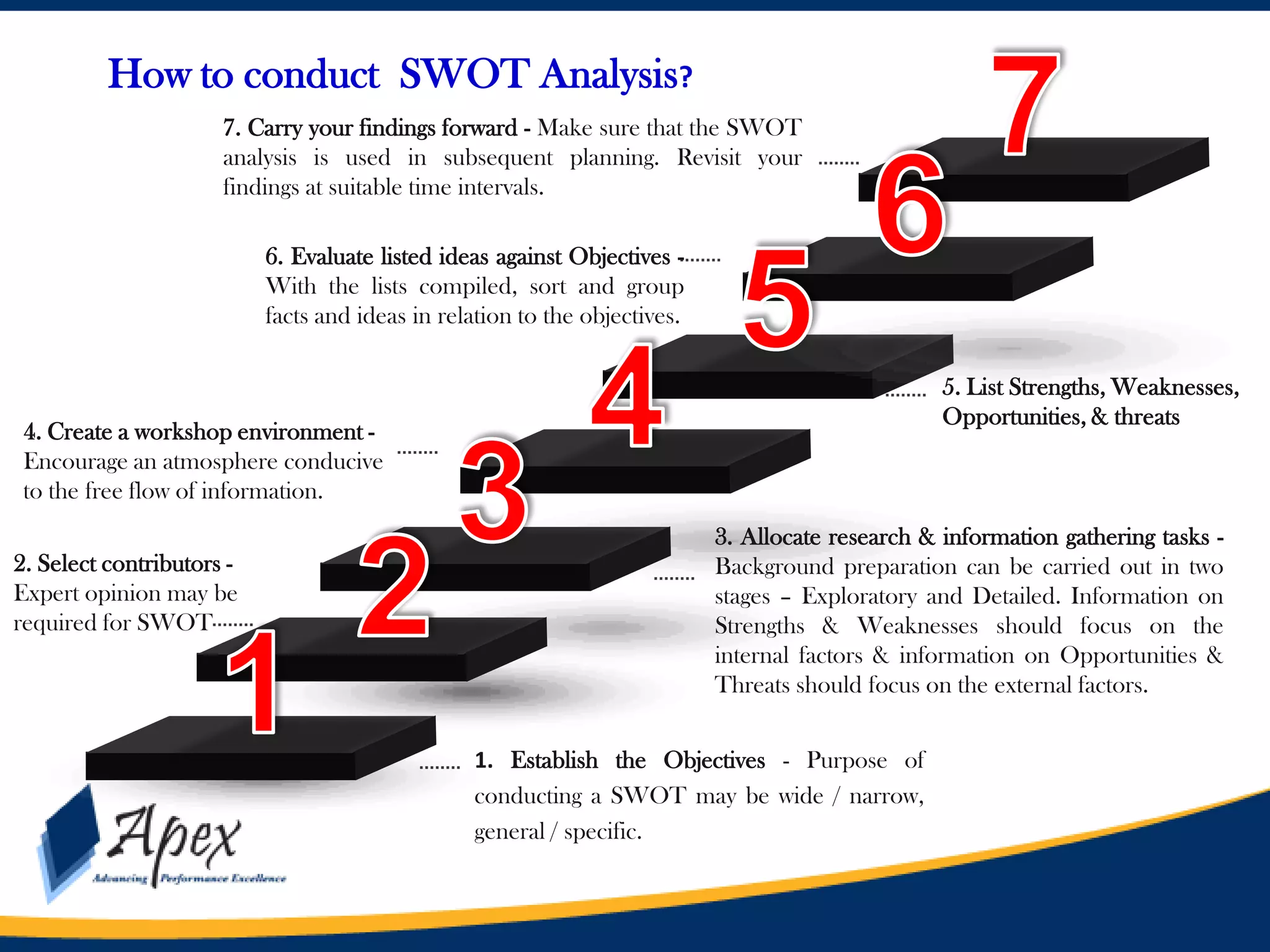
How to conduct SWOT Analysis?
7. Carry your findings forward - Make sure that the SWOT
analysis is used in subsequent planning. Revisit your
findings at suitable time intervals.
6. Evaluate listed ideas against Objectives With the lists compiled, sort and group
facts and ideas in relation to the objectives.
5. List Strengths, Weaknesses,
Opportunities, & threats

4. Create a workshop environment Encourage an atmosphere conducive
to the free flow of information.
2. Select contributors Expert opinion may be
required for SWOT

3. Allocate research & information gathering tasks Background preparation can be carried out in two
stages – Exploratory and Detailed. Information on
Strengths & Weaknesses should focus on the
internal factors & information on Opportunities &
Threats should focus on the external factors.
1. Establish the Objectives - Purpose of
conducting a SWOT may be wide / narrow,
general / specific.
3.3 Importance of 3 C’s:
You know the importance of getting along with you and your
workers and making sure they get along with each other as a
TEAM.
You are doing your best to maintain Good and Strong
Relations with your boss, Subordinates and Colleagues.
Important as these Human Relations Jobs are, there is one
more that is every bit as important and never work without it.
 Communication:
– Exchange of Information among Organizations
– Better understanding of each Other.
 Coordination:
– Working together to achieve a Goal (Efficiently)

– Decreases Overlap, Redundancy, and/or Separation
 Cooperation:
– Work side-by-side with the group (be a “Team Player”)

– To make a contribution, either money or time and effort
3.4 Trust, Commitment & Loyalty:
The value of building Team Trust, Commitment, and Loyalty
can't be overestimated. Reduced turnover costs are one benefit,
but the ongoing benefit of retaining reliable, experienced
employees on your team is invaluable.

Management experts concede that success in building team
trust, commitment, and loyalty has eroded due to corporate
restructuring, mergers and acquisitions, and the increasing pace

of change. The research shows that trust is such a basic
requirement that without it a company's other benefits and
programs will not significantly raise employee commitment.
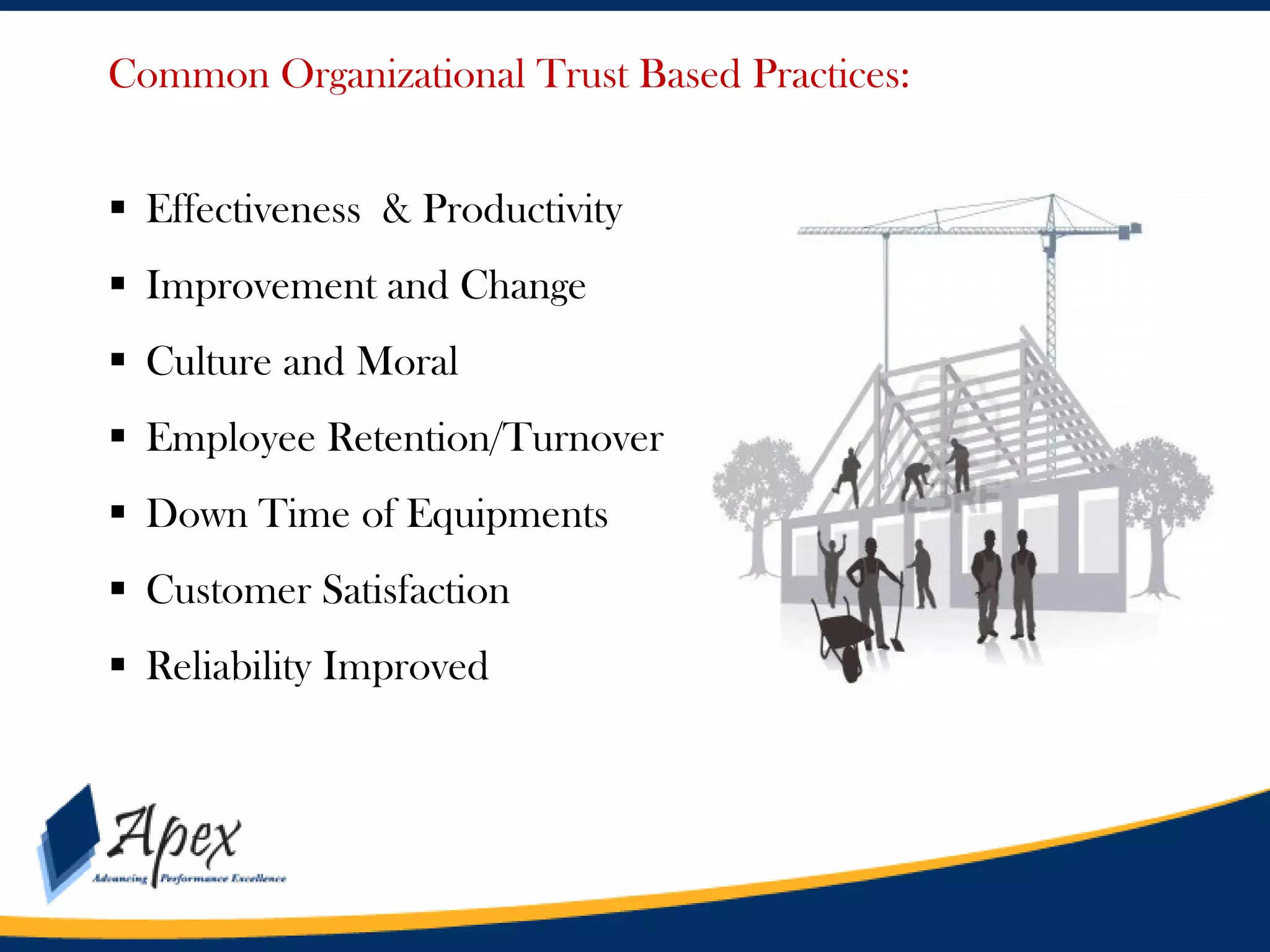
Common Organizational Trust Based Practices:
 Effectiveness & Productivity
 Improvement and Change
 Culture and Moral
 Employee Retention/Turnover
 Down Time of Equipments
 Customer Satisfaction
 Reliability Improved
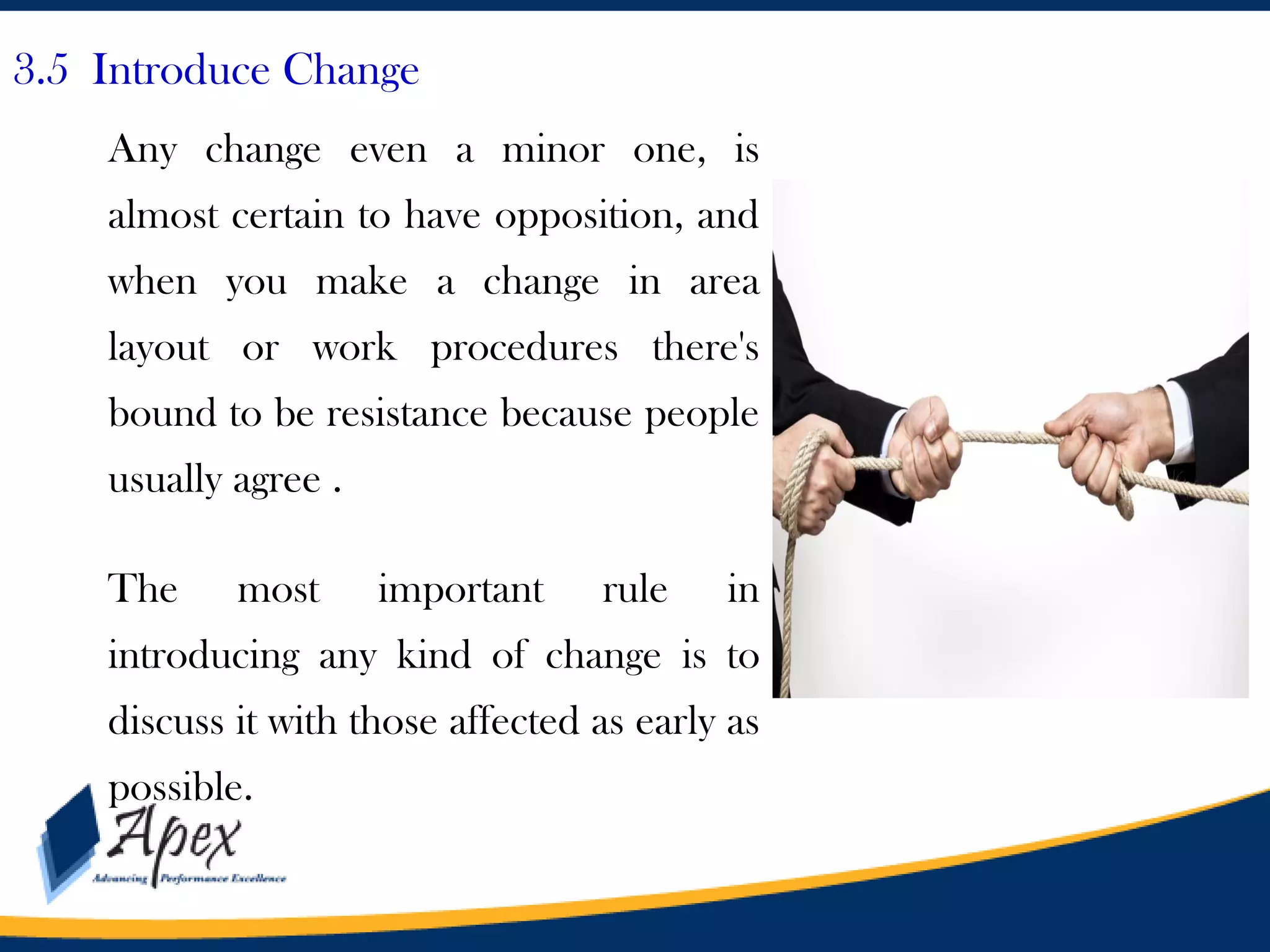
3.5 Introduce Change
Any change even a minor one, is
almost certain to have opposition, and
when you make a change in area

layout or work procedures there's
bound to be resistance because people
usually agree .
The

most

important

rule

in

introducing any kind of change is to
discuss it with those affected as early as
possible.
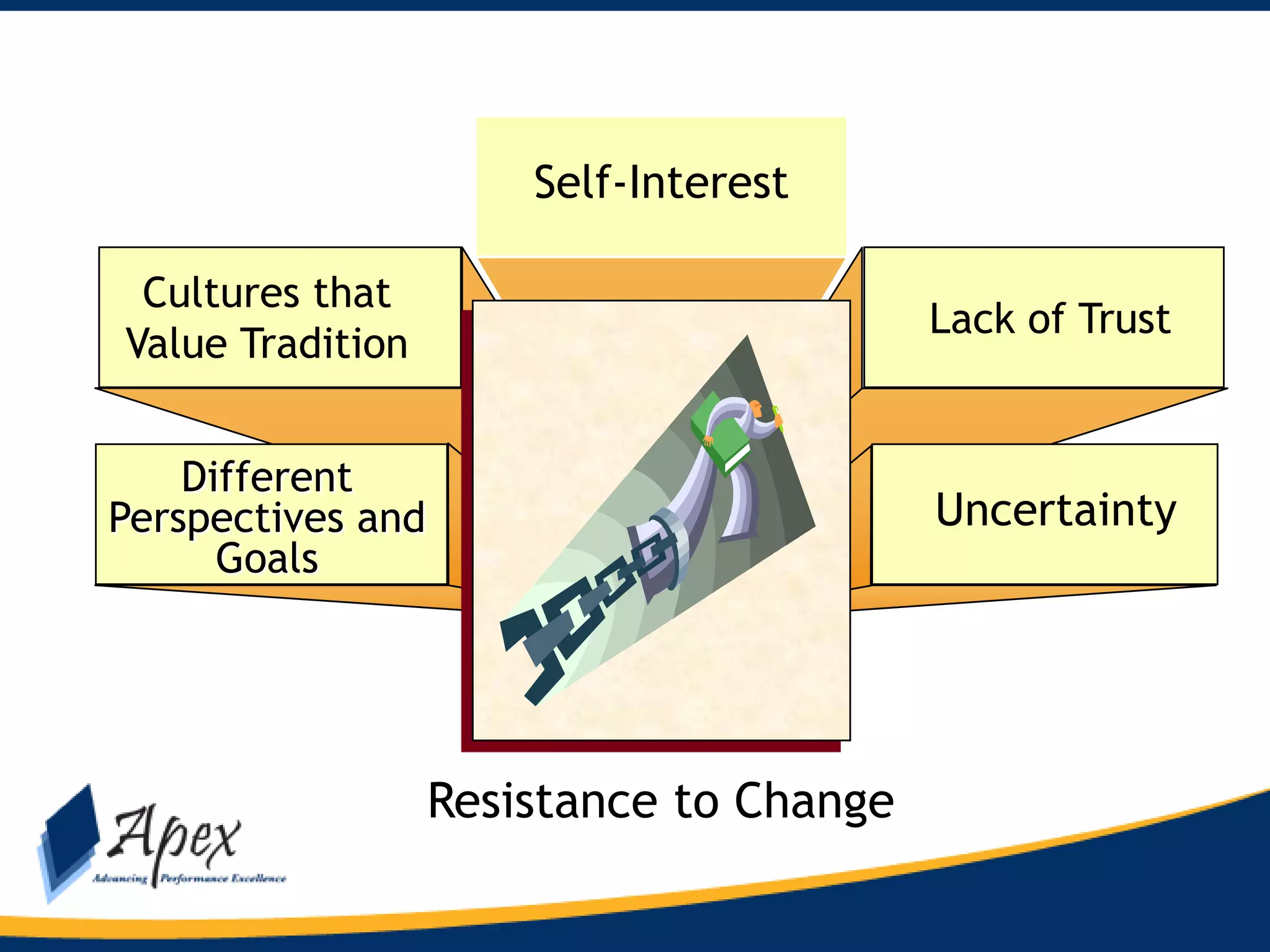
Self-Interest
Cultures that
Value Tradition

Lack of Trust

Different
Perspectives and
Goals

Uncertainty

Resistance to Change
Four W’s and an H:
 If you merely confirm that new equipment is coming, you do
nothing to reduce employees' anxiety and confusion.

 Before you make an announcement of this type, be sure you
know enough about it to answer the likely immediate
questions.
 Here are five things you should be prepared to tell your
employees:
 What the change is ………….?
 Why it is being made ………?
 Who will be affected ………?
 When it will go into effect ………….?
 How it will be implemented ……….?
3.6 Team Expectation
Leaders then can’t rely exclusively on pressure, rules, and
punishments to inspire a coordinated work team. Rather they
must become principled leaders who set performance

expectations that allow the team to take responsibility for
achieving success.

Below are five expectation guidelines to channel the
relationship between the team leader and team members:
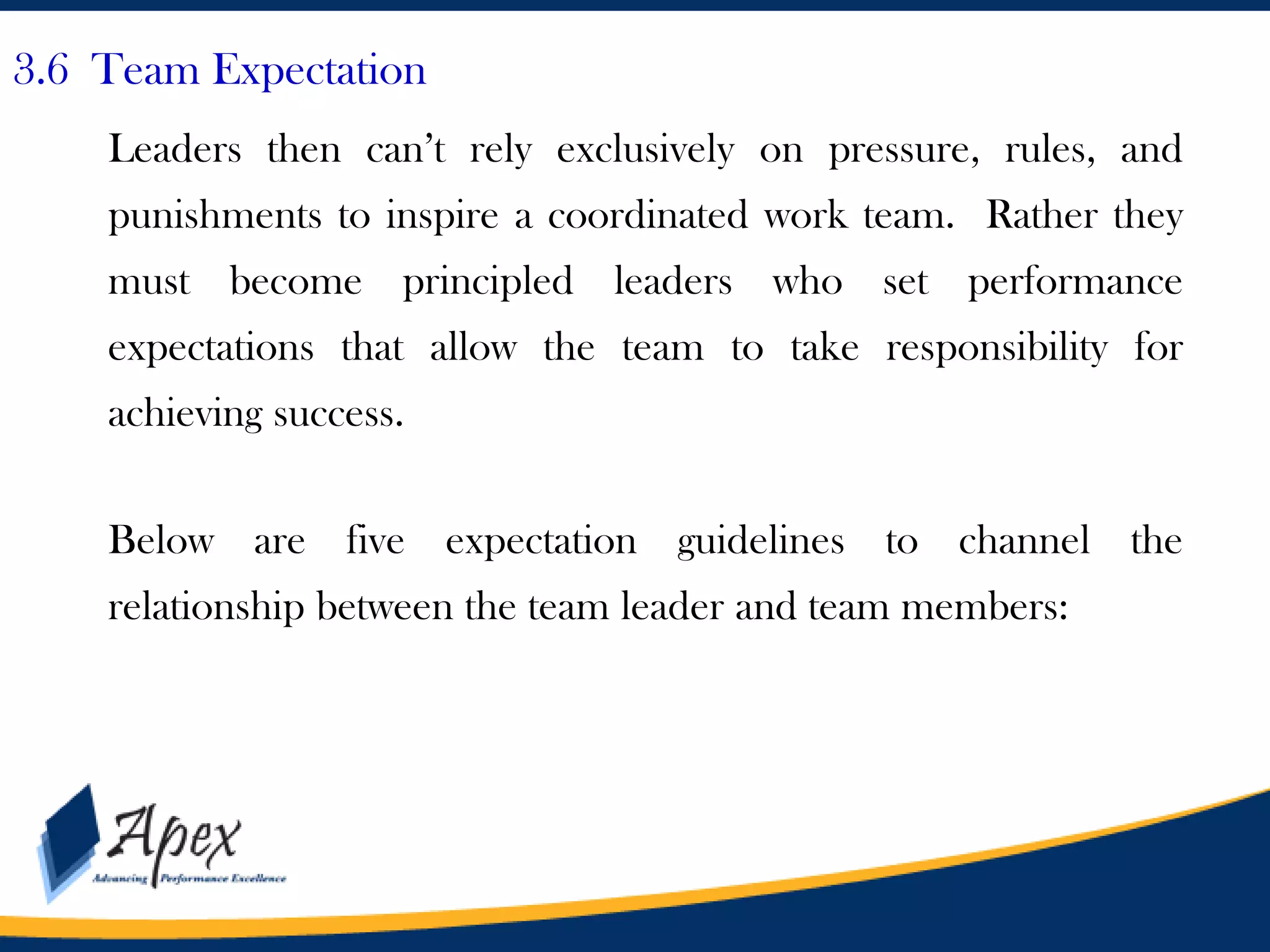
1. Expect Team Members to be Contributors:
This means that the leader will have
to nurture a team environment that
builds the confidence and trust levels

of team members.
Team members must believe that
they can express diverse opinions
without reprisal; that they can make
mistakes without feeling diminished;
and that they will be valued for their

achievements.
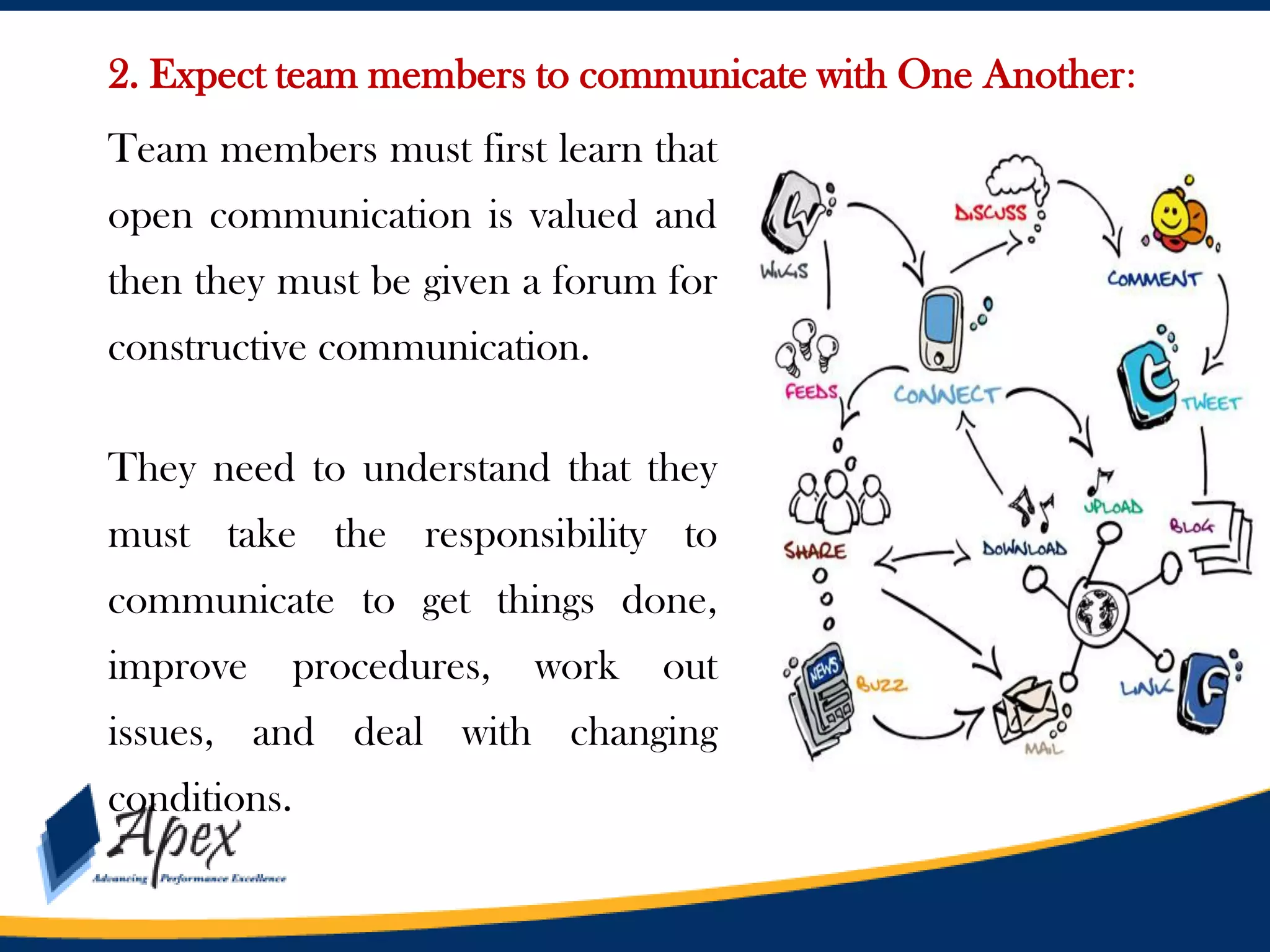
2. Expect team members to communicate with One Another:
Team members must first learn that
open communication is valued and
then they must be given a forum for

constructive communication.
They need to understand that they

must take the responsibility to
communicate to get things done,
improve

procedures,

work

out

issues, and deal with changing
conditions.
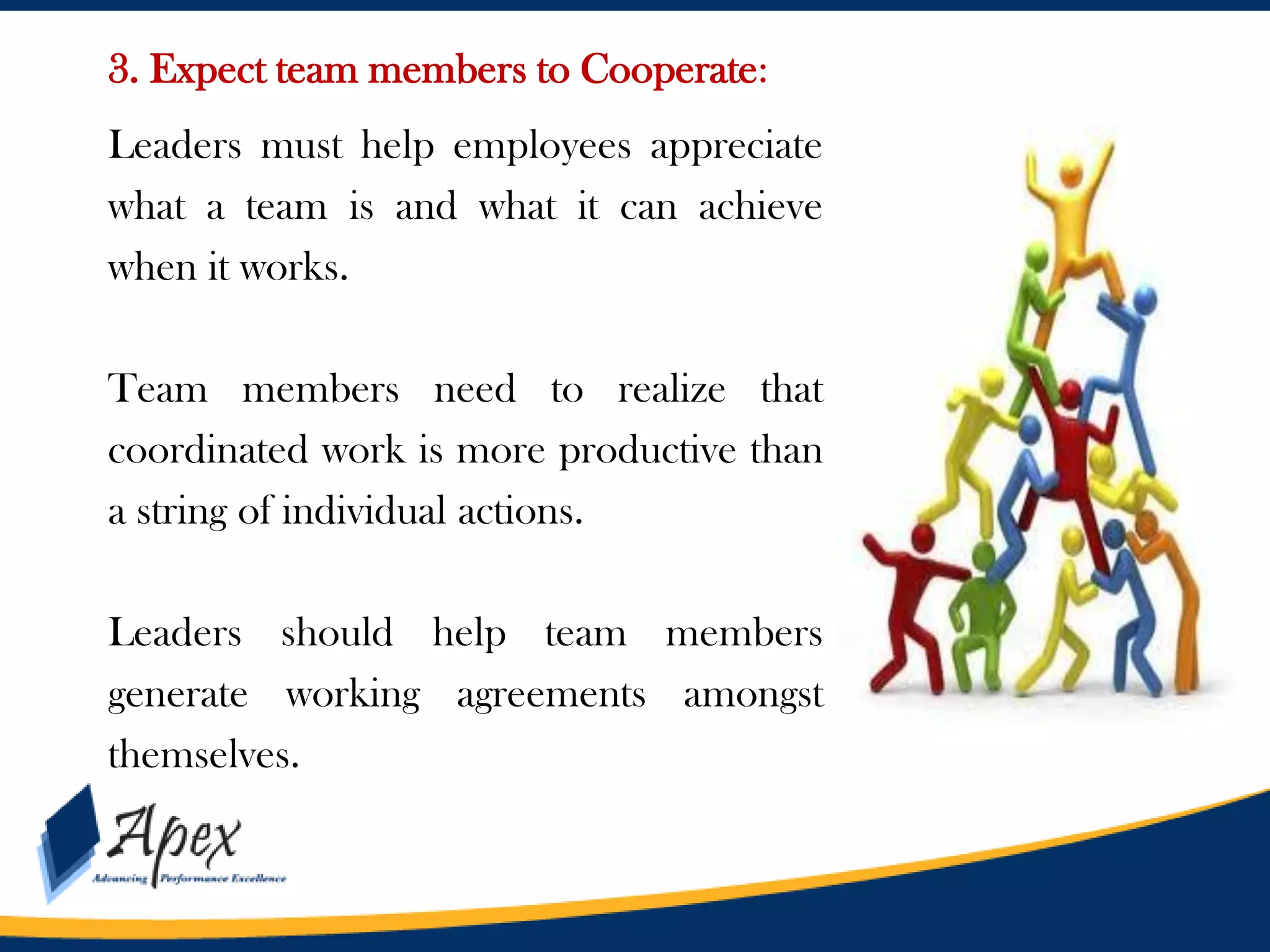
3. Expect team members to Cooperate:
Leaders must help employees appreciate
what a team is and what it can achieve
when it works.
Team members need to realize that
coordinated work is more productive than
a string of individual actions.
Leaders should help team members
generate working agreements amongst
themselves.
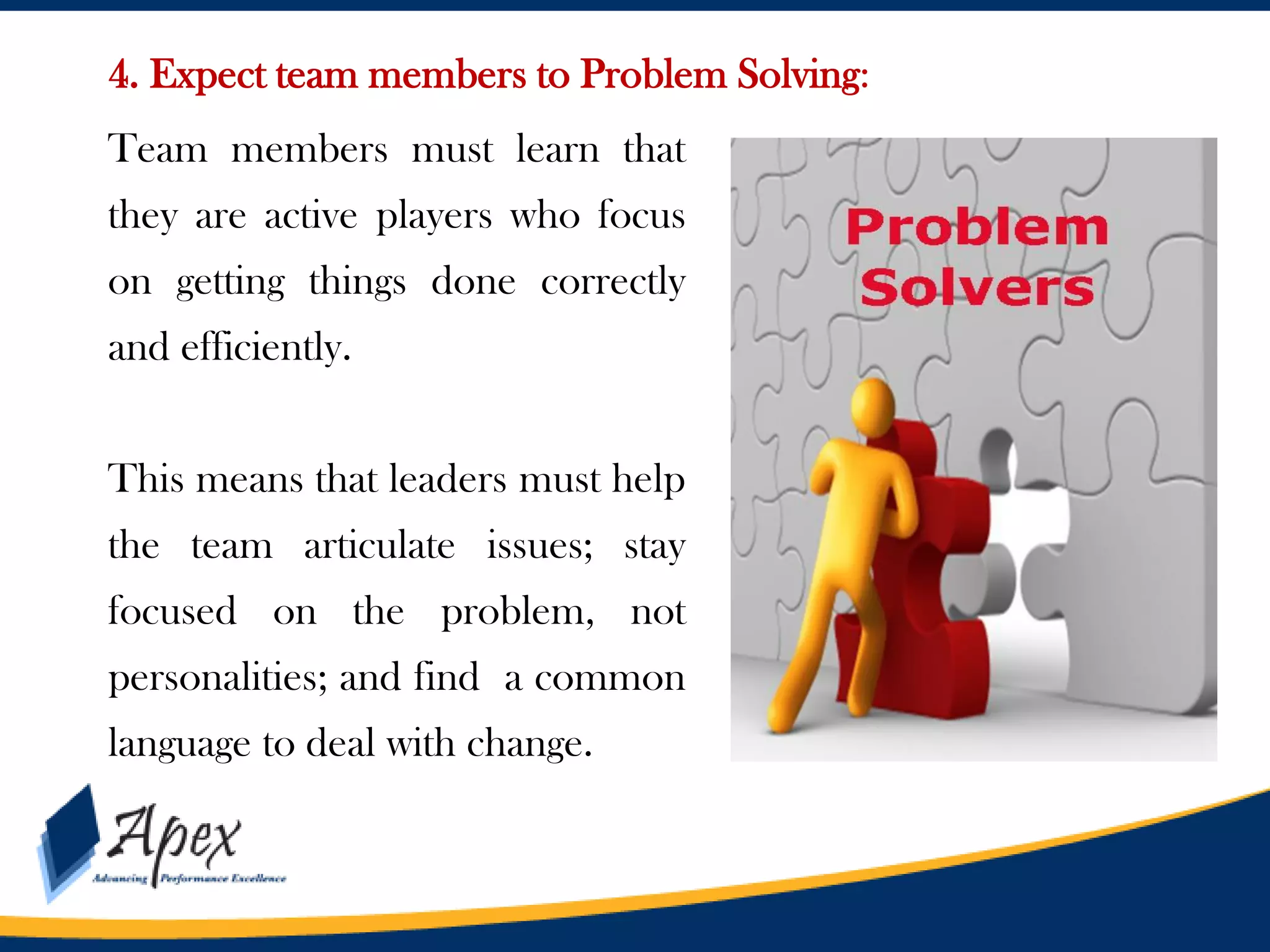
4. Expect team members to Problem Solving:
Team members must learn that
they are active players who focus
on getting things done correctly

and efficiently.
This means that leaders must help

the team articulate issues; stay
focused on the problem, not
personalities; and find a common
language to deal with change.
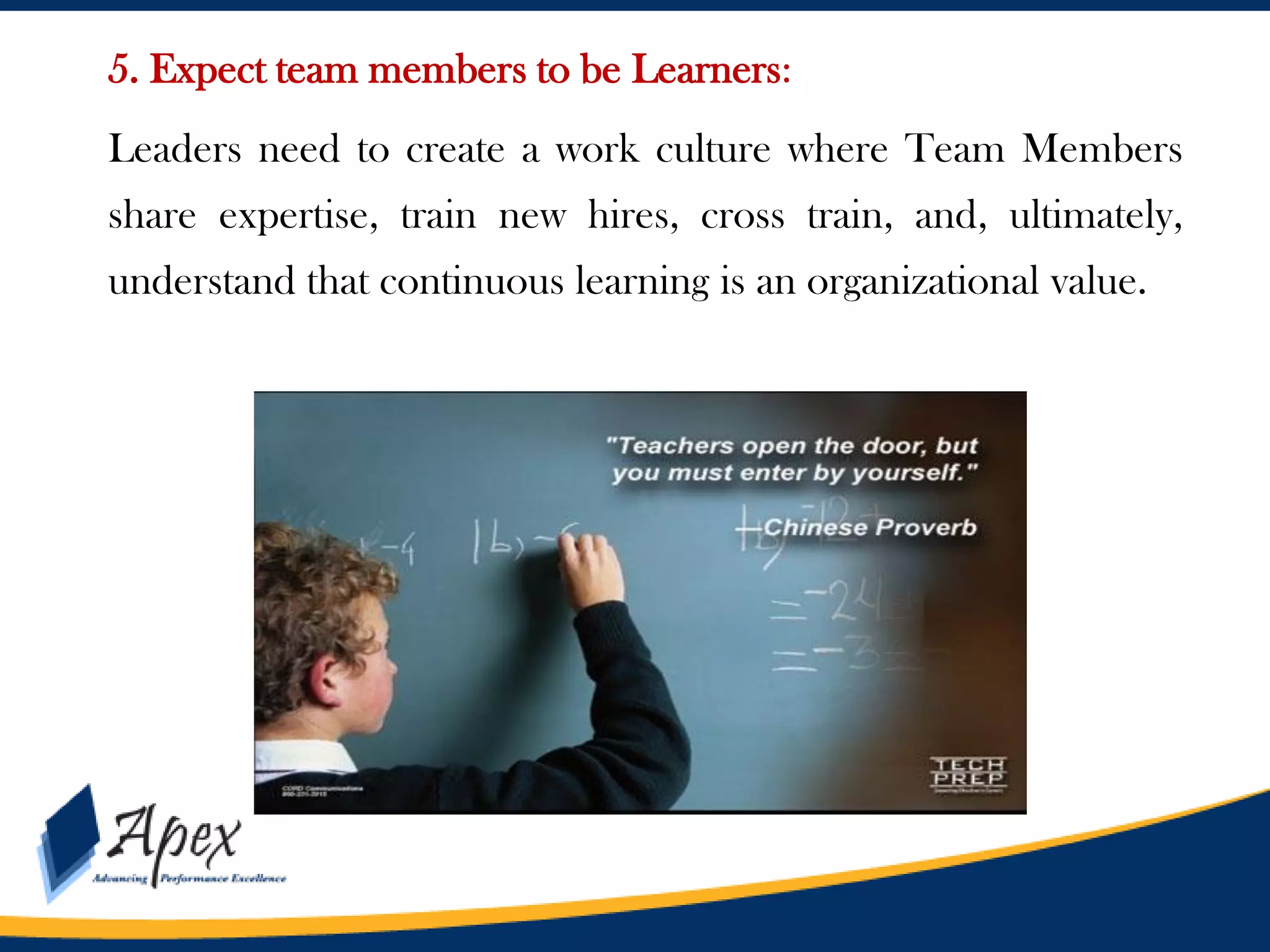
5. Expect team members to be Learners:
Leaders need to create a work culture where Team Members
share expertise, train new hires, cross train, and, ultimately,
understand that continuous learning is an organizational value.
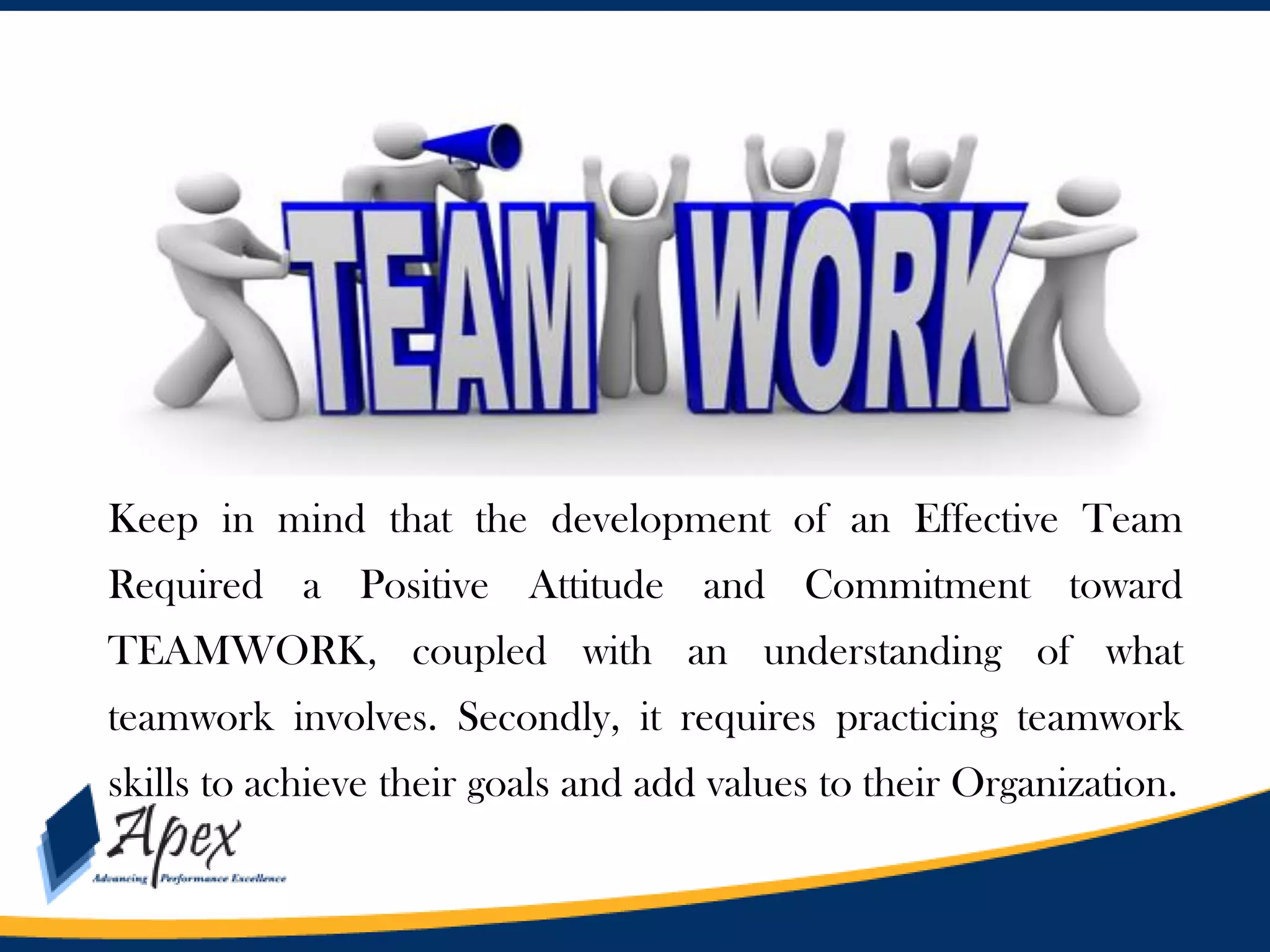
Keep in mind that the development of an Effective Team
Required a Positive Attitude and Commitment toward
TEAMWORK, coupled with an understanding of what
teamwork involves. Secondly, it requires practicing teamwork

skills to achieve their goals and add values to their Organization.
Building high performance teame module (03) team management

Building high performance teame module (03) team management

  • 1.
    Building High PerformanceTeam Module (03) TEAM MANAGEMENT
  • 2.
    Module (03) TeamManagement 3.1 Establishing Team Rules 3.2 SWOT Analysis 3.3 Importance of 3 C’s 3.4 Trust, Commitment & Loyalty 3.5 Introduce Change 3.6 Team Expectation
  • 3.
    3.1 Establishing TeamRules: If not all team members participate in the team-building process, it may not be effective. Setting rules at the beginning of the process ensures that all team members know what is expected of them. Guidelines guide team members on how to interact to ensure the process is successful. If the team-building process will take place over a series of sessions, require that team members attend all sessions. Require that all team members show respect toward one another during team-building sessions and define what it means to show respect.
  • 4.
    A consensus onbehavioral norms and team processes increases a team’s ability to stay focused on objectives. This helps teams develop and agree on rules and procedures that will help the team function efficiently and productively.  Avoid or resolve Conflict among team members.  Establish norms of Behavior of the TEAM.  Encourage Listening and Brainstorming.  Achieve consensus on Work Processes and Flow Control.  Lay the foundation for Self-management and Facilitation.
  • 5.
    3.2 SWOT Analysis: Strength Opportunity Weakness Threats
  • 6.
    Planning Tool usedto understand Strengths, Weaknesses, Opportunities, & Threats involved in Strengths any Organization to utlize their abilities. Oppurtunity SWOT Analysis Technique that enables a Team / Individual to move from Everyday Problems / Traditional Strategies to a Fresh Perspective. Threats Weakness
  • 8.
    How to conductSWOT Analysis? 7. Carry your findings forward - Make sure that the SWOT analysis is used in subsequent planning. Revisit your findings at suitable time intervals. 6. Evaluate listed ideas against Objectives With the lists compiled, sort and group facts and ideas in relation to the objectives. 5. List Strengths, Weaknesses, Opportunities, & threats 4. Create a workshop environment Encourage an atmosphere conducive to the free flow of information. 2. Select contributors Expert opinion may be required for SWOT 3. Allocate research & information gathering tasks Background preparation can be carried out in two stages – Exploratory and Detailed. Information on Strengths & Weaknesses should focus on the internal factors & information on Opportunities & Threats should focus on the external factors. 1. Establish the Objectives - Purpose of conducting a SWOT may be wide / narrow, general / specific.
  • 9.
    3.3 Importance of3 C’s: You know the importance of getting along with you and your workers and making sure they get along with each other as a TEAM. You are doing your best to maintain Good and Strong Relations with your boss, Subordinates and Colleagues. Important as these Human Relations Jobs are, there is one more that is every bit as important and never work without it.
  • 10.
     Communication: – Exchangeof Information among Organizations – Better understanding of each Other.  Coordination: – Working together to achieve a Goal (Efficiently) – Decreases Overlap, Redundancy, and/or Separation  Cooperation: – Work side-by-side with the group (be a “Team Player”) – To make a contribution, either money or time and effort
  • 11.
    3.4 Trust, Commitment& Loyalty: The value of building Team Trust, Commitment, and Loyalty can't be overestimated. Reduced turnover costs are one benefit, but the ongoing benefit of retaining reliable, experienced employees on your team is invaluable. Management experts concede that success in building team trust, commitment, and loyalty has eroded due to corporate restructuring, mergers and acquisitions, and the increasing pace of change. The research shows that trust is such a basic requirement that without it a company's other benefits and programs will not significantly raise employee commitment.
  • 12.
    Common Organizational TrustBased Practices:  Effectiveness & Productivity  Improvement and Change  Culture and Moral  Employee Retention/Turnover  Down Time of Equipments  Customer Satisfaction  Reliability Improved
  • 13.
    3.5 Introduce Change Anychange even a minor one, is almost certain to have opposition, and when you make a change in area layout or work procedures there's bound to be resistance because people usually agree . The most important rule in introducing any kind of change is to discuss it with those affected as early as possible.
  • 14.
    Self-Interest Cultures that Value Tradition Lackof Trust Different Perspectives and Goals Uncertainty Resistance to Change
  • 15.
    Four W’s andan H:  If you merely confirm that new equipment is coming, you do nothing to reduce employees' anxiety and confusion.  Before you make an announcement of this type, be sure you know enough about it to answer the likely immediate questions.  Here are five things you should be prepared to tell your employees:
  • 16.
     What thechange is ………….?  Why it is being made ………?  Who will be affected ………?  When it will go into effect ………….?  How it will be implemented ……….?
  • 17.
    3.6 Team Expectation Leadersthen can’t rely exclusively on pressure, rules, and punishments to inspire a coordinated work team. Rather they must become principled leaders who set performance expectations that allow the team to take responsibility for achieving success. Below are five expectation guidelines to channel the relationship between the team leader and team members:
  • 18.
    1. Expect TeamMembers to be Contributors: This means that the leader will have to nurture a team environment that builds the confidence and trust levels of team members. Team members must believe that they can express diverse opinions without reprisal; that they can make mistakes without feeling diminished; and that they will be valued for their achievements.
  • 19.
    2. Expect teammembers to communicate with One Another: Team members must first learn that open communication is valued and then they must be given a forum for constructive communication. They need to understand that they must take the responsibility to communicate to get things done, improve procedures, work out issues, and deal with changing conditions.
  • 20.
    3. Expect teammembers to Cooperate: Leaders must help employees appreciate what a team is and what it can achieve when it works. Team members need to realize that coordinated work is more productive than a string of individual actions. Leaders should help team members generate working agreements amongst themselves.
  • 21.
    4. Expect teammembers to Problem Solving: Team members must learn that they are active players who focus on getting things done correctly and efficiently. This means that leaders must help the team articulate issues; stay focused on the problem, not personalities; and find a common language to deal with change.
  • 22.
    5. Expect teammembers to be Learners: Leaders need to create a work culture where Team Members share expertise, train new hires, cross train, and, ultimately, understand that continuous learning is an organizational value.
  • 23.
    Keep in mindthat the development of an Effective Team Required a Positive Attitude and Commitment toward TEAMWORK, coupled with an understanding of what teamwork involves. Secondly, it requires practicing teamwork skills to achieve their goals and add values to their Organization.