Presented By
Saad Ejaz
 To invest people with authority
 sharing varying degrees of power with lower-
level employees to better serve the customer
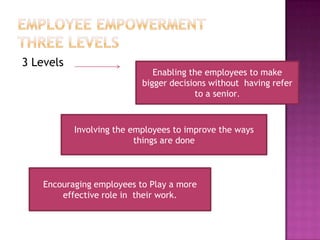
3 Levels
Enabling the employees to make
bigger decisions without having refer
to a senior.
Involving the employees to improve the ways
things are done
Encouraging employees to Play a more
effective role in their work.
 Improved employer satisfaction.
 By being shared, organizational power can
grow.
 Employees to perform better.
 Increases trust in the organization
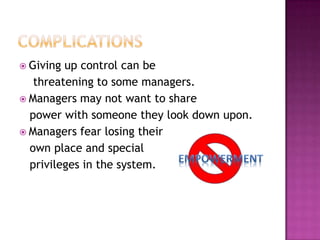
 Giving up control can be
threatening to some managers.
 Managers may not want to share
power with someone they look down upon.
 Managers fear losing their
own place and special
privileges in the system.
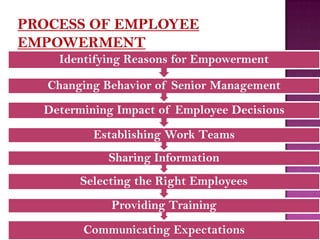
Communicating Expectations
Providing Training
Selecting the Right Employees
Sharing Information
Establishing Work Teams
Determining Impact of Employee Decisions
Changing Behavior of Senior Management
Identifying Reasons for Empowerment
1. Demonstrate That You Value People
2. Share Leadership Vision
3. Share Goals and Direction
4. Trust People
5. Provide Information for
Decision Making
6. Delegate Authority and Impact
Opportunities, Not Just More Work
7. Provide Frequent Feedback
8. Solve Problems: Don't Pinpoint Problem
People
9. Listen to Learn and Ask Questions to
Provide Guidance
1. Message Disconnect
2. Insufficient Training
3. Reluctant Managers
4. Breakdown of Organizational Structure
 Pros of Employee Empowerment
 It leads to greater job satisfaction,
motivation, increased productivity and
reduces the costs.
 It also leads to creativity and innovation
since the employees have the authority to
act on their own.
 There is increased efficiency in employees
because of increased ownership in their
work.
 Lesser need of supervision and delegation.
 Employees when empowered become more
entrepreneurial and start taking more risks.
Greater the risk, greater are the chances to
succeed.
 Focus on quality from the level of
manufacturing till actual delivery and service
of goods.
 Cons of Employee Empowerment
 Egotism / arrogance: Worker arrogance can
create a big trouble for the supervisors and
the managers. There can be problems in
delegating. Employees avoid reporting about
their work and feedback can be taken
negatively.
 Risk: Creativity and innovation demands a
greater risk bearing capacity and there are
equal chances of success and failure.
Workers often lack the expertise to execute
are enterprise, which can cost big.
 Industrial Democracy: Labor unions and
workers are empowered and they may misuse
the same. Strikes and lock outs become more
frequent. Also, labor unions gain insights into
management and their functioning and they
leak the same.
 Security: Since information comes and is
shared by all, there are apprehensions about
leakage of critical data
We can conclude that definitely employee
empowerment is a positive element in an
organization. However it depends on the
demands & circumstances. Empowering
employees develops self confidence & loyalty
in them & leads also to improved customer
satisfaction. Morever everyone’s limit is to
be defined when empowered.
Employee empowerment

Employee empowerment

  • 1.
  • 2.
     To investpeople with authority  sharing varying degrees of power with lower- level employees to better serve the customer
  • 3.
    3 Levels Enabling theemployees to make bigger decisions without having refer to a senior. Involving the employees to improve the ways things are done Encouraging employees to Play a more effective role in their work.
  • 4.
     Improved employersatisfaction.  By being shared, organizational power can grow.  Employees to perform better.  Increases trust in the organization
  • 5.
     Giving upcontrol can be threatening to some managers.  Managers may not want to share power with someone they look down upon.  Managers fear losing their own place and special privileges in the system.
  • 6.
    Communicating Expectations Providing Training Selectingthe Right Employees Sharing Information Establishing Work Teams Determining Impact of Employee Decisions Changing Behavior of Senior Management Identifying Reasons for Empowerment
  • 7.
    1. Demonstrate ThatYou Value People 2. Share Leadership Vision 3. Share Goals and Direction 4. Trust People 5. Provide Information for Decision Making 6. Delegate Authority and Impact Opportunities, Not Just More Work 7. Provide Frequent Feedback
  • 8.
    8. Solve Problems:Don't Pinpoint Problem People 9. Listen to Learn and Ask Questions to Provide Guidance
  • 9.
    1. Message Disconnect 2.Insufficient Training 3. Reluctant Managers 4. Breakdown of Organizational Structure
  • 11.
     Pros ofEmployee Empowerment  It leads to greater job satisfaction, motivation, increased productivity and reduces the costs.  It also leads to creativity and innovation since the employees have the authority to act on their own.  There is increased efficiency in employees because of increased ownership in their work.  Lesser need of supervision and delegation.
  • 12.
     Employees whenempowered become more entrepreneurial and start taking more risks. Greater the risk, greater are the chances to succeed.  Focus on quality from the level of manufacturing till actual delivery and service of goods.
  • 13.
     Cons ofEmployee Empowerment  Egotism / arrogance: Worker arrogance can create a big trouble for the supervisors and the managers. There can be problems in delegating. Employees avoid reporting about their work and feedback can be taken negatively.  Risk: Creativity and innovation demands a greater risk bearing capacity and there are equal chances of success and failure. Workers often lack the expertise to execute are enterprise, which can cost big.
  • 14.
     Industrial Democracy:Labor unions and workers are empowered and they may misuse the same. Strikes and lock outs become more frequent. Also, labor unions gain insights into management and their functioning and they leak the same.  Security: Since information comes and is shared by all, there are apprehensions about leakage of critical data
  • 15.
    We can concludethat definitely employee empowerment is a positive element in an organization. However it depends on the demands & circumstances. Empowering employees develops self confidence & loyalty in them & leads also to improved customer satisfaction. Morever everyone’s limit is to be defined when empowered.