Building High Performance Team

Module (02)
TEAMWORK STYLE
IN WORKPLACE
Module (02) Teamwork Style in Workplace
2.1

Work Groups and Team

2.2

Re-Active and Pro-Active

2.3

Building Trust and Believability

2.4

Inter-Team Conflicts

2.5

Model of Effective Team

2.6

High Performing Leadership

2.7

Style of Behaving toward Team Members
Management

2.1 Work Groups and Team

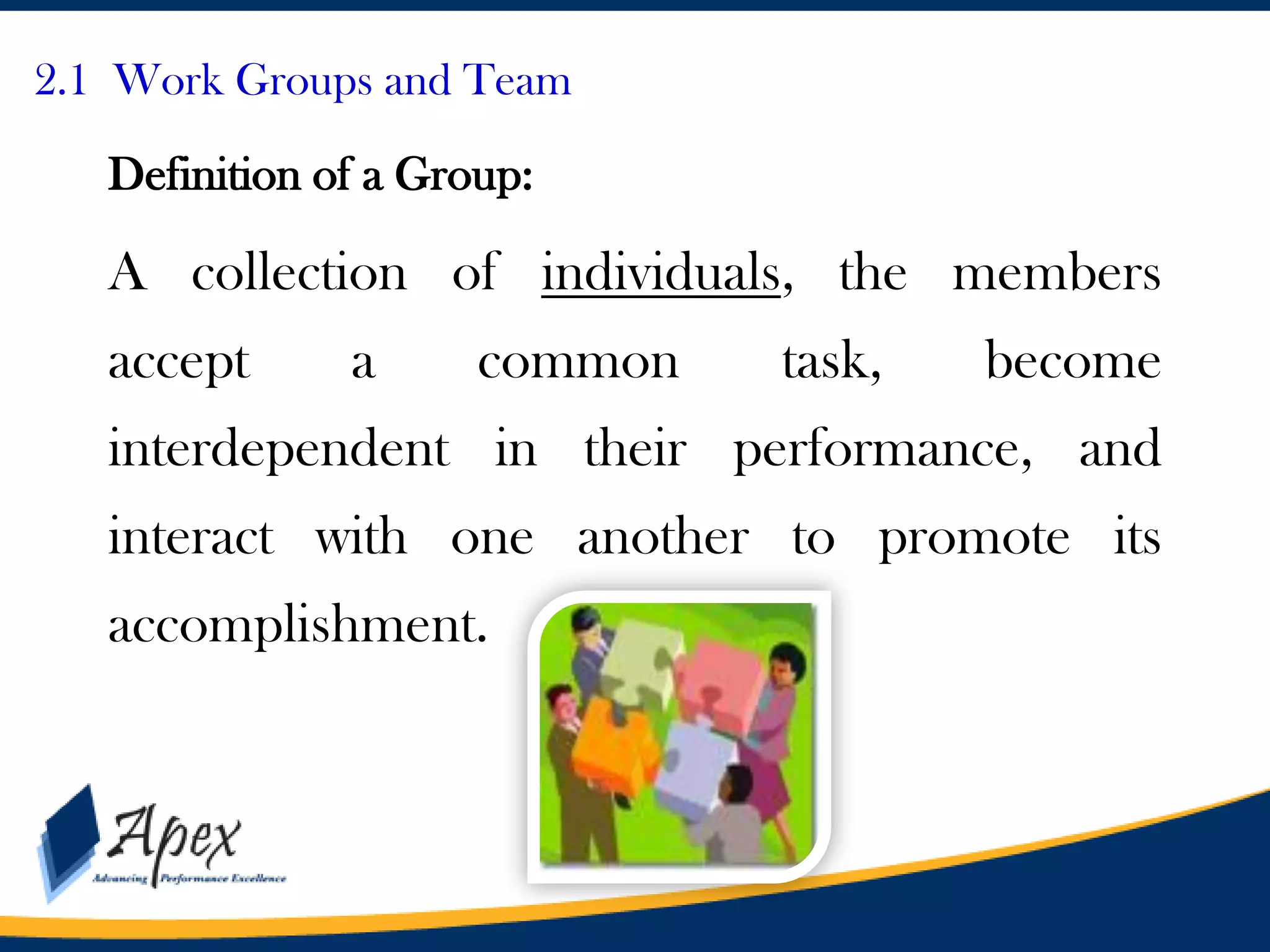
Definition of a Group:

A collection of individuals, the members

accept

a

common

task,

become

interdependent in their performance, and

interact with one another to promote its
accomplishment.
Dynamics of Group Formation:


Propinquity Theory:
People associate with one another due to geographical
proximity.



Balance Theory:
People who have similar attitudes toward certain objects
and goals tend to form a group.



Exchange Theory:
The reward-cost outcomes of interactions serve as the basis
for group formation.
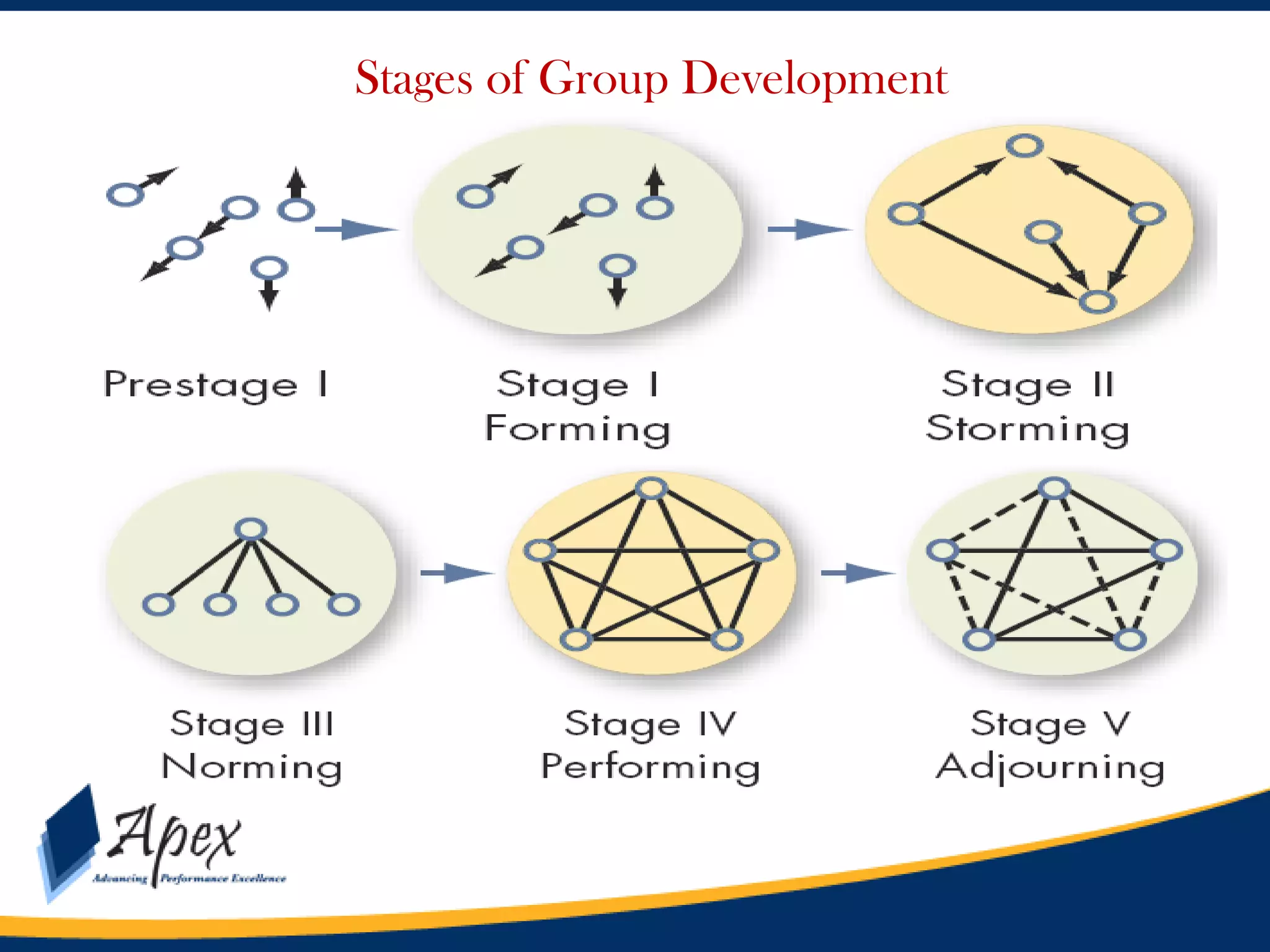
Stages of Group Development
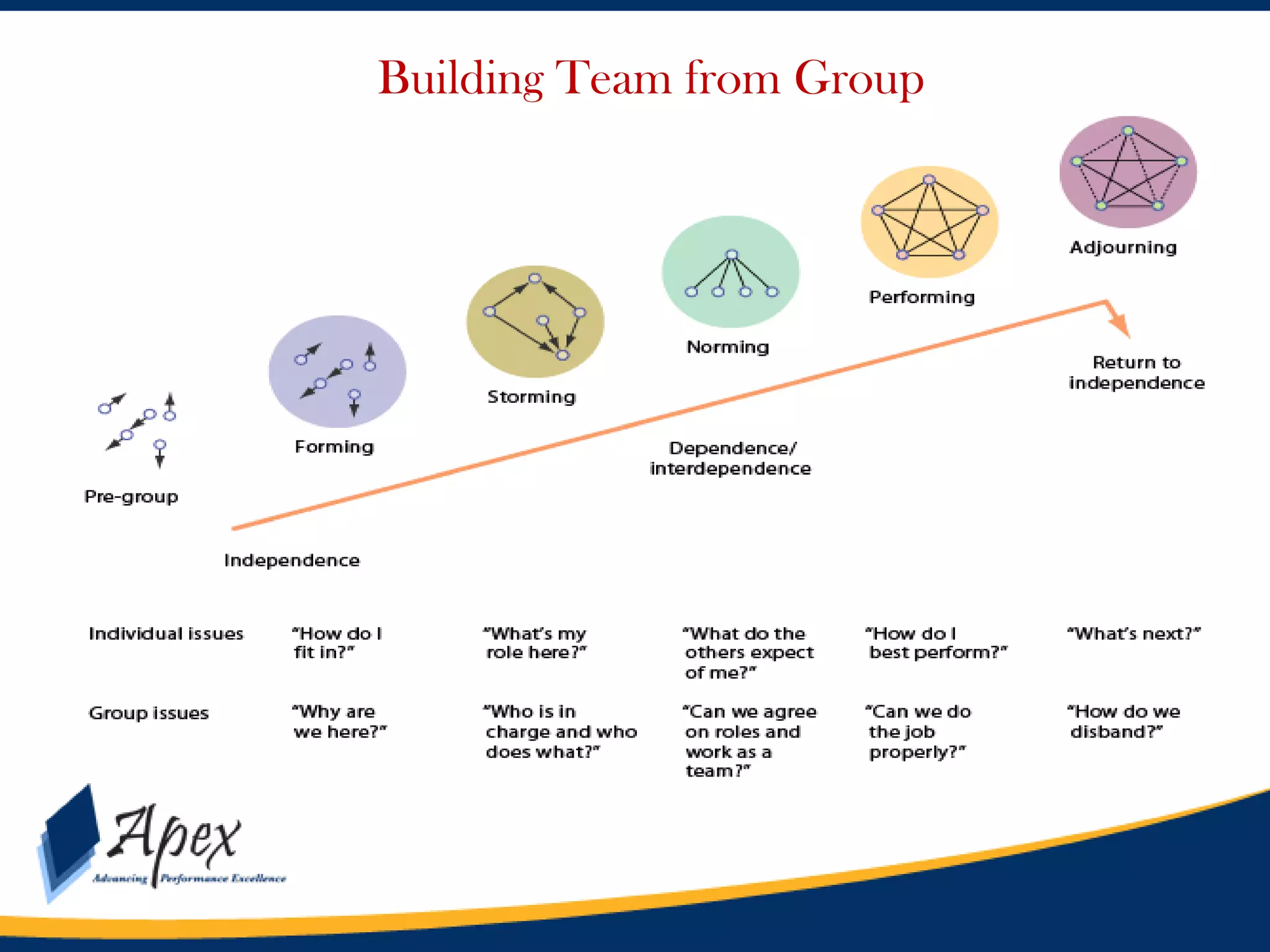
Building Team from Group
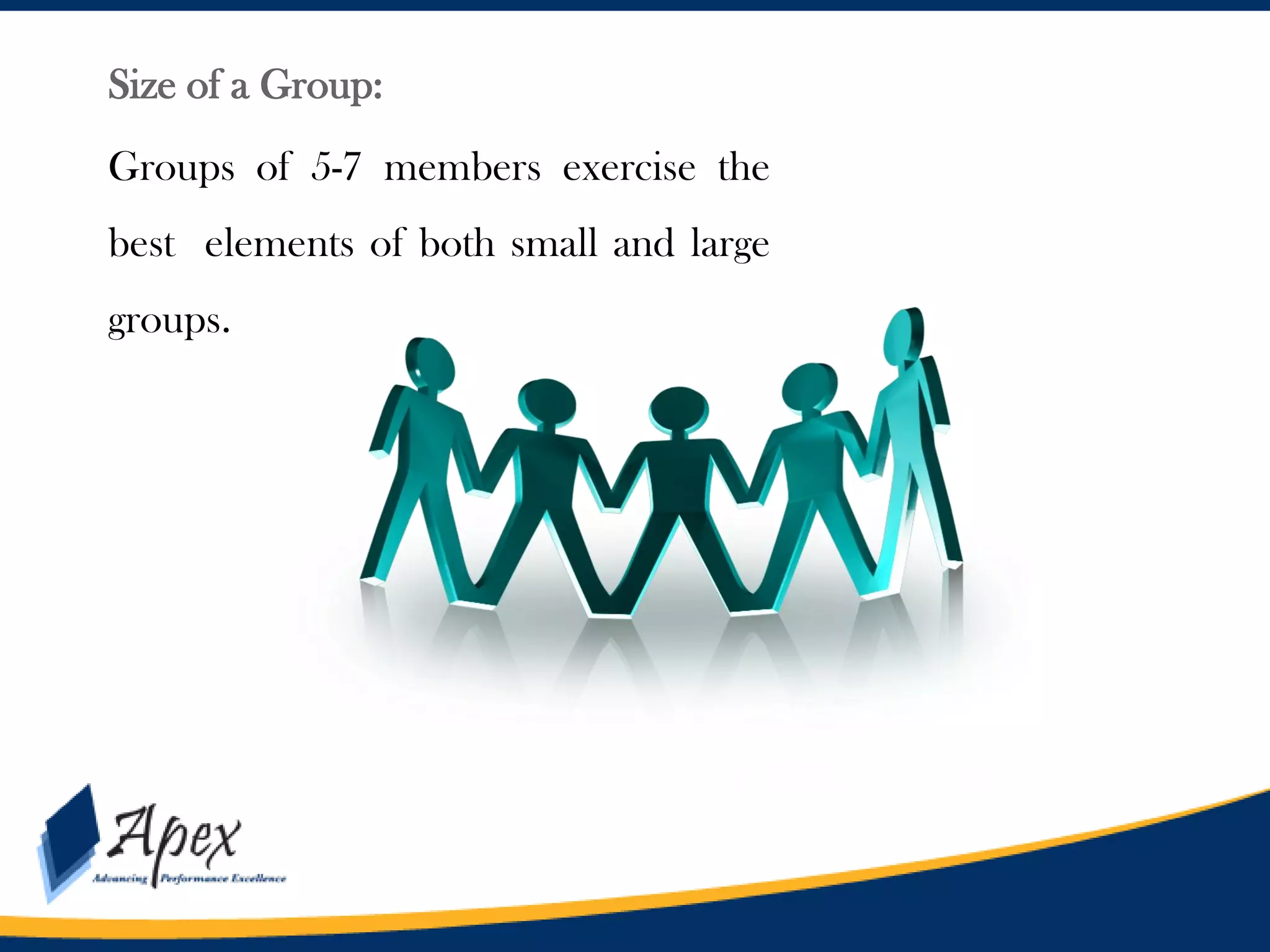
Size of a Group:
Groups of 5-7 members exercise the
best elements of both small and large
groups.
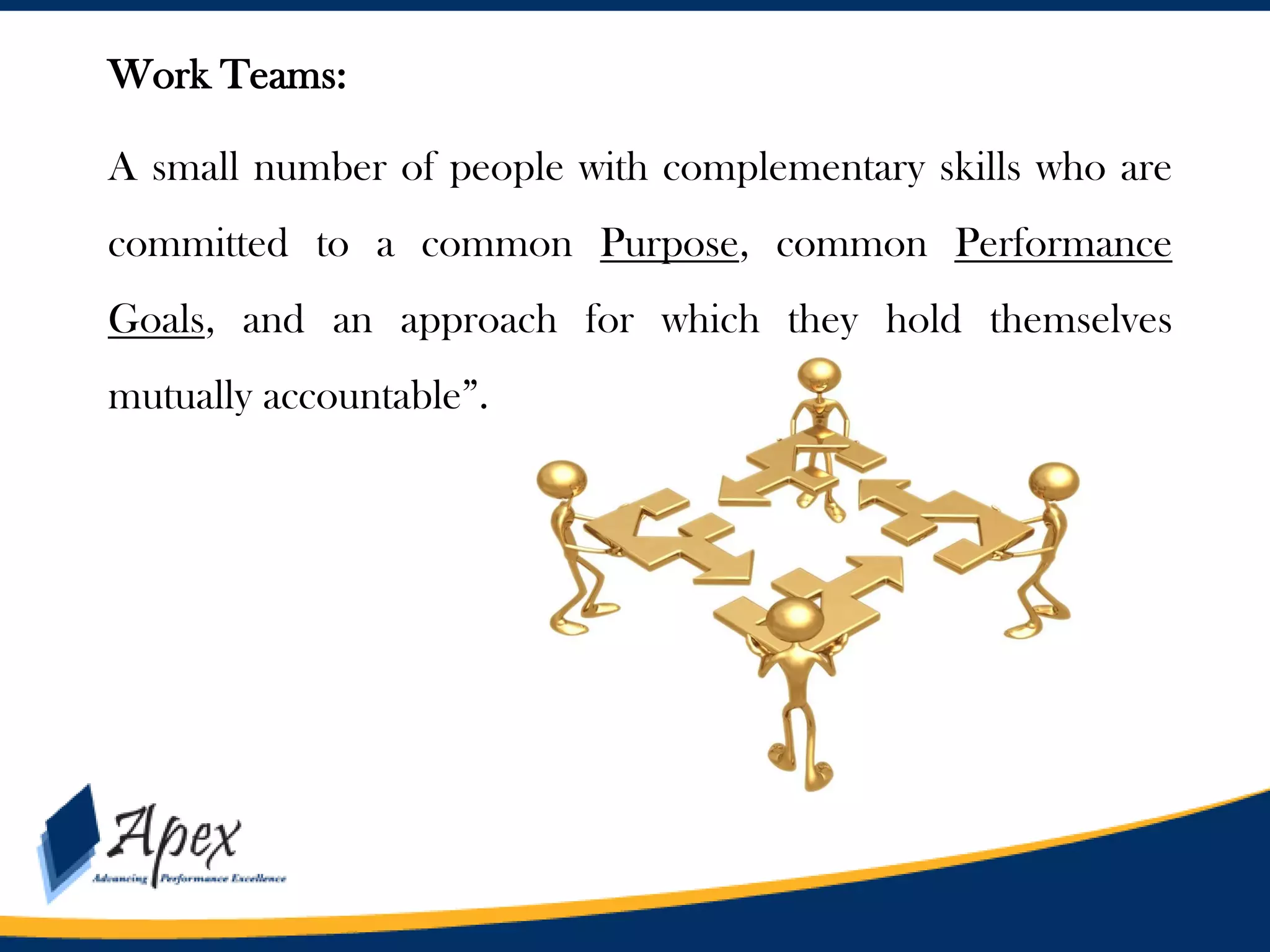
Work Teams:
A small number of people with complementary skills who are
committed to a common Purpose, common Performance
Goals, and an approach for which they hold themselves
mutually accountable”.
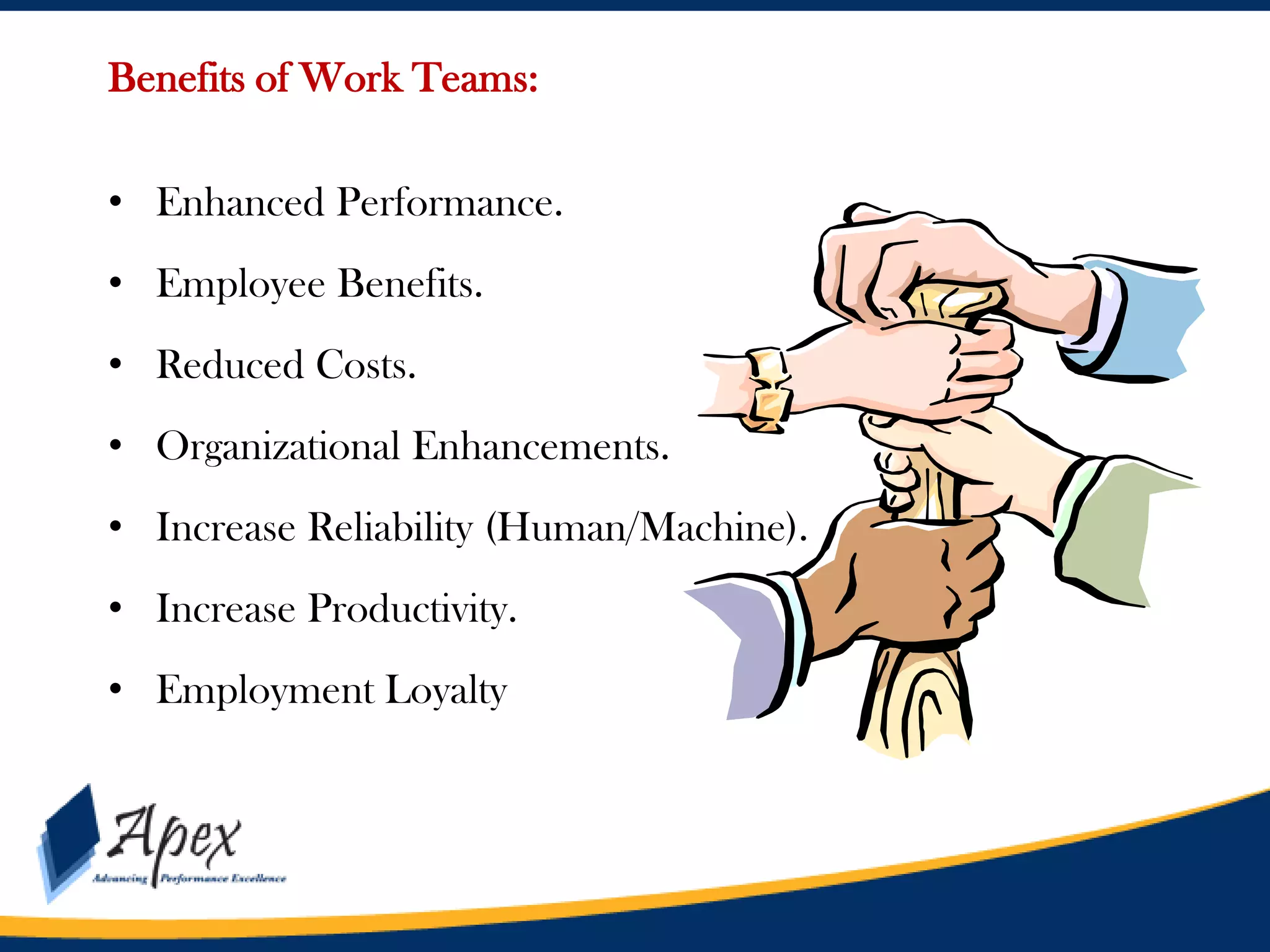
Benefits of Work Teams:
• Enhanced Performance.
• Employee Benefits.

• Reduced Costs.
• Organizational Enhancements.
• Increase Reliability (Human/Machine).
• Increase Productivity.
• Employment Loyalty
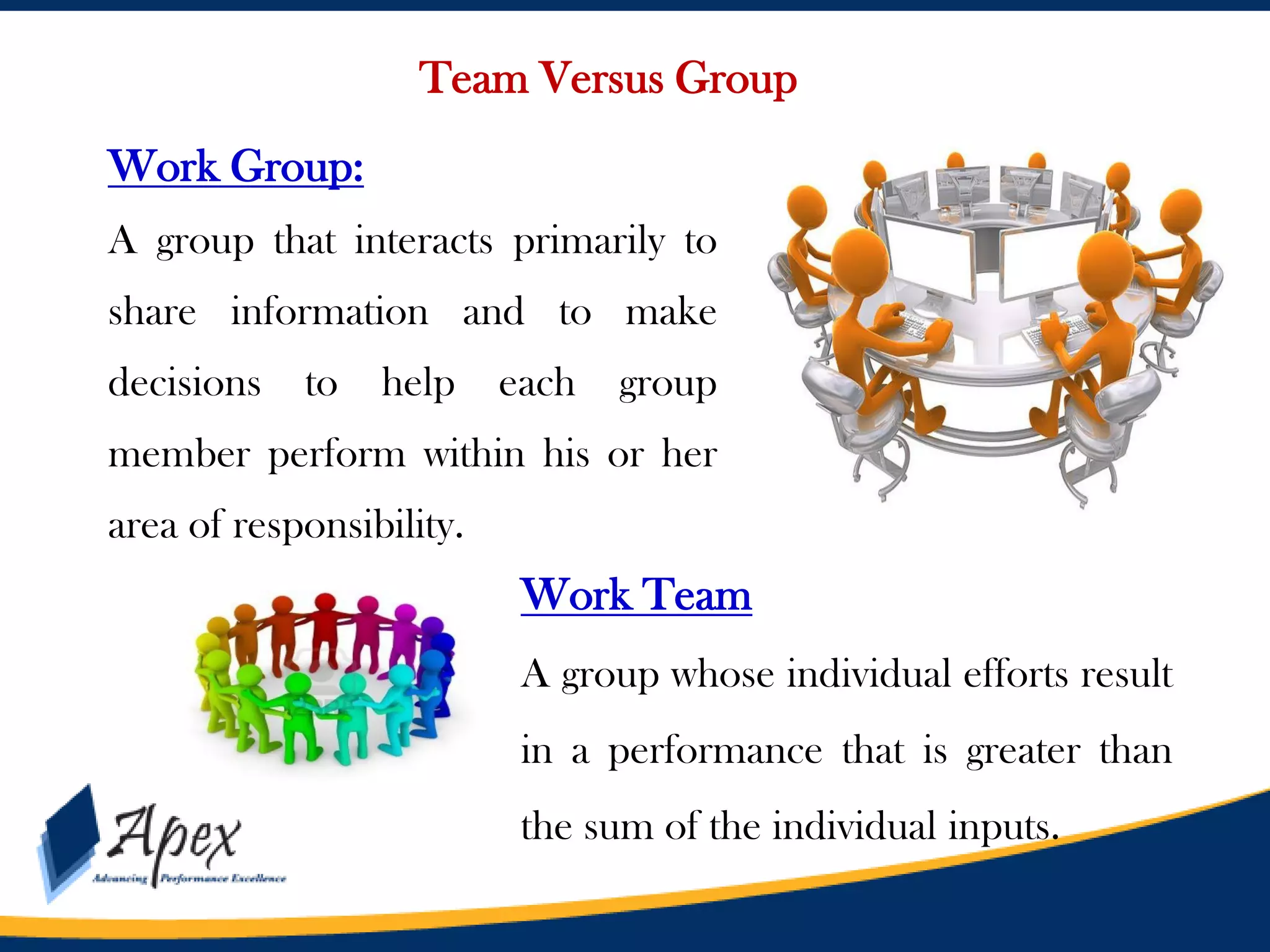
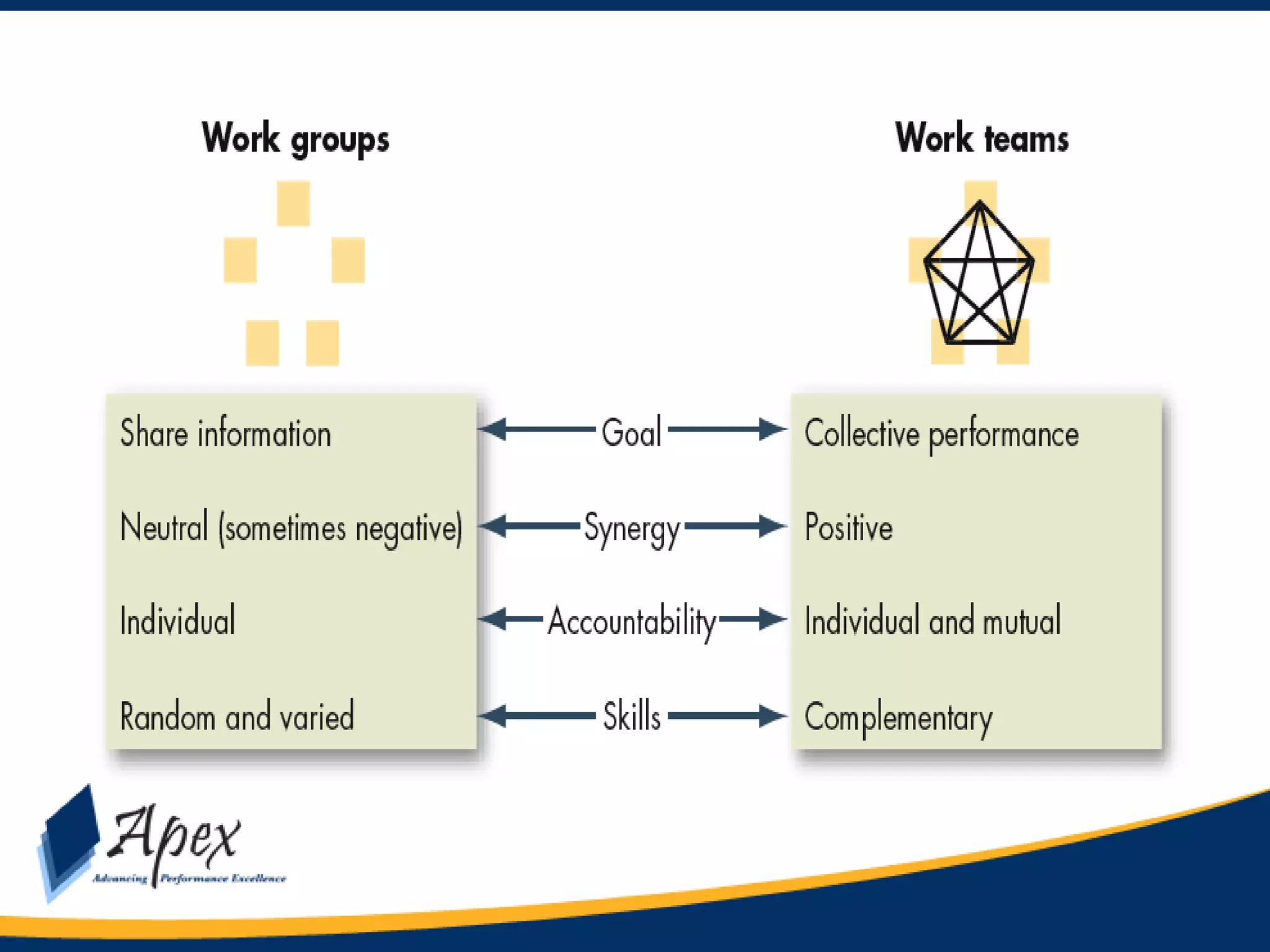
Team Versus Group
Work Group:
A group that interacts primarily to
share information and to make
decisions

to

help

each

group

member perform within his or her
area of responsibility.

Work Team
A group whose individual efforts result
in a performance that is greater than
the sum of the individual inputs.
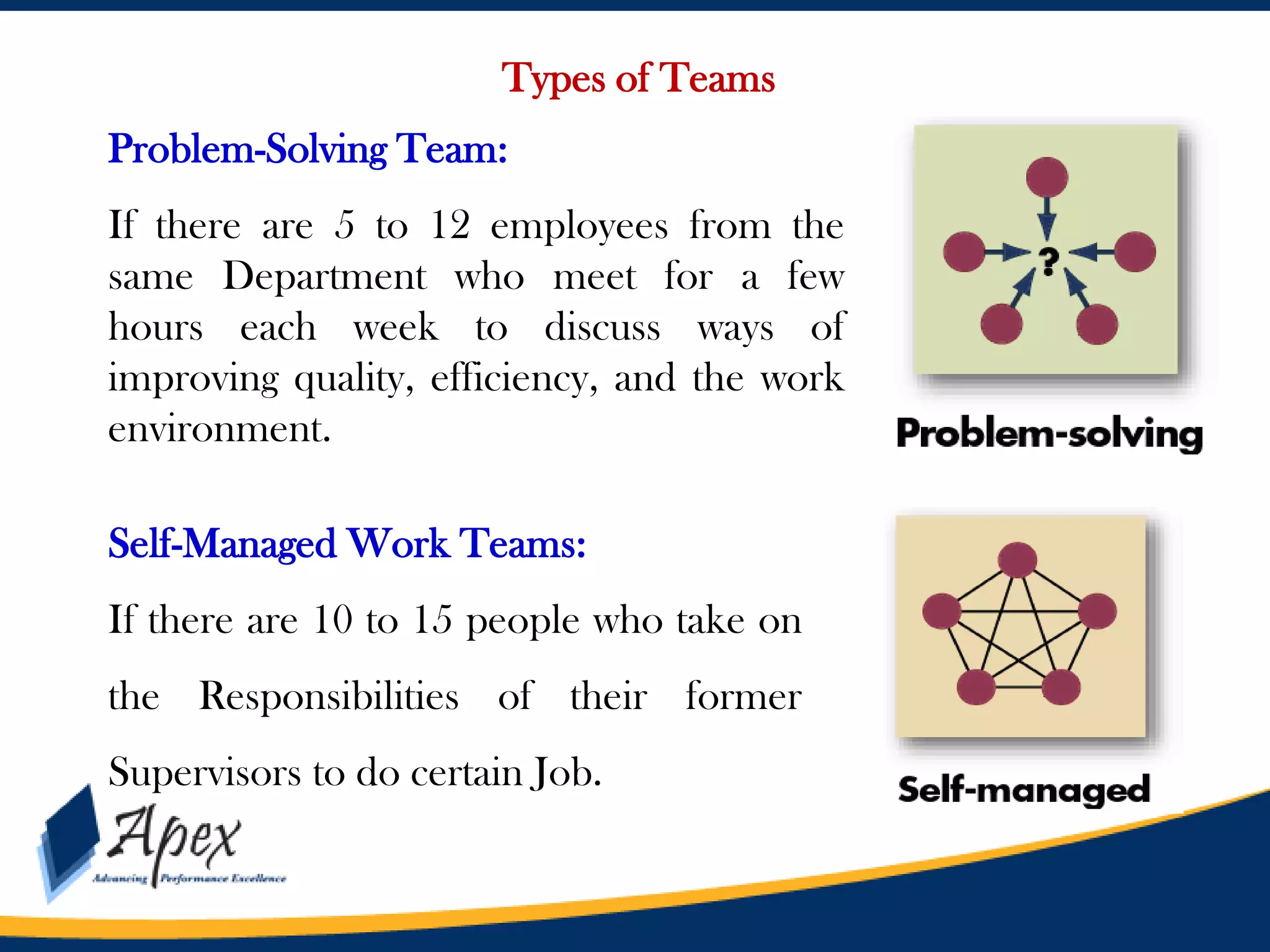
Types of Teams
Problem-Solving Team:
If there are 5 to 12 employees from the
same Department who meet for a few
hours each week to discuss ways of
improving quality, efficiency, and the work
environment.
Self-Managed Work Teams:

If there are 10 to 15 people who take on
the Responsibilities of their former
Supervisors to do certain Job.
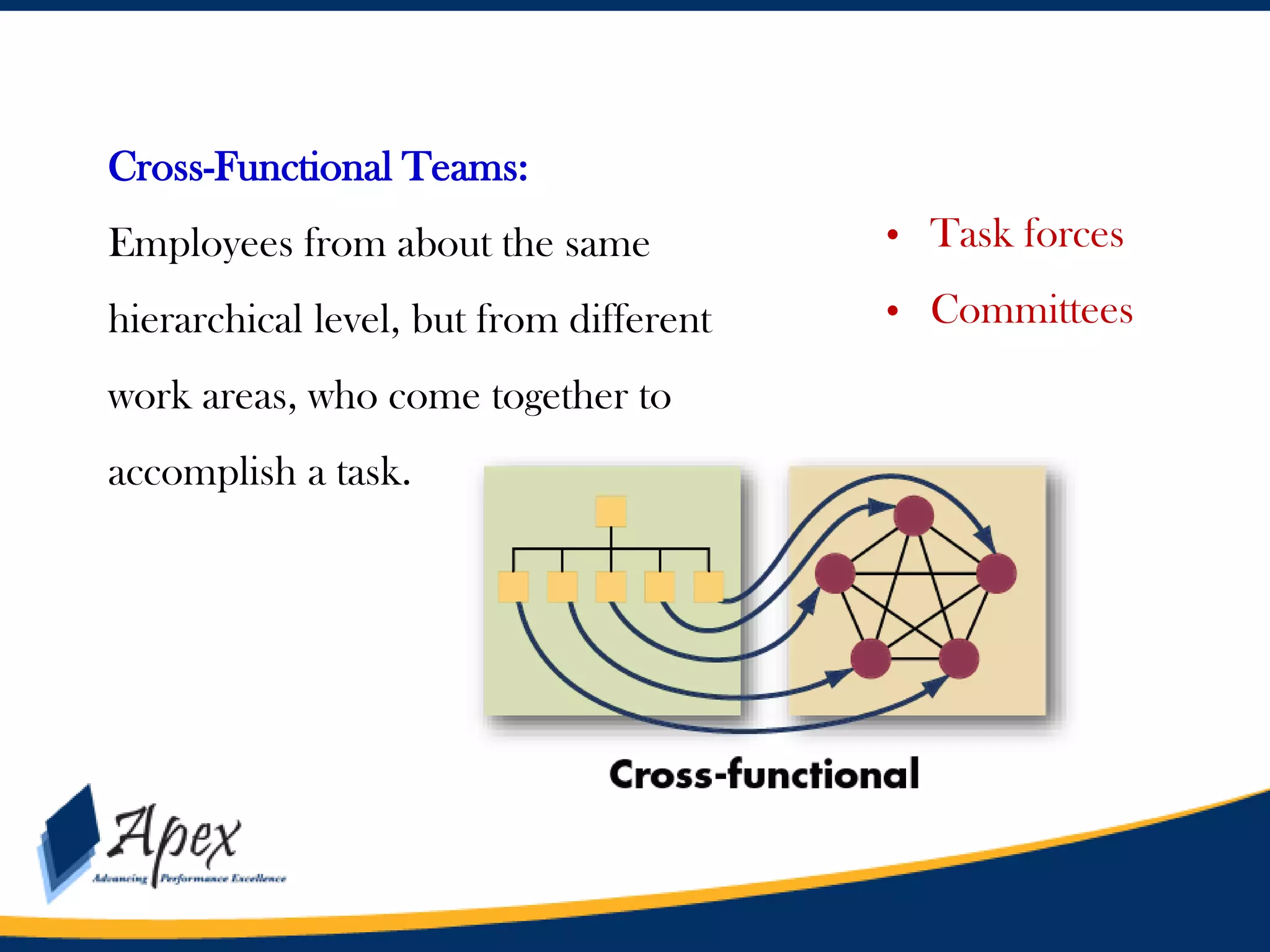
Cross-Functional Teams:
Employees from about the same

• Task forces

hierarchical level, but from different

• Committees

work areas, who come together to
accomplish a task.
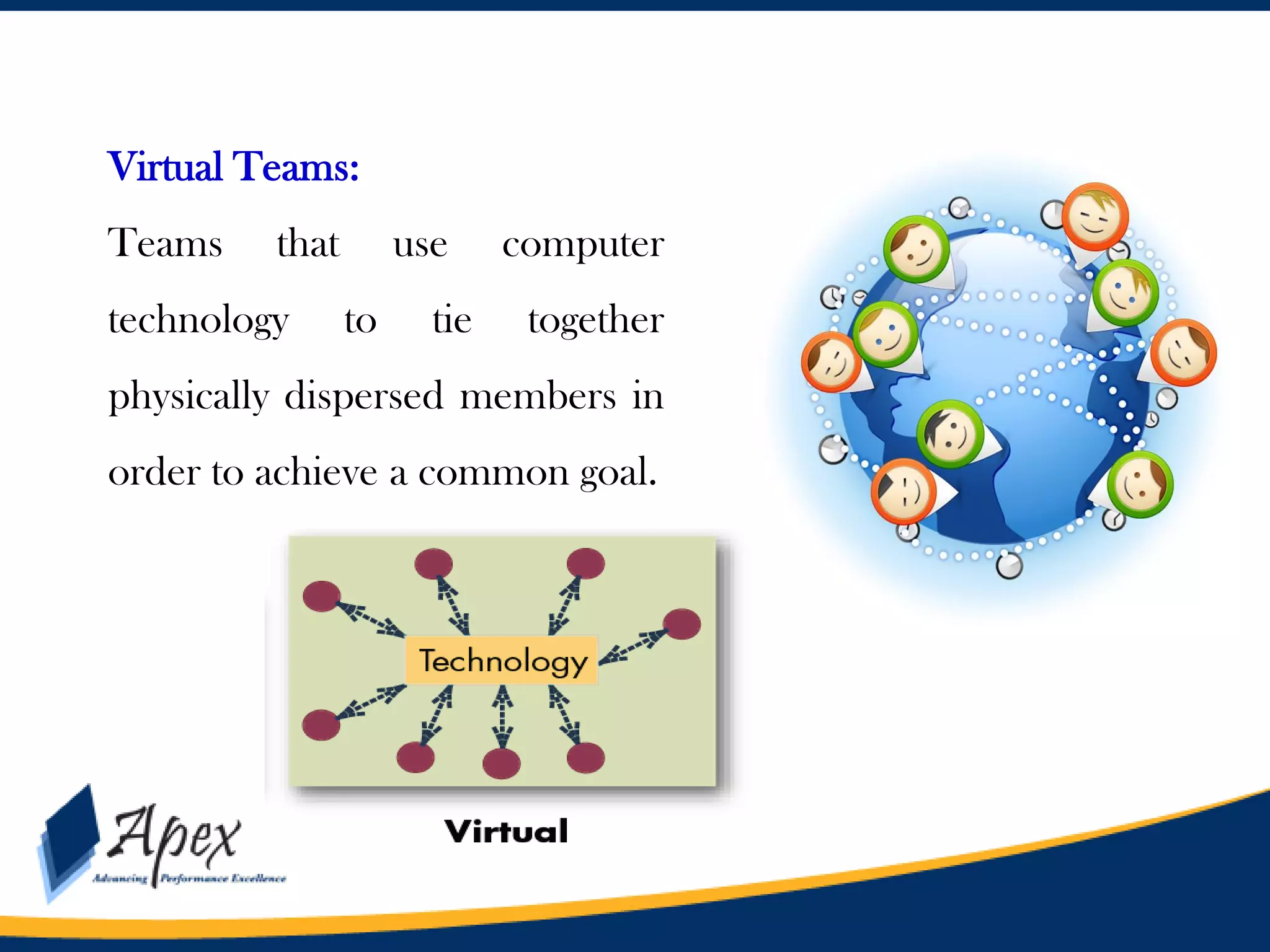
Virtual Teams:
Teams

that

technology

use
to

tie

computer
together

physically dispersed members in
order to achieve a common goal.
Shaping Individuals Into Team Players


Selection:
Good interpersonal skills



Training:
Can be trained by specialists



Rewards:

Financial or non Financial Rewards
2.2 Re-Active and Pro-Active
Re-Active People:
They focus on the weakness of other People, and they do
action once the problem happen. They can’t think about future

but they are focusing one what in their hand only.
Reactive people, on the other hand, are often affected by their

physical environment. They find external sources to blame for
their behavior. If the weather is good, they feel good. If it isn't,
it affects their attitude and performance, and they blame the

weather."
Pro-Active People:

They thing about what they can do with their resources, They
have Vision and they try to achieve it, Also they focus on the
things for future.
The proactive people focus their energies and attention on the

things which they can change for the better as per their vision.
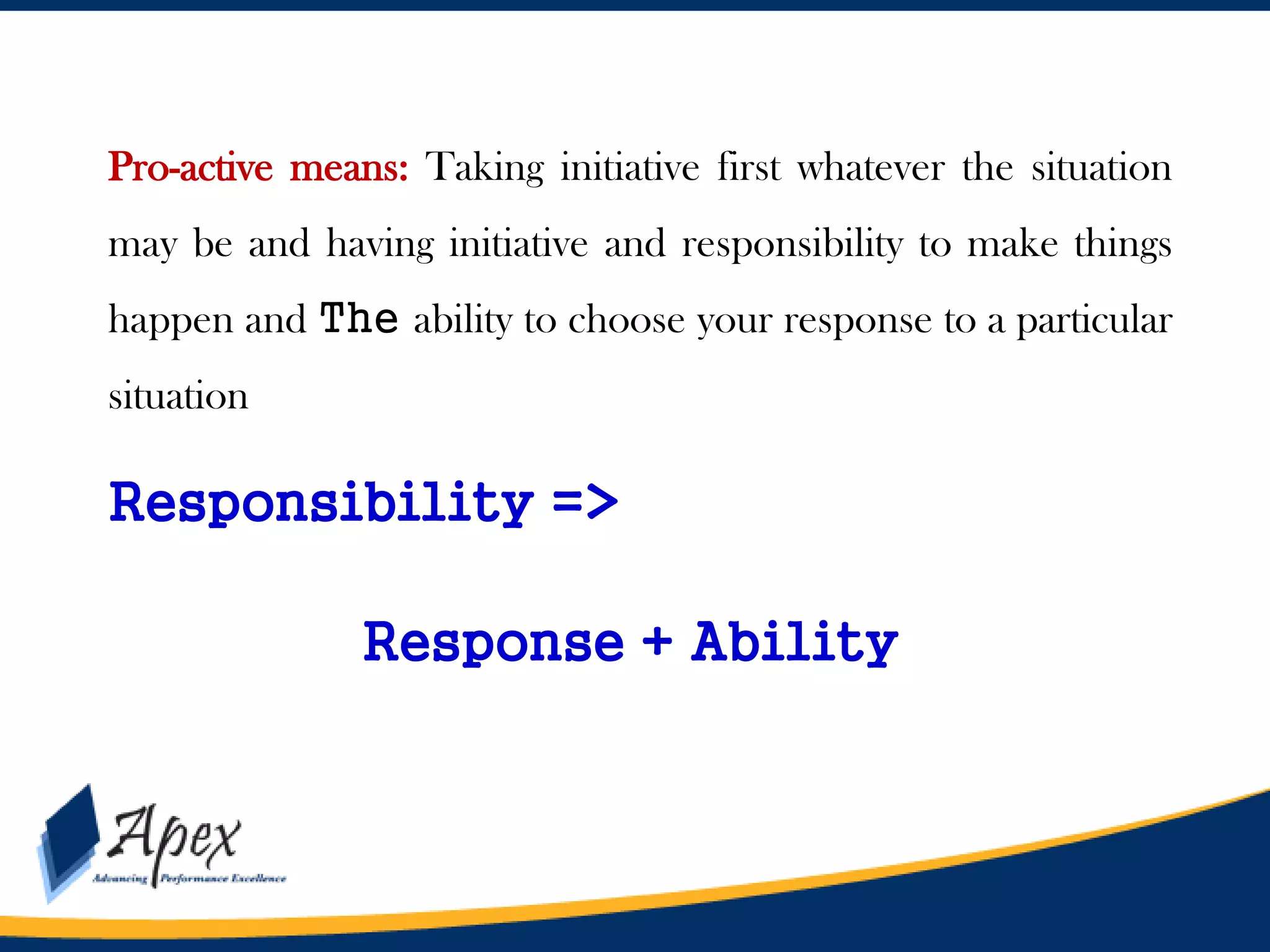
Pro-active means: Taking initiative first whatever the situation
may be and having initiative and responsibility to make things
happen and The ability to choose your response to a particular
situation

Responsibility =>
Response + Ability
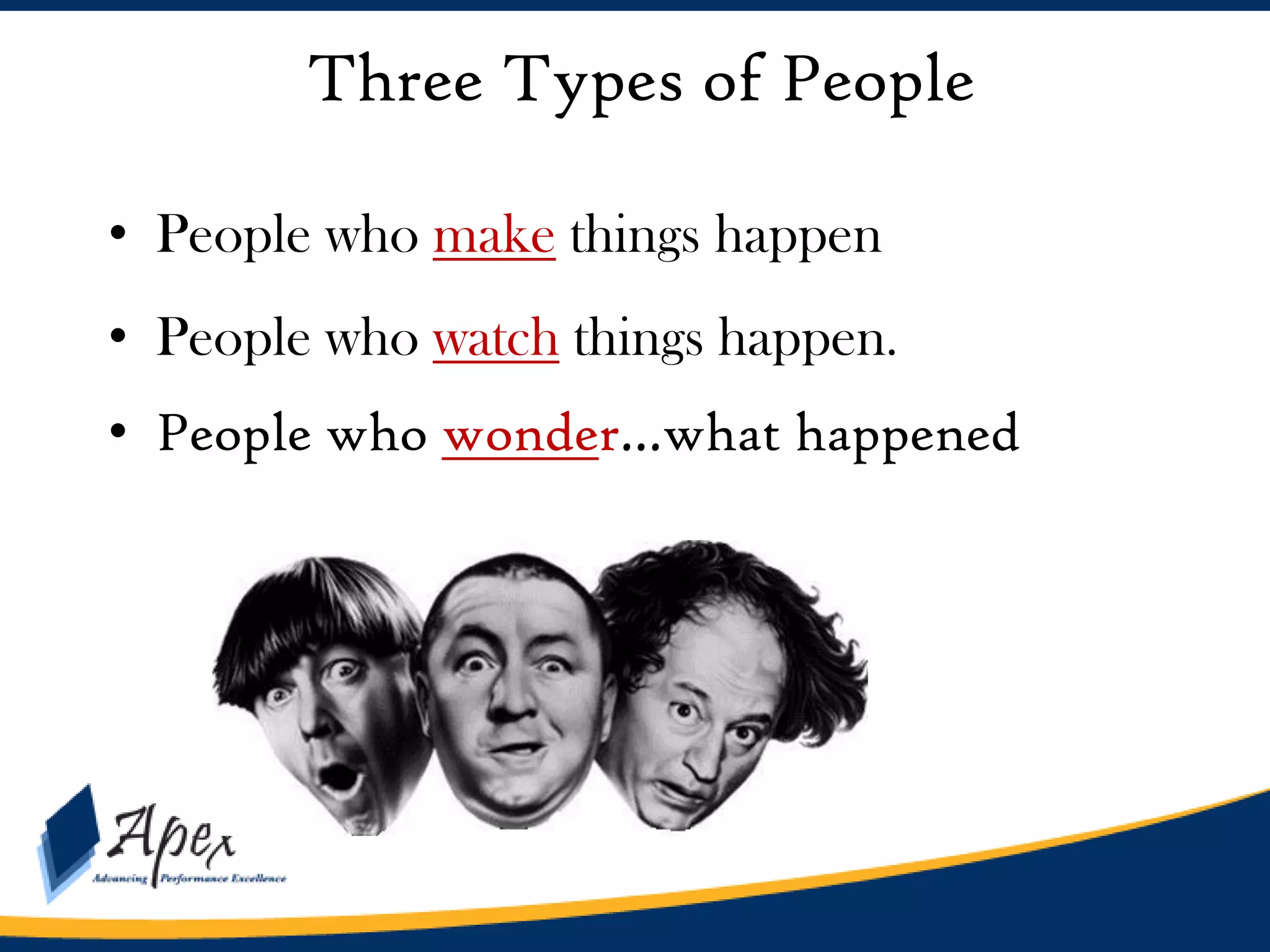
Three Types of People
• People who make things happen

• People who watch things happen.
• People who wonder…what happened
2.3 Building Trust and Believability
Importance of Trust and Believability:

“Under conditions of High Trust with right believes, problem
solving tends to be Creative and Productive. Under conditions
of Low Trust, problem solving tends to be degenerative and
ineffective.”

In contrast, in High Trust Groups there is less socially
generated uncertainty and problems are solved more
effectively.” in Low Trust Groups, interpersonal relationships
interfere with and distort perceptions of the problem.
Where Do We Trust?
Management

 Social Trust: It happen between people in the life activities.
 Trust in Organizations : It happen between organization and
those they serve (Employees)

 Intra - Organizational Trust: it happen within Organization’s
Departments.

 Inter- Organizational Trust : It happen between different
Organization.
Importance of Trust within Organizations
“Although an organization obviously cannot succeed without
high levels of trust between members, most aggressive
companies do little to actively build trust.

The typical corporation spends huge sums of money training
its managers in interpersonal skills, but pays lip service to the
critical issue of trust.”
Management
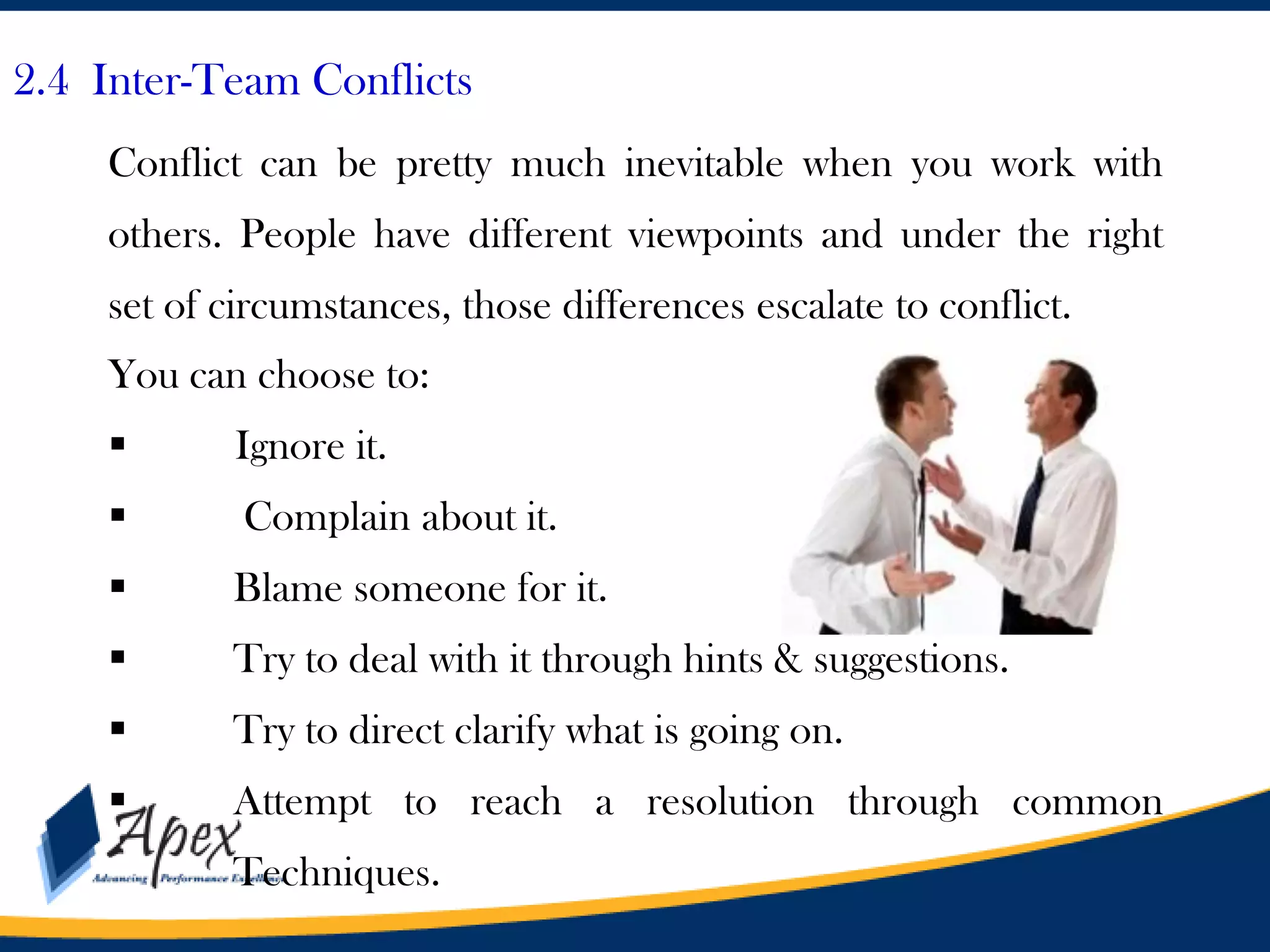
2.4 Inter-Team Conflicts
Conflict can be pretty much inevitable when you work with
others. People have different viewpoints and under the right
set of circumstances, those differences escalate to conflict.
You can choose to:


Ignore it.



Complain about it.



Blame someone for it.



Try to deal with it through hints & suggestions.



Try to direct clarify what is going on.



Attempt to reach a resolution through common
Techniques.
Management

Three-stage process below is a form of mediation process,
which helps Team Members to do:
Step 01: Prepare for Resolution:
 Acknowledge the Conflict
 Discuss the Impact
 Agree to a cooperate process
 Agree to communicate (Active Listening)
Management

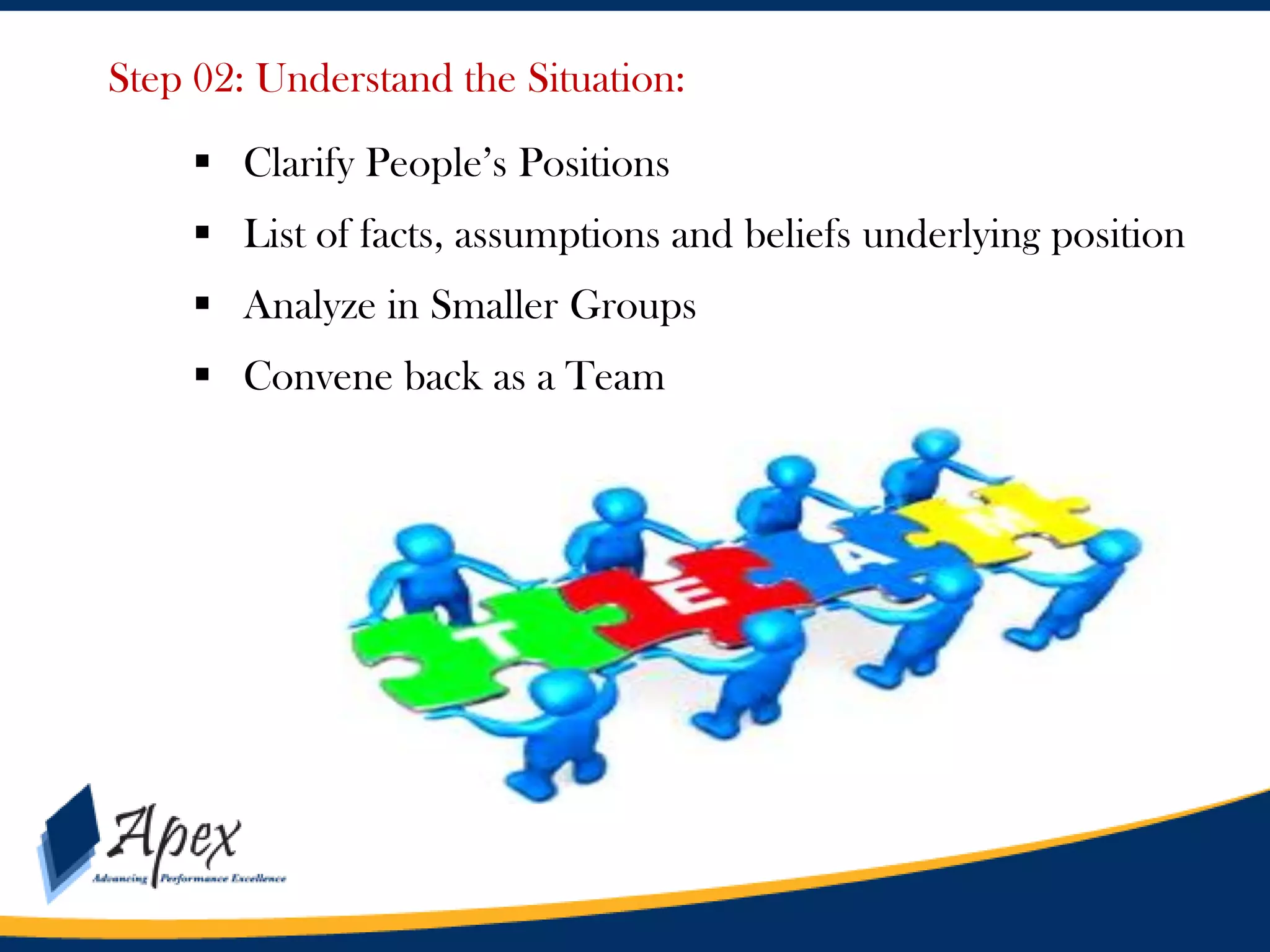
Step 02: Understand the Situation:
 Clarify People’s Positions
 List of facts, assumptions and beliefs underlying position
 Analyze in Smaller Groups
 Convene back as a Team
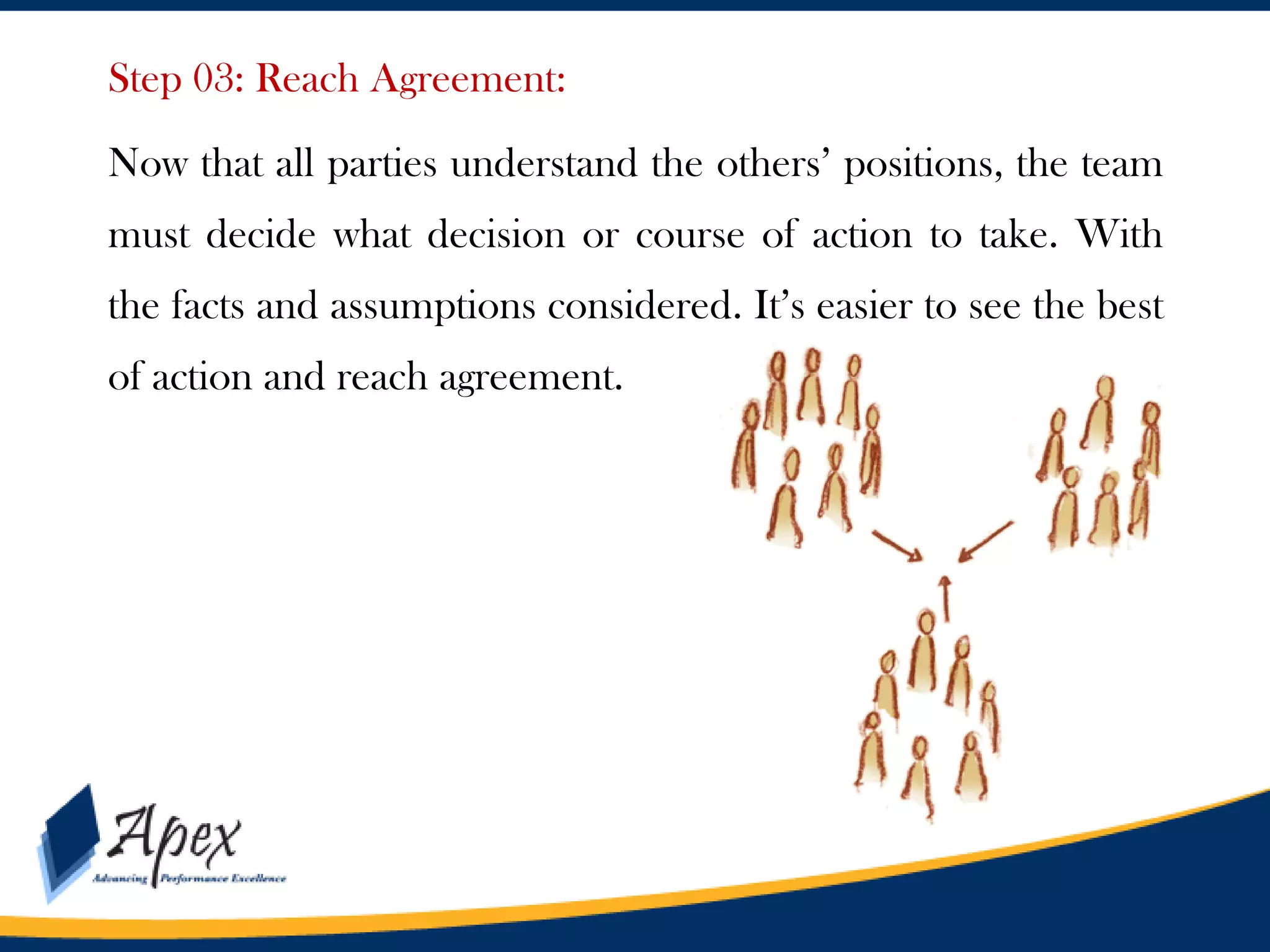
Step 03: Reach Agreement:

Management

Now that all parties understand the others’ positions, the team
must decide what decision or course of action to take. With
the facts and assumptions considered. It’s easier to see the best
of action and reach agreement.
2.5 Model of Effective Team
There are FIVE Functions of an Effective Team:
1. Trust ONE another.
2. Engage in In-filtered Conflict around Ideas.
3. Commit to Decisions & Plans of Action.

4. Hold ONE another Accountable/Catch Mistakes.
5. Focus on Achievement of Collective Results for all.
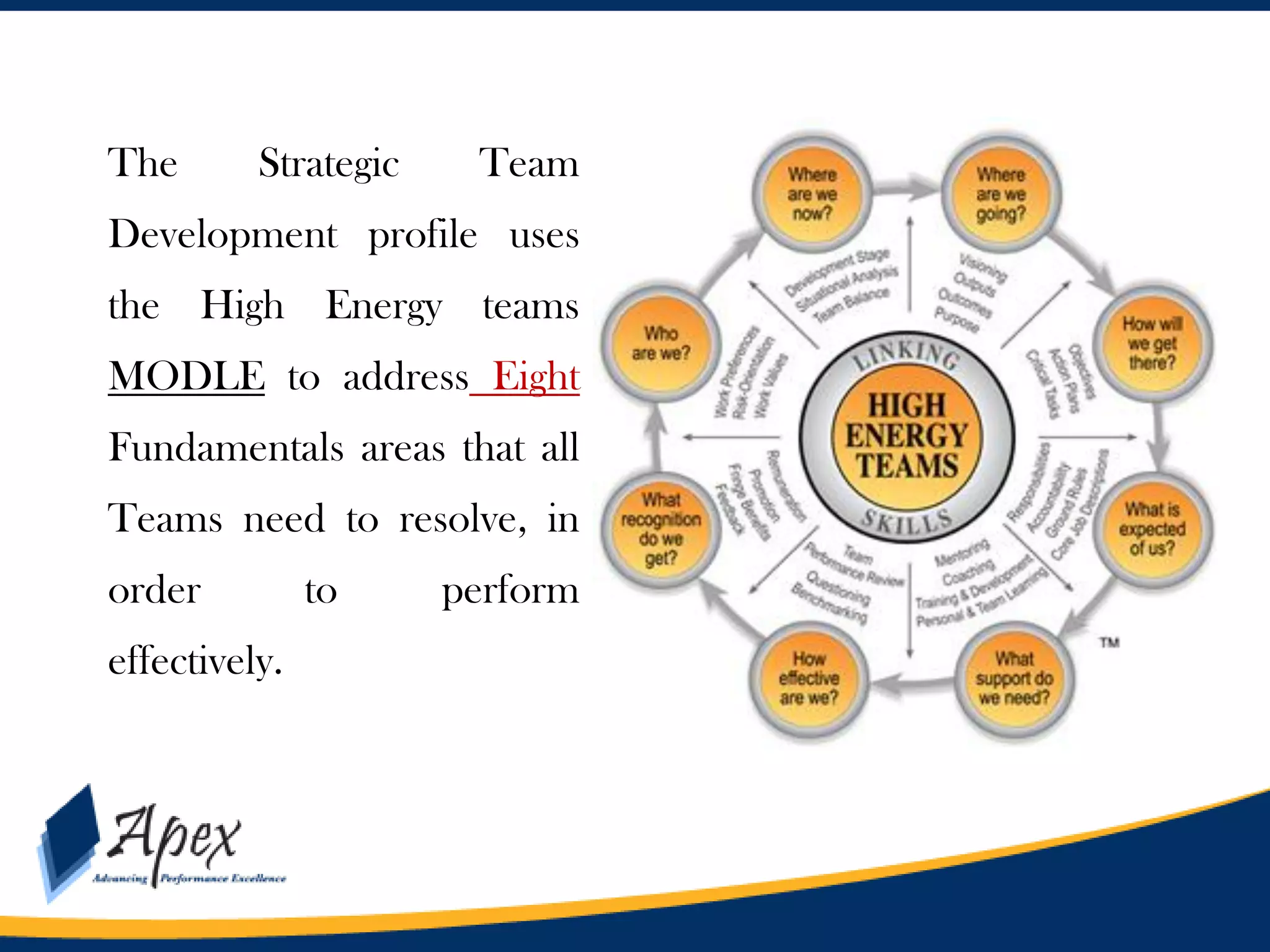
The

Strategic

Team

Development profile uses
the High Energy teams
MODLE to address Eight
Fundamentals areas that all
Teams need to resolve, in
order
effectively.

to

perform
Management

The Strategic Team Development Profile is a Team Needs
Analysis tool that will pinpoint the strategic issues that need
resolving in the group. Just some of the applications include:
 SWOT Analysis
 Conflict Resolution

 Role Clarification
 Identifying Skill Gaps / Needs
 Team Performance Reviews
 Establishing Rewards Programs

 Aligning Work Values
 Improving Team Processes, Quality and Productivity
High Effective Team Module:

Management

 Warm, Friendly Attitude
 Says Thank you and Smiles
 Customer Focused Oriented
 Prompt, and Reliable
 Self-Motivated and Learning
 Shares Knowledge & Values
 Good Listeners & Reporter

 Accountable and Accept Mistakes
 Has high Standards and Professionally
 Supportive and Cooperative
2.6 High Performance Leadership
Today’s Business Environment requires a New Breed of High
Performance Leaders who can identify the Right People for the
Right Job:
 Motivate and coach employees.
 Introduce and facilitate proactive organizational

change Strategies
 Use new communication skills
 Become

a

visible

champion

improvement programs and strategies.

for

process
Management

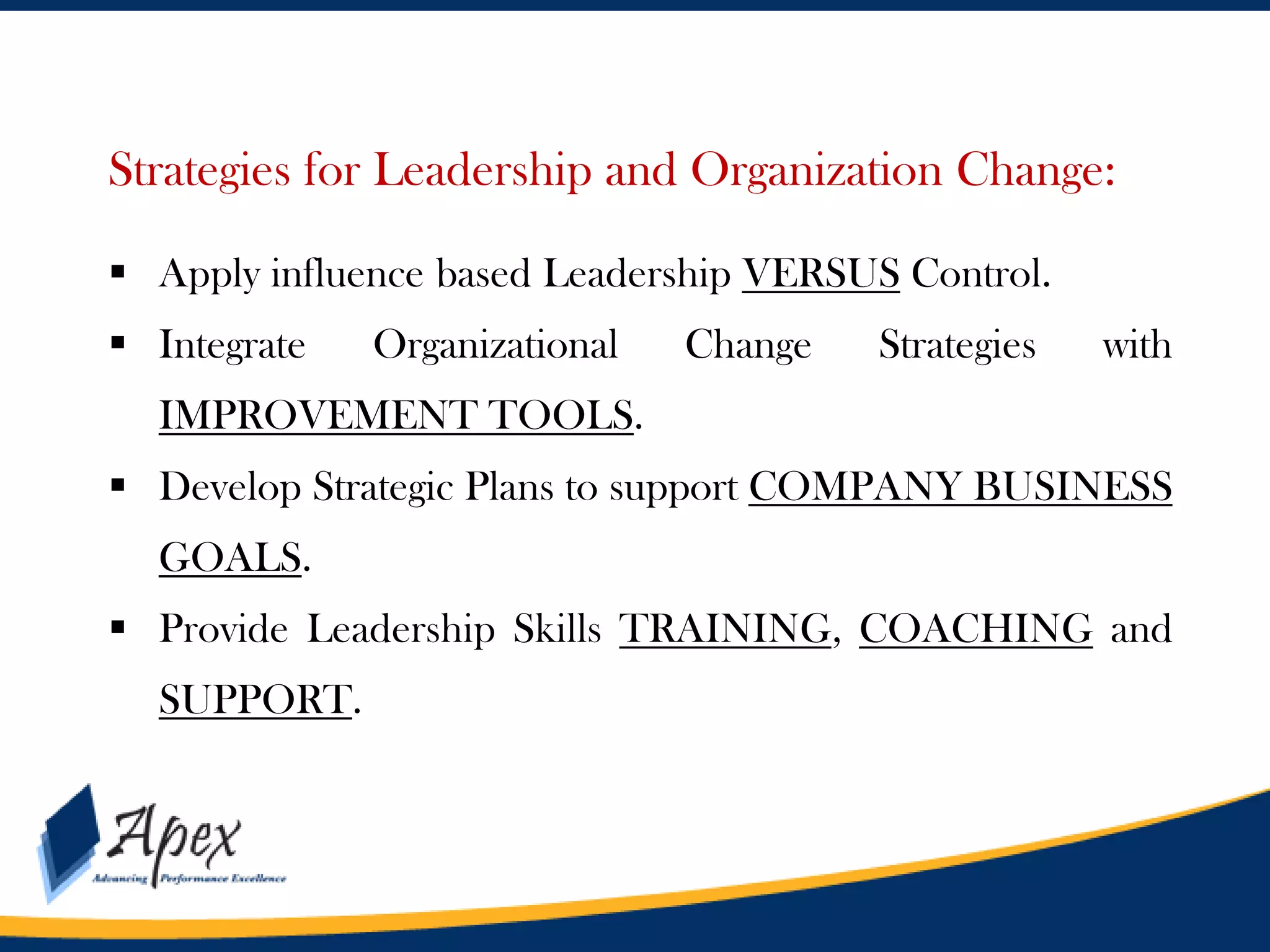
Strategies for Leadership and Organization Change:
 Apply influence based Leadership VERSUS Control.
 Integrate

Organizational

Change

Strategies

with

IMPROVEMENT TOOLS.

 Develop Strategic Plans to support COMPANY BUSINESS
GOALS.
 Provide Leadership Skills TRAINING, COACHING and
SUPPORT.
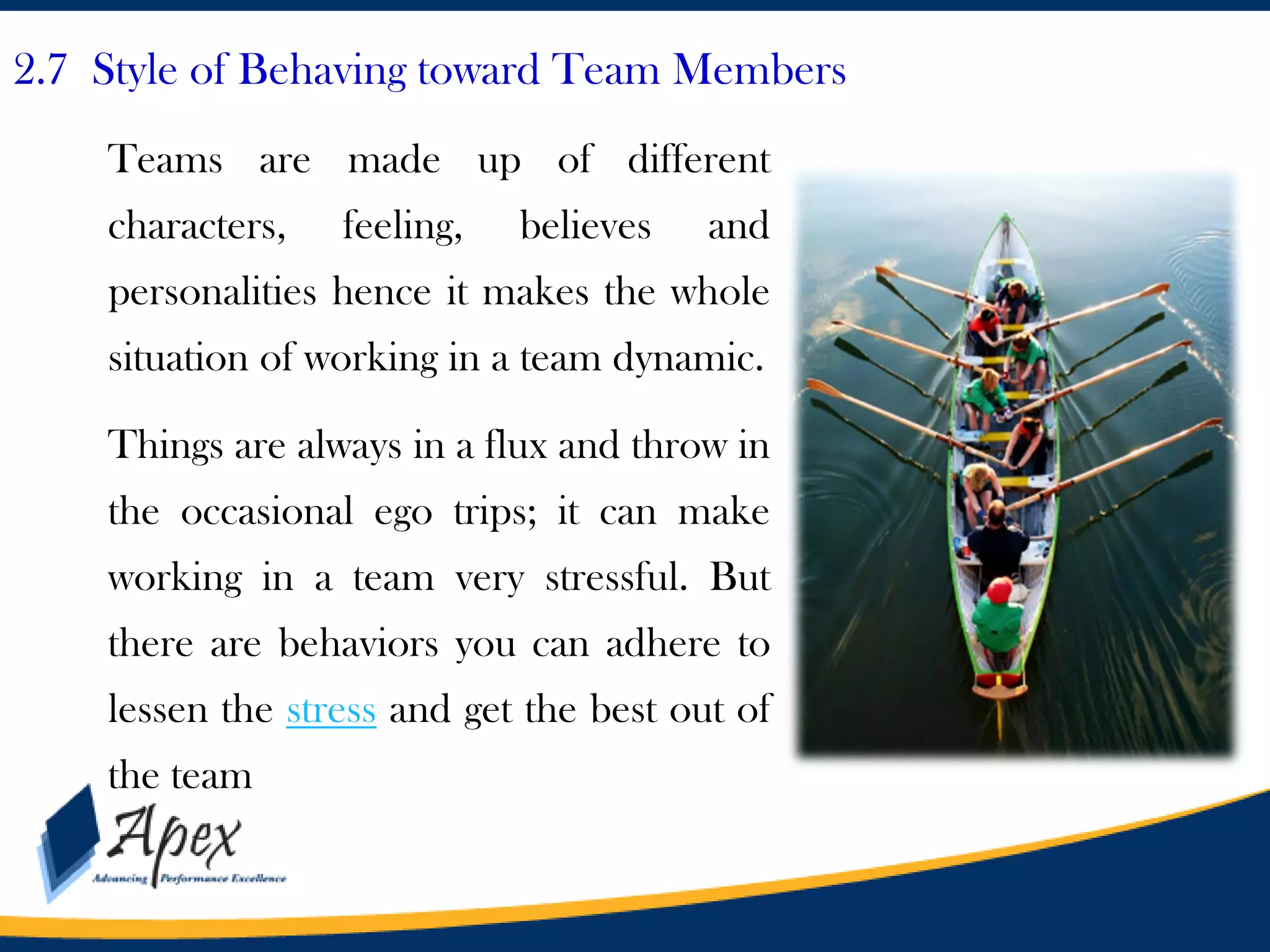
2.7 Style of Behaving toward Team Members
Teams are made up of different
characters,

feeling,

believes

and

personalities hence it makes the whole
situation of working in a team dynamic.
Things are always in a flux and throw in
the occasional ego trips; it can make
working in a team very stressful. But
there are behaviors you can adhere to
lessen the stress and get the best out of

the team
Management
Management
Management
Management
Management

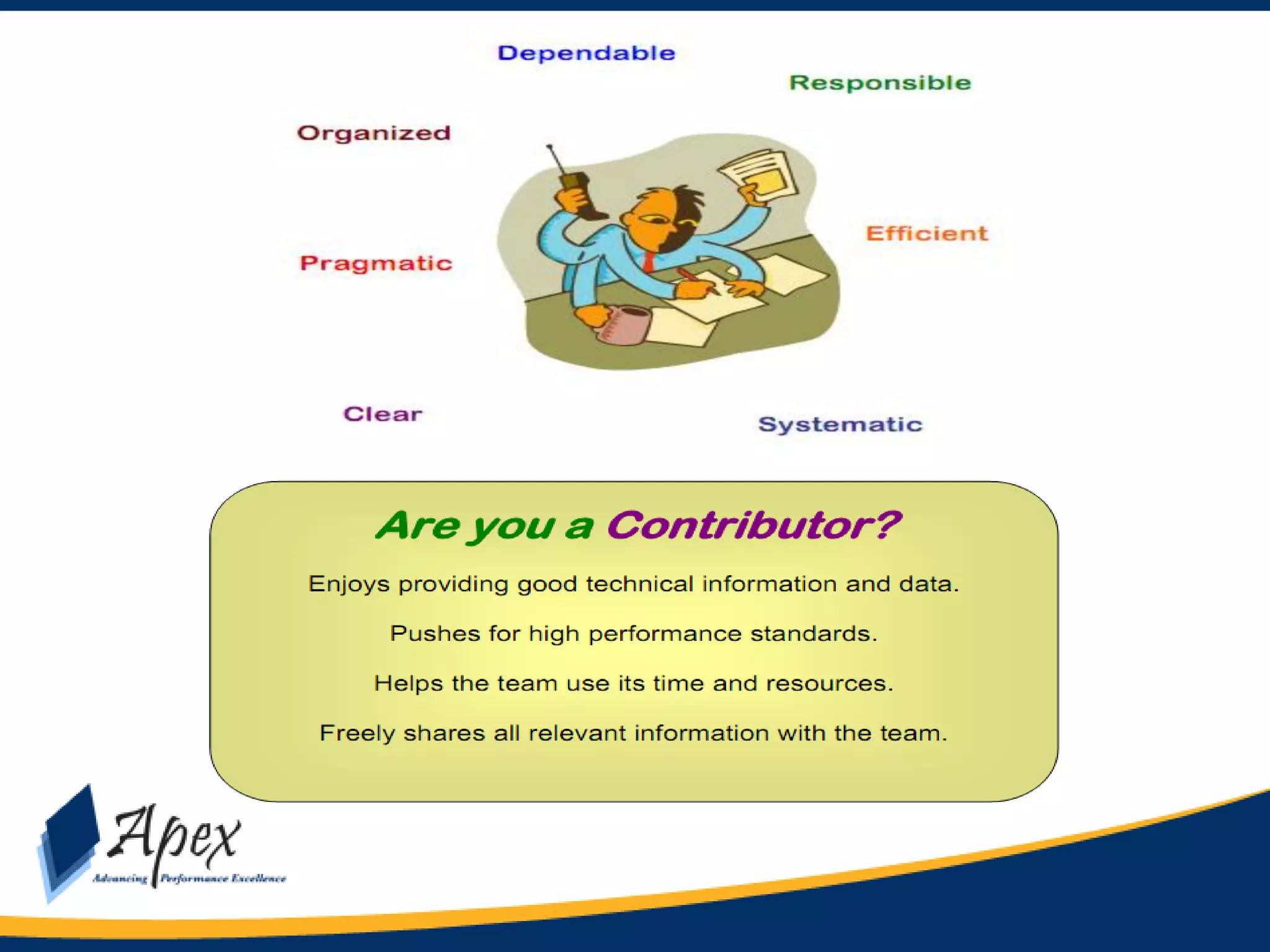
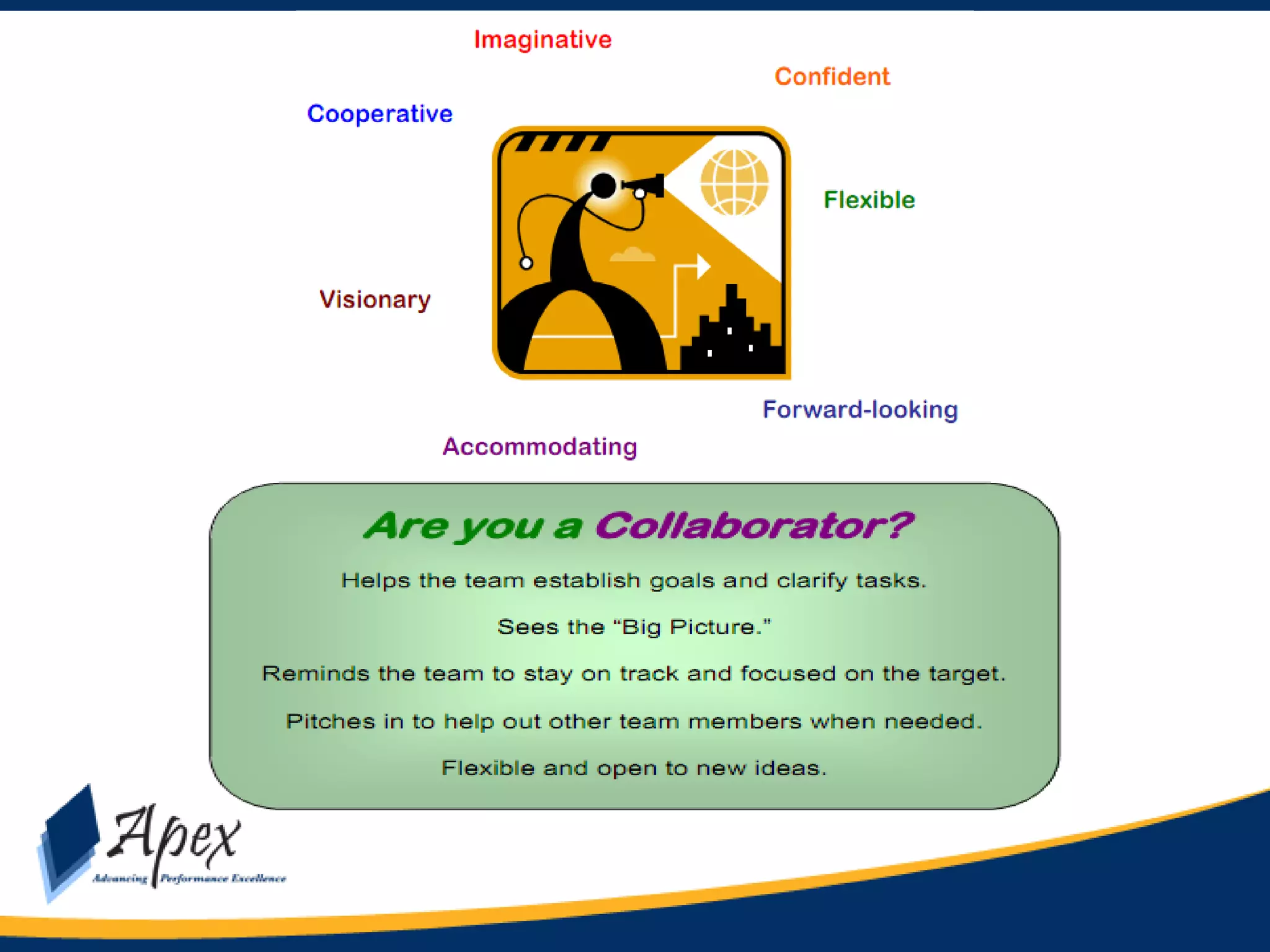
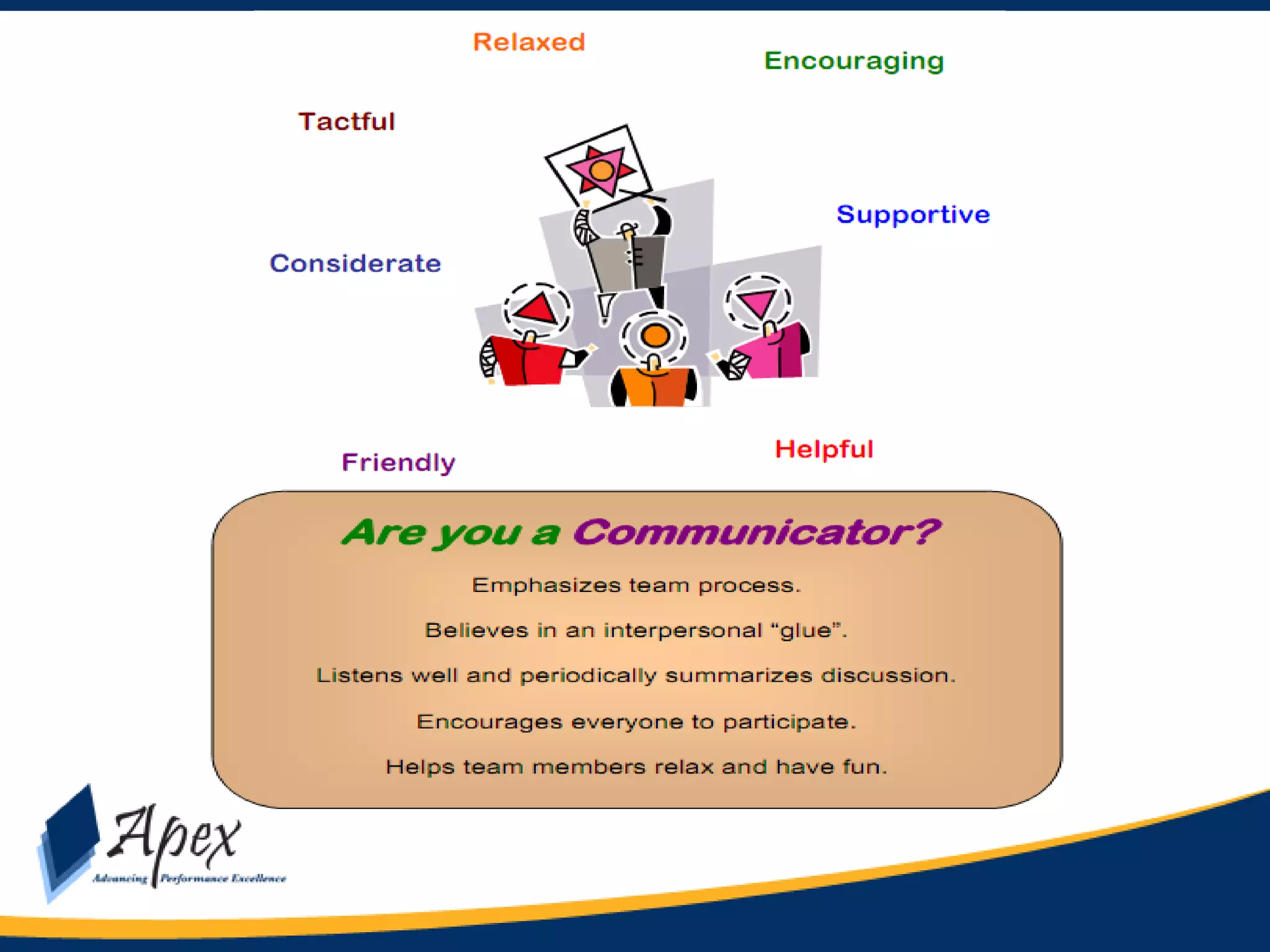
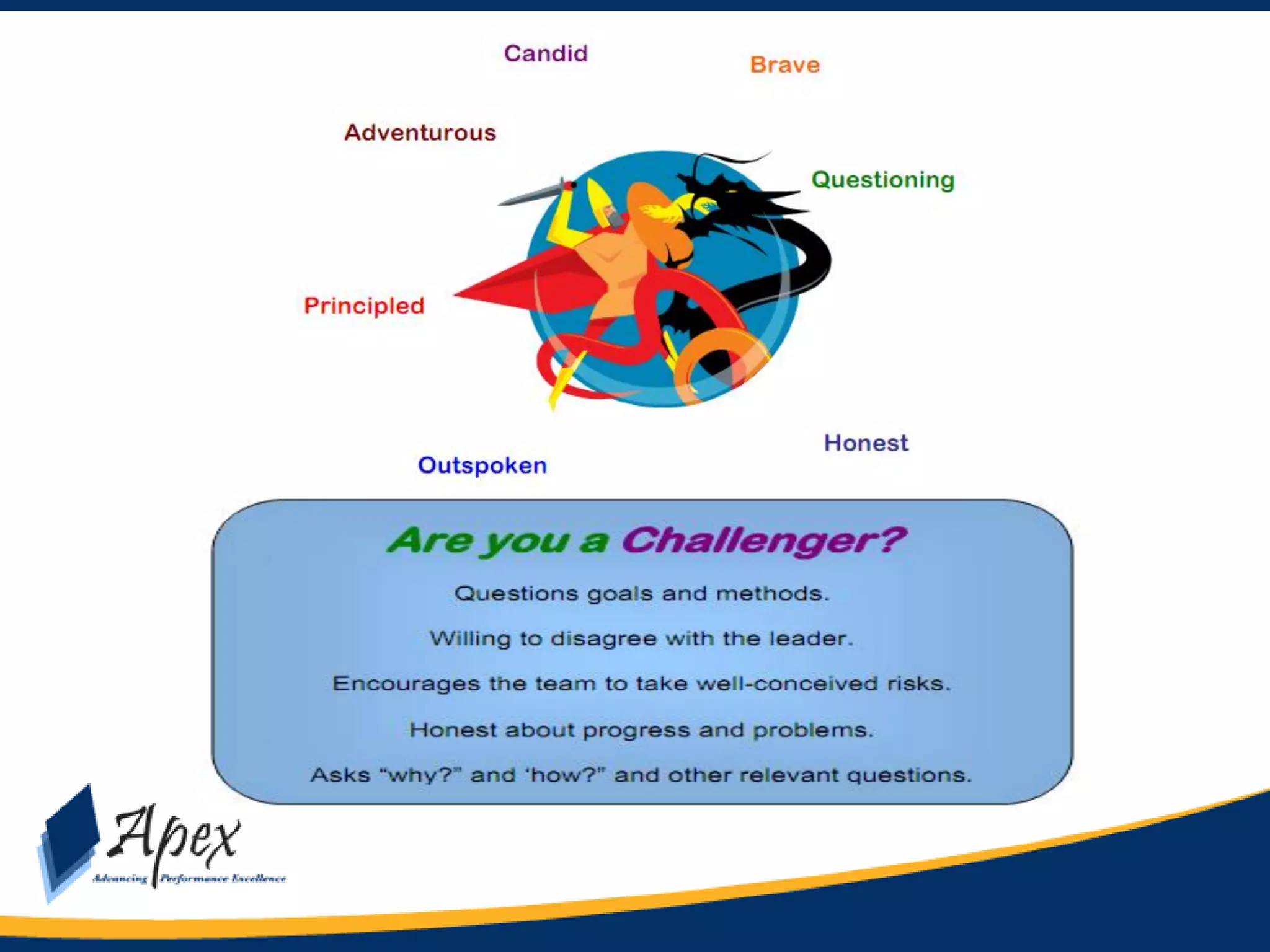
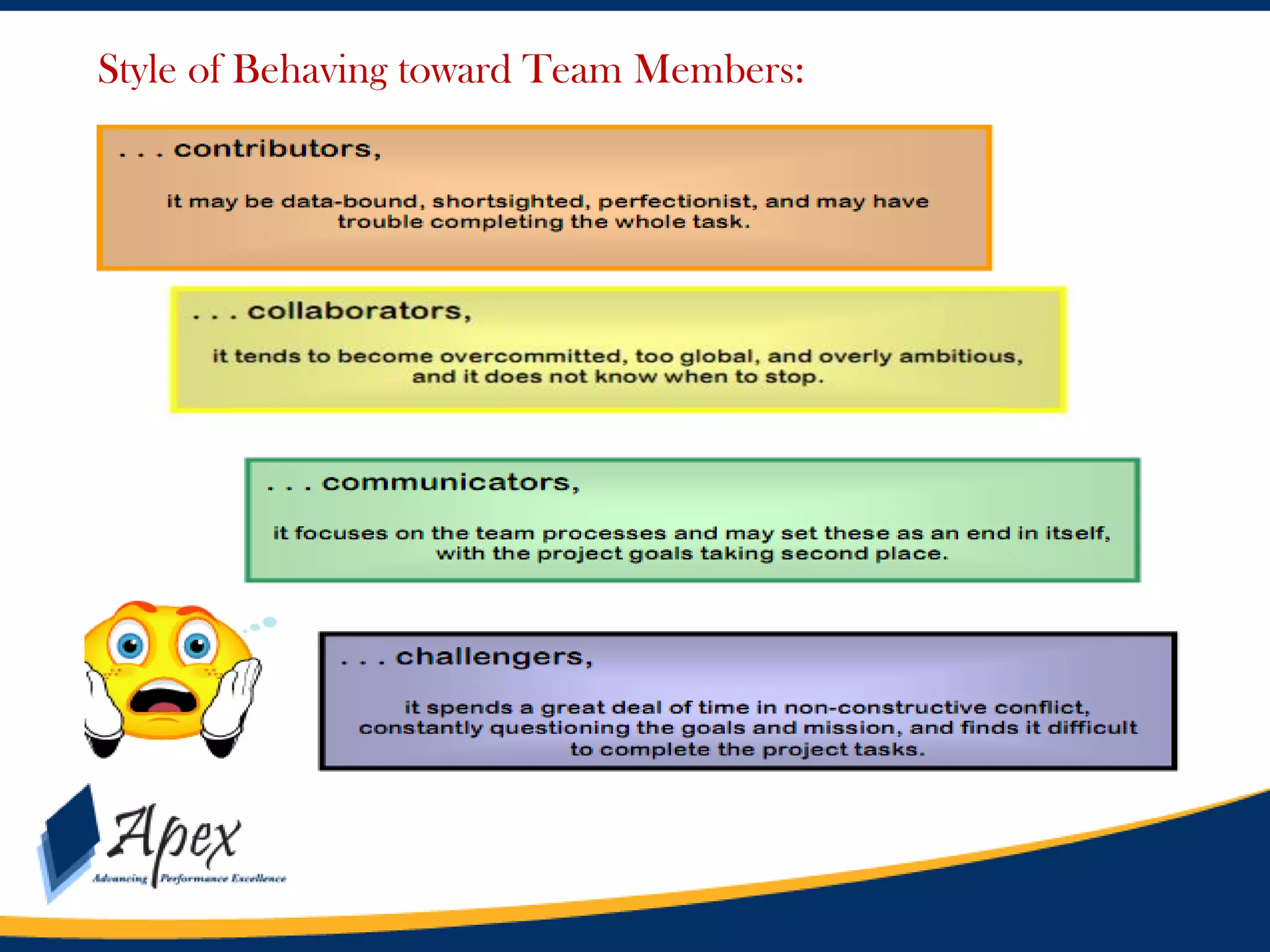
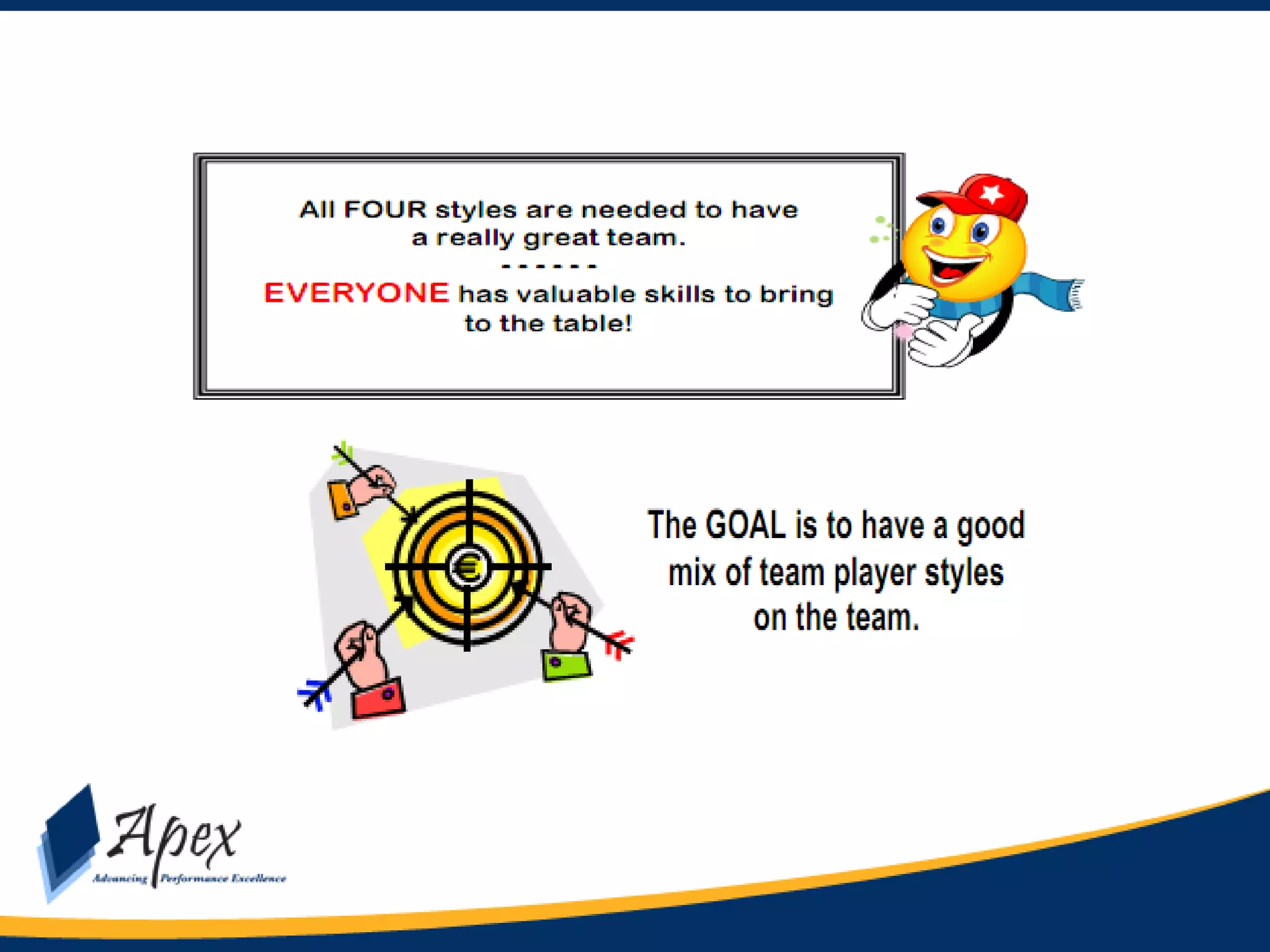
Style of Behaving toward Team Members:
Management
Building High Performance Teame module (02) Teamwork Style in Workplace

Building High Performance Teame module (02) Teamwork Style in Workplace

  • 1.
    Building High PerformanceTeam Module (02) TEAMWORK STYLE IN WORKPLACE
  • 2.
    Module (02) TeamworkStyle in Workplace 2.1 Work Groups and Team 2.2 Re-Active and Pro-Active 2.3 Building Trust and Believability 2.4 Inter-Team Conflicts 2.5 Model of Effective Team 2.6 High Performing Leadership 2.7 Style of Behaving toward Team Members
  • 3.
    Management 2.1 Work Groupsand Team Definition of a Group: A collection of individuals, the members accept a common task, become interdependent in their performance, and interact with one another to promote its accomplishment.
  • 4.
    Dynamics of GroupFormation:  Propinquity Theory: People associate with one another due to geographical proximity.  Balance Theory: People who have similar attitudes toward certain objects and goals tend to form a group.  Exchange Theory: The reward-cost outcomes of interactions serve as the basis for group formation.
  • 5.
    Stages of GroupDevelopment
  • 6.
  • 7.
    Size of aGroup: Groups of 5-7 members exercise the best elements of both small and large groups.
  • 8.
    Work Teams: A smallnumber of people with complementary skills who are committed to a common Purpose, common Performance Goals, and an approach for which they hold themselves mutually accountable”.
  • 9.
    Benefits of WorkTeams: • Enhanced Performance. • Employee Benefits. • Reduced Costs. • Organizational Enhancements. • Increase Reliability (Human/Machine). • Increase Productivity. • Employment Loyalty
  • 10.
    Team Versus Group WorkGroup: A group that interacts primarily to share information and to make decisions to help each group member perform within his or her area of responsibility. Work Team A group whose individual efforts result in a performance that is greater than the sum of the individual inputs.
  • 12.
    Types of Teams Problem-SolvingTeam: If there are 5 to 12 employees from the same Department who meet for a few hours each week to discuss ways of improving quality, efficiency, and the work environment. Self-Managed Work Teams: If there are 10 to 15 people who take on the Responsibilities of their former Supervisors to do certain Job.
  • 13.
    Cross-Functional Teams: Employees fromabout the same • Task forces hierarchical level, but from different • Committees work areas, who come together to accomplish a task.
  • 14.
  • 15.
    Shaping Individuals IntoTeam Players  Selection: Good interpersonal skills  Training: Can be trained by specialists  Rewards: Financial or non Financial Rewards
  • 16.
    2.2 Re-Active andPro-Active Re-Active People: They focus on the weakness of other People, and they do action once the problem happen. They can’t think about future but they are focusing one what in their hand only. Reactive people, on the other hand, are often affected by their physical environment. They find external sources to blame for their behavior. If the weather is good, they feel good. If it isn't, it affects their attitude and performance, and they blame the weather."
  • 17.
    Pro-Active People: They thingabout what they can do with their resources, They have Vision and they try to achieve it, Also they focus on the things for future. The proactive people focus their energies and attention on the things which they can change for the better as per their vision.
  • 18.
    Pro-active means: Takinginitiative first whatever the situation may be and having initiative and responsibility to make things happen and The ability to choose your response to a particular situation Responsibility => Response + Ability
  • 19.
    Three Types ofPeople • People who make things happen • People who watch things happen. • People who wonder…what happened
  • 20.
    2.3 Building Trustand Believability Importance of Trust and Believability: “Under conditions of High Trust with right believes, problem solving tends to be Creative and Productive. Under conditions of Low Trust, problem solving tends to be degenerative and ineffective.” In contrast, in High Trust Groups there is less socially generated uncertainty and problems are solved more effectively.” in Low Trust Groups, interpersonal relationships interfere with and distort perceptions of the problem.
  • 21.
    Where Do WeTrust? Management  Social Trust: It happen between people in the life activities.  Trust in Organizations : It happen between organization and those they serve (Employees)  Intra - Organizational Trust: it happen within Organization’s Departments.  Inter- Organizational Trust : It happen between different Organization.
  • 22.
    Importance of Trustwithin Organizations “Although an organization obviously cannot succeed without high levels of trust between members, most aggressive companies do little to actively build trust. The typical corporation spends huge sums of money training its managers in interpersonal skills, but pays lip service to the critical issue of trust.”
  • 23.
  • 24.
    2.4 Inter-Team Conflicts Conflictcan be pretty much inevitable when you work with others. People have different viewpoints and under the right set of circumstances, those differences escalate to conflict. You can choose to:  Ignore it.  Complain about it.  Blame someone for it.  Try to deal with it through hints & suggestions.  Try to direct clarify what is going on.  Attempt to reach a resolution through common Techniques.
  • 25.
    Management Three-stage process belowis a form of mediation process, which helps Team Members to do: Step 01: Prepare for Resolution:  Acknowledge the Conflict  Discuss the Impact  Agree to a cooperate process  Agree to communicate (Active Listening)
  • 26.
    Management Step 02: Understandthe Situation:  Clarify People’s Positions  List of facts, assumptions and beliefs underlying position  Analyze in Smaller Groups  Convene back as a Team
  • 27.
    Step 03: ReachAgreement: Management Now that all parties understand the others’ positions, the team must decide what decision or course of action to take. With the facts and assumptions considered. It’s easier to see the best of action and reach agreement.
  • 28.
    2.5 Model ofEffective Team There are FIVE Functions of an Effective Team: 1. Trust ONE another. 2. Engage in In-filtered Conflict around Ideas. 3. Commit to Decisions & Plans of Action. 4. Hold ONE another Accountable/Catch Mistakes. 5. Focus on Achievement of Collective Results for all.
  • 29.
    The Strategic Team Development profile uses theHigh Energy teams MODLE to address Eight Fundamentals areas that all Teams need to resolve, in order effectively. to perform
  • 30.
    Management The Strategic TeamDevelopment Profile is a Team Needs Analysis tool that will pinpoint the strategic issues that need resolving in the group. Just some of the applications include:  SWOT Analysis  Conflict Resolution  Role Clarification  Identifying Skill Gaps / Needs  Team Performance Reviews  Establishing Rewards Programs  Aligning Work Values  Improving Team Processes, Quality and Productivity
  • 31.
    High Effective TeamModule: Management  Warm, Friendly Attitude  Says Thank you and Smiles  Customer Focused Oriented  Prompt, and Reliable  Self-Motivated and Learning  Shares Knowledge & Values  Good Listeners & Reporter  Accountable and Accept Mistakes  Has high Standards and Professionally  Supportive and Cooperative
  • 32.
    2.6 High PerformanceLeadership Today’s Business Environment requires a New Breed of High Performance Leaders who can identify the Right People for the Right Job:  Motivate and coach employees.  Introduce and facilitate proactive organizational change Strategies  Use new communication skills  Become a visible champion improvement programs and strategies. for process
  • 33.
    Management Strategies for Leadershipand Organization Change:  Apply influence based Leadership VERSUS Control.  Integrate Organizational Change Strategies with IMPROVEMENT TOOLS.  Develop Strategic Plans to support COMPANY BUSINESS GOALS.  Provide Leadership Skills TRAINING, COACHING and SUPPORT.
  • 34.
    2.7 Style ofBehaving toward Team Members Teams are made up of different characters, feeling, believes and personalities hence it makes the whole situation of working in a team dynamic. Things are always in a flux and throw in the occasional ego trips; it can make working in a team very stressful. But there are behaviors you can adhere to lessen the stress and get the best out of the team
  • 35.
  • 36.
  • 37.
  • 38.
  • 39.
    Management Style of Behavingtoward Team Members:
  • 40.