Building a  Successful  Mentoring  Program Using the Mentor Michigan Quality Program Standards for Youth Mentoring Orientation & Training
Quality Program Standards 1: Definition of Youth Mentoring 2: Recruitment Plan 3: Eligibility Screening 4: Orientation and Training 5: Matching Strategy 6: Match Monitoring Process 7: Mentor Support, Recognition, and Retention 8: Match Closure 9: Program Evaluation 10: Organizational Management 11: Governance
Mentor Michigan’s  Quality Program Standards Developed by the Providers Council Not meant to certify or accredit mentoring programs Planning and assessment framework to raise the bar for mentoring programs Standards based on research, evidence-based practices, and the national Elements of Effective Practice
Self-Assessment Checklist Tool for self-assessment Benchmarks for progress Determine areas of potential improvement and strengths of the organization Quality Program Standards and Checklist are available for download on the Mentor Michigan website www.mentormichigan.org
Standard 4: Orientation & Training Standard 4 – Orientation & Training Orientation Plan Mentees Mentors Mentor Training Plan Importance Next Steps
POLL My program has an orientation plan for: Mentors Mentees Parent/Guardian All of the Above
Standard 4: Orientation & Training The program provides each mentor, mentee, and parent/guardian of mentee orientation with training and support materials.  Trained staff or volunteers conduct these sessions, which are held prior to the match.
Program Orientation Program overview Program description Eligibility and time commitment Program benefits and rewards.
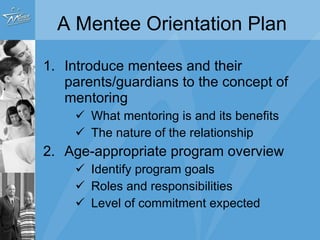
A Mentee Orientation Plan Introduce mentees and their parents/guardians to the concept of mentoring What mentoring is and its benefits The nature of the relationship Age-appropriate program overview  Identify program goals Roles and responsibilities Level of commitment expected
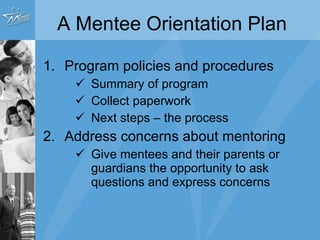
A Mentee Orientation Plan Program policies and procedures Summary of program  Collect paperwork Next steps – the process Address concerns about mentoring Give mentees and their parents or guardians the opportunity to ask questions and express concerns
A Mentor Orientation Plan Overview of the mentoring program Program goals Need for mentors Mentee characteristics and criteria for participation Establish expectations Expectation of mentors What mentors can expect from program staff Expectations of mentees Timeline
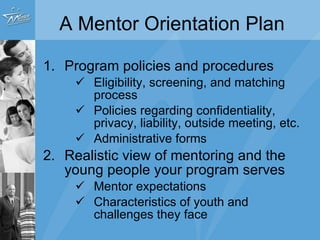
A Mentor Orientation Plan Program policies and procedures Eligibility, screening, and matching process Policies regarding confidentiality, privacy, liability, outside meeting, etc. Administrative forms Realistic view of mentoring and the young people your program serves Mentor expectations Characteristics of youth and challenges they face
Questions?
Program Training Program policies Roles, responsibilities, and expectations Building a healthy mentoring relationship Information referral and support services  Age-appropriate activities  Cross-cultural and diversity awareness training Child abuse reporting and recognition Crisis management and problem-solving resources Establishing appropriate boundaries.  Confidentiality, risk and liability management Communication skills Explanation of site rules Match closure procedures
POLL How much training do you provide mentors? 6 hours or more 4-5 hours 2-3 hours 1-2 hours None/not sure
Importance of an Orientation and Training Process Mentor mobilization practices 80% of mentors report they were never training in critical areas Pre-match training Training should answer the WHY,  WHAT and HOW questions Coordinator’s role
Continued Support Ongoing training sessions Match Support
Now What? Quality Program Standards Program Self-Assessment Checklist Elements of Effective Practice Toolkit www.mentoring.org Sample orientation plans for mentors and mentees and mentor training plan Bring this information back to YOUR mentoring program What does your orientation and training plan consist of? Are you following this plan consistently, with every participant in your program? Mentor Michigan Website www.mentormichigan.org Handouts, resources, related websites Webinars on a variety of topics
Building a Successful  Mentoring Program Definition and Recruitment Plan (recorded) Orientation and Training Matching Strategy and Monitoring Matches March 7 at 2:00 pm  March 9 at 9:00 am Mentor Support, Recognition, & Retention and Match Closure April 18 at 2:00 pm April 21 at 2:00 pm
Upcoming Opportunities Mentoring: A Promising Intervention for Children of Prisoners March 8 at 10:00 am March 17 at 2:00 pm Men in Mentoring Toolkit March 22 at 3:00 pm Resources for New Mentoring Programs and New Staff February 23 at 2:00 pm April 15 at 10:00 am June 13 at 2:00 pm
Questions or Comments?

Building a Successful Mentoring Program: Orientation and Training

  • 1.
    Building a Successful Mentoring Program Using the Mentor Michigan Quality Program Standards for Youth Mentoring Orientation & Training
  • 2.
    Quality Program Standards1: Definition of Youth Mentoring 2: Recruitment Plan 3: Eligibility Screening 4: Orientation and Training 5: Matching Strategy 6: Match Monitoring Process 7: Mentor Support, Recognition, and Retention 8: Match Closure 9: Program Evaluation 10: Organizational Management 11: Governance
  • 3.
    Mentor Michigan’s Quality Program Standards Developed by the Providers Council Not meant to certify or accredit mentoring programs Planning and assessment framework to raise the bar for mentoring programs Standards based on research, evidence-based practices, and the national Elements of Effective Practice
  • 4.
    Self-Assessment Checklist Toolfor self-assessment Benchmarks for progress Determine areas of potential improvement and strengths of the organization Quality Program Standards and Checklist are available for download on the Mentor Michigan website www.mentormichigan.org
  • 5.
    Standard 4: Orientation& Training Standard 4 – Orientation & Training Orientation Plan Mentees Mentors Mentor Training Plan Importance Next Steps
  • 6.
    POLL My programhas an orientation plan for: Mentors Mentees Parent/Guardian All of the Above
  • 7.
    Standard 4: Orientation& Training The program provides each mentor, mentee, and parent/guardian of mentee orientation with training and support materials. Trained staff or volunteers conduct these sessions, which are held prior to the match.
  • 8.
    Program Orientation Programoverview Program description Eligibility and time commitment Program benefits and rewards.
  • 9.
    A Mentee OrientationPlan Introduce mentees and their parents/guardians to the concept of mentoring What mentoring is and its benefits The nature of the relationship Age-appropriate program overview Identify program goals Roles and responsibilities Level of commitment expected
  • 10.
    A Mentee OrientationPlan Program policies and procedures Summary of program Collect paperwork Next steps – the process Address concerns about mentoring Give mentees and their parents or guardians the opportunity to ask questions and express concerns
  • 11.
    A Mentor OrientationPlan Overview of the mentoring program Program goals Need for mentors Mentee characteristics and criteria for participation Establish expectations Expectation of mentors What mentors can expect from program staff Expectations of mentees Timeline
  • 12.
    A Mentor OrientationPlan Program policies and procedures Eligibility, screening, and matching process Policies regarding confidentiality, privacy, liability, outside meeting, etc. Administrative forms Realistic view of mentoring and the young people your program serves Mentor expectations Characteristics of youth and challenges they face
  • 13.
  • 14.
    Program Training Programpolicies Roles, responsibilities, and expectations Building a healthy mentoring relationship Information referral and support services Age-appropriate activities Cross-cultural and diversity awareness training Child abuse reporting and recognition Crisis management and problem-solving resources Establishing appropriate boundaries. Confidentiality, risk and liability management Communication skills Explanation of site rules Match closure procedures
  • 15.
    POLL How muchtraining do you provide mentors? 6 hours or more 4-5 hours 2-3 hours 1-2 hours None/not sure
  • 16.
    Importance of anOrientation and Training Process Mentor mobilization practices 80% of mentors report they were never training in critical areas Pre-match training Training should answer the WHY, WHAT and HOW questions Coordinator’s role
  • 17.
    Continued Support Ongoingtraining sessions Match Support
  • 18.
    Now What? QualityProgram Standards Program Self-Assessment Checklist Elements of Effective Practice Toolkit www.mentoring.org Sample orientation plans for mentors and mentees and mentor training plan Bring this information back to YOUR mentoring program What does your orientation and training plan consist of? Are you following this plan consistently, with every participant in your program? Mentor Michigan Website www.mentormichigan.org Handouts, resources, related websites Webinars on a variety of topics
  • 19.
    Building a Successful Mentoring Program Definition and Recruitment Plan (recorded) Orientation and Training Matching Strategy and Monitoring Matches March 7 at 2:00 pm March 9 at 9:00 am Mentor Support, Recognition, & Retention and Match Closure April 18 at 2:00 pm April 21 at 2:00 pm
  • 20.
    Upcoming Opportunities Mentoring:A Promising Intervention for Children of Prisoners March 8 at 10:00 am March 17 at 2:00 pm Men in Mentoring Toolkit March 22 at 3:00 pm Resources for New Mentoring Programs and New Staff February 23 at 2:00 pm April 15 at 10:00 am June 13 at 2:00 pm
  • 21.