
Research in Action Series Mentoring: A Key Resource for Promoting Positive Youth Development
Overview of Research in Action Series MENTOR has developed an innovative series - Research in Action  Translates the latest research on mentoring into tangible strategies for mentoring practitioners.  Makes the best available research accessible and relevant to the mentoring field.   Using the Research in Action series, programs can ensure their practices are based on current research, resulting in improved services and better impacts for young people.
10 issues  Each issue provides:   Research Action  Resources Overview of Research in Action Series
Research in Action Issues: Mentoring: A Key Resource for Promoting Positive Youth Development Effectiveness of Mentoring Program Practices Program Staff in Youth Mentoring Programs: Qualifications, Training, and Retention Fostering Close and Effective Relationships in Youth Mentoring Programs Why Youth Mentoring Relationships End School-Based Mentoring Cross-Age Peer Mentoring Mentoring Across Generations: Engaging 50+ Adults as Mentors Youth Mentoring: Do Race and Ethnicity Really Matter? Mentoring: A Promising Intervention for Children of Prisoners
Mentor Michigan Webinar Series www.mentormichigan.org Click on “Training & Technical Assistance”
Issue 1:  Mentoring: A Key Resource for Promoting Positive Youth Development Richard M. Lerner, Ph.D., Aerika S. Brittian, and Kristen E. Fay,  Tufts University Issue available for free download at MENTOR’s website www.mentoring.org “ Access Research” Tab    Research in Action
Issue 1 – Overview Introduction to the positive youth development (PYD) perspective Implications for Mentors C’s of PYD Research Conclusions ACTION Section Resources
Positive Youth Development (PYD) Two key ideas: All young people possess strengths Positive youth development may be promoted when youth strengths are aligned with the strengths present in their families, communities, and schools
Four Ecological Assets that Promote PYD The individuals in young people’s lives  The institutions present in their community  Opportunities for youth and adults to work together in valued community activities Access to these people and institutions
Most Important Asset: Mentors Assets can be identified in any setting within which youth live and develop—families, schools, and communities The presence of mentors is   the most important asset  for PYD that exists in communities Mentoring    Capacity of youth to engage in high-quality social relationships, to have greater academic achievement, school engagement, school adjustment, and to view their futures more positively
“ Big 3” Features of Youth Development Programs Sustained, positive adult-youth relations Youth life-skill building activities Youth participation and leadership of valued community activities.
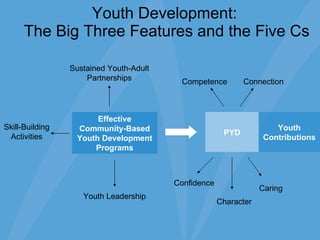
Youth Development:  The Big Three Features and the Five Cs PYD Youth Contributions Competence Connection Confidence Character Caring Effective Community-Based Youth Development Programs Sustained Youth-Adult Partnerships Youth Leadership Skill-Building Activities
Implications For Mentors Interactions with mentees should reflect the Big 3 Assure youth gain access to four key ecological assets in their communities Help to develop each of the Cs of positive youth development
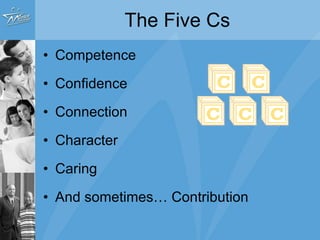
The Five Cs Competence Confidence Connection Character Caring And sometimes… Contribution
Competence Support your mentee’s passions and activities Encourage your mentee to pursue interests, activities, or hobbies that emphasize their skills Help your mentee “transfer” their skills  Involve your mentee in making decisions Turn mistakes into teachable moments
Confidence Help the mentee develop a team of supporters  Share your experiences Be on the lookout for obstacles that may challenge their confidence Connect the mentee to people and organizations to build social capital (networking)
Connection Be respectful of the mentee’s privacy, while still working to get to know them Create opportunities for the mentee to have their voice heard in the community
Character Discuss and explain  why   some behaviors are unacceptable Model good behaviors Provide a sense of perspective Provide opportunities for the mentee to make their own decisions
Caring Hang back when the mentee is not receptive and wait for an opportunity to talk and respond  Model caring in interactions with their mentee and in the community Encourage mentees to join organization and promote caring and social justice in the world around them
Contribution Encourage mentees to advocate for causes Encourage people and institutions to welcome youth participation Provide support and resources to help mentees succeed Allow the mentee to experience and learn from disappointment
Conclusions from Research Effective mentoring is an important developmental asset  You can facilitate the development of the several key indicators of positive youth development Within “Big 3” features of YD programs, you have many possible actions to take to foster positive youth development
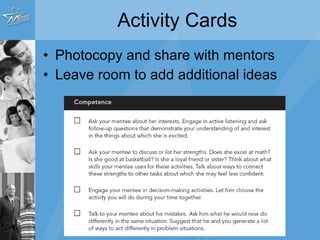
ACTION: Incorporating PYD Principals Mentors need to learn the general principals of positive youth development Program staff should provide practical activities and advice to support mentors in their efforts Activity Cards Reflection Sheet
Activity Cards Photocopy and share with mentors Leave room to add additional ideas
Mentor Reflection Sheet Provides an opportunity to reflect on activities and conversations that fostered the six Cs Let mentors know that each thing they list is providing their mentee with access to more assets
National Clearinghouse on Families and Youth (NCFY) Free information service for communities, organizations, and individuals interested in developing new and effective strategies for supporting young people and their families. Online Training: “ Introduction to Positive Youth Development” www.ncfy.com/pyd
National organization that provides training and technical assistance to youth mentoring programs http://educationnorthwest.org/nmc Understanding the Youth Development Model Putting Youth Development Principles to Work in Mentoring Programs A Mentor’s Guide to Youth Development Education Northwest:  National Mentoring Center
Resources:  Search Institute Provides leadership, information, and resources to promote positive healthy development of youth.  The 40 Developmental Assets for Youth  www.search-institute.org/assets
Questions or Comments?
This presentation provides an overview of Research in Action Issue 1:  Mentoring: A Key Resource for Promoting Positive Youth Development This tool was produced by MENTOR/The National Mentoring Partnership and can be accessed on their website: www.mentoring.org

Research in action #1

  • 1.
    Research in ActionSeries Mentoring: A Key Resource for Promoting Positive Youth Development
  • 2.
    Overview of Researchin Action Series MENTOR has developed an innovative series - Research in Action Translates the latest research on mentoring into tangible strategies for mentoring practitioners. Makes the best available research accessible and relevant to the mentoring field.   Using the Research in Action series, programs can ensure their practices are based on current research, resulting in improved services and better impacts for young people.
  • 3.
    10 issues Each issue provides:   Research Action Resources Overview of Research in Action Series
  • 4.
    Research in ActionIssues: Mentoring: A Key Resource for Promoting Positive Youth Development Effectiveness of Mentoring Program Practices Program Staff in Youth Mentoring Programs: Qualifications, Training, and Retention Fostering Close and Effective Relationships in Youth Mentoring Programs Why Youth Mentoring Relationships End School-Based Mentoring Cross-Age Peer Mentoring Mentoring Across Generations: Engaging 50+ Adults as Mentors Youth Mentoring: Do Race and Ethnicity Really Matter? Mentoring: A Promising Intervention for Children of Prisoners
  • 5.
    Mentor Michigan WebinarSeries www.mentormichigan.org Click on “Training & Technical Assistance”
  • 6.
    Issue 1: Mentoring: A Key Resource for Promoting Positive Youth Development Richard M. Lerner, Ph.D., Aerika S. Brittian, and Kristen E. Fay, Tufts University Issue available for free download at MENTOR’s website www.mentoring.org “ Access Research” Tab  Research in Action
  • 7.
    Issue 1 –Overview Introduction to the positive youth development (PYD) perspective Implications for Mentors C’s of PYD Research Conclusions ACTION Section Resources
  • 8.
    Positive Youth Development(PYD) Two key ideas: All young people possess strengths Positive youth development may be promoted when youth strengths are aligned with the strengths present in their families, communities, and schools
  • 9.
    Four Ecological Assetsthat Promote PYD The individuals in young people’s lives The institutions present in their community Opportunities for youth and adults to work together in valued community activities Access to these people and institutions
  • 10.
    Most Important Asset:Mentors Assets can be identified in any setting within which youth live and develop—families, schools, and communities The presence of mentors is the most important asset for PYD that exists in communities Mentoring  Capacity of youth to engage in high-quality social relationships, to have greater academic achievement, school engagement, school adjustment, and to view their futures more positively
  • 11.
    “ Big 3”Features of Youth Development Programs Sustained, positive adult-youth relations Youth life-skill building activities Youth participation and leadership of valued community activities.
  • 12.
    Youth Development: The Big Three Features and the Five Cs PYD Youth Contributions Competence Connection Confidence Character Caring Effective Community-Based Youth Development Programs Sustained Youth-Adult Partnerships Youth Leadership Skill-Building Activities
  • 13.
    Implications For MentorsInteractions with mentees should reflect the Big 3 Assure youth gain access to four key ecological assets in their communities Help to develop each of the Cs of positive youth development
  • 14.
    The Five CsCompetence Confidence Connection Character Caring And sometimes… Contribution
  • 15.
    Competence Support yourmentee’s passions and activities Encourage your mentee to pursue interests, activities, or hobbies that emphasize their skills Help your mentee “transfer” their skills Involve your mentee in making decisions Turn mistakes into teachable moments
  • 16.
    Confidence Help thementee develop a team of supporters Share your experiences Be on the lookout for obstacles that may challenge their confidence Connect the mentee to people and organizations to build social capital (networking)
  • 17.
    Connection Be respectfulof the mentee’s privacy, while still working to get to know them Create opportunities for the mentee to have their voice heard in the community
  • 18.
    Character Discuss andexplain why some behaviors are unacceptable Model good behaviors Provide a sense of perspective Provide opportunities for the mentee to make their own decisions
  • 19.
    Caring Hang backwhen the mentee is not receptive and wait for an opportunity to talk and respond Model caring in interactions with their mentee and in the community Encourage mentees to join organization and promote caring and social justice in the world around them
  • 20.
    Contribution Encourage menteesto advocate for causes Encourage people and institutions to welcome youth participation Provide support and resources to help mentees succeed Allow the mentee to experience and learn from disappointment
  • 21.
    Conclusions from ResearchEffective mentoring is an important developmental asset You can facilitate the development of the several key indicators of positive youth development Within “Big 3” features of YD programs, you have many possible actions to take to foster positive youth development
  • 22.
    ACTION: Incorporating PYDPrincipals Mentors need to learn the general principals of positive youth development Program staff should provide practical activities and advice to support mentors in their efforts Activity Cards Reflection Sheet
  • 23.
    Activity Cards Photocopyand share with mentors Leave room to add additional ideas
  • 24.
    Mentor Reflection SheetProvides an opportunity to reflect on activities and conversations that fostered the six Cs Let mentors know that each thing they list is providing their mentee with access to more assets
  • 25.
    National Clearinghouse onFamilies and Youth (NCFY) Free information service for communities, organizations, and individuals interested in developing new and effective strategies for supporting young people and their families. Online Training: “ Introduction to Positive Youth Development” www.ncfy.com/pyd
  • 26.
    National organization thatprovides training and technical assistance to youth mentoring programs http://educationnorthwest.org/nmc Understanding the Youth Development Model Putting Youth Development Principles to Work in Mentoring Programs A Mentor’s Guide to Youth Development Education Northwest: National Mentoring Center
  • 27.
    Resources: SearchInstitute Provides leadership, information, and resources to promote positive healthy development of youth. The 40 Developmental Assets for Youth www.search-institute.org/assets
  • 28.
  • 29.
    This presentation providesan overview of Research in Action Issue 1: Mentoring: A Key Resource for Promoting Positive Youth Development This tool was produced by MENTOR/The National Mentoring Partnership and can be accessed on their website: www.mentoring.org