

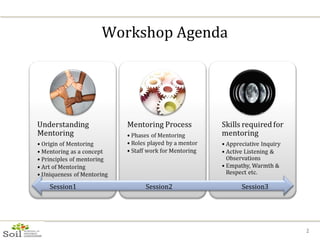

Workshop Agenda Session1 Session2 Session3
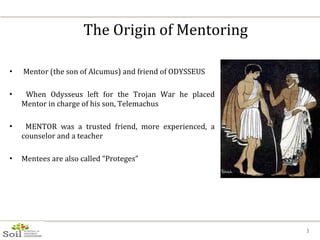
The Origin of Mentoring Mentor (the son of Alcumus) and friend of ODYSSEUS When Odysseus left for the Trojan War he placed Mentor in charge of his son, Telemachus MENTOR was a trusted friend, more experienced, a counselor and a teacher  Mentees are also called “Proteges”
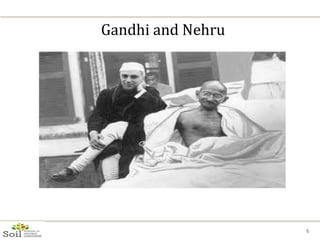
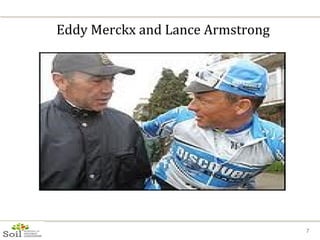
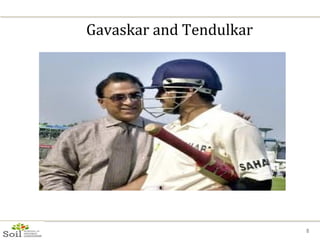
Examples
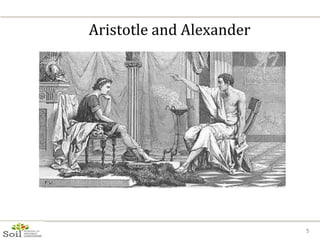
Aristotle and Alexander
Gandhi and Nehru
Eddy Merckx and Lance Armstrong
Gavaskar and Tendulkar
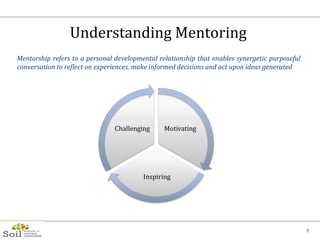
Understanding Mentoring  Mentorship refers to a personal developmental relationship that enables synergetic purposeful conversation to reflect on experiences, make informed decisions and act upon ideas generated
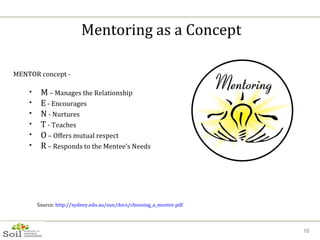
Mentoring as a Concept MENTOR concept -  M  – Manages the Relationship E  - Encourages N  - Nurtures T  - Teaches O  – Offers mutual respect R  – Responds to the Mentee’s Needs Source:  http://sydney.edu.au/sun/docs/choosing_a_mentor.pdf
Mutual Trust Regular “contact” and conversation Genuine Belief in the process Desire to build the “Institution” Helps both persons to “grow” Basis of Mentoring
Principles of Mentoring Synergy –  Mentoring should be enriching for both mentor and mentee Mentoring is about learning and not teaching Mentee is empowered to take responsibility of his/her actions Relationship –  Mentoring is a power-free partnership between two individuals Focus is not to make mentee dependent but to develop mentee’s independent critical thinking Uniqueness -  Understanding the concept of mentoring and how it is different from coaching and counseling is important Mentoring must provide direction in order to channelize efforts in the right direction
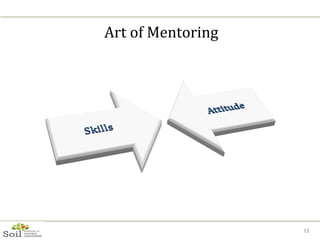
Art of Mentoring
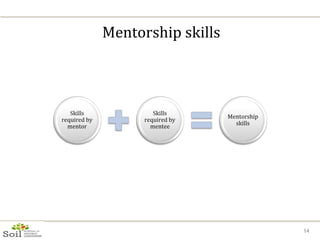
Mentorship skills
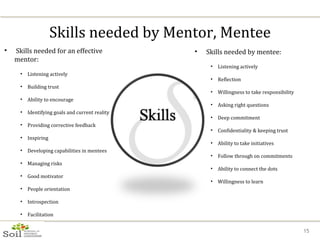
Skills needed by Mentor, Mentee Skills needed for an effective mentor: Listening actively Building trust Ability to encourage Identifying goals and current reality Providing corrective feedback Inspiring Developing capabilities in mentees Managing risks Good motivator People orientation Introspection Facilitation Skills needed by mentee: Listening actively Reflection Willingness to take responsibility Asking right questions Deep commitment Confidentiality & keeping trust Ability to take initiatives Follow through on commitments Ability to connect the dots Willingness to learn
Attitude for Mentoring Start  – At the start of mentoring process, mentors need to have an attitude of building trust and setting up the mentoring contract in initial meetings During  – During mentoring, a positive attitude of encouragement and giving directions is required Closing  – While the mentoring sessions are close to end, mentors need to have an attitude of reducing dependency of mentee and make the mentee self dependent
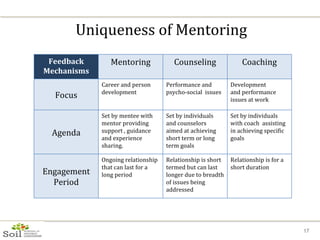
Uniqueness of Mentoring Feedback Mechanisms Mentoring Counseling Coaching Focus Career and person development Performance and psycho-social  issues Development  and performance issues at work Agenda Set by mentee with mentor providing support , guidance and experience sharing. Set by individuals and counselors  aimed at achieving short term or long term goals Set by individuals with coach  assisting in achieving specific goals Engagement Period Ongoing relationship that can last for a long period Relationship is short termed but can last longer due to breadth of issues being addressed Relationship is for a short duration
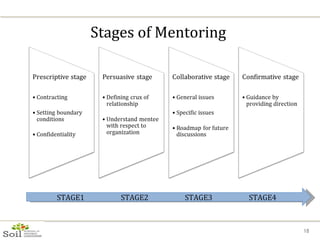
Stages of Mentoring  STAGE1 STAGE2 STAGE3 STAGE4
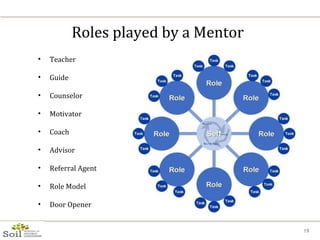
Roles played by a Mentor Teacher Guide Counselor Motivator Coach Advisor Referral Agent Role Model Door Opener
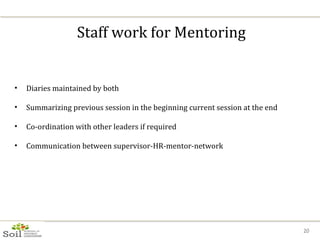
Staff work for Mentoring Diaries maintained by both Summarizing previous session in the beginning current session at the end Co-ordination with other leaders if required Communication between supervisor-HR-mentor-network
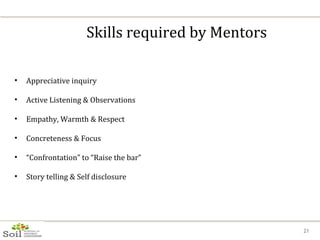
Skills required by Mentors Appreciative inquiry Active Listening & Observations Empathy, Warmth & Respect Concreteness & Focus “ Confrontation” to “Raise the bar” Story telling & Self disclosure
Appreciative Inquiry Ear of the child – “is that so?” Mine for the gold Focus on life giving force Tracking the positive energy to look at root causes of success & gifts Enhance the “positive”
Active Listening & Observations Being “fully present” Learning to listen to what is implied Observing the “whole person” Observing one self in relationship with the “mentee” Observing one’s breath, emotions, thoughts & perceptions
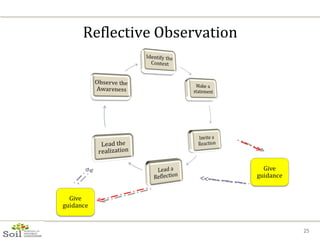
Reflective Observation Reflective Observation as a process works on the basis of prompted reflection: It starts with a contextual comment/statement from the mentor Mentor would then invite a reaction from the mentee Mentor would now prompt the mentee to reflect on the statement he has made Mentor leads the realization process of the mentee through proper guidance This contextual Realization would stay with the mentee as an Awareness  forever It is Mentor’s responsibility to keep the mentee on track through proper interventions in the process
Reflective Observation
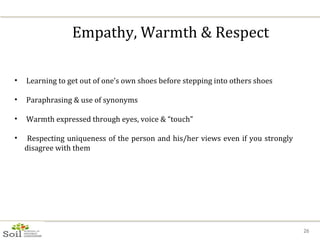
Empathy, Warmth & Respect Learning to get out of one’s own shoes before stepping into others shoes Paraphrasing & use of synonyms Warmth expressed through eyes, voice & “touch” Respecting uniqueness of the person and his/her views even if you strongly disagree with them
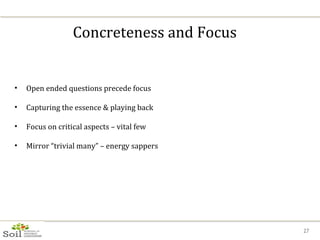
Concreteness and Focus Open ended questions precede focus Capturing the essence & playing back Focus on critical aspects – vital few Mirror “trivial many” – energy sappers
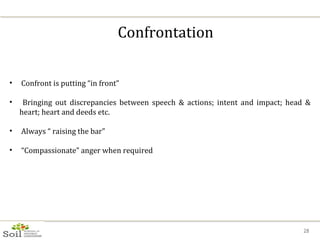
Confrontation Confront is putting “in front” Bringing out discrepancies between speech & actions; intent and impact; head & heart; heart and deeds etc. Always “ raising the bar” “ Compassionate” anger when required
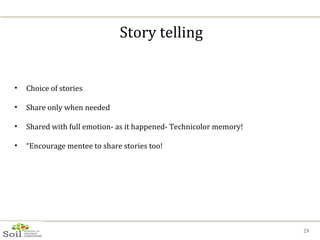
Story telling Choice of stories Share only when needed Shared with full emotion- as it happened- Technicolor memory! “ Encourage mentee to share stories too!
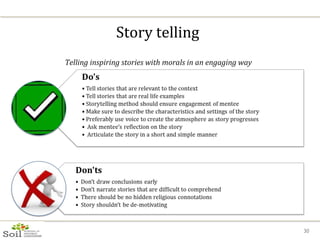
Story telling Telling inspiring stories with morals in an engaging way
Thank You

Mentoring ppt

  • 1.
  • 2.
    Workshop Agenda Session1Session2 Session3
  • 3.
    The Origin ofMentoring Mentor (the son of Alcumus) and friend of ODYSSEUS When Odysseus left for the Trojan War he placed Mentor in charge of his son, Telemachus MENTOR was a trusted friend, more experienced, a counselor and a teacher Mentees are also called “Proteges”
  • 4.
  • 5.
  • 6.
  • 7.
    Eddy Merckx andLance Armstrong
  • 8.
  • 9.
    Understanding Mentoring Mentorship refers to a personal developmental relationship that enables synergetic purposeful conversation to reflect on experiences, make informed decisions and act upon ideas generated
  • 10.
    Mentoring as aConcept MENTOR concept - M – Manages the Relationship E - Encourages N - Nurtures T - Teaches O – Offers mutual respect R – Responds to the Mentee’s Needs Source: http://sydney.edu.au/sun/docs/choosing_a_mentor.pdf
  • 11.
    Mutual Trust Regular“contact” and conversation Genuine Belief in the process Desire to build the “Institution” Helps both persons to “grow” Basis of Mentoring
  • 12.
    Principles of MentoringSynergy – Mentoring should be enriching for both mentor and mentee Mentoring is about learning and not teaching Mentee is empowered to take responsibility of his/her actions Relationship – Mentoring is a power-free partnership between two individuals Focus is not to make mentee dependent but to develop mentee’s independent critical thinking Uniqueness - Understanding the concept of mentoring and how it is different from coaching and counseling is important Mentoring must provide direction in order to channelize efforts in the right direction
  • 13.
  • 14.
  • 15.
    Skills needed byMentor, Mentee Skills needed for an effective mentor: Listening actively Building trust Ability to encourage Identifying goals and current reality Providing corrective feedback Inspiring Developing capabilities in mentees Managing risks Good motivator People orientation Introspection Facilitation Skills needed by mentee: Listening actively Reflection Willingness to take responsibility Asking right questions Deep commitment Confidentiality & keeping trust Ability to take initiatives Follow through on commitments Ability to connect the dots Willingness to learn
  • 16.
    Attitude for MentoringStart – At the start of mentoring process, mentors need to have an attitude of building trust and setting up the mentoring contract in initial meetings During – During mentoring, a positive attitude of encouragement and giving directions is required Closing – While the mentoring sessions are close to end, mentors need to have an attitude of reducing dependency of mentee and make the mentee self dependent
  • 17.
    Uniqueness of MentoringFeedback Mechanisms Mentoring Counseling Coaching Focus Career and person development Performance and psycho-social issues Development and performance issues at work Agenda Set by mentee with mentor providing support , guidance and experience sharing. Set by individuals and counselors aimed at achieving short term or long term goals Set by individuals with coach assisting in achieving specific goals Engagement Period Ongoing relationship that can last for a long period Relationship is short termed but can last longer due to breadth of issues being addressed Relationship is for a short duration
  • 18.
    Stages of Mentoring STAGE1 STAGE2 STAGE3 STAGE4
  • 19.
    Roles played bya Mentor Teacher Guide Counselor Motivator Coach Advisor Referral Agent Role Model Door Opener
  • 20.
    Staff work forMentoring Diaries maintained by both Summarizing previous session in the beginning current session at the end Co-ordination with other leaders if required Communication between supervisor-HR-mentor-network
  • 21.
    Skills required byMentors Appreciative inquiry Active Listening & Observations Empathy, Warmth & Respect Concreteness & Focus “ Confrontation” to “Raise the bar” Story telling & Self disclosure
  • 22.
    Appreciative Inquiry Earof the child – “is that so?” Mine for the gold Focus on life giving force Tracking the positive energy to look at root causes of success & gifts Enhance the “positive”
  • 23.
    Active Listening &Observations Being “fully present” Learning to listen to what is implied Observing the “whole person” Observing one self in relationship with the “mentee” Observing one’s breath, emotions, thoughts & perceptions
  • 24.
    Reflective Observation ReflectiveObservation as a process works on the basis of prompted reflection: It starts with a contextual comment/statement from the mentor Mentor would then invite a reaction from the mentee Mentor would now prompt the mentee to reflect on the statement he has made Mentor leads the realization process of the mentee through proper guidance This contextual Realization would stay with the mentee as an Awareness forever It is Mentor’s responsibility to keep the mentee on track through proper interventions in the process
  • 25.
  • 26.
    Empathy, Warmth &Respect Learning to get out of one’s own shoes before stepping into others shoes Paraphrasing & use of synonyms Warmth expressed through eyes, voice & “touch” Respecting uniqueness of the person and his/her views even if you strongly disagree with them
  • 27.
    Concreteness and FocusOpen ended questions precede focus Capturing the essence & playing back Focus on critical aspects – vital few Mirror “trivial many” – energy sappers
  • 28.
    Confrontation Confront isputting “in front” Bringing out discrepancies between speech & actions; intent and impact; head & heart; heart and deeds etc. Always “ raising the bar” “ Compassionate” anger when required
  • 29.
    Story telling Choiceof stories Share only when needed Shared with full emotion- as it happened- Technicolor memory! “ Encourage mentee to share stories too!
  • 30.
    Story telling Tellinginspiring stories with morals in an engaging way
  • 31.