DR.Jaganmohana Rao
Faculty of Education
MITE, Kohima
A buddy program can strengthen the
school community and help to challenge
stereotypes, misconceptions or fears
that students hold about younger or
older age groups. A buddy system can
also help students to feel valued and
supported, teach important social skills
and create a caring ethos in the school.
Buddy systems teach, and give children the
opportunity to practise, the important values of
respect, care, valuing difference, responsibility,
friendship and including others.
Buddy programs consist of upper-grade students
reading and/or completing activities or projects with
younger children. Older students are paired with
younger children from their buddy class and the
most effective programs have at least two grade
levels between students. The experience provides
children with stimulating opportunities for learning
and skill development.
A peer-tutoring program is similar to a
buddy program. However, it only includes
children in need of academic assistance. An
older student is paired with a child that he or
she tutors once or twice a week, before or after
school or during school hours.
The Better Buddies Framework:
Develops positive cross-age relationships
Provides opportunities for peer tutoring
Contributes to a positive and caring school
culture
Develops pro-social values and skills
Develops responsibility
Builds self confidence
Develops empathy
Promotes inclusion
Discourages bullying.
Multisensory Approach in teaching is
the simultaneous use of visual, auditory, and
kinaesthetic-tactile to enhance memory and
learning. Links are consistently made
between the visuals (what we see), auditory
(what we hear), and kinaesthetic- tactile
(what we do or feel) which enable the
learner to store the information directly to
the brain in its real sense.
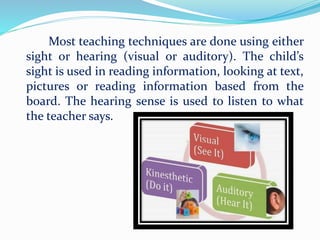
Most teaching techniques are done using either
sight or hearing (visual or auditory). The child’s
sight is used in reading information, looking at text,
pictures or reading information based from the
board. The hearing sense is used to listen to what
the teacher says.
Multisensory techniques are frequently used
for children with learning differences. Students
with learning difficulties typically have difficulties
in one or more areas of reading, spelling, writing,
math, listening comprehension and expressive
language.
Multisensory techniques enable students to
use their personal areas of strength to help them
learn. They can range from simple to complex,
depending on the needs of the student and the task
at hand.
The Different Teaching and Learning
Techniques:
Visual techniques: Visual learning methods
includes diagrams, modelling, photos and video.
Anything that will display something to the student
is considered visual.
Auditory techniques: Auditory learning methods
includes dialogue, clapping, rhymes or anything
that can be heard. Teachers use clapping or tapping
as a means of auditory aid. (Audio books are really
effective for students (or anyone!)
Tactile Techniques: Tactile learning includes
feel and touch. Teachers use anything
textured or raised to help with tactile learning
such as coins, sand, dice and clay.
Kinaesthetic techniques: Kinaesthetic
learning methods include movement and
doing things (i.e. writing and anything
physical). This type of learning method
engages the gross motor skills.
Key benefits of the multisensory approach are:
Increased learner engagement
Generating a greater capacity for learning
Encouraging a greater knowledge transfer
Improved attitudes towards learning
Greater student achievement
Reflective teaching is a personal tool
that teachers can use to observe and
evaluate the way they behave in their
classroom. Helps teachers in their
professional development self-awareness is a
powerful ally for a teacher, especially when
so much of what and how they teach.
Purpose of Reflective Teaching
 Reflection is one activity which bring forth
the practices and understanding of
educational processes.
 Reflection is the process in which teachers
become aware, or are supported to become
aware, of the theory and motives behind
their own teaching.
 Reflective teacher education is a approach
which ‘intended to prepare teachers to
become more thoughtful’.
Reflective Vs Invariant Teaching:
A Reflective Teacher
One who can design and implement an
effective educational program by adapting
his or her teaching skills and techniques to
the specific school situation
An Invariant Teacher
One who uses one approach in all teaching
situations regardless of the class/school
characteristics
Variables That Influence Effective Teaching:
 Values of the teacher
 Class size
 Number of class sessions per week
 Facilities and equipment
 Student behavior
 Context of the school
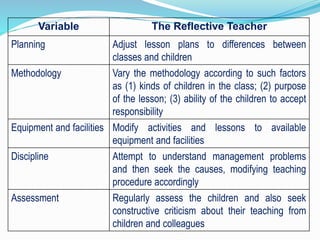
Variable The Reflective Teacher
Planning Adjust lesson plans to differences between
classes and children
Methodology Vary the methodology according to such factors
as (1) kinds of children in the class; (2) purpose
of the lesson; (3) ability of the children to accept
responsibility
Equipment and facilities Modify activities and lessons to available
equipment and facilities
Discipline Attempt to understand management problems
and then seek the causes, modifying teaching
procedure accordingly
Assessment Regularly assess the children and also seek
constructive criticism about their teaching from
children and colleagues
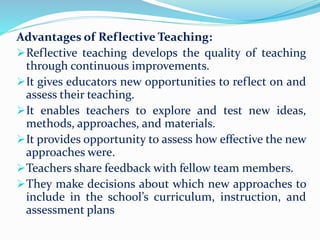
Advantages of Reflective Teaching:
Reflective teaching develops the quality of teaching
through continuous improvements.
It gives educators new opportunities to reflect on and
assess their teaching.
It enables teachers to explore and test new ideas,
methods, approaches, and materials.
It provides opportunity to assess how effective the new
approaches were.
Teachers share feedback with fellow team members.
They make decisions about which new approaches to
include in the school’s curriculum, instruction, and
assessment plans

Buddy Learning

  • 1.
    DR.Jaganmohana Rao Faculty ofEducation MITE, Kohima
  • 2.
    A buddy programcan strengthen the school community and help to challenge stereotypes, misconceptions or fears that students hold about younger or older age groups. A buddy system can also help students to feel valued and supported, teach important social skills and create a caring ethos in the school.
  • 3.
    Buddy systems teach,and give children the opportunity to practise, the important values of respect, care, valuing difference, responsibility, friendship and including others. Buddy programs consist of upper-grade students reading and/or completing activities or projects with younger children. Older students are paired with younger children from their buddy class and the most effective programs have at least two grade levels between students. The experience provides children with stimulating opportunities for learning and skill development.
  • 4.
    A peer-tutoring programis similar to a buddy program. However, it only includes children in need of academic assistance. An older student is paired with a child that he or she tutors once or twice a week, before or after school or during school hours. The Better Buddies Framework: Develops positive cross-age relationships Provides opportunities for peer tutoring
  • 5.
    Contributes to apositive and caring school culture Develops pro-social values and skills Develops responsibility Builds self confidence Develops empathy Promotes inclusion Discourages bullying.
  • 6.
    Multisensory Approach inteaching is the simultaneous use of visual, auditory, and kinaesthetic-tactile to enhance memory and learning. Links are consistently made between the visuals (what we see), auditory (what we hear), and kinaesthetic- tactile (what we do or feel) which enable the learner to store the information directly to the brain in its real sense.
  • 7.
    Most teaching techniquesare done using either sight or hearing (visual or auditory). The child’s sight is used in reading information, looking at text, pictures or reading information based from the board. The hearing sense is used to listen to what the teacher says.
  • 8.
    Multisensory techniques arefrequently used for children with learning differences. Students with learning difficulties typically have difficulties in one or more areas of reading, spelling, writing, math, listening comprehension and expressive language. Multisensory techniques enable students to use their personal areas of strength to help them learn. They can range from simple to complex, depending on the needs of the student and the task at hand.
  • 9.
    The Different Teachingand Learning Techniques: Visual techniques: Visual learning methods includes diagrams, modelling, photos and video. Anything that will display something to the student is considered visual. Auditory techniques: Auditory learning methods includes dialogue, clapping, rhymes or anything that can be heard. Teachers use clapping or tapping as a means of auditory aid. (Audio books are really effective for students (or anyone!)
  • 10.
    Tactile Techniques: Tactilelearning includes feel and touch. Teachers use anything textured or raised to help with tactile learning such as coins, sand, dice and clay. Kinaesthetic techniques: Kinaesthetic learning methods include movement and doing things (i.e. writing and anything physical). This type of learning method engages the gross motor skills.
  • 11.
    Key benefits ofthe multisensory approach are: Increased learner engagement Generating a greater capacity for learning Encouraging a greater knowledge transfer Improved attitudes towards learning Greater student achievement
  • 12.
    Reflective teaching isa personal tool that teachers can use to observe and evaluate the way they behave in their classroom. Helps teachers in their professional development self-awareness is a powerful ally for a teacher, especially when so much of what and how they teach. Purpose of Reflective Teaching
  • 13.
     Reflection isone activity which bring forth the practices and understanding of educational processes.  Reflection is the process in which teachers become aware, or are supported to become aware, of the theory and motives behind their own teaching.  Reflective teacher education is a approach which ‘intended to prepare teachers to become more thoughtful’.
  • 14.
    Reflective Vs InvariantTeaching: A Reflective Teacher One who can design and implement an effective educational program by adapting his or her teaching skills and techniques to the specific school situation An Invariant Teacher One who uses one approach in all teaching situations regardless of the class/school characteristics
  • 15.
    Variables That InfluenceEffective Teaching:  Values of the teacher  Class size  Number of class sessions per week  Facilities and equipment  Student behavior  Context of the school
  • 16.
    Variable The ReflectiveTeacher Planning Adjust lesson plans to differences between classes and children Methodology Vary the methodology according to such factors as (1) kinds of children in the class; (2) purpose of the lesson; (3) ability of the children to accept responsibility Equipment and facilities Modify activities and lessons to available equipment and facilities Discipline Attempt to understand management problems and then seek the causes, modifying teaching procedure accordingly Assessment Regularly assess the children and also seek constructive criticism about their teaching from children and colleagues
  • 17.
    Advantages of ReflectiveTeaching: Reflective teaching develops the quality of teaching through continuous improvements. It gives educators new opportunities to reflect on and assess their teaching. It enables teachers to explore and test new ideas, methods, approaches, and materials. It provides opportunity to assess how effective the new approaches were. Teachers share feedback with fellow team members. They make decisions about which new approaches to include in the school’s curriculum, instruction, and assessment plans